
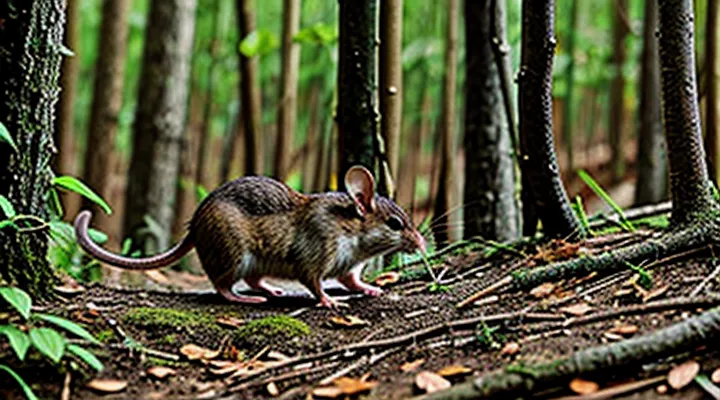
Diversity and Classification
Common Forest Mouse Species
The forest mouse community comprises several well‑documented species that dominate temperate and boreal woodlands. These rodents share adaptations for navigating leaf litter, burrowing, and exploiting seasonal food sources.
- Apodemus sylvaticus (Wood mouse) – widespread across European deciduous forests; omnivorous diet includes seeds, fruits, insects, and fungi; high reproductive output with up to five litters per year; nests built in dense ground cover or tree cavities.
- Peromyscus maniculatus (Deer mouse) – occupies North American coniferous and mixed forests; primarily granivorous but consumes arthropods during breeding season; exhibits flexible home‑range sizes, ranging from 0.5 to 2 ha; breeding season extends from spring to early autumn.
- Micromys minutus (Harvest mouse) – smallest European forest rodent; specializes in grass and herbaceous understory; constructs spherical nests attached to stems; limited litter size (2–4 pups) but rapid maturation.
- Myodes glareolus (Bank vole) – favors moist, moss‑rich understory in northern forests; diet rich in buds, roots, and fungi; displays territorial behavior with defined burrow systems; produces 3–4 litters annually.
- Tamiasciurus hudsonicus (Red‑backed vole) – inhabits boreal coniferous stands; feeds on conifer seeds and bark; builds extensive tunnel networks; reproductive cycle synchronized with cone production.
These species contribute to seed dispersal, soil aeration, and prey availability for avian and mammalian predators. Population fluctuations often correlate with mast years, predator density, and habitat disturbance, influencing overall forest dynamics. Conservation assessments focus on habitat connectivity, forest management practices, and climate‑driven changes in vegetation structure.
Habitat Preferences
Mice occupying forest environments exhibit distinct preferences that determine their distribution and population density. Preference for microhabitats with abundant ground cover, such as leaf litter and moss, provides protection from predators and stabilizes temperature fluctuations. Moisture levels influence nest site selection, with individuals favoring substrates that retain humidity without becoming saturated.
Key habitat features include:
- Dense understory vegetation offering vertical refuge and foraging opportunities.
- Proximity to dead wood and fallen logs, which supply nesting material and harbor insects.
- Soil types rich in organic matter, supporting seed and invertebrate availability.
- Access to small water sources, essential for hydration and supporting a diverse prey base.
Species demonstrate flexibility across successional stages, yet they concentrate in mature stands where canopy continuity maintains a stable microclimate. Elevational gradients affect species composition; lower elevations with warmer, wetter conditions host higher mouse densities compared to cooler, drier highlands.
Overall, habitat selection is driven by a combination of structural complexity, resource abundance, and microclimatic stability, shaping the ecological niche of forest-dwelling mice.
Ecological Roles of Forest Mice
Seed Dispersal and Forest Regeneration
Small rodents inhabiting forest habitats contribute significantly to seed movement and subsequent vegetation recovery. Their foraging behavior generates frequent contact with seeds of understory and canopy species, resulting in removal from the parent plant and transport to new microsites.
During seed handling, mice often cache surplus food items. These caches serve as temporary storage, and many seeds remain uneaten, germinating when conditions become favorable. The spatial pattern of caches creates a mosaic of seedling emergence that enhances structural diversity.
Key mechanisms of rodent‑mediated seed dispersal include:
- Larder formation: accumulation of multiple seeds in a single location, increasing local seed density.
- Scatter hoarding: distribution of individual seeds across a wide area, reducing competition and predation risk.
- Endozoochory: ingestion of fleshy fruits followed by excretion of viable seeds, often at distances beyond the parent’s canopy.
Empirical studies demonstrate that rodent‑driven dispersal accelerates forest regeneration after disturbance. Seedling recruitment rates are higher in plots with active rodent populations, and species composition shifts toward those with traits favored by rodent handling, such as moderate seed size and protective coatings. Consequently, management practices that maintain healthy small‑mammal communities support natural reforestation processes.
Prey for Predators
Forest mice constitute a primary food source for a wide range of carnivorous and avian predators. Their abundance directly influences predator reproductive success, survival rates, and territorial dynamics. By providing a reliable energy input, mice support the maintenance of diverse predator assemblages, from small mustelids to large raptors.
- Mammalian predators – foxes, weasels, martens, and domestic cats rely on nightly mouse captures to meet caloric requirements.
- Avian predators – owls, hawks, and shrikes incorporate mice into their diet, especially during breeding seasons when protein demand peaks.
- Reptilian predators – snakes such as rat snakes and vipers capture mice as part of their opportunistic feeding strategy.
Predator populations respond to fluctuations in mouse density. In years of high mouse productivity, predator litters increase, juvenile survival improves, and territorial ranges contract. Conversely, low mouse availability prompts dietary shifts, increased foraging distances, and temporary declines in predator numbers.
The predator‑prey interaction also regulates mouse populations, preventing overgrazing of seedling communities and limiting disease transmission among rodent colonies. This reciprocal relationship sustains forest trophic structure and contributes to ecosystem resilience.
Soil Aeration and Nutrient Cycling
Mice create extensive burrow networks that break compacted soil layers, allowing air to penetrate deeper horizons. This physical disruption improves oxygen availability for root systems and aerobic microorganisms, which accelerates decomposition of organic matter.
Through foraging and waste deposition, mice redistribute leaf litter, seeds, and fungal spores across the forest floor. Their activities mix nutrient‑rich material into mineral soil, enhancing the spatial heterogeneity of carbon, nitrogen, and phosphorus pools. The resulting micro‑environments foster diverse microbial communities that mediate mineralization and immobilization processes.
Key mechanisms linking rodent behavior to soil function include:
- Burrow construction – creates channels for gas exchange and water infiltration.
- Soil mixing – transports organic particles into deeper layers, increasing substrate availability for decomposers.
- Excreta deposition – adds labile nitrogen and phosphorus, directly supplying nutrients to plants and microbes.
- Seed and spore transport – introduces new plant and fungal propagules, influencing community composition and nutrient turnover.
Collectively, these actions promote a dynamic soil matrix that supports forest productivity and resilience.
Pest Control
Rodents occupying forest habitats can cause substantial damage to vegetation, seed banks, and timber resources. Their foraging behavior reduces seed viability, alters regeneration patterns, and creates pathways for disease agents that affect both wildlife and human populations.
Economic losses stem from reduced timber quality, increased maintenance costs, and the necessity for protective measures in recreational areas. Ecological consequences include lowered biodiversity due to selective feeding on vulnerable plant species and heightened competition with other small mammals.
Effective management relies on integrated techniques:
- Habitat modification: removal of dense understory and debris that provide shelter.
- Exclusion devices: fences and barriers around high‑value trees or structures.
- Biological agents: promotion of natural predators such as owls, foxes, and mustelids.
- Trapping programs: placement of live‑capture traps monitored regularly to prevent population spikes.
- Targeted baiting: use of rodenticides with strict adherence to environmental safety protocols.
Sustainable control requires monitoring population dynamics, assessing non‑target impacts, and adjusting tactics to maintain forest health while minimizing ecological disruption.
Impact on Forest Health
Disease Transmission
Forest-dwelling rodents serve as natural reservoirs for a variety of pathogens, including hantaviruses, Lyme‑disease spirochetes, and tick‑borne encephalitis viruses. Their high reproductive rates and extensive home ranges facilitate persistent infection cycles that extend to co‑habiting species and, occasionally, to humans entering the habitat.
Pathogen transmission occurs through several mechanisms:
- Direct contact: saliva, urine, or feces deposited on foraging surfaces expose other mammals and birds.
- Ectoparasite vectors: ticks, fleas, and mites acquire infectious agents while feeding on rodents and subsequently transmit them to new hosts.
- Environmental contamination: virus‑laden particles persist in leaf litter and soil, enabling indirect infection of ground‑dwelling organisms.
The presence of infected rodents influences community dynamics by altering predator–prey relationships. Predators that specialize in small mammals may experience reduced reproductive success when consuming infected prey, while disease‑free species may gain competitive advantage in affected areas.
Effective monitoring relies on systematic trapping, serological testing, and vector surveillance. Management strategies focus on habitat modification to reduce rodent density, targeted vaccination of high‑risk wildlife, and public education to limit human exposure during peak transmission periods.
Damage to Seedlings and Crops
Mice foraging within forested landscapes frequently target young vegetation, directly reducing the survival rate of seedlings. Their gnawing behavior removes sprouts before they develop functional leaves, while repeated browsing diminishes photosynthetic capacity and weakens stem structure. In agricultural margins adjoining woodlands, the same species consume emerging grains and legumes, leading to measurable yield loss.
Key mechanisms of damage include:
- Seed predation: Mice harvest seeds from the soil surface, lowering the seed bank available for germination.
- Stem clipping: Repeated bites truncate stems, causing dieback and increasing susceptibility to pathogens.
- Root disturbance: Burrowing activities expose root systems, facilitating fungal infection and desiccation.
- Crop theft: At night, individuals enter cultivated fields, feeding on tender shoots and seeds, often leaving only skeletal remains.
Consequences extend beyond immediate biomass reduction. Lower seedling recruitment alters forest composition, favoring species less palatable to rodents and potentially shifting successional trajectories. In agro‑forestry settings, reduced crop output can affect economic stability for local producers and encourage increased pesticide application, which in turn impacts non‑target wildlife.
Management strategies that have demonstrated efficacy:
- Physical barriers: Fine‑mesh fencing around seed beds prevents entry while allowing water flow.
- Habitat modification: Reducing ground cover near planting zones limits shelter and foraging opportunities.
- Population control: Targeted trapping combined with habitat management lowers local mouse densities without broad ecological disruption.
- Alternative food sources: Providing supplemental feed away from vulnerable seedlings diverts foraging pressure.
Monitoring programs that record seedling mortality rates, rodent population indices, and crop yield data enable adaptive management, ensuring that interventions remain proportionate to the observed impact.
Population Dynamics and Fluctuations
Population dynamics of small rodents in forest habitats are driven by birth rates, mortality, immigration, and emigration. Seasonal breeding cycles generate peaks in juvenile recruitment, while predation and disease impose mortality spikes. The balance among these processes determines the magnitude and timing of population fluctuations.
Key drivers of fluctuation include:
- Resource availability: seed mast years boost reproductive output; lean periods reduce survival.
- Predator pressure: fluctuations in raptor and mustelid populations create top‑down regulation.
- Climate variability: temperature and precipitation anomalies affect food production and habitat suitability.
- Intraspecific competition: high densities increase aggression and stress, lowering fecundity.
Temporal patterns often follow a multi‑year cycle, with rapid growth during favorable conditions and abrupt declines when mortality factors intensify. Density‑dependent feedbacks, such as increased cannibalism or nest predation, moderate extreme peaks, preventing long‑term overshoot.
Understanding these dynamics informs forest management. Monitoring mast production, predator abundance, and climate indicators enables predictive modeling of rodent abundance, supporting decisions on seed regeneration, disease surveillance, and biodiversity conservation.
Research and Conservation
Monitoring Techniques
Monitoring small rodent populations in woodland habitats requires precise, repeatable methods to capture spatial and temporal dynamics. Reliable data support assessments of ecosystem functions, predator‑prey interactions, and vegetation impacts.
- Live‑capture using Sherman or Tomahawk traps provides individual identification, body measurements, and health indicators. Repeated trapping sessions enable mark‑recapture analyses for survival and density estimates.
- Camera traps positioned near runs and burrow entrances record activity patterns without direct interference. Infrared sensors extend observations to nocturnal periods.
- Acoustic detectors equipped with ultrasonic microphones detect vocalizations and movement sounds, offering a non‑visual complement to visual surveys.
- Environmental DNA (eDNA) sampling from soil or leaf litter isolates rodent genetic material, confirming presence in areas where trapping is impractical.
- Passive integrated transponder (PIT) tags and radio‑frequency identification (RFID) readers track individual movements through tunnel systems or feeding stations.
- Miniature GPS or VHF transmitters attached to larger individuals yield fine‑scale location data, revealing home‑range size and habitat preferences.
Integrating these techniques within a geographic information system (GIS) framework enables spatial analysis of distribution trends. Advanced statistical models, such as hierarchical Bayesian approaches, accommodate detection probability variations and generate robust population forecasts. Consistent application of the described methods produces high‑resolution datasets essential for managing forest ecosystems and understanding the ecological contributions of murine species.
Conservation Strategies
Small rodents maintain forest structure by affecting seed distribution, soil composition, and predator–prey relationships. Their activities promote regeneration and influence nutrient cycles, thereby supporting overall ecosystem resilience.
Primary pressures on these populations include forest fragmentation, loss of understory cover, climate‑driven habitat shifts, pesticide exposure, and competition from invasive species. Reduced genetic exchange and elevated mortality rates undermine population stability.
Effective conservation measures focus on preserving and restoring suitable habitats, enhancing landscape connectivity, and implementing targeted management actions:
- Protect mature forest stands and buffer zones to retain essential cover and foraging resources.
- Establish ecological corridors that link isolated patches, facilitating gene flow and recolonization.
- Conduct systematic population monitoring using live‑trapping and remote‑sensing data to detect trends and emerging threats.
- Apply integrated pest management to minimize chemical impacts while controlling rodent‑borne diseases.
- Support community‑based stewardship programs that educate landowners about the ecological functions of small mammals and encourage sustainable land‑use practices.
- Enforce regulations that limit deforestation and promote reforestation with native understory species.
Combining habitat protection, connectivity enhancement, scientific monitoring, and stakeholder involvement creates a comprehensive framework that safeguards mouse populations and, by extension, the health of forest ecosystems.
The Future of Mice in Forest Ecosystems
Mice will experience altered population dynamics as climate patterns shift. Warmer temperatures expand the geographic range of some species while restricting others, leading to localized increases or declines. Changes in precipitation affect seed production and understory vegetation, directly influencing food availability for these small rodents.
Forest fragmentation creates isolated patches that limit dispersal. Genetic exchange between populations may decline, raising the risk of inbreeding depression. Conversely, edge habitats can provide new foraging opportunities, potentially supporting higher densities in certain landscapes.
Human‑driven forest management practices shape future conditions. Selective logging that preserves canopy complexity maintains habitat heterogeneity, which benefits mouse communities. Intensive clear‑cutting reduces shelter and increases exposure to predators, often resulting in rapid population crashes.
Disease dynamics will evolve alongside host populations. Shifts in vector distribution and pathogen prevalence can alter the role of mice as reservoirs for zoonotic agents. Monitoring pathogen loads and implementing biosecurity measures will be essential for mitigating spill‑over risks.
Research priorities should address:
- Long‑term monitoring of population trends across climate gradients.
- Genetic studies that quantify connectivity among fragmented habitats.
- Experiments evaluating the impact of different silvicultural regimes on rodent abundance and behavior.
- Surveillance of emerging diseases linked to mouse hosts.
Effective conservation strategies will combine habitat connectivity, adaptive management, and targeted research to sustain mouse populations and the ecological processes they influence.