
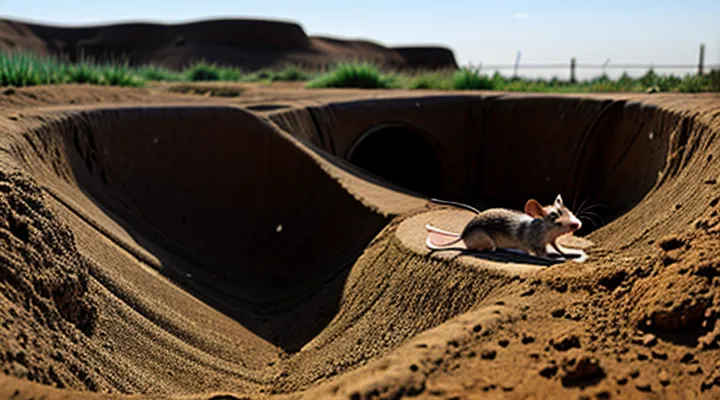
The Subterranean World of Mice
Defining Burrows: Form and Function
Types of Burrows
Mice construct a variety of underground shelters adapted to ecological pressures and reproductive strategies. Each burrow type reflects a balance between protection, thermoregulation, and foraging efficiency.
- «Simple tunnel» – straight passage approximately 5–10 cm in diameter, connects surface entry to a single nesting chamber.
- «Branching network» – multiple intersecting tunnels forming a maze; includes several side chambers for food storage and waste disposal.
- «Communal burrow» – shared by several individuals or family groups; features interconnected nesting chambers and extensive escape routes.
- «Seasonal burrow» – shallow, temporary excavations used during mild weather; abandoned before winter.
- «Deep refuge» – vertically oriented shaft extending below frost line; provides stable temperature and humidity throughout the year.
- «Escape tunnel» – narrow, concealed exit leading away from the main system; enables rapid evasion of predators.
The structural differences among these burrow types influence colony density, predator avoidance, and resource allocation. Simple tunnels favor solitary foragers, while branching networks support larger groups and enable efficient food caching. Deep refuges ensure survival in harsh climates, whereas seasonal burrows reduce energetic costs during favorable periods. Collectively, the diversity of subterranean architectures underpins the adaptive success of murine populations in varied habitats.
Construction Materials and Techniques
Mice construct burrows using locally available substrates that provide both stability and insulation. The primary constituents include fine sand, loam, and organic detritus such as leaf litter. These materials are selected for their cohesion when compacted and their capacity to retain moisture, which reduces collapse risk. Additional reinforcement derives from root fragments and fungal mycelia that interlace with the packed earth, creating a natural lattice.
The excavation process follows a sequential pattern. Initial tunnels are widened by rhythmic forelimb strokes, displacing soil toward the surface. Displaced material is deposited in a series of spoil heaps, forming a tamped ridge that supports the entrance. Throughout digging, mice press the tunnel walls with their snouts, compacting the substrate and expelling air pockets. Salivary secretions, rich in mucus, coat the interior surfaces, enhancing adhesion between particles.
Key techniques employed:
- Progressive widening of passages to accommodate body size while maintaining a narrow profile for predator avoidance.
- Strategic placement of vertical shafts to facilitate ventilation and waste removal.
- Integration of debris layers—such as twigs and dried grass—at chamber floors to improve thermal regulation.
- Utilization of existing plant roots as anchor points, preventing lateral displacement of tunnel walls.
These material choices and construction methods enable the creation of durable, climate‑controlled networks that support the physiological needs of the rodents and protect against environmental fluctuations.
Environmental Factors Influencing Burrow Design
Mice construct burrows that reflect the physical and biological conditions of their environment. Soil texture determines tunnel stability; coarse, well‑drained substrates support deeper chambers, whereas fine, compacted soils limit excavation depth. Moisture gradients influence ventilation design; higher humidity zones prompt the development of vertical shafts that facilitate airflow and reduce fungal growth.
Temperature fluctuations shape burrow geometry. In regions with pronounced diurnal temperature shifts, mice extend tunnels toward cooler strata to maintain a stable microclimate. Conversely, in consistently warm habitats, shallow networks suffice for thermal regulation.
Predation pressure drives entrance placement and concealment. Burrows located near dense vegetation or under debris reduce detection by aerial and terrestrial predators. The presence of competing rodent species often leads to spatial segregation, with mice selecting less contested soil layers.
Food resource distribution affects tunnel orientation. Proximity to seed stores or root systems results in lateral extensions that minimize foraging distance. Seasonal changes in food availability trigger temporary expansion of side passages to exploit transient resources.
The following list summarizes primary environmental determinants of burrow architecture:
- Soil composition and compaction
- Moisture level and drainage characteristics
- Ambient temperature patterns
- Predator density and habitat cover
- Availability and spatial arrangement of food sources
Understanding these factors enables accurate prediction of burrow configurations across diverse habitats.
The Ecology of Underground Life
Adaptations for Subterranean Existence
Physiological Adaptations
Mice that inhabit subterranean tunnels display several physiological adaptations that enable survival in environments characterized by limited oxygen, high carbon‑dioxide concentrations, and constant darkness.
- Enhanced hemoglobin affinity for oxygen permits efficient uptake despite low ambient levels.
- Enlarged diaphragm muscles increase ventilation capacity, supporting higher respiratory rates.
- Elevated erythrocyte count improves oxygen transport throughout the body.
- Specialized nasal epithelium reduces water loss, conserving moisture in the dry burrow microclimate.
- Reduced visual cortex volume coincides with heightened tactile and olfactory receptor density, facilitating navigation and foraging without reliance on sight.
- Metabolic rate modulation allows temporary hypometabolism during periods of extreme hypoxia, conserving energy reserves.
Thermoregulatory mechanisms also adjust to the stable underground temperature. Peripheral vasoconstriction minimizes heat loss, while brown adipose tissue activity generates heat during brief surface excursions. These integrated physiological traits collectively sustain mouse populations within the confined, low‑oxygen habitats of their underground dwellings.
Behavioral Adaptations
Mice inhabiting subterranean burrow systems exhibit a suite of behavioral adaptations that optimize survival in confined, low‑light environments. These adaptations reduce energy expenditure, enhance resource acquisition, and mitigate predation risk.
- Cooperative nest building maintains structural integrity and temperature stability.
- Spatial memory enables efficient navigation through complex tunnel networks, allowing rapid relocation between foraging zones and escape routes.
- Seasonal food caching stores surplus seeds and insects, ensuring sustenance during periods of scarcity.
- Scent marking establishes individual territories within communal chambers, regulating social interactions and reproductive access.
- Vigilant alarm calling triggers coordinated retreat when surface predators breach burrow entrances.
Cooperative nest building involves continuous remodeling of chambers, reinforcing walls and sealing openings that could admit drafts or predators. Spatial memory relies on tactile cues from tunnel geometry and pheromone trails, facilitating swift movement without visual reference. Food caching employs selective hoarding of high‑energy items, with periodic retrieval based on depletion cues. Scent marking utilizes glandular secretions deposited on walls, creating a chemical map that conveys identity and reproductive status. Alarm calling consists of high‑frequency vocalizations transmitted through soil, prompting immediate cessation of surface activity and rapid descent into deeper tunnels.
Social Structures Within Burrows
Solitary Dwellers
Solitary mice occupy individual chambers within complex tunnel networks, avoiding cohabitation with conspecifics. Their exclusive use of a single burrow segment minimizes competition for food and nesting material.
Territoriality manifests through reinforced entrance structures, scent marking, and aggressive responses to intruders. Burrow architecture reflects this behavior:
- reinforced vestibules at tunnel mouths;
- deep nesting chambers insulated with shredded plant matter;
- escape tunnels leading to secondary exits.
Physiological traits support isolation. Reduced stress hormone fluctuations accompany limited social interaction, while enhanced olfactory sensitivity facilitates detection of neighboring burrows. Metabolic rates adjust to the stable microclimate of a private chamber, reducing energy expenditure.
Reproductive output aligns with solitary living. Females produce smaller litters, each offspring receiving prolonged maternal care within a single nest. Dispersal of juveniles occurs after weaning, prompting the establishment of new independent burrows rather than communal re‑entry.
«Solitary mice maintain exclusive burrow sections», illustrating the direct link between individual space use and survival in subterranean environments.
Colonial Systems
Colonial systems in subterranean mouse communities represent organized groups that share burrow space and resources. Members cooperate in nest construction, food acquisition, and maintenance tasks, creating a network of interconnected chambers that support the collective.
Key characteristics of these systems include:
- Cooperative nest building, where multiple individuals contribute to the structural integrity of the burrow.
- Shared foraging activities, with coordinated excursions that reduce predation risk.
- Division of labor, assigning specific roles such as tunnel excavation, brood care, and waste removal.
- Chemical and acoustic signaling, enabling rapid transmission of information about danger or food sources.
- Collective disease mitigation, achieved through grooming and spatial segregation of sick individuals.
Burrow architecture reflects communal living. Central nesting chambers are enlarged to accommodate several litters, while peripheral tunnels serve as foraging pathways and escape routes. Structural complexity increases with group size, providing redundancy that preserves habitat function after localized damage.
Evolutionary analysis links colonial organization to enhanced reproductive success and survival rates. By distributing labor and resources, mouse groups achieve higher offspring survival compared to solitary individuals. The emergence of «colonial» behavior aligns with selective pressures in dense, resource‑limited underground environments, promoting traits that favor cooperation and social stability.
Predator-Prey Dynamics Underground
Burrow as Shelter
The burrow functions as a permanent refuge for mice, providing a protected environment beneath the soil surface. Its architecture consists of a main entrance tunnel that leads to a network of subsidiary passages and nesting chambers. Construction materials include compacted earth, plant debris and secreted saliva, which together reinforce wall stability.
Burrows maintain a narrow temperature range, typically within a few degrees of the ambient ground temperature, thereby reducing exposure to extreme surface fluctuations. Humidity levels remain relatively constant, preventing desiccation of fur and respiratory passages. The subterranean structure also creates a physical barrier against aerial and terrestrial predators, limiting direct contact and visual detection.
Key shelter attributes include:
- Thermal insulation that buffers against heat and cold
- Moisture regulation that sustains skin and respiratory health
- Spatial segregation that allows separate zones for nesting, food storage and waste disposal
- Structural reinforcement that resists collapse under soil pressure
- Concealed entry points that minimize predator access
Overall, the burrow serves as an engineered habitat that meets the physiological and safety requirements of mice, enabling sustained underground living.
Predators of Burrowing Mice
Burrowing rodents occupy extensive underground networks, exposing them to a range of terrestrial and aerial predators adapted to locate prey beneath the surface.
- Owls, especially barn and great horned species, detect mouse activity through sound and subtle ground vibrations, then capture individuals emerging at tunnel entrances.
- Foxes exploit scent trails, often digging shallow burrows to reach concealed mice.
- Snakes such as the common garter and rattlesnake species enter tunnels by following chemical cues, seizing mice within confined chambers.
- Mustelids, including weasels and martens, rely on agility to navigate narrow passages, preying on mice during nocturnal foraging.
- Hawks and kestrels patrol open fields, attacking mice that surface to forage for seeds and insects.
Predators employ distinct hunting techniques. Owls combine acute auditory perception with silent flight, striking when mice breach the tunnel mouth. Foxes use powerful olfactory detection, coupled with digging claws to breach burrow walls. Snakes employ heat-sensitive pits and rapid constriction, enabling capture in low-light tunnel environments. Mustelids exhibit elongated bodies and flexible spine structures, allowing movement through tight burrow segments. Raptors rely on high-speed dives, targeting mice exposed at the soil surface.
Predation pressure regulates mouse population density, influencing tunnel architecture and foraging behavior. Elevated predator presence prompts deeper burrow construction and reduced surface activity, thereby reshaping the spatial organization of underground colonies. Conversely, periods of low predation correlate with expanded tunnel networks and increased reproductive output. The dynamic interaction between burrowing rodents and their predators sustains ecological balance within subterranean ecosystems.
Survival Strategies Below Ground
Food Storage and Foraging
Cache Management
Cache management mirrors the organization of subterranean rodent habitats, where temporary chambers store essential resources. In this parallel, caches act as compact repositories that reduce latency between processing units and primary memory, much as burrow chambers minimize travel distance for foraging mice.
Key placement architectures include:
- Direct‑mapped caches assign each memory block to a single line, providing deterministic access.
- Set‑associative caches group multiple lines per set, balancing speed and flexibility.
- Fully associative caches permit any block to occupy any line, maximizing utilization at the cost of complexity.
Eviction strategies determine which stored data is discarded when capacity is reached:
- Least‑Recently‑Used (LRU) removes the block with the longest period of inactivity.
- First‑In‑First‑Out (FIFO) discards the earliest inserted block regardless of access frequency.
- Random replacement selects a block arbitrarily, simplifying hardware logic.
Coherence mechanisms preserve consistency across multiple cache levels:
- Write‑through policies propagate modifications immediately to lower memory tiers, ensuring up‑to‑date data.
- Write‑back policies delay updates until eviction, reducing traffic but requiring tracking of dirty lines.
- Cache‑coherent interconnects synchronize shared data among parallel processors, preventing divergent views.
Effective cache management optimizes the flow of information within layered storage systems, analogous to how burrow architecture streamlines resource distribution for underground dwellers. «Efficient eviction and coherence maintain data integrity while minimizing access delays».
Subterranean Food Sources
Mice residing in underground tunnels exploit a variety of food resources that are available beneath the soil surface. Primary sources include:
- Seeds and grains that have fallen into the soil profile or been deposited by wind and water.
- Plant roots, particularly tender taproots and fibrous roots of grasses and herbaceous species.
- Fungal fruiting bodies and mycelial networks, which provide protein-rich nourishment.
- Invertebrates such as beetle larvae, earthworms, and nematodes encountered during burrow excavation.
Seasonal fluctuations affect resource abundance. During spring and early summer, germinating seeds and young roots dominate the diet, while autumn sees an increase in fungal availability. In winter, mice rely more heavily on stored items, including cached seeds and food remnants gathered earlier in the year.
Caching behavior involves transporting edible material to deeper chambers where temperature and humidity remain stable. This strategy minimizes exposure to surface predators and preserves nutritional value. Additionally, the excavation process itself exposes hidden food items, allowing mice to capitalize on incidental finds without leaving the burrow system.
Overall, subterranean foraging integrates direct consumption of naturally occurring resources with strategic storage, ensuring a reliable energy supply throughout the annual cycle.
Reproduction and Rearing Young
Nesting Chambers
Nesting chambers constitute the reproductive core of the underground system built by small rodents. Positioned deep within the tunnel network, these chambers are typically located near the lowest stable point, where soil moisture and temperature remain relatively constant. Construction relies on compacted earth, shredded plant material, and occasional animal fur, producing a dense, insulated substrate that safeguards developing offspring from thermal fluctuations and external predators.
Functional attributes of nesting chambers include:
- Thermal regulation: Soil at greater depth maintains temperatures within a narrow range, reducing the need for active warming.
- Moisture control: Compact walls limit evaporation, preserving a humid microenvironment essential for embryonic development.
- Structural stability: Reinforced walls resist collapse under surface loads, ensuring long‑term integrity of the reproductive space.
- Spatial segregation: Separate chambers isolate litters, minimizing competition and disease transmission among groups.
Reproductive cycles are synchronized with chamber readiness. Females enter a prepared nest only after completing the construction phase, which may last several days depending on soil consistency. The chamber’s dimensions are adjusted to accommodate litter size, with larger litters prompting expansion of the internal volume while preserving wall thickness for protection.
The design of nesting chambers reflects adaptive responses to ecological pressures. In regions with high predator density, deeper placement and thicker walls are observed, whereas in temperate zones, shallower chambers suffice due to milder surface conditions. These variations illustrate the role of underground architecture in enhancing survival and reproductive efficiency.
Parental Care
Parental care among burrow-dwelling mice is tightly linked to the architecture of their nests. Females construct deep chambers lined with soft bedding, providing thermal stability and protection from predators. After birth, the mother remains within the nest, delivering milk and maintaining a constant temperature, which accelerates pup growth.
Key aspects of maternal investment include:
- Frequent nursing sessions that supply essential nutrients and antibodies.
- Continuous grooming to stimulate circulation and remove debris.
- Vigilant monitoring of tunnel entrances to detect intruders.
Paternal involvement is limited; males typically abandon the nest shortly after mating, leaving the female to assume sole responsibility for offspring survival. The spatial organization of the burrow, with separate nesting and foraging zones, reduces disturbance to the young and supports efficient resource allocation.
The duration of care extends until pups achieve independence, marked by the development of whisker-based navigation and the ability to forage independently. At this stage, juveniles disperse to peripheral tunnels, contributing to colony expansion and genetic exchange.
Seasonal Variations and Burrow Use
Winter Survival
Winter imposes severe temperature drops, limited food availability, and increased moisture infiltration for small burrowing rodents. Survival depends on the ability of the underground environment to retain heat, protect against flooding, and provide accessible energy reserves.
Burrow architecture contributes directly to thermal regulation. Deep chambers situated below the frost line maintain relatively stable temperatures, often several degrees above the surface. Entrance tunnels are angled downward, reducing wind exposure and limiting cold air influx. Soil compaction around nesting chambers enhances insulation, while strategic placement of ventilation shafts prevents condensation without sacrificing warmth.
Behavioral adjustments complement structural defenses. Mice aggregate in communal nests to share body heat, decreasing individual metabolic demands. Activity periods contract to conserve energy, focusing on foraging during brief daylight windows when ground temperature rises marginally. Food caches, primarily seeds and dried vegetation, are stored in sealed side chambers to remain accessible throughout the cold season.
Key winter‑survival mechanisms:
- Deep, insulated nesting chambers below frost depth
- Angled entrance tunnels that block wind and cold drafts
- Compacted soil walls that increase thermal resistance
- Communal nesting to reduce per‑individual heat loss
- Seasonal reduction of metabolic rate and activity
- Secure food stores in moisture‑proof side chambers
These adaptations enable mice to maintain physiological stability, avoid hypothermia, and emerge in spring with sufficient energy reserves for reproduction and territory expansion.
Summer Refuge
Summer refuge for small rodents emerges as a specialized zone within their underground networks, providing thermal stability and protection during the hottest months. The burrow architecture expands into deeper chambers where soil moisture and insulation maintain temperatures markedly lower than surface exposure.
Ventilation shafts intersect with horizontal tunnels, creating airflow that dissipates heat. Soil composition, compacted by root systems, retains moisture, further moderating temperature fluctuations. Seasonal modifications include sealing peripheral entrances with soil plugs, reducing direct solar heating while preserving access to deeper exits.
Key components of the summer refuge:
- Deep chambers positioned 30‑50 cm below the surface, where temperature averages 2‑4 °C lower than ambient air.
- Vertical shafts functioning as passive convection channels, facilitating continuous air exchange.
- Moisture‑rich lining of tunnel walls, composed of fungal hyphae and decaying organic matter, enhancing evaporative cooling.
- Food caches stored in sealed side rooms, protecting provisions from desiccation and opportunistic predators.
These adaptations enable sustained activity, reproduction, and growth throughout the warm season, ensuring population resilience and contributing to the stability of the broader ecosystem.
Conservation and Human Impact
Habitat Loss and Fragmentation
Impact on Burrowing Species
The underground environment created by burrowing rodents shapes the physical and biological characteristics of soil ecosystems. Structural modifications such as tunnel networks increase aeration, promote water infiltration, and generate microhabitats that support diverse invertebrate communities. These changes directly influence the distribution and abundance of co‑habiting species, including insects, arthropods, and other small mammals.
Key effects on associated burrowing organisms include:
- Enhanced soil porosity, which facilitates movement and foraging for detritivores.
- Accumulation of organic matter at tunnel walls, providing a nutrient source for fungi and bacteria.
- Creation of stable temperature gradients, offering refuge from surface temperature extremes.
- Redistribution of predators and parasites, altering survival rates of vulnerable species.
The presence of mouse burrows also impacts ecosystem processes. Bioturbation accelerates decomposition, leading to faster nutrient cycling. Elevated microbial activity near tunnel entrances contributes to increased carbon mineralization. Consequently, the overall productivity of the subterranean habitat improves, supporting higher trophic levels.
Long‑term observations reveal that areas with dense burrow networks exhibit greater species richness compared with undisturbed soils. The structural complexity introduced by these mammals serves as a catalyst for ecological interactions, reinforcing the resilience of underground communities.
Mitigation Strategies
Effective mitigation of risks affecting subterranean mouse populations requires targeted actions that address predation, disease, habitat disturbance, and anthropogenic impact. Each threat demands a distinct response to preserve the integrity of the burrow system and the health of its inhabitants.
«Mitigation Strategies» include:
- Installation of protective barriers at burrow entrances to reduce predator access while maintaining ventilation.
- Regular health surveillance through non‑invasive sampling to detect and control pathogen outbreaks early.
- Reinforcement of tunnel walls with biodegradable supports to prevent collapse caused by soil erosion or heavy rainfall.
- Management of surrounding vegetation to limit invasive plant species that alter soil composition and impede burrow stability.
- Controlled human activity zones that restrict excavation and construction near known colonies, thereby minimizing disturbance.
Implementation of these measures, combined with continuous monitoring, sustains functional underground ecosystems and enhances the resilience of mouse colonies against environmental and anthropogenic pressures.
Research Methods for Studying Burrows
Tracking Technologies
Tracking technologies enable precise monitoring of small rodents within complex tunnel networks. Miniature passive integrated transponder (PIT) tags, implanted subcutaneously, generate unique identifiers detectable by antenna arrays positioned at burrow entrances. Data loggers record entry‑exit events, providing temporal patterns of activity without visual contact.
Radio‑frequency identification (RFID) systems extend PIT functionality by integrating lightweight readers into soil‑compatible housings. When a mouse passes within a few centimeters, the system captures signal strength, allowing estimation of position along a tunnel segment. These measurements support reconstruction of movement pathways and identification of preferred foraging zones.
Acoustic telemetry utilizes ultrasonic emitters attached to the animal’s dorsal surface. Receivers placed at strategic nodes capture emitted frequencies, translating time‑of‑flight differences into spatial coordinates. This method penetrates dense substrate and operates continuously, delivering high‑resolution tracks over extended periods.
Harmonic radar, adapted for sub‑gram payloads, reflects a low‑frequency signal generated by a transponder on the mouse. Ground‑based antennas sweep the burrow area, producing real‑time location updates even when the animal is concealed by soil. The technology balances range and resolution, suitable for mapping extensive tunnel systems.
Infrared video probes, inserted into pre‑drilled observation chambers, capture locomotion without disturbing natural behavior. Coupled with motion‑analysis software, the footage yields gait parameters and social interactions within confined sections of the network.
Effective deployment requires addressing power constraints, signal attenuation by moisture, and the physical limits imposed by the animal’s size. Battery‑free designs, such as inductively powered RFID tags, mitigate weight concerns while ensuring long‑term operation. Soil composition influences electromagnetic propagation; calibrations based on local dielectric properties improve accuracy.
Integration of multi‑modal data streams facilitates comprehensive models of subterranean activity. Temporal event logs from PIT systems combine with spatial coordinates from acoustic telemetry and harmonic radar, producing layered representations of tunnel usage. These models inform ecological assessments, disease‑vector studies, and conservation strategies targeting the underground niche of small rodents.
Excavation Techniques
Investigating subterranean mouse habitats requires precise excavation methods that reveal tunnel geometry while preserving ecological context.
Ground‑penetrating radar (GPR) provides rapid, non‑invasive mapping of burrow networks. High‑frequency antennas detect dielectric contrasts between soil and air‑filled passages, generating three‑dimensional models suitable for quantitative analysis. Electrical resistivity tomography (ERT) complements GPR by measuring subsurface conductivity variations, enhancing detection of shallow, moisture‑rich chambers.
Direct excavation techniques supply physical samples for structural verification. Plaster casting involves injecting low‑viscosity gypsum into active tunnels, allowing the material to solidify before careful extraction. Soil block extraction removes intact sections of the burrow wall, preserving microhabitat features for microscopy. Both approaches demand controlled disturbance to prevent collapse of adjacent passages.
Key steps for plaster casting:
- Prepare a gypsum mixture with a water‑to‑powder ratio of 0.5 : 1 to ensure fluidity.
- Introduce the mixture at the entrance of the target tunnel using a syringe or small pump.
- Allow curing for 30–45 minutes, monitoring temperature to avoid premature hardening.
- Carefully backfill the tunnel with supporting soil and mark the cast’s orientation.
- Excavate the surrounding soil block, exposing the cast for documentation and measurement.
Best practice integrates non‑invasive imaging with targeted physical sampling. Initial GPR or ERT surveys identify candidate zones, reducing unnecessary excavation. Subsequent plaster casting or soil block removal validates model predictions, delivering high‑resolution data on tunnel dimensions, branching patterns, and substrate composition. This combined methodology maximizes data quality while minimizing habitat disruption.