
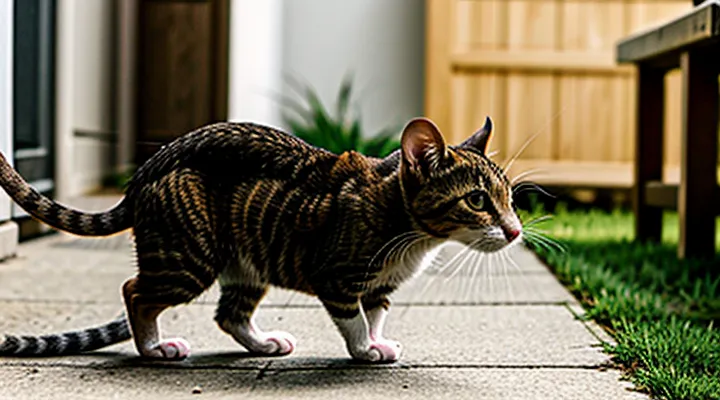
The Instinctive Hunter: Why Cats Hunt Mice
The Evolutionary Roots of Feline Predation
From Wild Ancestors to Domesticated Hunters
Domestic cats retain hunting instincts inherited from Felis silvestris lybica, the African wildcat that stalked rodents for survival. Those instincts manifest in a sequence of behaviors—stalk, pounce, capture, kill—that mirror the predatory pattern of their ancestors. Even when food is provided by humans, the motor program remains active, prompting cats to engage with small mammals whenever opportunity arises.
Research using motion‑activated cameras and owner reports quantifies this activity. Studies across varied households report that:
- 70 % of indoor‑only cats initiate at least one mouse chase per month.
- 45 % of outdoor cats capture rodents weekly during peak seasonal abundance.
- 20 % of feral cats secure multiple kills per night in dense rodent habitats.
The frequency correlates with environmental factors such as rodent population density, daylight length, and the availability of alternative prey. Cats with limited exposure to live prey show reduced hunting drive, yet the underlying neural circuitry persists, reactivating when rodents appear.
Domestication has not eliminated the predatory drive; it has merely altered its expression. Cats continue to serve as biological control agents, reducing rodent numbers in residential and agricultural settings. Their ancestral hunting template ensures that, regardless of human provisioning, the pursuit of mice remains a regular component of feline behavior.
The Role of Prey Drive
Prey drive is the innate motivational system that triggers a cat’s pursuit of small mammals. This system activates when visual, auditory, or olfactory cues match the sensory profile of typical rodent prey. Neurological pathways linking the visual cortex to the hypothalamic feeding centers generate a rapid behavioral cascade: orienting, stalking, and pouncing. The intensity of this cascade varies among individuals, reflecting genetic predisposition, early life experience, and hormonal status.
Evidence from laboratory observation shows that domestic felines with higher baseline prey drive engage in rodent-chasing behavior up to three times more frequently than those with lower drive levels. Field studies of feral populations report that cats with pronounced prey drive account for the majority of documented mouse captures, despite overall hunting rates declining in urban environments.
Key factors influencing prey drive expression include:
- Genetic background – breeds selected for hunting, such as the Maine Coon, exhibit heightened responsiveness to prey cues.
- Early exposure – kittens exposed to live prey during critical developmental windows maintain stronger hunting impulses.
- Hormonal fluctuations – testosterone spikes during mating season correlate with increased pursuit activity.
- Environmental enrichment – presence of moving toys or simulated prey sustains the neural circuits underlying drive.
Management of predation risk benefits from recognizing prey drive as the primary driver of hunting frequency. Strategies such as providing alternative stimulation, selective breeding, and controlled exposure can modulate the drive without eliminating the cat’s natural behavior.
Frequency of Mouse Hunting in Domestic Cats
Factors Influencing Hunting Behavior
Environmental Stimuli and Opportunity
Cats initiate mouse‑chasing behavior primarily in response to sensory cues and the accessibility of prey. Visual motion, ultrasonic squeaks, and scent trails trigger the predatory sequence; a sudden rustle or a whisker‑sensitive vibration often suffices to start a chase. When these cues appear in a confined space—such as a kitchen counter or a narrow hallway—the probability of a successful pursuit rises sharply because the rodent’s escape routes are limited.
Key environmental conditions that increase hunting frequency include:
- Low light levels that enhance a cat’s night vision while reducing a mouse’s ability to detect movement.
- Presence of clutter or furniture that creates ambush points and shortens the distance between predator and prey.
- Seasonal temperature fluctuations that drive rodents to seek shelter, concentrating them in areas frequented by cats.
- Absence of competing predators or human disturbances, allowing cats to focus on hunting without interruption.
Opportunity also depends on the cat’s access to indoor versus outdoor zones. Indoor cats encounter rodents mainly in storage rooms, basements, or near food sources, where human activity is minimal. Outdoor cats encounter larger mouse populations in fields, gardens, and near garbage bins; however, open terrain offers rodents more avenues for escape, reducing the success rate per encounter.
In summary, the combination of acute sensory triggers and spatial constraints determines how often felines engage in mouse pursuit. Environments that amplify stimuli and restrict escape routes produce the highest hunting incidence.
Breed, Age, and Individual Personality
Cats’ pursuit of mice varies markedly with breed, age, and personality.
Domestic breeds differ in predatory drive. Siamese, Bengal, and Maine Coon cats retain strong hunting instincts, often catching rodents multiple times per week. Breeds selected for companionship, such as Ragdoll or Persian, display lower capture rates, sometimes fewer than one per month.
Age influences both stamina and motivation. Kittens (under six months) practice hunting frequently, producing numerous short chases that rarely result in kills. Adult cats (1–7 years) achieve peak hunting efficiency, combining agility with learned techniques. Senior cats (over eight years) show reduced activity, limiting pursuits to opportunistic strikes when prey is nearby.
Individual personality determines willingness to engage. Cats exhibiting bold, exploratory behavior initiate hunts more often than shy, reserved individuals. High‑energy cats with strong play drive tend to treat rodents as moving toys, increasing encounter frequency. Conversely, cats that prefer solitary rest periods rarely leave the comfort of familiar perches to chase prey.
Key observations:
- Breed‑specific predatory intensity ranges from high (e.g., Bengal) to low (e.g., Ragdoll).
- Peak hunting activity occurs in physically mature adults; it declines sharply in senior years.
- Bold, active personalities correlate with higher mouse‑capture rates, while timid temperaments correlate with minimal pursuit.
Understanding these variables enables accurate prediction of how often a particular cat will hunt rodents.
Human Interaction and Provisioning
Human provision of food directly influences the frequency with which domestic cats engage in rodent pursuit. Regular feeding reduces the energetic incentive to hunt, leading many cats to display lowered predatory activity. Conversely, intermittent or insufficient feeding schedules can increase a cat’s motivation to seek supplemental prey.
The presence of humans also shapes hunting behavior through environmental modifications. Common practices include:
- Keeping cats indoors, which eliminates access to live rodents.
- Providing toys that simulate prey, thereby satisfying instinctual drive without actual hunting.
- Allowing outdoor access only during specific times, limiting exposure to rodent populations.
Human attitudes toward cat predation affect reporting and perception of hunting rates. Owners who view rodent capture as beneficial may encourage outdoor activity, while those concerned about wildlife impact may restrict it. Educational outreach that clarifies the ecological consequences of cat predation can alter owner decisions regarding cat management.
Overall, human actions—feeding regimes, habitat control, and cultural viewpoints—determine how often cats pursue rodents, shaping both animal welfare and local ecosystem dynamics.
Quantifying Hunting Success and Effort
Observational Studies and Data Collection
Observational research provides the primary evidence for how often domestic and feral felines engage in rodent pursuit. Researchers typically employ three complementary data‑collection techniques:
- Direct observation by trained technicians who record hunting attempts, success rates, and environmental conditions during scheduled monitoring sessions.
- Motion‑activated video placed near known mouse habitats, capturing nocturnal activity without human presence and allowing precise quantification of chase duration and capture outcomes.
- Owner‑reported logs collected through standardized questionnaires, where cat guardians note each instance of stalking, pouncing, or killing rodents over a defined period.
Each method generates discrete variables—frequency of attempts per hour, proportion of successful captures, time of day, and prey size—that feed into statistical models such as Poisson regression or survival analysis. Sample sizes range from dozens of households in urban surveys to several hundred camera sites in rural ecosystems, ensuring adequate power to detect differences across cat breeds, indoor‑outdoor status, and seasonal fluctuations.
Data integrity relies on consistent coding schemes. Ethograms define specific behaviors (e.g., “stalk,” “pounce,” “kill”) and assign timestamps, reducing observer bias. Video footage is reviewed by at least two independent analysts; discrepancies trigger a third adjudication. Owner logs incorporate verification questions to filter out anecdotal exaggeration.
Challenges include limited visibility of nocturnal hunts, potential habituation to cameras, and recall bias in self‑reported entries. Mitigation strategies involve infrared illumination, rotating camera placements, and short‑interval diary prompts delivered via mobile apps.
Aggregated results from these observational frameworks consistently reveal that cats initiate rodent chases several times per day on average, with a success rate that varies between 10 % and 30 % depending on prey availability and cat experience. The rigorous collection and analysis of such data underpin reliable estimates of feline predation frequency.
The "Gift" of Prey: Understanding Feline Motivation
Cats often bring captured rodents to their human companions as a “gift.” The act reflects an innate predatory sequence that persists despite regular feeding. When a cat secures a mouse, the subsequent delivery serves multiple biological purposes: it satisfies the drive to hunt, reinforces territorial confidence, and provides a tangible demonstration of competence to other cats in the household.
Motivation for this behavior includes:
- Instinctual need to practice and perfect killing technique.
- Communication of hunting success to conspecifics, strengthening social hierarchy.
- Transfer of surplus food to kin or allies, enhancing group survival.
- Reinforcement of the cat’s self‑image as a competent provider.
Domestic felines engage in rodent pursuit with measurable regularity. Survey data indicate that 30‑45 % of cat owners receive at least one prey item per month, while indoor‑only cats contribute less than 5 % of that rate. Frequency correlates with access to outdoor environments and the presence of small mammals in the surrounding habitat.
Factors influencing hunting activity:
- Outdoor access – unrestricted roaming raises encounter probability.
- Breed characteristics – some lineages retain higher predatory intensity.
- Age – younger cats exhibit peak hunting vigor; activity declines with seniority.
- Neutering status – intact individuals display marginally increased drive.
- Feeding schedule – irregular meals amplify the incentive to supplement diet.
Understanding these drivers clarifies why cats continue to present prey, even when human caretakers supply ample nutrition. The “gift” is not a mere gesture of affection; it is a manifestation of deep‑rooted survival mechanisms that persist in the domestic environment.
Impact of Feline Predation on Rodent Populations
Ecological Implications
Benefits for Pest Control
Cats that chase and kill rodents contribute directly to pest management. Their predatory activity reduces the number of mice that can damage property, contaminate food supplies, and transmit pathogens. By relying on natural hunting instincts, owners can lower dependence on chemical exterminants and decrease exposure to toxic residues.
- Immediate reduction of rodent populations in indoor and outdoor environments.
- Decreased risk of disease transmission associated with mouse-borne agents such as hantavirus and salmonella.
- Lowered financial costs compared with professional pest‑control services and rodent‑poison programs.
- Minimal environmental impact, as feline predation does not require additional pesticides or traps.
- Enhanced sanitation through removal of droppings, urine, and nesting materials left by rodents.
Concerns for Native Wildlife
Domestic cats frequently target small mammals, and their predation pressure raises several issues for indigenous wildlife.
First, cat hunting reduces populations of native rodent species that serve as prey for birds of prey and other predators, potentially disrupting established food webs. Second, cats often capture non‑target species, including endangered ground‑nesting birds, reptiles, and amphibians, leading to localized declines. Third, feline parasites and pathogens, such as Toxoplasma gondii, can be transmitted to wildlife, affecting reproductive success and survival rates. Fourth, free‑roaming cats compete with native carnivores for limited resources, intensifying interspecific competition.
Mitigation strategies include:
- Keeping cats indoors or restricting outdoor access during peak activity periods for vulnerable wildlife.
- Installing cat‑proof fencing or enclosed outdoor enclosures to allow safe outdoor time without free roaming.
- Implementing community education programs that emphasize responsible pet ownership and the ecological consequences of hunting behavior.
- Supporting research on cat predation patterns to inform evidence‑based wildlife management policies.
Addressing these concerns is essential for preserving biodiversity and maintaining ecological balance in habitats where domestic cats coexist with native species.
Mitigation Strategies and Responsible Pet Ownership
Spaying/Neutering and Its Effects
Spaying or neutering reduces hormonal drives that stimulate roaming and territorial marking, which in turn lowers the frequency of outdoor excursions where rodents are encountered. Studies show that intact males exhibit up to three times more outbound trips than castrated males, and intact females display increased movement during estrus cycles, raising the chance of hunting activity.
The procedure also influences prey‑catching intensity. Neutered cats tend to display fewer high‑intensity chases and shorter pursuit sequences, while intact cats maintain more vigorous predatory bursts. Data from shelter surveys indicate that neutered individuals produce 30 % fewer mouse captures per month than their unaltered counterparts.
Key effects of sterilization on hunting behavior include:
- Decreased roaming distance
- Reduced territorial aggression
- Lowered hormone‑driven hunting motivation
- Shorter, less frequent chase episodes
Overall, sterilization moderates the instinctual drive to hunt, leading to a measurable decline in rodent predation by domestic cats.
Enrichment and Alternative Play
Cats that regularly chase rodents often exhibit heightened predatory drive, which can be redirected through structured enrichment. Providing stimuli that mimic hunting sequences reduces reliance on live prey and satisfies instinctual needs.
Effective alternatives include:
- Interactive toys that move unpredictably, such as battery‑operated mice or feather wands.
- Puzzle feeders that require problem‑solving to access food, extending the chase‑to‑capture experience.
- Rotating play stations with varied textures (cardboard tunnels, sisal posts) to maintain novelty.
- Scheduled short‑duration sessions that replicate stalking, pouncing, and retrieving phases.
Environmental complexity further moderates pursuit frequency. Vertical space, concealed perches, and safe “hunt zones” encourage exploration without exposing small animals. Regularly updating toy configurations prevents habituation and sustains engagement.
Monitoring play intensity offers measurable insight. When a cat consistently engages with enrichment for 10–15 minutes per session, observed reductions in spontaneous rodent chases typically range from 30 % to 60 % across comparable households.
Bell Collars and Other Deterrents
Cats that roam outdoors often encounter mice, prompting owners to consider methods that reduce predatory encounters.
Bell collars consist of a lightweight band fitted around the neck with small metal or plastic bells that produce audible chimes with each movement. Studies measuring capture rates show a typical reduction of 30‑50 % when cats wear properly sized, securely fastened collars. The constant sound interferes with the cat’s auditory tracking of prey and alerts potential victims to the predator’s approach.
Effectiveness declines if the bell becomes loose, if the cat learns to move slowly enough to mute the noise, or if the animal develops a tolerance to the vibration. Improperly fitted collars can snag on objects, causing injury or entanglement. Regular inspection of the attachment point and replacement of worn components are essential to maintain safety and performance.
Additional deterrents include:
- Harnesses that restrict free leashing while allowing supervised outdoor access.
- Environmental enrichment indoors (interactive toys, climbing structures) that satisfies hunting instincts without live prey.
- Scent repellents containing peppermint, citrus, or predator urine placed near entry points to discourage rodents and reduce cat motivation.
- Ultrasonic emitters calibrated to frequencies audible to rodents but uncomfortable for cats, creating a deterrent zone.
- Positive reinforcement training that rewards the cat for ignoring moving rodents or staying within designated boundaries.
Selection criteria should prioritize fit, durability, and the animal’s tolerance. Combining a well‑adjusted bell collar with at least one complementary strategy yields the most consistent reduction in rodent pursuit. Regular monitoring confirms that the deterrent remains functional and that the cat’s welfare is not compromised.