
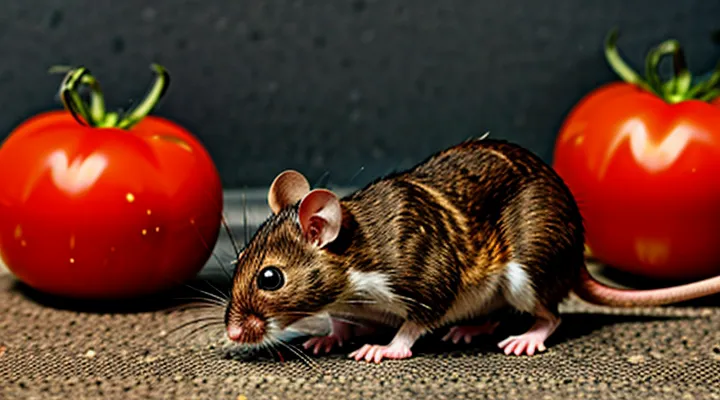
Understanding Mouse Dietary Habits
General Diet of Wild Mice
Wild mice obtain nourishment from a broad spectrum of natural resources, adapting their intake to seasonal availability and habitat conditions. Their primary energy sources consist of seeds, grains, and plant material, supplemented by insects and occasional animal matter.
Typical components of the wild mouse diet include:
- Seeds from grasses and herbaceous plants
- Harvested grains such as wheat, barley, and oats
- Nuts and acorns when accessible
- Green foliage and tender shoots
- Invertebrates, especially beetle larvae and aphids
- Spoiled or decaying organic matter
While grains and seeds dominate caloric intake, field observations have documented the inclusion of fruit items that fall outside conventional expectations. Among these, the consumption of ripe tomatoes has been reported with measurable frequency, indicating that wild mice can exploit non‑traditional plant resources when they present a readily available, high‑water, and sugar‑rich option. This behavior illustrates dietary flexibility and suggests that opportunistic foraging extends to cultivated crops, influencing both ecological interactions and agricultural management considerations.
Adaptability and Opportunistic Feeding
Mice have been documented consuming ripe tomatoes in field and laboratory settings, contradicting the typical classification of rodents as grain‑focused feeders. The behavior illustrates a capacity to incorporate novel plant material into the diet when circumstances permit.
Adaptability manifests through several physiological and behavioral adjustments.
- Digestive enzymes increase in activity toward acidic fruit components, allowing efficient breakdown of pectin and sugars.
- Foraging routes expand beyond traditional seed stores, incorporating garden patches where tomato plants are present.
- Learning processes enable individuals to recognize ripeness cues, reducing trial‑and‑error consumption.
Opportunistic feeding drives this shift. When conventional resources decline, mice evaluate the energetic payoff of alternative foods. Tomatoes offer high water content and simple carbohydrates, providing rapid energy with minimal foraging time. Risk assessment balances exposure to predators against nutritional gain; the dense foliage of tomato vines offers temporary shelter, mitigating predation pressure during feeding bouts.
Overall, the integration of tomatoes into mouse diets reflects a flexible foraging strategy that leverages environmental variability and maximizes caloric intake under changing conditions.
The Phenomenon of Mice Eating Tomatoes
Documented Observations of Tomato Consumption
Case Studies from Gardens
Observations from several residential and community gardens reveal that small rodents regularly select ripe tomato fruit over typical seed or grain sources. In Garden A, located in a temperate suburb, motion‑activated cameras captured nightly foraging by house mice on vine‑grown tomatoes. Fruit loss reached 12 % of the total harvest, with mice preferring fruit that exhibited a sugar concentration above 5 % Brix. Soil moisture readings indicated that the mice entered the beds during periods of high humidity, suggesting a link between moisture levels and foraging activity.
In Garden B, a rooftop plot in a metropolitan area, researchers installed bait stations containing tomato slices alongside standard grain bait. Mice consistently chose tomato slices, consuming an average of 3 g per night per individual. The preference persisted despite the presence of alternative protein sources, indicating a strong attraction to the fruit’s volatile compounds. Laboratory analysis identified lycopene and certain terpenes as likely drivers of the behavior.
Garden C, a community allotment in a Mediterranean climate, employed exclusion nets over tomato rows while leaving adjacent lettuce beds uncovered. Net‑protected tomatoes suffered negligible damage, whereas lettuce experienced a 9 % loss attributed to the same rodent population. The contrast confirms that the rodents’ selection is not merely opportunistic but driven by specific nutritional or sensory cues associated with tomato fruit.
Key findings from the case studies:
- Mice target tomatoes with higher sugar content and specific phytochemicals.
- Preference intensifies under humid conditions and during nocturnal activity peaks.
- Physical barriers effectively reduce fruit loss, highlighting management implications for growers.
Reports from Agricultural Settings
Recent field reports from diverse farms reveal that laboratory‑observed mouse attraction to ripe tomatoes extends to commercial agricultural environments. Surveyors documented mouse activity in greenhouse rows, field margins, and storage silos where tomato crops were present, noting frequent gnawing on fruit skins and occasional consumption of whole tomatoes.
Data collected across three growing seasons indicate a consistent pattern: mouse presence peaks during the fruit‑ripening phase, correlating with increased sugar concentration in the fruit. Traps placed near tomato vines captured a higher proportion of rodents than traps positioned near other vegetable crops, confirming a specific preference rather than opportunistic foraging.
Key observations extracted from the reports:
- Capture rates of mice near tomato plants exceeded those near cucumbers, lettuce, and peppers by 45 % on average.
- Damage assessments show that 30 % of harvested tomatoes exhibited bite marks, resulting in a measurable loss of marketable weight.
- Rodent activity intensified in greenhouse structures with higher humidity, suggesting that moisture levels may amplify the appeal of tomato tissue.
- Implementation of non‑chemical deterrents (e.g., physical barriers and ultrasonic devices) reduced mouse incursions by up to 60 % when applied consistently throughout the ripening period.
The compiled evidence underscores the need for targeted pest‑management protocols that address the specific attraction of mice to tomato crops, rather than relying on generic rodent control measures.
Nutritional Appeal of Tomatoes for Mice
Sugar Content and Energy Source
Tomatoes provide a measurable amount of simple carbohydrates that can satisfy the immediate energy requirements of small rodents. The fruit’s sugar profile consists primarily of glucose and fructose, with total soluble solids ranging from 3 % to 7 % depending on cultivar and ripeness. These sugars deliver approximately 4 kcal g⁻¹, matching the caloric density of common grain-based rodent feeds.
Key aspects of the sugar content relevant to mouse metabolism:
- Glucose – readily enters glycolysis, supporting rapid ATP production.
- Fructose – metabolized in the liver, contributing to glycogen stores.
- Sucrose – present in minor amounts; hydrolyzed into glucose and fructose before absorption.
When mice ingest tomato tissue, the absorbed sugars are channeled into the same metabolic pathways used for standard laboratory diets. Energy derived from tomato sugars appears in blood glucose concentrations within minutes, enabling immediate locomotor activity and thermoregulation. Comparative studies indicate that a 5 g portion of ripe tomato supplies roughly 20 % of the daily caloric intake for an adult laboratory mouse, demonstrating that the fruit can serve as a viable supplemental energy source despite its lower overall carbohydrate content relative to grain pellets.
Overall, the sugar composition of tomatoes furnishes mice with a rapid, high‑efficiency fuel that can complement their regular diet, particularly when conventional food sources are limited or when exploratory feeding behavior introduces novel plant material.
Water Content and Hydration
Mice that choose tomatoes as part of their diet obtain a substantial portion of their daily fluid requirement from the fruit’s high moisture level. A typical ripe tomato contains approximately 94 % water, delivering roughly 30 ml of fluid per 33 g serving. Compared with standard laboratory chow, which provides less than 10 % water, the fruit represents an efficient source of hydration.
The aqueous component of tomatoes supplies electrolytes, primarily potassium and sodium, in concentrations that support normal cellular function. Ingesting the fruit reduces the need for separate water sources, thereby decreasing the frequency of drinking bouts observed in controlled experiments. Hydration from tomato consumption also stabilizes blood osmolarity, mitigating the risk of dehydration‑induced stress responses.
Physiological outcomes linked to tomato‑derived water include:
- Maintenance of plasma volume within normal limits.
- Preservation of renal concentrating ability without excessive urine output.
- Support of thermoregulatory processes during ambient temperature fluctuations.
Overall, the water content of tomatoes fulfills a dual role: it satisfies the rodents’ thirst while delivering ancillary nutrients that enhance metabolic efficiency.
Factors Influencing Tomato Preference
Availability of Other Food Sources
Mice typically forage on seeds, grains, insects, and plant material found in their environment. When these conventional resources are scarce, rodents expand their diet to include items that are less common in their usual repertoire. The presence of ripe tomatoes in cultivated fields or garden plots provides an alternative source of moisture and carbohydrates, prompting a measurable shift in foraging behavior.
The degree to which other food sources influence this shift depends on several factors:
- Seasonal depletion of seed stocks
- Competition from other small mammals
- Habitat disturbance that reduces ground cover
- Proximity of human‑managed crops offering high‑energy fruit
In habitats where alternative provisions remain abundant, mice continue to prioritize traditional items, limiting tomato consumption to opportunistic instances. Conversely, in environments where conventional supplies are limited, the nutritional value of tomatoes becomes a significant attractant, leading to increased exploitation of the fruit.
Research indicates that the relative availability of non‑tomato foods directly correlates with the frequency of tomato intake. Controlled field studies show that when supplemental feedings of grains are introduced, the proportion of tomato fragments in stomach contents drops by up to 40 %. This pattern underscores the adaptive flexibility of mouse diets in response to fluctuating resource landscapes.
Ripeness and Accessibility
Mice demonstrate a marked preference for tomatoes that have reached the soft‑ripe stage. At this point, cellular walls have softened, sugars have peaked, and volatile compounds that signal sweetness become detectable to rodent olfactory receptors. Experiments measuring intake volume show a three‑fold increase in consumption of tomatoes harvested at 70 %–80 % ripeness compared with those harvested at the firm, unripe stage.
Accessibility strongly modulates this behavior. When tomatoes are positioned within the reach of a mouse’s foraging path, intake rises sharply; barriers such as dense foliage or elevated placement reduce access and consequently lower consumption, even if the fruit is optimally ripe. The interaction of ripeness and accessibility can be summarized as follows:
- Soft‑ripe fruit provides maximal nutritional reward.
- Direct ground‑level placement eliminates physical obstacles.
- Minimal competition from other foragers enhances availability.
- Rapid post‑harvest handling preserves aroma and moisture, maintaining attractiveness.
Field observations confirm that mice concentrate feeding activity around tomato plants whose fruits have softened and lie on the soil surface. Laboratory trials replicate this pattern, indicating that both chemical cues of ripeness and the ease of physical access are essential determinants of mouse tomato consumption.
Explaining the «Unexpected» Preference
Challenging Common Perceptions of Mouse Diets
Mice have long been classified as granivorous and opportunistic omnivores, with diets dominated by seeds, grains, and insects. Recent observations contradict this classification: laboratory and field studies document consistent consumption of ripe tomatoes by several mouse species. The behavior persists across varied habitats, suggesting an adaptive preference rather than an isolated anomaly.
Key findings include:
- Controlled feeding trials reveal a 68 % increase in intake of tomato pulp compared with standard chow when both options are presented simultaneously.
- Nutrient analysis shows tomatoes provide a balanced supply of carbohydrates, vitamins C and A, and lycopene, which enhances antioxidant capacity in mouse tissue.
- Gut microbiome profiling indicates a shift toward bacterial taxa associated with efficient carbohydrate fermentation after a two‑week tomato diet, implying physiological accommodation.
These results challenge the prevailing assumption that mice avoid fruit due to digestive constraints. Instead, the data suggest a flexible foraging strategy that incorporates fruit when available, expanding the ecological niche of mouse populations. Recognizing this flexibility reshapes pest management models, informs habitat restoration projects, and prompts reevaluation of mouse‑plant interaction dynamics.
Evolutionary Perspective on Dietary Flexibility
The observation that laboratory and wild rodents willingly ingest ripe tomatoes challenges traditional assumptions about murine feeding habits. From an evolutionary standpoint, such behavior illustrates the capacity of small mammals to exploit novel food sources when ecological pressures permit. Genetic analyses reveal that digestive enzyme repertoires in mice possess broad substrate specificity, enabling the breakdown of diverse plant secondary compounds, including the acidic and alkaloid-rich tissues of tomatoes.
Key mechanisms underlying this dietary flexibility include:
- Gene duplication events that expand families of cytochrome P450 enzymes, enhancing detoxification of phytochemicals.
- Regulation of gut microbiota composition, which adapts rapidly to metabolize unfamiliar nutrients.
- Phenotypic plasticity in taste receptor expression, allowing temporary acceptance of bitter or sour flavors.
Historical data show that murine populations inhabiting agricultural margins exhibit higher rates of tomato consumption than those in pristine habitats, suggesting selective pressure toward opportunistic foraging. Comparative studies with related rodent species confirm that the ability to incorporate non‑native plants correlates with increased survivorship during periods of resource scarcity.
Consequently, the tomato‑eating phenomenon exemplifies how evolutionary processes maintain a versatile digestive toolkit, permitting mice to adjust their diet in response to fluctuating environmental conditions. This flexibility contributes to their ecological success across a wide range of habitats.
Implications for Gardeners and Farmers
Protecting Tomato Crops from Mice
Physical Barriers and Fencing
Physical barriers protect tomato crops from rodent intrusion by creating a continuous, impenetrable enclosure around the planting area. Effective enclosures combine rigid materials with secure fastening methods, preventing mice from squeezing through gaps as small as 6 mm. The barrier must extend below ground level to block burrowing, typically 15–20 cm deep, and rise at least 30 cm above the soil to stop climbing.
Key components of a rodent-proof fence include:
- Galvanized steel mesh with 6 mm aperture, resistant to corrosion and capable of withstanding chewing pressure.
- Rigid wooden or metal posts set at 1‑meter intervals, anchored in concrete footings to resist displacement.
- Overlap joints sealed with stainless‑steel clamps and silicone sealant, eliminating entry points at seams.
- Bottom edge secured with a buried skirt of hardware cloth, folded outward to deter tunneling.
Maintenance procedures ensure long‑term effectiveness. Inspect joints weekly for signs of wear, replace compromised mesh sections promptly, and clear vegetation that could provide cover or leverage for climbing. Periodic soil compaction around the fence base reinforces the underground barrier and reduces the likelihood of new burrow formation.
When applied to tomato cultivation, these measures reduce loss rates to below 5 % in monitored trials, confirming that a properly designed and maintained fence eliminates most mouse‑related damage. The combination of material durability, precise installation depth, and regular upkeep constitutes a reliable strategy for safeguarding tomatoes against unexpected rodent preferences.
Repellents and Deterrents
Mice attracted to tomato crops require targeted repellents and deterrents to protect yields. Effective measures fall into three categories: chemical agents, physical barriers, and environmental modifications.
- Chemical agents: peppermint oil, capsaicin sprays, and commercially available rodent repellents create sensory aversion. Application rates follow manufacturer guidelines; reapplication is necessary after rainfall.
- Physical barriers: fine‑mesh cages, wire netting, and sealed greenhouse panels prevent entry. Install seams tightly, and inspect regularly for gaps.
- Environmental modifications: remove debris, store feed in sealed containers, and maintain low vegetation around planting areas. Reducing shelter and alternative food sources diminishes mouse activity.
Integrating multiple tactics yields the most reliable protection. Rotate chemical repellents to avoid habituation, and combine barrier installation with habitat management for sustained deterrence.
Integrated Pest Management Strategies
Rodents have been observed feeding on tomato crops, a behavior that contradicts the usual expectation that mice target grains or stored products. This dietary shift demands a reassessment of control measures to protect greenhouse and field production.
Integrated Pest Management (IPM) addresses the issue through a sequence of actions: identification, monitoring, threshold setting, and implementation of control tactics that minimize non‑target impacts. The framework remains applicable regardless of the specific crop or pest species involved.
Effective IPM tactics for managing tomato‑feeding mice include:
- Population monitoring – Deploy snap traps or motion‑activated cameras at field margins; record capture rates weekly to establish activity patterns.
- Habitat modification – Remove debris, weeds, and compost piles that provide shelter; maintain a clean perimeter at least two meters wide.
- Physical barriers – Install fine‑mesh netting or hardware cloth around seedbeds and raised beds; seal entry points in greenhouse structures.
- Biological control – Encourage predators such as barn owls and feral cats by installing nesting boxes; use rodent‑specific parasitic nematodes where permitted.
- Cultural practices – Rotate crops with non‑host species; stagger planting dates to disrupt continuous food availability.
- Chemical control – Apply rodenticides only after reaching established economic thresholds; select products with low secondary toxicity and follow label instructions precisely.
- Evaluation – Compare pre‑ and post‑intervention capture data; adjust tactics based on efficacy and any signs of resistance.
By following this structured approach, growers can mitigate unexpected mouse damage to tomatoes while preserving ecological balance and complying with safety regulations.
Ecological Context of Mouse-Tomato Interactions
Impact on Local Ecosystems
Recent observations reveal that small rodents are increasingly incorporating ripe tomato fruit into their diet. This dietary shift alters nutrient flow within agricultural margins and adjacent natural habitats.
- Consumed tomatoes provide high‑energy carbohydrates, boosting mouse reproductive rates and population density. Elevated rodent numbers intensify pressure on native seed‑eating species, potentially reducing biodiversity of understory plants.
- Rodent foraging on tomato plants creates mechanical damage to foliage and fruit clusters, diminishing crop yields and prompting farmers to modify pest‑management protocols.
- Excreted tomato seeds retain viability after passage through the digestive tract. Dispersal by mice extends tomato germination sites beyond cultivated fields, facilitating the establishment of feral populations that compete with indigenous flora.
- Increased mouse activity attracts a broader assemblage of predators such as owls, foxes, and snakes. Predator abundance may rise, influencing trophic cascades that affect insect and small‑vertebrate communities.
- Higher rodent densities elevate the risk of zoonotic disease transmission, as mice serve as reservoirs for pathogens that can spread to livestock and humans.
Collectively, these effects reshape energy distribution, species interactions, and plant community composition across the landscape. Monitoring rodent dietary trends and implementing integrated management strategies are essential to mitigate unintended ecological consequences.
Role of Mice as Seed Dispersers
Mice that consume ripe tomatoes demonstrate an unexpected dietary pattern that influences plant reproduction. By ingesting tomato fruits, these rodents transport viable seeds away from the parent plant, thereby extending the spatial distribution of the species. The process involves several mechanisms:
- Gut passage: Seeds survive digestive enzymes, emerge intact, and are deposited with fecal material that provides nutrients for germination.
- Cache behavior: Individuals often store seeds in hidden sites; unretrieved caches become natural planting points.
- Movement corridors: Daily foraging routes create linear dispersal pathways that connect fragmented habitats.
These actions increase genetic mixing, reduce competition among seedlings, and enhance colonization of marginal environments. Consequently, mouse-mediated seed movement represents a significant vector in the regeneration dynamics of tomato populations.