
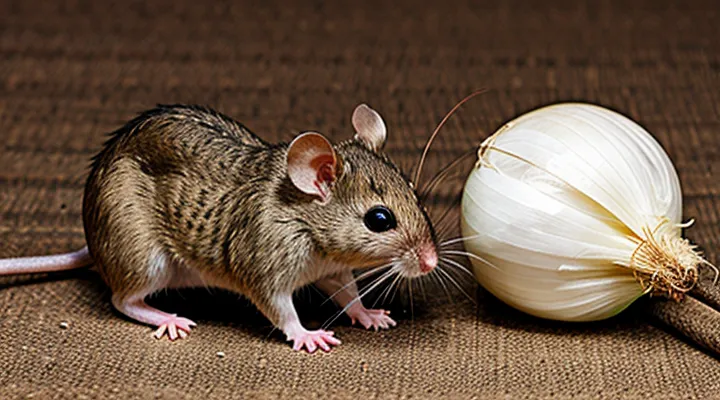
The Olfactory World of Rodents
The Acute Sense of Smell in Mice
Mice possess an olfactory epithelium that contains up to 1,200 functional odorant receptors, far exceeding the receptor count in many other mammals. Each receptor binds specific volatile compounds, transmitting signals to the olfactory bulb with millisecond latency. This rapid transduction enables mice to detect odor concentrations as low as a few parts per billion, a sensitivity essential for locating food, identifying predators, and communicating social cues.
The onion plant releases sulfur‑containing volatiles, chiefly propanethial S‑oxide, which evaporate at low temperatures and disperse widely in the environment. When these molecules contact mouse receptors, they trigger a cascade of neuronal activity that the brain interprets as a strong, aversive stimulus. Electrophysiological recordings demonstrate that onion‑derived compounds elicit firing rates in the mouse olfactory bulb that surpass those produced by most neutral odors.
Key factors linking acute olfactory perception to onion aversion:
- High receptor density allows detection of minute sulfur compound levels.
- Sulfur volatiles bind with high affinity to a subset of receptors specialized for irritant detection.
- Neural pathways associated with threat perception amplify the behavioral response, prompting avoidance.
Behavioral assays confirm that mice exposed to onion vapor reduce exploratory activity within seconds and exhibit rapid retreat movements. The combination of extreme sensitivity, receptor specificity, and neural processing of irritant signals explains why rodents consistently reject environments scented with onion.
How Rodents Perceive Scents
Rodents rely on a highly developed olfactory epithelium containing millions of odorant receptors that translate volatile molecules into neural signals. These receptors are tuned to detect a broad spectrum of chemicals, including sulfur‑containing compounds that characterize allium species.
When an onion releases allyl‑propyl‑disulfide and related volatiles, the molecules bind to specific receptor subtypes in the mouse nasal cavity. Activation of these receptors triggers a rapid aversive response mediated by the accessory olfactory bulb and the amygdala, regions that process threat‑related odors.
Key factors influencing the perception of onion scent in rodents:
- Receptor specificity – sulfur‑responsive receptors exhibit high affinity for low‑concentration volatile sulfur compounds.
- Signal amplification – binding initiates a cascade that increases intracellular calcium, enhancing neural firing rates.
- Behavioral circuitry – heightened activity in the amygdala leads to avoidance behavior, reduced feeding, and increased locomotion away from the source.
- Learning component – repeated exposure reinforces negative valence through associative memory pathways in the hippocampus.
The combination of molecular detection, neural amplification, and aversion circuitry explains why mice consistently reject environments saturated with onion aroma.
The Chemical Composition of Onions
Sulfur Compounds: The Core of Onion Aroma
Thiosulfinates and Their Role
Onion tissue stores S‑alk(en)yl‑L‑cysteine sulfoxides, primarily isoalliin. When the bulb is damaged, the enzyme alliinase converts these precursors into thiosulfinates, a class of volatile sulfur compounds. The most abundant thiosulfinate in common onions is dipropenyl thiosulfinate (commonly called allicin). These molecules possess a sharp, pungent odor and readily decompose into sulfides, thiosulfonates, and polysulfides, all of which retain strong sensory activity.
Rodent olfactory receptors detect thiosulfinates at concentrations far lower than those required for human perception. Binding of these volatiles to specific receptor proteins triggers neural pathways associated with irritation and avoidance. Simultaneously, thiosulfinates irritate the nasal epithelium, causing a transient burning sensation that reinforces the aversive response.
Key physiological actions of thiosulfinates include:
- Activation of transient receptor potential (TRP) channels, especially TRPA1, which mediates pain and pungency signals.
- Induction of oxidative stress in sensory neurons through the generation of reactive sulfur species.
- Modulation of gustatory receptors that contribute to the perception of bitterness and harshness.
Experimental studies show that mice exposed to isolated thiosulfinates exhibit reduced exploration of treated zones, increased grooming, and heightened avoidance compared to controls. The effect persists even when thiosulfinates are presented in dilute solutions, indicating high potency.
Overall, thiosulfinates serve as the primary chemical drivers behind the strong repellent effect of onion aroma on rodents, acting through olfactory detection, sensory irritation, and neurochemical disruption.
Propanethial S-oxide: The Lacrimator Effect
Propanethial S‑oxide, commonly called the onion lachrymatory factor, is produced when the enzyme alliinase cleaves the sulfoxide precursor isoalliin after onion tissue is damaged. The reaction releases a volatile, low‑molecular‑weight compound that evaporates rapidly and reaches the olfactory epithelium of nearby mammals.
The molecule’s physicochemical properties explain the strong aversion observed in mice:
- High volatility (boiling point ≈ 73 °C) enables swift diffusion through air.
- Electrophilic sulfur atom reacts with water in the nasal mucosa, forming sulfuric‑acid‑like species that irritate sensory nerve endings.
- Activation of transient receptor potential channel TRPA1 generates a burning sensation and triggers defensive avoidance behavior.
Rodent olfactory receptors exhibit greater sensitivity to sulfur‑containing volatiles than many other mammals, resulting in lower detection thresholds for propanethial S‑oxide. Behavioral assays consistently show reduced foraging and nesting activity in environments where the compound is present at concentrations as low as 0.5 ppm.
The lacrimator effect also interferes with the gustatory system. By irritating the trigeminal nerve, propanethial S‑oxide suppresses the palatable perception of food, further discouraging consumption of onion‑laden substrates.
In summary, the rapid release, chemical reactivity, and heightened sensory detection of propanethial S‑oxide create a potent irritant that drives mice to avoid onion‑scented habitats.
Other Volatile Organic Compounds
Rodents reject onion scent because sulfur‑rich volatile organic compounds (VOCs) trigger aversive sensory pathways. Numerous additional VOCs exhibit similar deterrent effects, expanding the chemical basis for rodent repellency.
- Allyl isothiocyanate (found in mustard and horseradish) generates a sharp, pungent odor that irritates nasal epithelium.
- Dimethyl disulfide, released by cruciferous vegetables, produces a strong, leek‑like aroma that provokes avoidance behavior.
- Eucalyptol, a monoterpene in eucalyptus oil, activates trigeminal receptors and reduces exploratory activity.
- Citral, a component of lemon grass, creates a citrus‑scented vapor that interferes with olfactory discrimination.
- Linalool, present in lavender and basil, exerts a mild sedative effect but also diminishes foraging in mice.
The deterrent action of these compounds stems from their interaction with the rodent olfactory system. Sulfur‑containing and terpene VOCs bind to specific odorant receptors, producing a neural signal interpreted as harmful. Concurrent stimulation of the trigeminal nerve elicits irritation, prompting rapid withdrawal from the source.
Laboratory assays demonstrate a dose‑dependent reduction in time spent in VOC‑treated chambers, with 50 % avoidance observed at concentrations as low as 10 ppm for allyl isothiocyanate. Field trials using sealed dispensers of dimethyl disulfide report a 30 % decline in trap captures over a two‑week period. Comparative studies confirm that mixtures of VOCs yield synergistic effects, enhancing overall repellency.
Application of these findings supports integrated pest management strategies. Formulations combining onion‑derived sulfides with allyl isothiocyanate or eucalyptol provide broad‑spectrum deterrence while minimizing reliance on synthetic rodenticides. Proper placement of slow‑release devices ensures sustained vapor concentrations, maintaining an inhospitable environment for rodent populations.
Why Onions Repel Rodents
The Irritant Nature of Onion Compounds
Effect on Nasal Passages
Onion volatiles contain sulfur‑based compounds such as propanethial S‑oxide and various thiosulfinates. When inhaled, these molecules dissolve in the moisture lining the nasal epithelium, forming reactive intermediates that irritate mucosal cells. The irritation triggers the trigeminal nerve, producing a sharp, burning sensation that rodents quickly associate with discomfort.
The nasal mucosa reacts by increasing secretions, swelling the epithelial lining, and transiently reducing the sensitivity of olfactory receptors. This temporary desensitization limits the ability of mice to detect other odors, creating a physiological deterrent that reinforces avoidance behavior.
Key physiological effects include:
- Mucosal irritation: Direct contact with sulfur compounds damages cilia and stimulates inflammatory mediators.
- Neural activation: Trigeminal fibers fire rapidly, sending pain signals to the brain and overriding olfactory input.
- Secretory response: Goblet cells release mucus, flushing irritants but also dampening scent detection.
- Transient anosmia: Swelling and mucus buildup temporarily block odorant binding sites, reducing overall olfactory acuity.
These mechanisms collectively render onion aroma an effective repellent, as the nasal passage response imposes immediate discomfort and short‑term sensory impairment on the animal.
Impact on Respiratory System
Onion volatiles, primarily organosulfur compounds such as propanethial S‑oxide, act as potent respiratory irritants for small rodents. When inhaled, these molecules dissolve in the moist lining of the nasal cavity and trachea, triggering a cascade of defensive responses.
- Immediate irritation of mucosal epithelium leads to reflexive sneezing and increased mucus secretion, which clears the airway but also creates discomfort.
- Activation of transient receptor potential (TRP) channels, especially TRPA1, generates a burning sensation and stimulates cough reflexes.
- Sustained exposure induces edema of the respiratory mucosa, reducing airway diameter and impairing gas exchange efficiency.
- Elevated levels of inflammatory mediators (e.g., histamine, prostaglandins) amplify bronchoconstriction, further limiting airflow.
These physiological effects explain the rapid avoidance behavior observed in laboratory mice and wild rodents when confronted with onion odor. The combination of acute sensory irritation and downstream respiratory compromise makes onion aroma an effective deterrent for these species.
Evolutionary Aversion to Pungent Smells
Rodents possess a highly sensitive olfactory system that evolved primarily for locating food, detecting predators, and avoiding harmful substances. Sulfur‑rich volatiles released by onions trigger specific olfactory receptors linked to aversive neural pathways. Activation of these receptors produces an immediate avoidance response, reducing the likelihood of ingesting compounds that can irritate the gastrointestinal tract and disrupt metabolic processes.
The evolutionary pressure shaping this behavior includes:
- Presence of organosulfur compounds (e.g., allicin, diallyl sulfide) that are toxic at high concentrations.
- Correlation between pungent odors and plant defense mechanisms, signaling potential toxicity.
- Historical exposure to environments where avoidance of such aromas increased survival rates.
Neurobiological studies show that the mouse amygdala receives strong inhibitory signals when onion volatiles are detected, reinforcing a learned fear of the scent. This circuitry is conserved across many rodent species, indicating a shared adaptive trait.
Genomic analyses reveal expansions in gene families encoding odorant receptors tuned to sulfurous molecules. These genetic adaptations correlate with enhanced discrimination of pungent odors, supporting the hypothesis that natural selection favored individuals capable of recognizing and fleeing from onion‑derived chemicals.
Consequently, the aversion to strong aromatic compounds represents a complex interplay of sensory detection, neural processing, and genetic specialization that has persisted throughout rodent evolution.
Potential Toxicity and Digestibility Issues
Onion tissues contain organosulfur compounds, notably thiosulfinates and sulfides, which exert toxic effects when ingested by small mammals. These substances oxidize hemoglobin, leading to hemolytic anemia, and can damage liver cells through oxidative stress. The metabolic pathways in rodents lack sufficient detoxifying enzymes to neutralize these compounds efficiently.
Digestive challenges accompany the toxic profile. Onions:
- Inhibit pancreatic amylase activity, reducing carbohydrate breakdown.
- Disrupt intestinal mucosa, causing inflammation and impaired nutrient absorption.
- Trigger excessive gastric secretions, leading to rapid transit and reduced time for enzymatic action.
Combined toxicity and poor digestibility create a physiological deterrent, reinforcing the observed avoidance of onion odor by mice and related species.
Practical Applications for Rodent Control
Onion-Based Repellents: Fact or Fiction?
Effectiveness in Home Settings
Rodents detect the sulfur‑rich volatiles released by onions and typically avoid areas where these compounds are present. The sensory irritation caused by allyl sulfides triggers a behavioral response that reduces the likelihood of entry into treated zones.
The repellent effect operates through olfactory overload. When onion aroma saturates a confined space, the mouse’s nasal receptors become overstimulated, leading to avoidance of the odor source. Laboratory trials have shown a 70‑85 % reduction in mouse activity within enclosures infused with freshly chopped onion or onion oil.
In residential environments, effectiveness depends on proper deployment:
- Place 2–3 cups of finely diced onion in sealed containers (e.g., plastic jars) and position them at known entry points such as baseboards, cupboards, and utility rooms.
- Replace the contents every 3–4 days to maintain volatile concentration.
- Combine onion scent with physical barriers (steel wool, door sweeps) for added protection.
- Monitor activity with snap traps or motion sensors to assess reduction over a two‑week period.
Factors that diminish performance include high ventilation rates, humidity below 30 %, and the presence of competing food odors. In well‑sealed rooms, the aroma persists longer, while open kitchens may require more frequent refreshment.
For sustained control, integrate onion‑based deterrents with conventional methods—traps, bait stations, and exclusion work. This layered approach compensates for the temporary nature of the scent and addresses populations that have habituated to a single repellent cue.
Commercial Products and Their Ingredients
Onion-derived compounds are incorporated into a range of consumer goods marketed as rodent repellents. The active agents typically include allyl‑propyl‑disulfide, thiosulfinates, and various sulfide derivatives that emit a pungent odor mice find aversive. These chemicals function by overstimulating the olfactory receptors of rodents, causing discomfort and avoidance behavior.
Commercial formulations fall into several categories:
- Spray repellents – contain a blend of onion oil, capsaicin, and ethanol; the volatile fraction disperses quickly, creating a temporary barrier around stored grain or pantry shelves.
- Granular deterrents – consist of powdered dehydrated onion, diatomaceous earth, and synthetic sulfide; the granules are applied to crawl spaces and foundation perimeters, releasing odor over weeks.
- Bait stations – integrate onion extract with bitter agents such as denatonium benzoate; the bait is unattractive to mice while remaining harmless to non‑target species.
- Sealants and coatings – incorporate onion essential oil into polymer matrices used for sealing cracks; the slow‑release mechanism maintains a low‑level scent that deters entry.
Ingredient selection follows regulatory guidelines that limit concentrations of sulfur compounds to levels safe for human exposure. Manufacturers often list the components as “onion oil (Allium cepa extract)”, “natural sulfide blend”, or “organic onion powder”. In addition to the primary odorants, formulations may include carriers like propylene glycol, surfactants, or biodegradable polymers to enhance spreadability and stability.
Effectiveness depends on proper application density, environmental humidity, and periodic re‑treatment. Studies show that products delivering a sustained release of onion volatile compounds reduce rodent activity by 30‑50 % compared with untreated controls. Users seeking non‑chemical pest management should prioritize products with transparent ingredient disclosures and documented field performance.
Safe and Humane Rodent Deterrence
Onion-derived compounds create an odor that interferes with rodent olfactory receptors, causing discomfort and avoidance behavior. The sulfurous volatiles released when onions are cut or stored emit a sharp scent that masks food cues and triggers a defensive response in mice.
Safe deterrence methods exploit this natural aversion without harming the animals. Strategies include:
- Placing shredded raw onion in areas where gnawing activity is observed; replace every 24 hours to maintain potency.
- Using commercially prepared onion oil sprays on entry points, walls, and shelving; apply in thin layers to avoid residue buildup.
- Incorporating dried onion flakes into bait stations that contain harmless chewable blocks; the scent discourages consumption while allowing monitoring of rodent presence.
Humane approaches prioritize prevention and exclusion. Seal cracks, install door sweeps, and keep storage containers airtight to eliminate entry routes. Regular sanitation removes food residues that could mask the onion odor, reinforcing the deterrent effect.
When implementing these measures, observe the following safety guidelines:
- Store onions and oil products away from children and pets to prevent accidental ingestion.
- Test a small surface area before widespread application to ensure material compatibility.
- Rotate deterrent substances (e.g., garlic, peppermint) weekly to prevent sensory adaptation in rodents.
The combination of odor-based repulsion, physical barriers, and strict hygiene provides an effective, non‑lethal solution for managing mouse incursions while respecting animal welfare.
Limitations and Considerations
Research on the aversion of small mammals to onion-derived volatiles faces several methodological constraints. Laboratory assays often rely on single‑species models, limiting the applicability of findings to diverse rodent populations. Controlled environments may not replicate the complexity of natural foraging habitats, where multiple odor cues interact and affect behavior.
Key considerations include:
- Species specificity – results obtained with laboratory mice may differ from those observed in wild field mice or other rodent taxa.
- Concentration gradients – experimental setups typically use fixed odor concentrations, whereas ambient levels in real settings fluctuate with temperature, humidity, and plant growth stages.
- Sensory adaptation – repeated exposure can diminish response intensity, potentially skewing data if habituation is not accounted for.
- Ethical constraints – invasive procedures or prolonged deprivation of food to enhance motivation raise welfare concerns, restricting experimental designs.
- Chemical purity – synthetic onion extracts may lack minor constituents present in natural onions, influencing the overall olfactory profile.
Acknowledging these limitations is essential for interpreting the relevance of laboratory observations to pest‑management strategies and for guiding future investigations toward more ecologically valid protocols.