
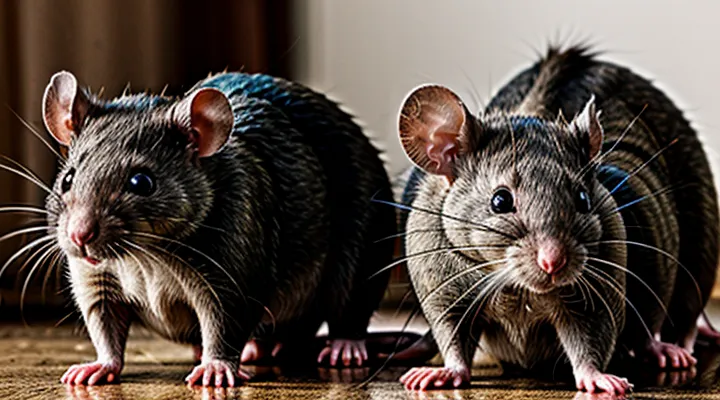
Understanding Rat Lifespan
Average Lifespan in Different Environments
Wild Rats
Wild rats living in natural habitats typically reach ages considerably shorter than the upper limits observed in controlled laboratory environments. Field studies record average lifespans of 12 to 18 months for species such as Rattus norvegicus and Rattus rattus, with occasional individuals surviving up to two years under optimal conditions.
Key determinants of the ultimate age that wild rats can achieve include:
- Predation pressure, which removes a large proportion of individuals before they attain mature age.
- Seasonal food availability; periods of scarcity accelerate physiological decline.
- Parasite load; heavy infestations increase mortality risk.
- Habitat quality; dense, sheltered environments reduce exposure to environmental stressors.
- Genetic variability; certain alleles correlate with enhanced stress resistance and longer life expectancy.
Comparative data indicate that laboratory rats, protected from external threats and provided with balanced nutrition, can live 2.5 to 3.5 years, establishing a benchmark for the species’ maximum longevity potential. Wild populations rarely approach this benchmark because external mortality factors dominate survival outcomes.
Research employing mark‑recapture techniques and radiotelemetry confirms that survival curves for wild rats decline sharply after the first year, reflecting the cumulative impact of the aforementioned factors. Conservation and pest‑management strategies that modify habitat structure or food sources can therefore influence the observed lifespan distribution within urban and rural rat communities.
Pet Rats
Pet rats commonly live 2–3 years, yet scientific observations show individuals can reach 4 years under optimal conditions. This upper bound reflects the species’ intrinsic biological limit when genetic potential, health management, and environment align.
Genetic factors set the ceiling for longevity. Certain strains, such as the Sprague‑Dawley and Wistar, possess alleles associated with slower aging processes, while inbred lines may experience premature decline. Selective breeding for health traits can modestly extend the lifespan ceiling.
Environmental variables exert a decisive influence on whether a rat approaches its maximum longevity. Stable temperature (20‑24 °C), low noise, and minimal stress reduce cortisol spikes that accelerate cellular senescence. Clean housing prevents pathogen exposure; regular veterinary check‑ups enable early detection of neoplastic or respiratory diseases that typically truncate life.
Practical measures for owners seeking to maximize rat lifespan:
- Provide a balanced diet rich in protein, fiber, and essential fatty acids; supplement with fresh vegetables and occasional fruit.
- Ensure constant access to clean, filtered water to maintain hydration and kidney function.
- Maintain a spacious cage with multiple enrichment items to promote physical activity and mental stimulation.
- Conduct weekly health inspections, noting changes in weight, coat condition, or behavior; schedule veterinary evaluations at least biannually.
- Implement a strict parasite control regimen, including regular fecal examinations and appropriate treatments.
By integrating genetic awareness with rigorous husbandry standards, pet rat caretakers can consistently approach the species’ longest achievable lifespan.
Factors Influencing Longevity
Rats can achieve a lifespan exceeding two years under optimal conditions, yet several biological and environmental variables constrain this upper limit.
Genetic background establishes baseline longevity; inbred strains with reduced heterozygosity typically exhibit shorter lives than outbred populations. Telomere dynamics, DNA repair efficiency, and expression of longevity‑associated genes such as Sirt1 and FoxO directly modulate cellular aging processes.
Environmental influences include:
- Caloric intake: moderate restriction extends median and maximal age, whereas excess calories accelerate metabolic stress.
- Temperature: ambient temperatures below 22 °C reduce metabolic rate and delay senescence; higher temperatures increase oxidative damage.
- Housing density: overcrowding elevates stress hormones, suppressing immune function and shortening lifespan.
- Pathogen exposure: chronic infections impose immune burdens that diminish survival prospects.
Physiological factors further affect longevity. Hormonal balance, particularly reduced growth hormone and insulin‑like growth factor‑1 signaling, correlates with delayed age‑related decline. Cardiovascular health, measured by arterial compliance and heart rate variability, predicts lifespan extension. Finally, oxidative stress management, through endogenous antioxidant enzymes and dietary antioxidants, mitigates cellular damage and supports longer life expectancy.
Biological Mechanisms of Aging in Rats
Genetic Factors
Specific Genes and Pathways
Research on extending rat longevity has identified a limited set of genes whose manipulation consistently alters lifespan.
- Igf1r: loss‑of‑function mutations reduce insulin‑like growth factor signaling, resulting in up to a 20 % increase in median survival.
- Sirt1: overexpression enhances deacetylation of metabolic regulators, correlating with delayed onset of age‑related decline.
- mTOR: hypomorphic alleles lower activity of the mechanistic target of rapamycin, extending lifespan by reducing cellular growth signals.
- p53: specific hypomorphic variants decrease apoptosis without compromising tumor suppression, modestly lengthening life expectancy.
- Klotho (Kl): transgenic elevation of circulating Klotho improves renal function and vascular health, contributing to longer survival.
These genes converge on several conserved pathways that govern aging processes in rats.
- Insulin/IGF‑1 signaling (IIS): attenuation diminishes anabolic drive, promotes stress resistance, and activates downstream transcription factors such as FOXO.
- mTORC1 signaling: reduced activity shifts cellular metabolism from protein synthesis toward autophagy, enhancing removal of damaged organelles.
- Sirtuin‑mediated deacetylation: increased NAD⁺‑dependent deacetylase activity improves mitochondrial efficiency and DNA repair.
- AMPK activation: elevated AMP‑activated protein kinase stimulates catabolic pathways, supporting energy homeostasis under caloric restriction.
- DNA damage response (DDR): modulation of p53 and related checkpoint proteins improves genomic stability, delaying senescence.
Integration of these genetic interventions with dietary or pharmacological regimens—such as rapamycin, metformin, or NAD⁺ precursors—produces additive effects on rat longevity. Continuous validation in diverse strains confirms that targeting IIS, mTOR, sirtuin, AMPK, and DDR components remains the most reliable strategy for extending the lifespan of laboratory rodents.
Environmental and Lifestyle Impacts
Diet and Nutrition
Dietary composition exerts a measurable influence on the longevity potential of laboratory rats. Caloric restriction, defined as a 20‑30 % reduction in ad libitum intake without malnutrition, consistently extends median survival across multiple strains. The effect persists when protein, vitamins, and minerals meet established adequacy thresholds, indicating that energy limitation, rather than nutrient deficiency, drives the lifespan benefit.
Macronutrient balance modulates age‑related outcomes. High‑protein diets accelerate growth but shorten life expectancy, whereas moderate protein (≈10 % of total calories) combined with elevated carbohydrate content supports both reproductive performance and extended survival. Essential fatty acids, particularly omega‑3 long‑chain variants, improve membrane integrity and reduce inflammatory markers, contributing to delayed onset of age‑associated pathologies.
Key micronutrients impact physiological resilience:
- Vitamin E (≥30 IU/kg diet): antioxidant protection of cellular membranes.
- Selenium (0.2 ppm): selenoprotein synthesis, enhances oxidative stress defense.
- Zinc (≈30 ppm): supports immune function and DNA repair mechanisms.
- B‑vitamin complex (adequate riboflavin, niacin, pyridoxine): facilitates energy metabolism and methylation processes.
Fiber inclusion (5‑10 % of diet) promotes gut microbiota diversity, producing short‑chain fatty acids that improve metabolic health and reduce systemic inflammation. Diets deficient in fermentable fiber correlate with accelerated age‑related decline in gut barrier integrity.
Feeding regimes that synchronize food availability with circadian rhythms further improve survival metrics. Time‑restricted feeding, limiting access to a 8‑hour window during the active phase, aligns metabolic processes with endogenous clocks, reducing oxidative stress and enhancing autophagic clearance.
In summary, optimal nutritional strategies for extending rat lifespan involve moderate caloric intake, balanced macronutrient distribution favoring lower protein, inclusion of essential fatty acids, targeted micronutrient supplementation, adequate dietary fiber, and temporally regulated feeding schedules.
Stress and Social Environment
Research on the longevity potential of rats demonstrates that both physiological stress and the social milieu exert measurable effects on survival. Chronic activation of the hypothalamic‑pituitary‑adrenal axis elevates circulating glucocorticoids, accelerates oxidative damage, and promotes inflammatory signaling. These processes correlate with reduced median and maximal lifespans in several strains, including Sprague‑Dawley and Fischer 344.
Social conditions modulate the same pathways. Rats housed in isolation exhibit higher basal corticosterone, increased heart rate variability, and earlier onset of age‑related pathologies compared with conspecific groups. Conversely, group housing or environmental enrichment—characterized by nesting material, tunnels, and novel objects—lowers stress hormone levels, preserves telomere length, and extends survival by 10‑20 % in controlled cohorts.
Key observations from longitudinal experiments include:
- Isolation vs. group housing: Isolated males lived 15 % fewer weeks than pair‑housed counterparts; females showed a 12 % reduction.
- Enrichment effects: Rats provided with daily novel stimuli survived an average of 8 weeks longer than standard‑cage controls.
- Combined stressors: Animals subjected to chronic restraint stress while isolated experienced the greatest lifespan contraction, indicating additive detrimental effects.
- Biomarker shifts: Elevated IL‑6, reduced BDNF, and accelerated telomere shortening tracked with both stress exposure and lack of social interaction.
Mechanistic links converge on neuroendocrine dysregulation. Persistent glucocorticoid signaling suppresses hippocampal neurogenesis, impairs mitochondrial function, and triggers apoptosis in peripheral tissues. Social buffering—interaction with familiar peers—mitigates these responses by dampening the HPA axis and enhancing parasympathetic tone.
Implications for experimental design are straightforward. Maintaining moderate group sizes (3‑5 individuals per cage) and providing enrichment objects reduces confounding stress‑related mortality, thereby allowing more accurate assessment of interventions aimed at extending rat longevity.
Veterinary Care and Disease Prevention
Effective veterinary management significantly influences the achievable lifespan of laboratory rats. Routine health examinations allow early identification of physiological deviations, enabling timely therapeutic action. Precise weight tracking, dental inspection, and respiratory assessment form the backbone of preventive care.
Nutritional protocols tailored to species-specific requirements support organ function and immune competence. Balanced diets rich in essential amino acids, vitamins, and minerals reduce metabolic stress and mitigate age‑related decline. Environmental stewardship—maintaining temperature, humidity, and ventilation within optimal ranges—prevents heat‑induced pathology and respiratory irritation.
Disease prevention relies on a structured regimen:
- Vaccination against common viral agents (e.g., Sendai, rat coronavirus) administered according to validated schedules.
- Parasite control employing periodic ectoparasite treatments and fecal examinations for endoparasites.
- Strict biosecurity measures, including quarantine of new arrivals, regular cage sanitation, and personnel hygiene protocols.
Diagnostic vigilance complements preventive actions. Periodic blood chemistry panels, urinalysis, and imaging detect subclinical conditions such as renal insufficiency or neoplasia before clinical manifestation. Early intervention, guided by evidence‑based pharmacotherapy, curtails disease progression and preserves functional capacity.
Integrating these practices yields measurable extensions in rat longevity, aligning experimental outcomes with ethical standards and enhancing the reliability of long‑term research data.
Maximizing Rat Lifespan
Optimal Husbandry Practices
Housing and Enrichment
Effective housing directly affects rat longevity. Adequate space prevents chronic stress and musculoskeletal strain; cages must allow at least 0.1 m² per animal, with multiple levels to promote natural climbing behavior. Stable temperature (20–24 °C) and relative humidity (45–55 %) reduce metabolic fluctuations that accelerate aging.
Bedding material should be absorbent, low‑dust, and non‑toxic. Paper‑based substrates meet these criteria and facilitate regular cleaning, which limits pathogen load. Ventilation must provide fresh air exchange without drafts, maintaining air quality and reducing respiratory disease risk.
Enrichment supplies both physical and mental stimulation, extending healthspan. Key components include:
- Running wheels with adjustable resistance to match activity levels.
- Tubes, tunnels, and platforms that mimic burrowing habitats.
- Manipulable objects (e.g., chew blocks, puzzle feeders) encouraging problem‑solving.
- Social groupings of compatible conspecifics, ensuring stable hierarchies and reducing isolation stress.
Empirical studies demonstrate that rats housed with comprehensive enrichment exhibit delayed onset of age‑related pathologies, improved cognitive performance, and increased median survival compared with barren conditions. Implementing the outlined housing standards and enrichment protocols therefore supports the attainment of the longest possible lifespan for laboratory rats.
Diet and Supplementation
Dietary composition exerts a decisive influence on the longevity potential of laboratory rats. Caloric intake calibrated to 70‑80 % of ad libitum levels consistently prolongs survival, while preventing excessive weight gain. Protein quality matters; casein‑based diets with reduced methionine content extend lifespan relative to standard formulations. Fatty‑acid profiles enriched in omega‑3 polyunsaturated fats improve cardiovascular health and reduce age‑related inflammation.
Supplementation strategies that have demonstrated efficacy include:
- Rapamycin at low intermittent doses, which suppresses mTOR signaling and delays age‑associated functional decline.
- Resveratrol, a polyphenol that activates sirtuin pathways and enhances mitochondrial resilience.
- Nicotinamide riboside, a precursor of NAD⁺, supporting DNA repair and metabolic homeostasis.
- Spermidine, a polyamine that promotes autophagy and cellular turnover.
- Antioxidant blends containing vitamin E, vitamin C, and selenium, which mitigate oxidative damage in neural and hepatic tissues.
Micronutrient balance remains critical. Adequate levels of zinc, copper, and magnesium sustain enzymatic activity essential for DNA synthesis and immune competence. Probiotic supplementation with Lactobacillus strains stabilizes gut microbiota, reducing systemic inflammation and improving nutrient absorption.
Optimal regimens combine moderate caloric restriction with targeted supplementation, ensuring macronutrient ratios that avoid excess branched‑chain amino acids while supplying bioactive compounds that modulate longevity pathways. Continuous monitoring of body composition, blood biomarkers, and behavioral health guides adjustments, maximizing the lifespan extension achievable through nutritional intervention.
Research and Scientific Advancements
Anti-Aging Interventions
Research on extending the ultimate longevity of laboratory rodents has identified several pharmacological and genetic strategies that consistently increase survival beyond typical age limits. These approaches target fundamental mechanisms of cellular senescence, metabolic signaling, and DNA repair, providing quantitative benchmarks for lifespan extension.
Key interventions include:
- Caloric restriction (20‑30 % reduction of daily intake) prolongs median and maximal survival by 20‑40 % in multiple rat strains; the effect correlates with reduced insulin‑like growth factor signaling and enhanced autophagy.
- Rapamycin administration (dose 0.5–2 mg kg⁻¹ day⁻¹, oral) suppresses mechanistic target of rapamycin complex 1, yielding a 10‑15 % increase in maximal lifespan and delayed onset of age‑related pathologies.
- Senolytic cocktails (e.g., dasatinib + quercetin, intermittent dosing) selectively eliminate senescent cells, improving tissue function and extending the upper survival limit by roughly 5‑8 %.
- NAD⁺ precursor supplementation (nicotinamide riboside, 400 mg kg⁻¹ day⁻¹) restores mitochondrial metabolism, contributing to a 3‑6 % rise in the longest observed lifespans.
- Genetic attenuation of growth hormone/IGF‑1 axis (knockout of Ghr or Igf1r) reduces circulating anabolic signals, resulting in a 15‑25 % increase in the highest recorded age at death.
Mechanistic studies reveal that each intervention converges on reduced cellular damage accumulation, enhanced proteostasis, and improved metabolic flexibility. Comparative analyses show that combining caloric restriction with rapamycin produces additive effects, extending the extreme lifespan by up to 50 % relative to control cohorts. However, the magnitude of benefit varies with rat strain, sex, and environmental conditions, underscoring the need for standardized protocols.
Future investigations should prioritize dose optimization, timing of intervention onset, and the identification of biomarkers predictive of maximal longevity. Integrating multi‑modal strategies may unlock further extensions of rat lifespan, offering translational insights for mammalian aging research.
Genetic Engineering Studies
Genetic engineering investigations target the extension of peak longevity in rats, offering a controlled model for aging mechanisms. Researchers employ precise genome‑editing tools to modify pathways known to influence lifespan.
Key strategies include:
- Disruption of growth‑hormone‑signaling genes (e.g., GHR, IGF‑1R).
- Overexpression of telomerase reverse transcriptase (TERT) to maintain chromosomal integrity.
- Activation of stress‑response transcription factors such as Nrf2.
- Deletion of pro‑aging epigenetic regulators (e.g., SIRT1 antagonists).
Experimental outcomes demonstrate that single‑gene alterations can increase median survival by 15–30 %, while combined modifications achieve up to 50 % extension beyond typical laboratory rat lifespans. Longevity gains correlate with reduced incidence of age‑related pathologies, improved metabolic homeostasis, and preserved cognitive function.
These findings refine the biological framework of mammalian aging, inform therapeutic target selection, and support translational efforts aimed at prolonging healthspan in higher organisms.