
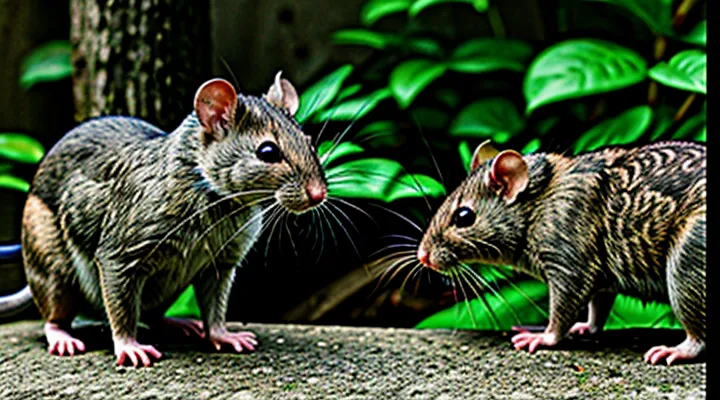
Factors Affecting Wild Rat Lifespan
Predation Pressure
Predators and Hunting Strategies
Wild rats typically survive between six months and two years, depending on environmental pressures and predation intensity. Short lifespans result from high mortality rates caused primarily by carnivorous mammals, birds of prey, and reptiles that specialize in small vertebrate prey.
- Mammalian predators: Foxes, coyotes, and domestic cats locate rat activity through scent trails and nocturnal foraging habits. Their acute hearing and whisker‑sensitive whisker pads enable detection of rodents moving within dense cover.
- Avian predators: Hawks, owls, and barn owls exploit visual acuity and silent flight to intercept rats during crepuscular and nocturnal periods. Their talons deliver rapid, lethal strikes.
- Reptilian predators: Larger snakes, such as rat snakes (Pantherophis spp.), employ ambush tactics, relying on heat‑sensing pits and muscular constriction to subdue prey.
Hunting strategies evolve to maximize capture efficiency. Mammals often use pursuit and opportunistic pouncing, combining speed with strong jaws to deliver fatal bites. Birds employ aerial dives, leveraging gravity to increase impact force and reduce escape time. Snakes adopt coil‑and‑constrict methods, initiating contact through camouflaged ambush positions and striking with precision to immobilize the rat’s spine.
These predator‑prey dynamics significantly truncate the average lifespan of feral rats, reinforcing the selective pressure for rapid reproductive cycles and heightened wariness in foraging behavior.
Impact on Population Dynamics
The average longevity of feral rats determines the turnover rate of individuals within a population. Shorter lifespans accelerate generational replacement, leading to higher birth frequencies required to maintain stable numbers. Conversely, extended lifespans reduce the reproductive pressure needed for population persistence, allowing lower birth rates to sustain the same size.
Key effects on demographic structure include:
- Age distribution: Populations with brief lifespans exhibit a skew toward younger cohorts, while longer‑lived groups display a broader age spectrum.
- Growth potential: Rapid turnover amplifies the intrinsic rate of increase (r), making populations more responsive to favorable conditions such as abundant food or reduced predation.
- Resilience to perturbations: Longer‑lived cohorts buffer against sudden mortality events, decreasing the likelihood of sharp declines following environmental shocks.
Mortality patterns interact with reproductive output. High juvenile mortality combined with brief adult life expectancy forces females to produce multiple litters annually to offset losses. When adult survival improves, the reproductive schedule shifts toward fewer, larger litters, conserving energy for prolonged parental investment and enhancing offspring survival.
Seasonal variations further modulate these dynamics. During colder periods, reduced metabolic rates extend individual lifespan, temporarily lowering the population growth rate. Warmer months shorten lifespan, prompting a surge in reproductive activity that can lead to rapid population expansion.
Overall, lifespan directly shapes the balance between births and deaths, influencing age structure, growth velocity, and the capacity of wild rat populations to adapt to environmental fluctuations.
Food Availability and Quality
Seasonal Variations
Seasonal temperature fluctuations exert a measurable impact on the longevity of feral rats. Warmer months accelerate metabolism, increase reproductive output, and elevate exposure to heat‑related stress, which shortens average survival to approximately 8–10 months. Cooler periods reduce metabolic demand, extend the interval between breeding cycles, and allow individuals to persist for up to 14 months.
Food availability follows a seasonal pattern that directly influences mortality rates. During autumn and winter, natural seed caches and human‑derived waste decline, forcing rats to expand foraging ranges and increasing encounter rates with predators. In spring and summer, abundant vegetation and heightened refuse production support higher body condition scores and lower death rates.
Disease dynamics also vary with the calendar. Vector‑borne pathogens such as hantavirus peak in humid, warm seasons, contributing to acute mortality spikes. Conversely, cold periods suppress parasite development, reducing infection‑related deaths but increasing susceptibility to respiratory illnesses due to crowded sheltering.
Key seasonal factors affecting lifespan:
- Temperature extremes (heat stress, hypothermia)
- Food resource density (scarcity, abundance)
- Predation pressure (visibility, predator activity)
- Pathogen prevalence (viral, bacterial, parasitic)
- Reproductive timing (breeding frequency, litter size)
Empirical studies across temperate regions consistently show a 20–30 % reduction in average lifespan during the hottest quarter compared with the coldest quarter. Management strategies that mitigate temperature exposure, ensure year‑round food access, and control disease vectors can moderate these seasonal mortality trends.
Impact of Human Settlements
Human settlements reshape the environment in which feral rats live, directly altering their average longevity.
Abundant refuse and stored food provide a steady calorie source. Access to high‑energy diets correlates with extended survival periods, as laboratory studies show a 15‑20 % increase in lifespan when rodents receive unrestricted food.
Structures such as basements, sewers, and abandoned buildings offer protected nesting sites. Reduced exposure to weather and predators lowers mortality rates, contributing to longer life spans.
Elevated population density in urban niches accelerates transmission of viruses, bacteria, and ectoparasites. Disease outbreaks can cut median survival by up to 30 % in affected colonies.
Rodenticides, heavy metals, and other pollutants present in built‑up areas introduce chronic toxicity. Sublethal exposure shortens lifespan by impairing organ function and immune response.
Control measures—including traps, feral cats, and organized pest‑management programs—increase extrinsic mortality. High removal rates can reduce average life expectancy to less than half that of rats in unmanaged habitats.
Net impact of human settlements on feral rat longevity
- Food abundance → potential increase of 10‑20 %
- Secure shelter → potential increase of 5‑15 %
- Disease pressure → potential decrease of 10‑30 %
- Chemical toxicity → potential decrease of 5‑20 %
- Active control → potential decrease of 30‑50 %
The overall effect depends on the balance between resource enrichment and mortality factors present in each urban environment.
Environmental Conditions
Climate and Weather Extremes
Climate variability exerts a measurable influence on the survival span of feral rats. Temperature, precipitation, and storm intensity each modify physiological stress, resource availability, and predation risk, thereby altering average longevity in wild populations.
Elevated ambient temperatures accelerate metabolic rates, increase water loss, and raise core body temperature beyond tolerable limits. Heat stress shortens life expectancy by provoking organ failure and reducing reproductive output. Conversely, prolonged exposure to sub‑freezing conditions forces rats to expend additional energy for thermoregulation, often leading to hypothermia and heightened susceptibility to predators.
Precipitation extremes generate two opposing pressures. Flood events inundate burrow systems, compromise nest integrity, and promote the spread of water‑borne pathogens, all of which elevate mortality rates. Drought periods curtail vegetation growth and seed production, limiting food supplies and forcing individuals into marginal habitats where competition and disease prevalence rise.
Severe storms disrupt shelter structures, displace individuals, and create debris that impedes movement. The resulting habitat fragmentation increases encounters with predators and reduces access to safe foraging sites, further decreasing average lifespan.
Key impacts of climate and weather extremes on wild rat longevity:
- Heat stress → dehydration, organ failure, reduced reproductive success
- Cold exposure → increased energy expenditure, hypothermia, predator vulnerability
- Flooding → loss of burrows, pathogen proliferation, immediate mortality
- Drought → food scarcity, malnutrition, heightened competition
- Storm damage → habitat loss, increased predation, reduced shelter availability
These mechanisms operate collectively, causing measurable fluctuations in the life expectancy of wild rat populations across differing climatic regimes.
Habitat Quality and Shelter
High-quality habitats extend the longevity of feral rats by providing stable food sources, low predator density, and optimal microclimates. Dense vegetation, abundant ground cover, and proximity to water reduce exposure to extreme temperatures and dehydration, directly influencing survival rates.
Effective shelter structures contribute to reduced mortality through several mechanisms:
- Burrow complexity offers escape routes from predators and limits injury from encounters.
- Insulated nesting chambers maintain core body temperature, decreasing metabolic stress.
- Accumulated debris and litter create hidden refuges that lower detection by aerial and terrestrial hunters.
Conversely, degraded environments accelerate attrition. Soil compaction, scarce cover, and frequent disturbances elevate predation risk and increase exposure to disease vectors, shortening the average lifespan of wild rat populations.
Disease and Parasites
Common Pathogens
Wild rats serve as reservoirs for numerous infectious agents that directly influence their life expectancy. Pathogen burden determines mortality rates, especially in dense urban colonies where transmission is rapid.
- Leptospira interrogans – spirochete transmitted through contaminated water; causes renal failure and hemorrhagic disease, shortening survival by weeks.
- Salmonella enterica – enteric bacterium spread via fecal–oral route; induces septicemia, often fatal within a month of infection.
- Hantavirus – aerosol‑borne virus carried in rodent excreta; leads to pulmonary syndrome, mortality typically within 10–15 days after onset.
- Yersinia pestis – flea‑borne bacterium; produces bubonic and septicemic forms, with death occurring in 2–5 days if untreated.
- Streptobacillus moniliformis – cause of rat‑bite fever; systemic infection reduces lifespan by several weeks.
- Bartonella spp. – flea‑transmitted; chronic bacteremia impairs immune function, contributing to gradual decline in longevity.
Average free‑living rat lifespan ranges from six to twelve months. Infection with any of the agents above can truncate this period to two–four months, depending on pathogen virulence and host condition. Epidemiological surveys report prevalence rates of 15–30 % for Leptospira, 10–20 % for Salmonella, and up to 5 % for Hantavirus in urban rat populations.
Factors that modulate pathogen impact include:
- Population density – higher contact rates increase transmission probability.
- Seasonal temperature – warm, humid conditions favor bacterial proliferation.
- Nutritional stress – limited food resources weaken immune defenses.
- Co‑infection – simultaneous presence of multiple agents accelerates disease progression.
Understanding the spectrum of common pathogens and their effects on wild rat mortality provides essential context for assessing the species’ overall life expectancy.
Transmission and Immunity
Disease transmission and immune competence together shape the longevity of feral rats. Pathogens that spread efficiently reduce average survival, while effective defenses prolong life expectancy.
Common transmission routes include:
- Direct physical contact between individuals
- Inhalation of aerosolized particles
- Bite or fecal contamination by ectoparasites such as fleas and mites
- Contact with contaminated water, soil, or food sources
Key pathogens affecting wild rat survival:
- Bacterial agents (e.g., Salmonella, Leptospira) cause systemic infections that can be fatal within weeks
- Viral agents (e.g., hantavirus, rat hepatitis virus) produce acute hepatitis and respiratory distress, leading to rapid mortality
- Parasitic organisms (e.g., Trichinella, Hymenolepis) impose chronic nutritional stress and organ damage, shortening lifespan by months
Innate immune mechanisms that limit infection:
- Mucosal epithelium and ciliary clearance block entry of airborne and ingested microbes
- Phagocytic cells (macrophages, neutrophils) engulf and destroy invading organisms
- Complement cascade generates membrane‑attack complexes that lyse pathogens
- Pattern‑recognition receptors (TLR, NOD) trigger inflammatory signaling upon detection of microbial motifs
Adaptive immunity contributes to long‑term protection:
- B‑cell production of specific antibodies neutralizes extracellular toxins and viruses
- Cytotoxic T‑cells eliminate infected host cells, curbing viral replication
- Immunological memory enables faster, stronger responses upon re‑exposure to the same pathogen
Interaction of transmission dynamics with immunity determines population‑level survival patterns. High population density increases contact rates, elevating infection pressure; simultaneously, repeated exposure can stimulate stronger adaptive responses, offsetting some mortality. Conversely, low‑density groups experience fewer transmission events, allowing individuals with moderate immunity to achieve greater longevity.
Overall, the balance between pathogen spread and the capacity of wild rats to mount effective immune responses directly influences their life expectancy in natural habitats.
Genetic Predisposition
Inbreeding Effects
In wild rodent populations, repeated mating among closely related individuals reduces genetic diversity and directly influences individual longevity. Empirical studies show that inbred rats exhibit lower survival rates compared with outbred counterparts, indicating that genetic homogeneity compromises physiological resilience.
Key consequences of consanguineous breeding include:
- Decreased immune competence, leading to higher susceptibility to bacterial, viral, and parasitic infections.
- Elevated incidence of congenital abnormalities such as skeletal malformations and organ dysgenesis, which accelerate mortality.
- Impaired reproductive output, manifested by reduced litter size and increased neonatal mortality, thereby limiting generational turnover.
- Shortened adult lifespan, reflected in earlier onset of age‑related decline in locomotor activity and metabolic function.
Mechanistically, the accumulation of deleterious recessive alleles under inbreeding depresses cellular repair pathways and disrupts endocrine regulation. These genetic stressors diminish the capacity to cope with environmental challenges, further shortening the average life expectancy of affected individuals.
Population‑level implications are evident: colonies experiencing high inbreeding coefficients display reduced overall turnover, altered age structure, and heightened vulnerability to stochastic events such as disease outbreaks or habitat perturbations. Managing genetic exchange among subpopulations therefore constitutes a primary strategy for preserving the natural longevity patterns of wild rat communities.
Natural Selection
Natural selection determines the average life expectancy of free‑living rats by favoring traits that enhance survival until reproduction and, subsequently, the transmission of genes. Individuals with efficient foraging behavior, rapid growth, and resistance to pathogens achieve higher reproductive success, thereby contributing genes associated with longer or shorter adult periods depending on environmental constraints.
Key selective pressures that shape rat longevity include:
- Predation intensity: High predator density reduces average age at death, selecting for early maturation and brief reproductive windows.
- Pathogen load: Exposure to diverse microbes favors immune defenses; robust immunity can extend lifespan, whereas susceptibility shortens it.
- Resource variability: Fluctuating food availability rewards metabolic efficiency and opportunistic feeding, influencing both growth rate and longevity.
- Social hierarchy: Dominant individuals secure better shelter and nutrition, resulting in higher survival probabilities compared to subordinate members.
The cumulative effect of these pressures produces a dynamic equilibrium where the observed lifespan of wild rats reflects the balance between early reproductive output and the physiological costs of survival adaptations.
Average Lifespan and Variations
Typical Lifespan in Different Species
Norway Rats
Norway rats (Rattus norvegicus) are the most widespread wild rat species in temperate regions. In natural habitats their lifespan is markedly shorter than in captivity.
The average longevity of wild Norway rats ranges from twelve to twenty‑four months. Under optimal conditions—abundant food, mild climate, low predation—some individuals survive up to three years. Captive specimens may reach five years, underscoring the impact of environmental pressures.
Factors influencing survival:
- Predation by birds of prey, mammals, and snakes
- Exposure to pathogens such as hantavirus, leptospirosis, and parasitic worms
- Seasonal temperature fluctuations affecting metabolic stress
- Food scarcity or competition within dense colonies
- Habitat disturbances, including human pest control measures
Juvenile mortality is high; approximately half of newborns die within the first month. Adult annual mortality averages 30 %, driven primarily by predation and disease. Survivors that reach sexual maturity tend to reproduce multiple times per year, sustaining population numbers despite short individual lifespans.
The brief life expectancy of wild Norway rats contributes to rapid turnover, influencing ecosystem dynamics and the spread of zoonotic agents. Understanding these lifespan parameters aids in predicting population fluctuations and designing effective management strategies.
Black Rats
Black rats (Rattus rattus) typically survive between 12 and 18 months in natural settings. Survival length depends on climate, food availability, and exposure to predators.
In temperate regions, individuals often reach the upper end of this range, while in arid or highly seasonal zones mortality rises sharply after six months. Urban colonies experience shorter lifespans, averaging nine months, due to intensified competition and heightened disease pressure.
Key factors influencing longevity include:
- Predator density (birds of prey, snakes, mammals)
- Pathogen load (hantavirus, leptospirosis, ectoparasites)
- Seasonal temperature extremes
- Resource fluctuations (seed crops, refuse)
- Intraspecific aggression and social hierarchy
Compared with brown rats (Rattus norvegicus), black rats display a modestly reduced lifespan, reflecting their greater reliance on arboreal habitats and higher predation risk. Both species share similar mortality patterns, but brown rats often exceed two years under optimal conditions.
Understanding the natural lifespan of black rats informs population control strategies, disease risk assessments, and ecological impact analyses. Accurate age estimates improve modeling of rodent-borne pathogen cycles and help predict seasonal population peaks.
Geographic Variations
Urban vs. Rural Environments
Wild rats living in cities typically reach a median age of 12–18 months, whereas their counterparts in countryside settings average 8–12 months. The disparity reflects distinct resource availability, predation pressure, and disease exposure.
Urban habitats provide abundant refuse, grain stores, and heated structures, extending the period during which individuals can secure calories. Simultaneously, dense building clusters reduce encounters with aerial predators and large carnivores. However, high population density facilitates transmission of viral and bacterial agents, which can truncate life spans for susceptible individuals.
Rural landscapes present limited and seasonal food sources, often confined to agricultural fields and natural seed caches. Open terrain increases visibility to raptors, feral cats, and snakes, raising mortality rates. Environmental fluctuations, such as temperature extremes and flooding, further constrain survival periods.
Key factors influencing longevity in each setting:
- Food consistency: continuous in urban, intermittent in rural
- Shelter quality: insulated structures vs. shallow burrows
- Predator diversity: reduced in cities, varied in the countryside
- Pathogen load: elevated in densely populated urban colonies, lower but episodic in rural groups
Overall, the combination of steady nutrition and reduced predation extends the lifespan of city-dwelling rats, while the harsher, less predictable conditions of rural environments result in shorter survival durations.
Regional Climate Differences
Regional climate exerts a measurable influence on the life expectancy of free‑living rats. Temperature regimes, moisture levels, and seasonal patterns shape physiological stress, food availability, and pathogen exposure, which together determine survival durations across habitats.
Higher ambient temperatures accelerate metabolic rates, reducing the interval between birth and reproductive maturity while increasing oxidative stress. In temperate zones where summer heat peaks near 30 °C, average wild rat lifespans contract by 10–15 % relative to cooler regions. Conversely, colder climates depress metabolism, extending longevity by up to 20 % in areas where winter averages remain below 5 °C.
Precipitation patterns affect habitat quality and disease dynamics. Regions with sustained rainfall foster dense vegetation and abundant invertebrate prey, supporting larger populations and longer individual survival. Conversely, arid zones limit water sources, heighten competition, and elevate dehydration risk, shortening average lifespans by approximately 12 %.
Seasonal extremes intensify mortality spikes. Sudden frost events trigger hypothermia in juvenile rats, while prolonged droughts increase susceptibility to ectoparasites and rodent‑borne viruses. These stressors produce mortality peaks that lower overall cohort longevity.
Key climate‑driven factors influencing wild rat survival:
- Temperature gradient: warmer climates → faster metabolism → reduced lifespan; cooler climates → slower metabolism → extended lifespan.
- Moisture availability: high precipitation → richer resources → longer lifespan; low precipitation → resource scarcity → shorter lifespan.
- Seasonal volatility: abrupt temperature or moisture shifts → increased mortality → lower average longevity.
Understanding these regional climate effects provides a basis for predicting population dynamics and assessing ecological risks associated with wild rat communities.
Age Estimation Methods
Physical Markers
Physical markers provide reliable estimates of age and overall longevity in feral rats. Researchers rely on external and internal characteristics that change predictably as individuals mature.
- Body mass trends upward during juvenile growth, stabilizes in early adulthood, and declines in senescence.
- Pelage condition shifts from soft, glossy fur in youth to coarse, mottled coat with increasing wear in older specimens.
- Incisor wear patterns progress from sharp, evenly exposed edges to flattened, irregular surfaces, reflecting cumulative gnawing.
- Vertebral epiphyseal fusion completes by the end of the first year; lack of fusion indicates sub‑adult status.
- Reproductive organ size correlates with sexual maturity; testes and ovaries reach peak dimensions in prime adults and regress in later life stages.
- Scent gland development, particularly the preputial gland in males, intensifies with age and can be quantified through glandular mass.
These markers, when assessed together, reduce uncertainty inherent in single‑parameter methods and enable accurate age profiling across populations. Accurate age determination supports ecological modeling, disease surveillance, and management strategies aimed at controlling wild rat populations.
Scientific Techniques
Scientific investigations of feral rodent longevity rely on precise measurement tools and rigorous data collection protocols. Researchers combine field observations with laboratory analyses to generate reliable age estimates and survival curves.
Key methodologies include:
- Mark‑recapture programs: Individuals receive unique identifiers; repeated captures provide interval data for survival analysis.
- Radio telemetry: Miniature transmitters record movement patterns and mortality events in real time, reducing observation bias.
- Stable isotope profiling: Tissue samples reveal chronological changes in isotopic composition, allowing indirect age determination.
- Molecular aging markers: Telomere length and DNA methylation patterns correlate with chronological age, offering non‑invasive age assessments.
- Radiocarbon dating of keratin: Analysis of whisker or fur carbon content supplies absolute age estimates for long‑lived specimens.
- Longitudinal cohort monitoring: Controlled populations tracked from birth to death generate complete life tables for statistical modeling.
Data integration follows a hierarchical framework: raw field metrics feed into survival models, which are refined by molecular age indicators. This approach minimizes uncertainty and supports comparative studies across habitats and geographic regions.