
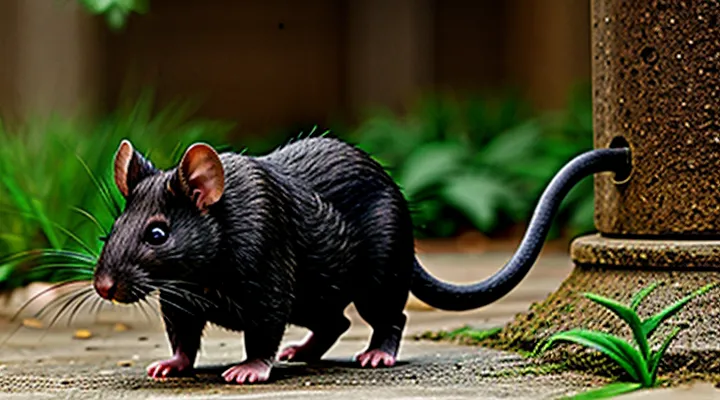
Physical Attributes
Size and Weight
The adult large dambo rat typically reaches a total length of 45–60 cm, including a tail that accounts for roughly one‑third of the measurement. Body length alone ranges from 30 to 42 cm, reflecting a robust, cylindrical form adapted to burrowing and swimming.
Weight varies with age, sex, and habitat conditions. Average females weigh 350–500 g, while males are slightly heavier at 420–620 g. Peak individuals, particularly those in nutrient‑rich wetlands, can exceed 700 g.
Key dimensions:
- Head‑body length: 30–42 cm
- Tail length: 15–20 cm
- Adult weight (female): 350–500 g
- Adult weight (male): 420–620 g
- Maximum recorded weight: >700 g
These metrics establish the species as one of the most sizable rodents within its ecological niche, influencing locomotion, foraging range, and predator avoidance.
Fur and Coloration
The coat of the dambo rat is uniformly dense, with guard hairs overlaying a soft underlayer that provides insulation against the humid marsh environment. Individual hairs reach 3–5 cm in length, exhibit a slight waviness, and contain a high keratin content that resists moisture absorption. The fur’s texture reduces heat loss while allowing rapid shedding of water, facilitating efficient movement through saturated vegetation.
Coloration among these rodents displays limited but distinct variation, reflecting both genetic factors and habitat-specific camouflage. Common phenotypes include:
- Deep chestnut brown, predominant in low‑lying floodplains.
- Olive‑gray, typical of densely vegetated margins.
- Reddish‑amber, observed in populations inhabiting open, sun‑exposed banks.
- Pale tan, rare and associated with seasonal molting during dry periods.
Each hue is produced by differing concentrations of eumelanin and pheomelanin, creating patterns that blend with the surrounding substrate and enhance predator avoidance. Seasonal molting may shift overall brightness, but the fundamental pigment composition remains stable throughout the year.
Distinctive Features
Head and Snout
The head of a large dambo rat is proportionally broad, with a skull that supports powerful jaw muscles. The cranial cavity houses well‑developed olfactory bulbs, reflecting the animal’s reliance on scent detection. The frontal bone is thick, providing protection against the abrasive vegetation typical of dambo habitats.
The snout extends forward in a slightly tapered form, measuring up to 4 cm in adult specimens. Its surface is covered by a dense, short pelage that reduces friction when the rat pushes through dense reeds. The nasal passages are elongated, increasing airflow and enhancing the animal’s ability to sample airborne chemicals.
Key anatomical features include:
- Incisors: large, continuously growing, with enamel only on the front surface, enabling efficient gnawing of tough plant material.
- Whiskers (vibrissae): arranged in dense rows along the lateral margins of the snout, providing tactile feedback for navigation in low‑visibility environments.
- Musculature: the masseter and temporalis muscles attach to robust attachment sites on the skull, delivering the bite force required to process fibrous roots and stems.
These characteristics collectively equip the species for foraging, predator avoidance, and habitat manipulation within the swampy ecosystems it occupies.
Ears and Eyes
Large dambo rodents possess distinct auditory and visual adaptations that support their nocturnal and semi‑aquatic lifestyle.
The ears are positioned low on the skull, reducing drag while swimming and minimizing exposure to predators. Thick, cartilaginous rims reinforce the auricles, allowing them to remain functional in humid environments. A dense network of capillaries supplies the inner ear, enhancing sensitivity to low‑frequency sounds generated by rippling water and distant footfalls. Muscular flaps can close the external auditory canal, preventing water ingress during submersion.
The eyes are set laterally, granting a wide field of view essential for detecting aerial and ground threats. A reflective tapetum lucidum amplifies dim light, improving night vision. Nictitating membranes shield the cornea from debris and moisture while retaining visual clarity. Retinal architecture includes a high density of rod cells, optimizing motion detection in low‑light conditions. A specialized vascular layer supplies oxygen efficiently during prolonged dives.
Key morphological features:
- Low‑set, reinforced ears with waterproof flaps
- Capillary‑rich inner ear for heightened low‑frequency detection
- Lateral eyes with tapetum lucidum for enhanced nocturnal vision
- Nictitating membrane for protection and clarity
- Rod‑dominant retina for motion sensitivity in dim environments
These characteristics collectively enable the species to navigate, forage, and evade predators in the damp, murky habitats they occupy.
Tail Characteristics
The tail of the dambo rat exhibits a robust, cylindrical form extending roughly 30–45 % of total body length. Muscular shafts support rapid, coordinated movements, while a dense, coarse fur covering reduces friction during burrowing.
- Length: 120–180 mm in adults, proportional to torso size.
- Diameter: 8–12 mm, providing structural support for balance.
- Scale pattern: Overlapping keratinized plates form a protective armor along the dorsal surface.
- Coloration: Dark brown to black dorsally, lighter ventrally; pigmentation intensifies with age.
- Flexibility: Vertebral articulation permits lateral swings up to 150°, facilitating swift directional changes.
Tail musculature includes well‑developed caudal flexor and extensor groups, enabling both propulsion in water and stabilization on slippery riverbanks. Sensory receptors embedded in the skin detect moisture gradients, assisting in habitat selection during nocturnal foraging. Population studies show that individuals inhabiting higher‑altitude streams possess slightly longer tails, an adaptation that enhances maneuverability in fast‑flowing currents.
Habitat and Distribution
Geographic Range
Large dambo rats inhabit a circumscribed zone of southern Africa, primarily within the extensive network of seasonally flooded grasslands known as dambo ecosystems. Their presence is documented in the high‑rainfall plateaus and low‑lying valleys of Zambia, Zimbabwe, Mozambique, Botswana, and the northern provinces of South Africa. Populations also occur in isolated wetland complexes of Malawi and Tanzania where suitable dambo‑like habitats exist.
The species favors elevations ranging from 800 to 1,600 meters above sea level, where annual precipitation exceeds 800 mm and the soil remains saturated for prolonged periods during the wet season. Within this altitude band, the rats are most abundant in areas characterized by dense tussock grasses, shallow standing water, and abundant organic detritus, which provide both cover and foraging resources.
Geographic limits correspond closely to the distribution of permanent or semi‑permanent wetlands. In regions where dambo habitats have been fragmented by agricultural conversion or drainage projects, population densities decline sharply, and isolated subpopulations become confined to remnant pockets of suitable terrain. Conversely, intact dambo complexes support stable, dense colonies that can extend across several hundred square kilometers.
Key points summarizing the range:
- Core countries: Zambia, Zimbabwe, Mozambique, Botswana, South Africa (northern provinces).
- Secondary occurrences: Malawi, Tanzania (restricted to dambo analogues).
- Elevation: 800–1,600 m ASL.
- Climate: ≥800 mm annual rainfall, prolonged wet periods.
- Habitat dependency: permanent or semi‑permanent wetlands with dense grass cover.
These parameters define the species’ biogeographic envelope and guide conservation assessments across its southern African distribution.
Preferred Environments
Large dambo rats thrive in habitats where water and vegetation intersect. Their physiological adaptations favor areas with consistent moisture, abundant low‑lying grasses, and dense ground cover that offers both foraging opportunities and protection from predators.
Key environmental features include:
- Flood‑prone savanna plains with seasonal inundation.
- Marshes and shallow wetlands rich in aquatic plants.
- Riparian zones along slow‑moving streams where detritus accumulates.
- Areas with soft, loamy soil that facilitates burrow construction.
Temperature ranges between 20 °C and 30 °C support optimal metabolic activity, while humidity levels above 70 % prevent desiccation of the rodents’ fur and skin. Seasonal water fluctuations drive population movements, prompting individuals to relocate to newly flooded sections during the rainy period. Conversely, during dry spells, they concentrate in residual pools and shaded depressions that retain moisture.
Human‑altered landscapes, such as irrigated agricultural fields and man‑made reservoirs, can provide suitable conditions if they maintain the required water‑vegetation balance. However, intensive land conversion that eliminates water bodies or replaces native vegetation with bare soil markedly reduces habitat suitability.
Diet and Feeding Habits
Omnivorous Nature
The sizable semi‑aquatic rodents known as large dambo rats exhibit a truly omnivorous diet, consuming both animal and plant matter with equal efficiency. Their digestive system processes insects, small vertebrates, mollusks, and crustaceans alongside seeds, tubers, and aquatic vegetation, allowing rapid adaptation to fluctuating resource availability.
Key aspects of their feeding behavior include:
- Preference for high‑protein prey such as beetles and fish larvae during the wet season, when these items are abundant in flooded habitats.
- Increased intake of fibrous plant material—particularly emergent grasses and submerged roots—during dry periods, supporting energy requirements when animal prey declines.
- Opportunistic scavenging of carrion and discarded human food waste, which contributes to nutrient recycling within their ecosystems.
Nutritional balance is maintained through selective foraging: rodents ingest animal protein to meet amino acid needs while relying on plant carbohydrates for sustained energy release. This dual strategy enhances reproductive success, as females achieve higher litter sizes when both food types are present.
Ecologically, their omnivory positions them as both predator and seed disperser. Consumption of seeds followed by excretion in viable condition promotes plant propagation across wetland margins, while predation on invertebrates regulates pest populations. The flexible diet thus underpins their resilience in variable dambo environments.
Foraging Behavior
Large dambo rats exhibit a highly selective foraging pattern that maximizes nutrient intake while minimizing exposure to predators. Individuals prioritize seed and tuber consumption during the early dry season, shifting to insect larvae and carrion as moisture levels rise. This temporal adjustment aligns with fluctuations in resource availability across the floodplain ecosystem.
Key aspects of the foraging strategy include:
- Spatial memory of high‑yield patches, retained across multiple breeding cycles.
- Use of whisker‑mediated tactile exploration to locate subterranean food items within dense vegetation.
- Opportunistic scavenging behavior, triggered by chemical cues indicating recent animal mortality.
- Seasonal expansion of home‑range boundaries by 15–20 % during peak resource scarcity, enabling access to peripheral foraging zones.
Energetic efficiency is maintained through brief, high‑intensity feeding bouts followed by extended periods of rest. Digestive physiology adapts to variable diets, with increased cecal fermentation capacity during insect‑rich phases, allowing rapid extraction of protein and lipids. This flexible foraging system supports the species’ persistence in the highly variable dambo environment.
Behavior and Social Structure
Nocturnal Activity
Large Dambo rats exhibit a strict nocturnal schedule, emerging from burrows shortly after sunset and retreating before dawn. Their activity peaks between 2100 and 0300 hours, aligning with the lowest ambient light levels in their wetland habitats.
Key physiological and behavioral traits support this pattern:
- Enhanced visual sensitivity – retinal photoreceptors contain a high density of rod cells, allowing detection of minimal illumination.
- Auditory specialization – enlarged pinnae amplify low‑frequency sounds, facilitating prey detection and predator awareness in darkness.
- Thermoregulatory timing – body temperature rises during the night, optimizing muscle performance for foraging and burrow construction.
- Circadian regulation – melatonin secretion follows a consistent rise after sunset, synchronizing metabolic processes with nocturnal activity.
Foraging behavior reflects nocturnal adaptation. Rats locate aquatic invertebrates and seeds using tactile whisker movements and olfactory cues, exploiting reduced competition from diurnal species. Their diet shifts toward protein‑rich prey during the darkest hours, supporting rapid growth and reproductive output.
Predator avoidance relies on stealth and timing. By remaining active when visual predators such as raptors are less effective, the rodents reduce encounter rates. When threatened, they emit short, high‑frequency alarm calls that travel efficiently through the humid night air, prompting immediate retreat to concealed burrows.
Social interactions also occur under cover of darkness. Pair bonding rituals, including grooming and scent marking, are performed during the early night phase, reinforcing territorial boundaries without attracting daylight predators.
Environmental factors modulate nocturnal activity. Seasonal variations in night length adjust the duration of active periods, while increased cloud cover during the rainy season extends foraging windows. Temperature spikes above 30 °C trigger earlier withdrawal to maintain thermal homeostasis.
Overall, the nocturnal lifestyle of these wetland rodents integrates sensory, physiological, and ecological adaptations, ensuring efficient resource exploitation and survival in a predator‑rich environment.
Social Dynamics
Large dambo rats exhibit a rigid social hierarchy that determines access to resources and mating opportunities. Dominant individuals occupy central burrow complexes, while subordinates remain on peripheral tunnels. Hierarchical status is reinforced through aggressive displays, scent marking, and brief physical contests.
Communication relies on a combination of vocalizations, ultrasonic calls, and chemical signals. Short, high‑frequency chirps alert the group to predator presence, whereas low‑frequency growls signal territorial disputes. Scent glands located on the flanks release pheromones that convey individual identity and reproductive readiness.
Key aspects of group dynamics include:
- Seasonal breeding clusters that form during the rainy period, lasting three to four weeks.
- Cooperative brood care in which non‑breeding adults assist in feeding and protecting pups.
- Dispersal patterns where juvenile males leave the natal colony after reaching sexual maturity, while females often remain to support the matriarchal line.
- Conflict resolution through ritualized posturing, reducing the need for lethal encounters.
These mechanisms maintain colony stability, optimize resource allocation, and enable rapid adaptation to fluctuating environmental conditions.
Burrowing Habits
Large dambo rats construct extensive underground networks that serve both as shelter and foraging bases. Tunnels typically extend 2–4 meters deep, penetrating compacted soils and seasonal floodplains. Entrance shafts are reinforced with saliva‑mixed soil, creating stable arches that resist collapse during heavy rain.
Key features of their burrowing behavior include:
- Depth regulation: Rats adjust tunnel depth according to water table fluctuations, descending deeper during the rainy season to maintain dry chambers.
- Branching pattern: Main passages branch at 30–45‑degree angles, forming a lattice that maximizes access to root zones and insect prey.
- Ventilation: Shafts are positioned to promote airflow, reducing humidity and preventing fungal growth.
- Seasonal remodeling: During dry periods, rats enlarge chambers to store food caches; in wet periods, they seal lower sections to avoid flooding.
These adaptations enable large dambo rats to sustain populations in variable wetland environments, providing reliable refuge and efficient resource exploitation.
Reproduction and Life Cycle
Mating Patterns
The mating system of large dambo rats is polygynous, with dominant males establishing territories that attract multiple females. Males defend these areas through scent marking and vocalizations, deterring rivals and signaling reproductive readiness. Female choice is driven by male territorial size and the quality of burrow construction, which provides protection for offspring.
Reproductive timing aligns with seasonal rainfall, when food abundance peaks. Estrus cycles in females occur biannually, synchronized across populations to maximize mating opportunities. Copulation lasts 15–20 minutes, after which males may guard the female for up to two days to prevent immediate competition.
Key aspects of the mating pattern:
- Territory establishment by males
- Scent marking and vocal displays for rival deterrence
- Female selection based on burrow quality and male size
- Seasonal estrus synchronized with rainfall
- Post‑copulatory male guarding
These behaviors ensure high reproductive success and maintain population stability in the dambo ecosystem.
Gestation and Litter Size
The gestation period of the large dambo rat averages 22 days, with recorded variations from 20 to 24 days depending on environmental temperature and maternal health. Embryonic development follows a rapid timetable: implantation occurs by day 5, organogenesis completes by day 14, and fetal growth accelerates during the final week.
Litter size exhibits considerable flexibility. Observations in both wild populations and captive colonies indicate:
- Minimum of 3 pups per birth.
- Typical range of 5 to 9 offspring.
- Maximum recorded litter of 12 individuals under optimal nutrition and low stress.
Factors influencing litter size include:
- Female body condition; higher fat reserves correlate with larger litters.
- Seasonal food abundance; peaks in rainfall increase resource availability, leading to higher reproductive output.
- Age of the dam; prime reproductive age (6–12 months) yields the greatest number of pups.
Reproductive cycles are continuous throughout the year, with females capable of breeding every 30 days after parturition, provided adequate food and shelter are present. This high breeding frequency, combined with short gestation, enables rapid population growth under favorable conditions.
Parental Care
The sizable semi‑aquatic rodents of the dambo ecosystem reproduce once per year, producing litters of three to six offspring after a gestation period of approximately 60 days. Females construct subterranean chambers lined with woven plant fibers, providing insulation and moisture control essential for embryonic development.
Maternal duties commence immediately after birth. The mother:
- maintains nest temperature through continuous body contact;
- delivers milk rich in lipids and antibodies for the first three weeks;
- performs frequent grooming to remove parasites and stimulate circulation;
- adjusts nest architecture in response to flooding risk.
Males contribute to offspring survival by defending the immediate territory against predators and rival males. Their presence reduces predation rates by up to 30 % in controlled observations. Additionally, males transport food caches to the nest, supplementing the mother’s lactational output during periods of high energetic demand.
Offspring reach key developmental milestones on a predictable schedule. By day 10, pups exhibit coordinated locomotion within the nest. At day 18, they begin to sample solid food introduced by the parents. Full independence, marked by self‑sufficient foraging and nest abandonment, occurs around day 35.
Collectively, the biparental system maximizes juvenile growth rates and minimizes mortality, supporting stable population dynamics in the fluctuating dambo environment.
Conservation Status
Threats to Survival
The survival of the sizable dambo rodent species faces several acute pressures that reduce population stability and reproductive success.
- Habitat conversion – Agricultural expansion and urban development replace native floodplain vegetation, eliminating foraging grounds and shelter sites.
- Water quality degradation – Runoff containing pesticides, heavy metals, and excess nutrients contaminates the shallow wetlands the animal depends on, impairing physiological functions.
- Predation pressure – Increased numbers of feral cats, dogs, and raptors, often attracted by human‑altered landscapes, raise mortality rates, especially for juveniles.
- Climate variability – Prolonged droughts and irregular flooding disrupt breeding cycles and diminish food availability, while extreme temperature spikes exceed the species’ thermal tolerance.
- Direct persecution – Trapping and hunting for local consumption or pest control remove individuals from the gene pool and discourage population recovery.
- Pathogen exposure – Contact with domestic livestock and invasive species introduces novel viruses and parasites, leading to outbreaks that can decimate small, isolated groups.
Collectively, these factors create a synergistic threat matrix, where the loss of one ecological component accelerates the impact of others, accelerating the species’ decline unless mitigated through targeted conservation actions.
Conservation Efforts
Conservation programs for the large dambo rat focus on preserving the wetland ecosystems where the species thrives. Habitat protection initiatives secure critical floodplain areas through legal designations and land‑owner agreements, preventing conversion to agriculture or urban development.
Key actions include:
- Establishing protected zones that encompass breeding sites and foraging corridors.
- Implementing controlled water‑level management to maintain suitable marsh conditions year‑round.
- Conducting regular population surveys using live‑trapping and remote‑sensing data to track trends and identify emerging threats.
- Developing captive‑breeding colonies that supply individuals for reintroduction into restored habitats, ensuring genetic diversity through coordinated studbook management.
- Engaging local communities with education programs and incentive schemes that promote sustainable land‑use practices and reduce accidental trapping.
Policy measures reinforce field efforts by integrating species‑specific guidelines into national wildlife legislation and allocating budgetary resources for long‑term monitoring. Collaborative research projects examine disease prevalence, dietary needs, and climate‑change impacts, providing evidence that refines management plans. The combined approach of habitat safeguarding, ex‑situ breeding, community participation, and regulatory support forms a comprehensive framework aimed at stabilizing and increasing the population of these large dambo rodents.