
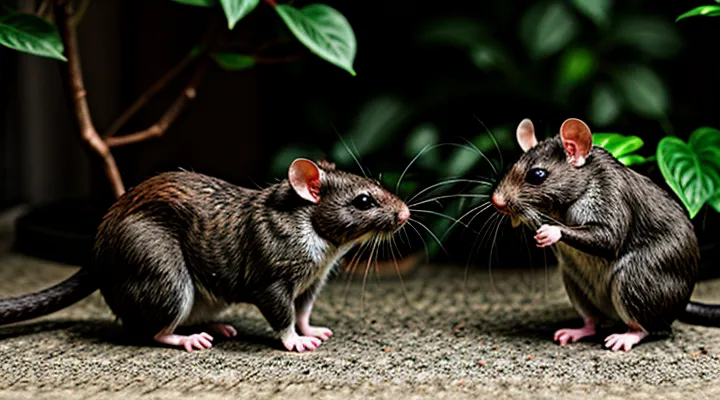
Understanding Rat Communication: An Overview
The Social Nature of Decorative Rats
Decorative rats exhibit complex social structures that influence their communicative patterns. Individuals form stable groups in which dominance hierarchies are established through repeated interactions. Higher‑ranking members gain priority access to resources, while subordinate rats adjust their behavior to maintain group cohesion.
Communication within these groups relies on multimodal signals. Visual cues include posture adjustments and tail positioning; auditory signals consist of high‑frequency chirps and low‑frequency squeaks; chemical messages are conveyed through scent glands and urine markings. Each modality reinforces social bonds and clarifies hierarchical status.
Key social behaviors can be summarized as follows:
- Grooming exchanges – reciprocal cleaning that strengthens affiliative ties.
- Territorial marking – deposition of scent cues to delineate personal space and signal occupancy.
- Play bouts – brief, non‑aggressive interactions that facilitate learning of social norms.
- Vocal negotiation – coordinated calls used to resolve conflicts and coordinate movement.
Group dynamics adapt to environmental changes. When resources become scarce, competitive vocalizations increase, prompting re‑evaluation of rank. Conversely, abundant conditions encourage cooperative foraging and synchronized nesting activities, reducing the frequency of aggressive signals.
Sensory Modalities in Rat Communication
Olfactory Signals and Their Role
Olfactory signals constitute a primary channel through which ornamental rats convey information. Scent marks deposited by individuals encode identity, reproductive status, and territorial boundaries, allowing conspecifics to interpret social context without visual cues.
The chemical composition of these signals includes volatile compounds released from the preputial, flank, and anal glands. Species‑specific pheromones, such as methyl‑acetate and 2‑heptanone, persist on surfaces and are detectable for extended periods, providing a reliable medium for long‑range communication.
Detection relies on the vomeronasal organ and main olfactory epithelium, which house receptors tuned to the molecular structure of rat pheromones. Signal transduction triggers neural pathways that integrate scent information with memory and hormonal state, shaping immediate behavioral responses.
Resulting behaviors derived from olfactory cues include:
- Territory establishment and defense
- Mate attraction and assessment of reproductive readiness
- Hierarchical positioning within groups
- Recognition of kin and avoidance of inbreeding
These functions collectively sustain the social architecture of decorative rat colonies, ensuring cohesion and reproductive efficiency.
Auditory Cues: Vocalizations and Ultrasonic Frequencies
Auditory signals among decorative rats consist of two distinct categories: audible vocalizations and ultrasonic emissions. Audible calls include short chirps, low‑frequency squeaks, and prolonged croaks, each associated with specific behavioral contexts such as alarm, territorial display, and mate attraction. Ultrasonic frequencies, ranging from 20 kHz to 80 kHz, convey information beyond human perception, supporting covert communication during foraging and social grooming.
- Chirps (4–8 kHz): rapid onset, high repetition rate, indicating immediate threat.
- Squeaks (10–15 kHz): moderate duration, used in pair bonding and nest maintenance.
- Croaks (1–3 kHz): low‑frequency, sustained tones, marking dominance hierarchies.
- Ultrasonic bursts (20–80 kHz): brief pulses, transmitted during exploratory activities and predator evasion.
Acoustic analysis reveals that vocal amplitude correlates with the urgency of the signal, while frequency modulation encodes individual identity. Ultrasonic emissions exhibit precise temporal patterns, enabling receivers to discriminate between conspecifics and heterospecifics. Neurophysiological studies confirm that the auditory cortex of decorative rats contains specialized tonotopic regions tuned to both audible and ultrasonic bands, facilitating parallel processing of layered information.
Environmental factors modulate signal propagation. Dense vegetation attenuates low‑frequency sounds more effectively than ultrasonic pulses, prompting rats to favor high‑frequency communication in cluttered habitats. Conversely, open arenas enhance the reach of audible calls, supporting long‑distance alarm broadcasts.
Research employing high‑speed microphones and spectral analysis software quantifies the spectral power distribution of each call type, establishing a comprehensive acoustic profile. These data support the conclusion that auditory cues form a dual‑channel communication system, integrating overt vocalizations with covert ultrasonic messaging to maintain social cohesion and predator awareness within decorative rat populations.
Tactile Interactions and Social Bonding
Decorative rats rely on tactile cues to establish and maintain social connections. Whisker contact, body brushing, and gentle nuzzling convey information about hierarchy, health, and emotional state. These physical signals are processed by mechanoreceptors that trigger rapid neural responses, reinforcing group cohesion.
During grooming sessions, rats exchange saliva and scent markers, which further solidify bonds. Repeated tactile exchanges increase oxytocin-like peptide release, reducing stress and promoting cooperative behavior. The frequency and intensity of contact correlate with group stability: higher interaction rates predict lower aggression and better resource sharing.
Key aspects of tactile communication include:
- Contact type: Light strokes signal affiliation; firm pressure indicates dominance.
- Duration: Extended grooming fosters long‑term attachment, while brief touches maintain immediate awareness.
- Reciprocity: Mutual exchange of touch ensures balanced relationships and prevents isolation.
Environmental factors such as substrate texture and enclosure design influence the effectiveness of tactile interactions. Soft bedding enhances grooming frequency, whereas hard surfaces limit contact opportunities and may elevate tension within the group.
Understanding these mechanisms allows caretakers to optimize habitat conditions, encouraging natural touch behaviors that support robust social structures among decorative rats.
Visual Signals and Body Language
Decorative rats convey information primarily through visual cues that are observable without auditory input. The most salient signals include ear orientation, whisker positioning, tail posture, and body silhouette. Each element functions as a discrete indicator of the animal’s internal state and social intent.
- Ear orientation: Forward‑facing ears denote alertness or curiosity; flattened ears signal submission or fear.
- Whisker position: Forward‑projected whiskers accompany exploratory behavior; retracted whiskers accompany defensive posturing.
- Tail posture: Elevated, stiff tail accompanies dominance displays; lowered, relaxed tail accompanies calm or affiliative behavior.
- Body silhouette: Expanded chest and raised fur indicate aggression; crouched stance and compressed body indicate avoidance.
Body language integrates these signals into coherent sequences that structure interactions. During approach, a rat typically raises its forepaws, extends its head, and holds whiskers forward, establishing a non‑threatening profile. In contrast, retreat involves a lowered head, backward‑tilted ears, and a tucked tail, communicating withdrawal. The combination of posture, ear and tail placement, and whisker alignment provides observers with a reliable assessment of the rat’s motivational state.
Color patterns on decorative fur augment visual communication. Contrasting patches highlight specific body regions, enhancing the visibility of posture changes. For example, a bright dorsal stripe accentuates spine elevation during threat displays, while muted ventral tones reduce conspicuousness during submissive crouches. These pigment arrangements function as visual amplifiers, ensuring that subtle posture adjustments remain detectable within group dynamics.
Interpretation of visual signals relies on consistent intra‑species conventions. Repeated exposure to the same cue–response patterns reinforces the association between a particular posture and its outcome, allowing rats to coordinate social hierarchies, mating rituals, and territorial negotiations with minimal reliance on vocalizations.
Deciphering Rat Vocalizations
Types of Ultrasonic Vocalizations (USVs)
Long USVs: Indicating Positive Affect
Long ultrasonic vocalizations (USVs) that exceed 50 ms in duration are consistently linked to positive affect in ornamental rats. These vocalizations occupy the 20–80 kHz frequency range, with peak frequencies typically centered around 50 kHz. Their extended temporal structure differentiates them from brief, 10–30 ms calls associated with alarm or distress.
During social play, grooming, and food anticipation, rats emit long USVs at rates up to 8 calls per minute. Playback experiments demonstrate that listeners increase approach behavior and display heightened exploratory activity when exposed to these calls, confirming their rewarding quality. Neurophysiological recordings reveal elevated activity in the nucleus accumbens and ventral tegmental area during emission, aligning with dopaminergic pathways that mediate pleasure.
Research methodology commonly includes:
- High‑frequency microphones calibrated for 20–100 kHz capture.
- Automated segmentation algorithms that classify calls by duration and spectral features.
- Behavioral scoring synchronized with vocal output to correlate affective states.
Long USVs serve as a reliable indicator for welfare assessment in captive populations. Monitoring their frequency provides a non‑invasive metric for environmental enrichment effectiveness and can guide husbandry adjustments to promote positive emotional states.
Short USVs: Associated with Aversive Stimuli
Short ultrasonic vocalizations (USVs) emitted by decorative rats serve as reliable indicators of negative emotional states. These calls typically occupy the 18–32 kHz band, with a peak around 22 kHz, and last between 30 and 200 ms. Their occurrence rises sharply after exposure to electric shocks, predator odors, or social defeat, confirming a tight link to aversive stimuli.
Acoustic and behavioral data reveal several consistent patterns:
- Frequency: narrow-band peak near 22 kHz, minimal harmonic content.
- Duration: brief bursts, rarely exceeding 200 ms.
- Amplitude: moderate intensity, sufficient for intra‑colony detection but below human hearing threshold.
- Temporal distribution: clustered within seconds of stimulus onset, often preceding freezing or escape behaviors.
- Neural correlates: activation of the amygdala‑central nucleus and periaqueductal gray aligns with call production.
Experimental protocols employing conditioned fear paradigms demonstrate that suppression of short USVs reduces stress‑related physiological responses, indicating a functional role in signaling danger to conspecifics. The specificity of these vocalizations distinguishes them from the longer, 50‑kHz calls associated with positive contexts, reinforcing their utility as a measurable marker of aversive processing in ornamental rodent communication.
Interpreting Audible Sounds
Squeaks and Chirps: Context and Meaning
Squeaks and chirps constitute the primary acoustic signals employed by ornamental rodents during social interaction. High‑frequency squeaks, typically ranging from 8 to 12 kHz, appear when an individual encounters a novel object or environment, signaling heightened arousal and prompting nearby conspecifics to approach or retreat. Low‑frequency chirps, measured between 3 and 5 kHz, emerge during affiliative exchanges such as grooming or nest‑building, conveying a state of calm and reinforcing group cohesion.
The functional context of each vocalization can be distinguished by three observable parameters:
- Temporal pattern: Squeaks occur in rapid bursts lasting 0.2–0.5 s; chirps extend to 1–2 s with smoother envelopes.
- Amplitude modulation: Squeaks display abrupt onset and offset, whereas chirps exhibit gradual crescendos and decrescendos.
- Behavioral accompaniment: Squeaks align with exploratory locomotion; chirps accompany stationary, tactile activities.
Interpretation of meaning relies on recipient response. Experiments demonstrate that exposure to squeaks triggers increased locomotor activity and heightened vigilance, while chirps elicit reduced movement and prolonged proximity to the emitter. These reactions confirm that squeaks function as alert signals, whereas chirps serve as affiliative cues.
Acoustic analysis reveals that both signal types possess species‑specific spectral signatures, enabling precise discrimination even in noisy habitats. The consistency of these signatures across individuals supports their role as reliable carriers of contextual information within decorative rat communication systems.
Bruxing and Chattering: Comfort and Warning Signals
Bruxing, the rhythmic grinding of incisors, occurs most frequently when decorative rats are relaxed in a familiar environment. The sound frequency falls within the low‑to‑mid audible range, allowing conspecifics to detect the behavior without visual cues. This activity correlates with elevated oxytocin levels and a lowered heart rate, confirming its function as a physiological indicator of comfort. Observers can infer a stable social setting when bruxing is sustained for several seconds, especially during grooming or resting periods.
Chattering, characterized by rapid, high‑frequency tooth clicks, signals heightened arousal or perceived threat. The acoustic pattern rises sharply in pitch and tempo, producing a stark contrast to the smoother bruxing waveforms. Neurological studies link chattering to activation of the sympathetic nervous system, resulting in increased cortisol and preparedness for escape or confrontation. The presence of chattering alerts nearby rats to potential danger, prompting defensive postures or avoidance behaviors.
Both signals integrate auditory and somatic channels, enabling a compact communication system among ornamental rodents. The duality—bruxing for reassurance, chattering for alert—provides a clear, binary framework that reduces ambiguity in group dynamics. Understanding these mechanisms enhances interpretation of social stability and stress responses within captive or exhibition settings.
- Bruxing: low‑pitch, sustained grinding; indicates contentment and physiological relaxation.
- Chattering: high‑pitch, rapid clicking; indicates stress, threat perception, and activation of defensive responses.
Olfactory Communication: The Scent of Information
Pheromones and Their Behavioral Impact
Urine Marking: Territoriality and Status
Urine marking serves as a primary channel for conveying territorial boundaries and hierarchical status among ornamental rats. The fluid contains a complex blend of volatile and non‑volatile compounds, including pheromonal proteins, steroids, and electrolytes, which encode individual identity and rank. Recipients detect these cues through the vomeronasal organ and olfactory epithelium, triggering behavioral responses that reinforce spatial claims and social order.
The functional aspects of urine marking can be summarized as follows:
- Boundary establishment: Deposits are placed at entry points, perches, and nesting sites, creating a chemical fence that deters conspecific intruders.
- Rank signaling: Concentration of specific steroids, such as testosterone derivatives, correlates with dominant individuals, allowing subordinates to assess hierarchy without direct confrontation.
- Temporal information: Degradation rates of volatile components provide a timeline of recent activity, enabling rats to gauge the freshness of a claim.
- Individual identification: Unique protein patterns act as signatures, facilitating recognition of familiar neighbors versus strangers.
Experimental observations indicate that removal or masking of urine marks leads to increased exploratory behavior and heightened aggression, confirming the marks’ role in maintaining stable social structures. Moreover, variations in marking frequency and volume directly reflect changes in an individual’s status, with dominant rats exhibiting more frequent and larger deposits.
In captive environments, manipulation of substrate absorbency and ventilation can alter the efficacy of urine communication, affecting group dynamics. Proper management of these factors preserves natural signaling pathways and reduces stress-related conflicts.
Scent Glands: Individual Identification
Scent glands constitute a primary channel through which ornamental rats convey identity information. Each gland secretes a complex mixture of volatile and non‑volatile compounds that reflect the animal’s genetic makeup, hormonal status, and recent experiences. The resulting chemical profile remains stable enough for conspecifics to recognize individuals across multiple encounters.
Detection relies on the highly sensitive olfactory epithelium and vomeronasal organ. Receptor neurons bind specific molecular motifs, triggering neural patterns that correspond to known individuals. This system enables rapid discrimination without visual cues, supporting social cohesion in dense colonies.
Key functions of individual identification via scent glands include:
- Maintaining hierarchical structures by allowing subordinates to recognize dominant individuals.
- Facilitating mate selection through recognition of compatible pheromonal signatures.
- Reducing aggression by signaling familiarity among group members.
- Enabling kin recognition, which influences cooperative behaviors and resource allocation.
Chemical Signals in Reproductive Behavior
Chemical signaling governs mating interactions among ornamental rats, integrating olfactory cues with visual displays. Males emit volatile compounds from specialized scent glands during courtship. These pheromones convey individual identity, reproductive status, and genetic compatibility, prompting female receptivity.
Females assess pheromone concentration and composition through the vomeronasal organ. Elevated levels of specific fatty acid derivatives correlate with estrus, triggering approach behavior and synchronized vocalizations. In response, males adjust grooming patterns to enhance scent dissemination, reinforcing pair bonding.
Reproductive cycles exhibit temporal alignment with pheromone release. Peak emission occurs within the first hour of darkness, matching peak activity periods. Laboratory assays demonstrate that synthetic analogs of the dominant compounds elicit comparable mating responses, confirming their functional significance.
Key aspects of the chemical communication system include:
- Species‑specific glandular secretions
- Hormone‑modulated pheromone synthesis
- Rapid detection via nasal epithelium
- Behavioral modulation of both sexes
Understanding these mechanisms clarifies how olfactory signals complement visual ornamentation, shaping the overall communicative repertoire of decorative rats.
Body Language and Tactile Communication
Tail Positions and Their Meanings
Tail Wagging: Excitement and Play
Decorative rats rely on a repertoire of visual cues to convey emotional states, and tail movement forms a central element of this repertoire. When a rat’s tail oscillates rapidly, the motion signals heightened arousal associated with playful intent. The frequency, amplitude, and direction of the wag provide precise information about the animal’s excitement level.
Key observable features of tail wagging include:
- Frequency: Rapid, rhythmic flicks indicate intense enthusiasm; slower, intermittent movements suggest mild interest.
- Amplitude: Wide, sweeping arcs accompany vigorous play; narrow, subtle swings correspond to tentative engagement.
- Directionality: Alternating left‑right motions reflect balanced stimulation, while unilateral bends may signal a focus on a specific stimulus or companion.
Interpretation of these signals requires correlation with accompanying behaviors such as pouncing, vocal chirps, and body posture. A rat that combines high‑frequency tail wagging with upright stance and forward lunges is actively inviting interaction. Conversely, a similar tail motion paired with crouched posture and reduced mobility denotes alertness without playful intent.
For caretakers, responding appropriately enhances welfare. When rapid, high‑amplitude wagging is observed, offering interactive toys or initiating gentle play reinforces positive reinforcement. If tail wagging appears with cautious posture, providing a safe environment and minimizing sudden disturbances helps the rat transition to a more relaxed state.
Understanding tail dynamics therefore equips observers with a reliable metric for assessing excitement and playfulness in ornamental rats, allowing precise adjustments to enrichment protocols and social management.
Tail Thumping: Alarm and Aggression
Tail thumping serves as a rapid signaling mechanism among decorative rats, conveying both alarm and aggression without reliance on vocalization. When a rat perceives a threat, it strikes its tail against the substrate, generating a distinct acoustic pattern that nearby conspecifics recognize as a warning. The intensity, rhythm, and duration of the thump encode the level of perceived danger, prompting immediate evasive behavior in the audience.
In aggressive encounters, tail thumping escalates to a more forceful, repetitive sequence. The heightened amplitude signals dominance and readiness to confront, often preceding physical engagement. Observers interpret the amplified pattern as a declaration of intent, adjusting their own posture and response accordingly.
Key characteristics of tail thumping:
- Acoustic signature: Low-frequency thuds produced by rapid tail‑ground contact.
- Temporal structure: Short bursts for mild alerts; extended series for high aggression.
- Amplitude modulation: Increased force correlates with elevated threat level.
- Contextual interpretation: Conspecifics differentiate between defensive warnings and offensive displays based on rhythm and strength.
Neurophysiological studies reveal that the somatosensory cortex processes these vibrations, linking them to motor preparation for flight or fight. Behavioral assays confirm that rats trained to associate specific thump patterns with predator cues exhibit faster escape latency, while those exposed to aggressive thumps display heightened territorial marking and reduced approach behavior.
Overall, tail thumping integrates auditory and tactile channels to enrich the communicative repertoire of ornamental rodents, providing a versatile tool for both collective vigilance and individual assertion.
Grooming and Allogrooming Rituals
Grooming and allogrooming constitute a core component of the communicative repertoire of ornamental rats, functioning as both a hygienic practice and a signal exchange mechanism. Individual grooming involves precise removal of debris and parasites from fur, whiskers, and facial pads, executed with rapid, repetitive strokes that generate low‑frequency vibrations detectable by conspecifics through tactile receptors. These vibrations encode information about the groomer’s health status, stress level, and social rank, allowing receivers to assess the condition of the individual without direct visual inspection.
Allogrooming extends the same motor pattern to a partner, establishing a bidirectional flow of tactile feedback. The ritual follows a structured sequence:
- Initiation – the initiator approaches the recipient, presenting the forepaws and emitting a brief, high‑frequency squeak that signals intent.
- Contact – the initiator places the forepaws on the recipient’s dorsal or ventral surface, applying light pressure while maintaining rhythmic strokes.
- Synchronization – the recipient often responds with reciprocal strokes or a subtle tail flick, aligning its own tactile output with the initiator’s rhythm.
- Termination – a gradual reduction in stroke frequency accompanied by a soft exhalation signals the end of the interaction.
Each phase conveys distinct messages. Initiation whispers indicate willingness to engage; sustained contact reinforces affiliative bonds and reduces aggression; synchronized movements demonstrate mutual recognition of hierarchy; and a calm termination confirms the interaction’s success, reducing the likelihood of subsequent conflict. The tactile feedback generated during allogrooming also triggers the release of pheromonal cues from specialized skin glands, further enriching the multimodal communication channel.
In group settings, patterns of grooming frequency and partner selection map the social network of the colony. Dominant individuals receive more grooming bouts, while subordinate rats increase allogrooming toward higher‑rank members to curry favor. The cumulative effect of these rituals shapes group cohesion, stabilizes hierarchy, and facilitates the propagation of health‑related information across the population.
Play Behavior and Social Dynamics
Play among decorative rats serves as a primary mechanism for establishing and maintaining social bonds. During interaction, individuals exchange tactile cues, rapid darting motions, and vocalizations that convey intent, status, and emotional state. These signals enable participants to negotiate dominance, reinforce alliances, and reduce aggression.
Key components of rat play behavior include:
- Chasing and pouncing – demonstrates physical competence and prompts reciprocal engagement.
- Tug‑of‑war with whisker or tail contacts – signals willingness to cooperate and tests strength hierarchies.
- High‑frequency chirps and ultrasonic squeaks – encode excitement levels and act as immediate feedback for the partner’s actions.
Social dynamics within groups of ornamental rodents reflect a fluid hierarchy shaped by repeated play sessions. Frequent participants attain higher rank, while observers acquire information about group structure without direct confrontation. Grooming bouts often follow successful play, consolidating trust and reinforcing the established order.
Communication patterns observed during play differ from those used in defensive or mating contexts. The temporal precision of ultrasonic calls, the amplitude modulation of chirps, and the synchronized body postures create a distinct communicative repertoire that supports rapid assessment of intent. This repertoire allows groups to adapt swiftly to environmental changes, maintain cohesion, and allocate resources efficiently.
Environmental Factors Influencing Rat Communication
Impact of Group Size and Density
Group size directly influences signal frequency among ornamental rodents. As the number of individuals rises, the overall vocal output escalates, driven by heightened competition for resources and increased social monitoring. Dense aggregations compress acoustic space, prompting shorter, higher‑frequency calls that penetrate neighboring conspecifics more effectively.
Density modifies the spatial distribution of visual cues. Tight packing forces rats to rely on body posture and whisker movements rather than distant visual displays. Consequently, subtle tactile signals become predominant, and the repertoire of gestures expands to convey status, intent, and territorial boundaries within confined areas.
Key effects of varying group size and density include:
- Elevated call rates in larger groups, supporting rapid information exchange.
- Shift toward higher‑frequency vocalizations in crowded settings, enhancing signal reach.
- Increased reliance on tactile and proximal visual signals when space is limited.
- Expansion of gesture complexity to maintain hierarchical clarity under dense conditions.
These patterns demonstrate that both the number of participants and their spatial arrangement shape the communicative architecture of decorative rat colonies, affecting acoustic, visual, and tactile channels in predictable ways.
Effects of Stress and Fear on Communication Patterns
Stress and fear dramatically reshape the signaling repertoire of ornamental rodents. When exposed to acute stressors, these animals increase the frequency of short, high‑frequency vocalizations, while reducing the duration of complex chirps that normally convey social information. Elevated cortisol levels also suppress the production of scent marks, limiting the chemical channel used for territory demarcation and mate attraction.
Fearful states trigger a shift toward defensive communication patterns. Observable changes include:
- Rapid, repetitive squeaks that serve as alarm calls to conspecifics.
- Adoption of flattened ear postures and reduced tail flicking, diminishing visual cues.
- Intensified grooming motions that mask olfactory signals, decreasing the reliability of scent‑based messages.
Chronic exposure to stressors produces lasting alterations. Baseline vocal output declines, and the repertoire contracts to a narrow set of low‑complexity calls. Long‑term cortisol elevation impairs the neural circuits governing auditory processing, resulting in delayed response times to incoming signals. Consequently, group cohesion deteriorates as individuals fail to synchronize movements and coordinate foraging activities.
Overall, stress and fear impose a hierarchical reallocation of communicative resources: immediate survival cues dominate, while nuanced social exchanges are suppressed. This adaptive reconfiguration ensures rapid threat response but compromises the richness of the decorative rats’ communicative system.
Individual Differences in Communication Styles
Individual decorative rats exhibit distinct communication patterns that reflect underlying personality traits, sensory acuity, and social experience. These patterns emerge through variations in vocalization frequency, tail‑wiggle cadence, and scent‑marking intensity, allowing each rat to convey unique information within its group.
Key dimensions of individual variation include:
- Vocal pitch and rhythm – some rats produce higher‑frequency chirps with rapid intervals, while others favor lower tones and elongated pauses.
- Tail‑movement dynamics – differences appear in oscillation speed, amplitude, and directional bias, signaling confidence levels or territorial intent.
- Scent‑deposit behavior – individuals differ in the concentration of pheromonal secretions and the spatial distribution of markings, influencing mate attraction and hierarchy establishment.
These differences affect signal reception and interpretation. Rats with heightened auditory sensitivity respond more readily to subtle pitch shifts, whereas those with enhanced tactile perception prioritize tail‑movement cues. Social rank modifies responsiveness: dominant individuals tend to suppress low‑intensity signals, whereas subordinates amplify them to gain attention.
Environmental factors shape individual communication styles. Exposure to varied habitat complexity fosters adaptive modulation of signal strength, while limited social interaction can lead to reduced variability in vocal and gestural output. Consequently, the repertoire of each decorative rat is a product of innate predisposition and experiential refinement, contributing to the overall diversity of the species’ communicative system.
Evolution and Adaptation of Rat Communication
Phylogenetic Roots of Rat Communication
Rats belong to the Muridae family, a lineage that diverged from other rodents approximately 12–15 million years ago. Genetic analyses reveal that the genes governing ultrasonic vocalization and pheromone detection are conserved across murine species, indicating an early establishment of multimodal signaling mechanisms.
Key phylogenetic features of rat communication:
- Ultrasonic vocal repertoire – evolved in the common ancestor of Rattus and Mus; frequencies between 20–80 kHz are present in neonatal distress calls and adult social interactions.
- Olfactory receptor expansion – gene families related to major urinary proteins show duplication events coinciding with the emergence of complex scent marking.
- Neuroanatomical specialization – the auditory cortex and accessory olfactory bulb exhibit enlarged cortical layers in murids, reflecting selective pressure for precise signal processing.
- Social structure inheritance – hierarchical colony organization observed in wild Rattus species parallels that of early murine ancestors, reinforcing the role of communication in group cohesion.
Fossil records and molecular clocks suggest that the capacity for decorative visual displays, such as patterned fur pigmentation, arose concurrently with vocal and olfactory systems. Comparative studies of extinct and extant murids demonstrate that these traits co-evolved, enhancing intra‑species recognition and mate selection.
Overall, the phylogenetic trajectory of rat communication integrates acoustic, chemical, and visual channels, rooted in early murine diversification and refined through successive adaptive radiations.
Domestication's Influence on Communication
Domesticated ornamental rats exhibit distinct communicative patterns compared to their wild counterparts. Selective breeding and prolonged human contact have reshaped signal repertoires, altering both acoustic and visual channels.
Key modifications include:
- Expansion of high‑frequency vocalizations used during handling, enabling owners to detect subtle stress cues.
- Reduction of aggressive scent‑marking behaviors, replaced by increased reliance on tactile grooming signals within small groups.
- Adoption of prolonged ear‑posture adjustments that signal submissiveness, a trait rarely observed in feral populations.
Social dynamics shift as well. Hierarchical structures become less rigid; subordinate individuals display more overt affiliative gestures, facilitating cohesion in confined environments. Learned mimicry of caretaker movements emerges, allowing rats to anticipate feeding times and respond to human gestures with precise head‑tilts and paw extensions.
For practitioners, these changes demand refined observation techniques. Monitoring frequency spectra of vocal output provides early warning of health issues, while systematic recording of grooming exchanges aids in assessing group stability. Breeders can exploit the heightened responsiveness to auditory cues to reinforce desired traits through conditioned sound cues.
Overall, domestication drives a comprehensive reconfiguration of communication in decorative rats, integrating acoustic refinement, visual nuance, and social flexibility to accommodate the anthropogenic niche they occupy.
Future Research Directions in Rat Communication
Research on the communicative systems of ornamental rodents is poised for expansion across several methodological fronts. Emerging technologies, interdisciplinary collaborations, and refined analytical frameworks promise to deepen insight into signal production, reception, and social function.
Key avenues for investigation include:
- Neurophysiological mapping – applying in vivo calcium imaging and optogenetics to identify brain circuits that generate and interpret decorative vocalizations and tactile displays.
- Acoustic‑visual integration – quantifying how patterned fur coloration interacts with ultrasonic calls during mating rituals, using high‑speed videography synchronized with spectrographic analysis.
- Environmental modulation – testing how habitat complexity, lighting, and substrate vibrations alter signal structure and efficacy, employing controlled arena experiments.
- Comparative phylogenetics – reconstructing the evolutionary trajectory of ornamental communication across related murine species through genomic sequencing and ancestral state reconstruction.
- Machine‑learning classification – training deep neural networks on large datasets of recorded signals to detect subtle variations linked to individual identity, health status, or hierarchical rank.
- Social network dynamics – modeling information flow within colonies using agent‑based simulations to predict how decorative cues influence group cohesion and conflict resolution.
Advancing these directions will require standardized data repositories, cross‑disciplinary funding mechanisms, and ethical protocols that balance scientific rigor with animal welfare. The resulting knowledge base is expected to clarify the functional architecture of decorative rat language and to inform broader theories of animal communication.