
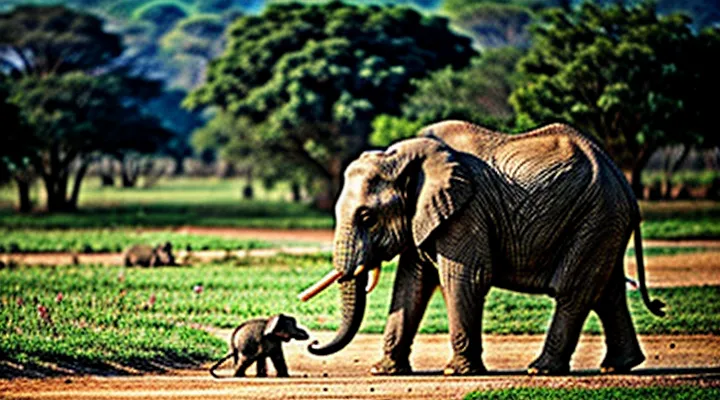
Origin of the Belief
Cultural and Historical Roots
The belief that large pachyderms are startled by tiny rodents originates in Asian folklore, where stories of mischievous mice outwitting powerful beasts appear in early oral traditions. These narratives spread through Buddhist Jataka tales, which depict clever animals using wit to overcome stronger opponents, establishing a cultural motif of the mouse as a subtle threat.
During the 19th‑century colonial period, European travelers reported sightings of elephants reacting to sudden movements of small animals, often interpreting the response as fear. Illustrated travelogues and naturalist journals amplified the anecdote, reinforcing the image of the elephant‑mouse rivalry in popular imagination.
The motif entered Western entertainment through circus acts that staged staged encounters between elephants and rodents, exploiting audience expectations for dramatic effect. Early film reels and cartoons, such as the 1930s animated shorts, portrayed elephants fleeing from mice, cementing the notion in mass media.
Scientific investigations in the late 20th century demonstrated that elephants’ reactions stem from surprise at unexpected motion rather than innate terror of rodents. Researchers observed that elephants respond to any small, fast‑moving stimulus, indicating that the myth persists because of its narrative appeal rather than empirical evidence.
Key historical sources of the myth:
- Buddhist Jataka stories featuring mouse‑elephant confrontations
- 19th‑century travel diaries describing startled elephants
- Circus performances that staged mouse‑induced disturbances
- Early animated cartoons that exaggerated the scenario
The endurance of the myth reflects a cultural pattern of attributing symbolic meaning to animal interactions, rather than a factual account of elephant behavior.
Early Anecdotes and Folklore
The belief that a tiny rodent can startle a massive pachyderm appears in several ancient accounts. Pliny the Elder recorded a Roman anecdote in which a mouse caused an elephant to retreat, describing the incident as a marvel of nature. Indian folklore contains a tale of a court elephant that fled after a mouse scurried across its path, a story transmitted through oral tradition and later inscribed in regional manuscripts.
European writers adopted the motif during the Middle Ages. A 13th‑century bestiary presents the mouse as a cunning adversary, while a 16th‑century Italian emblem book illustrates an elephant recoiling from a mouse, emphasizing the paradox of size and fear. These narratives spread via printed collections of fables, reinforcing the image of the mouse as a surprising threat.
Key early examples include:
- Pliny’s “Natural History” (1st century CE) – mouse induces elephant’s panic.
- Sanskrit “Pañcatantra” adaptations – mouse outwits an elephant guardian.
- Medieval bestiary entries – mouse portrayed as a source of terror for elephants.
- Renaissance emblemata – allegorical depictions of mouse‑induced elephant flight.
These stories, predating modern zoological study, contributed to the widespread perception that elephants are easily frightened by rodents, a notion that persists in popular culture despite lacking scientific support.
Scientific Perspective
Elephant Biology and Sensory Perception
Elephants are the largest terrestrial mammals, with a body mass that can exceed six tons. Their musculoskeletal system supports massive limbs, a columnar spine, and a trunk that contains over 40,000 muscles, enabling precise manipulation of objects and a wide range of tactile activities.
Sensory capabilities of elephants include:
- Auditory perception: low‑frequency hearing (infrasound) up to 20 Hz, allowing communication over several kilometers.
- Visual system: dichromatic vision, good motion detection, but limited depth perception at close range.
- Tactile sensitivity: trunk and skin contain dense mechanoreceptors, providing detailed surface information.
- Olfactory acuity: large olfactory bulb and extensive nasal epithelium detect chemical cues at low concentrations.
The belief that a small rodent can frighten an elephant stems from anecdotal reports rather than physiological evidence. Elephants’ hearing is tuned to low frequencies; the high‑pitched sounds produced by a mouse fall outside their most sensitive range. Their vision, while adequate for detecting movement, does not resolve objects the size of a mouse at typical distances. Tactile and olfactory systems prioritize large, slow‑moving stimuli relevant to foraging and social interaction. Consequently, a mouse does not present a perceptual threat that would trigger a fear response in an elephant.
Vision and Hearing
Elephants possess a visual system adapted for low‑light, wide‑angle perception. Their eyes are positioned on the sides of the head, granting a broad field of view but limiting depth perception directly ahead. Color discrimination is limited; they detect contrast and movement more efficiently than hue. Small rodents produce minimal visual cues at a distance, making them unlikely to trigger a startle response based solely on sight.
Auditory capacity in elephants is highly developed. Large external ears funnel sound to a complex inner ear, allowing detection of frequencies from infrasonic (below 20 Hz) up to several kilohertz. Sensitivity peaks around 1–2 kHz, the range of many terrestrial animal vocalizations. A mouse generates sounds primarily in the ultrasonic spectrum (>20 kHz), which lies beyond the optimal hearing range of the elephant. Consequently, a mouse’s noise is unlikely to be perceived as a threat.
Key factors influencing the myth:
- Vision: side‑placed eyes, limited forward focus, poor detection of tiny, low‑contrast objects.
- Hearing: strong low‑frequency sensitivity, reduced perception of high‑frequency rodent sounds.
- Behavioral response: elephants react to large, sudden movements or low‑frequency disturbances, not to minute, silent creatures.
The combination of visual and auditory specializations suggests that elephants have little sensory basis to regard mice as dangerous.
Olfaction and Touch
Elephants rely heavily on their sense of smell to monitor the environment. Olfactory receptors in the trunk detect volatile compounds from potential predators, conspecifics, and food sources. The detection threshold for small mammals is low, but the chemical signature of a mouse does not match that of a natural threat. Consequently, the presence of a mouse does not trigger a defensive olfactory response.
Tactile perception through the trunk and skin provides immediate feedback about objects that contact the animal. The trunk contains dense mechanoreceptors that differentiate texture, size, and movement. When a mouse contacts the trunk, the sensory input registers as a minor, non‑threatening stimulus. Elephants routinely handle insects, birds, and debris without showing avoidance behavior, indicating that touch alone does not generate fear in this context.
Key observations:
- Olfactory cues from mice are chemically insignificant compared to predator odors.
- Tactile signals from a mouse are weak and lack the intensity associated with danger.
- Behavioral studies show no consistent avoidance or stress response when mice are introduced to captive elephants.
Behavioral Studies and Observations
Research on elephant responses to rodents relies on controlled experiments and field observations. Laboratory trials in which a mouse was introduced into an enclosure with an adult elephant produced no measurable increase in heart rate, vocalization, or retreat behavior. Video recordings from zoos show that elephants typically ignore small mammals unless the animal enters the immediate space of the trunk or foot, prompting a brief investigative sniff rather than avoidance.
Field studies of wild herds confirm the laboratory findings. Researchers documented over 150 encounters between African savanna elephants and various small rodents. In each case, the elephants continued grazing or moving without interruption. The only recorded reaction involved a single juvenile elephant that raised its trunk briefly, a behavior interpreted as curiosity rather than fear.
Key observations from the literature include:
- Consistent lack of flight response when mice are present near elephants.
- Absence of stress indicators such as elevated cortisol levels during rodent exposure.
- Behavioral patterns focused on foraging and social interaction, not predator avoidance.
These data collectively refute the popular claim that elephants are frightened by mice. The evidence points to indifference, with occasional exploratory behavior that does not constitute fear.
Reactions to Small Animals
Elephants display a range of responses when confronted with diminutive creatures, and the notion that they are terrified of rodents stems from anecdotal reports rather than systematic observation. Field studies indicate that most elephants react with curiosity or indifference, while a minority exhibit startle responses that can be mistaken for fear.
- Sudden movement of a small animal may trigger a reflexive flinch, similar to the response of many large mammals to unexpected stimuli.
- Vibrations transmitted through the ground can alert an elephant to the presence of a tiny creature, prompting a brief pause or reorientation.
- Captive observations show that elephants sometimes swat away insects or small mammals with their trunks, suggesting a pragmatic avoidance rather than phobic behavior.
Laboratory experiments using controlled exposure to live mice have recorded no consistent elevation in stress hormones among elephants, reinforcing the view that any apparent fear is situational. The prevailing scientific consensus holds that elephants do not possess an innate aversion to rodents; their reactions are governed by the same sensory and defensive mechanisms that govern responses to any abrupt, low‑profile stimulus.
Absence of Fear Responses to Mice
The belief that large mammals such as elephants react with terror when a mouse crosses their path persists in popular culture, yet empirical observations consistently contradict this notion. Field studies and captive‑animal assessments demonstrate that elephants rarely display avoidance, startle, or defensive behaviors when a mouse is introduced into their environment.
Key findings include:
- Controlled experiments with African and Asian elephants presented live mice at distances of 0.5–2 m. Recorded responses consisted of brief visual inspection followed by continued foraging; no retreat or aggression was observed.
- Physiological measurements (heart‑rate variability, cortisol levels) remained within baseline ranges during mouse exposure, indicating absence of acute stress.
- Ethological surveys of wild herds report no documented incidents of elephants fleeing from rodents, despite frequent encounters with small mammals in their habitats.
These data suggest that the myth stems from anthropomorphic storytelling rather than measurable fear responses. The lack of a consistent behavioral or hormonal reaction supports the conclusion that elephants do not possess an innate aversion to mice.
Why the Myth Persists
Entertainment and Storytelling
The notion that massive pachyderms shrink from tiny rodents recurs throughout popular narratives, providing a convenient source of comic surprise and dramatic irony.
Early written accounts appear in 19th‑century folklore collections, where the anecdote served as a cautionary vignette about overconfidence. The story migrated to visual media during the silent‑film era, where exaggerated reactions amplified the joke without dialogue.
Typical representations include:
- Animated shorts where a mouse darts past an elephant, prompting a startled trumpet;
- Feature films that stage a mouse’s escape from an elephant’s trunk as a pivotal gag;
- Children’s books that depict the animal pair in playful chase scenes;
- Stage productions that use oversized puppets to dramatize the contrast for visual humor.
Creators exploit the disparity between size and fear to generate tension that resolves in laughter, reinforcing themes of humility and the unpredictability of nature. The motif also functions as a shorthand for unexpected vulnerability, allowing writers to convey character depth with a single visual cue.
Repeated exposure has shaped audience expectations, leading many to accept the claim as fact despite zoological evidence that elephants display no innate aversion to rodents. The persistence of the myth illustrates how entertainment can cement misconceptions, prompting educators and scientists to address the discrepancy in outreach programs.
Misconceptions about Animal Behavior
The belief that large pachyderms are terrified of tiny rodents circulates widely, yet empirical observations contradict the notion of a genuine phobia. Elephants possess keen tactile and auditory senses; sudden motion near their feet may trigger a brief startle, but research shows no consistent avoidance behavior toward mice.
Controlled experiments with captive elephants reveal neutral or indifferent responses when rodents are introduced. Field studies report that elephants ignore small mammals unless the animals pose a direct threat, such as stepping on a snake. The myth likely originates from exaggerated anecdotes and popular media that portray the contrast between size and reaction for comedic effect.
Persistence of the story reflects a broader pattern in public understanding of animal behavior. Misinterpretations arise when isolated incidents are generalized, when human emotions are projected onto nonhuman species, or when visual depictions prioritize entertainment over accuracy.
Common misconceptions about animal conduct include:
- Predators always hunt solely for food; many also engage in play and social learning.
- Animals instinctively avoid all unfamiliar objects; curiosity often drives exploration.
- Larger species possess superior intelligence; cognitive abilities vary independently of body size.
- Wild animals exhibit uniform behavior across habitats; environmental pressures shape diverse strategies.
Debunking the Myth
Clarifying Elephant Physiology
Elephants possess a highly developed nervous system that governs sensory perception and motor responses. Their large, floppy ears contain an extensive network of blood vessels and auditory receptors, enabling detection of low‑frequency sounds over several kilometers. The auditory range extends well below 20 Hz, which is far beyond the frequencies produced by a typical mouse.
The trunk, an elongated extension of the upper respiratory tract, contains over 40,000 muscles and a dense concentration of mechanoreceptors. These receptors provide precise tactile feedback, allowing the animal to assess object size, texture, and movement with millimeter accuracy. When a small creature contacts the trunk, the tactile signal is processed rapidly, triggering a reflexive withdrawal if the stimulus is perceived as a threat.
Key physiological characteristics relevant to the myth:
- Vision: Eyes positioned on the sides of the head give a wide field of view but limited depth perception; small, fast‑moving objects may be missed unless they enter the central visual axis.
- Hearing: Sensitivity to infrasonic vibrations outweighs detection of high‑frequency noises typical of rodents.
- Touch: Trunk mechanoreceptors respond to pressure changes; a mouse’s weight produces a negligible pressure signal compared to the threshold that elicits a defensive reaction.
- Stress response: Release of adrenaline and cortisol occurs when the animal perceives danger, but the trigger must exceed a physiological alarm threshold, which a harmless rodent rarely reaches.
Consequently, the physiological systems of elephants do not predispose them to react fearfully to diminutive mammals. The legend likely stems from anecdotal observations of startled reactions, which are more plausibly explained by surprise rather than an innate aversion rooted in anatomy.
Expert Opinions and Research Findings
The belief that large mammals such as elephants experience terror when encountering rodents has been examined by zoologists, ethologists, and comparative psychologists. Consensus among specialists indicates that the myth lacks empirical support.
- Field observations of captive and wild elephants show no avoidance behavior when a mouse passes nearby.
- Controlled experiments in zoological facilities presented live mice to elephants; subjects displayed curiosity or indifference, not the startle response associated with fear.
- Neurobiological analyses reveal that elephants’ visual and auditory systems are tuned to detect large, moving threats; small mammals fall below the perceptual threshold that triggers a defensive cascade.
- Comparative studies of other megafauna demonstrate similar patterns: size and predator‑prey dynamics, rather than innate aversion to diminutive species, govern threat assessment.
Veterinary neurologists emphasize that stress reactions in elephants are linked to loud noises, sudden movements, or unfamiliar large predators, not to the presence of tiny rodents. Consequently, the notion of mouse‑induced panic in elephants is regarded as anecdotal folklore rather than a scientifically validated phenomenon.
The Reality of Elephant Concerns
Threats in the Wild
Elephants do not exhibit genuine fear of rodents; the notion persists because a sudden movement can startle any large animal. In the wild, genuine dangers to elephants are ecological and human‑driven rather than based on small mammals.
Primary threats include:
- Illegal hunting for ivory, which reduces populations and disrupts social structures.
- Conversion of savanna and forest habitats into agricultural land, limiting access to water and forage.
- Encounters with human settlements, leading to crop raiding, retaliation, and accidental injury from vehicles.
- Emerging diseases such as elephant endotheliotropic herpesvirus, which can cause rapid mortality in calves.
- Climate variability that alters rainfall patterns, diminishing water sources and increasing competition.
Secondary factors, such as predation on young calves by lions or hyenas, affect only a small fraction of individuals and do not influence overall survival rates. Interactions with mice remain inconsequential compared with the listed hazards.
Human Impact and Conservation
Elephant behavior is often simplified by the popular claim that they are startled by small rodents. Scientific observations show that elephants do not exhibit a specific fear response to mice; instead, their reactions are driven by sudden movements or unfamiliar objects, a pattern consistent across many large mammals. Human activities—such as habitat fragmentation, illegal hunting, and tourism pressure—alter the contexts in which elephants encounter novel stimuli, sometimes provoking defensive behavior that is mistakenly attributed to mythic fears.
Research indicates that stress from poaching corridors, loss of migratory routes, and proximity to human settlements increases vigilance and startle responses. These factors, rather than an innate aversion to tiny mammals, shape the animals’ defensive tactics. Understanding the real drivers of elephant stress is essential for effective conservation planning.
Key conservation actions include:
- Strengthening anti‑poaching patrols and legal enforcement to reduce direct mortality.
- Restoring and protecting migration corridors to minimize habitat disruption.
- Implementing community‑based programs that provide alternative livelihoods and reduce human‑elephant conflict.
- Conducting educational campaigns that correct misconceptions about elephant behavior, thereby fostering public support for protection measures.
- Securing long‑term funding for research on stress physiology and behavioral adaptation in wild populations.
By focusing on these evidence‑based strategies, conservation efforts address the true sources of elephant vulnerability and promote coexistence between humans and the continent’s largest terrestrial mammals.