
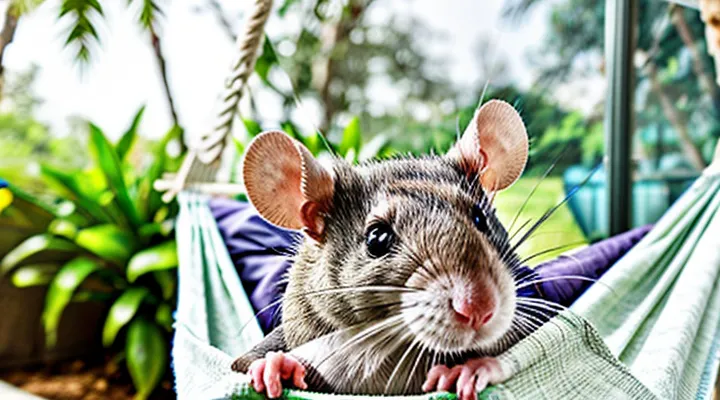
Why Your Rat Needs a Hammock
The Benefits of Hammocks for Rats
Comfort and Security
A rat hammock must combine softness with structural integrity to keep the animal calm and safe while it rests.
Select fabric that feels gentle against fur yet resists tearing. Ideal options include tightly woven cotton, fleece, or lightweight canvas treated with a non‑toxic sealant. The material should breathe, preventing heat buildup, and be washable for hygiene.
Construct the hammock with reinforced seams. Use a double‑stitch at all edges, spacing stitches no more than 3 mm apart to distribute the rat’s weight evenly. Fold the raw edges inward at least twice before stitching to eliminate fraying. Size the interior so the rat can stretch fully without touching the seams; a rectangle of approximately 12 × 8 cm works for most adults.
Secure the hammock to the cage using sturdy attachment points. Metal rings or D‑shaped eyelets sewn into the corners provide reliable anchors. Verify that the load capacity exceeds the rat’s weight by at least 50 % to avoid sagging. Position the hammock away from sharp cage bars and close to a quiet corner, reducing the risk of accidental injury or escape.
Key considerations for comfort and security
- Soft, breathable, washable fabric
- Double‑stitched, tightly spaced seams
- Folded and reinforced edges
- Dimensions allowing full stretch without contact with seams
- Metal eyelets or rings for strong attachment
- Load capacity ≥ 1.5 × rat’s weight
- Placement away from hazards and in a low‑traffic area
Following these specifications yields a hammock that supports the rat’s physical needs while providing a secure, stress‑free resting spot.
Enrichment and Play
A rat’s environment thrives on opportunities that stimulate natural climbing, nesting, and foraging behaviors. A handmade hanging platform supplies a vertical space that encourages exploration, strengthens muscles, and reduces stress. When constructing the hammock, select breathable, natural fibers such as cotton or fleece; these materials mimic the textures rats encounter in the wild and are easy to clean. Secure the hammock with sturdy, rust‑free wire or nylon braiding, attaching it to the cage’s upper bars at a height that allows the rodent to reach it without excessive strain.
Key considerations for enrichment and play:
- Position the hammock near a chewable object or tunnel to create a continuous activity circuit.
- Ensure the suspension points can support at least twice the rat’s weight to prevent sagging.
- Provide a removable cover so the rat can rearrange the interior, fostering problem‑solving.
- Rotate the hammock’s location periodically; changing the layout keeps the animal engaged and discourages habituation.
Integrating the hammock into daily routines enhances interaction. Offer treats on the platform to motivate climbing, then remove them to encourage independent use. Observe the rat’s behavior; signs of frequent climbing, grooming, and brief rest periods indicate the hammock fulfills its purpose. Adjust rope tension or add additional loops if the animal shows reluctance or difficulty accessing the structure.
Overall, a self‑sewn hanging perch serves as a compact, low‑cost enrichment device that supports physical activity, mental stimulation, and natural nesting instincts, contributing to a healthier, more content pet rat.
Materials and Tools for Your DIY Rat Hammock
Fabric Selection
Safe and Durable Materials
Choosing the right fabric, rope, and hardware determines the hammock’s longevity and the pet’s safety. Natural cotton canvas, woven polyester, and ripstop nylon resist tearing, withstand chewing, and are easy to clean. Heavy‑weight canvas (≥12 oz) offers rigidity; polyester (≥600 denier) provides water resistance; ripstop nylon (≥70 denier) combines lightness with strength.
Rope selection must balance tensile capacity and comfort. Braided polyester or nylon lines rated for at least 150 lb (≈68 kg) prevent breakage under dynamic loads. Avoid cotton cords, which stretch and degrade when exposed to moisture. Use snap‑hooks made from stainless steel or anodized aluminum; these metals resist corrosion and maintain secure connections.
Fastening points on the cage or support structure should be reinforced with eye bolts or mounting plates rated for the same load as the rope. Install bolts into solid wood or metal frames, not into plastic slats, to avoid failure. Apply lock washers or thread‑locking compound to eliminate loosening from the rat’s movement.
Finishing considerations:
- Trim excess fabric to prevent fraying.
- Heat‑seal or apply fabric glue to raw edges.
- Inspect all components weekly for wear, replacing any damaged element immediately.
Fabric Considerations
Select fabric that balances strength, weight, and breathability. Heavy‑duty canvas resists tearing but adds bulk; cotton twill offers moderate durability with softer feel. Nylon ripstop provides high tensile strength and low moisture absorption, suitable for outdoor use. Avoid fabrics that shed fibers, such as low‑grade fleece, to prevent respiratory irritation for the small animal.
Consider thread count and weave density. A weave of at least 12 threads per inch ensures structural integrity while allowing the rat to grasp the material. Tight weaves reduce gaps where claws might snag. For indoor hammocks, prioritize low‑pilling fabrics to maintain a smooth surface over time.
Assess chemical treatments. Fabrics pre‑treated with flame retardants or waterproof coatings may contain toxic compounds. Choose untreated or pet‑safe dyed materials; verify compliance with ASTM F963 or equivalent safety standards.
Plan seam reinforcement. Double‑stitched seams with UV‑resistant polyester thread increase load capacity. Incorporate a ¼‑inch margin of fabric beyond the stitching line to distribute tension evenly. Use a bar tack at each attachment point to prevent seam failure under repeated climbing.
Maintain cleanliness. Removable, machine‑washable fabrics simplify hygiene. Ensure the material tolerates 30 °C wash cycles without shrinking; pre‑shrink the fabric before assembly to preserve dimensions.
Summary of recommended fabrics:
- Nylon ripstop (UV‑stable, low stretch)
- Heavy‑weight cotton canvas (natural, breathable)
- Twill‑weave polyester (quick‑dry, durable)
Each option meets the criteria for strength, safety, and comfort required in a self‑constructed rat hammock.
Essential Sewing Supplies
Needles and Thread
When constructing a miniature hammock for a pet rodent, the choice of needle and thread directly influences seam strength and comfort. Select a fine, stainless‑steel or high‑carbon steel needle with a length of 25–30 mm; the point should be sharp enough to penetrate woven fabric without enlarging holes. A needle with a small eye (approximately 2 mm) accommodates thin, high‑tenacity thread while minimizing bulk.
Use a synthetic, polyester‑based thread rated for at least 30 lb (13.6 kg) tensile strength. A denier of 30–40 provides sufficient thickness to hold the weight of an adult rat (up to 300 g) without adding excessive stiffness. Polyester resists moisture and UV exposure, preserving seam integrity in a cage environment.
Key preparation steps:
- Thread the needle using a needle‑threader to avoid fraying the fine filament.
- Tie a double knot at the thread’s end; a small, tight knot prevents slipping through the fabric.
- Test the stitch on a scrap piece of the chosen hammock material to verify needle entry angle and thread tension.
During assembly, employ a running stitch or a backstitch for the main suspension lines. The backstitch offers greater pull resistance, essential for the repetitive climbing motions of a small animal. Secure each seam with two or three backstitches spaced 2–3 mm apart, then trim excess thread flush with the fabric surface to eliminate potential snags.
Measuring and Cutting Tools
Accurate measurement and clean cuts determine the strength and comfort of a homemade rat hammock. Use a flexible tape measure to trace the intended span between attachment points, allowing for curvature around the cage bars. Mark the fabric with a fine-tip fabric pen or chalk before cutting to prevent errors.
- Metal ruler or straight edge for straight lines
- Sharp fabric scissors or rotary cutter for smooth edges
- Cutting mat to protect surfaces and maintain blade integrity
- Pinch clamps or fabric pins to hold material in place while measuring
Measure twice, cut once. After marking, align the straight edge with the line, apply even pressure with the scissors, and keep the blade perpendicular to the fabric. Verify the cut length matches the recorded measurement before proceeding to seam assembly. Consistent tool use yields uniform strips, reducing stress points and extending the hammock’s lifespan.
Fasteners and Hooks
When constructing a miniature hammock for a pet rat, the choice of fasteners and hooks determines both structural integrity and ease of adjustment. Stainless‑steel eye bolts, split rings, and small carabiners provide reliable attachment points on the fabric and the support structure. Select components rated for at least 1 kg load to accommodate the animal’s movements and any additional stress.
Installation proceeds in three steps. First, reinforce the fabric corners with a double layer of heavy‑weight canvas or denim, then sew a reinforced loop using a double‑needle lockstitch. Second, thread a 2‑mm stainless‑steel wire through each loop, securing it with a crimp sleeve to prevent slippage. Third, attach the wire ends to the chosen hooks, ensuring the hooks are anchored to a sturdy frame or ceiling joist with appropriate wall plugs.
Recommended fasteners and hooks:
- 3 mm stainless‑steel eye bolts with washers – for permanent mounting.
- 4 mm split rings – for quick release and reattachment.
- Miniature aluminum carabiners – for lightweight, corrosion‑resistant connections.
- 2 mm stainless‑steel wire with crimp sleeves – for flexible yet secure linkage.
- Heavy‑duty nylon zip ties – for temporary adjustments during fitting.
Each component should be inspected for sharp edges before assembly to avoid injury to the rat. After installation, test the hammock by applying a gradual load up to the maximum expected weight, confirming that no deformation or loosening occurs. Regularly tighten fasteners and replace any signs of wear to maintain safety.
Step-by-Step Hammock Construction
Preparing Your Fabric
Measuring and Cutting
Accurate dimensions determine the hammock’s strength and comfort for a small rodent. Begin by selecting a lightweight, breathable fabric such as cotton canvas; a strip 12 inches wide and 24 inches long provides sufficient surface area for a typical laboratory rat. Measure the fabric with a steel ruler or a measuring tape, marking the endpoints with a fine-tip fabric pen. Verify the marks by measuring twice to eliminate errors.
Next, calculate the suspension length. The distance between the anchor points should be roughly 1.5 times the fabric length, yielding a sag of approximately 6 inches when the rat occupies the hammock. Measure the intended anchor spacing on the support beam, record the value, and add a 2‑inch allowance for knot loops. Mark the rope at the adjusted length, then cut.
Proceed to cutting:
- Place the fabric on a flat surface, align the measurement marks, and cut with sharp fabric scissors to avoid fraying.
- Use a utility knife or heavy‑duty scissors for the rope; cut cleanly at the marked point.
- After cutting, inspect edges for unevenness; trim any irregularities before proceeding to sewing.
These precise measurements and clean cuts create a reliable foundation for the subsequent stitching phase.
Hemming the Edges
Hemming the edges of a rat hammock creates a clean, durable border that prevents fabric from unraveling and eliminates rough seams that could injure a small pet.
Materials required for the hem:
- Fabric chosen for the hammock (cotton, linen, or lightweight canvas)
- Matching or slightly stronger thread
- Sharp scissors
- Pin cushion and pins
- Sewing needle or a machine equipped with a fine stitch setting
- Iron and ironing board
Procedure:
- Cut the fabric to the planned dimensions, adding an extra 1 inch on each side for the hem.
- Fold the raw edge inward ½ inch, press with the iron, then fold again another ½ inch to enclose the raw edge completely.
- Secure the folded strip with pins at 2‑inch intervals.
- Stitch a straight or a small zig‑zag stitch along the folded edge, keeping stitches ¼ inch apart for strength.
- Remove pins, trim any excess thread, and press the finished hem flat.
For enhanced durability, use a double‑stitch line on the outer side of the hem, select a polyester‑blended thread, and reinforce corners with a backstitch. The completed hem should be smooth to the touch and capable of withstanding repeated tension when the hammock is suspended.
Assembling the Hammock
Sewing the Main Body
The main body of a rat hammock consists of two fabric panels sewn together along three sides, leaving the fourth edge open for insertion of the support rope.
Select a breathable, lightweight fabric such as cotton voile or hemp canvas. Cut two rectangles measuring 12 cm by 20 cm; these dimensions accommodate an adult rat comfortably while allowing sufficient slack for movement.
Stitch the panels as follows:
- Align panels with the right‑sided (finished) faces together.
- Sew a 0.5 cm seam along the long edges and one short edge, using a straight stitch at 3 mm stitch length.
- Trim excess fabric, leaving a 0.3 cm seam allowance.
- Turn the sewn envelope right side out; the open edge will serve as the entry point for the suspension cord.
Reinforce the three sewn edges with a second line of stitching positioned 0.5 cm inside the original seam. This double‑stitch prevents fraying under the rat’s weight.
Create a reinforced channel for the support rope by folding the open edge 0.5 cm inward, stitching a 0.5 cm seam parallel to the edge, and then folding again to encase the rope. Secure the final fold with a lockstitch to ensure the cord remains in place during use.
Attaching Fasteners
Attaching fasteners securely is essential for a functional rat hammock that can support the animal’s weight and allow easy suspension.
Materials needed include nylon webbing or strong cotton cord, metal or plastic D‑rings, reinforced eyelets, a heavy‑duty needle, waxed thread, and a pair of scissors. Choose hardware rated for at least 5 lb (2.3 kg) to provide a safety margin.
- Measure the webbing to match the hammock’s length, leaving 2 in (5 cm) extra at each end for knots.
- Thread the needle with waxed thread, tie an overhand knot at the end.
- Pass the needle through the webbing end, pull the thread through, and create a double knot to form a loop.
- Slide a D‑ring or eyelet onto the loop, then pull the thread tight, securing the hardware with three surgeon’s knots.
- Repeat the process on the opposite end, ensuring both fasteners are aligned.
- Test each attachment by pulling with a steady force equal to the rat’s weight; the knots should hold without slipping.
After installation, trim excess thread and apply a small amount of fabric glue to the knots for added durability. Verify that the fasteners swivel freely if using D‑rings, preventing twists that could stress the fabric. Regularly inspect for fraying or wear, replacing any compromised component immediately.
Adding Finishing Touches
Reinforcing Stress Points
Reinforcing stress points is essential for a durable, safe hammock designed for a small rodent. Weak areas concentrate the load when the animal climbs, rests, or moves, leading to seam failure or fabric tearing.
The most vulnerable zones are the attachment loops that connect the hammock to the support, the corners where fabric folds, and the central seam that bears the majority of the weight. Each of these locations experiences repeated tension and must be strengthened beyond the basic stitch.
- Use a double‑stitch or lock‑stitch pattern along the entire perimeter, especially at loop holes.
- Apply a small fabric patch on the inside of each corner; secure it with at least three rows of tight stitches.
- Select a high‑tenacity polyester or nylon thread rated for at least 200 g tensile strength; avoid cotton or low‑strength synthetic threads.
- Incorporate a thin strip of ripstop nylon or woven webbing over the central seam, stitching it in place with a reinforced stitch.
- Tie loops with a figure‑eight knot, then pass the thread through the loop twice before tightening, creating a self‑locking reinforcement.
Materials that provide the best performance include heavyweight canvas or denim for the main body, ripstop nylon for reinforcement strips, and UV‑resistant polyester thread. Avoid flimsy fabrics that stretch under load.
After construction, attach the hammock to the support and apply a gradual load—first a few grams, then up to the expected maximum weight of the rat (approximately 300 g). Observe any deformation or loosening of stitches. Periodically inspect the reinforced zones for fraying or thread breakage and replace patches as needed to maintain structural integrity.
Optional Decorations
When adding optional decorations to a homemade rat hammock, prioritize materials that are safe, lightweight, and easy to clean. Decorative elements should not compromise the hammock’s structural integrity or the animal’s comfort.
- Natural fibers such as untreated cotton twine or hemp rope can be woven around the edges to create a fringe that enhances visual appeal while remaining chew‑friendly.
- Small fabric patches, cut into circles or stars, may be sewn onto the hammock surface using a fine, non‑toxic thread; these patches provide texture and can serve as visual landmarks for the rat.
- Lightweight wooden beads or natural pine cones, securely attached with a few stitches, add tactile variety without adding significant weight.
- Eco‑friendly, non‑painted felt shapes can be glued with a pet‑safe adhesive to the underside of the hammock, offering additional grip for the animal’s paws.
Attach each decorative component with a minimum of two stitches to distribute stress evenly. Verify that no loose ends protrude, as they could become choking hazards. After installation, inspect the hammock for any signs of wear before allowing the rat to use it.
Tips for a Successful Project
Safety First
Non-Toxic Materials
When constructing a hammock for a small pet rodent, selecting non‑toxic fabrics and threads eliminates the risk of chemical exposure. Materials that meet safety standards are readily available and inexpensive.
- Organic cotton canvas: breathable, sturdy, free of synthetic dyes.
- Hemp twill: natural fiber, resistant to wear, low allergen potential.
- Linen canvas: smooth texture, low moisture absorption, untreated fibers preferred.
- Unbleached muslin: soft for the animal’s paws, no chlorine or formaldehyde residues.
- Natural‑oil‑finished twine: waxed linen or sisal, provides strong seams without synthetic additives.
- Food‑grade polyester thread: dyed with certified non‑toxic pigments, maintains tensile strength during stitching.
Sourcing guidelines:
- Verify product labels for “organic,” “GOTS certified,” or “food‑grade” designations.
- Request material safety data sheets (MSDS) from suppliers to confirm absence of heavy metals, phthalates, and azo dyes.
- Avoid fabrics labeled “fire‑retardant” or “water‑proof” unless the treatment is explicitly listed as non‑hazardous.
Assembly considerations:
- Pre‑wash all fabrics in mild, fragrance‑free detergent; rinse thoroughly to remove residual chemicals.
- Test a small thread segment against the rat’s skin to ensure no irritation before completing the hammock.
- Use a double‑stitch pattern to reinforce load‑bearing edges without adding extra hardware that could contain metal alloys.
By adhering to these material choices and verification steps, the finished rat hammock remains safe, durable, and comfortable for daily use.
Secure Installation
When attaching a homemade rodent hammock, prioritize load‑bearing capacity and stability. Select mounting points that can sustain at least five times the rat’s weight; metal hooks on a sturdy frame or reinforced wooden beams work best. Verify that the surface is free of cracks, rot, or corrosion that could weaken the attachment.
- Use stainless‑steel carabiners or heavy‑duty eye bolts; avoid plastic fasteners.
- Thread the hammock’s support cords through the eye bolts, then tie a double‑figure‑eight knot for redundancy.
- Tighten each knot with a tensioning tool until the cord is taut but not overstretched; excess tension may cause premature wear.
- Attach a secondary safety line from the opposite side of the hammock to the same mounting point; this backup prevents collapse if the primary knot fails.
- Test the installation by applying gradual weight, starting with 25 % of the animal’s mass and increasing to full load; observe for any movement or slippage.
After confirming stability, inspect all connections weekly. Replace any component showing signs of fatigue, rust, or fraying to maintain a secure environment for the rat.
Customization Ideas
Different Hammock Styles
When constructing a hammock for a pet rat, selecting an appropriate style determines comfort, durability, and ease of cleaning.
- Flat‑weave hammock – simple rectangular fabric stretched between two anchor points. Uses lightweight cotton or fleece, sewn with a reinforced edge to prevent fraying. Ideal for rats that prefer a solid surface without sag.
- Catenary‑curve hammock – fabric or webbing forms a gentle curve, mimicking a natural hanging shape. Requires two suspension cords of equal length, attached to opposite corners. The curve distributes weight evenly, reducing pressure on the rat’s spine.
- Pocket‑style hammock – fabric folded to create a shallow pocket that encloses the rat’s body partially. Constructed from two layers of breathable material sewn together, leaving a small opening for entry. Provides a sense of security while allowing ventilation.
- Netted hammock – fine mesh stitched into a rectangular panel. Mesh size should be small enough to prevent paw injury but large enough for airflow. Suitable for rats that enjoy climbing and crawling within the enclosure.
- Enclosed tube hammock – cylindrical fabric tube sewn end‑to‑end, forming a tunnel that can be hung horizontally. Requires a larger diameter (approximately 3‑4 inches) to accommodate a rat’s body comfortably. Offers a protected environment for nesting and sleeping.
Each style demands precise seam reinforcement at attachment points. Use a double‑stitch or bar‑tack to secure the fabric to the suspension cords. Select thread that matches the fabric’s strength; polyester or nylon thread resists moisture and wear.
When choosing a style, consider the rat’s behavior: active climbers benefit from netted or pocket designs, while more sedentary individuals may prefer flat or catenary options. Ensure the hammock’s dimensions exceed the rat’s length by at least two inches to avoid confinement.
Proper installation involves anchoring the suspension cords to sturdy cage bars or external supports. Verify that the load capacity of the cords exceeds the rat’s weight by a factor of three to prevent failure. Regular inspection of seams and cords prevents wear‑related hazards.
Incorporating Toys
When adding play elements to a self‑stitched rat hammock, prioritize safety and durability. Select toys made of non‑toxic, chew‑resistant materials such as untreated wood, hard plastic, or natural sisal. Avoid items with loose strings, small detachable parts, or toxic dyes, as these can cause injury or ingestion.
Attach toys using reinforced stitching or lock‑stitch seams that match the hammock’s fabric gauge. Secure knots should be tied close to the fabric surface to prevent gaps where a rat could become trapped. Test each attachment by applying gentle tension to ensure it will not detach during vigorous play.
Typical play accessories include:
- A short wooden tunnel that fits within the hammock’s interior space.
- A small, flat platform with a textured surface for climbing.
- A detachable teething ring made of natural rubber, anchored with a double‑stitched loop.
- A miniature swing made from a thin, flexible strip of fabric, hung from the hammock’s side seams.
Integrate toys during the final assembly stage, positioning them so the rat can reach each element without excessive stretching of the fabric. Verify that the overall weight remains within the hammock’s load capacity, usually no more than 150 g for a standard laboratory‑grade rat. Regularly inspect seams and toy connections for wear, replacing any compromised components promptly.
Troubleshooting Common Issues
Loose Seams
When constructing a hammock for a small rodent, the integrity of each seam directly affects safety and durability. A seam that allows excess movement can create gaps where the animal may become trapped or cause the fabric to fray under load.
Loose seams often result from using an inappropriate stitch length, selecting thread with insufficient tensile strength, or failing to secure the final knot. Overly long stitches reduce the fabric’s grip on the thread, while thin or elastic thread stretches under weight, widening the seam.
To achieve tight, reliable seams:
- Choose a polyester or nylon thread rated for at least 50 lb break strength.
- Set the sewing machine to a stitch length of 2.5 mm to 3 mm; shorter stitches increase friction.
- Use a backstitch at the start and end of each run to lock the thread.
- Apply a double‑stitch along the edge of the hammock material, ensuring the needle penetrates both layers fully.
- Press the seam flat with an iron set to the fabric’s recommended temperature; this compresses fibers and reduces slack.
After stitching, perform a tension test by pulling the fabric gently along the seam. Any audible give indicates a need for reinforcement. Reinforce weak sections with a second line of stitching placed 2 mm inside the original seam. Trim excess thread and seal the seam edges with a fabric adhesive to prevent fraying.
Regular inspection—once weekly for the first month, then monthly—will detect early signs of loosening. Promptly re‑stitch any compromised area to maintain a secure environment for the pet.
Fabric Durability
When constructing a hammock for a small rodent, the choice of material determines how long the accessory will withstand weight, chewing, and environmental stress.
Durability depends on fiber composition, weave density, and finish. Natural fibers such as cotton and linen offer softness but degrade quickly under moisture and repeated gnawing. Synthetic options—polyester, nylon, and polypropylene—retain strength after many wash cycles and resist tearing from sharp teeth. A tight plain or twill weave adds tensile strength; a looser knit may sag and develop holes more rapidly.
Key factors to evaluate:
- Tensile strength – measured in pounds; select fabric rated above the animal’s weight plus a safety margin of at least 2 ×.
- Abrasion resistance – synthetic blends with a high denier count survive chewing better than low‑denier cotton.
- Moisture resistance – waterproof or water‑repellent coatings prevent mold growth and maintain structural integrity.
- UV stability – fabrics treated with UV inhibitors retain color and strength when exposed to sunlight.
For a DIY rat hammock, a 600‑denier polyester canvas provides an optimal balance of strength, chew resistance, and ease of cleaning. If a softer surface is desired, line the interior with a thin layer of fleece that can be removed and laundered separately, while the outer canvas bears the load.
Stitch selection influences longevity as well. Use a double‑threaded, 5‑mm polyester or nylon thread, and employ a reinforced seam pattern such as a flat-felled or bar tack at stress points (corners, attachment loops). Reinforce the attachment loops with a small metal eyelet or a sewn‑on fabric patch to distribute force evenly.
Regular inspection—at least once a week—identifies fraying or bite marks before they compromise safety. Replace any compromised panel promptly; the modular nature of a sewn hammock allows individual sections to be swapped without rebuilding the entire piece.
Maintaining Your Rat's Hammock
Regular Cleaning
Washing Instructions
When cleaning a self‑made rat hammock, preserve the fabric’s integrity and prevent shrinkage.
Use mild, fragrance‑free detergent. Avoid bleach, fabric softeners, or harsh chemicals that can degrade stitching or cause irritation.
Wash method
- Hand wash in lukewarm water (30‑35 °C). Submerge the hammock, gently agitate for 30 seconds, then rinse until no suds remain.
- If machine washing is necessary, place the hammock in a mesh laundry bag, select a gentle cycle, cold water, and a low spin speed.
Drying procedure
- Squeeze excess water without wringing.
- Lay the hammock flat on a clean, dry towel, reshape to original dimensions, and allow it to air‑dry away from direct sunlight or heat sources.
- Do not tumble dry; heat can warp seams and weaken threads.
Maintenance tips
- Spot‑clean stains promptly with a damp cloth and a small amount of detergent.
- Store the hammock rolled, not folded, to avoid creases that may stress seams.
- Inspect stitching after each wash; re‑secure any loose threads before the next use.
Drying Techniques
When the fabric is cut, sewn, and trimmed for a miniature rat hammock, residual moisture can weaken seams and encourage mildew. Immediate removal of dampness preserves structural integrity and extends the hammock’s lifespan.
Effective drying methods include:
- Air circulation: Hang the hammock in a well‑ventilated area, spacing it to prevent contact between layers.
- Low‑temperature tumble: Use a dryer on the “fluff” or “air‑only” setting for 10‑15 minutes; avoid heat that may shrink the material.
- Elevated rack: Place the piece on a mesh drying rack, allowing airflow on both sides.
- Targeted airflow: Apply a handheld hair dryer on a cool or warm setting, moving constantly to avoid localized overheating.
- Controlled environment: Situate the hammock in a room with a dehumidifier set to 45‑55 % relative humidity; maintain temperature around 20 °C (68 °F).
Key practices:
- Verify that the fabric is completely dry before final assembly; any lingering dampness can compromise stitching.
- Rotate the hammock periodically during drying to ensure uniform moisture removal.
- Avoid direct sunlight, which can fade colors and weaken fibers.
A fully dried hammock provides a stable, hygienic perch for the small pet, ready for immediate use.
Inspection and Repair
Checking for Wear and Tear
Inspecting a homemade rat hammock is essential for safe, long‑term use. Perform the following checks regularly, especially after each cleaning cycle or after the hammock has supported the animal for several weeks.
- Examine the fabric for fraying, thinning, or discoloration. Any loss of weave indicates reduced load capacity and should prompt replacement of the affected panel.
- Run a fingertip along each seam. Look for loose stitches, gaps, or uneven tension. Reinforce any weak spots with a double‑threaded stitch or a small patch of matching material.
- Test the attachment points. Verify that knots, knots, or hardware remain tight and that the rope or webbing shows no signs of abrasion where it contacts the cage bars.
- Assess the overall shape. The hammock should retain a symmetrical curve without sagging in the center. Excessive sag suggests stretched fabric or compromised support lines.
- Check for odors or stains that persist after washing. Residual waste can degrade fibers and attract pests; clean or replace the hammock if cleaning does not restore it to a neutral condition.
If any item on the list fails, repair or rebuild the hammock before allowing the rat to use it again. Regular inspection prevents sudden failure and extends the life of the DIY rat hammock.
Simple Fixes
When a homemade rat hammock shows signs of wear, quick adjustments prevent failure and keep the pet safe. Replace frayed stitching with a double backstitch using a sturdy polyester thread; this adds tensile strength without adding bulk. If the fabric sags under the animal’s weight, reinforce the corners with small fabric patches sewn on the inside, distributing load evenly. Loose knots can be tightened by pulling the standing end firmly, then securing with a surgeon’s knot to avoid slipping. When the hammock hangs unevenly, measure the distance between attachment points, adjust to equal lengths, and re‑attach using metal rings rather than elastic cords, which stretch over time. For occasional stains, spot‑clean with a mild detergent diluted in warm water, rinse with a damp cloth, and air‑dry completely before reuse. These straightforward remedies extend the lifespan of a DIY rat hammock and maintain a reliable resting platform.