
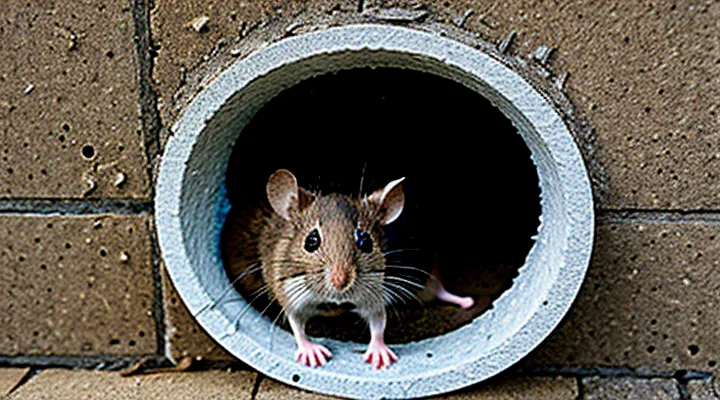
Understanding the Problem «Why Mice Chew Walls»
Common Reasons for Mouse Chewing «Food, Shelter, and Nesting»
Mice gnaw wall openings to satisfy three primary needs. Access to sustenance, protection from predators, and a structure for offspring drive this behavior.
- «Food» – rodents test gaps to reach crumbs, stored provisions, or piping that carries edible residues.
- «Shelter» – concealed passages offer refuge from temperature fluctuations and external threats.
- «Nesting» – enlarged cavities provide material collection points and space for building nests.
Understanding these motivations clarifies why sealing compromised walls is essential; eliminating entry points removes the means to obtain nourishment, hide from danger, and construct a nest, thereby reducing future damage.
Identifying the Extent of Damage «Assessing Wall Holes»
Before any sealing work, determine the full scope of mouse‑induced damage. Accurate assessment prevents unnecessary material use and ensures long‑term effectiveness.
Identify all entry points. Walk the interior and exterior walls, looking for gnaw marks, sawdust piles, and fresh bite edges. Use a flashlight to highlight darkened tunnels and a mirror to view concealed areas behind trim or fixtures.
Measure each opening. Record width, height, and depth with a tape measure or caliper. Note the material type (drywall, plaster, wood) and any surrounding deterioration such as crumbling plaster or moisture stains.
Inspect surrounding structure. Check for secondary damage: weakened studs, compromised insulation, and signs of nesting material. Verify that no additional holes exist behind the visible ones by probing with a thin rod or flexible inspection camera.
Document findings. Create a simple table listing location, dimensions, material, and observed secondary effects. This record guides material selection and prioritizes repair sequence.
Proceed to sealing only after the comprehensive «Assessing Wall Holes» stage confirms that all compromised sections are accounted for.
Essential Tools and Materials «Gathering Your Arsenal»
Safety Gear «Protecting Yourself»
Gloves and Masks «Recommended Personal Protection»
When repairing rodent‑damaged walls, direct contact with dust, droppings, and sealant chemicals presents a health risk. Protective equipment mitigates exposure and maintains work quality.
Gloves designed for chemical resistance and puncture protection are essential. Nitrile gloves offer durability against sealants and sharp debris, while rubber‑coated gloves provide additional grip when handling tools. Select gloves with a snug fit to preserve tactile sensitivity and inspect for tears before each use.
Masks prevent inhalation of particulate matter and potential pathogens. A certified N95 respirator filters at least 95 % of airborne particles; for environments with strong odors or fumes, an elastomeric respirator equipped with appropriate cartridges delivers superior protection. Ensure a proper seal around the nose and mouth and replace filters according to manufacturer guidelines.
Practical steps for safe execution:
- Verify glove integrity; replace damaged units immediately.
- Perform a fit test for the chosen mask; adjust straps for a leak‑free seal.
- Wear both gloves and mask simultaneously, adhering to the principle of «Recommended Personal Protection».
- Dispose of single‑use gloves and filter cartridges in sealed containers after completion.
Consistent use of suitable gloves and masks reduces health hazards and supports efficient restoration of compromised wall surfaces.
Cleaning and Preparation Supplies «For a Flawless Finish»
Brushes and Vacuum Cleaners «Removing Debris»
When preparing rodent‑chewed wall openings for repair, eliminating loose material is a prerequisite. The procedure «Removing Debris» ensures that sealant adheres directly to sound substrate, preventing future failure.
Stiff‑bristle brushes dislodge fragments lodged in irregular crevices. Select a brush with bristles sized to reach the narrowest gaps; apply firm, linear strokes to sweep dust and wood shavings toward the opening. For stubborn residues, a wire‑copper brush penetrates deeper without damaging surrounding plaster.
Vacuum cleaners complement brushing by extracting displaced particles. A shop‑vac equipped with a high‑flow hose captures debris efficiently; attach a narrow nozzle to target the interior of the hole. HEPA‑rated units are advisable when dust contains potential allergens, as they retain fine particles within the filter.
Typical workflow for «Removing Debris»:
- Attach appropriate brush, sweep interior of the opening.
- Immediately follow with a vacuum nozzle to collect dislodged matter.
- Inspect the cavity; repeat brushing and vacuuming until no visible residue remains.
- Proceed to apply sealant or repair material.
Consistent use of suitable brushes and vacuums eliminates contaminants, providing a clean foundation for durable wall restoration.
Sealing Agents «Choosing the Right Solution»
Steel Wool and Expanding Foam «Primary Blockers»
Mice create openings in walls that allow entry and cause insulation loss. Effective closure requires a material that resists chewing and fills gaps securely.
Steel wool provides a physical barrier that rodents cannot easily gnaw through. Cut the wool to match the diameter of the hole, press it firmly into the opening, and ensure the fibers are tightly packed against the surrounding wood or drywall.
Expanding foam applied over the steel wool seals remaining voids and hardens into a durable plug. Spray the foam until it fills the cavity, then trim excess after curing to achieve a flush surface.
Key steps for sealing mouse‑damaged wall openings:
- Cut steel wool to size and insert into the hole, compressing tightly.
- Apply expanding foam over the wool, allowing expansion to fill all gaps.
- Allow foam to cure according to manufacturer’s instructions.
- Trim cured foam to align with the wall surface.
- Inspect the repair for any remaining openings and repeat if necessary.
Using steel wool and expanding foam together creates a two‑layer defense: the wool blocks chewing, while the foam provides airtight sealing and structural stability. This combination constitutes the most reliable primary blockers for mouse‑induced wall damage.
Patching Compounds and Spackle «Finishing Touches»
When repairing rodent‑damaged wall openings, the final stage relies on the correct use of «Patching Compounds and Spackle» to achieve a seamless surface. These materials fill gaps, bond to surrounding plaster, and provide a smooth base for paint or wallpaper.
Selection criteria focus on composition, setting time, and shrinkage. Latex‑based compounds dry quickly and remain flexible, reducing the risk of cracks. Oil‑based fillers offer superior adhesion for deep gouges but require longer curing periods. Low‑shrinkage formulas prevent surface depressions after drying, preserving the integrity of the repair.
Application procedure:
- Remove loose debris and smooth edges of the damaged area.
- Apply a thin layer of the chosen compound with a putty knife, pressing firmly to eliminate air pockets.
- Allow the material to set according to manufacturer specifications; typical drying times range from 15 minutes (quick‑set) to several hours (oil‑based).
- Sand the cured surface with fine‑grain paper until flush with surrounding wall.
- Prime the patched section to ensure uniform paint absorption.
- Complete the process with a final coat of paint, matching the existing finish.
The «Finishing Touches» phase restores structural continuity and aesthetic uniformity, preventing future infestation pathways and preserving wall durability.
Step-by-Step Sealing Process «From Damage to Restoration»
Preparing the Area «Cleanliness is Key»
Clearing Debris and Dust «Ensuring Adhesion»
Before applying any sealing material, remove all loose fragments, gnawed wood splinters, and accumulated dust from the opening. Use a vacuum with a narrow nozzle or a brush‑type hand tool to draw out fine particles that could compromise the bond. Inspect the cavity for hidden debris; any residual material will create gaps that reduce the effectiveness of the filler.
Once the surface is clean, prepare it for optimal adhesion. Apply a thin coat of primer compatible with the chosen sealant; the primer penetrates the substrate and creates a uniform bonding layer. Allow the primer to dry completely before proceeding to the next step.
Key actions for a reliable seal:
- Vacuum or brush out all dust and crumbs.
- Scrape away loose wood or plaster fragments.
- Wipe the perimeter with a lint‑free cloth dampened with isopropyl alcohol.
- Apply a suitable primer to the cleaned area.
- Verify that the primer has cured before introducing the sealant.
Following these procedures guarantees that the sealing compound adheres firmly, preventing future rodent re‑entry and extending the durability of the repair.
Initial Blockage «The First Line of Defense»
Stuffing with Steel Wool «A Deterrent for Pests»
Steel wool provides a practical barrier for openings created by rodents. Its dense fibers resist chewing, making it an effective material for closing gaps in walls, foundations, and utility penetrations.
Key properties that contribute to pest exclusion include:
- High tensile strength that prevents rodents from pulling fibers apart.
- Sharp edges that irritate chewing surfaces, discouraging further damage.
- Compatibility with sealants, allowing a seamless finish after insertion.
Procedure for applying steel wool as a sealing agent:
- Clean the opening to remove debris and loose material.
- Cut a piece of steel wool slightly larger than the hole.
- Pack the fibers tightly into the cavity, ensuring no gaps remain.
- Apply a layer of exterior‑grade caulk or expanding foam over the packed area to lock the wool in place and protect against moisture.
- Allow the sealant to cure according to the manufacturer’s instructions before repainting or covering.
Maintenance considerations:
- Inspect sealed points periodically; steel wool can degrade over time due to corrosion or moisture exposure.
- Replace compromised sections and reseal with fresh material.
- Combine steel wool with metal mesh or hardware cloth in high‑traffic areas for added durability.
Using steel wool «A Deterrent for Pests» delivers a reliable, low‑cost solution for preventing rodents from re‑entering compromised wall structures.
Applying Expanding Foam «Filling Voids Securely»
Expanding foam offers rapid, durable closure for rodent‑damaged openings in interior and exterior walls. The material expands to fill irregular gaps, adheres to wood, plaster and masonry, and hardens into a rigid barrier that resists further chewing.
Preparation begins with cleaning the aperture. Remove loose debris, trim frayed edges, and ensure the surrounding surface is dry. Shield adjacent areas with painter’s tape to prevent excess foam spread.
Application steps:
- Insert the nozzle of a low‑expansion foam can into the cavity, positioning it near the deepest point.
- Dispense foam in short bursts, allowing each layer to expand before adding more; over‑filling creates pressure that may crack surrounding material.
- After the foam reaches the cavity’s perimeter, trim the excess with a utility knife while still pliable.
- Allow the foam to cure for the manufacturer‑specified period, typically 10–15 minutes, then sand the surface smooth.
- Seal the repaired area with a compatible patching compound or drywall tape, then finish with paint or plaster as needed.
The resulting seal eliminates drafts, blocks entry for further gnawing, and restores structural integrity. Regular inspection of adjacent wall sections helps detect new damage before it spreads.
Repairing the Surface «Aesthetics and Durability»
Applying Patching Compound «Smoothing the Area»
Repairing rodent‑damaged wall openings requires a durable, smooth surface to prevent recurrence and maintain structural integrity. Applying Patching Compound «Smoothing the Area» creates a seamless finish that resists further gnawing and blends with surrounding plaster.
Materials needed:
- Patching compound suitable for drywall or plaster
- Putty knife or trowel
- Sandpaper (medium‑grit)
- Clean cloth
- Primer and paint matching the wall
Procedure:
- Remove loose debris and any remaining fragments from the hole. Clean the perimeter with a damp cloth to eliminate dust.
- Apply a thin layer of the compound with a putty knife, pressing firmly into the cavity to fill gaps completely.
- Allow the first layer to set according to the manufacturer’s instructions, then apply a second coat to build height to the surrounding surface.
- Once the final coat dries, sand the area until smooth and level with adjacent wall sections.
- Prime the repaired spot, then paint to match the existing finish.
The result is a uniform, reinforced wall surface that eliminates entry points for pests and restores aesthetic continuity. Regular inspection of repaired zones ensures long‑term effectiveness.
Sanding and Priming «Ready for Paint»
After the damaged area has been filled, the surface must be prepared before applying paint. Proper sanding removes excess filler and creates a uniform texture that accepts primer evenly.
Sanding should begin with a medium‑grit (80‑120) abrasive to level the patch. Follow with a fine‑grit (180‑220) pad to smooth the transition between repaired and surrounding wall. Keep the sanding motion consistent, overlapping each pass to avoid low spots. Remove dust with a vacuum or a tack cloth; any residue will compromise adhesion.
Priming provides a sealed, moisture‑resistant base that prevents paint from soaking into the repaired zone. Apply a high‑quality, stain‑blocking primer formulated for interior walls. Use a roller or brush to cover the entire area, extending a few inches beyond the repair to blend with the existing paint. Allow the primer to dry fully according to the manufacturer's specifications before proceeding to the topcoat.
Recommended tools and materials
- Medium‑grit sanding block or orbital sander
- Fine‑grit sanding sponge
- Vacuum with brush attachment or lint‑free tack cloth
- Interior‑grade, low‑odor primer
- Synthetic‑bristle brush or low‑nap roller
- «Ready for Paint» label to confirm completion of the priming stage
Following these steps yields a smooth, primed surface that accepts paint without visible seams, ensuring a durable finish over areas previously damaged by rodents.
Finishing Touches «Blending In»
Painting the Repaired Area «Matching Existing Walls»
When repairing mouse‑damaged wall sections, the final step is to paint the patched area so that it blends seamlessly with the surrounding surface.
Begin by cleaning the repaired zone. Remove dust, debris, and any residual filler using a soft brush or vacuum. Apply a thin coat of primer suitable for the wall material; this stabilises the substrate and promotes uniform pigment absorption.
Select paint that matches the existing wall colour and finish. If the original paint is unknown, scrape a small sample from an inconspicuous spot and compare it with swatches. For walls with a matte or satin texture, choose a paint with the same sheen to avoid visible contrast.
Apply the matching paint using a quality brush or roller. Follow a two‑coat approach: first coat thin, allowing complete drying before the second application. Overlap the edges of the repaired area slightly into the surrounding wall to eliminate hard lines.
After the final coat dries, inspect the surface under different lighting conditions. Touch up any discrepancies with a fine‑tipped brush, blending edges gently. Once satisfied, clean tools with the appropriate solvent and allow the wall to cure for the manufacturer‑specified period before exposing it to normal use.
Preventing Future Infestations «Long-Term Solutions»
Inspecting for Entry Points «Finding Weaknesses»
Cracks and Gaps «Common Mouse Access Points»
Cracks and gaps constitute the primary routes through which mice infiltrate interior spaces. Small openings as narrow as a quarter of an inch allow entry, making thorough inspection essential.
Typical access points include:
- Foundation fissures and settling cracks.
- Gaps surrounding utility penetrations such as electrical conduit, plumbing, and gas lines.
- Openings around vent pipes, dryer exhausts, and chimney flues.
- Gaps at door frames, window sills, and floor joist seams.
- Unsealed openings behind baseboards, cabinets, and appliance installations.
Effective sealing requires materials that resist gnawing. Recommended solutions:
- Steel wool packed tightly into openings, followed by a layer of durable sealant.
- Expanding polyurethane foam applied to larger gaps, reinforced with mesh or metal flashing.
- Cement or hydraulic mortar for foundation cracks, ensuring a smooth, impermeable surface.
- Self‑adhesive metal or copper tape wrapped around pipe penetrations, then covered with silicone caulk.
- Rigid metal plates or lath secured over vent and dryer exhaust openings, sealed with high‑temperature silicone.
Regular maintenance involves periodic visual checks, especially after seasonal temperature shifts or building settlement, to verify the integrity of sealed areas. Prompt repair of newly formed cracks prevents re‑entry and reduces the likelihood of infestation.
Implementing Deterrents «Keeping Mice Away»
Traps and Repellents «Effective Control Measures»
Traps and repellents serve as essential components of a comprehensive strategy to stop rodents from re‑entering repaired wall openings. Deploying these measures before sealing creates a hostile environment that discourages further gnawing and reduces the likelihood of future damage.
-
Snap traps provide immediate lethal control; placement near known activity points maximizes capture rates.
-
Live‑capture traps allow removal without killing; regular checking prevents stress‑induced escape.
-
Electronic traps deliver rapid, humane termination; battery operation ensures reliability in concealed locations.
-
Glue boards capture small rodents passively; positioning along wall crevices enhances effectiveness.
-
Ultrasonic repellents emit high‑frequency sound waves that irritate rodents; installation in wall cavities distributes the signal throughout the structure.
-
Capsaicin‑based sprays create an aversive taste on surfaces; application around entry points deters gnawing.
-
Natural oil diffusers, such as peppermint or eucalyptus, emit scents rodents avoid; periodic re‑application maintains potency.
-
Light‑triggered deterrents flash bright LEDs when motion is detected; sudden illumination startles and discourages repeated visits.
Integrating «Effective Control Measures» with physical sealing—using steel wool, foam, or cement—creates a dual barrier. Initial trapping reduces population pressure, while repellents sustain a hostile environment during and after the repair process, ensuring long‑term integrity of the wall structure.
Maintaining a Clean Environment «Minimizing Attractions»
Proper Food Storage «Eliminating Temptations»
Proper food storage directly reduces the attraction of rodents to structural gaps. By limiting accessible nutrients, the incentive for mice to gnaw through walls diminishes, supporting long‑term repair efforts.
Key practices for secure storage:
- Store all dry goods in airtight containers made of metal or thick plastic; ensure lids seal without gaps.
- Place perishable items in refrigeration units promptly; avoid leaving food at ambient temperature for extended periods.
- Keep pantry shelves organized; rotate stock so older items are used first, preventing spoilage that emits strong odors.
- Position storage containers away from exterior walls and baseboards; maintain a clear perimeter of at least 12 inches.
- Clean spills immediately; vacuum crumbs and residues from floors and cabinets daily.
Implementing these measures creates an environment where the primary driver for rodent activity is removed, reinforcing the overall strategy of «Eliminating Temptations» and protecting structural integrity.
Regular Housekeeping «Removing Debris and Clutter»
Regular housekeeping that eliminates debris and clutter creates an environment less attractive to rodents, reducing the likelihood of new gnawing activity. Accumulated material near wall openings provides concealment and easy access for mice; its removal denies shelter and limits entry points.
Effective debris removal includes:
- Sweeping and vacuuming the area surrounding each opening to capture loose particles.
- Discarding stored items that create pathways or hide damage.
- Organizing remaining objects to maintain clear sightlines and unobstructed access for inspection.
Once the space is cleared, the remaining holes can be sealed with appropriate materials such as steel wool, expanding foam, or cement. A clean surface ensures proper adhesion and prevents gaps that could compromise the seal. Continuous monitoring of the cleared area supports early detection of any fresh damage, allowing prompt repair and sustained protection.