
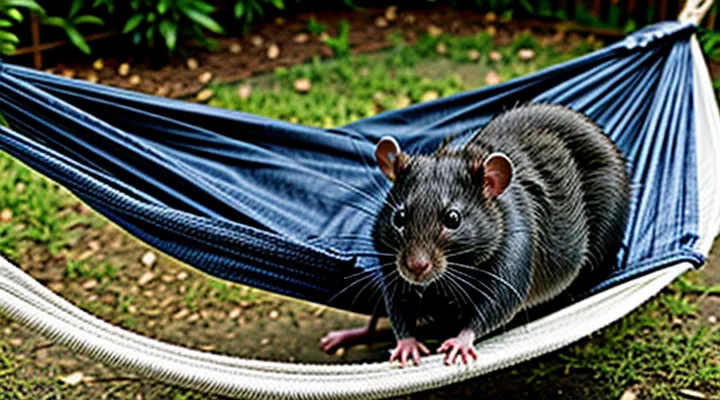
Why a Hammock for Your Rat?
Comfort and Enrichment
A rat hammock adds a dedicated resting zone that supplements the cage’s floor space, reducing pressure on joints and encouraging a natural hanging posture.
- Use breathable cotton or fleece with a weight of 80–120 g/m²; the material should be soft enough to prevent skin irritation while remaining durable under repeated use.
- Size the hammock to accommodate a mature rat’s length plus a 2‑inch margin, ensuring the animal can stretch fully without feeling confined.
- Attach the suspension points to the cage’s upper bars with stainless‑steel clips; the clips must support at least 500 g to accommodate active movement and occasional climbing.
Enrichment derives from the hammock’s vertical orientation and flexible surface. Rats explore the hanging structure, practice climbing, and develop spatial awareness. The hammock also serves as a secluded nest, allowing the animal to retreat from the main activity zone, which reduces stress and promotes natural nesting behavior.
Routine care maintains comfort and safety. Wash the fabric weekly in warm water with a mild detergent, then air‑dry completely before reinstalling. Inspect attachment hardware for signs of corrosion or fatigue each month; replace any compromised components immediately.
Integrating a well‑designed hammock addresses both physical ease and mental stimulation, enhancing overall welfare for pet rats.
Safety Considerations
When constructing a hammock for small rodents, safety dictates material choice, structural integrity, and environmental conditions. Selecting non‑toxic, chew‑resistant fabrics such as untreated cotton or polyester prevents health hazards. Avoid fabrics dyed with harmful chemicals or containing loose threads that could be ingested.
- Use rope or twine rated for at least double the expected load; a single rat typically weighs 200–300 g, so a 1 kg rating provides a safe margin.
- Tie knots that remain tight under tension; bowline or double‑figure‑eight knots resist slipping when the animal moves.
- Anchor the hammock to sturdy fixtures—metal brackets or solid wood beams—ensuring anchors are secured with screws or bolts that cannot be pulled out by chewing.
- Position the hammock away from sharp edges, open flames, and direct sunlight to avoid burns or overheating.
- Provide a smooth, level surface beneath the hammock to catch any falls; a soft bedding layer reduces impact injuries.
Regular inspection is essential. Check for frayed fibers, loosened knots, or signs of wear before each use. Replace any compromised components immediately. Maintain cleanliness by washing the fabric with mild, rodent‑safe detergent and drying thoroughly to prevent mold growth. Monitoring the animal while it first uses the hammock confirms that the structure supports its movements without restriction.
Materials You Will Need
Fabric Choices
Types of Fabric
Choosing the right fabric determines durability, comfort, and safety for a small‑animal hammock. The material must support the rat’s weight, resist chewing, and allow easy cleaning.
- Cotton canvas – heavyweight, breathable, washable; resists tearing under moderate chewing.
- Fleece – soft, low‑friction surface; excellent for warmth, but less resistant to sharp teeth.
- Nylon ripstop – strong, lightweight, water‑resistant; ideal for outdoor use, tolerates heavy gnawing.
- Polyester twill – smooth, durable, quick‑dry; provides a balance between strength and comfort.
- Denim – thick, sturdy, easy to sew; withstands aggressive chewing but may retain odors.
Consider seam reinforcement with double stitching or fabric tape when using thinner fabrics. Pre‑wash fabrics to remove chemicals and shrinkage before assembly. Attach the finished hammock to sturdy brackets or hooks, ensuring the load is evenly distributed across the fabric’s edges.
Fabric Quantity
When constructing a rat hammock, precise fabric measurement prevents excess waste and ensures structural integrity. Determine the hammock’s dimensions first: a typical adult rat comfortably spans a 12‑inch length and a 6‑inch width when relaxed. Add a 2‑inch allowance on each side for stitching and edge reinforcement, resulting in a finished panel of 16 × 10 inches.
Select fabric with a minimum weight of 8 oz per square yard; lighter material may tear under repeated use. For a single hammock, calculate the required area:
- Panel size: 16 in × 10 in = 160 in²
- Convert to square yards: 160 in² ÷ 1296 in² per yd² ≈ 0.124 yd²
Round up to the nearest commercial increment, typically 0.25 yd², to accommodate cutting errors. If the design includes a reinforced perimeter or a decorative border, add an extra 0.05 yd² per side.
Summarized fabric needs:
- Base panel: 0.25 yd² of 8 oz fabric
- Reinforcement (optional): 0.05 yd² per side, total 0.20 yd²
Total recommended purchase: 0.45 yd², or one half‑yard, providing sufficient material for the hammock and any additional stitching margins. Use a fabric with a tight weave to resist gnawing and to support the rat’s weight safely.
Tools for the Job
Cutting Tools
Cutting tools are essential for shaping the fabric and supporting materials used in a rat hammock. Precise cuts reduce waste, ensure clean edges, and prevent fraying that could compromise the hammock’s durability.
- Sharp fabric scissors: Provide clean, straight cuts on lightweight textiles such as cotton or fleece. Replace blades regularly to maintain accuracy.
- Rotary cutter with a cutting mat: Allows rapid, straight cuts on larger fabric sheets, producing uniform strips for the hammock’s suspension cords.
- Utility knife: Suitable for trimming excess material from rope or webbing, especially when working with thick, woven fibers. Use a fresh blade to avoid ragged edges.
- Wire cutters: Required for trimming metal hooks, eyelets, or small metal components that may be incorporated into the suspension system.
When selecting tools, prioritize ergonomics to enable steady hand movements, especially when working with delicate rat‑size dimensions. Clean each tool after use to prevent contamination of the fabric and to extend the lifespan of the blades. Proper maintenance and the right cutting instruments collectively streamline the construction process and produce a safe, reliable hammock for small pets.
Sewing Tools
A reliable rat hammock requires precise preparation; selecting the correct sewing instruments directly influences durability and safety.
- Sharp fabric scissors
- Fine‑point quilting or embroidery needle (size 70/10 to 80/12)
- Polyester or nylon thread, 100 % strength, 2‑ply
- Self‑adhesive or stainless‑steel pins, ¼‑inch length
- Small measuring tape or ruler, millimeter markings
- Seam ripper for quick corrections
- Fabric marker or chalk, wash‑out
The scissors must cut cleanly through lightweight cotton or fleece without fraying edges. A fine‑point needle penetrates the thin material without creating holes that could harm a small rodent. Polyester or nylon thread resists moisture and tension, preventing seam failure under the hammock’s load. Pins hold pattern pieces securely; stainless steel avoids rust in humid environments. Accurate measurements ensure consistent strap length and hammock dimensions, critical for proper support. A seam ripper allows immediate removal of misplaced stitches, preserving fabric integrity. A washable marking tool outlines cut lines and stitch guides without leaving permanent stains.
Step-by-Step Guide
Preparing Your Fabric
Measuring and Cutting
Accurate measurement ensures a safe, comfortable suspension for small rodents. Begin by determining the rat’s fully extended length; add 2 inches to accommodate movement. Measure the desired width, typically 4–5 inches for a single animal, then double for a two‑rat configuration. Record the total fabric dimensions, including a 1‑inch seam allowance on each side.
Select a sturdy, breathable material such as cotton canvas or denim. Lay the fabric flat, align a straight edge, and mark the cut lines with a fabric pen. Use a rotary cutter or sharp scissors to follow the markings precisely, maintaining clean edges to prevent fraying.
- Measure length: rat length + 2 in.
- Measure width: 4–5 in. per rat (double for two)
- Add 1 in. seam allowance on all sides
- Mark cut lines on fabric
- Cut with rotary cutter or scissors
After cutting, reinforce the edges with a double stitch to increase durability before attaching the suspension cords. This sequence produces a uniformly sized hammock that fits the animal without excess material or stress points.
Hemming Edges
When constructing a rat hammock, the durability of the fabric depends on properly finished edges. A secure hem prevents fraying, maintains shape under the animal’s weight, and ensures the structure remains safe for repeated use.
Select a strong, lightweight material such as cotton canvas or breathable polyester. Cut the fabric to the desired dimensions, then fold each edge inward by ½ inch (1.25 cm). Press the fold with an iron to create a crisp line that will guide stitching.
- Use a sewing machine set to a medium‑weight stitch (approx. 3 mm length).
- Stitch along the folded line, keeping the seam within the folded edge to enclose raw fabric.
- Reinforce the start and end of each seam with backstitches for added strength.
- Trim excess fabric leaving a small margin (≈¼ inch) to avoid bulk.
After hemming, inspect the seam for uniform tension. A well‑finished edge will resist tearing when the hammock is suspended and when the rodent climbs or rests inside.
Assembling the Hammock
Sewing the Main Body
Begin by cutting two identical fabric panels, each measuring 30 cm by 45 cm. Use a tightly woven, breathable material such as cotton canvas; the weave prevents tearing when the rats climb and pull. Mark the center of each panel along the long edge, then align the panels edge‑to‑edge, right sides together, and pin the sides.
Sew a straight stitch 0.5 cm from the edge around the three open sides, leaving the short edge unstitched for the opening. Reinforce the corners with a backstitch to avoid fraying. After stitching, turn the fabric right side out and press the seams flat.
Create a reinforced hem at the opening: fold the raw edge inward 1 cm, press, fold again 1 cm, and stitch a double line of stitching 0.3 cm from the inner fold. This double hem will hold the attachment cords securely.
Attach the suspension cords as follows:
- Cut four nylon ropes, each 60 cm long.
- Thread each rope through the reinforced hem, positioning two opposite cords at the top corners and two at the bottom corners.
- Tie a secure double fisherman’s knot at each corner, ensuring the knot sits against the fabric to distribute load evenly.
Finally, test the seam strength by pulling each cord with a force of approximately 2 kg. The main body should remain intact, providing a durable, comfortable hammock for small rodents.
Adding Loops or Grommets
When constructing a hammock intended for small rodents, secure attachment points are essential for stability and safety. Loops or metal grommets provide reliable anchors for hanging hardware, distribute load evenly, and prevent fabric tearing.
Choose durable thread‑bonded loops or stainless‑steel grommets sized to match the hammock’s width. For loops, use a heavy‑weight cotton or nylon cord, double‑knotted at each end, and reinforced with a backstitch. For grommets, select a diameter slightly larger than the fabric thickness, then punch holes with a sharp awl before inserting the grommet and setting it with a rivet tool.
Installation steps:
- Measure and mark placement points 2–3 inches from each edge, ensuring symmetry.
- For loops:
- For grommets:
- Align the grommet hole with the marked point.
- Insert the grommet, place the washer on the opposite side, and press the rivet with a hammer until flush.
- Verify that the grommet rotates freely and does not snag the fabric.
- Attach hanging hooks or carabiners to the loops or grommets, then test the hammock by applying gradual weight before introducing the animal.
Regularly inspect loops or grommets for fraying, corrosion, or loosening. Replace any compromised component immediately to maintain a safe environment for the pet.
Finishing Touches
Attaching Hanging Hardware
When securing the support for a rodent hammock, choose hardware that can bear the animal’s weight and the dynamic load of movement. Stainless‑steel eye bolts, heavy‑duty S‑hooks, or swivel clips are suitable options. Verify the load rating before installation.
- Locate a sturdy anchor point such as a ceiling joist, wooden beam, or reinforced wall stud. Use a stud finder if the structure is hidden.
- Drill a pilot hole slightly smaller than the bolt’s shank to prevent wood splitting.
- Insert the eye bolt or hook through the hole, then tighten a washer and nut with a wrench until the connection is flush and immovable.
- Attach a length of nylon rope or braided webbing to the hardware using a double‑fisherman knot; pull the knot tight and trim excess ends.
- Connect the rope to the hammock’s grommets or sewn loops, ensuring equal tension on both sides to keep the hammock level.
- Test the assembly by applying gradual weight, checking for any flex or slippage before allowing the rat to use the hammock.
Regularly inspect the hardware for rust, loosening, or wear. Replace any compromised components immediately to maintain safety.
Tips for Success
Fabric Scraps and Recycling
Fabric scraps are the most economical material for constructing a small rodent hammock. Their lightweight nature reduces strain on the animal’s limbs while providing sufficient support. Select pieces that are tightly woven, free of loose threads, and free of toxic dyes. Cotton, linen, and bamboo blends meet these criteria; synthetic blends should be avoided unless they are certified safe for pets.
To incorporate recycled textiles effectively, follow these steps:
- Gather at least three pieces measuring 30 cm × 60 cm each; dimensions ensure adequate span for an average laboratory rat.
- Trim edges to eliminate frayed fibers that could pose a choking hazard.
- Align the pieces in a triangular configuration, overlapping the corners by 5 cm to create a secure junction.
- Stitch the overlapping sections using a double‑threaded, lock‑stitch pattern; this reinforces the joint and prevents seam failure.
- Attach four short lengths of sturdy twine to the outer corners, knotting each securely. The twine serves as suspension lines.
Recycling unused fabric reduces waste and lowers project cost. By repurposing remnants from other sewing projects, the hammock gains a unique aesthetic while contributing to sustainable practices. The completed hammock can be suspended from a cage bar, a rod, or a dedicated frame, providing a comfortable resting platform that encourages natural climbing behavior.
Customizing Your Hammock
Customizing a rat hammock enhances comfort, durability, and aesthetic appeal while preserving the basic structure of the simple pattern. Begin by selecting fabric that balances softness with strength; natural fibers such as cotton or bamboo provide gentle support, whereas canvas or denim add resistance to wear. Cut the material to match the original dimensions, leaving an extra 2‑3 cm on each edge for seam reinforcement.
Stitching technique influences both safety and longevity. Use a double‑stitch or a reinforced running stitch along the perimeter to prevent fraying under the animal’s weight. For added security, incorporate a small, flat bar or wooden dowel at the attachment points; this distributes tension evenly and reduces stress on the fabric.
Color and pattern choices can aid visual identification and stimulation. Choose high‑contrast colors to make the hammock easily visible during cleaning, and consider adding small, non‑toxic embroidered motifs that encourage exploration without harming the rat.
Optional accessories improve functionality:
- Detachable side panels – sewn with Velcro to create a semi‑enclosed space during colder months.
- Removable washable liner – a thin, absorbent layer that can be laundered without disassembling the hammock.
- Adjustable hanging cords – looped through reinforced eyelets, allowing height modification to suit different cage sizes.
Finally, test the customized hammock by gently loading it with a weight equivalent to the rat’s mass. Verify that the fabric remains taut, seams hold without stretching, and the attachment hardware stays stable. Adjust tension or reinforce seams as needed before introducing the rat to ensure a safe, comfortable retreat.
Cleaning and Maintenance
A rat hammock accumulates droppings, fur, and food residue; regular cleaning prevents odor, mold, and material degradation.
- Remove the hammock from its mounting points.
- Shake loose debris into a trash container.
- Rinse with lukewarm water to dissolve surface grime.
- Apply a mild, fragrance‑free detergent; scrub gently with a soft brush.
- Rinse thoroughly until no suds remain.
- Air‑dry completely before re‑installing.
For deeper sanitation, soak the fabric in a solution of one part white vinegar to three parts water for 15 minutes. After soaking, repeat the rinse and dry steps. Avoid bleach or harsh chemicals that can weaken fibers.
Inspection after each cleaning cycle identifies wear. Replace frayed strands, tighten loose knots, and verify that attachment loops remain secure. Store the hammock in a dry, dust‑free area when not in use to extend its service life.
Troubleshooting Common Issues
Sagging Hammock
A sagging hammock provides the natural curve that allows a rat to rest comfortably without excessive tension on the fabric. The curve distributes the animal’s weight evenly, reducing the risk of tears and ensuring stable support.
To achieve proper sag, follow these precise steps:
- Measure the distance between the two anchor points; subtract 10 % to determine the length of fabric needed for a gentle dip.
- Cut a strip of breathable cotton or hemp fabric to the calculated length and a width of 4–6 cm.
- Fold the fabric in half lengthwise, creating a reinforced edge that will bear the load.
- Sew a reinforced seam along the fold using a heavy‑duty thread; double‑stitch at the ends for added strength.
- Attach sturdy hooks or eye bolts to the anchor points, ensuring they can support at least 200 g.
- Thread the fabric through the hooks, allowing the material to hang freely; adjust the tension until the center of the hammock sags approximately 2–3 cm below the line connecting the hooks.
The resulting sag should form a smooth, shallow arc. Verify that the hammock does not touch the ground when a rat is positioned at its center. If the fabric contacts the floor, shorten the length or raise the anchor points by 1–2 cm.
Regular inspection of the seam and attachment points prevents wear. Replace the fabric when fraying appears, and tighten any loosened knots to maintain consistent sag. This approach yields a reliable, comfortable hammock suitable for small rodents.
Fabric Fraying
Fabric fraying is a common failure point in small‑animal hammocks. Unfinished edges quickly unravel under the weight of a rat and the constant pulling of its paws, reducing the hammock’s load‑bearing capacity and creating a hazard.
Fraying originates from raw seams, loosely woven material, and the animal’s teeth. Repeated tension stretches fibers, while chewing accelerates the separation of yarns. The problem worsens when the hammock is washed or exposed to humidity, which loosens the weave.
Preventive measures eliminate the need for frequent repairs. Apply bias‑cut binding or folded hem to all cut edges before assembly. Use a serger or overlock stitch to lock fibers in place. For synthetic fabrics, a brief pass with a heat‑seal tool fuses the edge, creating a moisture‑resistant barrier.
Maintenance requires regular inspection and targeted reinforcement. Remove any loose threads, then secure the area with a small patch of the same material, stitching with a tight, double‑back stitch. Replace severely worn sections rather than attempting ad‑hoc fixes.
Steps to treat frayed edges
- Trim the frayed portion to a clean line.
- Fold the edge inward ¼ inch and press with an iron.
- Stitch the fold using a double‑back or overlock seam.
- Apply a thin strip of bias tape over the seam for added protection.
- Check the repaired section after each use for signs of new wear.
By addressing fraying during construction and through routine care, the hammock retains its structural integrity, providing a safe, comfortable suspension for rats.
Rat Chewing
When constructing a hammock for laboratory or pet rats, understanding their natural chewing tendencies is essential for durability and safety. Rats continuously gnaw to keep their incisors at a functional length; a hammock that neglects this behavior will quickly deteriorate, posing injury risks and requiring frequent replacement.
Key material choices that accommodate chewing include:
- Untreated natural fibers such as cotton or hemp, which resist excessive wear while remaining safe if ingested in small amounts.
- Soft, low‑density polyester rope, offering sufficient strength for suspension but yielding to bite pressure without splintering.
- Reinforced stitching with heavy‑duty, non‑toxic thread; double‑seam construction prevents gaps that rats could enlarge with their teeth.
Design features that mitigate damage:
- Incorporate a removable, chew‑resistant panel at the hammock’s attachment points; replaceable panels extend the overall lifespan.
- Provide supplemental chew toys attached to the hammock’s corners, diverting gnawing away from structural elements.
- Ensure all seams are flush and free of loose ends, eliminating potential snag points that could be torn apart.
By aligning material selection and structural details with the rat’s instinctive gnawing pattern, the hammock remains functional, secure, and comfortable throughout the animal’s lifecycle.