
Distinguishing Rodents
Common Misconceptions
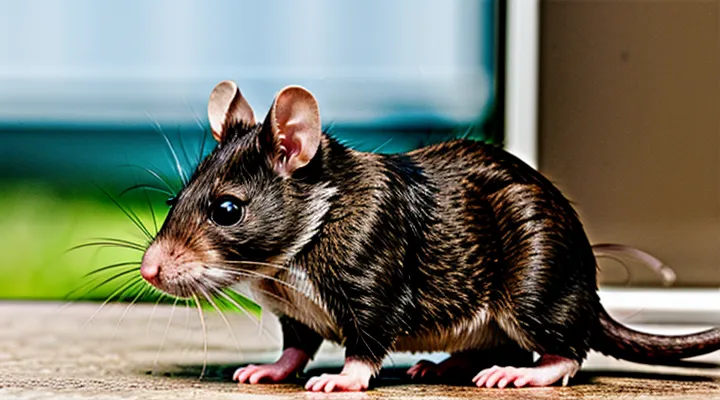
Misconceptions about outward traits often hinder accurate recognition of rats.
Common false beliefs include:
- «Rats are larger than mice» – size overlap occurs; adult mice can approach the lower size range of rats.
- «Rats always have pink skin under the tail» – many individuals possess dark or mottled skin, especially in wild populations.
- «A rat’s tail is always hairless» – some rats display fine hair along the tail’s dorsal surface.
- «Rats lack whisker length variation» – whisker length differs among species and age groups, providing a useful diagnostic cue.
- «All rats have uniformly brown fur» – coloration ranges from black and gray to brown and even albino variants.
Correcting these misconceptions requires reliance on measurable features such as body length, tail proportion, ear size, and fur texture rather than stereotypical assumptions. Accurate identification improves pest management, research validity, and public awareness.
Rats vs. Mice: Size and Proportions
Rats and mice differ markedly in overall dimensions, a primary criterion for reliable identification. The larger body mass, longer tail relative to head‑body length, and proportionally larger ears distinguish the two rodents.
- Body length (head‑to‑base of tail): typical rat 9–11 cm; typical mouse 6–9 cm.
- Tail length: rat tail 18–25 cm, often exceeding body length; mouse tail 7–10 cm, usually shorter than body.
- Weight: rat 250–500 g; mouse 15–30 g.
- Ear size: rat ears 2–3 cm, proportionally smaller to head; mouse ears 1–1.5 cm, relatively larger.
- Hind‑foot length: rat 3.5–4 cm; mouse 2–2.5 cm.
These measurements provide a clear, quantifiable framework for separating «rat» from «mouse» in field observations or laboratory settings. Accurate assessment of size and proportion eliminates ambiguity when external features are the sole diagnostic tools.
Head and Facial Features
Snout Characteristics
The snout provides immediate visual cues for distinguishing a rat from other small mammals. Its overall shape is elongated and relatively narrow, forming a pointed tip that tapers smoothly from the base to the nose. The profile appears straight when viewed laterally, lacking the pronounced curvature seen in many mouse species.
Length typically exceeds one‑third of the head‑body measurement, creating a proportion that distinguishes the rat’s snout from the shorter, more stubby snouts of shrews or voles. Width remains consistent along most of the snout, narrowing only near the tip where the rostral bones converge.
Skin covering the snout is usually hairless, revealing a pinkish‑gray or brownish‑gray coloration that matches the underlying musculature. In mature individuals, a thin layer of fine, short fur may be present on the dorsal surface, while the ventral side remains largely glabrous.
Whisker (vibrissae) arrangement contributes to identification. Long, stiff whiskers emerge from the sides of the snout, extending forward and upward. Their spacing is regular, with the most prominent pair positioned near the tip, aiding tactile exploration. Nostrils are positioned laterally, opening outward at the very end of the snout, and are separated by a distance roughly equal to the width of the rostral bones.
Key observable snout traits:
- Elongated, pointed shape with a straight lateral profile.
- Length greater than one‑third of the head‑body length.
- Consistent width narrowing only at the tip.
- Predominantly hairless skin, pinkish‑gray to brownish‑gray.
- Long, forward‑projecting whiskers arranged symmetrically.
- Laterally placed nostrils at the extreme tip.
These characteristics, when examined together, enable reliable identification of a rat in field or laboratory settings.
Ear Morphology
Ear morphology provides reliable clues when distinguishing rats from other small mammals. The external ear, or pinna, exhibits a set of characteristic traits that remain consistent across most rat populations.
The pinna is relatively large, typically measuring 1.5–2 cm in length from base to tip. Its shape is rounded to slightly oval, with a broad, fleshy edge that folds outward. Dense, short fur covers the outer surface, creating a smooth appearance that contrasts with the more sparsely haired ears of many rodent species. The inner surface displays a thin, translucent membrane supported by a flexible cartilage framework, allowing the ear to pivot easily.
Key external ear features include:
- Length exceeding 1.5 cm, proportionate to head size.
- Rounded or oval outline with a pronounced, fleshy margin.
- Uniform short fur covering the entire pinna.
- Visible cartilage ridge forming a subtle central ridge.
- Position low on the head, close to the cheek region, with the ear lying flat against the skull when the animal is at rest.
These attributes, combined with other external characteristics, enable accurate identification of rats in field observations and laboratory settings.
Eye Placement and Size
Rats are distinguished by a set of external markers; eye placement and size provide reliable evidence.
The eyes are positioned laterally on the skull, granting a wide field of vision. This lateral orientation creates a noticeable gap between the orbit and the nasal bridge, a contrast to the forward‑facing eyes of many small mammals. The separation is evident when the head is viewed from the front, with the pupils appearing on opposite sides of the head rather than converging toward the midline.
Eye size contributes additional diagnostic value. Rats possess relatively large ocular globes relative to skull dimensions, measured as approximately 30 % of head width. The cornea is prominent, and the iris typically exhibits a dark, uniform coloration without distinct patterning. In comparison, other rodent species often display proportionally smaller eyes and reduced orbital exposure.
Key points for rapid assessment:
- Lateral orbital placement, producing a broad visual field.
- Noticeable gap between orbit and nasal bridge when viewed anteriorly.
- Eye diameter approaching one‑third of head width.
- Dark, unpatterned iris covering most of the visible eye surface.
These characteristics, when observed together, enable accurate differentiation of rats from other small mammals in field or laboratory settings.
Whisker Details
Whiskers, or vibrissae, serve as reliable indicators when distinguishing a rat from other small mammals. Their size, placement, and condition reveal species, age, and health status.
Typical whisker length ranges from 2 cm to 4 cm, proportionate to head width. Longer, robust whiskers suggest mature individuals, while shorter, finer hairs indicate juveniles. Whiskers emerge in four symmetrical rows on each side of the snout, extending forward and laterally. The most anterior pair aligns with the nose tip, providing precise tactile feedback.
Key whisker characteristics include:
- Uniform dark pigmentation; occasional lighter tips may signal recent shedding.
- Straight, stiff shafts without kinks or breaks.
- Even spacing between adjacent whiskers, maintaining consistent intervals of 3–5 mm.
- Absence of excessive wear or fraying, which could imply environmental stress.
Assessing these attributes enables accurate identification of a rat based on external morphology.
Body and Tail Examination
Body Shape and Build
Rats display a distinct body configuration that separates them from other small rodents. The overall silhouette is compact, with a proportionally long tail that matches the length of the torso. The torso is cylindrical, lacking pronounced shoulders or hips, which gives the animal a streamlined appearance.
Key aspects of the body shape and build include:
- Head‑to‑body ratio: head length occupies roughly one‑third of the total body length, resulting in a relatively small, triangular skull.
- Tail proportion: tail length equals or slightly exceeds the combined length of head and torso, providing balance and agility.
- Body mass: muscle distribution concentrates around the forelimbs and hindquarters, enabling rapid bursts of speed and climbing ability.
- Fur texture: short, dense pelage adheres closely to the skin, accentuating the sleek outline of the animal.
These characteristics create a recognizable profile that aids in distinguishing rats from mice, voles, and other comparable species.
Fur Color and Texture
Rats display a range of fur colors that assist in distinguishing species and age groups. Common shades include brown, gray, black, and reddish‑brown, each varying in intensity across the body. Younger individuals often possess lighter, more uniform coats, while adults may exhibit darker patches on the back, ears, and tail.
Texture provides additional clues. Healthy rats have dense, fine hair that lies close to the skin, creating a sleek appearance. Coarse or patchy fur may indicate malnutrition, illness, or seasonal shedding. The under‑coat, when present, is softer and thicker, especially in colder environments, and can be felt by gently running a fingertip along the flank.
Key observations for identification:
- Primary color: note dominant hue and any contrasting patches.
- Color distribution: assess whether the back, sides, and belly differ.
- Hair density: evaluate overall thickness and uniformity.
- Surface feel: detect smoothness versus roughness or brittleness.
Combining color and texture information with other external traits, such as body size and tail length, yields a reliable assessment of the rat’s species and health status.
Tail Length and Covering
Tail Scalation
Tail scalation provides a reliable criterion for distinguishing rat species. The dorsal surface of the tail is covered by overlapping keratinized plates that vary in number, size, and arrangement. These variations correlate with taxonomic groups and can be observed without handling the animal.
Key observable aspects of tail scalation include:
- Scale count per centimeter; Norway rats typically display 10–12 small scales, whereas roof rats exhibit 8–10 larger scales.
- Scale shape; rectangular plates are common in Rattus norvegicus, while Rattus rattus often shows broader, more rounded scales.
- Scale coloration; a uniform pink hue indicates a healthy tail, while darkened or mottled scales may signal disease or injury.
- Presence of hair; a sparse fringe of hair along the tail margin distinguishes certain subspecies.
- Relative tail length; a tail length equal to or exceeding body length, combined with the described scalation pattern, confirms identification.
When examining a specimen, record the scale count, note the geometry of the plates, and assess coloration for consistency with known species profiles. This systematic approach enhances accuracy in rat identification based on external morphology.
Tail Hair Density
Tail hair density provides a reliable indicator when distinguishing rats from other rodents. The presence, scarcity, or complete absence of fur on the tail correlates with species, age, and health condition.
In most laboratory and wild brown rats (Rattus norvegicus), the tail exhibits a sparse, fine covering limited to the proximal third. The distal portion is virtually naked, revealing the underlying skin. In contrast, black rats (Rattus rattus) display a denser, uniform pelage extending nearly the full length of the tail, often giving a slightly mottled appearance.
Key observations:
- Proximal third: fine, short hairs, often indistinguishable without magnification.
- Mid‑tail region: gradual reduction in hair count for R. norvegicus; persistent coverage for R. rattus.
- Distal tip: typically hairless in R. norvegicus; may retain sparse hairs in R. rattus.
- Seasonal shedding: temporary thinning may occur in colder months, but baseline density pattern remains consistent.
Exceptions arise in juvenile specimens, which may retain a more uniform fur layer across the entire tail until maturation. Injuries or dermatological conditions can also alter hair distribution, necessitating corroboration with additional external features such as ear size, body length, and whisker arrangement.
Locomotion and Behavior
Gait and Movement Patterns
Observing the way an animal moves provides reliable clues for distinguishing a rat from other small mammals. The gait of a rat is characterized by rapid, short bursts of activity combined with a distinctive body posture.
Key aspects of rat locomotion include:
- A high‑frequency footfall pattern, with each hind foot striking the ground shortly after the corresponding fore foot.
- A low, flattened body profile that stays close to the ground, reducing visibility while the animal darts forward.
- A pronounced, rhythmic tail swing that balances the swift forward thrust and aids in rapid direction changes.
- Frequent, sudden pauses followed by explosive acceleration, creating an erratic, unpredictable trajectory.
When compared with mice, rats display a longer stride length and a more powerful push‑off phase, resulting in a smoother yet faster overall movement. The combination of short, rapid steps, low body carriage, and pronounced tail dynamics forms a distinctive movement signature that assists in reliable identification.
Common Habitats and Signs
Rats thrive in environments that provide shelter, food, and water. Urban settings offer abundant resources: basements, crawl spaces, and wall voids supply warmth and concealment. Suburban and rural properties host rats in barns, sheds, and grain storage areas where vegetation and waste accumulate. Sewer systems, drainage pipes, and stormwater channels serve as underground highways, connecting multiple habitats and facilitating movement between sites.
Signs of rat activity appear consistently across locations. Typical indicators include:
- Small, dark droppings measuring ¼‑½ inch, often found along walls, in pantries, or near food sources.
- Gnaw marks on wood, plastic, or wiring, characterized by clean, V‑shaped incisions.
- Grease or urine trails that darken surfaces and emit a musky odor.
- Nesting material composed of shredded paper, fabric, or insulation, frequently located in hidden corners.
- Footprints or tail‑drag marks in dusty or muddy areas, revealing a distinct four‑toed pattern.
Observing these habitats and signs enables reliable identification of rat presence without reliance on external coloration or body measurements. Prompt recognition supports effective control measures and prevents disease transmission.
Additional Identifying Marks
Presence of Scars or Blemishes
Scars and blemishes provide reliable visual cues when distinguishing rats from other small mammals. Their presence reflects the animal’s history of encounters, injuries, or environmental hazards, and they often appear in predictable areas.
Typical locations and characteristics include:
- Dorsal region: healed wounds may leave irregular patches of fur loss or darker skin.
- Tail base: bite marks or abrasions frequently result in short, fibrous scars that differ from the smooth tail surface.
- Hind limbs: puncture scars from traps or predator attacks appear as small, raised patches.
- Facial area: chronic sores or ulcerations can create asymmetrical discoloration.
Assessment of these features should focus on texture, coloration, and distribution. Consistent patterns—such as multiple scars along the spine or a distinct tail base injury—strengthen identification confidence. Absence of any scar does not exclude a rat, but the presence of one or more characteristic marks significantly supports the conclusion.
Distinctive Markings
Distinctive markings serve as reliable criteria for differentiating rats from other rodents. Fur coloration varies across body regions, with dorsal pelage typically darker than ventral fur; a sharp contrast between the two zones indicates a mature specimen. Tail surfaces often display a consistent stripe or mottling pattern, while the presence of a hairless ventral strip distinguishes the species from similar mammals.
Key external characteristics include:
- Dorsal stripe: a longitudinal line of darker hairs running from the neck to the base of the tail.
- Facial mask: a darker patch surrounding the eyes and nose, creating a contrast with the lighter cheek fur.
- Tail banding: alternating light and dark segments visible when the tail is lifted.
- Ear rim coloration: a pigmented edge surrounding the otherwise pink ear pinna.
- Whisker arrangement: longer, stiff vibrissae positioned symmetrically on the snout, often exceeding the width of the head.
These markings remain consistent across age groups and habitats, providing a practical reference for field identification and laboratory assessment.