
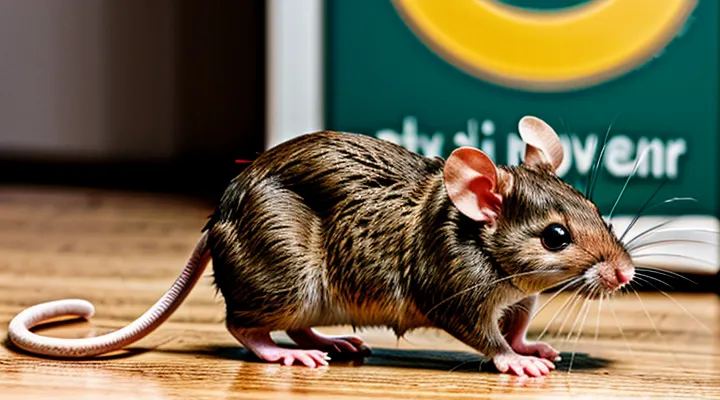
Introduction to Rodent Identification
Why Early Identification Matters
Practical Implications
Accurate identification of young rodents directly influences control measures. Early recognition allows targeted bait selection, reducing non‑target exposure and lowering overall pesticide usage. Distinguishing features guide the choice between rat‑specific anticoagulants and mouse‑specific traps, improving cost efficiency.
In veterinary practice, species‑specific diagnosis prevents misapplication of treatments. Rats and mice differ in susceptibility to common parasites and diseases; correct identification ensures appropriate medication dosages and reduces the risk of drug resistance.
Research settings benefit from precise classification. Experimental data rely on species consistency; misidentification can invalidate results, compromise reproducibility, and waste resources. Clear visual criteria support standardized breeding colonies and reduce cross‑contamination.
Public‑health programs depend on accurate surveillance. Rats are primary vectors for leptospirosis and hantavirus, while mice more frequently transmit salmonellosis. Early differentiation informs risk assessments and prioritizes community interventions.
Practical steps for implementation:
- Train field staff to observe tail length, ear size, and fur texture in juveniles.
- Incorporate species‑specific identification charts into pest‑inspection kits.
- Adjust bait formulations based on confirmed species to enhance efficacy.
- Record species data in health‑tracking databases to refine epidemiological models.
Health and Safety Considerations
Accurate identification of young rodents is essential for maintaining a safe environment and preventing health hazards. Misidentifying a rat as a mouse, or vice versa, can expose individuals to different disease vectors, allergen levels, and behavioral risks.
Proper handling procedures reduce the likelihood of bites, scratches, and pathogen transmission. Wear disposable gloves and, when necessary, protective eyewear. Clean work surfaces with an approved disinfectant before and after contact with any specimen. Dispose of bedding, droppings, and carcasses in sealed, biohazard‑rated containers.
Key health and safety factors include:
- Zoonotic disease potential – Rats commonly carry leptospirosis, hantavirus, and salmonella; mice are frequent carriers of hantavirus and lymphocytic choriomeningitis virus. Identification guides targeted monitoring and medical response.
- Allergen exposure – Rat urine and dander contain higher protein concentrations than mouse equivalents, increasing the risk of respiratory irritation for sensitive individuals.
- Behavioral differences – Juvenile rats exhibit more aggressive exploratory behavior, requiring stricter containment to prevent escape and accidental contact.
- Regulatory compliance – Laboratory and field protocols mandate species‑specific reporting and containment levels; accurate classification ensures adherence to institutional and governmental standards.
- Child safety – Young children may handle rodents without understanding risks; supervision, age‑appropriate instruction, and immediate hand‑washing after contact are mandatory.
Implement a systematic identification workflow: observe tail length, ear size, whisker spacing, and fur texture; confirm findings with a reference guide before any handling. Record species, age estimate, and health observations in a logbook to support ongoing risk assessment and response planning.
Key Physical Characteristics
Body Size and Shape
Overall Proportions
Rats and mice can be separated by examining their overall body proportions, even when the animals are only a few weeks old.
The head of a young rat occupies a smaller fraction of total length than that of a mouse; a rat’s skull typically measures 20‑25 % of its body length, whereas a mouse’s skull accounts for 25‑30 %.
Tail length relative to body length provides a reliable metric. In juveniles, a rat’s tail approaches or exceeds the length of its torso (tail‑to‑body ratio ≈ 1.0–1.2), while a mouse’s tail is noticeably shorter (ratio ≈ 0.7–0.9).
Body mass relative to length also differs. For comparable lengths, a rat’s weight is roughly 1.5–2 times that of a mouse, reflecting a sturdier, more robust build.
Key proportional indicators:
- Head‑to‑body ratio: rat ≈ 0.20–0.25, mouse ≈ 0.25–0.30
- Tail‑to‑body ratio: rat ≈ 1.0–1.2, mouse ≈ 0.7–0.9
- Mass‑to‑length ratio: rat ≈ 1.5–2 × mouse
Assessing these dimensions with calipers or a simple ruler allows rapid, accurate discrimination between the two species during early development.
Tail Length and Appearance
The tail provides a reliable visual cue when separating juvenile rats from mice.
In young rats, the tail typically measures equal to or exceeds the head‑body length. The surface is relatively thick, covered with sparse, short hairs, and the skin exhibits a faint, dark stripe along the dorsal midline. The tip is blunt and may show a slight taper but retains a robust cross‑section.
In contrast, a mouse’s tail is considerably shorter, often reaching only half to three‑quarters of the head‑body length. The tail is slender, densely covered with fine hairs that give it a uniform, silky appearance. A faint, lighter line may be present, but the overall coloration matches the body more closely, and the tip ends in a fine point.
Key distinctions:
- Length ratio: rat tail ≈ 100 % or more of body length; mouse tail ≈ 50‑75 % of body length.
- Thickness: rat tail comparatively thick; mouse tail markedly thin.
- Hair density: rat tail sparsely haired; mouse tail densely haired.
- Coloration: rat tail often darker with a dorsal stripe; mouse tail lighter, more uniform.
Observing these characteristics enables accurate identification of the species at an early developmental stage.
Head and Facial Features
Snout Shape
The snout provides a reliable visual cue when separating juvenile rats from juvenile mice.
Rats possess a broader, blunter snout that appears almost rectangular when viewed from the side. The length of the snout relative to the head is modest, and the tip ends in a slightly rounded point. In contrast, mice exhibit a slender, tapered snout that extends farther forward, giving the head a more triangular silhouette. The tip of a mouse’s snout is sharply pointed.
Key distinctions in snout morphology for young specimens:
- Width – Rat snouts are noticeably wider at the base; mouse snouts remain narrow throughout.
- Length proportion – Rat snouts occupy roughly one‑third of head length; mouse snouts approach one‑half.
- Shape of tip – Rat tips are rounded; mouse tips are acute.
These characteristics remain consistent from birth through the first weeks of development, allowing accurate identification without reliance on size or behavior.
Ear Size and Placement
Ear morphology provides a reliable indicator when separating young rats from young mice. The ears of juvenile rats are proportionally larger than those of mouse pups, extending farther beyond the skull margins. The outer rim (pinna) is broad, rounded, and often visible even in neonates. Placement is low on the head, close to the cheek region, and the ear cartilage is thick enough to retain shape without external support.
Mouse pups display comparatively small ears that occupy a modest fraction of the head width. The pinna is narrow, triangular, and tends to lie flat against the skull. Ears are positioned higher, near the top of the head, and appear delicate, with minimal cartilage firmness.
Key distinctions:
- Size: Rat ears ≈ 30‑40 % of head width; mouse ears ≈ 15‑20 % of head width.
- Shape: Rat pinna broad and rounded; mouse pinna narrow and triangular.
- Placement: Rat ears low on the skull, near cheeks; mouse ears high, near crown.
- Rigidity: Rat cartilage visibly firm; mouse cartilage soft, collapses when handled.
Observing these characteristics enables accurate identification of the species during the first weeks of life.
Eye Size and Prominence
Eye size offers a reliable metric for separating young rats from young mice. In neonatal rodents, the ocular diameter scales differently relative to skull length: rat pups exhibit eyes that occupy roughly 12‑15 % of head width, while mouse pups show eyes covering 8‑10 % of the same dimension. This proportional disparity persists through the first three weeks of life, allowing observers to assess species without invasive measures.
Key comparative points:
- Relative diameter: Rat eyes are visibly larger when measured against the distance between the inner canthi; mouse eyes appear proportionally smaller.
- Prominence: The bulge of the rat’s eyeball extends further from the facial plane, creating a more pronounced convexity. In mice, the orbital rim is flatter, and the eye sits closer to the surrounding fur.
- Visibility through fur: Rat pup fur is coarser, revealing the eye’s outline more clearly; mouse pup fur is finer, often masking the ocular margin.
- Developmental timeline: By day 7, the size gap widens as rat eyes approach adult dimensions faster than those of mice, reinforcing the metric for early identification.
When examining litters, measure eye width with calipers or estimate proportion visually; a ratio exceeding 0.13 of head width indicates a rat, whereas a ratio below 0.11 suggests a mouse. Consistent application of this criterion streamlines species discrimination in early developmental studies.
Fur Color and Texture
Young rodents can be separated by examining the characteristics of their fur.
Rats typically display a uniform, coarse coat that ranges from dark brown to black. The dorsal hair often appears glossy, while the ventral side may be lighter but still dense. Mice usually possess a finer, softer pelage with shades of gray, brown, or beige; the coloration may include a distinct stripe along the spine or a mottled pattern on the belly.
Texture provides additional clues. Rat fur feels rough to the touch and resists gentle compression, reflecting a higher hair shaft thickness. Mouse fur yields a silky impression and compresses easily, indicating thinner strands.
Key distinctions:
- Color range: rats – dark, uniform; mice – lighter, variable, often with dorsal stripe.
- Coat gloss: rats – glossy; mice – matte.
- Hair thickness: rats – coarse, thick; mice – fine, delicate.
- Feel under pressure: rats – resistant; mice – pliable.
Observing these attributes enables reliable identification of juvenile rats and mice without advanced equipment.
Behavioral Differences in Young Rodents
Activity Patterns
Diurnal vs. Nocturnal Habits
Rats and mice exhibit opposite activity cycles that become apparent shortly after birth. Young rats are primarily nocturnal; they remain relatively inactive during daylight hours and display heightened movement, feeding, and vocalization after dusk. In contrast, juvenile mice tend toward diurnal patterns, showing peak activity in the early morning and late afternoon while resting more throughout the night.
Key behavioral markers for early‑age identification:
- Timing of locomotion – Rat pups increase wheel runs or exploratory trips after sunset; mouse pups are more likely to scurry during daylight.
- Feeding schedule – Rat juveniles consume most of their food during night periods; mouse juveniles take regular bites throughout the day.
- Vocal activity – Rat squeaks intensify in the dark; mouse chirps are more frequent in light conditions.
- Resting posture – Rat nests are clustered in concealed, low‑light corners; mouse nests are positioned in higher, well‑lit areas of the enclosure.
Observing these patterns over several days provides reliable differentiation without relying on physical size or tail length. Consistent nocturnal bursts signal a rat, while sustained daylight activity points to a mouse.
Social Structures
Rats and mice develop distinct social patterns shortly after birth, and these patterns provide reliable clues for early identification. Rat litters typically form tight, hierarchical groups in which dominant individuals assert control through frequent grooming and vocal exchanges. Mouse litters, by contrast, maintain a more egalitarian organization, with minimal aggression and occasional communal nesting without a clear rank structure.
Key social behaviors that differentiate the two species include:
- Grooming frequency: rats engage in intensive, reciprocal grooming sessions; mice perform brief, occasional grooming.
- Vocalization type: rats emit low‑frequency ultrasonic chirps during group interaction; mice produce higher‑frequency calls with less regularity.
- Nesting arrangement: rat pups cluster around a central nest site, often defending it; mouse pups spread across multiple nest spots with little territoriality.
These social cues appear within the first two weeks of life and persist as the animals mature. Observers can record grooming bouts, capture ultrasonic vocalizations, and note nest distribution to confirm species identity without relying on morphological traits alone.
Vocalizations
Vocalizations provide a reliable criterion for separating juvenile rats from mice. Young rats emit ultrasonic calls that peak between 30 and 50 kHz, while mouse pups produce a broader range of ultrasonic sounds spanning 40 to 80 kHz. The temporal pattern of each species differs: rats generate short, broadband chirps lasting 5–10 ms, whereas mice emit longer, frequency-modulated squeaks of 10–20 ms.
Key acoustic markers include:
- Frequency band: rats – 30–50 kHz; mice – 40–80 kHz.
- Call duration: rats – ≤10 ms; mice – ≥10 ms.
- Modulation: rats – minimal; mice – pronounced frequency sweeps.
- Developmental onset: rat ultrasonic vocalizations appear at post‑natal day 10; mouse calls emerge as early as day 5.
Contextual usage also separates the species. Rat pups produce distress calls when isolated, characterized by abrupt onset and high amplitude. Mouse pups respond to maternal contact with repetitive, lower‑amplitude trills. Recording equipment calibrated for the respective frequency ranges captures these distinctions without ambiguity.
In practice, analyzing the spectral profile and timing of each call enables accurate identification of the species at an early developmental stage.
Habitat and Nesting Habits
Preferred Environments
Rats and mice occupy distinct habitats even when they are very young, and these preferences provide reliable clues for early identification.
- Rats favor larger, cluttered spaces such as basements, sewers, and grain storage areas. Their nests are typically constructed from shredded material, paper, or insulation, and they often appear near water sources or waste piles.
- Mice prefer confined, dry locations including wall voids, ceiling cavities, and pantry corners. Their nests consist of fine fibers, cotton, or shredded paper, and they are commonly found close to food containers or electrical wiring.
In addition to structural differences, rats tend to establish colonies in open burrows with multiple entry points, whereas mice create single‑entry tunnels that remain hidden behind walls or under floors. Observing these environmental patterns simplifies the distinction between the two species during their early developmental stages.
Nest Construction Materials
Nest construction offers reliable clues for identifying juvenile rodents. Young rats and mice select materials that reflect species‑specific preferences and physiological constraints.
Rats favor coarse, durable substrates. Typical components include shredded paper, cardboard, dried grass, twine, and small wooden fragments. These materials provide structural strength for larger nests and accommodate the rat’s broader body dimensions. Rats also incorporate insulating fibers such as cotton or synthetic fleece, often in thicker layers.
Mice opt for fine, lightweight elements. Common choices are soft lint, shredded tissue, fine hair, and fine plant fibers. Mice also use small bits of sponge or foam, which conform to their compact nest architecture. The overall nest volume remains modest, with minimal reinforcement.
Key distinctions:
- Material size: rats use larger, sturdier pieces; mice select fine, pliable fibers.
- Insulation thickness: rats build thicker, multi‑layered insulation; mice employ thin, single‑layer coverings.
- Nest shape: rat nests exhibit broader, more robust structures; mouse nests are compact and dome‑shaped.
Observing the composition of a nest therefore assists in early‑stage differentiation between these two rodent species.
Nest Location Preferences
Young rats usually select nests that are deep, concealed, and close to abundant water sources. Preferred sites include sewer systems, large underground burrows, and dense vegetation where moisture remains high. Nest chambers are often lined with coarse material such as shredded paper, cloth, or plant fibers, providing insulation against fluctuating temperatures. Rats tend to construct nests in groups, resulting in larger, more complex structures that can accommodate several juveniles simultaneously.
Young mice favor shallow, narrow cavities that require minimal excavation. Typical locations are wall voids, ceiling spaces, and gaps behind appliances. Nests are commonly built from fine fibers—cotton, hair, or shredded paper—arranged in compact, spherical formations. Mice often occupy solitary or small family units, leading to smaller nest dimensions that fit within tight spaces.
Key distinctions in nest location preferences:
- Depth: rats → deep burrows; mice → shallow cavities
- Moisture: rats → high humidity areas; mice → dry environments
- Size: rats → larger, communal nests; mice → small, individual nests
- Materials: rats → coarse, bulky fibers; mice → fine, soft fibers
Observing these nesting habits provides reliable indicators for early identification of the species, especially when visual confirmation of size or morphology is difficult.
Potential Misidentifications and Common Myths
Overlapping Characteristics
Both juvenile rats and mice share several physical and behavioral traits that can obscure species identification. Their small size, soft fur, and rapid growth rates produce a visual similarity that persists until the animals reach a more mature stage.
Key overlapping characteristics include:
- Body length of 5‑9 cm and tail length comparable to or slightly longer than the torso.
- Ear size proportionate to head width, with no distinctive notch or fold.
- Dark, glossy fur lacking the color patterns that appear in adult individuals.
- High activity levels, frequent exploration, and nocturnal foraging behavior.
- Similar dental formula (one incisor per quadrant) and absence of visible molar differentiation at this age.
Physiological markers also converge. Both species exhibit comparable heart rates (300‑500 bpm) and respiration frequencies (80‑150 breaths per minute) when measured in a controlled environment. Blood glucose levels and basal metabolic rates fall within overlapping ranges, limiting the usefulness of metabolic testing for early discrimination.
Environmental factors further blur distinctions. In mixed‑species habitats, shared nesting materials and diet composition lead to uniform scent profiles, reducing the reliability of olfactory cues. Consequently, definitive identification often requires genetic analysis or observation of species‑specific behaviors that emerge later in development.
Distinguishing from Other Small Mammals
Identifying juvenile rats and mice among other small mammals requires careful observation of physical and behavioral traits that persist from birth. Early‑age specimens are particularly similar in size, making precise differentiation essential for research, pest control, and wildlife management.
Size alone is unreliable; however, tail proportion provides a reliable metric. Rats exhibit tails that are roughly equal to or longer than body length, while mouse tails are slightly shorter, typically 75‑85 % of body length. Voles and shrews possess relatively short, hair‑covered tails, often less than half the body length. Ear size distinguishes rodents further: rat ears are proportionally larger and more rounded, whereas mouse ears are smaller and more triangular. Shrews have conspicuously large ears relative to head size, and voles display rounded, hair‑covered ears.
Dental structure offers decisive evidence. Both rats and mice possess large, continuously growing incisors with orange enamel, but the enamel band extends farther forward in rats. Voles and shrews have distinct molar patterns: voles present three rows of cusps, while shrews lack prominent incisors and instead have sharp, needle‑like teeth suited for insectivory. Hamsters and gerbils display cheek pouches and broader incisors, absent in rats and mice.
Behavioral cues reinforce morphological assessment. Juvenile rats are more cautious and tend to remain hidden, emerging primarily at dusk. Mice are active shortly after dark and display rapid, erratic movements. Voles create surface runways in grass, while shrews continuously hunt insects, producing a constant trail of scent. Hamsters are solitary burrowers, rarely venturing above ground.
Key distinguishing points for early‑age specimens
- Tail length: rat ≈ body length; mouse ≈ 0.8 × body; vole/shrew << body.
- Ear shape: rat large & rounded; mouse small & triangular; shrew large & hairless.
- Incisor enamel band: extends farther forward in rat; limited in mouse.
- Molars: vole three‑cusped rows; shrew needle‑like teeth; rat/mouse simple cheek teeth.
- Activity pattern: rat crepuscular & hidden; mouse nocturnal & mobile; vole surface runways; shrew continuous foraging.
Applying these criteria enables accurate separation of juvenile rats and mice from other small mammals without reliance on size alone.
Expert Tips for Accurate Identification
Observation Techniques
Accurately identifying juvenile rodents is critical for laboratory protocols, pest management, and wildlife monitoring. Distinguishing young rats from mice relies on systematic observation of morphological and behavioral traits.
- Body length: Juvenile rats exceed 10 cm, while mice remain under 8 cm. Measure from nose to base of tail with a ruler or caliper.
- Tail proportion: Rat tails approach the body length; mouse tails are noticeably longer, often 1.2–1.5 times the body length.
- Ear size: Rat ears are proportionally smaller; mouse ears occupy roughly one‑third of head width. Visual comparison against a reference chart reduces error.
- Fur texture and coloration: Rats develop coarser, darker fur earlier; mice retain softer, lighter pelage for a longer period.
- Head shape: Rats exhibit a blunter, broader snout; mice possess a pointed, narrow muzzle.
- Behavioral response: Rats tend to be more cautious and display slower exploratory movements; mice are quick, erratic, and more prone to rapid darting.
Implementing these techniques requires consistent lighting, magnification (hand lens or low‑power microscope), and calibrated measurement tools. Record each metric in a standardized data sheet; cross‑reference with species‑specific growth charts to confirm identification.
Combining precise morphometric data with observed activity patterns yields reliable differentiation of young rats and mice, supporting accurate reporting and effective control measures.
When to Seek Professional Help
When distinguishing juvenile rodents proves difficult, professional assistance becomes essential. Ambiguous size, overlapping fur coloration, and rapid growth rates can mask species‑specific traits, leading to misidentification that may affect pest‑control strategies, health assessments, or research accuracy. Moreover, signs of disease, infestation severity, or regulatory compliance often require expert evaluation.
Situations that warrant immediate consultation with a veterinarian, pest‑management specialist, or wildlife biologist include:
- Uncertain species identification after careful visual inspection.
- Presence of atypical behavior such as aggression, lethargy, or excessive grooming.
- Observation of wounds, discharge, or parasites that could indicate illness.
- Rapid population increase suggesting an uncontrolled infestation.
- Legal restrictions on handling or eradication of specific rodent species in the area.
- Need for accurate data in scientific studies, breeding programs, or educational settings.
Engaging qualified professionals ensures correct species determination, appropriate intervention measures, and compliance with health and safety standards.