
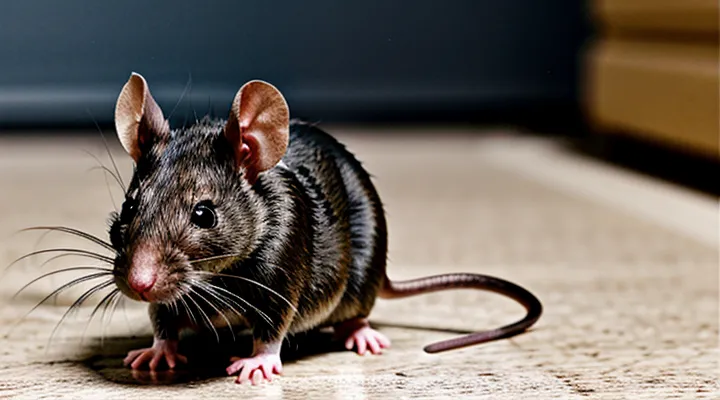
Physical Characteristics: A Comparative Analysis
Body Size and Shape
Length and Weight
Rats typically measure 18–20 cm from nose to the base of the tail, with tails adding another 15–20 cm. Mice range 6–10 cm in body length, with tails of comparable length (7–10 cm). The overall size disparity is evident when both species are placed side by side; rats are roughly twice as long as mice, even before accounting for tail length.
Weight reinforces the size distinction. An adult Norway rat weighs 300–500 g, while a common house mouse averages 15–30 g. Consequently, a rat’s mass exceeds a mouse’s by a factor of ten to thirty. These numerical benchmarks provide a reliable basis for visual identification without reliance on behavioral cues.
Proportionality of Body
Rats and mice differ markedly in body proportions, a key factor for reliable visual identification. A rat’s body exhibits a robust, elongated form; the head occupies a smaller fraction of total length, producing a longer neck and a relatively narrow skull. In contrast, a mouse displays a compact body with a head that represents a larger proportion of its overall size, giving the animal a rounder silhouette.
- Body‑to‑tail ratio: Rat tail length typically equals or exceeds body length, yielding a ratio near 1:1 or greater. Mouse tail length is usually shorter, often 0.8 times the body length, resulting in a visibly shorter appendage.
- Head size relative to body: Rat head length is roughly 15–20 % of total length; mouse head length approaches 25 % of total length, creating a proportionally larger cranial region.
- Neck length: Rat neck extends noticeably between head and torso; mouse neck is brief, merging directly into the torso.
- Body mass distribution: Rat mass concentrates along the torso, producing a thick, muscular midsection. Mouse mass is evenly distributed, giving a slender, tapered appearance.
These proportional metrics enable precise discrimination between the two rodents without reliance on coloration or habitat cues. By measuring or visually estimating the ratios described, observers can consistently differentiate a rat from a mouse.
Head and Face Features
Snout Shape
Rats possess a broad, blunt snout that tapers only slightly toward the tip. The nasal bridge is relatively short, giving the face a sturdy, blocky appearance. Mice, by contrast, display a narrow, sharply pointed snout that extends further from the skull, creating a delicate, elongated profile.
Key visual cues for the snout:
- Width: rat snout ≈ 1.5 – 2 cm; mouse snout ≤ 1 cm.
- Shape: rat – rounded, almost square; mouse – triangular, tapered.
- Length relative to head: rat – short, proportionate; mouse – long, exceeds the eye line.
When observing a small rodent, measure the snout’s width and note the angle of tapering. A blunt, wide snout indicates a rat; a thin, sharply pointed snout indicates a mouse.
Ear Size and Placement
Ear dimensions provide a reliable visual indicator when separating rats from mice. Rat ears are proportionally small, covering roughly one‑third of the head width, and sit low on the skull, close to the cheekbones. The ear membrane appears thick, with a rounded or slightly oval outline.
Mouse ears are markedly larger relative to head size, occupying up to half of the head width. They sit higher on the head, near the crown, and present a thin, delicate membrane. The outline is typically more triangular, with a pointed tip.
Key differences in ear morphology:
- Size ratio: rat ≈ 30 % of head width; mouse ≈ 45‑50 % of head width.
- Placement: rat ears positioned low, near the jawline; mouse ears positioned high, near the top of the skull.
- Membrane thickness: rat ears thick and rounded; mouse ears thin and triangular.
These characteristics enable rapid visual discrimination between the two rodent species.
Eye Size
Rats and mice can be separated visually by the size of their eyes relative to the head. Rats have eyes that occupy a smaller fraction of the skull’s width, typically 15‑20 % of head width, while mice display eyes that cover 25‑30 % of the same dimension. The reduced ocular diameter in rats results in a narrower field of vision and a less prominent eye socket. Mice possess larger, more forward‑placed eyes that give the face a rounder appearance.
Average adult rat eye diameter ranges from 5 to 7 mm; mouse eye diameter ranges from 7 to 9 mm. When measured against body length, rat eyes constitute roughly 2 % of total length, whereas mouse eyes account for about 3 %. The pupil in rats is often smaller and appears more elongated, while mouse pupils are relatively larger and rounder.
Key visual cues for identification:
- Eye‑to‑head width ratio: rat ≈ 0.15–0.20, mouse ≈ 0.25–0.30.
- Absolute eye diameter: rat ≈ 5–7 mm, mouse ≈ 7–9 mm.
- Pupil shape: rat – elongated, mouse – round.
- Position on skull: rat – lower, mouse – higher and more forward.
These measurements provide a reliable basis for distinguishing the two species without resorting to genetic or behavioral analysis.
Tail
Length Relative to Body
Rats typically possess a longer overall body than mice. An adult Norway rat measures 20–25 cm (8–10 in) from nose to the base of the tail, whereas a common house mouse ranges from 7–10 cm (3–4 in). This disparity is evident when the animal is observed in profile; the rat’s torso appears more elongated, while the mouse’s form is compact.
Tail length follows the same proportion. In rats, the tail is roughly equal to or slightly shorter than the body length, often reaching 15–20 cm (6–8 in). Mice exhibit tails that are about the same length as their bodies or marginally longer, typically 6–9 cm (2.5–3.5 in). Consequently, a rat’s tail‑to‑body ratio hovers around 0.8–1.0, whereas a mouse’s ratio approaches 1.0–1.2.
Key measurements for rapid visual assessment:
- Body length: rat ≈ 20–25 cm, mouse ≈ 7–10 cm
- Tail length: rat ≈ 15–20 cm, mouse ≈ 6–9 cm
- Tail‑to‑body ratio: rat ≤ 1.0, mouse ≥ 1.0
These proportional differences provide a reliable metric for distinguishing the two species without relying on coloration or behavior.
Thickness and Hairiness
Rats possess a noticeably thicker, more robust body compared with the slender, delicate frame of a mouse. Their torso appears broader, with a heavier ribcage and a shorter, stockier neck. Musculature is visibly more developed, giving the animal a solid, compact silhouette.
Mice display a slim, elongated profile. The abdomen tapers gently toward the hindquarters, and the neck is proportionally longer and finer. Overall mass is lower, resulting in a lighter appearance when observed side‑on.
Hair density further distinguishes the two species. Rats have coarse, relatively sparse fur that lies close to the skin, especially along the back and sides. The coat often feels rough to the touch and may reveal patches of bare skin on the tail.
Mice are covered with fine, dense pelage that gives a soft, velvety texture. Fur extends uniformly over the tail, creating a uniformly hairy appearance. The hair on a mouse’s body is typically longer relative to its size than the rat’s.
Key visual cues:
- Body thickness: rat – robust, mouse – slender.
- Neck length: rat – short, mouse – elongated.
- Fur texture: rat – coarse, sparse; mouse – fine, dense.
- Tail hair: rat – mostly naked; mouse – fully furred.
Scale Rings
Scale rings on the tail provide a reliable visual cue when separating rats from mice. Rats possess a tail covered with relatively broad, faintly demarcated scales. The rings are spaced farther apart, creating a pattern of subtle, irregular banding. In contrast, mice display a tail with narrow, sharply defined scales that form closely spaced, regular rings along the entire length.
Key differences include:
- Ring width: Rat rings average 2–3 mm; mouse rings measure 0.5–1 mm.
- Spacing: Rat scales are separated by noticeable gaps; mouse scales abut each other with minimal interruption.
- Uniformity: Mouse rings maintain consistent size and shape; rat rings vary in thickness and may appear fragmented.
Observation of these characteristics allows quick, accurate identification without reliance on size or behavior. By focusing on tail scale rings, field personnel can differentiate the two species efficiently.
Fur and Coloration
Texture of Fur
The fur of a rat feels noticeably coarser than that of a mouse. Rat hair is thicker, less pliable, and often appears slightly rough when brushed against the skin. Mouse hair is finer, softer, and densely packed, giving a velvety sensation.
Key texture differences:
- Coarseness – Rat fur is robust; mouse fur is delicate.
- Length – Rat hair may reach several millimeters; mouse hair typically stays under a millimeter.
- Density – Mouse fur forms a tighter, more uniform surface; rat fur shows gaps between strands.
- Slickness – Rat fur can feel slightly oily, especially on the back; mouse fur remains dry and matte.
These tactile cues, combined with visual inspection, allow reliable separation of the two species without relying on size alone.
Common Color Variations
Rats and mice exhibit distinct color palettes that aid visual identification. Recognizing these patterns reduces misidentification in field observations and laboratory settings.
-
Rats commonly display:
- Dark brown to black dorsal fur, often with a glossy sheen.
- Light gray or tan ventral fur, creating a clear contrast with the back.
- Occasionally, a reddish hue on the tail or ears in certain breeds.
-
Mice typically present:
- Light brown, gray, or buff dorsal fur, lacking the deep darkness of rats.
- White or pale underbellies, sometimes extending onto the sides.
- Uniformly colored tails, without the pronounced shading seen in rats.
Regional and genetic variations influence coloration. Albinism produces entirely white individuals in both species, but albino rats retain larger, pinkish ears, while albino mice keep proportionally smaller ears. Pigmentation mutations may yield spotted or mottled patterns; these are more frequent in mice, whereas rats rarely deviate from the standard dark‑light contrast.
Understanding these color distinctions streamlines species classification, supporting accurate data collection and pest management.
Behavioral and Habitat Indicators (Brief Overview)
Locomotion and Movement Patterns
Rats and mice exhibit distinct locomotor behaviors that aid visual identification. Rats move with a steady, ground‑hugging gait, maintaining a low center of gravity. Their steps are longer, producing a pronounced, rhythmic stride that covers greater distance per footfall. Mice display a rapid, erratic gait; foot placement is shorter and more frequent, resulting in a jittery, skittering motion.
Key differences in movement patterns:
- Stride length: Rats ≈ 2–3 cm per step; mice ≈ 1 cm.
- Speed: Rats reach 5–7 m / s in short bursts; mice peak at 3–4 m / s.
- Tail use: Rats employ the tail as a counterbalance, keeping it elevated and relatively steady during locomotion. Mice wave the tail loosely, often flicking it with each stride.
- Body posture: Rats maintain a straight back, shoulders aligned with hips. Mice arch the back slightly when accelerating, producing a “hunched” silhouette.
- Footfall pattern: Rats follow a consistent quadrupedal sequence (right‑front, left‑hind, left‑front, right‑behind). Mice often insert extra footfalls, creating a semi‑diagonal pattern during rapid movement.
Observation of these locomotor traits in the field provides reliable visual cues for separating the two rodent species without reliance on size or coloration alone.
Preferred Environment
Rats and mice occupy distinct habitats, and those settings often influence observable physical traits. Rats thrive in areas with abundant water sources, such as sewers, basements, and outdoor burrows near streams. Their larger bodies and robust paws are adapted for swimming and navigating damp tunnels. Mice prefer dry, concealed spaces like wall cavities, attic insulation, and grain storage rooms. Their slender frames and delicate feet facilitate movement through narrow gaps and high‑up structures.
Key environmental differences include:
- Moisture level – rats favor wet environments; mice avoid them.
- Space size – rats occupy larger burrows and open sewers; mice inhabit tight crevices.
- Food storage – rats are commonly found near refuse piles and compost; mice concentrate around stored grains and pantry items.
- Location – rats are frequent in lower levels of buildings; mice are more prevalent in upper levels and roof spaces.
Observing where an animal is captured or sighted provides reliable clues for distinguishing the species without relying solely on size or tail length.