
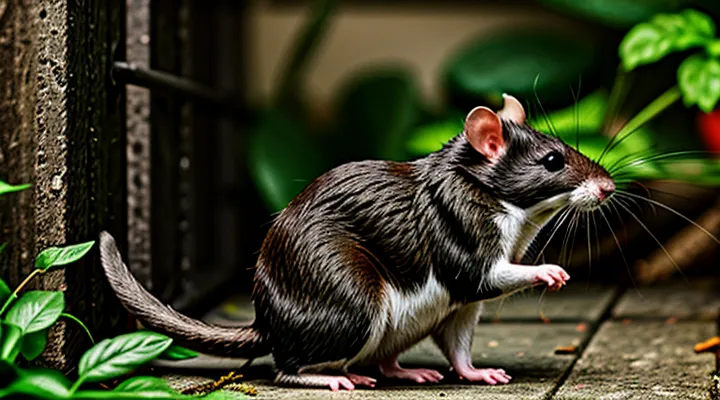
The Importance of Knowing the Difference
Safety Concerns
Potential for Diseases
Pet rats typically undergo health screening, vaccination, and regular veterinary care, resulting in a lower likelihood of carrying zoonotic pathogens. Wild rats are exposed to contaminated environments, sewage, and other rodents, increasing their burden of bacteria, viruses, and parasites that can transmit to humans and other animals. Recognizing disease potential helps differentiate a domesticated companion from a free‑living specimen.
Key differences in disease risk include:
- Bacterial infections: Pet rats rarely harbor Salmonella or Leptospira; wild rats often test positive for these agents.
- Viral agents: Lymphocytic choriomeningitis virus (LCMV) prevalence is higher in wild populations; laboratory colonies maintain strict biosecurity to prevent LCMV.
- Parasitic load: Wild rats commonly carry ectoparasites such as fleas, mites, and internal worms (e.g., Hymenolepis nana); pet rats are usually parasite‑free after routine deworming.
- Fungal concerns: Dermatophyte infections appear more frequently in wild individuals due to poor grooming conditions.
Observing clinical signs can also be informative. Pet rats usually exhibit clean fur, bright eyes, and normal activity levels, whereas wild rats may show emaciation, nasal discharge, or visible parasites. Laboratory testing of a suspect rat—blood smear, fecal flotation, and serology—provides definitive evidence of pathogen exposure and reinforces the identification of the animal’s origin.
Aggression and Bites
Pet rats generally display low levels of aggression toward humans. Their bites are infrequent, brief, and often result from sudden handling errors rather than defensive intent. Wild rats, by contrast, exhibit heightened defensive behavior; bites are more frequent, deeper, and accompanied by audible chattering or lunging.
Key differences in aggression and biting patterns:
- Frequency – Pet rats bite rarely; wild rats bite often during close contact.
- Depth and severity – Domestic bites are shallow, causing minimal tissue damage; wild bites penetrate deeper, sometimes tearing skin.
- Accompanying signals – Pet rats may emit soft squeaks before a bite; wild rats produce harsh chattering, raised fur, and rapid tail flicks.
- Reaction to handling – A pet rat may pause and retreat after a bite, while a wild rat typically continues to snap or attempts to escape aggressively.
Observation of these behavioral cues provides reliable evidence for distinguishing a domesticated rat from its feral counterpart.
Ethical Considerations
Releasing Pet Rats into the Wild
Releasing a domesticated rat into a natural habitat creates immediate ecological and health risks. Domestic rats lack the survival skills of their wild counterparts, leading to rapid starvation, predation, or disease spread. Their presence can also introduce pathogens to wild populations, compromising local rodent health and the broader ecosystem.
Key consequences of releasing pet rats:
- Genetic contamination: Interbreeding with wild rats may dilute local genetic adaptations and alter behavioral traits.
- Disease transmission: Domestic rats may carry parasites, viruses, or bacteria unfamiliar to wild groups, facilitating outbreaks.
- Population imbalance: An influx of inexperienced individuals can increase competition for limited resources, affecting native species’ survival.
- Misidentification: Released pets may be mistaken for wild rats during field surveys, skewing data on distribution and abundance.
Management guidelines recommend humane euthanasia or placement in licensed shelters rather than environmental release. If a release is unavoidable, it must occur in a controlled, monitored enclosure that mimics natural conditions and prevents contact with wild rodents. This approach minimizes ecological disruption while respecting animal welfare.
Attempting to Tame Wild Rats
Attempting to tame a wild rat requires understanding the fundamental differences between domesticated and feral individuals. Pet rats typically display reduced fear of humans, consistent grooming habits, and a stable weight. Wild rats retain heightened wariness, erratic grooming, and fluctuating body condition due to variable food sources.
Successful taming begins with minimizing stressors. Provide a secure enclosure that limits escape routes and shields the animal from sudden movements. Introduce a steady supply of high‑quality rat chow, fresh water, and occasional treats such as small pieces of fruit or nuts to encourage positive association with the handler.
Key steps for habituation:
- Place the rat in the enclosure for several days without direct contact; allow it to explore undisturbed.
- Offer food from the hand at a short distance; gradually decrease the gap as the rat approaches voluntarily.
- Incorporate gentle, brief sessions of hand‑holding once the rat accepts food from the palm; support the body to prevent injury.
- Maintain a consistent routine; irregular handling can reinforce fear and impede progress.
Observe behavioral indicators of domestication: reduced flight response, willingness to climb onto the hand, and regular grooming within the enclosure. Absence of these signs after extended effort suggests the rat remains feral and may never achieve the trust level typical of a pet.
Key Physical Characteristics
Size and Build
Pet Rats: Generally Larger and More Robust
Pet rats tend to exceed the size of their wild relatives. Adult domestic specimens often reach 9–12 cm in body length, whereas wild brown rats usually measure 7–9 cm. The extra length results from selective breeding for larger frames and from a diet rich in protein and calories.
Robustness distinguishes owned rats as well. Muscular development appears more pronounced, especially along the shoulders and hindquarters. This strength manifests in a steadier gait and the ability to sustain longer periods of activity without fatigue. In contrast, wild individuals display leaner bodies, thinner limbs, and a tendency toward rapid, cautious movements.
Fur condition offers another reliable indicator. Pet rats exhibit dense, glossy coats that lack the coarse texture and occasional patches of missing hair common in wild rats, which often endure parasites and harsh environments. A smooth, well‑maintained pelage suggests regular grooming and veterinary care.
Health markers reinforce the size and robustness differences. Domestic rats typically present higher body weight relative to length, a sign of adequate nutrition and controlled living conditions. Blood work frequently shows stable hematocrit levels and lower stress hormone concentrations, whereas wild rats exhibit fluctuating values linked to food scarcity and predation pressure.
When assessing an unknown rat, consider the following checklist:
- Measure body length and compare against typical domestic ranges (9–12 cm).
- Observe muscle tone, especially on the back and hind legs.
- Inspect fur for uniformity, shine, and absence of parasites.
- Weigh the animal; a higher weight‑to‑length ratio suggests a pet.
- Note behavior: confident, exploratory movements often belong to domesticated rats.
These physical attributes provide a practical framework for separating captive‑bred rats from their wild counterparts without relying on behavioral observations alone.
Wild Rats: Typically Smaller and More Sleek
Wild rats commonly exhibit a reduced body length compared with domesticated counterparts, often measuring 7–9 inches from nose to tail tip. Their skeletal structure appears more streamlined, with a narrower rib cage and elongated spine that contributes to a slender silhouette.
Coat condition provides another reliable indicator. In the wild, fur tends to be short, glossy, and uniformly colored, reflecting constant exposure to environmental elements. Pet rats usually display longer, softer hair that may appear fluffy or uneven due to grooming practices and controlled habitats.
Behavioral cues reinforce physical distinctions. Wild individuals maintain a cautious posture, keeping their bodies low to the ground and minimizing movement to avoid predators. Domestic rats, accustomed to human interaction, display relaxed musculature and more pronounced, frequent grooming motions.
Key characteristics for identification:
- Length: 7–9 inches (wild) vs. 9–12 inches (domestic).
- Build: lean, angular frame; narrow shoulders.
- Fur: short, sleek, evenly pigmented; minimal fluff.
- Tail: thin, proportionally longer relative to body.
Observing these traits allows accurate differentiation between free‑living rats and those kept as companions.
Fur Color and Texture
Pet Rats: Wide Variety of Colors and Patterns
Pet rats display a broad spectrum of coat colors and patterns that differ markedly from the uniform brown‑gray pelage of wild counterparts. Breeders select for traits such as albino, black, agouti, and hooded, producing visual markers that rarely appear in feral populations.
- Albino – pure white fur, pink eyes, and pink nose.
- Black – solid black coat, often with a glossy sheen.
- Agouti – speckled mixture of brown, black, and white hairs, giving a grizzled appearance.
- Hooded – dark coloration limited to the head, shoulders, and tail, with a lighter body.
- Blaze – white or lighter stripe running from the nose across the forehead to the shoulders.
- Mink – dark brown base with a silvery sheen.
- Siamese – darker points on ears, tail, and nose contrasting with a lighter body.
These color variations arise from selective breeding and are genetically stable within captive lines. When assessing an unknown rat, the presence of any of the listed patterns strongly suggests a domesticated origin, whereas the absence of such traits, combined with a homogenous brown‑gray coat, points to a wild individual.
Wild Rats: Predominantly Brown, Black, or Grey
Wild rats most often display coats in shades of brown, black, or grey. The pigmentation results from natural selection for camouflage in urban and rural environments. Brown individuals range from light tawny to deep chestnut, while black rats exhibit a uniform dark hue that may appear almost glossy. Grey rats show a spectrum from silvery‑blue to mouse‑grey, sometimes with a faint white belly.
Key visual markers that separate feral specimens from domestic counterparts include:
- Uniform, coarse fur lacking the glossy sheen common in pet breeds.
- Darker, thicker tail with sparse hair, contrasted with the slender, hair‑covered tail of a house‑raised rat.
- Prominent, pointed ears that appear less rounded than those of a domesticated animal.
- Larger, more muscular body proportions, reflecting a lifestyle of foraging and escape.
These characteristics, combined with the typical coloration, provide reliable criteria for distinguishing a wild rat from a pet rat without reliance on behavioral assessment.
Tail Length and Appearance
Pet Rats: Often Thicker at the Base, Less Scaly
Pet rats typically display a more robust base where the tail meets the body. This area is noticeably thicker than in wild counterparts, whose tails taper sharply from the outset. The increased girth reflects selective breeding for a sturdier skeletal structure and enhanced muscle mass, which supports the animal’s indoor lifestyle.
Scales on a rat’s skin provide protection in natural habitats. Domestic rats exhibit a reduced scale density, especially along the dorsal surface and tail. The skin feels smoother to the touch, and the fur coverage is denser, masking any remaining scales. Wild rats retain a pronounced, rougher scale pattern that aids in navigating outdoor environments and deterring parasites.
Key physical markers for identification:
- Tail base: Pet rats – thick, rounded; Wild rats – thin, tapered.
- Scale coverage: Pet rats – minimal, smooth skin; Wild rats – abundant, coarse scales.
- Fur density: Pet rats – thick, uniform coat; Wild rats – uneven, sparser fur.
These characteristics provide reliable criteria for separating domesticated individuals from their feral relatives without reliance on behavioral observation.
Wild Rats: Usually Longer Than Body, Noticeably Scaly
Identifying whether a rat is a domesticated companion or a free‑living individual requires close observation of physical traits.
Wild specimens display a tail that exceeds the length of the head‑body segment, often by several centimeters. The skin on the tail and hindquarters is covered with coarse, visible scales, giving a rough texture that contrasts sharply with the smooth, hair‑covered tail of a pet rat.
Additional indicators include:
- Body size: wild rats tend to be leaner, with a more elongated torso.
- Fur condition: coarse, patchy fur with occasional bald spots.
- Ear shape: larger, thinner ears with prominent blood vessels.
- Behavior: heightened wariness and rapid escape responses.
Pet rats, by comparison, possess a tail roughly equal to or slightly shorter than the body length, a uniformly silky coat, and a lack of noticeable scaliness. Their demeanor is generally relaxed, allowing for close handling.
By measuring tail proportion and inspecting skin texture, observers can reliably differentiate a free‑roaming rat from a domesticated one.
Ear Size and Shape
Pet Rats: Larger, More Rounded Ears
Pet rats exhibit ears that are noticeably larger and more rounded than those of their wild relatives. The increased surface area accommodates the heightened auditory sensitivity required for a domesticated environment, while the curvature reduces the risk of injury in confined cages.
- Size: ear pinnae extend farther from the skull, creating a broader silhouette.
- Shape: edges form a smooth, circular outline rather than the tapered points seen in feral specimens.
- Fur: a dense, soft coat covers the ear surface, giving a plush appearance.
- Color: pigmentation tends toward uniform shades, lacking the mottled patches common in wild individuals.
These ear characteristics provide a quick, reliable metric for distinguishing a domesticated rat from a wild one during visual assessment.
Wild Rats: Smaller, More Pointed Ears
Wild rats can be identified by the size and shape of their ears. Their ears are noticeably smaller and terminate in a sharp point, a contrast to the larger, rounded ears of domesticated rats.
The reduced ear dimensions serve two functions. First, they lower the profile of the animal, helping it slip through narrow openings in urban environments. Second, the pointed tip improves directional hearing for predators that hunt at night.
Key ear characteristics of wild specimens include:
- Length: typically 1–1.2 cm, compared with 1.5–2 cm in pet rats.
- Shape: triangular with a distinct apex; pet rats display a more oval, blunt outline.
- Fur coverage: sparse hair around the edge, exposing more skin; domestic rats have denser fur encircling the ear.
These morphological traits provide a quick visual cue for distinguishing a free‑living rat from a companion animal.
Behavioral Indicators
Tameness and Fear Response
Pet Rats: Comfortable with Human Interaction
Pet rats raised in a domestic environment show a distinct ease of contact with people. They readily approach a hand, allow gentle petting, and tolerate brief restraint without signs of stress such as frantic squeaking or aggressive biting.
Key behavioral markers of domesticated rats include:
- Calm response when a caretaker’s scent is present; the animal often seeks proximity or climbs onto the lap.
- Tolerance of routine health checks, including handling of the tail, ears, and paws, without sudden escape attempts.
- Preference for soft bedding and enclosure accessories that are frequently cleaned, indicating familiarity with human-maintained habitats.
Physical clues support the behavioral assessment. Domesticated rats typically have a well‑groomed coat, free of excessive dirt or parasites that are common in wild specimens. Their nails are often trimmed or naturally worn down by regular interaction with cage surfaces, reducing the likelihood of sharp defensive scratches.
Observing these traits during handling provides reliable evidence to separate a companion rat from a free‑living counterpart. Consistent comfort with human touch, combined with the outlined physical signs, forms the basis for accurate identification.
Wild Rats: Extremely Skittish and Fearful of Humans
Wild rats exhibit a pronounced aversion to human contact. Their instinctive flight response activates at the slightest disturbance, causing rapid retreat to concealed burrows or hidden crevices. This behavior contrasts sharply with the confidence displayed by domesticated rats, which often approach or remain still when approached.
Key indicators of a wild rat’s skittish nature include:
- Immediate, high‑speed escape when a person enters its vicinity.
- Preference for dark, secluded routes rather than open spaces.
- Minimal tolerance for handling; attempts at capture result in vigorous struggle.
- Sparse grooming, leading to a rough, uneven coat.
- Strong, musky odor derived from environmental exposure and diet.
These characteristics provide reliable criteria for distinguishing a wild individual from a pet. Observers can assess reaction speed, willingness to be touched, and physical condition to determine whether a rat is accustomed to human interaction or remains a naturally fearful, free‑living specimen.
Activity Patterns
Pet Rats: Often Active During the Day
Pet rats commonly display pronounced daytime activity, a trait that sets them apart from their wild counterparts. In a household environment, domesticated rats will explore cages, chew objects, and seek interaction with owners during normal waking hours. Their schedules often align with human routines, leading to visible engagement in the morning and early afternoon.
Key indicators of diurnal behavior in pet rats include:
- Frequent movement and grooming while lights are on.
- Vocalizations such as squeaks or chirps directed at humans during the day.
- Regular feeding from scheduled bowls placed at breakfast and dinner times.
- Interaction with enrichment items (tunnels, wheels) during daylight periods.
In contrast, wild rats typically restrict most activity to nighttime, avoiding bright environments and human presence. Observing a rat that remains active, curious, and responsive when the room is illuminated provides reliable evidence of a domesticated animal. This pattern, combined with other domestic traits, aids in distinguishing a pet rat from a field‑living specimen.
Wild Rats: Primarily Nocturnal
Wild rats exhibit a night‑time activity pattern that contrasts sharply with the daytime exposure typical of domesticated rats. Their peak foraging, social interaction, and movement occur after dusk, driven by heightened rodent circadian rhythms that favor darkness for predator avoidance and food searching.
Key nocturnal characteristics include:
- Elevated locomotor activity between sunset and sunrise.
- Dilated pupils and increased retinal sensitivity, allowing navigation in low‑light environments.
- Preference for concealed shelters such as sewers, basements, and wall voids during daylight hours.
- Reduced vocalization and social display in bright conditions, conserving energy for nighttime foraging.
These traits provide reliable indicators when assessing an unknown rat. An animal observed active, alert, and exploratory in the dark, yet withdrawn and hidden during daylight, is likely a wild specimen. Conversely, a rat that remains active, sociable, and visible throughout the day typically reflects a domesticated background.
Socialization
Pet Rats: Enjoy Interaction with Other Rats and Humans
Pet rats are domesticated rodents that readily engage with conspecifics and people. Their breeding for companionship produces individuals that display reduced fear of human presence and an inclination toward social contact.
When housed with other rats, pet specimens form stable groups. They exchange grooming strokes, share nesting material, and establish a clear dominance order without aggressive encounters. These behaviors indicate familiarity with group living and a tolerance for close proximity.
Human interaction is marked by calm acceptance of handling. Pet rats allow gentle restraint, explore hands voluntarily, and emit soft vocalizations that signal contentment. They readily learn simple cues, such as stepping onto a fingertip or navigating a maze, demonstrating cognitive flexibility that differs from wild counterparts.
Key interaction traits that help identify a domesticated rat:
- Frequent grooming of cage mates rather than avoidance.
- Quick approach to unfamiliar humans, often sniffing and climbing onto the hand.
- Absence of intense flight response when the cage is opened.
- Preference for communal nesting over solitary burrows.
- Vocalizations that are soft and repetitive during petting sessions.
These characteristics collectively confirm that the rat has been raised in a human‑oriented environment and distinguishes it from its wild relatives.
Wild Rats: Live in Colonies but Are Wary of Outsiders
Wild rats occupy dense colonies that consist of several breeding pairs, their offspring, and subordinate members. The group shares burrows, foraging routes, and a communal nest. Social hierarchy dictates who leads movements and who guards the perimeter. Communication relies on scent marking, ultrasonic vocalizations, and brief tactile contacts, all maintained within the familiar members of the colony.
Outsiders trigger immediate defensive reactions. A wild rat encountering an unfamiliar animal or human will freeze, emit high‑frequency alarm calls, and retreat to the deepest part of the burrow system. Scent of a foreign individual prompts aggressive sniffing followed by rapid escape. These responses persist even after repeated exposure, reflecting an innate suspicion of non‑colony members.
The contrast with domesticated rats is evident in observable behavior and physical condition:
- Reaction to handling: Pet rats accept gentle restraint; wild rats flee or bite.
- Body condition: Domesticated individuals display uniform coat sheen and well‑developed musculature; wild rats often have uneven fur and signs of nutritional stress.
- Scent profile: Tame rats carry human-associated odors; wild rats retain strong environmental musk.
- Social interaction: Pet rats engage in prolonged grooming with humans; wild rats limit contact to brief, hierarchical exchanges.
- Habitat use: Domesticated rats remain in cages; wild rats occupy complex underground networks and avoid open spaces.
Recognizing these markers enables reliable differentiation between a rat raised in captivity and one that originates from a natural colony.
Vocalizations
Pet Rats: Purrs, Squeaks, Bruxing
Pet rats raised in households exhibit vocalizations that differ markedly from those of feral counterparts. Domestic individuals produce soft, rhythmic chirps—often described as “purrs”—when content, whereas wild rats emit harsher, irregular squeaks linked to alarm or aggression. The tonal quality, frequency, and context of these sounds provide reliable clues for identification.
Additional behavioral markers include:
- Bruxing – continuous grinding of incisors observed in captive rats during relaxation; wild rats demonstrate bruxing only when gnawing hard objects for survival.
- Social grooming – frequent, gentle grooming of cage mates, absent in feral populations that prioritize minimal contact.
- Habituation to handling – willingness to allow human touch without defensive biting, a trait rarely seen in undomesticated specimens.
Physical observations reinforce auditory cues. Pet rats typically display a well‑groomed coat, smooth whisker alignment, and reduced scar tissue from fights, reflecting a low‑conflict environment. Conversely, wild rats often bear uneven fur, broken whiskers, and pronounced bite marks. Combining vocal, behavioral, and physical data yields a comprehensive method for separating domesticated rodents from their wild relatives.
Wild Rats: Primarily Squeaks of Alarm or Aggression
Distinguishing a domesticated rat from its wild counterpart relies heavily on vocal cues. Wild rats communicate danger and dominance through a limited set of high‑energy sounds that differ markedly from the varied repertoire of a pet rat.
The alarm squeak of a wild rat is a brief, sharp chirp lasting 0.05–0.1 seconds, typically pitched between 8 and 12 kHz. Its waveform shows a rapid rise and abrupt fall, creating a startling acoustic signature that alerts nearby conspecifics to predators or sudden disturbances. Aggressive squeaks are longer, more guttural, and often layered with low‑frequency components (4–6 kHz) that convey threat and territorial intent. Both vocalizations are produced at higher amplitude than the softer coos and purrs of a pet rat, ensuring they cut through ambient noise in open, unsheltered environments.
Contextual triggers for these sounds include:
- Sudden movement of larger animals or humans near a burrow entrance.
- Intrusion of an unfamiliar rat into an established foraging area.
- Competition over food resources during twilight feeding periods.
In contrast, a pet rat’s vocalizations encompass a broader spectrum:
- Contented chirps and trills during grooming or social bonding.
- Soft squeaks indicating mild curiosity or exploration.
- Low‑frequency rumblings associated with relaxation.
Key distinctions observable in the field:
- Pitch range: Wild alarm/ aggression sounds occupy the upper 8–12 kHz band; pet noises spread across 4–10 kHz.
- Duration: Wild alarm squeaks are under 0.1 seconds; pet chirps extend to 0.3 seconds or longer.
- Amplitude: Wild calls exceed 70 dB SPL at the source; pet vocalizations remain below 60 dB.
- Contextual pattern: Wild sounds appear exclusively in defensive or confrontational scenarios; pet sounds occur during routine care and play.
When assessing a rat in an unfamiliar setting, listen for abrupt, high‑frequency bursts and note the surrounding circumstances. Presence of these alarm or aggression squeaks, especially in response to perceived threats, strongly indicates a feral individual rather than a domesticated companion.
Habitat and Environment
Location of Discovery
Pet Rats: Found Indoors, Often Near Cages
Pet rats typically remain within the interior of a home, concentrating activity around their enclosure. Their presence is marked by small droppings on the floor, bedding fibers, and occasional gnaw marks on nearby objects. Unlike wild rats, which travel across walls, ceilings, and outdoor debris, domestic individuals stay close to the cage, often venturing only a few feet from it.
Key indicators of a domestic rat’s location:
- Droppings clustered within a radius of the cage, usually uniform in size and shape.
- Chewed materials such as wood shavings, cardboard, or plastic found near the enclosure.
- Scent of laboratory‑type bedding or commercial food remnants on the floor.
- Absence of graffiti‑style gnaw marks on structural elements like baseboards or joists.
Observing these patterns allows rapid differentiation between a house‑kept rat and a free‑roaming counterpart. The limited range of movement, specific waste distribution, and proximity to cage accessories constitute reliable evidence of a pet rat’s indoor habitat.
Wild Rats: Found Outdoors, in Walls, or Sewers
Wild rats thrive in urban and suburban settings, occupying spaces where food, shelter, and water are readily available. Their presence is most frequent in three distinct environments: open outdoor areas, interior wall cavities, and underground drainage systems.
- Outdoor locations: parks, alleys, garbage piles, abandoned lots, and fields where vegetation provides cover.
- Wall spaces: gaps behind insulation, ceiling voids, and floor joists that connect rooms and allow movement between structures.
- Sewer networks: storm drains, municipal sewers, and underground utility tunnels where moisture and refuse accumulate.
Physical and behavioral traits set wild rats apart from domesticated counterparts. Their fur often appears ragged, with patches of missing hair and a coarse texture. A strong, musky odor accompanies them, reflecting exposure to waste and disease vectors. Wild individuals display heightened wariness, rapid flight responses, and nocturnal activity patterns, whereas pet rats are accustomed to human interaction, exhibit tame behavior, and are active during daylight hours. Health indicators include visible parasites, sores, and a higher incidence of respiratory symptoms.
To determine whether a rat originates from the wild, observe the surrounding environment for signs of infestation—chewed wiring, gnaw marks on wood, droppings in concealed areas, and tracks near sewage outlets. Capture or photograph the animal for close inspection of coat condition, ear size, and tail length, which tend to be longer and thinner in wild specimens. Cross‑reference these observations with the known habitats listed above to reach a reliable conclusion.
Signs of Care
Pet Rats: Cleanliness, Presence of Food/Water Bowls
Pet rats kept as companions exhibit a level of hygiene that rarely appears in wild populations. Their cages are regularly cleaned, and the bedding is replaced on a predictable schedule. In contrast, wild rats rely on natural environments where debris and droppings accumulate without systematic removal.
The presence of dedicated food and water containers is another reliable indicator. Domesticated rats are provided with separate bowls that are refilled daily, often made of plastic or metal to prevent contamination. Wild rats forage for scraps and obtain water from puddles, streams, or improvised sources, leaving no permanent vessels.
Key differences to observe:
- Clean, dry bedding with minimal droppings visible on the surface.
- Clearly defined, regularly maintained food and water bowls.
- Absence of stray debris, leaves, or insect remains within the living area.
These characteristics collectively signal a rat that is cared for by humans rather than one surviving in the wild.
Wild Rats: Lack of Human-Provided Amenities
Wild rats live without the comforts that owners supply to domestic rodents. They receive no manufactured cages, no padded bedding, and no controlled temperature environment. Food sources are irregular, consisting of scavenged waste rather than balanced pellets. Veterinary attention is absent, leaving parasites and injuries untreated. Social contact is limited to opportunistic encounters rather than consistent companionship.
These omissions affect appearance and health. Fur often appears coarse, matted, or missing patches where parasites have damaged skin. Body condition fluctuates, with visible weight loss during food scarcity and rapid gain after abundant garbage. Dental wear is uneven, reflecting a diet of hard, abrasive materials. Eyes may show redness or discharge due to untreated infections.
Observable indicators tied to the lack of human-provided amenities include:
- Coarse, uneven fur with visible parasites or scabs.
- Irregular body weight, frequent emaciation.
- Dental irregularities such as overgrown or worn incisors.
- Unclean, soiled paws and tail due to unsanitary foraging.
- Absence of a stable, familiar nesting material; nests are constructed from discarded debris.
What to Do if You Encounter a Rat
If You Suspect It's a Pet
How to Safely Approach
When a rat appears in a garden, garage, or indoor space, a cautious approach minimizes stress for the animal and reduces risk of bites or disease transmission. The following protocol enables safe contact while gathering clues about the rat’s origin.
- Move slowly, keeping your body turned sideways to appear less threatening.
- Extend a hand palm‑up, fingers relaxed, maintaining a distance of 12–18 inches.
- Observe the rat’s reaction for at least ten seconds before reducing the gap.
- If the rat remains still or approaches, lower your hand gradually, allowing it to sniff.
- Use a clean, low‑profile container (plastic box with a breathable lid) to coax the rat inside, sliding a piece of soft fabric or a small amount of fresh fruit as incentive.
- Seal the container securely once the rat is inside, then transport it to a controlled environment for further inspection.
Key indicators that differentiate a domesticated rat from a feral counterpart become apparent once the animal is contained:
- Coat condition: glossy, clean fur suggests regular grooming; matted, dirty pelage points to outdoor living.
- Tail length and shape: shorter, thickened tails are typical of bred rats; long, slender tails are common in wild specimens.
- Ear size and fur: domestic rats often exhibit larger, hair‑less ears; wild rats retain a thin layer of fur on the ear edges.
- Behavior under handling: calm, exploratory movements indicate habituation to human contact; frantic fleeing or aggressive lunges signal lack of exposure.
After identification, release the animal according to local wildlife regulations. If the rat is a pet, arrange a safe return to its caretaker. If it is wild, consider contacting pest‑control professionals or humane‑trap services to prevent further intrusion.
Contacting Local Shelters
Contacting local animal shelters provides direct access to records and expertise that clarify whether a rat is a former pet or a wild capture. Shelters maintain intake documentation, health histories, and often have staff familiar with the typical appearance and temperament of rescued rodents.
- Identify shelters within a reasonable radius using online directories or municipal listings.
- Call or email the shelter’s rodent coordinator; request the intake form for the specific rat, noting breed, age estimate, and source of acquisition.
- Ask for any veterinary reports that describe coat condition, dental health, and parasite screenings, which differ markedly between domesticated and wild specimens.
- Inquire whether the rat has been observed displaying social behavior toward humans, a trait uncommon in feral individuals.
- If possible, arrange a brief, supervised meeting to assess the rat’s response to handling and its scent profile, both indicators of prior captivity.
Shelters typically differentiate pet rats from wild ones by recording rescue circumstances (e.g., surrendered by an owner versus found in a field) and by noting physical markers such as trimmed nails, clean fur, and absence of severe injuries. Analyzing this data enables a reliable determination without relying on visual speculation alone.
If You Suspect It's Wild
Maintaining Distance
Maintaining a safe observational distance provides reliable clues about a rat’s origin. Pet rats are accustomed to human proximity; wild rats keep a larger perimeter and display heightened alertness.
Observable differences when kept at arm’s length:
- Coat condition: pet rats exhibit smooth, well‑groomed fur; wild rats often have matted or dirty pelage.
- Body weight: pet rats maintain consistent, healthy mass; wild rats show fluctuating weight due to irregular food sources.
- Fear response: pet rats may approach or remain still when a person is nearby; wild rats retreat, emit high‑pitched squeaks, or freeze.
- Interaction with objects: pet rats explore cages and toys calmly; wild rats investigate new items cautiously and may avoid them altogether.
Practical application:
- Position yourself 2–3 feet away from the animal.
- Observe without sudden movements; avoid direct eye contact that could be perceived as a threat.
- Record coat, weight, and behavior indicators before attempting any physical contact.
- If the rat exhibits consistent avoidance or aggressive vocalizations, classify it as likely wild.
By enforcing a measured distance, observers reduce stress on the animal and acquire objective data that distinguishes domesticated specimens from their wild counterparts.
Contacting Pest Control
When a rat appears in a home, confirming whether it is a domesticated animal or a wild intruder often requires professional input. Engaging a pest‑control service supplies expertise that distinguishes the two based on behavior, physical traits, and context, while also addressing health and safety concerns.
Professional assessment is advisable if the rodent shows signs of aggression, carries disease, or if there is uncertainty about its origin. Pest specialists can identify pet rats by the presence of a microchip, a calm demeanor, and a well‑groomed coat, whereas wild rats typically exhibit skittishness, a coarse fur texture, and evidence of gnawing on structural elements.
Before calling, collect the following information:
- Exact location of the sighting (room, entry point).
- Description of size, color, and any markings.
- Observed behavior (fearful, aggressive, accustomed to handling).
- Knowledge of any pet rats owned by occupants.
- Recent changes in the environment (new food sources, open windows).
When contacted, a pest‑control provider will schedule an on‑site inspection, verify the rat’s status, and recommend appropriate action—ranging from humane capture and release of a pet rat to safe extermination of a wild specimen. The service also offers guidance on sealing entryways, removing attractants, and maintaining a rat‑free environment.