
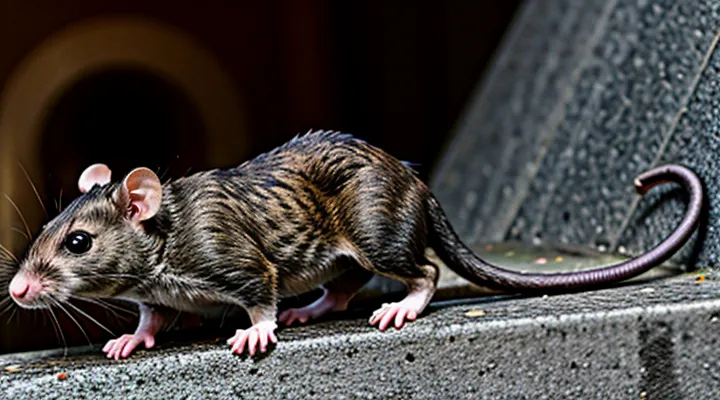
Understanding Rat Anatomy for Sexing
Key Anatomical Differences
Anogenital Distance
Anogenital distance (AGD) is the linear measurement from the center of the anus to the base of the genital papilla. In rodents, AGD exhibits a pronounced sexual dimorphism: males possess a longer AGD than females due to androgen‑dependent development during the fetal period.
To use AGD for sex identification, follow these steps:
- Place the rat on a flat surface with the ventral side upward.
- Gently spread the hindlimbs to expose the perineal region without applying pressure to the abdomen.
- Use a calibrated digital caliper to record the distance from the anus midpoint to the urethral orifice (males) or the vaginal opening (females).
- Compare the measured value to established reference ranges: adult male rats typically show AGD values of 10–13 mm, whereas adult females range from 5–7 mm. Juvenile measurements require age‑adjusted charts.
AGD remains stable after sexual maturation, making it a reliable indicator for routine laboratory assessments. The method is non‑invasive, rapid, and eliminates the need for visual inspection of external genitalia, which can be ambiguous in neonates. Limitations include overlap in measurements among very young pups and potential measurement error if the caliper is not perpendicular to the body axis. Proper training and consistent technique minimize these issues.
Genital Papilla
The genital papilla is a small, raised structure located at the ventral edge of a rat’s anus. In males, the papilla appears as a distinct, conical projection that extends forward and is often accompanied by a visible scrotal sac behind it. In females, the area is smooth, lacking any protruding tissue, and the opening of the vulva lies directly adjacent to the anus without a papilla.
When determining sex, gently restrain the rat and expose the ventral region. Observe the following characteristics:
- Presence of a cone‑shaped papilla → male.
- Absence of papilla, smooth perineal area → female.
- In males, a palpable, elongated urethral opening may be visible at the tip of the papilla.
- In females, the urethral and vaginal openings are separate and situated close to the anus.
Accurate identification requires adequate lighting and minimal stress to the animal. Use a soft, gloved hand to avoid injury, and handle the rat briefly to prevent temperature loss. If the papilla is ambiguous, examine secondary features such as testicular position or mammary gland development for confirmation.
When is the Best Time to Sex a Rat?
The most reliable period for determining a rat’s sex occurs after the first set of permanent incisors have erupted but before the onset of puberty. At 21–28 days of age the anogenital distance is clearly different between males and females, and external genitalia are sufficiently developed for visual inspection. Handling at this stage minimizes stress because the animals are still small enough to be gently restrained without excessive movement.
Key considerations for optimal timing:
- Age window: 21–28 days (approximately three weeks old).
- Physical markers:
• Males: larger anogenital distance, visible preputial fold, often a small scrotal sac.
• Females: shorter anogenital distance, prominent nipples, absence of preputial tissue. - Environmental factors: warm room temperature (22–24 °C), bright but diffused lighting, and a calm environment reduce agitation.
- Handling technique: support the torso with one hand, gently lift the tail with the other, and observe the region without applying force.
Sexing earlier than 21 days often yields ambiguous results because genital structures are not fully differentiated. Delaying beyond 35 days increases the risk of injury and may require anesthesia, which adds complexity and potential health concerns. Therefore, scheduling sex determination within the three‑to‑four‑week window provides the highest accuracy while maintaining animal welfare.
Methods for Sexing Rats
Visual Inspection
Observing the Perineum
Observing the perineal region provides the most reliable visual cues for sexing laboratory rats. The area between the anus and the genital opening differs markedly between males and females and can be examined without invasive procedures.
In males, the perineum displays a visibly distinct scrotum that houses the testes. The distance from the anus to the genital papilla (the opening of the preputial gland) is typically longer, often exceeding 5 mm. The genital papilla itself is rounded and may be covered by a thin layer of fur. In females, the perineum lacks a scrotum; the anus‑to‑genital distance is shorter, usually under 3 mm, and the genital papilla appears as a small, slit‑like opening without surrounding bulge.
Practical steps for observation:
- Secure the rat in a gentle restraint, such as a soft towel or a specialized handling device.
- Position the animal on its back or side to expose the ventral surface.
- Use a bright, diffused light source to minimize shadows.
- Measure the anus‑to‑genital distance with fine calipers or a ruler marked in millimeters.
- Note the presence or absence of a scrotal sac and the shape of the genital papilla.
Common errors include misidentifying the preputial gland in females as a scrotum, overlooking fur that obscures the perineal structures, and measuring from the wrong reference point. Accurate identification requires consistent positioning and clear visualization of the perineal anatomy.
By adhering to these observation techniques, researchers can determine rat gender quickly and with high confidence, supporting appropriate experimental grouping and animal care.
Identifying Testicles in Males
When determining a rat’s sex, the presence of testicles provides the most reliable confirmation of a male.
Testicles are situated in the scrotal sac beneath the ventral abdomen, flanking the anus. In mature males they appear as two rounded, pinkish‑white masses, each roughly 2–4 mm in diameter. The scrotum is a thin, loose skin fold that may retract when the animal is stressed.
To examine a rat safely:
- Secure the animal by gently holding the base of the tail with one hand.
- Support the body with the other hand, keeping the back flat.
- Lift the ventral side slightly to expose the area around the vent.
- Observe the region under adequate lighting; use a magnifying lens if needed.
Key visual cues for male identification:
- Two distinct, symmetrical masses within a scrotal pouch.
- Visible spermatic cords extending from each mass toward the abdomen.
- Absence of a pronounced genital papilla, which is typical of females.
In juveniles before puberty, testicles may remain intra‑abdominal and be undetectable externally. In such cases, alternative methods—such as examining the anogenital distance—should be employed.
Identifying the Vulva/Urethral Opening in Females
When examining a laboratory or pet rat, the first step in sex identification is to locate the external genitalia. In females, the vulva appears as a small, rounded opening situated just ventral to the anus. It is typically positioned slightly lower on the ventral surface than the male’s scrotal sac and is surrounded by a smooth, hair‑free patch of skin.
Key visual cues for the female opening:
- Shape: Circular to slightly oval, without the pronounced scrotal bulge seen in males.
- Location: Approximately 1–2 mm distal to the anal opening; the distance can be measured with fine forceps or a calibrated ruler.
- Surrounding tissue: A thin, pale mucosal membrane may be visible; the area is generally smoother than the surrounding fur.
- Urethral slit: In some strains, a short, linear urethral opening can be observed just anterior to the vulva; it is less conspicuous than the vulvar opening but aligns with the same ventral line.
Procedure for reliable identification:
- Restrain the rat gently using a thumb and forefinger to expose the ventral surface without causing stress.
- Pull the tail forward to reveal the perineal region.
- Observe the area between the anus and the genital opening; the presence of a single, rounded vulva confirms a female.
- If a pair of testicular bulges is visible, the animal is male; otherwise, the single opening indicates a female.
Accurate recognition of the vulvar and urethral structures eliminates ambiguity in sex determination and ensures proper handling in research or breeding programs.
Palpation (for advanced users)
Gently Feeling for Testicles
When confirming a rat’s sex, the most reliable indicator for males is the presence of testicles. The examination should be performed with minimal stress to the animal and requires a gentle, systematic approach.
First, secure the rat by holding it upright against your palm, supporting the torso with one hand and the hindquarters with the other. Keep the grip firm enough to prevent movement but not so tight as to cause discomfort.
Second, locate the ventral surface of the abdomen just behind the pelvic bones. In a male, two small, oval masses—typically 3‑5 mm in diameter—will be palpable beneath the skin. These are the testicles, positioned within the scrotal sac.
Third, assess the texture and mobility of the masses. Testicles feel firm yet yielding, and they may shift slightly when pressure is applied. In females, the area will feel smooth, with no discrete lumps.
If the rat is very young (under three weeks), testicles may be internal and not easily felt. In such cases, wait until the animal is older or use additional visual cues, such as the presence of a larger anogenital distance.
Key points to remember:
- Use a light, consistent pressure; excessive force can injure the animal.
- Perform the check in a calm environment to reduce stress.
- Observe the animal’s reaction; a startled or aggressive response may indicate improper handling.
Accurate identification relies on consistent technique and careful observation of the abdominal region.
Comparing with Known Sexes
When the sex of an unfamiliar rat is uncertain, direct visual comparison with reference males and females provides a reliable shortcut. By placing the subject beside specimens whose sex is already confirmed, observers can detect subtle differences that may be missed in isolated examination.
- Anogenital distance – Measured from the vent to the anus; males typically show a gap twice the length of females.
- Genital papilla – Prominent, rounded in males; reduced or absent in females.
- Nipple development – More pronounced and numerous in females, especially after puberty.
- Body size and head shape – Males often exhibit larger body mass and broader skulls, though overlap exists.
The comparison process should follow a consistent sequence: restrain the unknown rat gently, align its ventral side with the reference, observe the anogenital region, then assess the presence and shape of the genital papilla and nipple pattern. Photographic documentation of both the subject and the reference specimens enhances repeatability.
Reliability improves with a well‑maintained reference set that includes individuals of various ages and strains. Regular verification of the reference sex eliminates potential mislabeling and ensures that comparative judgments remain accurate.
Important Considerations and Tips
Handling Rats Safely
Gentle Restraint Techniques
Gentle restraint is essential when examining a rat to identify its sex, because stress can obscure visual cues and increase the risk of injury. The handler should support the animal’s body without applying pressure to the abdomen, allowing clear observation of the anogenital region.
Key steps for safe handling include:
- Place the rat on a flat surface, using the thumb and forefinger to cup the torso while the other hand cups the hindquarters.
- Maintain the head in a neutral position; avoid grasping the neck or tail.
- Apply light pressure on the shoulders to keep the animal still, but release immediately if resistance occurs.
- Use a calm voice and slow movements to reduce anxiety.
Once the rat is securely but gently held, lift the tail gently to expose the genital area. In males, a visible penile sheath and testes may be present; in females, a smooth vulvar opening without protruding structures is observed. The restraint method should allow quick visual assessment and immediate release to minimize distress.
Practice with a calm, experienced handler improves technique, ensures consistent sex identification, and promotes the welfare of the rodent during routine examinations.
Distinguishing from Pups
Accurately identifying the sex of rat pups requires careful observation of external anatomical features. The most reliable indicator is the anogenital distance (AGD): in males, the space between the anus and the genital papilla is noticeably larger than in females. This difference becomes measurable around 5–7 days of age and remains consistent throughout development.
At birth, the genital papilla appears as a small, rounded protuberance in both sexes. By day three, male pups develop a slight swelling that will eventually form the scrotum, while female pups retain a smooth, flat region. The presence of visible testes, often discernible as tiny, whitish masses beneath the skin of the scrotal area, confirms male sex. In females, the absence of such masses and the continuity of the perineal skin indicate female sex.
Practical steps for sex determination:
- Gently restrain the pup on a soft surface; avoid excessive pressure that could cause injury.
- Use a magnifying lens or low‑power microscope to enhance visual detail.
- Measure the AGD with a fine ruler or calipers; record the distance for comparison.
- Inspect the genital papilla for swelling or testicular bulges; note any asymmetry.
- Confirm findings by cross‑checking with a second observer when possible.
Effective assessment depends on optimal lighting, a calm environment, and handling techniques that minimize stress. Conduct examinations before the weaning period to prevent interference with growth patterns. Accurate early sexing supports proper breeding management, health monitoring, and experimental consistency.
What if you're Unsure?
Seeking Veterinary Advice
Professional input is essential when sex identification in rats proves uncertain. Veterinary expertise eliminates guesswork, ensures accurate classification, and prevents mismanagement of health or breeding plans.
Consult a veterinarian if the animal is less than three weeks old, displays ambiguous genital morphology, or exhibits reproductive‑related health issues. Early assessment also benefits owners planning future breeding or adopting multiple rodents.
Prepare the appointment with the following items:
- The rat in a secure transport container.
- A brief health history, including age, diet, and any observed abnormalities.
- Photographs of the genital area, if safe to obtain.
- A list of questions regarding sex‑related care.
During the exam the veterinarian will:
- Perform a visual inspection using magnification tools.
- Palpate the abdomen to locate testes in males or assess uterine tissue in females.
- Apply gentle lighting to differentiate the anogenital distance and the presence of a scrotal sac.
- If visual cues remain unclear, recommend ultrasound imaging or genetic testing for definitive results.
After diagnosis, the veterinarian will document the sex, advise on sex‑specific health monitoring, and outline appropriate husbandry practices. Record the information in the rat’s medical file to guide future veterinary visits and breeding decisions.
Consulting Experienced Breeders
When the sex of a rat is unclear, seasoned breeders provide the most reliable guidance. Their expertise stems from years of observing subtle anatomical differences and recognizing variations across breeds.
- Direct visual inspection: Experienced breeders focus on the distance between the genital opening and the anus. In males, the anogenital distance is noticeably greater, and a small, rounded testicular bulge may be visible beneath the tail base. In females, the distance is shorter and the genital area appears flatter.
- Behavioral cues: Breeders note that males often exhibit mounting or territorial displays earlier than females, while females may show nesting behavior sooner.
- Handling technique: Professionals recommend gentle restraint to expose the ventral side without causing stress. Proper lighting and magnification, such as a low‑magnification loupe, enhance accuracy.
- Record‑keeping: Trusted breeders maintain detailed logs of each animal’s sex, litter history, and any anomalies, facilitating quick reference for future assessments.
- Peer verification: When uncertainty remains, breeders routinely seek confirmation from another experienced colleague, reducing the risk of misidentification.
Consulting these knowledgeable individuals eliminates guesswork, ensures correct breeding decisions, and supports the health and welfare of the colony.