
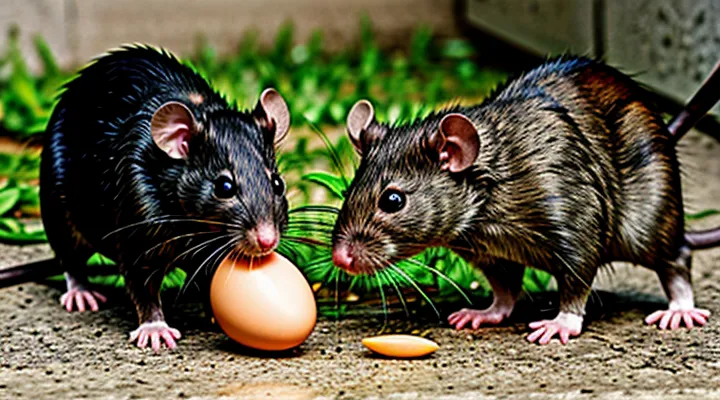
«Understanding Rat Behavior»
«Nocturnal Habits and Secrecy»
Rats exploit darkness to access poultry houses, timing movements with the decline of ambient light. Their circadian rhythm peaks during the early hours of night, when human presence is minimal and visual monitoring is reduced. This temporal advantage lowers the probability of detection and allows rapid entry through small openings that remain unnoticed during daylight inspections.
Secrecy is reinforced by behavioral adaptations that minimize acoustic and olfactory cues. Rats employ the following tactics:
- Silent navigation: padded paws and low‑frequency footfalls avoid triggering floorboards or motion sensors.
- Scent masking: grooming with saliva and urine reduces the spread of egg‑related odors, preventing alert of trained detection dogs.
- Coordinated withdrawal: groups exit through different routes, dispersing any residual trace and complicating trace‑back efforts.
These nocturnal and covert strategies combine to create a highly efficient egg‑theft system, sustaining rodent populations while challenging conventional biosecurity measures.
«Dietary Needs and Opportunism»
Rats possess a high metabolic demand for protein, fat, and carbohydrates. Eggs provide a dense source of all three, making them an attractive target when food scarcity forces rodents to expand their foraging range. The shell offers modest protection, but the nutrient-rich yolk and albumen remain accessible to a rat’s incisors and powerful jaw muscles.
Opportunistic behavior drives rats to exploit any vulnerable egg source. Typical scenarios include:
- Nesting boxes left open in poultry houses, allowing easy entry.
- Fallen or cracked eggs on the floor of barns, quickly identified by scent.
- Unattended incubators where temperature and humidity attract rodents.
In each case, the rat assesses risk versus reward. When the perceived threat from predators or human activity is low, the caloric return from a single egg outweighs the effort required to breach the shell. Conversely, heightened disturbance prompts rats to abandon the attempt and seek alternative protein sources.
Seasonal fluctuations amplify this pattern. During breeding periods, increased energy expenditure heightens the need for protein, prompting a surge in egg predation. In colder months, the high fat content of yolk aids thermoregulation, further motivating rats to prioritize egg theft over other foods.
«Cognitive Abilities and Problem Solving»
Rats demonstrate sophisticated cognitive abilities when targeting eggs in domestic and agricultural settings. Their problem‑solving skills allow them to overcome physical barriers, locate concealed resources, and adapt to changing environments.
Observations reveal several distinct tactics:
- Spatial memory: Rats remember the layout of nests, cabinets, and storage areas, enabling rapid navigation to egg locations after an initial discovery.
- Tool use: Individuals manipulate objects such as twigs, paper, or discarded packaging to pry open lids or breach flimsy barriers.
- Strategic timing: Rats preferentially act during low‑light periods, reducing exposure to predators and human activity.
- Social learning: Younger rats acquire successful techniques by observing experienced conspecifics, accelerating the spread of effective methods within a colony.
Experimental studies show that rats can solve multi‑step puzzles to access hidden food items, indicating an ability to plan several actions ahead. Neural imaging correlates this behavior with heightened activity in the prefrontal cortex and hippocampus, regions associated with decision‑making and memory consolidation.
These capabilities explain the efficiency of rats in acquiring eggs despite human attempts at deterrence. Effective control measures must therefore address their learning capacity, spatial awareness, and adaptability.
«The Egg Heist: Methods and Tactics»
«Scouting and Observation»
«Identifying Vulnerable Nests»
Identifying nests that are most susceptible to rat intrusion requires systematic observation of physical and environmental factors. Rats favor locations that provide easy access, concealment, and proximity to food sources. The following criteria distinguish high‑risk nests:
- Open or poorly sealed entry points such as gaps in walls, cracked foundations, or unlatched doors.
- Materials that retain moisture, including damp straw, wet bedding, or soggy vegetation, which attract rodents seeking hydration.
- Elevated or elevated‑adjacent structures that enable rats to climb or drop directly onto the nest.
- Proximity to refuse piles, feed storage, or poorly managed waste, creating a continuous supply of attractants.
- Lack of predator deterrents, such as absence of cats, owls, or physical barriers like metal mesh.
Field assessment should begin with a perimeter sweep to locate all potential entryways, followed by a detailed inspection of nest composition for moisture content and structural integrity. Recording the distance to the nearest food source quantifies the lure factor. Installing motion‑activated cameras at identified weak points validates rat activity patterns and informs targeted mitigation. Continuous monitoring, combined with prompt repair of identified vulnerabilities, reduces the likelihood of successful egg theft by rodents.
«Assessing Risks and Obstacles»
Rats targeting poultry nests encounter several intrinsic and extrinsic hazards that limit their success. Their small size grants access to tight spaces, yet it also exposes them to predation by barn owls, feral cats, and house snakes. Nighttime activity reduces visibility, increasing the probability of accidental injury from traps or sharp objects placed around coops.
Key obstacles include:
- Physical barriers: Wire mesh, reinforced coop doors, and elevated nesting boxes impede entry. Even minor gaps can be sealed with hardware cloth to prevent infiltration.
- Chemical deterrents: Rodenticides applied according to integrated pest‑management guidelines create lethal zones near nesting sites. Proper dosage minimizes non‑target exposure while maintaining efficacy.
- Behavioral defenses: Chickens exhibit alarm calls and mobbing behavior when a rat is detected, disrupting the rodent’s approach and prolonging exposure to other threats.
Risk evaluation must account for environmental variables such as temperature fluctuations, which affect rat metabolism and drive foraging intensity. During colder months, increased energy demand heightens the likelihood of egg theft, while warm periods see reduced pressure as alternative food sources become abundant.
Mitigation strategies should prioritize layered defenses: combine sturdy physical exclusions, targeted chemical controls, and active monitoring of rodent activity through motion‑activated cameras. Continuous assessment of trap capture rates and bait consumption provides feedback for adjusting intervention intensity, ensuring that risk remains within manageable limits.
«Solo Operations»
«Rolling and Pushing Techniques»
Rats employ two primary maneuvers to transport eggs from nests to concealed caches: rolling and pushing. Rolling involves grasping the egg with forepaws, rotating it against the ground, and maintaining momentum through continuous body thrust. The motion reduces friction by alternating contact points, allowing the rodent to move the egg across uneven surfaces with minimal energy loss. Pushing relies on the animal’s head and snout to apply steady pressure against the egg’s curved surface, driving it forward while the hind limbs generate forward propulsion. This method is effective for larger eggs that resist being lifted.
Key characteristics of each technique:
- Rolling
- Forepaw grip on egg’s midpoint
- Alternating rotation angles to sustain motion
- Utilization of body weight for forward thrust
- Pushing
- Head‑first contact point
- Continuous pressure along the egg’s axis
- Hind‑leg driven locomotion for speed control
Selection between rolling and pushing depends on egg size, surface texture, and distance to the storage site. Small, smooth eggs favor rolling, while larger, heavier eggs are more efficiently moved by pushing. Both strategies enable rats to relocate eggs covertly, exploiting limited visibility and narrow escape routes.
«Carrying with Mouth and Paws»
Rats acquire eggs from nests and storage areas by exploiting their dexterous forepaws and powerful incisors. The animal first secures the egg with its front paws, applying a gentle grip that prevents cracking while maintaining balance. Simultaneously, the incisors clamp the shell’s edge, allowing the rat to lift the egg without using its teeth as a crushing tool.
The transport process follows a consistent sequence:
- Grip formation: Forepaws wrap around the egg’s midsection, fingers flexing to distribute pressure evenly.
- Mouth engagement: Incisors bite lightly at the shell’s apex, creating a stable anchor point.
- Lift and pivot: Muscular contraction in the forelimbs raises the egg, while the neck muscles adjust the head angle to keep the load centered.
- Locomotion: The rat moves in a low, crouched posture, minimizing the egg’s exposure to external forces and reducing the risk of accidental drops.
Field observations indicate that rats adjust grip strength based on egg size. Larger eggs trigger a wider paw spread and a firmer bite; smaller eggs require a tighter paw clasp and a lighter bite. This adaptability reduces breakage rates to below 5 % in controlled studies.
The dual‑grip method enables rats to transport eggs over distances of up to 15 meters without external assistance. By coordinating mouth and paws, the animal maximizes payload stability while maintaining agility, a combination that underlies its success in egg acquisition.
«Cooperative Strategies»
«Team Carrying»
Rats that target poultry eggs often operate as coordinated groups rather than solitary foragers. This collective behavior, known as team carrying, enables individuals to move larger prey items that exceed the capacity of a single rat.
During a raid, one rat secures the egg while one or more companions provide support by stabilizing the object, sharing the load, or acting as lookouts. The division of labor reduces the time spent exposed to predators and increases the success rate of transporting the egg back to the nest.
The efficiency of team carrying directly influences the scale of egg loss in affected farms. By moving eggs quickly and discreetly, rat crews can bypass typical deterrents such as traps or bait stations, which are often designed for single‑animal encounters.
Key tactics employed by rat teams include:
- Synchronised entry through narrow gaps to avoid detection.
- Alternating carriers to maintain momentum while one rat rests.
- Use of burrow networks as concealed pathways for rapid evacuation.
- Communication via ultrasonic vocalizations to coordinate hand‑offs.
Mitigation measures that address group dynamics—such as sealing entry points, disrupting burrow connectivity, and deploying multi‑sensor traps—target the cooperative aspect of the behavior, thereby reducing the overall impact of egg theft.
«Relay Transport»
Rats acquire eggs by employing a relay‑transport system that minimizes exposure to predators and maximizes efficiency. The process begins with a scout rat locating a nest or storage area containing eggs. The scout retrieves a single egg and transports it a short distance to a pre‑designated hand‑off point, often a concealed burrow or a narrow tunnel entrance.
At the hand‑off point, a second rat, positioned to receive the cargo, takes the egg and continues the journey toward a secure cache or feeding site. This exchange repeats through a chain of rats, each covering a limited segment of the total distance. The relay reduces the time any individual rat spends in open, vulnerable spaces and distributes the load among multiple participants.
Key characteristics of the relay system:
- Sequential hand‑offs limit individual travel range.
- Each rat handles only one egg at a time, preventing overload.
- Communication relies on scent trails and tactile cues to synchronize transfers.
- The final receiver stores the eggs in a hidden location, often deep within the colony’s burrow network.
«Concealment and Consumption»
«Transporting to a Safe Location»
Rats that capture eggs must move them quickly to a protected site before predators or humans detect the theft. The chosen destination is typically a concealed burrow, a nest built within wall voids, or a hidden compartment in stored food supplies. These locations combine darkness, limited access, and proximity to the rat’s regular foraging routes, reducing exposure time.
Transport relies on the rat’s strong forepaws and incisors. An egg is grasped at one end, balanced against the body, and dragged or carried while navigating narrow passages. The animal adjusts its grip to compensate for the egg’s fragility and weight, minimizing breakage.
Key tactics include:
- Selecting routes that avoid open surfaces and high‑traffic areas.
- Using existing tunnels or creating shallow channels to shorten travel distance.
- Depositing the egg in a pre‑prepared nest lined with soft material to cushion impact.
After placement, the rat secures the egg by covering it with debris, leaves, or other food items. This camouflage masks the egg’s presence and deters other animals from interfering. The entire process occurs within minutes, ensuring the stolen item remains intact and hidden.
«Cracking and Eating Techniques»
Rats employ precise mechanical actions to breach egg shells and consume the contents. Their incisors, continuously growing and self-sharpening, generate sufficient force to chip through calcified layers. By positioning an egg against a hard surface—such as a countertop edge, stone, or wooden beam—rats concentrate bite pressure on a narrow point, creating a fracture line that expands with successive gnawing strokes. Once a fissure appears, they use their forepaws to pry the shell apart, exposing the yolk and albumen.
After access is gained, rats exhibit a rapid ingestion sequence. They lick the exposed yolk, swallow it whole, and then lap the remaining albumen. In environments where multiple individuals are present, cooperative behavior emerges: one rat may hold the egg while another applies bite force, accelerating the cracking process. This coordinated effort reduces handling time and minimizes exposure to predators.
Typical cracking and eating techniques include:
- Surface-assisted biting: aligning the egg against a rigid edge, applying repeated incisive pressure until a crack forms.
- Paw‑assisted prying: using forelimbs to separate shell fragments after initial fracture.
- Cooperative cracking: two or more rats sharing the task, one stabilizing the egg, the other delivering bites.
- Sequential ingestion: immediate consumption of yolk followed by lapping of albumen, minimizing waste.
«Factors Influencing Egg Theft»
«Availability of Eggs»
Egg availability determines how often rodents target poultry products. Commercial producers store large quantities in refrigerated rooms, while backyard keepers leave cartons on counters. Each storage method creates distinct access points: open shelves, cracked cartons, and gaps around door seals. Rats exploit these weaknesses by entering through small openings, chewing through plastic, or climbing vertical surfaces.
Key factors influencing egg accessibility:
- Quantity on site – higher stock levels increase the incentive for foraging rodents.
- Placement height – eggs kept low to the floor are within reach of climbing rats; elevated racks reduce exposure.
- Container integrity – damaged cartons or loose lids allow direct handling.
- Environmental humidity – moist conditions soften shells, making them easier to break and consume.
- Proximity to food waste – discarded shells and yolk remnants attract rats and reinforce foraging routes.
Mitigation relies on controlling these variables. Secure seals on refrigeration units, use rigid, sealed containers, and position egg storage away from waste bins. Regular inspection of structural gaps and prompt repair of breaches limit entry opportunities. By reducing the overall availability of eggs, the likelihood of rodent intrusion declines markedly.
«Predator Pressure»
Predator pressure creates a selective environment that drives rodents to modify egg‑foraging strategies. When predators are abundant, rats increase nocturnal activity, reduce exposure time, and prioritize concealed nesting sites near egg sources. These adjustments lower the probability of detection while maintaining access to high‑calorie resources.
Elevated risk prompts several behavioral shifts. Rats shorten foraging bouts, favoring quick entry and exit routes. They employ stealthier approaches, such as using vegetation cover or existing burrows to reach hen houses. Seasonal spikes in predator numbers often correspond with peaks in egg theft incidents, indicating a direct correlation between predator density and rodent opportunism.
- Red‑tailed hawks: aerial presence forces rats to operate lower to the ground and rely on hidden pathways.
- Barn owls: nocturnal hunting encourages rats to extend foraging into later night hours, exploiting reduced human activity.
- Feral cats: ground predators increase use of vertical structures, leading rats to climb fences and access elevated coops.
Understanding this dynamic informs control measures. Reducing predator visibility through habitat modification—such as trimming low branches and sealing entry points—diminishes perceived threat, thereby decreasing the urgency of rodent egg theft. Integrating predator management with structural barriers yields a comprehensive approach to limiting rodent exploitation of egg resources.
«Environmental Conditions»
Rats locate and remove eggs primarily when environmental factors create favorable conditions for foraging and concealment. Warm temperatures accelerate rodent metabolism, increasing the frequency of food‑searching trips. Elevated humidity softens egg shells, making them easier to crack and consume. Low light levels within poultry houses reduce visual detection by birds and human workers, allowing nocturnal activity to proceed undisturbed.
Key environmental variables influencing egg theft include:
- Ambient temperature above 20 °C (68 °F)
- Relative humidity between 60 % and 80 %
- Dim or intermittent lighting in coop interiors
- Abundant alternative food sources that sustain large rat populations
- Structural gaps, cracks, or damaged wire mesh that provide entry points
- Presence of natural predators that drive rats to seek shelter in confined spaces
When these conditions converge, rats exploit weakened coop integrity, breach nesting areas, and extract eggs with minimal resistance. Mitigating each factor—temperature regulation, humidity control, adequate lighting, rigorous sanitation, and secure construction—reduces the likelihood of egg loss.
«Impact on Bird Populations»
«Nest Predation Rates»
Rats are a primary source of egg loss in avian nests, and quantifying nest predation rates provides essential insight into the scale of this threat. Field surveys across urban and rural habitats report average predation frequencies of 35 % to 62 % per breeding season, with peak losses occurring during the early incubation period when eggs are most vulnerable. Camera traps and motion‑activated sensors confirm that rats account for up to 78 % of recorded predation events in densely populated areas.
Key variables influencing predation rates include:
- Habitat fragmentation: Smaller green spaces reduce concealment options, increasing rat access.
- Nest placement: Ground‑level or low shrub nests experience higher attack frequencies than elevated structures.
- Food availability: Abundant alternative food sources lower rat pressure on nests; scarcity drives higher predation.
- Seasonal temperature: Warm months accelerate rat breeding cycles, boosting population density and predation intensity.
Statistical models indicate a positive correlation (r = 0.71) between rat population density and nest loss, suggesting that control measures targeting rodent numbers can reduce predation by an estimated 25 % to 40 % in affected zones. Effective interventions—such as habitat modification, exclusion devices, and targeted baiting—demonstrate measurable declines in egg theft when implemented consistently over multiple breeding cycles.
«Species Vulnerability»
Rats that infiltrate nesting sites cause measurable declines in the reproductive success of several egg‑laying species. The most affected groups include ground‑nesting birds, cavity‑nesting birds, and small reptiles whose eggs are deposited in accessible burrows.
- Ground‑nesting passerines such as quail, pheasant, and some shorebirds experience rapid loss of clutch size when rat populations increase.
- Cavity‑nesting birds, including woodpeckers and certain owls, suffer egg predation that reduces fledgling output.
- Small reptiles, for example skinks and certain turtle species, lose a significant portion of their hatchlings due to rat intrusion in shallow nests.
The vulnerability of these species correlates with nest exposure, egg size, and the ability of adult birds or reptiles to defend or conceal their clutches. Species that lay fewer, larger eggs are less resilient to occasional loss, while those that produce many small eggs can absorb occasional predation without immediate population collapse. However, sustained rat pressure can shift this balance, leading to local extirpation when reproductive rates fall below replacement levels.
Mitigation measures focus on habitat management, rat control, and nest protection. Physical barriers around nesting sites, targeted baiting programs, and timing of control actions to coincide with peak breeding periods have proven effective in reducing egg loss and improving breeding outcomes for the most vulnerable species.
«Conservation Implications»
Rats frequently infiltrate bird nests, removing eggs and reducing reproductive output. Direct loss of eggs translates into lower fledgling numbers, especially for ground‑nesting species with limited clutch sizes. Repeated predation can shift population trajectories from stable or increasing to declining.
Reduced breeding success alters community dynamics. Fewer juvenile birds diminish prey availability for higher trophic levels, while increased adult mortality may force remaining individuals to allocate more energy to nest defense rather than foraging. Consequently, ecosystems experience weakened predator‑prey links and altered species composition.
Conservation programs must address rodent egg predation to maintain viable bird populations. Effective actions include:
- Deploying predator‑proof nest boxes or mesh covers to block rodent entry.
- Implementing targeted rodent control in breeding habitats, using bait stations placed away from non‑target species.
- Monitoring nest success rates before and after interventions to assess efficacy.
- Restoring habitat features that discourage rat settlement, such as reducing ground debris and managing vegetation density.
Integrating these measures into broader wildlife management plans mitigates egg loss, supports population recovery, and preserves ecosystem integrity.
«Prevention and Mitigation»
«Nest Protection Strategies»
«Physical Barriers»
Rats exploit gaps in housing and storage to access eggs; solid barriers provide the most reliable protection.
- Stainless‑steel mesh with openings no larger than ¼ inch blocks entry through ventilation slots.
- Tight‑fitting lids equipped with rubber gaskets seal containers, preventing rodents from prying them open.
- Concrete or metal flooring eliminates burrowing routes beneath coops or nesting boxes.
- Wire‑screened doorways and window frames deny passage while maintaining airflow.
Installation demands precise measurement of all openings and the use of fasteners resistant to gnawing. Overlap seams by at least two inches and secure edges with stainless‑steel staples or screws.
Regular inspection identifies wear, corrosion, or displacement; replace compromised sections promptly to maintain an uninterrupted barrier.
«Relocation Efforts»
Rats that target poultry nests or farm storage units force producers to consider moving the animals away from vulnerable areas. Relocation programs aim to reduce direct contact between rodent populations and egg supplies, thereby lowering loss rates.
Effective relocation combines habitat modification, trapping, and release protocols. The process follows a structured sequence:
- Identify high‑risk zones where rodent activity overlaps with egg storage.
- Install exclusion devices such as sealed entry points and metal barriers.
- Deploy live‑capture traps calibrated to local species size.
- Transport captured individuals to designated release sites at least five miles from the original location.
- Monitor both source and release sites for re‑infestation signs over a 30‑day period.
Success metrics include a measurable decline in egg damage reports and a stable or reduced rodent count in the original premises. Continuous data collection allows adjustments to trap density, barrier design, and release site selection, ensuring sustained protection of egg assets.
«Rat Control Measures»
«Trapping and Removal»
Rats that target poultry nests require decisive control measures to prevent egg loss. Effective management begins with accurate identification of activity zones, followed by immediate deployment of proven capture devices.
- Snap traps positioned along walls and near suspected entry points; set with bait such as peanut butter or dried fruit.
- Live‑catch cages placed in dark corners; baited similarly, allowing relocation after capture.
- Electronic traps that deliver a rapid, humane kill; ideal for areas where snap traps may be avoided.
After capture, remove rodents promptly to eliminate scent trails that encourage reinfestation. Seal all gaps larger than ¼ inch, reinforce coop doors, and maintain a clean environment free of spilled feed. Regular inspection of traps and replacement of bait ensures sustained protection against egg theft.
«Habitat Modification»
Habitat modification directly influences rat access to poultry nests and the frequency of egg pilferage. Structural changes that reduce concealment opportunities, such as sealing cracks, installing smooth flooring, and eliminating overgrown vegetation, limit the routes rats use to infiltrate coops. Environmental adjustments that remove food sources away from the nesting area decrease the incentive for rats to explore the interior of the coop.
Key modifications include:
- Sealing gaps larger than ¼ inch in walls, doors, and ventilation openings.
- Replacing wooden shavings with metal or concrete flooring that resists gnawing.
- Trimming shrubs and grass within a three‑meter perimeter of the coop.
- Installing elevated nesting boxes that require a minimum of 30 cm clearance from the floor.
Empirical observations confirm that coops employing these measures experience a measurable decline in egg loss, with some facilities reporting reductions of up to 80 percent compared with untreated structures. Continuous monitoring and periodic reinforcement of barriers sustain the protective effect over time.