
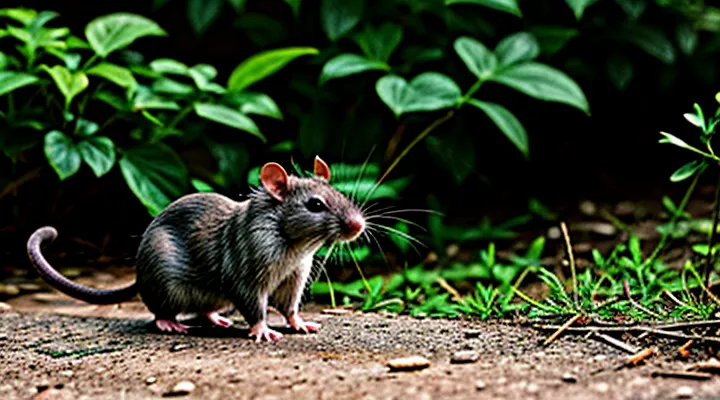
Rat Species in the Wild
Common Wild Rat Types
Wild rats occupy a wide range of ecosystems, from urban fringe to remote grasslands. Their adaptability stems from distinct species that have evolved specialized habits and ecological niches.
- Brown rat (Rattus norvegicus) – Predominant in temperate zones, inhabits burrows, sewers, and agricultural fields. Constructs extensive tunnel networks, feeds on seeds, insects, and human waste. Exhibits strong social hierarchy within colonies.
- Black rat (Rattus rattus) – Common in subtropical and tropical regions, prefers elevated structures such as roofs, attics, and tree canopies. Displays agile climbing ability, consumes fruits, grains, and stored food. Forms smaller, loosely organized groups.
- Polynesian rat (Rattus exulans) – Smallest of the three, found on many Pacific islands. Occupies coastal scrub and cultivated gardens. Relies heavily on native seeds and insects, influencing seed dispersal patterns.
- Himalayan field rat (Rattus nitidus) – Native to mountainous habitats of South Asia. Lives in open fields and forest edges, burrows in soft soil. Diet includes tubers, grasses, and arthropods, contributing to soil turnover.
- Australian swamp rat (Rattus lutreolus) – Restricted to wetlands and floodplains of eastern Australia. Constructs nests among dense vegetation, feeds on aquatic insects and plant material, and serves as prey for raptors and snakes.
Each species demonstrates unique foraging strategies, reproductive cycles, and territorial behaviors that support survival across diverse wild settings. Their presence shapes local food webs, affects seed dynamics, and provides a food source for numerous predators.
Distribution and Habitats
Rats occupy every continent except Antarctica, thriving in diverse climatic zones from tropical rainforests to arid deserts. Species such as the brown rat (Rattus norvegicus) dominate temperate urban and agricultural areas, while the black rat (Rattus rattus) favors subtropical regions and dense vegetation. In remote high‑altitude environments, specialized species like the Himalayan field rat (Rattus nitidus) persist at elevations above 3,000 m. Distribution maps show overlapping ranges where multiple species exploit similar resources, leading to competitive displacement in some locales.
Habitats utilized by wild rats include:
- Natural burrows in riverbanks, slopes, and open fields, providing shelter from predators and temperature extremes.
- Vegetation thickets where dense cover offers concealment and access to seeds, fruits, and insects.
- Human‑altered landscapes such as abandoned structures, crop storage facilities, and waste dumps, which supply abundant food and nesting sites.
- Rock crevices and cliff ledges that serve as refuges in mountainous regions, especially for species adapted to cooler temperatures.
Adaptations such as flexible diet, high reproductive rates, and nocturnal activity enable rats to exploit these habitats efficiently, maintaining stable populations across their extensive geographic spread.
Where Wild Rats Live
Burrow Systems and Nests
Rats construct extensive underground networks that serve multiple functions, including shelter, food storage, and protection from predators. Primary tunnels typically measure 5–10 cm in diameter and extend 1–3 m from the entrance before branching into secondary passages. These secondary passages connect to nesting chambers, which are deeper (15–30 cm below surface) and insulated with shredded vegetation, dried grasses, and collected debris.
Nesting chambers are organized according to social hierarchy. Dominant individuals occupy central chambers, while subordinate members use peripheral spaces. Seasonal variations influence nest composition: winter nests contain higher proportions of dry plant material and animal fur to conserve heat, whereas summer nests incorporate more fresh leaves and moss to improve ventilation.
Key characteristics of wild rat burrow systems:
- Multi‑level architecture: surface entry, primary tunnel, secondary tunnel, nesting chamber.
- Variable depth: 15–40 cm, adjusted for soil type and moisture.
- Structural reinforcement: compacted soil walls, occasional use of root fragments for stability.
- Escape routes: secondary exits positioned 0.5–1 m from main entrance, providing rapid retreat from threats.
- Shared resources: communal food caches located near nesting chambers, often containing seeds, insects, and carrion.
Burrow maintenance involves continuous excavation, removal of waste, and reinforcement of tunnel walls. Rats replace displaced soil with compacted material, preventing collapse. Waste is expelled through dedicated outlet tunnels, reducing contamination of living spaces. This systematic approach ensures the longevity of the burrow network and supports the colony’s reproductive success.
Urban vs. Rural Habitats
Rats occupy both city environments and countryside settings, adapting their behavior and physiology to the resources and risks each presents.
In urban areas, rats exploit abundant refuse, sewage systems, and building structures. Their shelters are often concealed within wall voids, sub‑basements, and underground utilities. Food intake relies heavily on human waste, resulting in high caloric availability and rapid population growth. Dense housing provides continuous cover, reducing exposure to aerial predators but increasing competition with conspecifics. Disease transmission intensifies because of close proximity to humans and other commensal species.
In rural landscapes, rats inhabit fields, grain stores, and natural burrows. Their diet consists of seeds, insects, and occasional carrion, leading to more seasonal fluctuations in body condition. Open terrain exposes them to a broader range of predators, such as owls, foxes, and snakes, prompting heightened nocturnal activity and extensive burrowing. Population density remains lower than in cities, with dispersal distances extending several hundred meters to locate food and mates.
Key contrasts:
- Food source: human waste (urban) vs. natural foraging (rural)
- Shelter type: built‑environment cavities vs. soil burrows
- Predator pressure: limited aerial predators vs. diverse wildlife predators
- Population density: high, localized clusters vs. sparse, dispersed groups
- Disease dynamics: amplified human‑rat pathogen exchange vs. reduced zoonotic spillover potential
Understanding these habitat‑specific adaptations clarifies how rats sustain themselves across the spectrum of human‑altered and natural ecosystems.
Adaptations to Different Environments
Rats occupy a broad spectrum of natural habitats, ranging from arid deserts and temperate forests to wetlands and high‑altitude grasslands. Their distribution reflects a suite of physiological and behavioral traits that enable survival under contrasting conditions.
- Dense, water‑repellent fur reduces heat loss in cold environments and protects against abrasive particles in dry regions.
- Highly vascularized tails serve as thermoregulatory radiators, dissipating excess heat in hot climates while conserving warmth when curled against the body.
- Flexible, clawed hind feet provide traction on loose sand, muddy banks, and rocky substrates, facilitating rapid locomotion across uneven terrain.
Behavioral adaptations complement physical traits.
- Burrowing creates insulated microhabitats that buffer temperature extremes and conceal individuals from predators.
- Nocturnal activity patterns align foraging with lower ambient temperatures and reduced predator visibility.
- Omnivorous diet, coupled with strong incisors capable of gnawing hard seeds, roots, and carrion, allows exploitation of diverse food sources, from desert succulents to forest fungi.
Reproductive strategies reinforce population resilience. Short gestation periods and litters of up to twelve offspring enable rapid population recovery after environmental disturbances. Females can breed year‑round in temperate zones, while in harsher climates breeding cycles concentrate during periods of resource abundance.
Predator avoidance relies on acute sensory systems. Large, mobile ears detect low‑frequency sounds of aerial hunters, while whisker arrays map confined burrow passages, allowing swift escape routes. Chemical communication through scent marks establishes territorial boundaries, reducing direct confrontations and conserving energy.
Collectively, these adaptations equip rats to thrive across disparate ecosystems, demonstrating a flexible evolutionary blueprint that supports their status as one of the most successful mammalian groups in the wild.
What Wild Rats Eat
Omnivorous Diet
Rats thriving in natural habitats rely on a flexible omnivorous diet that supports survival across diverse ecosystems. Their classification as omnivores reflects the ability to ingest both plant and animal matter, enabling adaptation to fluctuating resource availability.
Typical food items include:
- Seeds, grains, and nuts
- Fresh fruits and berries
- Insects, larvae, and other arthropods
- Small vertebrates such as amphibians or fledgling birds
- Carrion and decaying organic material
- Human-derived waste, including scraps and refuse
Seasonal shifts dictate the relative importance of each category; abundant plant produce dominates in spring and summer, while animal prey and carrion become more prominent during colder periods. Rats exploit food sources opportunistically, often consuming items encountered during nocturnal foraging excursions.
Foraging behavior integrates tactile sensing via whiskers, acute olfactory detection, and spatial memory of productive sites. These strategies reduce energy expenditure and increase intake efficiency.
The diet contributes to ecological dynamics: seed consumption and subsequent dispersal affect plant regeneration, while predation on insects helps regulate invertebrate populations. Conversely, scavenging of waste can link rats to human environments, influencing disease transmission pathways.
Foraging Strategies
Wild rats exhibit adaptable foraging tactics that sustain survival across diverse habitats. Their diet ranges from seeds and insects to human-derived waste, requiring constant assessment of resource availability and predation risk.
- Opportunistic scavenging: consume discarded food items near settlements, exploiting high‑calorie sources with minimal effort.
- Seed caching: transport and store grains in concealed sites, permitting later retrieval during scarcity.
- Nocturnal foraging: operate primarily at night to reduce exposure to visual predators.
- Social information use: follow conspecifics to locate abundant patches, enhancing discovery speed.
- Habitat-specific selection: prefer moist, vegetated microhabitats for invertebrate prey, while favoring open, debris‑laden areas for plant material.
These strategies combine flexibility with risk mitigation, enabling rats to thrive in fluctuating wild environments.
Food Storage Habits
Rats in natural habitats secure food for periods when resources are scarce. They gather edible items and conceal them to reduce competition and predation risk.
Typical storage strategies include:
- Burrow caches – food placed within tunnel systems, often near nesting chambers, protected from weather and predators.
- Surface caches – items hidden under leaf litter, stones, or debris, enabling quick retrieval during foraging trips.
- Communal hoards – multiple individuals contribute to a shared stockpile, reinforcing social bonds and increasing cache size.
- Seasonal hoarding – accumulation of high‑energy foods such as seeds and nuts before winter, allowing sustained metabolism when foraging opportunities decline.
Rats rely on spatial memory and scent cues to relocate caches. They frequently relocate or refresh stored items to prevent spoilage and deter other animals. Food choice for storage reflects nutritional value and durability; seeds, grains, and dried insects dominate, while perishable fruits are stored only briefly.
Overall, these behaviors enhance survival rates by ensuring a reliable food supply across fluctuating environmental conditions.
Social Structure and Behavior
Colony Dynamics
Wild rats organize into colonies that function as flexible social units. Each colony centers on a dominant pair, typically a male and a female, which maintain breeding priority. Subordinate individuals occupy peripheral roles, contributing to foraging, nest maintenance, and predator vigilance.
- Breeding output concentrates in the dominant pair; offspring disperse when colony density rises or resources dwindle.
- Hierarchical interactions are mediated through scent marking, vocalizations, and brief aggressive encounters, which reinforce status without constant conflict.
- Nest structures are communal, composed of shredded vegetation, debris, and burrow chambers. Multiple nests may link together, allowing rapid relocation in response to environmental pressures.
- Food acquisition is coordinated: scouts locate resources, then signal findings to the group, prompting synchronized feeding bouts that reduce individual exposure to predators.
- Disease transmission is mitigated by grooming behavior and selective tolerance; unhealthy members are often excluded, limiting pathogen spread within the colony.
Colony size fluctuates seasonally. In abundant periods, populations expand, leading to the formation of satellite groups that may merge with the primary colony. During scarcity, groups contract, and dominant individuals may abandon peripheral members to conserve resources. This dynamic equilibrium enables wild rats to persist across diverse habitats, from urban alleys to agricultural fields.
Communication Methods
Rats inhabiting natural ecosystems rely on a multimodal communication system that coordinates foraging, predator avoidance, and social hierarchy. Vocal output spans a broad frequency range; low‑frequency squeaks convey alarm, while ultrasonic chirps transmit individual identity and reproductive status. Auditory signals travel efficiently through dense underbrush, enabling rapid dissemination of danger cues.
Chemical signaling dominates territory maintenance. Specialized glands release pheromones onto urine, feces, and glandular secretions. Conspecifics detect these cues with a highly sensitive olfactory apparatus, allowing assessment of occupancy, breeding condition, and relatedness without direct contact.
Tactile exchanges occur during close‑range interactions. Whisker brushing, body rubbing, and gentle bites function as affiliative gestures that reinforce pair bonds and hierarchies. These contacts convey immediate feedback about intent and emotional state, supplementing distant acoustic and olfactory messages.
Visual cues, though limited by nocturnal activity, include tail posturing and facial expressions. Subtle changes in ear orientation and eye dilation provide additional context during confrontations and courtship, enhancing signal redundancy across modalities.
Collectively, these communication channels form a resilient network that supports survival and reproductive success in the wild.
Reproduction and Rearing Young
Wild rats reproduce continuously when food and shelter are abundant, allowing multiple breeding cycles each year. Females reach sexual maturity at 5–6 weeks, males at a similar age, and both sexes remain fertile throughout most of the year.
Mating occurs after brief courtship involving scent marking and ultrasonic vocalizations. Males compete for access to receptive females, and dominant individuals often secure the majority of copulations. Sperm competition intensifies when females mate with several partners in a short interval.
Gestation lasts 21–23 days, after which a female typically delivers 6–12 pups. Litter size varies with species, habitat quality, and maternal condition. A single female can produce three to five litters annually in temperate regions, increasing population growth potential.
Immediately after birth, the mother builds a shallow nest of dry vegetation, shredded plant material, or collected debris. She provides constant warmth, cleans the pups, and delivers milk rich in protein and fat. The nest offers protection from predators and environmental extremes.
Pup development follows a predictable schedule:
- Day 0–3: Altricial; eyes closed, limited mobility, fully dependent on milk.
- Day 4–7: Fur begins to develop; thermoregulation improves.
- Day 8–12: Eyes open; auditory responsiveness increases; brief exploratory attempts.
- Day 13–18: Transition to solid food; mother introduces soft plant matter and insects.
- Day 19–21: Weaning completed; juveniles leave the nest and disperse to establish territories.
By the end of the third week, young rats achieve independence, ready to reproduce in subsequent months if conditions remain favorable.
Survival Challenges and Threats
Predators and Defense Mechanisms
Rats inhabiting natural environments face continuous pressure from a diverse array of predators. Birds of prey, such as hawks and owls, target rats during daylight and night hours. Terrestrial carnivores—including foxes, coyotes, and feral cats—hunt rats on the ground. Larger mammals like weasels, minks, and snakes also contribute to mortality rates, while raptors and larger birds scavenge weakened individuals.
- Hawks, owls, and other raptors
- Foxes, coyotes, feral cats
- Weasels, minks, snakes
- Larger mammals (e.g., bobcats) and opportunistic scavengers
Rats employ multiple defense mechanisms to reduce predation risk. Acute hearing detects approaching sounds, prompting immediate flight. Their whiskers sense air currents, allowing navigation through tight spaces and early threat identification. Muscular hind limbs generate rapid bursts of speed, reaching up to 8 mph, facilitating escape through burrows and vegetation. Burrowing behavior provides concealed refuge; complex tunnel systems offer multiple exit routes. Additionally, rats exhibit social vigilance: individuals emit alarm vocalizations that alert conspecifics to danger, prompting collective dispersal.
- Sensitive auditory and vibrissal detection
- High‑speed sprinting and agile maneuvering
- Extensive burrow networks with escape tunnels
- Alarm calls that trigger group flight responses
These predator–prey interactions shape rat behavior, population dynamics, and habitat utilization across wild ecosystems.
Environmental Factors
Rats occupying natural ecosystems adjust their physiology and behavior to a range of environmental conditions. Temperature extremes dictate metabolic rates; colder periods trigger increased body heat production and shelter seeking, while heat stress prompts nocturnal activity and burrow depth alteration. Moisture levels influence skin hydration and susceptibility to parasites, leading to habitat selection that balances humidity with shelter stability.
Food resources fluctuate seasonally, shaping foraging strategies. Abundant seeds and insects support rapid growth cycles, whereas scarcity forces opportunistic feeding on carrion, plant matter, and human refuse. Competition with other small mammals intensifies during lean periods, prompting territorial shifts and altered diet composition.
Predation pressure from birds of prey, snakes, and carnivorous mammals drives vigilance and escape responses. Rats develop heightened sensory acuity, use complex tunnel networks, and exhibit rapid reproductive turnover to offset losses. Presence of predators also influences population density and spatial distribution within a given area.
Human activities introduce additional variables:
- Habitat fragmentation from agriculture and urban expansion
- Chemical exposure through pesticides and waste
- Light pollution affecting nocturnal patterns
- Direct control measures such as trapping and poisoning
Each factor interacts with the others, creating a dynamic matrix that determines survival, reproduction, and dispersal of wild rat populations.
Human Impact on Wild Rat Populations
Human activities reshape the environments where wild rats survive, directly altering population size, distribution, and genetic composition. Urban expansion replaces native vegetation with concrete, reducing shelter and foraging grounds while simultaneously creating new niches that favor commensal species.
Key anthropogenic pressures include:
- Habitat conversion – agricultural clearing and infrastructure development fragment territories, limiting dispersal and increasing mortality.
- Chemical control – rodenticides introduce acute toxicity and sublethal effects that suppress reproductive output and foster resistance.
- Food availability – waste management practices provide abundant, predictable resources, boosting local densities and encouraging synanthropic behavior.
- Disease transmission – proximity to domestic animals and humans facilitates pathogen exchange, influencing mortality rates and population health.
Effective mitigation requires integrated strategies: preserving riparian corridors, applying targeted, low‑impact pest control, and implementing waste reduction programs. Monitoring genetic diversity and population trends informs adaptive management, ensuring that interventions maintain ecological balance without exacerbating rat‑related conflicts.
The Role of Wild Rats in Ecosystems
Impact on Vegetation
Wild rats continuously interact with plant communities, shaping vegetation through feeding, seed movement, and soil alteration. Their omnivorous diet includes seeds, seedlings, roots, and tender shoots, leading to direct removal of plant material and reduction of above‑ground biomass. Repeated foraging on young shoots limits the growth of annual herbs and suppresses the regeneration of perennials.
Burrowing activity creates underground galleries that modify soil structure. The excavated soil is displaced to the surface, forming mounds that expose seed banks to light and temperature fluctuations. These mounds can:
- Accelerate germination of opportunistic species that thrive in disturbed microhabitats.
- Inhibit germination of shade‑adapted plants by increasing exposure to sunlight.
- Alter moisture retention, favoring drought‑tolerant vegetation.
Rats also transport seeds over short distances, influencing plant dispersal patterns. Their caching behavior results in:
- Concentrated seed deposition in localized sites, increasing seedling density in those patches.
- Selective retrieval of high‑nutrient seeds, leaving lower‑quality seeds to germinate, which can shift species composition toward less competitive flora.
Overall, the combined effects of herbivory, soil disturbance, and seed handling generate a mosaic of vegetation states, favoring pioneer and disturbance‑adapted species while reducing dominance of mature, shade‑requiring plants.
Prey for Other Animals
Rats occupy a central position in many terrestrial food webs, providing a reliable source of nutrition for a diverse array of carnivores and omnivores. Their abundance, reproductive speed, and nocturnal activity make them accessible to predators across multiple habitats, from forests and grasslands to agricultural fields.
- Red‑tailed hawks and other raptors capture rats during low‑light foraging flights.
- Owls, particularly barn and great horned species, hunt rats on the ground or from perches.
- Snakes such as rat snakes and copperheads locate and subdue rats using heat‑sensing and constriction.
- Small to medium mammals, including foxes, coyotes, and weasels, pursue rats in burrows or open terrain.
- Larger carnivores—bobcats, lynx, and wild canids—occasionally include rats in opportunistic meals.
Predation pressure influences rat behavior, population density, and distribution. High predator presence can suppress local rat numbers, thereby limiting competition for resources and reducing disease transmission risk. Conversely, declines in predator populations often lead to rat population surges, affecting crop yields and increasing zoonotic disease exposure. The predator‑prey relationship therefore remains a critical component of ecosystem stability.
Disease Vectors and Public Health
Wild rats occupying natural habitats host a range of pathogens that can move from animal populations to humans. Their burrows, foraging routes, and social interactions create opportunities for microbes to persist and spread.
- Leptospira spp. (leptospirosis) – transmitted through urine contaminating water and soil.
- Yersinia pestis (plague) – maintained in flea vectors that feed on rat blood.
- Hantavirus – shed in aerosolized rodent excreta.
- Salmonella enterica – spread via contaminated food sources.
- Lymphocytic choriomeningitis virus – released in saliva, urine, and feces.
Transmission occurs when humans contact contaminated surfaces, ingest water or food tainted with rat excreta, or are bitten by ectoparasites that have fed on infected rats. Dense rat colonies increase pathogen load, while seasonal fluctuations in food availability alter movement patterns, expanding the geographic reach of disease agents.
Public‑health agencies monitor rodent populations, test environmental samples for pathogen presence, and implement control programs that combine habitat modification, baiting, and targeted pesticide application. Early detection of rat‑borne infections relies on surveillance of clinical cases and laboratory confirmation of the causative agents. Effective risk reduction demands coordinated efforts between wildlife biologists, epidemiologists, and municipal services.