
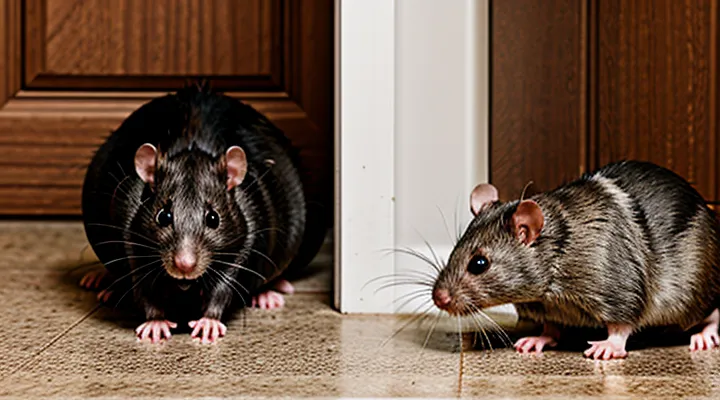
Understanding Rat Behavior and Entry Points
Why Rats Seek Shelter Indoors
«Food, Water, and Shelter: The Driving Forces»
Rats pursue three primary incentives when infiltrating residential structures: nourishment, hydration, and safe nesting sites. These incentives dictate the pathways they exploit and the behaviors they exhibit inside homes.
Food availability draws rats to kitchens, pantries, and garbage containers. Open food packages, spilled crumbs, and unattended pet dishes provide immediate sustenance. Rats locate these resources by following scent trails and by probing gaps that lead to storage areas.
Water sources sustain rat activity, especially during dry periods. Leaking pipes, dripping faucets, condensation on cold surfaces, and pet water bowls supply the necessary moisture. Rats enter through cracks near bathrooms, basements, and utility rooms to reach these liquids.
Shelter fulfills the need for protection from predators and environmental extremes. Warm, concealed spaces such as wall voids, attic insulation, and crawl‑space openings offer suitable nesting sites. Rats gain access by:
- Enlarged gaps around utility penetrations
- Unsealed vent covers
- Damaged soffits and eaves
- Open doors to garages or sheds
The convergence of food, water, and shelter creates a compelling motive for rats to breach structural barriers, turning ordinary openings into effective entry routes.
«Seasonal Influences on Rat Activity»
Rats adjust their movement patterns according to temperature, food availability, and breeding cycles, which directly influences the ways they gain access to residential structures.
During colder months, rats seek shelter and warmth, increasing pressure to infiltrate insulated walls, attics, and crawl spaces. Cracks around foundations and gaps around utility penetrations become primary targets because they provide a protected path from the exterior to heated interior zones.
In spring, the surge in reproductive activity expands the population. Young rats test new openings, exploiting loosened mortar, uncovered roof vents, and damaged siding that were previously sealed by snow or ice. The abundance of emerging vegetation also creates additional cover near ground‑level entry points such as door thresholds and garage doors left ajar.
Summer heat drives rats to pursue water sources. Leaky pipes, clogged gutters, and standing rainwater near foundations attract foraging individuals, prompting them to enlarge existing holes or gnaw through plastic vent covers. The increased activity around outdoor trash receptacles encourages rats to use gaps beneath decks and porches as shortcuts into homes.
Autumn brings a decline in temperature and a reduction in food waste as households prepare for holidays. Rats consolidate nests in protected indoor locations, often entering through previously unnoticed openings around chimney flues, vent pipes, and basement windows that have not been sealed after seasonal cleaning.
Seasonal trends can be summarized as follows:
- Winter: focus on insulated cavities; prioritize foundation cracks and utility gaps.
- Spring: exploit fresh structural damage; expand use of roof and siding openings.
- Summer: target water‑related vulnerabilities; enlarge vent and pipe breaches.
- Fall: reinforce indoor nesting; utilize chimney and window gaps left unsealed.
Understanding these patterns enables homeowners to anticipate the most likely entry routes at each time of year and implement targeted exclusion measures before infestations become established.
Common Rat Species and Their Characteristics
«Norway Rats: Diggers and Gnawers»
Norway rats (Rattus norvegicus) are large, robust rodents that rely on two primary behaviors to gain access to residential structures: digging through soil and gnawing solid materials. Their powerful incisors allow them to breach wood, plastic, and even concrete, while their strong forelimbs and claws enable them to create burrows that intersect foundations, crawl spaces, and basements.
Typical infiltration methods include:
- Excavating soil to reach shallow foundations, then moving upward through cracks in concrete slabs or mortar joints.
- Enlarging existing gaps around utility penetrations, such as water pipes, electrical conduits, and HVAC ducts, by gnawing the surrounding material.
- Widening ventilation openings, soffit vents, and chimney flues to accommodate their body size.
- Chewing through door frames, window sills, and weatherstripping where wear creates minimal openings.
- Exploiting poorly sealed crawl‑space doors and attic hatches, often enlarging the opening after initial entry.
Effective control requires sealing all identified gaps with rodent‑grade materials, maintaining a smooth exterior surface to discourage burrowing, and regularly inspecting vulnerable points for fresh gnaw marks or soil displacement.
«Roof Rats: Climbers and Explorers»
Roof rats (Rattus rattus) excel at navigating vertical surfaces, allowing them to infiltrate structures from above. Their slender bodies and powerful hind limbs enable rapid ascent of tree trunks, utility poles, and building eaves. Once at the roofline, they exploit gaps, damaged shingles, or vent openings to access attic spaces and interior rooms.
Typical entry routes include:
- Open eaves or soffits where insulation is missing or damaged.
- Roof vents, especially those lacking screens or with cracked covers.
- Chimney caps that are broken, improperly fitted, or absent.
- Gaps around skylights, dormer windows, or roof‑to‑wall junctions.
- Unsealed cracks in the roof decking or underlayment.
Signs of roof‑rat activity are distinct. Fresh droppings, approximately ¼‑inch long and black, appear near food sources and along pathways. Gnaw marks on wiring, insulation, or wooden beams indicate nesting sites. Audible scurrying in the attic, especially at night, confirms their presence. Nests constructed from shredded paper, fabric, or insulation material often reside in hidden corners of the roof cavity.
Preventive measures require sealing all potential openings. Install metal mesh or stainless‑steel flashing over vents, ensure chimney caps are intact, and repair damaged roofing material promptly. Trim tree branches so they clear the roof by at least 10 feet, eliminating direct bridges to the structure. Regular inspections of attic and roof spaces help identify breaches before infestations become established.
External Entry Routes
Gaps and Cracks in Foundations and Walls
«Crumbling Mortar and Deteriorated Brickwork»
Rats exploit gaps created when mortar crumbles or brickwork deteriorates. As the binding material breaks down, joints widen and individual bricks shift, forming openings as small as a quarter‑inch. These fissures align with a rat’s ability to squeeze through spaces barely larger than its head, providing direct routes from the exterior to interior voids such as crawl spaces, basements, and wall cavities.
Key characteristics of compromised masonry that facilitate rodent entry include:
- Cracked or missing mortar joints exposing the underlying brick surface.
- Spalling bricks that have detached from the wall plane, leaving irregular edges.
- Settling walls that create horizontal cracks near the foundation.
- Gaps around pipe penetrations where mortar has eroded.
Inspection should focus on the building’s perimeter, foundation walls, and any masonry that contacts soil. Visible signs of damage—loose bricks, powdery mortar, or small holes—indicate potential entry points. Moisture intrusion accelerates mortar decay; therefore, water‑resistant coatings and proper drainage reduce the risk of further degradation.
Remediation steps:
- Remove deteriorated mortar with a chisel or rotary tool, taking care not to damage surrounding brick.
- Repoint joints using a mortar mix appropriate for the structure’s age and exposure, ensuring a tight seal.
- Replace spalled or cracked bricks, securing them with compatible mortar.
- Apply a breathable sealant to exterior walls to repel water while allowing vapor diffusion.
Regular maintenance of mortar and brick integrity blocks the primary pathways rats use to infiltrate residential structures.
«Unsealed Utility Line Openings»
Rats commonly exploit gaps left around utility lines—cable, telephone, and electrical conduits that pass through exterior walls. These openings often lack proper sealing, providing a direct route from the outdoors into interior spaces. The size of typical rodent bodies allows entry through openings as small as a quarter inch, making even minor gaps a significant vulnerability.
Rodents use utility line gaps to travel along protected pathways, avoiding open exposure while moving toward food, water, and shelter. The insulated environment around cables offers warmth and concealment, encouraging repeated use of the same entry points. Evidence of gnaw marks, droppings, or fresh urine near utility penetrations confirms active use.
Effective mitigation includes:
- Installing steel wool or copper mesh into gaps before applying sealant.
- Applying silicone-based or polyurethane caulking to create a continuous barrier.
- Using metal flashing or conduit sleeves that overlap the exterior wall surface.
- Inspecting all utility penetrations during routine maintenance and resealing any deterioration.
Regular assessment and prompt sealing of utility line openings reduce the likelihood of rodent intrusion and limit the spread of associated health risks.
Damaged Roofs and Eaves
«Missing or Loose Shingles»
Rats frequently exploit gaps in roofing material to gain access to interior spaces. When shingles are missing, cracked, or loosely fastened, they create openings large enough for a rat to squeeze through, especially during warm weather when rodents are most active.
- A single absent shingle can expose a hole up to 2 inches wide, matching the average rat’s shoulder width.
- Loose shingles shift under pressure, widening cracks and forming tunnels that connect the eave line to the attic.
- Water damage around damaged shingles softens surrounding wood, accelerating rot and enlarging entry points.
- Rats gnaw on the edges of compromised shingles, further destabilizing the roof and creating additional pathways.
Inspecting the roof for absent or insecure shingles, repairing or replacing them promptly, and sealing gaps with roofing cement or metal flashing eliminates a primary infiltration route. Regular maintenance, including visual checks after storms, reduces the likelihood of rodent entry through the roof structure.
«Gaps Around Chimneys and Vents»
Rats exploit any opening that connects the exterior to interior spaces, and gaps surrounding chimneys and vents provide a direct pathway. Cracks larger than ¼ inch, deteriorated mortar, and missing flashing create continuous voids that rodents can squeeze through. Unsealed vent covers, especially those on dryer exhausts or bathroom fans, often have loose edges that rats enlarge with gnawing.
Typical vulnerabilities include:
- Split or cracked chimney crowns and flues.
- Gaps between the chimney stack and the roof sheathing.
- Uncapped or poorly fitted vent pipes.
- Openings around attic access doors adjacent to vent ducts.
- Deteriorated sealant around chimney flashing.
Effective mitigation requires sealing all identified openings with durable materials. Use high‑temperature mortar or stainless‑steel mesh for chimney cracks, install tight‑fitting vent hoods, and apply expanding foam or metal flashing to bridge gaps. Regular inspections after severe weather ensure that new fissures are detected and repaired before rats can establish entry.
Openings Around Doors and Windows
«Worn Weather Stripping and Door Sweeps»
Rats exploit gaps created by deteriorated weather stripping and door sweeps to gain access to interior spaces. When the flexible seal around doors and windows becomes cracked, torn, or compressed, it no longer blocks small mammals, allowing rodents to wedge through openings as narrow as a quarter‑inch.
Wear on these components typically results from age, exposure to moisture, and repeated contact with moving doors. The loss of material creates visible spaces and reduces the pressure barrier that normally forces rats to seek alternative routes.
Common indicators of compromised seals include:
- Cracks, splits, or missing sections in the weather‑stripping material.
- Loose or detached door sweeps that no longer contact the floor.
- Accumulated debris or gnaw marks along the bottom edge of doors.
- Persistent droppings or gnawing near entry points.
Effective mitigation involves regular inspection and prompt replacement. Use durable, rodent‑resistant weather stripping—such as silicone or reinforced rubber—and install heavy‑duty door sweeps that maintain continuous contact with the threshold. Seal any remaining gaps with steel wool or expanding foam before fitting new components. Routine checks, especially after severe weather, ensure that seals remain intact and continue to block rat intrusion.
«Cracked Window Frames and Screens»
Cracked window frames and damaged screens create unobstructed gaps that rats exploit to gain indoor access. Even hairline splits allow entry because rats can compress their bodies to pass through openings as small as ½ inch. Once inside, they can travel along the frame to reach interior spaces, using the screen as a concealed pathway.
Typical indicators of rat activity around windows include:
- Fresh gnaw marks on wood or metal around the frame
- Accumulated droppings on ledges or sills
- Small burrows or shredded material in the gap
- Grease trails along the frame surface
Effective mitigation measures consist of:
- Inspecting all window frames quarterly for cracks, warping, or loose joints.
- Replacing or repairing damaged screens with steel mesh that resists chewing.
- Sealing gaps with durable caulk or weather‑resistant foam, ensuring a tight fit around hinges and latches.
- Installing metal flashing or a removable steel strip over vulnerable sections to block entry while preserving ventilation.
Regular maintenance eliminates the primary conduit that rats use to infiltrate homes through windows.
Utility Lines and Pipes
«Unsealed Entry Points for Wires and Cables»
Rats commonly exploit gaps around electrical wiring and communication cables to gain indoor access. These openings often occur where pipes, conduit, or service lines penetrate exterior walls, foundations, or roof structures. The small diameter of many cable sleeves permits entry without detection, especially when surrounding material has deteriorated or was never sealed.
Typical unsealed points include:
- Openings around utility penetrations that lack grommets or sealing collars.
- Gaps at the junction of exterior conduit and interior drywall, especially where conduit bends or splices are present.
- Holes left by removed or replaced wiring, often covered only by loose insulation or foam.
- Spaces surrounding satellite dish cables, antenna wires, or television coaxial lines that pass through wall sleeves.
- Unfinished attic or crawl‑space penetrations where cable bundles run along joists without protective conduit.
Effective mitigation requires sealing each aperture with durable, rod‑proof material. Recommended methods are:
- Insert steel wool or copper mesh into the gap before applying a bead of silicone or polyurethane sealant.
- Install metal or heavy‑duty plastic conduit sleeves that fit tightly around the cable bundle and extend beyond the wall surface.
- Use expanding foam specifically rated for pest resistance, ensuring the foam does not contact the cable insulation directly.
- Apply metal flashing or a stainless‑steel plate over larger openings, fastening it with rust‑proof screws.
Regular inspection of all cable entry points during seasonal maintenance reduces the likelihood of rod intrusion. Prompt repair of any discovered gaps maintains the integrity of the building envelope and prevents the establishment of a rat pathway.
«Drain Pipes and Sewer Lines»
Rats exploit the network of household drainage and sewer systems to gain access to interior spaces. Openings at the base of vertical stacks, cracked or missing pipe sleeves, and unsealed joints create direct pathways from underground sewers to kitchens, bathrooms, and basements. Small gaps around pipe penetrations in walls and floors allow rodents to squeeze through, as their bodies can compress to diameters of less than two inches.
Typical entry points include:
- Uncovered clean‑out caps that are loose, cracked, or left open during maintenance.
- Damaged or deteriorated PVC or cast‑iron pipes that develop holes or splits.
- Gaps between pipe sleeves and surrounding concrete or brickwork, especially where retrofitting has occurred.
- Overflow or vent pipes that terminate above ground without proper screening.
Once inside, rats travel upward using the vertical flow of waste water, or they move laterally through horizontal runs to reach food sources and nesting sites. Their presence in drainage systems also facilitates the spread of pathogens and causes blockages that impair plumbing performance.
Preventive actions focus on sealing and reinforcing potential ingress sites. Install metal or heavy‑duty mesh covers on all external clean‑out openings. Apply expanding foam or cement mortar to seal gaps around pipe sleeves and wall penetrations. Replace cracked or corroded sections of pipe with intact, properly fitted units. Conduct regular visual inspections of visible pipe sections, especially after construction or renovation work, to identify and repair damage promptly. These measures reduce the likelihood of rodents exploiting the drainage infrastructure to enter residential interiors.
Internal Entry Routes and Vulnerabilities
Attics and Crawl Spaces
«Unsealed Access Points»
Rats exploit any opening that lacks a proper seal. Gaps between foundation walls and the soil, cracks in exterior masonry, and spaces around utility penetrations provide direct routes into interior spaces. Even small openings—down to a quarter of an inch—allow a rat to squeeze through, making thorough inspection essential.
Common unsealed access points include:
- Openings around pipe and cable entries, especially where flexible sleeves are absent.
- Unfinished attic vents, roof eaves, and soffit gaps without mesh.
- Gaps beneath doors, windows, and garage doors where weatherstripping is missing or damaged.
- Cracks in exterior siding, brickwork, or stucco that have not been filled.
- Spaces around HVAC ducts, chimney flues, and dryer exhaust vents lacking proper collars.
Sealing these points requires durable materials such as steel wool, copper mesh, cement-based sealants, or metal flashing. Install rigid barriers around large penetrations and use expanding foam for irregular gaps, ensuring the material is resistant to gnawing. Regular maintenance—rechecking seals after seasonal weather changes—prevents new openings from forming.
By eliminating unsealed access points, the probability of rat intrusion declines sharply, reducing the need for reactive pest control measures.
«Vents and Openings to Exterior»
Rats exploit any gap that connects the interior of a building with the outside environment. Vents designed for ventilation, dryer exhaust, and attic access often provide unobstructed pathways because they lack fine mesh or are poorly sealed. The animals squeeze through openings as small as a quarter‑inch, allowing entry even when the vent appears adequately sized for airflow.
- Wall and roof vents – gaps around vent covers, damaged screens, or missing flanges let rodents climb along rafters and drop into living spaces.
- Dryer and range‑hood ducts – flexible metal or plastic ducts that are not clamped tightly can be pulled apart by a determined rat, creating a direct tunnel from the exterior to the kitchen.
- Attic and crawl‑space vents – louvered vents without protective wire mesh permit rats to climb on roof shingles, enter the vent, and descend into the attic or crawl space.
- Utility penetrations – holes drilled for wiring, plumbing, or HVAC components that intersect vent shafts become combined entry points if left uncovered.
Preventive actions focus on sealing and reinforcing these openings. Install stainless‑steel mesh with openings no larger than ¼ in. behind all vent covers, ensure flanges are tightly fastened, and use metal flashing to close gaps around ductwork. Regularly inspect vent housings for corrosion, broken screens, or displaced hardware, and replace compromised components promptly. Maintaining a continuous barrier eliminates the primary conduit through which rats infiltrate homes.
Basements and Garages
«Gaps Around Garage Doors»
Rats exploit openings around garage doors as a reliable pathway into residential structures. The door’s perimeter often lacks a continuous seal, allowing rodents to squeeze through gaps as narrow as a quarter‑inch. Uneven framing, warped thresholds, and deteriorated weatherstripping create entry points that are difficult to detect without a systematic inspection.
Typical gaps include:
- Space between the door slab and the floor, especially when the garage floor is lower than the house slab.
- Cracks around the door frame caused by wood shrinkage or settling foundations.
- Openings behind the door where the hinge side meets the wall, often left uncovered during installation.
- Deteriorated or missing weatherstripping around the perimeter of the door.
Sealing these openings with high‑quality, rodent‑resistant materials—such as stainless‑steel mesh, heavy‑duty silicone caulk, or reinforced door sweeps—eliminates the most common access routes and reduces the likelihood of infestation. Regular maintenance checks after seasonal temperature shifts help ensure that seals remain intact and gaps do not reappear.
«Storage Areas Providing Cover»
Rats frequently exploit storage spaces that give them protection from predators and weather while they search for food. Areas such as garages, sheds, attics, basements, pantry shelves, and crawl‑space enclosures often contain gaps, loose boards, or unsealed vents that serve as entry points. Once inside, the cluttered environment offers hiding places and easy access to stored items.
Typical vulnerabilities in storage zones include:
- Unsealed cracks around foundation walls or floor joists.
- Damaged or missing weather‑stripping on garage doors and utility room doors.
- Open or poorly screened ventilation openings.
- Gaps around plumbing, electrical conduits, and cable entries.
- Stacked boxes or bags that create concealed pathways to the interior.
Mitigation measures focus on eliminating access and reducing attractants:
- Seal all cracks and holes with steel wool followed by caulk or concrete filler.
- Install tight‑fitting door sweeps and replace worn weather‑stripping.
- Fit metal mesh over vents, chimney openings, and utility penetrations.
- Keep storage items off the floor, use sealed containers for food, and maintain regular cleaning to remove debris.
- Conduct periodic inspections of storage areas for signs of gnawing, droppings, or burrows, and repair any damage immediately.
By reinforcing the structural integrity of storage zones and controlling clutter, homeowners limit the concealment opportunities that attract rats and prevent these pests from using covered spaces as a conduit into living areas.
Wall Voids and Ductwork
«Hidden Pathways for Movement»
Rats exploit concealed routes that bypass obvious entry points. Small openings behind appliances, gaps around pipe sleeves, and cracks in foundation walls create continuous passages through which rodents travel unnoticed. These hidden channels connect exterior environments to interior spaces, allowing rats to move from gardens or basements into living areas without triggering visual detection.
Typical concealed pathways include:
- Gaps of less than ¼ inch around plumbing and electrical conduits.
- Unsealed seams in wall cavities and attic insulation.
- Openings at the base of exterior doors, especially where weatherstripping is worn.
- Uncovered vent shafts, dryer exhaust ducts, and chimney flues.
- Cracks in the foundation or crawl‑space floorboards.
Identifying and sealing these routes requires thorough inspection of structural joints, utility penetrations, and any area where building materials meet. Applying steel wool, caulk, or metal flashing to gaps eliminates the pathways that rats prefer for discreet movement. Regular maintenance of weather barriers and routine checks of vent covers further reduce the risk of hidden access.
«Unsealed Openings for HVAC Systems»
Rats frequently exploit gaps in heating, ventilation, and air‑conditioning (HVAC) systems because these pathways connect the exterior to interior spaces while often lacking protective screens. Open ducts, vent grilles without proper sealing, and access doors left ajar create continuous routes that rodents can follow to reach food, water, and shelter.
Typical vulnerabilities include:
- Unsealed duct joints where metal or flexible connections meet.
- Vent covers without mesh screens or with damaged mesh.
- Service panels that are not fastened tightly or lack weather‑stripping.
- Exhaust or intake openings that are larger than the rodent’s body diameter.
Rats can squeeze through openings as small as 2 cm, so even minor gaps provide access. Once inside, they travel along the ductwork to reach attic spaces, crawl spaces, or living areas, leaving droppings, gnaw marks, and nesting material that compromise indoor air quality and structural integrity.
Prevention requires:
- Inspecting all HVAC components for gaps, cracks, or missing screens.
- Installing stainless‑steel mesh with apertures no larger than 1 mm over all vents.
- Securing duct joints with metal tape or approved sealants.
- Adding self‑closing door latches to service panels and ensuring weather‑stripping is intact.
- Scheduling regular maintenance checks to verify that seals remain effective.
Addressing these deficiencies eliminates a primary conduit for rodents, reducing the likelihood of infestation and protecting both the building envelope and occupant health.
Preventing Rat Entry
Sealing Exterior Openings
«Using Appropriate Materials: Steel Wool, Mesh, and Sealant»
Rats exploit gaps, cracks, and openings to gain access to interior spaces. Effective exclusion relies on materials that resist gnawing, withstand environmental exposure, and create a durable barrier.
-
Steel wool – dense, fibrous metal that rats cannot chew through. Pack tightly into holes around pipes, vents, and foundation cracks. Compress to eliminate voids, then secure with a layer of sealant to prevent displacement.
-
Mesh – galvanized or stainless‑steel wire with openings no larger than ¼ inch. Install over larger gaps such as attic vents, crawl‑space openings, and utility penetrations. Fasten with screws or staples, ensuring the mesh overlaps at seams to eliminate gaps.
-
Sealant – polyurethane or silicone caulk that adheres to wood, concrete, and metal. Apply after steel wool or mesh placement to lock the material in place and seal peripheral cracks. For exterior applications, use a weather‑resistant formula that remains flexible under temperature fluctuations.
Combine these materials where appropriate: fill small holes with steel wool, cover the filler with sealant; cover larger openings with mesh, then seal edges. Regular inspection of sealed points ensures long‑term integrity and prevents re‑entry.
«Regular Inspections for New Gaps»
Rats exploit any opening larger than a quarter‑inch. Seasonal changes, settling foundations, and routine home maintenance create new gaps that can become entry points. Regular inspections identify these vulnerabilities before rodents establish a foothold.
Inspectors should examine the exterior and interior of the structure at least quarterly. Focus areas include:
- Roof eaves, soffits, and vent caps for cracked or missing flashing.
- Wall sheathing, especially around windows, doors, and utility penetrations.
- Foundation walls and crawl‑space vents for deteriorated sealant or displaced bricks.
- Pipe and cable entries for gaps larger than 0.3 cm; replace with steel wool or silicone‑based sealant.
- Garage doors and garage‑to‑house connections for warped weatherstripping.
During each visit, use a flashlight and a flexible inspection mirror to view concealed joints. Record measurements of any openings and prioritize repairs based on size and proximity to food sources. Apply durable materials—metal flashing, cement‑based mortar, or heavy‑duty mesh—to close gaps permanently.
Document findings in a maintenance log. The log enables trend analysis, revealing patterns such as increased gap formation after heavy rain or during winter shrinkage. Prompt remediation, guided by the log, reduces the likelihood of rat intrusion and minimizes the need for emergency pest control measures.
Securing Doors and Windows
«Repairing and Replacing Damaged Components»
Rats exploit structural weaknesses to infiltrate residences. Identifying and fixing compromised elements eliminates the most common pathways.
Damaged components frequently used by rodents include:
- Cracked foundation walls – seal with hydraulic cement and install a continuous waterproof barrier.
- Gaps around utility penetrations – fill with metal flashing or heavy‑duty steel wool, then apply expanding foam for a tight seal.
- Unscreened vents and exhaust fans – replace mesh with stainless‑steel screens rated for rodent resistance; reinforce frames with metal brackets.
- Open or broken door sweeps – install new sweeps with a rubber seal that contacts the floor evenly; verify alignment to prevent gaps.
- Deteriorated soffit or eave vents – retrofit with vent covers that feature overlapping flanges and secure screws.
When repair is impractical, replace the component entirely. Select materials that resist gnawing, such as galvanized steel, reinforced concrete, or heavy‑gauge aluminum. Ensure installation follows manufacturer specifications, using corrosion‑resistant fasteners and sealed joints.
Regular inspection reinforces prevention. Examine foundation seams, pipe sleeves, and roof eaves at least twice a year. Document any signs of wear, then prioritize remediation according to the severity of the opening. Prompt correction of damaged structures removes the primary conduit for rodent entry and protects the home from infestation.
«Installing Rodent-Proof Barriers»
Rats exploit gaps, openings, and structural weaknesses to gain access to residential interiors. Installing rodent‑proof barriers blocks these pathways and reduces the likelihood of infestation.
Effective barrier installation includes:
- Sealing cracks and holes in foundations, walls, and floors with steel‑wool, caulk, or concrete patch.
- Fitting door sweeps and weatherstripping on exterior doors to eliminate gaps beneath thresholds.
- Covering vent openings, utility penetrations, and chimney flues with metal mesh of at least ¼‑inch (6 mm) aperture.
- Installing wire screen on crawl‑space vents, attic gable vents, and basement windows.
- Reinforcing garage doors with heavy‑duty rollers and ensuring the bottom seal is intact.
Regular inspection of the building envelope identifies new entry points caused by settling, weather damage, or renovations. Prompt repair and maintenance of the installed barriers maintain their effectiveness over time.
Maintaining the Exterior Environment
«Trimming Vegetation Near the House»
Keeping vegetation trimmed close to a dwelling reduces the likelihood that rats will use plants as bridges or cover to reach the building. Overgrown shrubs, vines, and ground cover create continuous pathways from sewer lines, garbage areas, and garden beds directly to the foundation, roof eaves, and open windows. Removing these links forces rats to travel exposed ground, increasing detection by predators and human activity.
Key benefits of regular vegetation maintenance include:
- Elimination of vertical connectors that allow rats to climb from the yard to the roof or attic.
- Reduction of shade and moisture that support rodent nesting and food sources.
- Improved visibility for inspection of potential entry points such as gaps around doors, vents, and utility lines.
Implement a schedule that trims bushes to at least six inches from the house, cuts back vines from siding, and clears debris at the base of the structure. This creates a clear perimeter, discouraging rodents from approaching and simplifying the identification of any remaining vulnerabilities.
«Storing Trash Securely»
Secure trash storage reduces the likelihood that rats will locate and exploit food sources near a dwelling. When waste containers are sealed, odors are contained, and access points are eliminated, making the environment unattractive to rodents seeking shelter and sustenance.
Effective practices include:
- Using bins with tight‑fitting lids that lock or latch.
- Positioning containers on a solid, non‑porous surface away from building foundations.
- Emptying trash daily, especially in warm weather, to prevent decomposition and strong scents.
- Selecting metal or heavy‑duty plastic containers that resist chewing.
- Keeping the area around bins clear of debris, vegetation, and standing water.
Additional measures reinforce protection: install a short, smooth metal or concrete curb around the container to block climbing; inspect lids regularly for cracks; and store compost or organic waste in sealed, rat‑proof compartments separate from general trash. Consistent application of these steps creates a barrier that deters rats from using waste sites as entry routes into homes.