
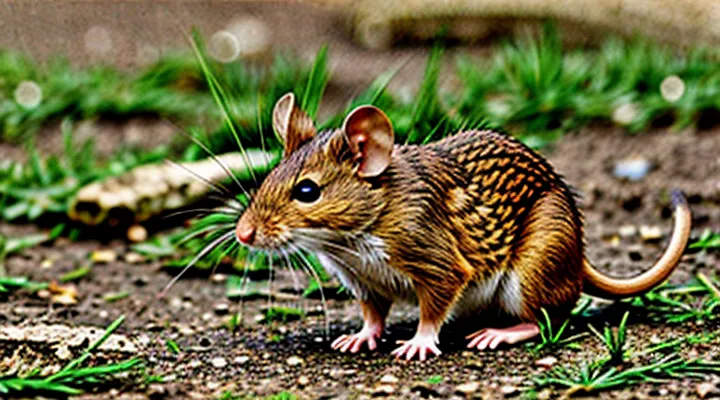
Field Mouse Overview
«What is a Field Mouse?»
The field mouse is a small rodent belonging to the genus Apodemus, commonly found across temperate regions of Europe and Asia. Adults typically measure 7–10 cm in body length, with a tail of comparable size. Fur coloration ranges from brown to gray, providing camouflage among grasses and leaf litter. Distinctive features include a pointed snout, large ears, and sharp incisors adapted for gnawing.
Habitat preferences include open meadows, agricultural fields, forest edges, and hedgerows. The species thrives in areas with abundant ground cover, where it constructs shallow burrows or utilizes existing crevices. Food sources consist of seeds, grains, insects, and occasional plant material, supporting a flexible diet that adjusts to seasonal availability.
Key characteristics:
- Body length: 7–10 cm; tail length: 6–9 cm
- Weight: 15–30 g
- Fur: brown to gray, dense dorsal coat, lighter ventral side
- Ears: proportionally large, aiding in predator detection
- Reproduction: multiple litters per year, each 4–7 offspring
- Activity: primarily nocturnal, with foraging bouts at dusk and dawn
These traits enable the field mouse to occupy a wide range of environments, maintain stable populations, and serve as a common prey item for numerous predators.
«Taxonomy and Classification»
The common field mouse belongs to the species Apodemus sylvaticus, a member of the family Muridae within the order Rodentia. This taxonomic placement distinguishes it from other small mammals that share similar ecological niches.
Its classification follows a hierarchical structure:
- Kingdom: Animalia
- Phylum: Chordata
- Class: Mammalia
- Order: Rodentia
- Family: Muridae
- Genus: Apodemus
- Species: A. sylvaticus
Within Apodemus sylvaticus, several subspecies are recognized, each adapted to distinct geographic regions across Europe and parts of North Africa. Subspecific variation influences coat coloration, body size, and micro‑habitat preferences, linking taxonomic identity directly to observable traits and environmental distribution.
The taxonomic framework provides a basis for comparing morphological features such as fur pattern, ear size, and tail length, as well as for mapping the range of habitats occupied by the species, from open grasslands to woodland edges. By aligning classification with physical and ecological characteristics, researchers can accurately describe the field mouse’s role in diverse ecosystems.
Appearance
«General Body Plan»
«Size and Weight»
Field mice are small rodents whose dimensions vary among species and geographic populations. Adult individuals typically measure between 6 cm and 10 cm in head‑body length, excluding the tail, which adds an additional 5 cm to 9 cm. Body mass ranges from 10 g to 25 g, with most specimens clustering around 15 g. These metrics reflect adaptations to open habitats, where reduced size enhances maneuverability and minimizes exposure to predators.
- Head‑body length: 6–10 cm (2.4–3.9 in)
- Tail length: 5–9 cm (2.0–3.5 in)
- Total length: 11–19 cm (4.3–7.5 in)
- Weight: 10–25 g (0.35–0.88 oz)
Size and weight exhibit modest seasonal fluctuations; individuals captured in late summer often display slightly higher body mass due to increased food availability. Comparative data across regions confirm that northern populations tend toward larger body dimensions, consistent with Bergmann’s rule.
«Body Shape»
The field mouse possesses a compact, elongated body that optimizes movement through dense vegetation and narrow burrow tunnels. Length ranges from 7 to 10 cm, while weight seldom exceeds 20 g, reflecting a high surface‑to‑mass ratio suited for rapid heat exchange.
Key morphological elements include:
- Head: Small, rounded skull with a pointed snout; large, protuberant eyes provide acute visual acuity.
- Body: Streamlined torso covered by fine, soft fur; dorsal coloration varies from brown to gray, offering camouflage against soil and leaf litter.
- Tail: Proportionally long, measuring 70–90 % of body length; sparsely haired and flexible, it assists in balance during agile climbing and swift escapes.
- Limbs: Short forelimbs and longer hind limbs equipped with clawed digits; configuration enables powerful leaping and efficient digging.
These structural adaptations facilitate the mouse’s ability to exploit ground‑level habitats, navigate subterranean passages, and respond swiftly to predator threats.
«Fur Characteristics»
«Coloration»
Field mice display a range of dorsal and ventral colors that reflect their ecological niches. The dorsal coat typically ranges from light brown to reddish‑brown, providing camouflage against grasses and leaf litter. Ventral fur is paler, often creamy or grayish, reducing contrast when viewed from below.
Key coloration characteristics include:
- Seasonal molt: Summer coats are richer in hue; winter coats become duller and denser.
- Geographic variation: Populations in arid regions exhibit lighter, sand‑colored dorsal fur, while those in forested areas show darker, more saturated tones.
- Age‑related changes: Juveniles possess a softer, grayish coat that darkens as they mature.
Pigmentation results from melanin concentration in hair shafts, influencing both thermoregulation and predator avoidance. Subtle patterning, such as faint dorsal stripes or speckles, enhances disruptive camouflage within heterogeneous habitats.
«Texture and Density»
Field mice exhibit a coat composed of fine, soft hairs that provide insulation against temperature fluctuations in open grasslands and hedgerows. The individual strands are short, overlapping, and densely packed, creating a uniform surface that resists moisture absorption. Underlying skin is thin yet resilient, allowing flexibility during rapid movement through dense vegetation.
Population density varies markedly with habitat quality. In fertile meadow patches, individuals may reach up to 30 per hectare, while in arid scrubland the density often falls below five per hectare. Seasonal shifts influence both fur density and group size:
- Fur density: In winter, hair follicles produce an additional layer, increasing overall coat thickness by roughly 20 %.
- Group density: Breeding periods trigger a temporary rise in local numbers as juveniles remain near the natal area for several weeks.
These texture and density characteristics enable field mice to exploit a range of environments while maintaining thermoregulation and predator avoidance.
«Distinctive Features»
«Ears»
Field mice possess relatively large, rounded ears positioned high on the skull. The pinnae are covered with fine fur that blends with the surrounding coat, reducing visibility to predators. Ear dimensions range from 8 to 12 mm in length, proportionate to the animal’s body size of 6–10 cm.
The auditory anatomy includes a well‑developed middle ear cavity and elongated auditory bullae, enabling detection of high‑frequency sounds. Sensitivity to frequencies above 20 kHz assists in locating insects and evading aerial threats. The vascular network within the ear aids thermoregulation, dissipating excess heat in open grassland environments.
Key ear-related adaptations:
- Fur‑lined pinnae – camouflage and protection from debris.
- Enhanced auditory bullae – improved low‑frequency sound amplification for ground‑level communication.
- Thin skin and abundant capillaries – efficient heat exchange during daytime activity.
- Mobility – ability to swivel the pinnae independently, broadening the auditory field.
«Eyes»
The field mouse possesses relatively large eyes positioned laterally on the skull, providing a wide field of view essential for detecting predators. Each eye measures approximately 4–5 mm in diameter, proportionate to the animal’s 7–10 cm body length, and exhibits a round, convex shape that maximizes light intake.
Eye coloration ranges from dark brown to nearly black, reflecting high melanin concentration that reduces glare and protects retinal tissue from ultraviolet exposure common in open habitats. The iris lacks conspicuous patterns, contributing to a uniform appearance that does not distract from camouflage.
Adaptations for low‑light environments dominate the visual system. A high density of rod photoreceptors enables efficient scotopic vision, while a thin, reflective tapetum lucidum enhances photon capture, producing the characteristic eye shine observed at night. The pupil expands dramatically under dim conditions, achieving near‑maximal dilation to increase retinal illumination.
These ocular features align with the mouse’s ecological niche:
- Wide visual field supports early detection of aerial and terrestrial predators in grasslands and field margins.
- Enhanced night vision facilitates foraging within burrows and during twilight periods when food availability peaks.
- Dark pigmentation and lack of distinct iris markings aid concealment against soil and vegetation backgrounds.
Overall, the eye morphology of the field mouse integrates size, pigmentation, and physiological specialization to meet the demands of its appearance and the environments it occupies.
«Snout and Whiskers»
The field‑dwelling mouse possesses a compact, triangular snout that tapers to a sharp tip. The rostrum measures approximately 4–6 mm in length, with a pale pinkish‑brown hue that blends with the surrounding fur. Dental enamel at the tip is reinforced, allowing efficient gnawing of seeds and soft plant material.
Whiskers (vibrissae) extend from the snout and cheeks in multiple rows. Each mystacial whisker reaches 12–15 mm, while the supraorbital set measures up to 8 mm. The tactile hairs are densely innervated, providing rapid feedback on air currents and surface textures. Their arrangement forms a three‑dimensional sensory field that detects obstacles within a radius of 2–3 cm.
These facial structures support survival in open grasslands, hedgerows, and cultivated fields:
- Snout shape concentrates bite force for seed extraction.
- Whisker length and density enable navigation through dense vegetation at night.
- Sensory input guides precise movements while foraging near ground cover.
- Reinforced rostral tissue protects against abrasion when burrowing through soil.
Collectively, the snout and whiskers constitute a specialized apparatus that optimizes feeding efficiency and spatial awareness in the mouse’s typical environments.
«Tail»
The tail of the field-dwelling mouse is a slender, hair‑covered extension measuring approximately 60–80 % of the animal’s body length. Its surface exhibits a uniform coloration that matches the dorsal fur, ranging from light brown to gray, and the underlying skin is thin and highly vascularized.
Functionally, the tail serves several essential purposes:
- Balance: When the mouse navigates narrow grass stems or climbs low vegetation, the tail acts as a counter‑weight, allowing rapid directional changes.
- Thermoregulation: Heat exchange occurs through the tail’s extensive blood vessels, aiding temperature control during exposure to open fields or cooler burrow environments.
- Communication: Tail posture and movement convey social signals during encounters with conspecifics, such as threat displays or submissive gestures.
Adaptations of the tail correspond closely to the mouse’s preferred habitats. In open meadow ecosystems, the elongated, flexible tail enhances agility across sparse cover, while in denser hedgerows it provides stability when squeezing through tight spaces. The fur density reduces drag and protects against abrasion from vegetation. These morphological traits reflect the species’ reliance on both terrestrial locomotion and brief arboreal excursions within its ecological niche.
«Sexual Dimorphism»
Sexual dimorphism in field mice manifests primarily through size, pelage, and cranial characteristics. Males typically exceed females in body mass by 10–20 %, with average weights of 22 g compared to 18 g for females. Tail length shows a similar pattern; male tails average 5 mm longer than those of females, contributing to a slightly greater overall length.
Distinct pelage patterns accompany the size disparity. Males often display a darker dorsal coat with more pronounced stripe markings, while females possess a lighter, more uniform coloration. These color differences become evident during the breeding season, when hormonal changes intensify pigment expression.
Cranial measurements also diverge. Male skulls exhibit greater breadth at the zygomatic arches and a larger auditory bullae, features linked to stronger jaw musculature and enhanced vocalization capacity. Female skulls retain a more streamlined shape, reflecting lower bite force requirements.
Ecological implications of dimorphism include:
- Territorial behavior: Larger males defend larger home ranges, securing resources for multiple females.
- Reproductive strategies: Size advantage enables males to compete for mating opportunities, while females allocate energy toward gestation and nest construction.
- Predation risk: Darker male coloration may confer better camouflage in dense underbrush, whereas lighter female coats blend with open meadow habitats.
These morphological and behavioral distinctions arise from selective pressures within the mouse’s environment, shaping the species’ reproductive success and population dynamics.
Habitat
«Geographic Distribution»
«Native Range»
The field mouse inhabits a broad native range that spans temperate zones across the Palearctic region. Populations are established throughout most of Europe, extending from the Iberian Peninsula in the west to the Ural Mountains in the east. In Asia, the species occurs in western Siberia, the Caucasus, and parts of the Middle East, including Turkey and Iran. Its distribution also reaches the northern fringe of North Africa, where suitable habitats exist.
Key areas of the native range include:
- Western and Central Europe (e.g., United Kingdom, France, Germany, Poland)
- Southern Europe (e.g., Italy, Greece, Balkans)
- Eastern Europe and western Russia up to the Ural range
- Caucasus and adjacent regions of Turkey and Iran
- Northwestern Siberia and the Baltic states
- Coastal and inland regions of northern Morocco and Algeria where temperate conditions prevail
These regions share common environmental characteristics such as mixed woodlands, grasslands, and agricultural fields, which provide the cover and food resources essential for the species’ survival and reproduction.
«Introduced Populations»
Introduced populations of the common field mouse have established themselves in a variety of non‑native regions, often following accidental transport in agricultural goods or deliberate release for pest control. These rodents retain the species’ characteristic small size, brownish dorsal fur, lighter ventral coloration, and a long, hairless tail, traits that facilitate adaptation to diverse environments.
In temperate zones where the species is not indigenous, the mouse occupies habitats that mirror its native preferences: grasslands, cultivated fields, and hedgerows offering dense ground cover. Soil composition influences burrow architecture; loamy soils support complex tunnel systems, while sandy substrates limit depth and promote surface nesting. Proximity to human settlements provides supplemental food sources, enhancing survival rates.
Key factors influencing successful establishment:
- Absence of native competitors occupying identical ecological niches.
- Availability of continuous herbaceous cover that protects against predators.
- Climate compatibility with the species’ tolerance for cold winters and warm summers.
Monitoring programs in North America, New Zealand, and parts of Southern Europe have documented population growth rates exceeding 15 % per annum in optimal habitats. Genetic analyses indicate limited founder effects, suggesting multiple introduction events rather than a single source population.
«Preferred Environments»
«Grasslands and Meadows»
The European field mouse (Apodemus sylvaticus) thrives in open grassland ecosystems where dense herbaceous cover offers both concealment and foraging opportunities. These habitats are characterized by a mosaic of tall grasses, wildflowers, and occasional shrub thickets, providing a continuous supply of seeds, insects, and other invertebrates that constitute the mouse’s diet.
Grasslands maintain a microclimate that moderates temperature fluctuations, reducing exposure to extreme heat and cold. The litter layer—composed of dead plant material and fallen leaves—creates a network of tunnels and nests that protect the mouse from predators and precipitation. Soil composition, typically loamy with good drainage, facilitates burrowing and supports a diverse arthropod community.
Key habitat attributes for the field mouse in meadow environments include:
- High seed density from grasses such as ryegrass (Lolium spp.) and meadow foxtail (Alopecurus pratensis)
- Abundant insect prey during the breeding season, especially beetles and larvae found in moist ground patches
- Structural complexity provided by staggered vegetation heights, enabling vertical escape routes
- Proximity to hedgerows or woodland edges that serve as additional shelter and dispersal corridors
Seasonal changes influence resource availability. In spring, rapid vegetative growth increases seed production, prompting heightened reproductive activity. Summer droughts may force mice to shift activity to cooler nocturnal periods and rely more on stored seeds. Autumn brings a surge in fallen seeds and nuts, while winter sees increased use of insulated burrows and reduced foraging range.
Overall, grasslands and meadows supply the essential components—food, cover, and nesting sites—that sustain field mouse populations, making these open habitats integral to their ecological success.
«Agricultural Fields»
Agricultural fields provide the primary foraging ground for the field mouse, whose coloration and size adapt to the open, low‑lying vegetation typical of cultivated land. The mouse’s dorsal fur often exhibits brown‑gray tones that blend with wheat stalks, barley, and rye, while the lighter ventral side remains concealed beneath ground cover.
Key characteristics of agricultural habitats influencing the species:
- Crop rotation creates a mosaic of seed availability, supporting seasonal population fluctuations.
- Soil composition, especially loamy or sandy textures, facilitates burrow construction and offers protection from aerial predators.
- Harvest periods temporarily reduce cover, prompting increased use of field margins and hedgerows as refuge.
- Irrigation practices affect moisture levels in burrow systems, influencing reproductive success.
Overall, the structural simplicity of cultivated plots, combined with periodic disturbances, shapes the field mouse’s appearance, behavior, and survival strategies within agricultural ecosystems.
«Forest Edges and Woodlands»
The field mouse thrives in transitional zones where dense woodland meets open terrain. These forest edges provide a mosaic of cover and foraging opportunities that match the species’ small size and cryptic coloration. The mouse’s dorsal fur, typically a muted brown with subtle striping, blends with leaf litter and low shrubbery, reducing visibility to predators.
Key habitat attributes of forest margins and interior woodlands include:
- Dense understory of herbaceous plants and young saplings for nesting and concealment.
- Abundant seed and insect resources supplied by seasonal leaf fall and ground-level vegetation.
- Microclimatic stability, with moderated temperature fluctuations and humidity levels that support the mouse’s metabolic requirements.
- Network of narrow pathways and natural clearings that facilitate movement while limiting exposure.
In mature woodlands, the species prefers peripheral zones where light penetration is greater, allowing a richer ground cover. These areas sustain higher invertebrate populations and provide the structural complexity necessary for the mouse’s burrowing behavior. The combination of edge-effect resources and protective vegetation defines the optimal living environment for the field mouse.
«Shelter and Nesting»
«Burrows»
Burrows of the field mouse are complex underground systems typically ranging from 30 cm to 1 m in depth. Primary tunnels are 5–10 cm in diameter, sufficient to accommodate the animal’s slender body while allowing rapid movement.
Construction begins with the mouse using its incisors and forelimbs to loosen loose soil. Excavated material is pushed to the surface, forming a modest mound that marks the entrance. The network includes a main passage, side chambers for food storage, and a nesting chamber lined with dry grasses and shredded plant matter.
Burrow sites are selected based on soil texture, moisture, and vegetation cover. Loose, well‑drained loam supports easier excavation, while dense grass or low shrub cover offers concealment from predators and stabilizes entrance structures.
Functions of the burrow system include:
- Protection from aerial and terrestrial predators.
- Maintenance of a stable microclimate, with temperatures typically 2–4 °C lower than surface conditions.
- Safe environment for reproduction; nesting chambers provide space for litters and maternal care.
- Storage of seeds and insects, ensuring food availability during winter or periods of scarcity.
«Surface Nests»
Field mice construct shallow nests on the ground surface, a behavior that distinguishes them from burrowing rodents. These nests serve as temporary shelters for foraging individuals and as breeding sites during the reproductive season.
The nests are shallow depressions, typically 5–10 cm deep, lined with dry grasses, leaves, moss, and shredded plant material. The interior is compacted to create a modest dome that offers protection from wind and precipitation while allowing quick access for the animal.
Placement of surface nests follows a predictable pattern. Mice select locations under low vegetation, such as tall grasses, sedges, or the bases of shrubs, where cover conceals the nest from aerial predators. Nests are often situated near food sources, including seed heads and insect-rich microhabitats, and may be positioned on slightly elevated ground to avoid moisture accumulation.
Seasonal adjustments affect nest structure and use. In spring and early summer, nests are commonly employed for breeding; females line the interior with finer fibers to insulate litters. During colder months, additional layers of insulating material are added, and nests may be reinforced with fur and dead insects to retain heat.
Key functions of surface nests include:
- Predator avoidance through concealment and rapid escape routes.
- Thermoregulation via layered insulation.
- Centralized location for rearing young, reducing exposure to environmental stressors.
- Temporary refuge during foraging excursions, minimizing time spent exposed.
The reliance on surface nests reflects the species’ adaptability to open-field environments, where subterranean burrows are less feasible. This nesting strategy contributes to the mouse’s capacity to exploit diverse habitats while maintaining reproductive success.
«Adaptations to Environment»
«Seasonal Changes»
Field mice undergo distinct morphological and ecological adjustments as the year progresses, reflecting the rhythm of temperate climates. These adjustments influence both external appearance and the selection of microhabitats, thereby shaping survival strategies throughout the annual cycle.
In early spring, the coat lightens and softens, facilitating thermoregulation during rising temperatures. Breeding activity peaks, prompting individuals to occupy dense ground cover such as tall grasses and newly emerged herbaceous plants, which provide concealment for vulnerable juveniles. Food availability expands, with seeds and insects becoming abundant, encouraging foraging trips close to the surface.
Summer brings a thicker, slightly longer pelage that protects against higher daytime heat while maintaining insulation during cooler nights. Field mice increase use of open meadow patches, exploiting abundant seed crops and arthropod populations. Burrow systems are expanded vertically to improve ventilation and reduce overheating.
Autumn triggers a progressive darkening of the fur, enhancing camouflage amid fallen leaf litter and dried vegetation. Individuals intensify collection of seeds, storing them within deeper burrow chambers. Habitat preference shifts toward edge habitats where shrub cover offers protection from increasingly frequent predators and prepares for forthcoming scarcity.
Winter conditions induce the development of a dense, insulating undercoat, minimizing heat loss in subzero environments. Activity becomes largely nocturnal and confined to subterranean networks, where temperature remains relatively stable. Surface movements are limited to brief forays for cached food, and burrow entrances are often sealed with vegetation to reduce drafts.
Key seasonal adaptations:
- Coat coloration and density adjust to temperature and camouflage needs.
- Burrow architecture modifies depth and complexity in response to thermal stress.
- Habitat selection transitions from open grasslands to edge and shrub-dominated areas.
- Food acquisition strategies shift from active foraging to seed caching and reliance on stored reserves.
«Predator Avoidance»
Field mice rely on a combination of physical traits and behavioral tactics to reduce the risk of predation in open grasslands and cultivated fields. Their small size, cryptic coloration, and rapid, erratic movements allow them to blend with vegetation and escape detection. When a threat is perceived, they employ several specific strategies:
- Alertness and early detection – large, positioned ears capture faint sounds; whiskers sense air currents, providing a 360‑degree awareness radius.
- Escape routes – individuals maintain multiple burrow entrances and nearby cover objects, enabling swift retreat in any direction.
- Erratic sprinting – bursts of high‑speed running combined with sudden changes in direction disrupt predator pursuit patterns.
- Freezing behavior – immediate cessation of movement reduces visual cues, especially effective against avian hunters relying on motion.
- Use of scent masking – urine and glandular secretions coat the fur, diminishing olfactory traces that mammals such as foxes might follow.
These mechanisms operate continuously, integrating sensory input with rapid motor responses to maintain survival in environments where raptors, snakes, and small carnivores are prevalent. The effectiveness of each tactic varies with habitat complexity; dense grass or crop residues enhance concealment, while open terrain increases reliance on speed and vigilance.