
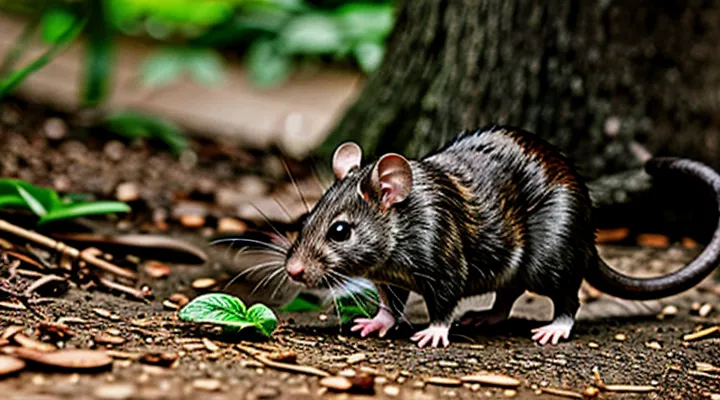
The Ecological Niche of Rats
Rodents as Keystone Species
Rodents function as keystone species by shaping community structure and ecosystem processes. Their foraging behavior modifies vegetation patterns, influencing plant diversity and succession. Burrowing activity enhances soil aeration, water infiltration, and nutrient cycling, which benefits microbial communities and root development.
Key ecological effects include:
- Seed transport and storage that promote regeneration of various plant species.
- Predation pressure on insects and small invertebrates, providing food resources for higher trophic levels such as raptors and carnivorous mammals.
- Creation of habitat complexity through tunnels and nests, offering shelter for numerous organisms.
- Regulation of parasite populations by serving as intermediate hosts, thereby affecting disease dynamics within ecosystems.
These functions collectively sustain biodiversity and maintain the stability of habitats where rodents are present. By altering physical and biological components of their environment, rodents ensure the persistence of ecological networks that would otherwise experience reduced resilience.
Seed Dispersal and Plant Propagation
Impact on Forest Regeneration
Rats and other small rodents influence forest regeneration through several direct mechanisms.
- Consumption of seed predators reduces the mortality of viable seeds, increasing the pool available for germination.
- Transport of seeds in fur or digestive tracts relocates them away from parent trees, creating spatially diverse seed banks.
- Burrowing activity loosens compacted soil, improves water infiltration, and incorporates organic matter, which enhances seedling establishment.
- Predation on invertebrates and herbivorous insects suppresses populations that would otherwise damage young shoots and foliage.
These processes collectively accelerate the turnover of vegetation, promote species richness, and support the resilience of forest ecosystems.
Role in Ecosystem Restoration
Rats act as agents of ecosystem recovery by influencing multiple biological and physical processes. Their activities accelerate the transition of degraded sites toward functional habitats.
- Foraging behavior transports viable seeds away from parent plants, creating spatially diverse seed banks that support native vegetation establishment.
- Burrowing disrupts compacted soils, increasing porosity, enhancing water infiltration, and promoting root penetration for pioneer species.
- Consumption of carrion and organic waste converts high‑energy material into fecal deposits rich in nitrogen, phosphorus, and potassium, enriching the nutrient pool available to growing plants.
These functions shape successional trajectories. By dispersing seeds of early‑successional flora, rats facilitate colonization of open patches. Their predation on invertebrate herbivores reduces pressure on regenerating seedlings, while removal of invasive plant propagules curtails the spread of non‑native species. Collectively, these actions create feedback loops that reinforce habitat complexity and biodiversity.
Restoration practitioners should incorporate rat population dynamics into project designs. Monitoring rat abundance, protecting key burrow networks, and managing habitat features that attract beneficial individuals can enhance the effectiveness of reforestation, wetland rehabilitation, and mine‑site reclamation efforts.
Soil Aeration and Nutrient Cycling
Burrowing Activities and Soil Structure
Rats construct extensive tunnel networks that modify the physical properties of soils. Their burrows introduce air pockets, increase porosity, and enhance the movement of water through otherwise compacted layers. This aeration reduces anaerobic conditions, fostering microbial communities that accelerate organic matter decomposition.
Burrowing activity also promotes the redistribution of minerals and organic particles. As rats displace soil while excavating, they blend surface litter with deeper strata, creating a more homogeneous substrate. The resulting mixture improves nutrient availability for plants and supports a diverse assemblage of soil fauna.
Key ecological outcomes of rat burrowing include:
- Improved water infiltration – channels lower surface runoff, decreasing erosion risk.
- Enhanced root penetration – loosened soil offers less mechanical resistance for plant roots.
- Accelerated nutrient cycling – mixed organic material becomes more accessible to decomposers.
- Increased habitat heterogeneity – tunnels provide refuge for invertebrates, amphibians, and small mammals.
Collectively, these effects demonstrate that rat-driven soil engineering contributes to ecosystem resilience and productivity.
Contribution to Decomposition
Rats accelerate the breakdown of organic matter by consuming carrion, spoiled vegetation, and discarded food. Their digestive systems process these materials, converting them into nutrient‑rich feces that reenter the soil as a fertilizer source.
Through foraging activity, rats transport fragments of dead tissue and plant debris across microhabitats. This redistribution spreads microbial colonies, enhances colonization of decomposers, and homogenizes nutrient availability.
Burrowing behavior creates tunnels that increase soil aeration and moisture penetration. The resulting structure supports fungal hyphae and bacterial growth, both critical for the mineralization of organic compounds.
Key mechanisms of rat‑driven decomposition include:
- Direct ingestion of dead and decaying matter.
- Production of fecal material enriched with nitrogen and phosphorus.
- Physical relocation of organic fragments.
- Soil disturbance that promotes aeration and microbial proliferation.
Rats in the Food Web
Prey for Predators
Supporting Carnivore Populations
Rats constitute a reliable food source for a wide range of carnivores, including birds of prey, foxes, raccoons, and reptiles. Their abundance and reproductive speed ensure that predator populations have consistent access to prey, reducing periods of scarcity that can trigger reproductive delays or increased mortality.
- Small mammals such as owls, hawks, and kestrels capture rats during daylight and nighttime hunts, obtaining protein essential for chick development.
- Terrestrial carnivores like red foxes and coyotes rely on rat carcasses to supplement diets during winter months when other prey are less available.
- Reptilian predators, including snakes and monitor lizards, exploit rat burrows and surface activity, gaining both nourishment and opportunities for shelter.
- Scavengers and opportunistic feeders, such as feral cats and dogs, benefit from rat mortality events, which provide easy meals without expending significant energy.
Stable rat populations support predator reproductive success. When prey density rises, carnivores experience higher litter sizes, earlier breeding seasons, and improved offspring survival rates. Conversely, declines in rat numbers can lead to reduced predator fitness, prompting shifts toward alternative, often less sustainable, food sources.
The trophic link between rats and carnivores contributes to balanced ecosystem dynamics. Predators regulated by rat availability help control other pest species, maintain biodiversity, and prevent overpopulation of rodents themselves. This feedback loop sustains ecological equilibrium without requiring human intervention.
Balancing Ecosystem Dynamics
Rats contribute to nutrient cycling by consuming organic waste and returning nitrogen‑rich material to the soil through their feces. This process accelerates decomposition, supports microbial activity, and enhances plant growth in both urban and rural habitats.
Predatory species such as owls, hawks, and snakes rely on rat populations for sustenance. Fluctuations in rodent numbers directly affect predator reproductive success, which in turn regulates other prey species and prevents overpopulation of insects or smaller mammals.
Rodents disperse seeds attached to their fur or excreted after ingestion. By moving seeds across fragmented landscapes, they promote plant colonization, increase genetic diversity, and assist in habitat restoration after disturbance.
- Control of disease vectors: rats compete with more hazardous species (e.g., certain insects) for food and shelter, reducing the latter’s abundance.
- Soil aeration: burrowing activity creates channels that improve water infiltration and root penetration.
- Food web stability: regular predation on rats maintains balanced trophic levels, limiting cascading effects that could destabilize ecosystems.
Scavenging and Waste Management
Reducing Organic Waste
Rats and other rodent species consume large quantities of decomposing plant material, fallen fruit, and discarded food scraps. By ingesting these organic residues, they transform waste that would otherwise accumulate on the ground into biomass that enters the food chain. Their digestive processes break down complex organic compounds, reducing the volume of litter and accelerating nutrient cycling.
In urban and agricultural settings, rodents foraging in compost heaps and refuse piles remove material that could attract pests or generate foul odors. Their activity lowers the risk of pathogen proliferation by limiting the time waste remains exposed. Additionally, the excreta of these animals enrich soil with nitrogen, phosphorus, and potassium, enhancing fertility without the need for synthetic additives.
Key contributions of rodent-mediated waste reduction include:
- Direct removal of organic debris from surface layers.
- Acceleration of decomposition through mechanical fragmentation and microbial stimulation.
- Redistribution of nutrients into soils via fecal deposition.
These mechanisms support ecosystem stability by maintaining cleaner habitats, promoting healthier plant growth, and reducing the load on human waste-management systems.
Preventing Disease Spread
Rats, as members of the rodent community, actively diminish the risk of disease transmission through several ecological functions.
By consuming dead animals, rats remove potential sources of bacterial and viral proliferation. Their scavenging activity shortens the period that pathogens remain viable in the environment, thereby lowering exposure for other wildlife and humans.
Rats prey on insects such as fleas, ticks, and mosquitoes, which are primary carriers of diseases like plague, Lyme disease, and malaria. Reducing vector populations directly curtails the pathways through which pathogens spread.
Through competition for food and habitat, rats suppress the numbers of more harmful rodent species. This competitive pressure limits the abundance of species that are more likely to harbor zoonotic agents.
Rats serve as model organisms in biomedical research. Studies on rat immune responses accelerate the development of vaccines and diagnostic tools, ultimately contributing to public health preparedness.
Key contributions of rats to disease prevention:
- Removal of carrion and reduction of environmental pathogen loads.
- Predation on disease‑carrying insects, decreasing vector density.
- Competitive exclusion of higher‑risk rodent species.
- Provision of a research platform for vaccine and therapeutic discovery.
Mutualistic Relationships
Seed Consumption and Dispersal
Rats consume a wide variety of seeds, influencing plant populations through both removal and transport. When they eat seeds, a portion is destroyed, reducing the number of viable propagules. Simultaneously, undigested seeds that pass through the gastrointestinal tract are deposited elsewhere with nutrient‑rich feces, often enhancing germination rates.
Key mechanisms of seed dispersal by rats include:
- Caching: Individuals store seeds in shallow burrows or underground chambers. Forgotten caches become recruitment sites for seedlings.
- Gut passage: Seeds survive digestion, emerge coated in fecal material that supplies nitrogen and phosphorus, accelerating early growth.
- Transport: Rats move seeds away from the parent plant, decreasing density‑dependent mortality and expanding the spatial distribution of flora.
Empirical studies show that rat‑mediated dispersal can increase seedling establishment by 15–30 % compared to passive dispersal, particularly in fragmented habitats where other dispersers are scarce. Moreover, rat activity creates micro‑habitats favorable for germination, such as disturbed soil patches with reduced litter cover.
Overall, rodent seed handling reshapes vegetation structure, promotes species diversity, and supports ecosystem resilience by linking plant regeneration to animal movement patterns.
Pollination (Rare Instances)
Rats occasionally function as pollinators when they visit flowers for nectar or fruit, inadvertently transferring pollen on their fur or whiskers. This behavior occurs in habitats where traditional pollinators are scarce or where nocturnal flowering plants have evolved traits that attract small mammals.
Examples of such interactions include:
- Madagascar’s Baobab (Adansonia spp.): nocturnal rats feed on the sweet pulp surrounding the flowers, moving pollen between blossoms.
- South American cloud forests: certain rat species forage on nectar-rich bromeliads, carrying pollen across canopy gaps.
- Australian alpine regions: alpine rats visit low‑lying, white‑flowered shrubs, contributing to seed set during cooler months.
The ecological effect of these rare pollination events is measurable in increased fruit production for the involved plant species, which in turn supports a broader suite of herbivores and seed dispersers. While rodents are not primary pollinators, their occasional activity supplements pollination networks, especially in disturbed or edge habitats where insect populations may be reduced.