
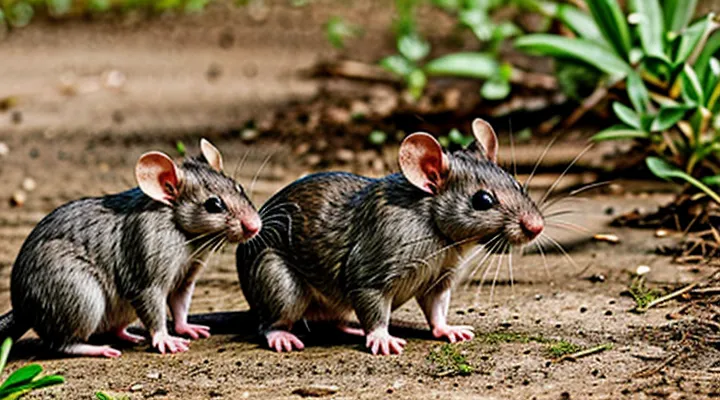
«Basic Reproductive Biology of Rats»
«Gestation Period and Litter Size»
Wild rats exhibit a relatively short gestation period, typically lasting 21–23 days from conception to birth. The interval between successive pregnancies can be as brief as 30 days under favorable conditions, allowing multiple litters per year.
Key parameters of reproductive output include:
- Average litter size: 5–12 offspring, with most populations clustering around 7–8 pups per litter.
- Species variation: Rattus norvegicus (brown rat) generally produces larger litters than Rattus rattus (black rat).
- Seasonal influence: Warmer months often see increased litter size and reduced inter‑litter intervals, while colder periods may extend gestation and reduce pup numbers.
- Nutritional impact: Abundant food supplies correlate with higher pup survival rates and occasional augmentation of litter size.
These figures reflect the reproductive strategy that enables rat populations to expand rapidly in natural habitats.
«Sexual Maturity and Breeding Age»
Rats in natural habitats reach sexual maturity rapidly, allowing frequent population turnover. In the Norway rat (Rattus norvegicus), puberty occurs at approximately 5 weeks for males and 6 weeks for females; the roof rat (Rattus rattus) matures slightly later, around 7–8 weeks for both sexes. These ages represent the earliest point at which individuals can contribute to breeding events.
The first successful conception typically follows a short post‑maturity interval. Female rats can produce a litter as early as one week after attaining sexual maturity, with the majority of first litters occurring between 8 and 12 weeks of age. Males achieve full sperm production within the same developmental window, enabling them to participate in mating shortly after reaching puberty. Consequently, the effective breeding age spans from roughly 8 weeks to the end of the reproductive lifespan, which may extend beyond one year in favorable conditions.
Environmental variables modulate the timing of «Sexual Maturity and Breeding Age». Key factors include:
- Ambient temperature: warmer climates accelerate growth, reducing time to maturity by 1–2 weeks.
- Food availability: abundant resources support faster weight gain, a prerequisite for hormonal activation.
- Photoperiod: longer daylight periods correlate with earlier onset of reproductive capability in many rodent populations.
These determinants influence the overall reproductive frequency observed in wild rat populations. Short maturation periods, combined with multiple breeding cycles per year, result in high turnover rates and rapid population expansion under optimal environmental conditions.
«Factors Influencing Breeding Cycles»
«Factors Influencing Breeding Cycles» describe the variables that regulate the timing and frequency of reproduction in wild rats. Seasonal temperature shifts alter metabolic rates, prompting earlier or later onset of estrus. Food abundance directly affects body condition, which determines the readiness of females to enter the breeding window. Population density influences social stress; high densities suppress hormonal activity through pheromonal cues, while low densities encourage mating opportunities.
- Temperature and photoperiod: warmer months extend the breeding season, shorter daylight reduces reproductive hormone secretion.
- Nutrient availability: surplus resources accelerate gonadal development, scarcity delays ovulation.
- Social environment: dominance hierarchies and crowding modulate stress hormones that inhibit or stimulate fertility.
- Predation pressure: heightened risk leads to reduced activity and delayed breeding to conserve energy.
- Pathogen load: disease incidence can suppress reproductive function through immune‑endocrine interactions.
Interactions among these factors produce regional variation in reproductive intervals. For example, temperate zones exhibit a concentrated breeding peak in spring, whereas tropical habitats maintain a more continuous cycle due to stable climate and food supply. Hormonal feedback mechanisms integrate environmental signals, ensuring that breeding aligns with optimal survival prospects for offspring.
Understanding these determinants clarifies population growth patterns and informs management strategies aimed at controlling rodent numbers in natural and urban ecosystems.
«Reproductive Frequency in Different Environments»
«Impact of Food Availability»
Food abundance directly modifies reproductive cycles in free‑living rodents. When resources are plentiful, females enter estrus more frequently, gestation periods shorten, and litter sizes increase. Conversely, scarcity prolongs the interval between ovulations, reduces the number of offspring per litter, and can suppress breeding altogether.
Key physiological responses to fluctuating nutrition include:
- Elevated leptin levels stimulate hypothalamic release of gonadotropin‑releasing hormone, accelerating ovarian activity.
- Low body condition triggers stress‑related cortisol spikes, inhibiting the reproductive axis.
- Seasonal peaks in seed and insect availability correspond with spikes in breeding frequency across multiple rat species.
Field observations consistently link periods of crop harvest or rodent infestations with heightened reproductive output, whereas drought or winter famine periods correspond with marked declines in breeding events. The correlation underscores that resource predictability shapes population growth potential in natural environments.
«Role of Climate and Seasonality»
Rats in natural habitats display reproductive cycles that align closely with environmental conditions. Warmer periods trigger hormonal changes that accelerate gonadal development, leading to shorter intervals between litters. Conversely, colder seasons suppress estrus, extending the time between breeding events.
Key climatic elements that affect breeding frequency include:
- Temperature fluctuations: Elevated ambient temperatures raise metabolic rates, shortening gestation and weaning periods.
- Precipitation patterns: Increased rainfall promotes vegetation growth, enhancing seed and insect populations that serve as food sources for rodents.
- Photoperiod length: Longer daylight hours stimulate melatonin regulation, which in turn influences reproductive hormone release.
Seasonal transitions modify resource availability, directly impacting litter size and the number of breeding cycles per year. In temperate zones, peak reproductive activity typically occurs during late spring and early summer, when food abundance and mild weather converge. In tropical regions, less pronounced temperature variation results in multiple breeding peaks that correspond with rainy seasons.
Overall, climate-driven variations in temperature, moisture, and daylight intensity dictate the timing and frequency of wild rat reproduction, producing distinct seasonal patterns across different geographic zones.
«Predation Pressure and Its Effects»
Predation pressure exerts a direct influence on the reproductive strategies of wild rats. When predator density rises, mortality rates increase, prompting females to accelerate breeding cycles. Shorter gestation intervals and earlier onset of sexual maturity become advantageous, allowing populations to replenish losses more rapidly.
Conversely, in environments with limited predation, rats allocate more resources to offspring quality rather than quantity. Larger litters are less common, and parental investment per pup rises, enhancing survival prospects without the need for frequent breeding.
Key effects of predation on rat reproduction include:
- Increased breeding frequency under high predation risk
- Reduced litter size when predator presence is low
- Earlier age at first estrus in populations facing constant threat
- Greater allocation of energy to defensive behaviors, which can suppress reproductive output if predation pressure is extreme
These adaptive responses maintain population stability across fluctuating predator landscapes, ensuring that rat numbers adjust in proportion to the intensity of predation.
«Reproductive Strategies of Wild Rat Species»
«Norway Rats («Rattus norvegicus»)»
Norway rats («Rattus norvegicus») display rapid reproductive cycles that enable populations to expand quickly under favorable conditions. Females reach sexual maturity at 5‑8 weeks, depending on food availability and climate. Once mature, individuals can produce multiple litters annually.
Breeding in wild populations is not confined to a single season; peaks occur during spring and autumn when temperatures rise above 10 °C and food resources increase. In temperate zones, the active breeding period spans roughly 9‑10 months, while tropical regions may support year‑round reproduction.
Gestation lasts 21‑23 days. After delivering a litter, females enter estrus within 24‑48 hours, allowing a short postpartum interval. This rapid turnaround permits successive pregnancies without a prolonged recovery phase.
Key reproductive parameters:
- Litter size: 6‑12 pups on average; extremes range from 4 to 14.
- Litters per year: 5‑7 for individuals in optimal habitats; 3‑4 in harsher environments.
- Inter‑litter interval: 30‑45 days, influenced by nutrition and population density.
- Lifetime reproductive output: up to 70 offspring per female under sustained favorable conditions.
Environmental factors modulate reproductive frequency. Abundant food, mild weather, and low predation pressure shorten inter‑litter intervals and increase litter numbers. Conversely, scarcity, extreme temperatures, and high predator presence extend intervals and reduce annual litters. Seasonal photoperiod changes also affect hormonal cycles, aligning peak breeding with periods of maximal resource availability.
«Black Rats («Rattus rattus»)»
The species «Black Rats («Rattus rattus»)» exhibits a rapid reproductive cycle that enables high population turnover in natural environments. Females reach sexual maturity at approximately 60–90 days, allowing the first breeding event within three months of birth. Gestation lasts 21–23 days, after which litters of 6–12 offspring are born.
In temperate regions, breeding intensity rises with increasing temperature and food availability, producing a pronounced peak during spring and summer. In tropical and subtropical habitats, the breeding season extends throughout the year, with only minor fluctuations linked to rainfall patterns. Under optimal conditions, a single female can produce five to seven litters annually, resulting in a potential exponential increase in local abundance.
Key reproductive parameters:
- Sexual maturity: 2–3 months
- Gestation period: 21–23 days
- Litter size: 6–12 pups
- Litters per year (optimal conditions): 5–7
- Breeding seasonality: seasonal peak in temperate zones; year‑round in warm climates
Reproductive output is modulated by resource abundance, ambient temperature, and population density. High food availability accelerates estrous cycles, while overcrowding can suppress fertility through social stress mechanisms. Consequently, the frequency of breeding events in wild «Black Rats («Rattus rattus»)» populations directly reflects environmental conditions and resource distribution.
«Other Common Wild Rat Species»
Rats occupying natural habitats belong to a limited set of species, each displaying characteristic reproductive patterns that shape overall breeding frequency.
- «Rattus norvegicus» (Norway rat) – gestation ≈ 22 days, average litter 6–12 pups, capable of 5–7 litters per year in temperate zones, up to 10 in tropical environments.
- «Rattus rattus» (Black rat) – gestation ≈ 21 days, average litter 5–8 pups, typically 4–6 litters annually, with accelerated cycles in warm, humid regions.
- «Rattus exulans» (Polynesian rat) – gestation ≈ 21 days, average litter 4–6 pups, 3–5 litters per year, limited by seasonal food availability on islands.
- «Rattus fuscipes» (Australian swamp rat) – gestation ≈ 23 days, average litter 5–9 pups, 2–4 litters annually, constrained by cooler climates and wet‑season breeding peaks.
These species dominate most wild rat populations worldwide. Their short gestation periods, relatively large litters, and the capacity for multiple breeding cycles each year enable rapid population growth when resources are abundant. Consequently, understanding the specific reproductive output of each species is essential for predicting fluctuations in wild rat numbers across diverse ecosystems.
«Consequences of High Reproductive Rates»
«Population Dynamics and Growth»
Rats in natural habitats achieve rapid population expansion due to short reproductive cycles and high litter output. Females reach sexual maturity within two to three months, produce gestations of approximately twenty‑three days, and can generate up to six litters annually under favorable conditions. This breeding frequency drives the core of «Population Dynamics and Growth», determining the speed at which local numbers can double.
Key drivers of population change include:
- Food abundance: surplus resources reduce inter‑birth intervals and increase litter size.
- Seasonal climate: warmer periods extend breeding windows, while cold spells compress them.
- Predation pressure: elevated predator density raises mortality, moderating net growth.
- Density‑dependent regulation: crowding induces hormonal feedback that lengthens estrus cycles and diminishes offspring survival.
Mathematical models frequently employ the intrinsic rate of increase (r) to quantify growth potential. Empirical observations reveal r values ranging from 0.3 to 0.6 per month for thriving colonies, reflecting the capacity for exponential escalation when limiting factors are minimal. Conversely, environments with scarce food or intense predation exhibit r near zero, indicating stable or declining populations.
Understanding these mechanisms enables accurate forecasting of rat abundance fluctuations across ecosystems, informing management strategies aimed at mitigating disease transmission and agricultural damage.
«Ecological Impacts»
Rats breeding cycles in natural environments generate rapid population turnover, which directly shapes community structure. High reproductive frequency produces dense aggregations that increase resource consumption and intensify interspecific competition.
Key ecological consequences include:
- Elevated predation pressure on small vertebrates and invertebrates, supporting higher predator densities.
- Accelerated transmission of zoonotic pathogens, facilitating spillover to other wildlife and humans.
- Intensified seed predation and reduced plant regeneration, altering vegetation composition.
- Enhanced soil disturbance through burrowing activity, modifying microhabitat conditions and influencing nutrient cycling.
These effects feed back into population regulation, creating feedback loops that sustain fluctuating rat numbers and drive ecosystem dynamics. Management strategies that consider reproductive timing can mitigate adverse outcomes while preserving ecological balance.
«Challenges in Population Control»
Rats in natural habitats breed continuously, with gestation lasting about three weeks and multiple litters produced each year. This rapid turnover generates dense populations that resist conventional control measures.
Key obstacles to effective population management include:
- High reproductive capacity – short intervals between litters enable exponential growth after even modest reductions.
- Habitat adaptability – ability to exploit diverse shelters, from sewers to agricultural fields, limits the reach of localized interventions.
- Behavioral avoidance – learned aversion to traps and toxic baits reduces efficacy over time.
- Genetic resistance – repeated exposure to anticoagulant rodenticides selects for resistant alleles, diminishing chemical control.
- Non‑target impacts – broad‑spectrum poisons threaten predators and scavengers, constraining permissible application rates.
Mitigation strategies must combine integrated pest management, habitat modification, and targeted baiting while monitoring resistance patterns. Continuous surveillance and adaptive response are essential to counteract the species’ intrinsic capacity for rapid population rebound.