
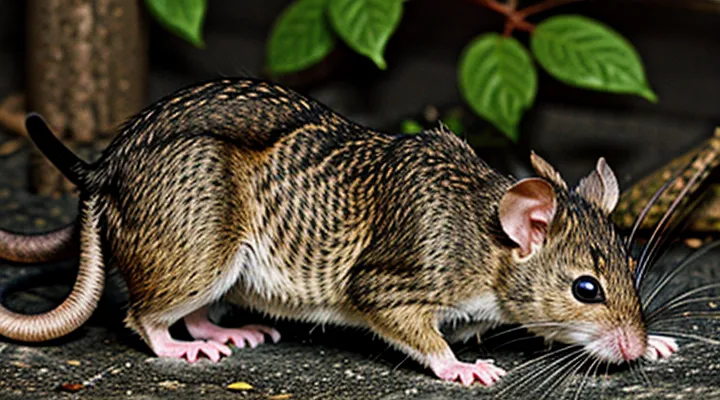
The Fundamentals of Mouse Sleep
Why Study Rodent Sleep?
Rodent sleep research offers a direct window onto the mechanisms that regulate mammalian rest‑activity cycles. Mice possess a compact brain architecture, rapid breeding cycle, and well‑characterized genetics, making them ideal for controlled experimental manipulation. Data derived from these models illuminate fundamental processes such as circadian rhythm generation, synaptic plasticity during sleep, and the impact of sleep deprivation on metabolism.
Insights gained from mouse studies translate to human health. Comparable neural pathways allow researchers to test therapeutic agents, identify genetic variants associated with sleep disorders, and evaluate the consequences of altered sleep on cognitive performance. Because experimental interventions can be applied with precision, findings reliably inform clinical strategies for insomnia, narcolepsy, and neurodegenerative disease.
Key motivations for investigating rodent sleep include:
- Direct observation of sleep architecture (REM, non‑REM) at high temporal resolution.
- Ability to manipulate specific genes or neuronal circuits and assess resulting sleep changes.
- Rapid assessment of pharmacological compounds targeting sleep regulation.
- Modeling of disease states, such as Alzheimer‑related sleep disruption, under reproducible conditions.
- Generation of quantitative benchmarks for comparative studies across mammalian species.
Collectively, these advantages justify extensive investment in mouse sleep research, providing a foundation for advancing both basic neuroscience and applied medical interventions.
General Sleep Characteristics in Mice
Mice exhibit polyphasic sleep, dividing the daily rest period into multiple short bouts. Average total sleep time for adult laboratory mice ranges from 12 to 14 hours within a 24‑hour cycle, with the majority occurring during the light phase.
Sleep architecture comprises distinct stages. Approximately 50 % of sleep consists of rapid eye movement (REM) sleep, while the remainder is non‑REM (NREM) sleep. NREM episodes are typically longer than REM bouts, which last 5–15 seconds on average. Transition between stages occurs rapidly, reflecting the fragmented nature of mouse sleep.
Circadian regulation aligns activity with the dark period. During the dark phase, mice display heightened locomotor activity and reduced sleep propensity. Light‑phase sleep shows higher consolidation, with longer uninterrupted periods.
Variability among strains influences sleep parameters. For example, C57BL/6J mice demonstrate slightly longer total sleep time compared with BALB/c counterparts. Environmental factors such as ambient temperature and housing density modulate both sleep duration and bout frequency.
Key physiological characteristics include:
- Core body temperature reduction of 1–2 °C during NREM sleep.
- Heart rate decrease of 20–30 % relative to wakefulness.
- Elevated cortical slow‑wave activity during deep NREM stages, measurable via electroencephalography.
These attributes provide a baseline for comparative studies of rodent sleep and facilitate translational research into mammalian sleep mechanisms.
Delving Deeper into Mouse Sleep Patterns
Diurnal vs. Nocturnal Activity and Sleep
Mice exhibit predominantly nocturnal behavior, concentrating most locomotor activity during the dark phase of a light‑dark cycle. Their wakefulness peaks shortly after lights off, with bouts of rapid movement interspersed by brief periods of rest. During the light phase, mice largely remain immobile, displaying reduced metabolic rate and lowered body temperature, which corresponds to their primary sleep period.
Nocturnal mammals, such as mice, allocate the majority of total sleep time to the light phase, while diurnal species reserve sleep for the dark phase. This inversion aligns with circadian regulation of hormonal secretion, notably melatonin, which rises during the inactive phase and facilitates sleep onset.
Key characteristics of mouse sleep:
- Total sleep duration averages 12–14 hours per 24‑hour cycle.
- Non‑rapid eye movement (NREM) sleep dominates, comprising roughly 80 % of total sleep.
- Rapid eye movement (REM) sleep occupies the remaining 20 %, occurring in short episodes throughout the rest phase.
- Sleep fragmentation is common; mice experience multiple brief awakenings, each lasting a few seconds to minutes.
Circadian entrainment mechanisms involve the suprachiasmatic nucleus, which synchronizes activity patterns to external light cues. Disruption of light‑dark cycles, such as constant darkness or light exposure, shifts the balance between diurnal and nocturnal tendencies, leading to altered sleep architecture and potential metabolic consequences.
Sleep Stages in Mice
REM Sleep Characteristics
Mice exhibit a brief but distinct rapid eye movement (REM) phase that occupies roughly 10‑15 % of total sleep time. During REM, cortical electroencephalogram (EEG) displays low‑voltage, high‑frequency activity comparable to wakefulness, while the hippocampal theta rhythm intensifies to 6‑8 Hz. Muscle tone diminishes markedly, producing near‑complete atonia that can be detected through electromyogram (EMG) suppression.
Key physiological markers of murine REM sleep include:
- Elevated theta power in the hippocampus, synchronized with cortical desynchronization.
- Pronounced reduction of neck‑muscle EMG amplitude, indicating muscular relaxation.
- Rapid cycling of eye movements observable on video monitoring, correlating with bursts of cortical activity.
- Temperature regulation shift toward a modest increase, reflecting autonomic adjustment.
Developmentally, REM proportion declines from approximately 30 % in neonatal mice to the adult range of 10‑15 %, mirroring maturation of cortical networks. The brief REM episodes, typically 10‑30 seconds in duration, intersperse with non‑REM phases, contributing to overall sleep architecture and influencing memory consolidation processes.
Non-REM Sleep Characteristics
Mice exhibit a distinct non‑REM (NREM) sleep phase characterized by synchronized slow‑wave activity, reduced muscle tone, and minimal eye movements. During NREM episodes, electroencephalographic recordings reveal high‑amplitude, low‑frequency delta waves (0.5–4 Hz) that dominate cortical activity. This pattern reflects a state of decreased neuronal firing rates and metabolic demand, facilitating synaptic down‑scaling and memory consolidation.
Key physiological markers of mouse NREM sleep include:
- Delta power: peaks early in the sleep bout and declines gradually, indicating homeostatic sleep pressure.
- Heart rate: drops 20–30 % relative to wakefulness, providing a reliable autonomic indicator.
- Body temperature: falls by approximately 1–2 °C, supporting energy conservation.
- Respiratory rhythm: becomes regular and shallow, contrasting with the irregular breathing of REM periods.
Sleep architecture in laboratory mice typically alternates NREM and REM phases in cycles lasting 5–10 minutes. NREM occupies roughly 70–80 % of total sleep time, with each bout averaging 30–60 seconds during the light phase when mice are most inactive. The duration and intensity of NREM sleep are modulated by prior wakefulness; extended activity leads to increased delta power and longer NREM episodes, demonstrating a classic homeostatic response.
Genetic and pharmacological manipulations that alter neurotransmitter systems (e.g., GABAergic, adenosinergic) produce predictable changes in NREM characteristics: enhanced GABA transmission prolongs NREM bouts, whereas antagonism of adenosine receptors reduces delta activity. These findings underscore NREM sleep as a quantifiable, physiologically distinct state essential for rodent neural health and experimental reproducibility.
Factors Influencing Mouse Sleep
Age-Related Sleep Changes
Mice exhibit a clear trajectory of sleep alteration as they progress from neonates to senior individuals. Newborn rodents spend up to 80 % of a 24‑hour cycle asleep, with rapid eye movement (REM) episodes dominating and sleep bouts lasting only a few minutes. Their circadian rhythm is weak, resulting in a highly fragmented pattern that supports intense brain development and growth.
During the juvenile and adult phases, total sleep time declines to roughly 12–14 hours per day. Non‑REM (NREM) sleep becomes the prevailing state, and bouts extend to 30–45 minutes, reflecting maturation of homeostatic regulation. The circadian drive strengthens, producing a distinct nocturnal activity peak and a consolidated rest period during the light phase.
In aged mice, several measurable changes emerge:
- Total sleep duration decreases by 10–15 % compared to young adults.
- REM sleep proportion contracts, often falling below 20 % of total sleep.
- Sleep bouts fragment, with increased frequency of brief awakenings.
- Circadian amplitude attenuates, leading to reduced contrast between active and rest phases.
- Latency to fall asleep after the onset of the dark period lengthens.
These patterns parallel age‑related adjustments observed in other mammals, indicating that senescence in rodents involves both quantitative and qualitative modifications of sleep architecture.
Environmental Impacts on Sleep
Mice exhibit sleep patterns that respond sharply to external conditions. Ambient temperature near the thermoneutral zone (approximately 30 °C) maximizes rapid‑eye‑movement (REM) duration, while cooler environments prolong non‑REM bouts but reduce total sleep time. Light intensity and photoperiod dictate circadian entrainment; constant darkness extends sleep episodes, whereas irregular light exposure fragments them.
Noise levels above 60 dB disrupt sleep architecture, decreasing slow‑wave activity and increasing awakenings. Humidity outside the 40–60 % range elevates stress hormones, shortening REM periods. Chemical pollutants such as ammonia from bedding accumulate in enclosed habitats, leading to reduced sleep efficiency and heightened arousal thresholds.
Key environmental variables influencing murine sleep:
- Temperature deviation from thermoneutrality
- Light cycle irregularities
- Acoustic disturbance
- Relative humidity extremes
- Airborne irritants (e.g., ammonia, volatile organic compounds)
- Cage enrichment density (structural complexity, nesting material)
- Social grouping (isolation versus group housing)
- Seasonal temperature shifts
Cage enrichment that provides nesting material and shelter promotes deeper non‑REM sleep and stabilizes REM cycles. Social isolation elevates corticosterone, shortening overall sleep duration, while stable group housing supports regular sleep‑wake rhythms. Seasonal changes in daylight and temperature synchronize endogenous clocks, adjusting sleep length to match environmental cues.
Nutritional composition also interacts with environmental factors; high‑fat diets amplify the impact of temperature stress, further reducing REM proportion. Monitoring and controlling these variables yields reproducible sleep measurements, essential for comparative studies of rodent physiology.
Genetic Predispositions and Sleep
Genetic architecture exerts a measurable influence on the sleep behavior of laboratory rodents. Specific allelic variants modulate total sleep time, the proportion of rapid eye movement (REM) versus non‑REM sleep, and the timing of circadian cycles.
- Clock and Bmal1 mutations shift the onset of the active phase, reducing overall sleep duration by up to 20 %.
- Period (Per1, Per2) and Cryptochrome (Cry1, Cry2) disruptions lengthen the interval between sleep bouts, producing fragmented sleep patterns.
- Orexin receptor (OxR1, OxR2) polymorphisms alter wakefulness stability, increasing wake periods during the light phase.
- Adenosine kinase (Adk) variants affect sleep pressure accumulation, influencing the depth of non‑REM sleep.
Strain comparisons reveal consistent genetic effects. The C57BL/6J line exhibits an average of 13 hours of sleep per 24‑hour cycle, whereas BALB/c mice display approximately 11 hours, a difference attributable to divergent alleles in the aforementioned genes. Hybrid crosses confirm additive inheritance, with offspring sleep metrics falling intermediate between parental strains.
These genetic determinants provide a framework for interpreting variability in experimental outcomes. Recognizing strain‑specific sleep phenotypes improves the design of studies targeting neurophysiological mechanisms, pharmacological interventions, and translational models of human sleep disorders.
The Biological Importance of Sleep for Mice
Restorative Functions of Sleep
Mice allocate a substantial portion of their daily cycle to sleep, with the majority occurring during the light phase. This behavior aligns with the physiological need to restore neural and systemic functions that deteriorate during wakefulness.
Restorative outcomes of murine sleep include:
- Synaptic down‑scaling during non‑rapid eye movement (NREM) periods, which reduces synaptic overload and stabilizes network activity.
- Consolidation of newly acquired spatial and procedural memories, predominantly during rapid eye movement (REM) episodes.
- Clearance of metabolic waste via the glymphatic system, a process accelerated in deep NREM stages.
- Modulation of immune responses, evidenced by increased production of cytokines that support pathogen defense during sleep bouts.
- Release of growth hormone and anabolic factors, facilitating tissue repair and muscle regeneration.
Electrophysiological recordings reveal that mice experience alternating cycles of NREM and REM sleep, each cycle contributing uniquely to the aforementioned restorative mechanisms. Disruption of these cycles, whether by environmental stressors or genetic manipulation, leads to measurable deficits in memory performance, synaptic integrity, and immune competence.
Cognitive Benefits of Sleep
Mice exhibit sleep cycles that closely resemble those of larger mammals, providing a tractable model for investigating how sleep influences brain function. Research on rodent somnolence demonstrates that even brief periods of rapid eye movement (REM) and non‑REM sleep contribute to neural processes essential for cognition.
Key cognitive benefits observed in laboratory rodents include:
- Enhanced consolidation of spatial memory after nightly REM bouts.
- Accelerated synaptic plasticity during slow‑wave sleep, reflected in increased dendritic spine formation.
- Improved problem‑solving performance following sleep‑deprived intervals, indicating that restorative sleep mitigates deficits in executive function.
- Strengthened long‑term potentiation in hippocampal circuits, supporting the formation of durable memory traces.
These findings underscore the relevance of murine sleep patterns for extrapolating the role of sleep in cognitive health, guiding translational studies aimed at optimizing sleep duration and quality in humans.«»
Sleep Deprivation Effects on Mice
Sleep loss in laboratory mice produces rapid and measurable physiological changes. Within hours of continuous wakefulness, performance on spatial navigation tasks declines, reflecting impaired hippocampal function. Electrophysiological recordings show reduced slow‑wave activity, indicating disruption of restorative sleep stages.
Metabolic consequences appear swiftly. Acute deprivation elevates plasma glucose and corticosterone, while chronic restriction leads to increased adiposity despite unchanged caloric intake. Insulin sensitivity deteriorates, predisposing animals to glucose intolerance.
Immune competence declines markedly. Short‑term sleep restriction reduces natural killer cell activity and lowers cytokine production. Prolonged deprivation augments susceptibility to bacterial and viral infections, accelerating disease progression.
Behavioral alterations include heightened anxiety‑like responses in elevated plus‑maze tests and increased locomotor hyperactivity. Social interaction deficits emerge after several days without adequate sleep, suggesting impaired social cognition.
Mortality rates rise with extended sleep deprivation. Studies report a dose‑response relationship: 48 hours of total sleep loss results in 30 % mortality, whereas 72 hours approaches 70 % in susceptible strains.
Key observed effects can be summarized:
- Cognitive impairment (memory, learning)
- Metabolic dysregulation (glucose, weight gain)
- Immune suppression (reduced pathogen defense)
- Behavioral disturbances (anxiety, social deficits)
- Increased mortality risk
These findings underscore the critical role of regular sleep in maintaining mouse health, offering a model for understanding sleep‑related disorders in other mammals.
Research Methodologies for Studying Mouse Sleep
Polysomnography in Rodents
Polysomnography provides the most comprehensive assessment of sleep architecture in laboratory rodents. The technique records electroencephalogram (EEG), electromyogram (EMG), and often electrooculogram (EOG) signals simultaneously, allowing precise delineation of wake, rapid eye movement (REM) sleep, and non‑REM (NREM) stages. Implantable telemetry devices enable continuous monitoring in freely moving mice, thereby preserving natural behavior and eliminating stress associated with tethered setups.
Key elements of a rodent polysomnographic protocol include:
- Surgical implantation of microelectrodes targeting the frontal cortex and neck musculature.
- Use of a lightweight telemetry transmitter, typically <1 g, to minimize interference with locomotion.
- Calibration of signal amplification and filtering to capture frequency bands specific to murine sleep (delta: 0.5–4 Hz, theta: 6–9 Hz).
- Automated scoring algorithms validated against visual inspection to ensure consistency across large datasets.
Data derived from polysomnography reveal that mice exhibit polyphasic sleep patterns, with multiple short bouts of NREM and REM sleep distributed throughout the 24‑hour cycle. Quantitative metrics such as total sleep time, sleep latency, and bout duration are crucial for evaluating genetic modifications, pharmacological interventions, and environmental influences on sleep regulation.
The reliability of polysomnographic recordings depends on proper electrode placement, stable signal transmission, and rigorous artifact rejection. Standardized reporting of electrode coordinates, sampling rates, and scoring criteria facilitates reproducibility across laboratories and supports meta‑analyses of rodent sleep research.
Actigraphy and Behavioral Monitoring
Actigraphy and behavioral monitoring provide complementary approaches for quantifying sleep duration and architecture in laboratory mice. Both methods operate without invasive electrodes, allowing longitudinal studies under naturalistic conditions.
Actigraphy employs miniature accelerometers affixed to the animal’s dorsal surface or implanted subcutaneously. The device records movement vectors continuously, translating periods of low activity into presumptive sleep bouts. Data are exported in raw time‑stamped files and processed with algorithms that segment epochs based on threshold values calibrated for murine locomotor patterns. Output includes total sleep time, sleep bout length, and fragmentation indices.
Behavioral monitoring relies on video‑based observation, typically using infrared cameras to capture activity across the light‑dark cycle. Automated tracking software extracts locomotor speed, rearing frequency, and posture changes. By applying predefined criteria—such as immobility duration exceeding a set threshold—researchers infer sleep episodes. The method yields high‑resolution temporal maps of behavior, enabling correlation with environmental cues.
Key strengths and limitations:
-
«actigraphy»
• Minimal handling, suitable for home‑cage deployment.
• Provides continuous, high‑frequency motion data.
• Limited discrimination between quiet wakefulness and true sleep without supplemental physiological signals. -
«behavioral monitoring»
• Direct observation of posture and grooming, enhancing sleep detection accuracy.
• Capable of integrating circadian lighting conditions.
• Requires substantial data storage and computational resources for video analysis.
Combining both techniques enhances reliability, with actigraphy delivering coarse‑grained sleep estimates and behavioral monitoring supplying fine‑grained verification. This integrative strategy supports robust assessment of murine sleep patterns across experimental paradigms.
Genetic and Pharmacological Manipulations
Research on murine sleep has increasingly employed targeted interventions to dissect the molecular and neural mechanisms governing rest‑activity cycles. Genetic manipulation techniques—such as constitutive knock‑out, conditional Cre‑loxP recombination, and CRISPR‑Cas9 editing—allow precise alteration of genes implicated in circadian regulation, neurotransmitter signaling, and synaptic plasticity. By disrupting the core clock gene Bmal1 or overexpressing the orexin receptor, investigators have observed reductions in total sleep time, fragmentation of non‑rapid eye movement (NREM) episodes, and altered rapid eye movement (REM) latency.
Pharmacological approaches complement genetic tools by providing reversible modulation of specific pathways. Administration of GABA‑ergic agonists (e.g., muscimol) enhances NREM depth, whereas antagonists of the adenosine receptor (e.g., caffeine) decrease sleep propensity and shorten bout duration. Selective serotonin reuptake inhibitors elevate REM density, while dopamine D2 receptor antagonists prolong total sleep time.
Key advantages of combined genetic and pharmacological strategies include:
- Ability to isolate acute versus chronic effects on sleep architecture.
- Facilitation of dose‑response assessments through reversible drug delivery.
- Validation of gene‑drug interactions, supporting translational relevance to human sleep disorders.
When applied to laboratory mice, these manipulations have clarified the contribution of distinct molecular circuits to overall sleep quantity and quality, providing a robust framework for future investigations into sleep regulation.
Comparing Mouse Sleep to Other Mammals
Similarities with Human Sleep
Mice exhibit sleep architecture that closely mirrors human patterns. Both groups follow a circadian rhythm that aligns activity with the light‑dark cycle, consolidating most sleep during the subjective night.
Key parallels include:
- Presence of rapid eye movement (REM) and non‑REM (NREM) stages, each identifiable by characteristic electroencephalographic signatures.
- Cyclical progression through NREM to REM approximately every 90–120 minutes in mice, comparable to the 90‑minute human sleep cycle.
- Homeostatic regulation: extended wakefulness increases subsequent sleep pressure, leading to deeper NREM sleep and longer REM periods.
- Similar neurochemical control, with acetylcholine, norepinephrine, and orexin influencing transitions between sleep states.
- Comparable behavioral consequences of deprivation, such as impaired cognition, reduced motor coordination, and altered metabolic function.
These shared features validate the use of mice as a model for investigating human sleep mechanisms, allowing experimental manipulation of genetic and environmental variables that would be impractical in people. Findings on mouse sleep regulation, memory consolidation, and disease‑related disruptions translate directly into hypotheses for human research, informing therapeutic strategies for insomnia, narcolepsy, and neurodegenerative disorders.
Differences from Other Rodent Species
Mice exhibit a highly fragmented sleep architecture, characterized by numerous brief bouts of activity and rest throughout the 24‑hour cycle. Typical total sleep time for a laboratory mouse ranges from 12 to 14 hours, with individual episodes often lasting only a few minutes. In contrast, larger rodent species such as rats or guinea‑pigs display longer, more consolidated sleep periods, frequently exceeding 15 hours and containing extended phases of uninterrupted rest.
Key distinctions from other rodents include:
- Bout length: Mice average 2–5 minutes per sleep episode; rats often exceed 10 minutes.
- REM proportion: Mice allocate roughly 20 % of total sleep to rapid eye movement; guinea‑pigs maintain a lower share, near 10 %.
- Circadian distribution: Mice maintain a predominantly nocturnal pattern with peak activity at night; some diurnal species, like hamsters, concentrate sleep during daylight hours.
- Adaptation to environment: Wild mice adjust sleep bout frequency in response to predator presence, whereas burrowing rodents such as prairie voles show reduced fragmentation in secure habitats.
These parameters illustrate that mouse sleep is uniquely polyphasic and highly responsive to environmental cues, setting it apart from the more consolidated, species‑specific schedules observed across the broader rodent clade.