
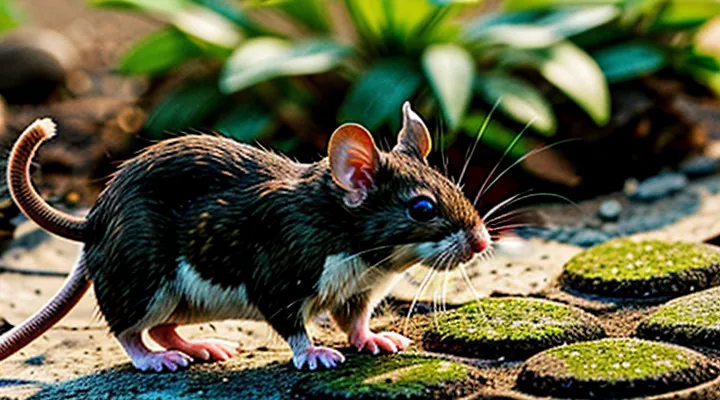
Mice as Primary Consumers and Food Source
Herbivory and Seed Dispersal
Impact on Plant Communities
Mice affect plant communities through direct and indirect mechanisms that shape vegetation composition and productivity.
- By gathering and transporting seeds, mice relocate propagules away from parent plants, creating spatial heterogeneity and enabling colonization of disturbed microsites.
- Selective seed consumption reduces the abundance of competitively dominant species, allowing less common flora to persist.
Burrowing activity aerates soil, promotes organic matter incorporation, and enhances microbial activity. These processes increase nutrient availability, particularly nitrogen and phosphorus, which accelerate seedling growth and improve plant vigor.
Mice also influence herbivore pressure. Their foraging reduces seed banks of certain grasses, limiting food resources for larger herbivores and indirectly decreasing grazing intensity on vulnerable seedlings.
Collectively, these actions modify species richness, alter successional trajectories, and sustain functional diversity within plant assemblages.
Role in Forest Regeneration
Mice influence forest regeneration through several direct mechanisms. Their foraging behavior moves large quantities of seeds from the forest floor into deeper soil layers, where germination conditions improve. By consuming seeds of both native and invasive plants, mice regulate species composition and reduce competition for emerging seedlings.
- Seed burial: transport and cache seeds, protecting them from predators and desiccation.
- Soil modification: create burrows that increase aeration, water infiltration, and organic matter mixing.
- Nutrient cycling: deposit feces rich in nitrogen and phosphorus, supplying essential nutrients to young plants.
- Herbivore control: prey on insects that feed on seedlings, decreasing herbivory pressure.
Collectively, these actions accelerate tree establishment, enhance structural diversity, and sustain long‑term forest resilience.
Prey for Predators
Supporting Carnivore Populations
Mice serve as a primary food source for a wide range of carnivores, including owls, foxes, snakes, and raptors. Their abundance provides reliable energy input that sustains predator reproduction and survival rates. Predators that specialize in hunting small mammals depend on mouse populations to meet their daily caloric requirements, reducing the need to shift to less efficient or riskier prey.
Key effects of mouse‑driven support for carnivores include:
- Increased breeding success: higher prey availability correlates with larger litter sizes and earlier breeding seasons in many predator species.
- Enhanced body condition: regular consumption of mice supplies essential proteins and fats, leading to stronger individuals capable of defending territories and caring for offspring.
- Stabilized predator numbers: consistent prey density mitigates extreme fluctuations in carnivore populations, preventing local extinctions during lean periods.
- Cascading ecological impact: robust predator communities control herbivore populations, indirectly protecting vegetation and maintaining plant diversity.
These mechanisms illustrate how mouse populations underpin carnivore health, promote balanced predator‑prey dynamics, and contribute to overall ecosystem stability.
Maintaining Food Web Stability
Mice occupy a central position in terrestrial food webs, linking primary producers and higher trophic levels. By consuming seeds, insects, and plant material, they convert basal energy into biomass that supports predators such as owls, foxes, and snakes. This conversion sustains predator populations and prevents over‑accumulation of certain prey species, thereby reducing the risk of population explosions that could destabilize the ecosystem.
Their foraging behavior influences seed dispersal and predation rates, which regulates plant community composition. When mouse numbers fluctuate, the resulting changes in seed predation directly affect plant recruitment patterns, creating feedback loops that maintain diversity and resilience within the habitat.
Key mechanisms through which mice contribute to food‑web stability include:
- Transfer of energy from primary producers to carnivores.
- Regulation of invertebrate populations that could otherwise become pests.
- Modulation of seed survival and germination, shaping vegetation structure.
Collectively, these functions preserve balanced trophic interactions, enhance ecosystem robustness, and mitigate cascading effects that might arise from the loss of intermediate consumers.
Ecosystem Engineers and Soil Health
Burrowing Activities
Aeration and Water Infiltration
Mice create extensive burrow networks that intersect soil layers, displacing compacted material and forming channels of varying diameter. The physical disruption introduces voids that increase the proportion of air-filled spaces within the substrate.
Increased void space enhances soil aeration by allowing oxygen to diffuse more readily into deeper horizons. Oxygen availability rises in root zones and microbial habitats, supporting aerobic respiration and accelerating organic‑matter decomposition.
The same tunnel system improves water infiltration. Rainfall enters the soil through the burrow openings, bypassing the surface crust that would otherwise impede percolation. Water moves vertically along the channels, reducing surface runoff and promoting deeper moisture storage.
Consequences for the broader ecosystem include:
- Faster root penetration and expansion due to looser, oxygen‑rich soil.
- Elevated microbial activity that drives nutrient mineralization.
- Higher plant productivity stemming from improved water and nutrient access.
- Enhanced resilience of plant communities to drought because of increased soil water holding capacity.
Collectively, mouse‑induced soil modifications strengthen the functional capacity of terrestrial habitats, illustrating a direct link between small‐mammal behavior and ecosystem health.
Nutrient Cycling
Mice accelerate nutrient turnover by converting plant matter, insects, and detritus into easily assimilable forms. Their digestive processes break down complex organic compounds, and the resulting feces deposit nitrogen, phosphorus, and potassium directly into the soil profile.
- Consumption of seeds and insects introduces organic carbon and micronutrients into mouse biomass.
- Excretion releases concentrated nutrient packets that increase soil fertility.
- Burrowing mixes surface litter with subsoil, dispersing nutrients throughout the rooting zone.
- Mortality of individuals adds carcass material that decomposes into humus, enriching microbial activity.
These mechanisms create feedback loops that sustain plant growth, support microbial communities, and maintain soil structure. By moving organic material across microhabitats, mice link surface ecosystems with deeper soil layers, ensuring continuous nutrient availability for diverse organisms.
Fecal Matter and Decomposition
Contribution to Soil Fertility
Mice construct burrows that break compacted layers, increasing porosity and allowing water infiltration. The resulting aerated environment supports root expansion and enhances the activity of aerobic microorganisms.
Their feces and urine introduce organic matter rich in nitrogen, phosphorus, and potassium. These nutrients are rapidly mineralized by soil microbes, raising the availability of essential elements for plant uptake.
Through foraging, mice transport seeds and plant fragments into deeper soil horizons. The buried propagules germinate under protected conditions, contributing to vegetation diversity and organic litter inputs.
Mice predation on invertebrates regulates populations of soil-dwelling detritivores. This predatory pressure balances decomposer communities, preventing overconsumption of organic material and maintaining steady nutrient release rates.
Key contributions to soil fertility include:
- Physical modification of soil structure via tunneling
- Direct addition of nutrient-rich excreta
- Seed burial and dispersal to favorable microhabitats
- Regulation of detritivore populations, stabilizing decomposition processes
Collectively, these actions improve nutrient cycling, support plant growth, and sustain ecosystem productivity.
Microbial Activity Enhancement
Mice stimulate soil microbial activity through physical and biochemical interactions. Their burrowing creates aerated channels that improve oxygen diffusion, allowing aerobic microbes to proliferate. Frequent movement of soil particles redistributes organic matter, exposing fresh substrates to decomposer communities.
Key mechanisms include:
- Deposition of feces rich in nitrogen, phosphorus, and labile carbon, which serve as nutrients for bacterial and fungal growth.
- Transport of plant material and seed remnants into deeper soil layers, providing additional carbon sources for microbes.
- Disruption of soil aggregates, enhancing moisture retention and temperature regulation, conditions favorable for enzymatic processes.
Enhanced microbial populations accelerate organic matter decomposition, releasing nutrients that support plant productivity. Faster nutrient turnover improves plant root development, which in turn supplies more root exudates, sustaining a feedback loop of microbial vigor. Empirical studies report up to a 30 % increase in soil respiration rates in areas with active mouse populations compared with rodent‑free plots, confirming the direct link between mouse activity and microbial metabolism.
Indicators of Ecosystem Health
Population Dynamics
Response to Environmental Changes
Mice possess short generation times and high reproductive output, allowing populations to shift quickly when temperature, moisture, or food resources change. Rapid breeding creates genetic diversity that supports adaptation to novel conditions.
When habitats become drier, mice reduce water loss by concentrating urine and adjusting activity periods to cooler hours. In colder periods, they increase nest insulation using collected vegetation and elevate metabolic heat production. Food scarcity triggers omnivorous foraging; individuals expand diet to include seeds, insects, and carrion, thereby maintaining energy intake while influencing resource distribution.
- Accelerated breeding replaces lost individuals after predation spikes or habitat disturbance.
- Seasonal coat thickening improves thermal regulation during winter.
- Altered foraging routes increase seed dispersal distance, enhancing plant colonization in recovering areas.
- Burrowing activity loosens compacted soil, promotes aeration, and facilitates water infiltration after floods.
These responses generate cascading effects: enhanced seed spread supports vegetation recovery; soil turnover improves nutrient cycling; altered prey availability stabilizes predator populations. Consequently, mouse-driven adjustments help ecosystems absorb and rebound from environmental fluctuations.
Bioindicators of Pollution
Mice provide a direct measure of contaminant levels in terrestrial habitats. Their presence across diverse environments and rapid life cycle allow researchers to capture short‑term fluctuations in pollution intensity.
Key biological traits that support their indicator function include:
- High reproductive output, generating multiple generations within a single season.
- Broad geographic distribution, ensuring representation of varied microhabitats.
- Ability to accumulate substances in liver, kidney, hair, and blood at concentrations proportional to environmental exposure.
Analysis of mouse specimens reveals exposure to several pollutant classes:
- Heavy metals such as lead, cadmium, and mercury.
- Organophosphate and pyrethroid pesticides.
- Endocrine‑disrupting compounds including bisphenol A and phthalates.
Standard monitoring protocols involve:
- Collecting tissue samples (liver, kidney) for chemical assay.
- Measuring metal concentrations in fur or whiskers, which reflect chronic exposure.
- Testing blood serum for pesticide residues using chromatography.
- Analyzing fecal matter to assess gut‑associated contaminant loads.
Field studies illustrate practical outcomes. In industrial suburbs, elevated lead levels in mouse liver corresponded with soil contamination maps, prompting remediation of former manufacturing sites. Agricultural regions showed pesticide residues in mouse hair that matched periods of intensive crop spraying, informing adjustments to application schedules.
These data feed ecosystem‑level assessments. Early detection of contaminant spikes enables timely intervention, reduces bioaccumulation risk in predator species, and guides policy decisions on land use and chemical regulation. By integrating mouse‑based bioindicator findings, managers obtain a cost‑effective, biologically relevant metric of environmental health.
Habitat Suitability
Assessing Biodiversity
Mice influence ecosystem health by participating in processes that shape species composition and functional balance. Assessing biodiversity therefore requires quantifying the presence, abundance, and ecological roles of mouse populations alongside other taxa.
- Species richness surveys record mouse species and co‑occurring organisms within defined habitats.
- Functional trait analyses evaluate mouse contributions to seed dispersal, soil turnover, and predator–prey dynamics.
- Genetic diversity assessments examine population structure, gene flow, and adaptive potential across landscape gradients.
Data reveal that mouse activity promotes seed germination, maintains soil porosity, and supplies prey for higher trophic levels. These effects increase habitat heterogeneity and sustain populations of insects, birds, and carnivores. Accurate biodiversity metrics that incorporate mouse‑driven processes provide a robust basis for ecosystem management and conservation planning.
Conservation Implications
Mice influence ecosystem stability, making them a focal point for conservation planning. Their population dynamics affect trophic interactions, soil processes, and biodiversity metrics, which in turn shape management priorities.
Population fluctuations of small rodents alter predator abundance, seed predation rates, and nutrient cycling. Conservation programs that ignore these effects risk misallocating resources, overlooking a key driver of ecological resilience. Maintaining viable mouse populations supports predator species that rely on them, stabilizes plant regeneration through seed consumption and dispersal, and enhances soil aeration via burrowing activity.
Practical conservation actions include:
- Protecting heterogeneous habitats that provide cover and foraging opportunities for rodents.
- Monitoring mouse abundance as an early indicator of ecosystem health and potential disease emergence.
- Integrating rodent population data into predator management models to calibrate hunting quotas and reintroduction efforts.
- Preserving native vegetation that supplies seeds and insects, thereby sustaining mouse food sources.
- Limiting pesticide use in areas where mouse-mediated pest control contributes to crop protection.
Policy frameworks that embed rodent considerations into land‑use planning, biodiversity assessments, and climate‑adaptation strategies improve ecosystem robustness. Recognizing mice as integral components of ecological networks ensures that conservation investments address both direct and indirect environmental outcomes.