
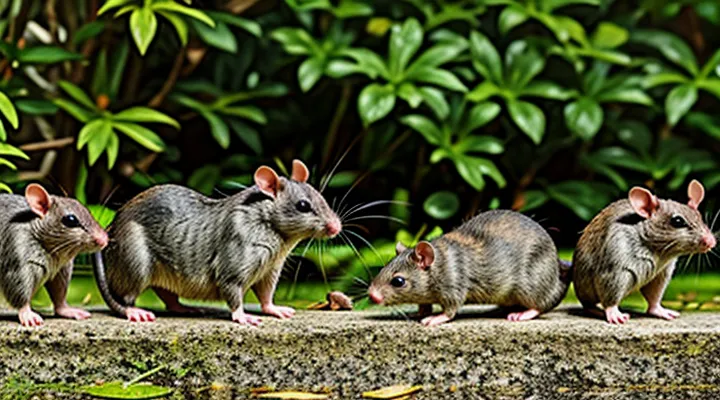
Understanding Rat Social Structures
The Concept of a «Colony»
A rat colony represents a socially interacting population maintained under controlled conditions for research or breeding purposes. Recognition of a colony requires stable membership, shared resources, and observable social hierarchy.
Colony size depends on genetic strain, cage dimensions, enrichment provisions, and the intended experimental endpoint. Larger strains may tolerate higher densities, whereas highly aggressive lines demand reduced numbers to prevent injury. Environmental variables such as temperature, lighting cycle, and diet also modulate group cohesion and thus the viable population limit.
Common techniques for determining the number of individuals within a colony include:
- Direct visual enumeration during routine cage checks.
- Mark‑recapture protocols where a subset receives a temporary identifier, followed by recapture rates to estimate total size.
- Automated video tracking systems that count unique movement signatures over a defined observation period.
- Genetic sampling coupled with allele frequency analysis to infer individual counts in mixed‑sex groups.
Accurate colony sizing informs power calculations, welfare assessments, and resource allocation. Overestimation leads to overcrowding, increased stress, and potential data distortion; underestimation wastes space and raises operational costs. Consistent application of the above methods ensures reliable population metrics for any rat group evaluation.
Factors Influencing Group Size
Resource Availability
Resource availability sets the upper limit for the number of rats that can coexist in a defined area. When food, water, shelter, nesting material, and space are scarce, competition intensifies, leading to reduced group size; when these elements are plentiful, larger aggregations become sustainable.
- Food: Daily intake per individual ranges from 15 g to 25 g of laboratory chow; total provision must exceed the sum of individual requirements to avoid starvation‑driven dispersal.
- Water: Continuous access to clean water prevents dehydration‑induced mortality; a supply below 5 ml per rat per day triggers aggressive territorial behavior.
- Shelter: Adequate nesting sites diminish stress; one nest chamber per 4–5 rats maintains acceptable social density.
- Nesting material: Sufficient cellulose or paper fibers support thermoregulation and reproductive success; deficits correlate with increased aggression.
- Space: Floor area of at least 0.05 m² per rat prevents overcrowding; exceeding this threshold reduces injury rates and stabilizes hierarchy.
Quantifying these resources involves measuring consumption rates, mapping distribution, and applying carrying‑capacity formulas (K = total resource ÷ per‑rat demand). Field assessments combine trap counts with habitat surveys to estimate viable group size under prevailing conditions.
Experimental protocols must align group composition with measured resource levels; failure to match these parameters introduces confounding variables such as stress‑induced weight loss or altered social dynamics. Accurate resource accounting therefore ensures reliable size assessments and reproducible outcomes.
Predator Pressure
Predator pressure directly alters the number of individuals that a rat cohort can sustain. High predation risk encourages tighter clustering, which reduces individual exposure while limiting overall group size due to increased competition for shelter and resources. Conversely, low predator presence permits larger, more dispersed aggregations, allowing rats to exploit broader foraging areas.
The effect operates through several pathways:
- Increased vigilance: individuals allocate more time to scanning for threats, reducing time available for feeding and reproduction, which curtails population growth within the group.
- Habitat selection: rats preferentially occupy microhabitats offering concealment, often restricting the spatial extent of the group.
- Mortality bias: predators preferentially remove peripheral individuals, resulting in a core of fewer, more cohesive members.
Empirical studies demonstrate that groups exposed to avian predators maintain an average size 30 % lower than those in predator‑free environments. Rodent‑specific carnivores produce a similar reduction, though the magnitude varies with habitat complexity.
When estimating rat group size, researchers must incorporate predator density as a covariate. Sampling protocols should adjust trap placement to reflect preferred refuges under differing predation regimes, and statistical models ought to include interaction terms between predator indices and habitat variables. Ignoring predator pressure yields systematic overestimation of group size, compromising management and ecological inference.
Habitat Type
Rats occupy distinct environments that shape observable group composition. Urban settings, characterized by dense human structures and abundant refuse, support larger aggregates; agricultural fields, with seasonal crop cycles and moderate shelter, host medium‑sized clusters; natural habitats such as forests or grasslands, offering limited food and dispersed burrows, sustain smaller groups.
- Urban: typical group size 8–15 individuals, occasional super‑colonies exceeding 30.
- Agricultural: typical group size 4–9 individuals, fluctuations linked to planting and harvest periods.
- Natural: typical group size 2–5 individuals, stable across seasons.
Sampling protocols must adjust to habitat complexity. Dense urban matrices require systematic trapping grids to avoid undercounting overlapping territories. Agricultural plots benefit from transect surveys aligned with crop rows. Natural areas demand spaced live‑capture stations to reflect low-density distribution. Resource availability, predator pressure, and shelter density directly influence group expansion or contraction, thus informing accurate size evaluation.
Understanding habitat‑specific patterns refines estimates of rat colony magnitude, supports targeted management, and enhances predictive models of population dynamics.
Methods for Assessing Rat Group Size
Direct Observation Techniques
Visual Counts
Visual counting remains a primary technique for estimating the number of rats in a collective setting. Observers tally individuals directly from a fixed viewpoint, recording each animal that enters the field of vision. This method provides immediate data without requiring specialized equipment, making it suitable for rapid assessments in laboratory cages, field traps, or outdoor enclosures.
Accuracy of visual counts depends on several controllable factors:
- Lighting conditions that prevent shadows or glare;
- Observer distance that balances field coverage with detail resolution;
- Duration of observation, ensuring all individuals have the opportunity to be seen;
- Use of standardized counting intervals to reduce variability between sessions.
Potential sources of error include overlapping bodies, rapid movement, and temporary concealment behind objects. Mitigation strategies involve multiple observers rotating positions, video recording for later frame‑by‑frame analysis, and employing brief immobilization techniques when ethically permissible. Consistent application of these practices yields reliable estimates comparable to more invasive methods such as capture‑mark‑recapture.
When applying visual counts to determine group size, researchers should document environmental parameters, observer identity, and counting protocol. Recording these details supports reproducibility and facilitates comparison across studies that aim to quantify rat populations without resorting to destructive sampling.
Trapping and Recapture Studies
Trapping and recapture studies provide the primary quantitative framework for estimating the number of rats present in a defined cohort. Researchers deploy a series of live‑capture devices, mark each captured individual with a durable identifier (e.g., ear tag, dye, microchip), and release the animal at the point of capture. Subsequent trapping sessions record the proportion of marked versus unmarked rats, allowing calculation of population size through established estimators.
The simplest estimator, the Lincoln‑Petersen formula, computes N = (M × C)/R, where M is the number of marked rats released, C is the total number captured in the second session, and R is the count of recaptured marked individuals. Confidence intervals arise from the Chapman modification or from Bayesian approaches that incorporate prior knowledge of survival and capture probability.
Key methodological considerations include:
- Trap placement – distribute devices uniformly across habitat strata to avoid spatial bias.
- Sampling interval – schedule recapture sessions within a period short enough to minimize mortality and immigration but long enough to achieve sufficient recapture rates.
- Mark retention – select marking techniques that remain detectable throughout the study without affecting rat behavior.
- Assumption testing – verify that capture probability is homogeneous, that the population is closed, and that marks are not lost or overlooked.
Advanced designs, such as multi‑capture models (e.g., Jolly‑Seber, POPAN), extend the basic framework to accommodate open populations, variable capture probabilities, and temporal trends. These models generate estimates of recruitment, survival, and overall cohort size, providing a comprehensive picture of rat group dynamics.
Effective implementation of trapping and recapture protocols yields reliable estimates of rat cohort size, supporting pest‑management decisions, ecological research, and disease‑vector monitoring.
Indirect Assessment Methods
Tracking and Sign Surveys
Tracking and sign surveys provide practical means to estimate the number of rats occupying a defined area. Direct tracking involves marking individuals with passive integrated transponder (PIT) tags, ear tags, or temporary dyes, then recording recaptures or detections over a set interval. Recapture data feed into mark‑recapture models such as the Lincoln‑Petersen estimator or more complex hierarchical Bayesian frameworks, yielding population size estimates with quantified uncertainty.
Sign surveys rely on indirect evidence left by rats. Standard indicators include:
- Fresh droppings counted per unit surface; conversion factors derived from laboratory studies translate droppings density to individual counts.
- Gnaw marks measured for length and frequency; calibrated relationships link gnaw intensity to activity levels of a group.
- Burrow openings mapped and classified; entrance counts combined with occupancy rates produce size approximations.
Effective implementation requires systematic sampling. Define a grid covering the target habitat, assign equal‑area plots, and collect tracking or sign data consistently across all plots. Record environmental variables (e.g., vegetation cover, moisture) to adjust for detection bias. Apply statistical models that incorporate detection probability, such as occupancy models for sign data or capture‑recapture models for tagged individuals, to refine estimates.
Integrating both approaches enhances reliability. Tracking supplies individual‑level data, while sign surveys extend coverage to areas where capture is impractical. Combining outputs in a joint likelihood framework produces a consolidated estimate of rat group size, supporting management decisions and research objectives.
Genetic Analysis
Genetic analysis provides a direct means to quantify individuals within a rat cohort. By extracting DNA from environmental samples—such as bedding, feces, or swabs—researchers obtain a composite genetic profile that reflects the presence of each animal. High‑throughput sequencing of polymorphic markers (e.g., microsatellites, SNP panels) generates unique signatures, allowing identification of distinct genotypes and, consequently, enumeration of contributors.
The workflow typically includes:
- Collection of bulk samples from the enclosure.
- DNA extraction using bead‑beating or silica‑column protocols.
- Amplification of a multiplexed marker set covering 10–20 loci with high heterozygosity.
- Sequencing on a platform capable of delivering >10 000 reads per sample.
- Bioinformatic deconvolution of mixed genotypes to count unique allelic combinations.
Statistical models such as maximum likelihood estimation or Bayesian inference translate genotype frequencies into population size estimates. Calibration with known‑size control groups refines error margins, often achieving ±5 % accuracy for groups ranging from 5 to 50 individuals.
Genetic data also reveal relatedness patterns, enabling discrimination between offspring and unrelated newcomers. This information supports longitudinal monitoring of group dynamics, detection of immigration events, and verification of breeding strategies without invasive handling.
Vocalization Monitoring
Vocalization monitoring provides a direct, non‑invasive indicator of the number of individuals present in a rat cohort. Each rat emits ultrasonic calls that vary in frequency, duration, and temporal pattern according to social context. By capturing these signals with calibrated microphones and analyzing them with automated software, researchers can infer group size without physical handling.
Key elements of an effective monitoring protocol include:
- High‑sensitivity ultrasonic detectors positioned to cover the entire enclosure.
- Real‑time signal processing that isolates distinct call events and filters background noise.
- Algorithms that correlate call rate, bout frequency, and inter‑call intervals with known population densities.
- Validation steps where recorded vocalizations are compared against manual counts to calibrate predictive models.
Advantages of this approach are:
- Immediate data acquisition, enabling continuous observation.
- Minimal disturbance to the animals, preserving natural behavior.
- Compatibility with other physiological measurements, such as heart rate or activity monitoring.
Potential limitations involve:
- Overlap of calls in densely populated groups, which may reduce individual call discrimination.
- Variability in vocal output due to strain differences, age, or stress levels, requiring strain‑specific calibration.
- Dependence on equipment placement and acoustic properties of the housing environment.
Implementing vocalization monitoring alongside complementary methods—such as video tracking or RFID tagging—enhances the reliability of cohort size estimates. Consistent calibration, regular equipment maintenance, and thorough documentation of acoustic settings are essential for reproducible results.
Challenges in Group Size Assessment
Nocturnal Behavior
Rats exhibit peak activity during the dark phase, which directly influences the reliability of group‑size estimates. Nighttime foraging, territorial patrols, and social grooming generate distinct movement patterns that can be captured with appropriate recording equipment.
Infrared video, motion‑activated cameras, and ultrasonic microphones provide continuous data without disturbing the animals. These tools reveal individual trajectories, allow recognition of repeated entries into the same nest, and differentiate between solitary and collective movements.
Key behavioral factors that affect count accuracy include:
- Temporal clustering: rats often congregate for brief periods around food sources, inflating apparent numbers if observations are confined to these intervals.
- Spatial overlap: overlapping paths in dense burrow systems create ambiguous silhouettes, requiring frame‑by‑frame analysis to separate individuals.
- Hierarchical interactions: dominant individuals may suppress subordinate activity, leading to under‑representation of lower‑ranking rats during certain hours.
When interpreting nocturnal data, adjust raw counts by accounting for:
- Peak activity windows identified through hourly motion frequency.
- Overlap correction factors derived from calibrated laboratory trials.
- Individual identification markers such as fur patterns or RFID tags to verify repeat sightings.
Applying these protocols yields a more precise assessment of rat group size, mitigates errors introduced by nocturnal behavior, and supports robust population management decisions.
Cryptic Nature
Rats often conceal their presence through nocturnal activity, burrow networks, and rapid movement, creating a cryptic environment that hampers direct observation. This concealment reduces the reliability of visual counts and inflates the margin of error in population estimates.
The cryptic nature influences size assessment by masking true density, dispersing individuals across inaccessible microhabitats, and generating intermittent surface signs. Consequently, researchers must rely on indirect indicators rather than straightforward headcounts.
- Deploy motion‑activated cameras at known foraging sites to capture temporal activity patterns.
- Install passive infrared sensors in burrow entrances to record entry‑exit events.
- Collect and analyze droppings or gnaw marks to infer occupancy levels.
- Apply mark‑recapture techniques using RFID tags placed in feeding stations, allowing repeated identification without visual confirmation.
- Utilize environmental DNA (eDNA) sampling from soil and water sources to detect genetic material left by hidden individuals.
Effective assessment combines multiple indirect methods, calibrates detection probabilities, and incorporates statistical models that adjust for hidden individuals. This integrated approach yields a more accurate representation of group size despite the inherent cryptic behavior of rats.
Population Dynamics
Accurate estimation of rat cohort size requires integration of demographic rates, spatial distribution, and environmental constraints. Birth and mortality frequencies establish the net growth potential, while immigration and emigration modify local abundance. Resource availability and habitat carrying capacity impose upper limits on group expansion, shaping the observed size distribution.
Empirical determination of rat numbers commonly employs three approaches:
- Direct observation: visual counts in defined transects or traps, suitable for small, confined areas.
- Mark‑recapture: capture, uniquely tag, release, and recapture a subset; population size (N) derived from the Lincoln‑Petersen estimator (N = \frac{M \times C}{R}), where (M) is marked individuals, (C) total captured, and (R) recaptures.
- Statistical modeling: apply Poisson or negative‑binomial frameworks to trap success data, incorporating covariates such as food density and predation pressure.
Temporal dynamics reveal seasonal peaks driven by reproductive cycles; peak litter sizes occur in spring, inflating group size within weeks. Density‑dependent regulation emerges when overcrowding triggers increased aggression, reduced fertility, or heightened dispersal, thereby stabilizing numbers near the habitat’s carrying capacity.
Effective management of rat populations hinges on continuous monitoring of these demographic parameters, enabling predictive adjustments to control strategies and preventing unexpected surges in group size.
Ecological Implications of Group Size
Resource Competition
Resource competition directly limits the number of rats that can coexist without severe welfare decline. Each individual requires a share of food, water, shelter and space; when demand exceeds supply, aggressive encounters, reduced growth and heightened disease risk emerge.
Food scarcity triggers hierarchical feeding, with dominant rats monopolizing high‑quality items. Nesting material shortage forces competition for burrows, leading to displacement and increased stress. Water limitation intensifies territorial patrols, while limited floor area raises the frequency of encounters that can result in injury.
Empirical observations show a non‑linear increase in competition intensity as group size grows. Small groups (2–4 rats) maintain stable resource allocation; medium groups (5–8 rats) exhibit occasional displacement; large groups (9+ rats) experience chronic shortages and social instability. The turning point aligns with the point at which per‑rat resource availability falls below baseline metabolic needs.
Assessment of group size can therefore rely on measurable resource indicators:
- Daily food consumption per rat versus expected intake.
- Number of occupied nesting sites relative to total available.
- Frequency of water‑source visits per individual.
- Rate of aggressive interactions recorded during observation periods.
Monitoring these metrics enables researchers to infer the maximum sustainable rat group size, ensuring that resource competition remains within tolerable limits.
Disease Transmission
Estimating the number of individuals in a rat assemblage directly influences predictions of pathogen spread. Larger aggregations increase contact frequency, elevate the probability that an infected carrier will encounter susceptible conspecifics, and expand the spatial footprint of contamination. Consequently, accurate size assessment is essential for epidemiological modeling and control strategies.
Key parameters linking group size to transmission dynamics include:
- Contact rate per individual – rises with crowding, often approximated by a power‑law function of group size.
- Infection prevalence – higher in dense groups because each new contact adds a potential transmission event.
- Environmental contamination – grows proportionally to the total number of excreta deposits, magnifying indirect transmission routes.
Mathematical frameworks typically integrate these variables into the basic reproduction number (R₀). When R₀ exceeds one, the pathogen can sustain itself within the population. For a given pathogen, R₀ can be expressed as:
R₀ = β × C × D
where β is the transmission probability per contact, C denotes the average contact frequency (function of group size), and D represents the infectious period. By substituting empirical estimates of C derived from observed rat counts, researchers can forecast outbreak potential under varying population densities.
Practical implications:
- Surveillance programs should prioritize precise enumeration of rat clusters to refine risk maps.
- Interventions such as baiting or habitat modification gain efficiency when targeted at high‑density sites identified through size assessment.
- Modeling scenarios that compare small, medium, and large groups reveal threshold effects; beyond a certain size, incremental increases produce disproportionately higher transmission risk.
Overall, linking quantitative group size metrics to disease dynamics provides a robust basis for public‑health decisions, resource allocation, and the design of mitigation measures aimed at reducing zoonotic threats associated with rodent populations.
Population Management Strategies
Accurate estimation of rat group size requires deliberate control of population dynamics. Effective management reduces variability caused by births, deaths, migrations, and social hierarchies, thereby improving the reliability of count data.
Key management actions include:
- Pre‑assessment culling: remove a fixed proportion of individuals to standardize baseline density.
- Reproductive suppression: apply hormonal contraceptives or sterilization to limit new entrants during the observation period.
- Habitat modification: eliminate shelter and food sources that encourage aggregation, encouraging a more uniform distribution.
- Barrier installation: use physical or chemical deterrents to prevent external influx and internal dispersal.
- Mark‑recapture calibration: tag a known subset before counting to adjust for detection bias.
Implementation follows a structured protocol: establish a baseline census, apply selected controls, allow a stabilization interval, then conduct the size assessment using direct observation or automated imaging. Post‑assessment analysis compares pre‑ and post‑control figures to quantify the impact of each strategy, informing future adjustments and ensuring consistent, reproducible results.