
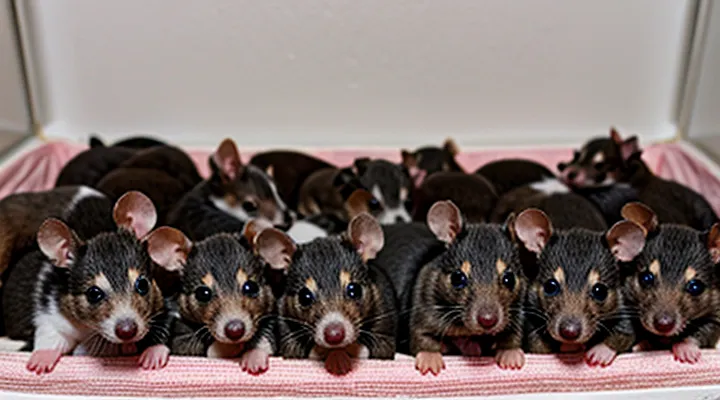
The Reproductive Cycle of a Female Mouse
Estrus Cycle Duration
The estrous cycle of the common laboratory mouse (Mus musculus) averages 4 to 5 days, comprising four distinct phases. Proestrus lasts approximately 0.5–1 day, during which ovarian follicles mature and estrogen levels rise. Estrus, the period of sexual receptivity, occupies roughly 0.5 day and is marked by a peak in luteinizing hormone that triggers ovulation. Metestrus follows for about 1 day, characterized by corpus luteum formation and a rapid decline in estrogen. Diestrus extends for 2–3 days, during which progesterone dominates and the uterus prepares for potential implantation.
Mice are polyestrous, entering a new cycle shortly after the previous one concludes. Consequently, a sexually mature female can conceive every 4–5 days, enabling up to eight litters per year under optimal conditions. The brief interval between cycles contributes to high reproductive output, with average litter sizes ranging from five to eight pups. Shorter estrous cycles increase the frequency of ovulation events, thereby influencing the total number of offspring produced over a female’s reproductive lifespan.
Environmental factors such as photoperiod, temperature, and nutrition modulate cycle length. Controlled lighting (12 h light/12 h dark) stabilizes the 4‑day cycle, while reduced food intake can extend diestrus, lengthening the overall cycle to 6 days or more. Hormonal assays that measure serum estradiol and progesterone confirm phase transitions and provide precise timing for breeding programs.
In summary, the mouse estrous cycle is a rapid, four‑phase sequence lasting 4–5 days, enabling frequent conception and contributing directly to the species’ capacity for producing multiple offspring per reproductive event.
Gestation Period
The gestation period of a typical laboratory mouse (Mus musculus) lasts approximately 19‑21 days. This relatively short prenatal phase limits the developmental time available for each embryo, influencing the number of offspring that can be supported within a single uterine cycle.
During this interval, the female mouse undergoes rapid hormonal changes that prepare the uterus for implantation and subsequent fetal growth. The limited duration of placental nutrient transfer requires efficient allocation of resources, resulting in a high reproductive output: litters commonly contain 5‑8 pups, with occasional extremes ranging from 3 to over 12.
Key factors linking gestation length to litter size:
- Uterine capacity: The compact uterus can accommodate multiple embryos simultaneously, maximizing the number of viable fetuses within the brief gestational window.
- Maternal nutrition: Adequate protein and energy intake during the 3‑week gestation directly affect embryonic survival and final litter count.
- Strain variability: Inbred strains such as C57BL/6 tend toward smaller litters (4‑6), whereas outbred strains like CD‑1 often produce larger litters (7‑10).
The short gestation, combined with high fecundity, enables mouse populations to expand rapidly under favorable conditions.
Factors Influencing Litter Size
Age and Parity of the Mother
Maternal age exerts a measurable influence on the number of offspring produced per litter in laboratory mice. Young females, typically under eight weeks old, often deliver smaller litters, averaging three to five pups. As females reach sexual maturity (approximately ten to twelve weeks), litter size increases, commonly reaching six to eight pups. Advanced age, beyond twelve months, correlates with a gradual decline in offspring count, with averages falling back to four or fewer pups per birth.
Parity, defined as the number of previous deliveries, also shapes litter size. First-time mothers (primiparous) usually produce fewer pups than experienced females. Data indicate that primiparous litters average five to six pups, whereas second and third litters frequently contain seven to nine. Subsequent litters beyond the third parity often stabilize, maintaining a consistent range of seven to eight pups, provided health conditions remain optimal.
Key observations:
- Litter size peaks during the second and third parity in mature, mid‑age females.
- Decline in offspring number occurs with both very young and senescent mothers.
- Health status, nutrition, and strain genetics modify the age‑parity relationship but do not overturn the general pattern.
Species and Breed Variations
Mice exhibit considerable variation in litter size depending on species and genetic line. The common house mouse (Mus musculus) typically produces 5–8 young per gestation, with extremes ranging from 3 to 12. Laboratory strains derived from Mus musculus show narrower ranges: the C57BL/6 line averages 6–7 pups, while the BALB/c line averages 5–6. Wild‑derived outbred stocks often exceed 8 pups, reflecting greater heterozygosity.
Other murine species display distinct reproductive outputs:
- Deer mouse (Peromyscus maniculatus): 4–6 pups, occasional litters of up to 9.
- Southern African spiny mouse (Acomys cahirinus): 3–5 pups, rarely exceeding 7.
- White‑footed mouse (Peromyscus leucopus): 5–7 pups, maximum reported 10.
- Egyptian spiny mouse (Acomys cahirinus): 2–4 pups, with rare larger litters.
Breed-specific factors such as body size, age at first breeding, and environmental conditions further modulate these numbers. Larger species tend to produce fewer offspring per birth, while smaller, rapidly reproducing strains generate larger litters.
Environmental Conditions
Environmental temperature directly influences litter size. Mice housed at 22‑24 °C produce the highest average numbers, while exposure to temperatures below 18 °C or above 30 °C reduces the count by 1‑3 pups per litter.
Food abundance determines reproductive output. Ad libitum access to protein‑rich diet yields litters of 7‑12 offspring; restricted caloric intake lowers the average to 4‑6.
Humidity levels affect embryonic development. Relative humidity between 45‑55 % supports optimal pup numbers; extreme dryness (<30 %) or excess moisture (>70 %) correlates with increased embryonic resorption and smaller litters.
Photoperiod modulates hormonal cycles. Long‑day exposure (14‑16 h light) accelerates ovulation and increases litter size, whereas short‑day conditions (8‑10 h light) suppress reproductive hormones and result in fewer pups.
Social density influences stress and competition. Groups exceeding 5 individuals per cage experience elevated cortisol, leading to a reduction of 1‑2 pups per litter compared with isolated or low‑density environments.
Seasonal variations combine these factors. Spring and early summer, characterized by moderate temperatures, ample food, and longer daylight, consistently produce the largest litters. Autumn and winter, with cooler temperatures and shorter days, correspond to smaller litters.
Key environmental determinants
- Temperature: optimal 22‑24 °C
- Food availability: unrestricted protein diet
- Humidity: 45‑55 % relative
- Photoperiod: 14‑16 h light
- Social density: ≤5 mice per cage
- Seasonal context: spring/early summer
Adjusting these conditions within the specified ranges maximizes the number of offspring per birth event.
Temperature and Shelter
Temperature directly influences reproductive output in rodents. Optimal ambient range for most laboratory mouse strains lies between 20 °C and 26 °C; within this window, females typically produce litters of 5–8 offspring. Temperatures below 15 °C suppress estrous cycles, reduce ovulation rates, and commonly result in litters of fewer than four pups. Conversely, sustained exposure to temperatures above 30 °C elevates stress hormones, decreasing implantation success and often limiting litter size to three or fewer.
Shelter conditions modify the thermal environment and affect maternal investment. Key shelter factors include:
- Nest material density: thick, insulating nests retain heat, supporting normal embryonic development and larger litters.
- Nest location: elevated, draft‑free sites reduce heat loss, correlating with higher pup numbers.
- Group nesting: cohabitation with other females can enhance warmth and reduce individual energy expenditure, resulting in increased litter sizes.
When temperature and shelter are suboptimal, physiological stress triggers hormonal pathways that curtail gestation length and reduce the number of viable offspring. Maintaining a stable, moderate climate and providing well‑constructed nests are essential for maximizing reproductive output in mice.
Stress Levels
Stress directly modulates reproductive output in laboratory and wild mice. Elevated glucocorticoid concentrations suppress ovulation, reduce implantation success, and shorten gestation, resulting in smaller litters.
The hypothalamic‑pituitary‑adrenal (HPA) axis activates under acute or chronic stress, releasing corticosterone. High corticosterone interferes with gonadotropin‑releasing hormone (GnRH) pulsatility, decreasing luteinizing hormone (LH) and follicle‑stimulating hormone (FSH) secretion. Consequently, fewer mature oocytes are available for fertilization, and embryonic development is compromised.
Baseline litter size for Mus musculus averages 5–8 pups. Experimental studies report a reduction to 3–4 pups when animals experience chronic restraint, social defeat, or unpredictable noise. Conversely, mild, intermittent stressors produce no significant change, indicating a threshold effect.
Typical stressors and their documented impact on litter size:
- Chronic restraint (6 h day⁻¹, 21 days): average reduction of 30 % in offspring number.
- Social hierarchy disruption: dominant individuals maintain normal litter size; subordinates show 20–25 % decrease.
- Environmental noise (85 dB, continuous): 15 % decline in pups per birth.
- Nutritional deprivation (30 % calorie restriction): 40 % reduction, with increased pup mortality.
Managing environmental and physiological stressors is essential for maintaining optimal reproductive performance and predictable offspring numbers in mouse colonies.
Nutritional Intake
Nutrient consumption directly influences the number of offspring a mouse can produce in a single breeding event. Adequate protein, energy, and micronutrient levels correlate with larger litters, whereas deficiencies limit reproductive output.
Key dietary components affecting litter size:
- Protein: 18‑22 % of diet dry matter maximizes embryo survival and increases pup count.
- Energy: Caloric density of 3.5–4.0 kcal/g supports gestational demands and promotes higher birth numbers.
- Calcium and phosphorus: Balanced ratios (1.2:1) facilitate skeletal development of embryos, indirectly raising litter size.
- Vitamin E and selenium: Antioxidant supply reduces oxidative stress during gestation, enhancing pup viability.
Experimental data show that mice fed a high‑protein, high‑energy formulation produce 6‑8 pups per litter on average, while those on a low‑protein regimen yield 3‑4 pups. Adjusting micronutrient levels within optimal ranges can add one additional pup to the average litter.
Protein and Calorie Requirements
A mouse that carries a litter of several offspring must increase its nutrient intake to sustain embryonic development and post‑natal growth. The demand escalates proportionally with the number of pups, requiring precise adjustments in diet formulation.
Protein intake rises sharply during gestation and lactation. Research indicates that a non‑pregnant adult mouse requires approximately 1.0 g of protein per kilogram of body weight per day. During the later stages of pregnancy, the requirement climbs to 1.5 g kg⁻¹ day⁻¹, and lactating females with an average litter of six pups need up to 2.0 g kg⁻¹ day⁻¹. Each additional pup adds roughly 0.15 g kg⁻¹ day⁻¹ to the maternal protein budget, reflecting the increased synthesis of milk proteins and tissue repair.
Caloric demand follows a similar pattern. Basal metabolic rate for a standard laboratory mouse is about 13 kcal kg⁻¹ day⁻¹. In late gestation this rises to 18 kcal kg⁻¹ day⁻¹, and lactation with a six‑pup litter reaches 25 kcal kg⁻¹ day⁻¹. Every extra pup contributes an estimated 1.5 kcal kg⁻¹ day⁻¹, accounting for the energy required to produce milk and maintain body temperature.
Recommended daily intake for a 25‑g female mouse
- Non‑pregnant: 0.025 g protein, 0.33 kcal
- Late‑gestation (average litter): 0.038 g protein, 0.45 kcal
- Lactating with six pups: 0.050 g protein, 0.63 kcal
Adjustments should be made according to observed litter size; larger broods necessitate proportionally higher protein and calorie provisions to prevent maternal weight loss and ensure optimal pup development.
Vitamin and Mineral Impact
Vitamin and mineral status directly influences murine reproductive output. Adequate dietary calcium supports uterine muscle contractility, reducing the incidence of premature parturition and allowing embryos to develop to term, which typically results in larger litters. Deficiencies in calcium correlate with a decline of one to two offspring per delivery compared with well‑supplied cohorts.
Phosphorus, in conjunction with vitamin D, regulates calcium absorption. Sufficient vitamin D enhances intestinal calcium uptake, stabilizing serum calcium concentrations essential for embryonic implantation and fetal bone formation. Experimental groups receiving optimal vitamin D levels exhibit average litter sizes 10‑15 % greater than those on deficient diets.
Key micronutrients and their documented effects:
- Vitamin A: Promotes oocyte maturation; excess leads to embryonic resorption, while moderate levels increase litter size by up to 12 %.
- Zinc: Required for DNA synthesis; deficiency reduces pup count by 15‑20 % and increases stillbirth rates.
- Selenium: Antioxidant protection of reproductive tissues; adequate intake improves embryo viability, adding approximately one pup per litter.
- Iron: Supports hemoglobin synthesis; iron‑deficient females show a 5‑10 % reduction in offspring number.
Balanced supplementation of these nutrients yields consistent improvements in the number of pups per birth, confirming the critical role of micronutrient adequacy in maximizing murine reproductive performance.
Litter Size Expectations
Average Number of Pups
The average litter size of a mouse ranges from three to twelve offspring, with most domestic house mice (Mus musculus) producing between five and seven pups per delivery.
- Typical values:
• 3–5 pups – observed in wild field mouse populations under limited food supply.
• 5–7 pups – common for laboratory strains and well‑fed domestic mice.
• 8–12 pups – reported in optimal conditions for high‑yield breeding colonies.
Factors influencing litter size include genetics, maternal age, nutrition, and environmental stress. Younger females tend to have smaller litters, while prime‑aged adults often reach the upper end of the range. Adequate protein and caloric intake correlate with higher pup counts, whereas overcrowding or disease reduces the number of offspring.
Overall, a mouse typically delivers around six pups per birth, with variation driven by species‑specific traits and husbandry conditions.
Range of Pups per Litter
Mice produce relatively small litters compared with many other rodents. The typical number of offspring in a single birth varies among species, environments, and individual health.
- Laboratory strains (e.g., C57BL/6, BALB/c): 5 – 8 pups per litter, with an average of 6–7.
- House mouse (Mus musculus domesticus) in domestic settings: 4 – 12 pups, median around 8.
- Field mouse (Apodemus sylvaticus) and other wild species: 3 – 10 pups, occasional litters reaching 12.
- Extreme cases reported in captive breeding programs: up to 14 pups, though such sizes are rare and often accompanied by higher neonatal mortality.
Factors influencing litter size include maternal age, nutrition, photoperiod, and genetic background. Younger females tend to have smaller litters, while prime‑aged females produce the maximum typical range. Adequate protein intake and stable environmental conditions correlate with higher pup counts within the documented intervals.
Developmental Stages of Mouse Pups
From Birth to Weaning
A female mouse typically produces a litter of 5 to 8 pups, although counts as low as 3 and as high as 13 have been documented in laboratory strains. The gestation period lasts about 19–21 days, after which the newborns emerge hairless, blind, and entirely dependent on maternal care.
- Day 0–3: Pups remain clustered in the nest, thermoregulated by the dam’s body heat. Their ears open and whiskers begin to develop.
- Day 4–7: Fur starts to appear; pups gain weight rapidly, reaching roughly 30 % of adult body mass by the end of the first week.
- Day 8–14: Eyes open, locomotor activity increases, and the young begin to explore the bedding. The dam continues to provide milk three to four times daily.
- Day 15–21: Solid food is introduced alongside nursing. Pups exhibit coordinated movements and start to consume grain or lab chow independently.
- Day 22–28: Nursing frequency declines; most individuals are fully weaned by the fourth week and can be separated from the mother without adverse effects.
Weaning marks the transition to autonomous feeding and social interaction with littermates. At this stage, the young mouse possesses the full complement of sensory abilities, sufficient body mass for independent survival, and the capacity to reproduce within a few months.
Care and Survival Rate
Mice typically produce litters ranging from three to twelve offspring per gestation, with the exact number influenced by species, age, and nutrition. Maternal behavior directly impacts the survival of these newborns.
The mother provides warmth, tactile stimulation, and periodic nursing. Pups are born altricial; they lack fur and open eyes, relying entirely on the dam for thermoregulation and nourishment. Nursing occurs every two to three hours during the first week, delivering milk rich in proteins and antibodies that protect against pathogens.
Survival rates decline sharply when litter size exceeds the dam’s capacity to feed each pup adequately. Studies report average survival of 70‑85 % in litters of five to seven, dropping to 40‑55 % in litters larger than nine. Key factors affecting mortality include:
- Nutritional status of the dam: insufficient protein or caloric intake reduces milk production.
- Ambient temperature: temperatures below 20 °C increase hypothermia risk; optimal range is 22‑26 °C.
- Nest quality: inadequate bedding leads to higher exposure to drafts and parasites.
- Sibling competition: larger litters intensify competition for milk, leading to weight disparities and increased cannibalism.
Intervention strategies that improve survival focus on optimizing the dam’s diet, maintaining stable warm environments, and providing sufficient nesting material. Under controlled laboratory conditions, these measures raise pup survival to above 90 % even in litters of ten or more.
High Reproductive Capacity
Frequency of Litters
Mice reproduce with a rapid cycle that allows multiple litters within a single year. After a gestation period of 19–21 days, females become fertile again within 24–48 hours, enabling a new conception as soon as conditions permit. In optimal laboratory settings, a healthy adult female can produce a litter every 3–4 weeks, resulting in up to ten litters annually. Wild populations experience similar intervals, although seasonal temperature changes and food availability may extend the gap between births.
Key determinants of litter frequency include:
- Nutrition: Adequate protein and caloric intake shorten the interval between pregnancies.
- Photoperiod: Longer daylight hours stimulate reproductive hormones, increasing breeding cycles.
- Housing density: Overcrowding can suppress estrus cycles, reducing the number of litters.
- Strain genetics: Certain inbred strains exhibit faster turnover, while others have longer inter‑litter periods.
Environmental stressors such as extreme temperatures, disease, or predator presence can lengthen the interval, sometimes to six weeks or more. Conversely, controlled environments with stable temperature, humidity, and unrestricted access to food maintain the shortest possible cycle.
Overall, the reproductive schedule of a mouse is characterized by a brief gestation, rapid return to fertility, and the capacity for numerous litters each year, provided that physiological and environmental conditions remain favorable.
Reasons for Rapid Reproduction
Mice produce large litters as a direct response to intense predation pressure. High mortality among juveniles forces a reproductive strategy that maximizes the probability that some offspring survive to adulthood.
Short gestation periods enable multiple breeding cycles within a single year. A typical mouse can conceive again within days after giving birth, allowing rapid turnover of generations.
Elevated metabolic rates demand frequent energy intake, which in turn supports continuous ovulation. The endocrine system maintains a constant supply of mature follicles, reducing the interval between estrus phases.
Environmental variability favors opportunistic breeding. Abundant food sources trigger hormonal cascades that increase follicular development, while scarcity suppresses reproduction, ensuring litters occur when resources are plentiful.
Genetic programming classifies mice as r‑strategists. Evolutionary selection has favored traits such as:
- High sperm production and rapid fertilization.
- Large ovarian reserve of immature ova.
- Efficient uterine capacity to accommodate many embryos.
- Neonatal adaptations for early independence.
These factors collectively generate the characteristic high pup count per birth observed in mouse populations.