
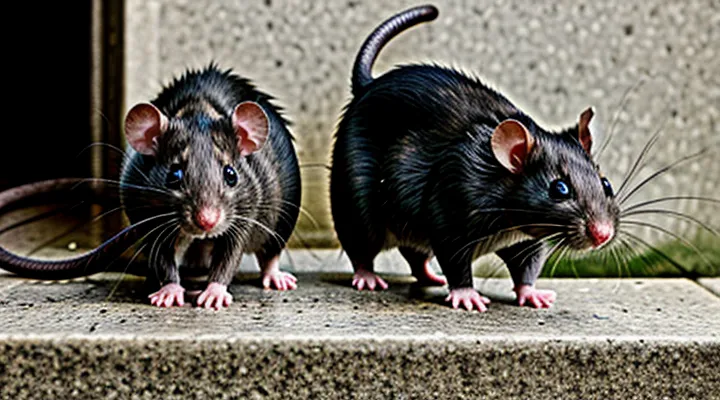
Rat Reproductive Biology: An Overview
Sexual Maturity and Breeding Age
Rats reach sexual maturity rapidly, enabling swift population expansion. Female rats (gilts) typically become capable of estrus between 5 and 7 weeks of age, although some individuals may achieve readiness as early as 4 weeks under optimal nutrition and ambient temperature. Male rats (boars) attain sperm production slightly later, generally between 6 and 8 weeks, with full fertility observed by 9 weeks.
Key factors influencing the onset of reproductive capability include:
- Genetic strain: laboratory strains often mature earlier than wild‑type counterparts.
- Environmental conditions: ambient temperature around 22‑24 °C and abundant food accelerate development.
- Hormonal status: adequate leptin levels correlate with earlier puberty onset.
Breeding practices exploit this early maturity. In controlled settings, breeders introduce pairs once females have experienced at least one estrus cycle, ensuring conception occurs during the first or second cycle to maximize litter size. Males are introduced after confirming consistent sperm viability, typically confirmed by microscopic examination of epididymal samples.
Overall, the narrow window between 5 and 9 weeks defines the practical breeding age for rats, allowing multiple generations to be produced within a single year.
Reproductive Cycle and Estrus
Rats exhibit a rapid reproductive cycle that repeats every four to five days under standard laboratory conditions. The cycle is divided into four distinct phases, each characterized by specific hormonal patterns and physiological changes.
- Proestrus – approximately 12 hours; rising estradiol prepares the ovary for ovulation.
- Estrus – approximately 12 hours; peak luteinizing hormone triggers ovulation, and the female is receptive to mating.
- Metestrus – about 12 hours; progesterone begins to increase, supporting early embryo development.
- Diestrus – 48–60 hours; progesterone dominates, maintaining uterine conditions until the next proestrus.
Ovulation occurs near the end of estrus, creating a narrow fertile window of roughly 4–6 hours. Successful mating within this interval leads to fertilization of multiple ova, contributing to the high litter sizes typical of the species. Hormonal surges during estrus also synchronize uterine receptivity, optimizing embryo implantation.
External factors such as light exposure, diet, and stress can alter cycle length and phase duration. Consistent photoperiods and adequate nutrition promote regular cycles, whereas disruptions may extend the inter‑estrous interval and reduce reproductive efficiency.
Understanding the precise timing and hormonal regulation of the rat estrous cycle is essential for predicting breeding outcomes and managing colony productivity.
Gestation Period and Litter Size
Rats reach parturition after a relatively brief gestation lasting approximately 21 to 23 days. The interval can shorten under optimal nutrition and ambient temperature, whereas stressors or poor diet may extend it by a day or two. Embryonic development proceeds rapidly, with organogenesis completed by day 15 and fetal growth accelerating thereafter.
Litter size in laboratory and wild populations exhibits considerable variability:
- Average number of pups per litter: 6 – 12
- Minimum reported litter: 5
- Maximum reported litter: 14
Factors influencing litter size include maternal age, body condition, genetic line, and environmental stability. Younger females often produce smaller litters, while well‑nourished, mature females tend toward the upper end of the range. Seasonal changes can also affect reproductive output, with longer daylight periods generally associated with increased litter size.
Factors Influencing Rat Reproduction
Environmental Conditions
Temperature and Humidity
Temperature directly influences rat reproductive output. Optimal breeding occurs between 22 °C and 28 °C; within this interval, females reach estrus more rapidly, gestation periods shorten by approximately 0.5 day, and average litter size increases by 10‑15 %. Temperatures below 15 °C delay ovulation, extend gestation, and reduce pup survival. Temperatures above 30 °C elevate stress hormones, suppress sperm production, and lower litter viability.
Humidity modulates the same physiological processes. Relative humidity between 45 % and 65 % supports normal vaginal cytology cycles and maintains adequate nest moisture, which correlates with higher neonatal weight. Humidity below 30 % causes dehydration of lactating females, leading to reduced milk output and increased pup mortality. Humidity above 80 % promotes fungal growth in nesting material, increasing infection risk and diminishing reproductive efficiency.
Key environmental parameters:
- Temperature: 22‑28 °C → maximized litter size and viability
- Temperature: < 15 °C → delayed estrus, smaller litters
- Temperature: > 30 °C → reduced sperm quality, higher embryonic loss
- Relative humidity: 45‑65 % → optimal pup growth
- Relative humidity: < 30 % → maternal dehydration, lower survival
- Relative humidity: > 80 % → nest contamination, increased morbidity
Management of breeding colonies requires strict control of both temperature and humidity to sustain high reproductive performance. Adjustments to HVAC systems, regular monitoring of environmental sensors, and maintenance of bedding moisture levels constitute standard practice in laboratory and commercial rat facilities.
Housing and Stress Levels
Rats housed in spacious cages with multiple levels, nesting material, and objects for gnawing exhibit lower baseline cortisol concentrations than individuals confined to small, barren enclosures. Reduced crowding diminishes aggressive encounters, thereby limiting chronic activation of the hypothalamic‑pituitary‑adrenal axis. Consequently, females in enriched environments produce larger litters and display shorter inter‑litter intervals.
Stressors unrelated to physical space also influence reproductive performance. Frequent handling, unpredictable noise, and abrupt temperature fluctuations elevate circulating glucocorticoids, which suppress gonadotropin‑releasing hormone secretion. The resulting hormonal imbalance reduces ovulation rates and increases embryonic resorption. Mitigation strategies include:
- Consistent daily routine for caretakers
- Sound‑attenuated housing rooms
- Temperature control within 20‑24 °C
Implementation of these measures correlates with higher conception percentages and greater pup survival, underscoring the direct link between environmental conditions, stress physiology, and breeding efficiency.
Nutritional Intake
Nutritional intake directly influences reproductive performance in laboratory rats. Adequate diet determines ovulation rate, gestation length, litter size, and neonatal viability. Deficiencies or excesses produce measurable changes in these parameters.
Key macronutrients:
- «Protein»: diets containing 18–20 % crude protein maximize litter size; reductions to 10 % decrease pup numbers by up to 30 %.
- «Energy»: caloric intake of 15–20 kcal · g⁻¹ body weight supports normal gestation; severe caloric restriction extends gestation and reduces offspring count.
- «Fat»: moderate inclusion (4–6 % of total calories) improves embryo implantation; high fat levels (>15 %) increase embryonic loss.
Essential micronutrients:
- «Calcium» and «phosphorus»: balanced ratios (≈1.2 : 1) maintain uterine health and skeletal development of fetuses.
- «Zinc»: supplementation of 30–50 mg · kg⁻¹ diet enhances sperm quality and oocyte maturation.
- «Vitamin E» and «selenium»: antioxidant protection reduces oxidative stress during pregnancy, improving pup survival rates.
- «Folate»: 2 mg · kg⁻¹ diet prevents neural tube defects and supports embryonic cell division.
Practical implications for breeding facilities include monitoring feed composition, adjusting protein and energy levels according to reproductive phase, and ensuring micronutrient adequacy through fortified diets. Consistent provision of optimal nutrition yields larger litters, shorter inter‑birth intervals, and higher post‑natal growth rates.
Genetics and Breed
Genetic composition directly influences the number of pups produced by a female rat. Alleles governing hormonal regulation, uterine capacity, and embryonic viability determine the potential litter size. Homozygosity for certain growth‑promoting genes can increase average litter numbers, while heterozygous combinations may reduce them due to suboptimal hormone levels.
Breed selection further modifies reproductive output. Distinct strains exhibit consistent differences:
- Laboratory albino (Wistar, Sprague‑Dawley) – average litters of 10–12 pups, occasional peaks of 14.
- Laboratory brown (Long‑Evans) – average litters of 8–10 pups, lower maximum size.
- Wild‑derived Norway rats – average litters of 6–9 pups, greater variability linked to environmental stressors.
- Selectively bred high‑fertility lines – documented litters exceeding 15 pups, achieved through artificial selection for larger uterine volume and enhanced ovulation rates.
Inheritance patterns for litter size follow polygenic inheritance. Quantitative trait loci identified on chromosomes 2, 7, and 15 contribute additive effects, each allele adding approximately 0.5–1.0 pup to the mean litter. Epistatic interactions among these loci can amplify or suppress the overall phenotype, explaining intra‑breed variation.
Selective breeding programs exploit these genetic principles. By pairing individuals with the highest recorded litter outputs across successive generations, breeders achieve incremental increases in average pup numbers. However, excessive selection may reduce genetic diversity, raising the risk of inbreeding depression, which manifests as lower fertility and increased neonatal mortality.
In summary, rat offspring numbers result from a complex interplay of inherited genetic factors and breed‑specific characteristics. Understanding the identified loci and maintaining balanced breeding strategies enable predictable manipulation of litter size while preserving overall population health.
Age of Parents
Rats reach sexual maturity at approximately five to six weeks of age, yet reproductive performance varies markedly with the age of the breeding pair. Younger females (8‑12 weeks) produce the largest litters, whereas litter size declines after the third month of life. Advanced maternal age also lengthens the gestation period by 1‑2 days and increases the frequency of embryonic resorption.
- Females aged 2‑3 months: average litter 10‑12 pups, 21‑23 days gestation, high conception rate.
- Females aged 4‑6 months: average litter 7‑9 pups, 22‑24 days gestation, moderate conception rate.
- Females older than 7 months: average litter 4‑6 pups, 23‑25 days gestation, reduced conception rate, higher neonatal mortality.
Paternal age exerts a subtler influence. Sperm quality remains adequate until approximately eight months, after which motility and morphology deteriorate, leading to modest reductions in litter size and increased incidence of genetic anomalies. Male rats older than one year contribute to delayed conception and lower overall reproductive efficiency.
These age‑related trends shape colony management strategies. Breeding programs prioritize females in their second to third month of life and replace males after eight months to sustain optimal litter output and maintain genetic vigor.
The Birthing Process and Neonatal Care
Parturition: The Act of Giving Birth
Rats reach parturition after a gestation period of approximately 21‑23 days, a duration that allows rapid population turnover. The delivery process is typically brief; a dam can expel a litter within 15‑30 minutes. Neonates emerge naked, hairless, and with closed eyes, relying on maternal care for thermoregulation and nutrition.
During labor, uterine contractions are coordinated by oxytocin release, which intensifies as the cervix dilates. The dam assumes a crouched posture, facilitating the alignment of the birth canal and reducing the risk of dystocia. Placental membranes are expelled immediately after each pup, and the dam usually consumes them, a behavior that aids uterine involution and provides essential nutrients.
Key aspects of rat parturition include:
- Litter size: average 6‑12 pups, with variation linked to strain, age, and nutritional status.
- Birth interval: intervals between successive pups range from 2 to 5 minutes.
- Post‑delivery care: the dam initiates licking and grooming within minutes, stimulating respiratory activity and thermogenesis in the newborns.
Successful parturition depends on hormonal regulation, optimal uterine contractility, and prompt maternal assistance. Disruptions in any of these components can lead to increased neonatal mortality and reduced reproductive efficiency.
Post-Natal Care by the Mother Rat
Mother rats provide intensive post‑natal care that begins immediately after parturition. The dam constructs a compact nest of shredded bedding, positioning it in a sheltered corner of the cage to maintain a stable microenvironment. By curling around the litter, she generates body heat that keeps pups at optimal temperatures during the first days of life.
Key maternal activities include:
- Thermoregulation – continuous contact supplies warmth, while occasional relocation prevents overheating.
- Grooming – licking stimulates pup circulation, removes debris, and encourages urination and defecation.
- Feeding – nipples release milk rich in proteins, lipids, and immunoglobulins; pups nurse every 1–2 hours.
- Protection – the dam monitors the nest, repelling intruders and relocating pups if environmental conditions deteriorate.
Care persists until weaning, typically occurring between post‑natal day 21 and day 28. During this period, the mother gradually reduces nursing frequency, encouraging independent foraging. The transition is marked by increased pup locomotion and exploratory behavior, while the dam continues to provide occasional guidance.
Effective maternal care correlates with higher survival rates, accelerated growth, and enhanced immunological competence in offspring. Absence of sustained nursing or nest maintenance leads to elevated mortality and developmental delays, underscoring the critical nature of the mother’s post‑natal responsibilities.
Development of Pups
Weaning and Independence
Rats detach from the mother shortly after birth, but complete nutritional independence typically occurs between the 21st and 28th day of life. During this period, pups transition from exclusive milk consumption to solid food, and their behaviors shift toward self‑sufficiency.
Key milestones of the weaning phase:
- 10‑14 days: emergence of coordinated locomotion; pups begin to explore the nest and sample solid food offered by the dam.
- 15‑18 days: increased frequency of gnawing on bedding and non‑nutritive objects; digestive enzymes mature, allowing efficient processing of carbohydrates and proteins.
- 21‑28 days: cessation of nursing; pups achieve full independence, capable of foraging, predator avoidance, and territorial establishment.
Maternal involvement declines as pups gain competence. The dam reduces grooming and nursing bouts, focusing instead on nest maintenance and vigilance. Early independence enhances survival prospects by limiting competition for milk and encouraging the development of social hierarchies within the litter.
Reproductive Strategies and Survival
High Fecundity as a Survival Mechanism
Rats exhibit a reproductive strategy defined by exceptionally high fecundity, which functions as a primary mechanism for species persistence. Rapid generation turnover, combined with the capacity to produce numerous offspring per breeding event, directly offsets elevated mortality rates typical of rodent populations.
Key physiological traits support this strategy:
- Gestation period spans approximately 21–23 days, enabling swift transition from conception to birth.
- Litter size averages 6–12 pups, with potential for larger broods under optimal conditions.
- Sexual maturity is reached at 5–6 weeks of age, allowing individuals to enter breeding cycles shortly after weaning.
- Estrous cycles occur every 4–5 days, permitting multiple litters within a single year.
These attributes generate several ecological benefits. Short reproductive cycles facilitate rapid population expansion following environmental disturbances. High offspring output ensures that a fraction of the cohort survives predation, disease, and resource scarcity, thereby maintaining stable numbers across fluctuating habitats. The ability to reproduce continuously enables rats to exploit transient food supplies and colonize new territories with minimal lag time.
Collectively, the combination of brief gestation, sizable litters, early maturity, and frequent estrus constitutes a robust survival mechanism, allowing rat populations to persist and thrive despite intense selective pressures.
Parental Investment and Offspring Survival Rates
Rats typically produce litters ranging from five to twelve pups, with breeding cycles occurring every three to four weeks under optimal conditions. Gestation lasts approximately twenty‑three days, after which the female assumes sole responsibility for offspring care.
Parental investment centers on the dam’s physiological and behavioral contributions. Primary elements include:
- Lactation, delivering nutrient‑rich milk for the first three weeks;
- Nest construction, providing thermal regulation and protection;
- Frequent grooming, stimulating physiological development and reducing pathogen load;
- Aggressive defense against conspecific intruders and external predators.
Male rats contribute minimally, offering no direct nourishment or protection after mating.
Offspring survival rates decline sharply during the neonatal period. Empirical observations indicate:
- Survival to weaning (≈21 days) averages 40–60 % in wild populations, rising to 80–90 % under laboratory conditions;
- Larger litters correlate with reduced individual survival, reflecting competition for milk;
- Maternal health, measured by body condition and stress hormone levels, predicts offspring viability;
- Environmental variables—temperature fluctuation, food scarcity, and predator density—exert significant pressure on early mortality.
Collectively, the dam’s investment determines the probability that each pup reaches independence, while extrinsic factors modulate overall cohort success.
Impact of Predation on Reproductive Success
Predation exerts direct pressure on the reproductive output of wild and laboratory rats. Adult females exposed to predator cues reduce litter size and increase the interval between successive pregnancies. The physiological response involves elevated corticosterone levels, which suppress gonadotropin release and impair ovulation.
Key mechanisms include:
- Stress‑induced hormonal changes that lower estrous cycle frequency.
- Increased embryonic resorption rates observed in females that detect predator odors.
- Behavioral shifts toward reduced nesting activity, leading to higher pup mortality.
Population-level effects manifest as lower recruitment rates in habitats with abundant predators. In experimental settings, removal of predator signals restores typical litter sizes within two breeding cycles, confirming the reversible nature of the impact. Monitoring predator presence therefore provides a reliable predictor of reproductive success in rat populations.
Considerations for Pet Rats and Control
Breeding in Domestic Settings
Domestic rat breeding requires careful attention to physiological cycles, environmental conditions, and husbandry practices. Female rats reach sexual maturity between five and eight weeks of age, after which estrus recurs every four to five days. Mating typically occurs during the dark phase, when females display a receptive stance and emit pheromonal cues that attract males. Successful copulation leads to a gestation period of twenty‑three to twenty‑four days, after which litters of three to twelve pups are common, with an average of seven.
Optimal cage design supports reproductive success. Provide a solid floor with ample bedding for nesting, and maintain a temperature range of twenty‑two to twenty‑four °C. Limit group size to prevent aggression; a common configuration pairs one male with two to three females, allowing each female independent nesting space. Regular cleaning, without removing nesting material, reduces disease risk while preserving maternal odor cues.
Nutrition directly influences litter outcomes. A diet formulated for laboratory rodents, containing at least eighteen percent protein and balanced micronutrients, sustains gestating females and growing pups. Supplementary calcium and vitamin D are advisable during late gestation and lactation to prevent skeletal deficiencies in offspring.
Health monitoring is essential. Conduct weekly visual inspections for signs of dystocia, abnormal weight loss, or respiratory distress. Early detection of common pathogens, such as Mycoplasma pulmonis or Streptobacillus moniliformis, prevents transmission to vulnerable neonates. Quarantine new arrivals for a minimum of thirty days before integration into breeding colonies.
Record‑keeping underpins effective management. Document each breeding pair, dates of pairing, birth, and weaning, as well as litter size and mortality. An organized log facilitates identification of trends, enabling adjustments to environmental parameters, diet, or pairing strategy to enhance reproductive efficiency.
Population Control Strategies
Sterilization and Contraception
Rats reproduce rapidly, with each female capable of producing several litters per year. Controlling this potential requires reliable sterilization and contraception strategies, especially in laboratory colonies and pest‑management programs.
Effective sterilization methods include:
- Surgical removal of reproductive organs (« ovariectomy » for females, « castration » for males). Provides permanent infertility, eliminates hormonal cycles, and simplifies colony management.
- Chemical sterilants such as gonadotropin‑releasing hormone (GnRH) antagonists. Administered via injection or implant, they suppress gonadal function without surgery, allowing reversible control when treatment ceases.
- Genetic approaches, including transgenic lines carrying infertility genes. Offer long‑term population suppression but demand rigorous containment and ethical oversight.
Contraceptive options focus on temporary fertility inhibition:
- Hormonal contraceptives (e.g., progestin implants) maintain estrous suppression in females, reducing litter occurrence while preserving normal sexual behavior.
- Immunocontraceptives that target reproductive proteins (e.g., zona pellucida antigens). Induce antibody production, decreasing fertilization rates without affecting overall health.
- Oral agents such as anti‑spermatogenic compounds for males, delivering reversible infertility through daily dosing.
Selection of a method depends on factors such as desired permanence, impact on animal welfare, ease of administration, and cost. Surgical sterilization guarantees zero offspring, while hormonal and immunological techniques provide flexibility for research protocols that require temporary fertility control.
Ethical Considerations
Rats used in reproductive research are sentient beings whose welfare must be protected throughout breeding, gestation, and weaning. Ethical review boards require that experimental designs limit the number of animals to the minimum necessary for statistically valid conclusions, thereby reducing excess litters and preventing unnecessary suffering.
Key ethical considerations include:
- Provision of enriched environments that allow natural nesting and social interaction, mitigating stress associated with confinement.
- Implementation of analgesic and anesthetic protocols for invasive procedures, ensuring pain is alleviated promptly.
- Adoption of the 3Rs principle—Replacement, Reduction, Refinement—by exploring in‑vitro models, computer simulations, or alternative species when feasible.
- Strict adherence to national and institutional regulations governing animal use, documentation of humane endpoints, and regular inspection of housing conditions.
- Transparent reporting of litter sizes, mortality rates, and any adverse events, facilitating reproducibility and accountability.
Researchers bear responsibility for continuous monitoring of maternal health, offspring development, and post‑experimental care. Institutional Animal Care and Use Committees must evaluate protocols for scientific merit and humane treatment before approval. Ongoing education of laboratory personnel in best‑practice husbandry reinforces a culture of respect for the animals involved.