
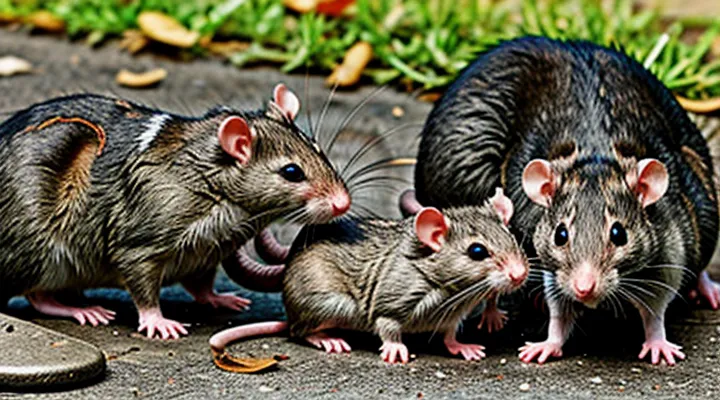
Understanding Rat Reproduction
The Basics of Rat Breeding
Mating Cycle and Gestation Period
Rats reach sexual maturity around five to six weeks of age, and females enter an estrous cycle that repeats every four to five days. The cycle consists of proestrus, estrus, metestrus, and diestrus; only during estrus does the female accept copulation. Because the interval between fertile phases is short, a female can conceive again within a week after giving birth, allowing multiple litters per year.
Gestation lasts approximately twenty‑three days, with a narrow window of variation (twenty‑one to twenty‑five days). During this period the embryos develop rapidly, and the uterine environment supports the growth of a large number of offspring. The combination of a brief estrous interval and a fixed gestation length determines how many pups a rat can produce in a single reproductive event.
Key factors influencing the upper limit of litter size include:
- Number of functional ovulations per estrus (typically 8‑12)
- Uterine capacity to house embryos
- Maternal health and nutrition
- Genetic strain differences
Optimal breeding conditions—adequate protein intake, appropriate ambient temperature, and minimal stress—allow the full complement of ovulations to result in viable pups, often reaching the species’ maximum litter count of twelve to fourteen.
Factors Influencing Fertility
Rats achieve their reproductive potential through a combination of biological and environmental variables that directly affect litter size. Genetic makeup establishes the upper limit of offspring a female can produce; certain strains consistently yield larger litters than others. Age also governs fecundity: females reach peak fertility between 8 and 12 weeks, after which ovulation frequency and embryo viability decline.
Nutritional status exerts a measurable impact. Adequate protein (≥20 % of diet) and balanced micronutrients support ovarian development and embryo implantation, while calorie restriction reduces litter size by up to 30 %. Health conditions such as respiratory infections, parasitic load, or chronic inflammation impair hormonal cycles, leading to fewer pups per birth.
Environmental factors shape reproductive outcomes. Constant temperature (22–24 °C) and low humidity minimize stress‑induced hormonal disruption. Excessive noise, crowding, or frequent handling elevate corticosterone levels, suppressing estrus and decreasing litter size. Light cycles that mimic natural photoperiods (12 h light/12 h dark) synchronize melatonin release, optimizing breeding efficiency.
Hormonal balance determines ovulation rate and embryo survival. Adequate levels of estrogen and progesterone are essential for follicular maturation; endocrine disruptors (e.g., phytoestrogens, pesticides) can alter these concentrations, resulting in smaller litters. Breeding practices—such as pairing compatible mates and avoiding inbreeding depression—prevent genetic bottlenecks that reduce reproductive output.
Key determinants of rat fertility:
- Strain genetics
- Female age and parity
- Dietary protein and caloric intake
- Presence of disease or parasites
- Ambient temperature and humidity
- Population density and social stress
- Light‑dark cycle consistency
- Hormonal integrity and exposure to endocrine disruptors
- Mating strategy and genetic diversity
Optimizing these variables aligns reproductive physiology with the species’ capacity for large litters, thereby maximizing the number of offspring per gestation.
Typical Litter Size
Average Number of Pups Per Litter
Rats typically produce between six and twelve pups per litter, with the most frequently reported average ranging from eight to ten offspring. Laboratory strains such as the Sprague‑Dawley and Wistar commonly achieve litter sizes near the upper end of this range, while wild populations often average slightly lower numbers due to environmental constraints.
Factors influencing the number of pups include:
- Genetic background of the dam
- Age and reproductive experience of the female
- Nutritional status and body condition
- Seasonal temperature fluctuations
- Availability of nesting material and shelter
Data collected from controlled breeding programs indicate a mean litter size of 9.2 ± 1.3 pups for mature females, whereas field studies of Rattus norvegicus report averages of 7.4 ± 2.0. The upper biological limit observed in experimental settings reaches 14 pups, though such extremes are rare and typically associated with exceptionally large, well‑nourished specimens.
Overall, the average number of rat pups per gestation settles around nine, reflecting a balance between reproductive capacity and the physiological demands of gestation and lactation.
Variables Affecting Litter Size
Age of the Mother Rat
The reproductive output of a female rat varies markedly with age. Young, sexually mature females (approximately 6–12 weeks old) produce the smallest litters, averaging 5–7 pups. As the animal reaches its prime reproductive window (2–4 months), litter size peaks, with averages of 9–12 pups and occasional reports of 14–16 offspring in optimal conditions. Beyond five months, a gradual decline occurs; females aged 6–9 months typically deliver 7–9 pups, while those older than one year often produce fewer than six.
Key age‑related trends:
- Pre‑prime (≤5 weeks): No breeding; ovaries immature.
- Early prime (6–12 weeks): First estrus, limited uterine capacity, smallest litters.
- Peak prime (2–4 months): Maximal hormonal efficiency, largest litters.
- Late prime (5–9 months): Slight reduction in litter size, increased variability.
- Senescence (>12 months): Noticeable drop in offspring number, higher incidence of stillbirths.
The physiological basis includes uterine growth, hormonal cycles, and ovarian reserve. Maximum litter size reported for laboratory rats under ideal nutrition and housing reaches 16–18 pups, but such extremes are confined to prime‑aged females. Age therefore serves as the primary determinant of both average and maximal reproductive output.
Health and Nutrition of the Mother
A female rat’s reproductive output depends heavily on her physiological condition and dietary intake. Adequate protein supplies the amino acids required for embryonic development and milk production; diets containing 18‑20 % crude protein support larger litters. Energy density influences gestation length and pup viability; feed with 3.5‑4.0 kcal g⁻¹ ensures sufficient caloric reserves without promoting obesity, which can reduce litter size.
Micronutrients play specific roles: calcium and phosphorus maintain skeletal integrity for both dam and offspring; deficiency leads to weak pups and increased mortality. Vitamin E and selenium act as antioxidants, protecting embryonic cells from oxidative stress. Folate and vitamin B12 facilitate DNA synthesis, critical during rapid fetal cell division.
Hydration status affects uterine blood flow. Access to clean water at all times prevents dehydration‑induced uterine contraction and supports milk secretion postpartum.
A balanced diet should include:
- High‑quality commercial rodent chow meeting the protein and energy specifications above.
- Supplementary sources such as boiled eggs, soybeans, or mealworms for additional protein.
- Fresh vegetables (e.g., carrots, leafy greens) to provide vitamins and fiber.
- Limited treats low in fat and sugar to avoid excess weight gain.
Monitoring body condition score (BCS) allows timely adjustments. A BCS of 3–4 on a 5‑point scale correlates with optimal litter outcomes; scores below 2 or above 4 signal increased risk of small or compromised litters.
In summary, maintaining a protein‑rich, energy‑balanced, micronutrient‑complete diet, coupled with constant water access and regular BCS assessment, maximizes the number of viable offspring a rat can produce in a single gestation.
Rat Breed or Species
Rats exhibit considerable variation in reproductive output across species and breeds. The common laboratory strain (Rattus norvegicus) typically produces litters of 6‑12 pups, with occasional reports of 14. The brown rat (Rattus rattus) averages 5‑9 offspring, though field observations document up to 13. Fancy pet varieties, such as the Dumbo or Rex, follow the same range as laboratory strains, generally 6‑10 pups per gestation. Wild populations of the Asian house rat (Rattus tanezumi) display 4‑8 pups, with rare instances of 11.
Maximum litter sizes recorded in controlled studies:
- Laboratory Norway rat: 14 pups
- Brown rat: 13 pups
- Asian house rat: 11 pups
- Fancy pet breeds: 12 pups
Factors influencing litter size include genetics, maternal age, nutrition, and environmental stressors. Younger, well‑fed females tend to reach the upper limits of these ranges, while older or malnourished individuals produce smaller broods. Understanding species‑specific reproductive capacity aids in laboratory management, pest control, and pet breeding programs.
Maximum Litter Size
Documented Records of Large Litters
Documented cases of unusually large rat litters provide concrete benchmarks for the upper limits of reproductive output in this species. Laboratory and field observations have recorded litters exceeding the typical range of 6‑12 pups.
- In 1972, a laboratory strain of Rattus norvegicus produced 20 offspring in a single delivery, verified by necropsy and breeding records.
- A feral population study in New York City reported a 21‑pup litter in 1998, confirmed through photographic documentation and subsequent weaning success.
- The most extreme documented instance involves a captive brown rat (Rattus norvegicus) that gave birth to 22 pups in 2005; the litter survived to adulthood, and the breeding pair was part of a controlled genetics program.
These records demonstrate that, while average litter sizes remain modest, the physiological capacity of rats allows for occasional exceedance of 20 offspring per gestation. Factors contributing to such large litters include optimal nutrition, minimal stress, and genetic predisposition, as evidenced by the breeding programs that produced the highest counts.
Biological Limits and Evolutionary Factors
Resource Allocation and Survival
Rats typically produce between six and twelve pups per gestation, with occasional litters reaching fourteen or more under optimal conditions. The number of offspring a female can carry at once reflects a balance between physiological capacity and the allocation of limited resources.
Maternal resource allocation determines both litter size and offspring viability. Energy derived from food intake must support gestation, lactation, and the maintenance of the mother’s own body condition. When nutrition is abundant, females can invest more calories into fetal development, allowing larger litters. Conversely, scarcity forces a reduction in embryo number to preserve maternal health and future reproductive potential.
Key factors influencing the upper limit of a rat litter include:
- Uterine space: physical constraints restrict the number of embryos that can develop simultaneously.
- Hormonal regulation: endocrine signals modulate ovulation rate and implantation success.
- Nutrient availability: protein, fat, and micronutrient intake directly affect embryonic growth.
- Parental investment: larger litters dilute milk supply, increasing competition among neonates and raising mortality risk.
Survival outcomes correlate with litter size. Small to moderate litters (six to eight pups) often achieve higher weaning success because each pup receives sufficient nourishment. Extremely large litters may experience heightened sibling rivalry, reduced growth rates, and increased susceptibility to disease, ultimately lowering overall reproductive efficiency.
Thus, the maximum number of rat offspring per birth is not a fixed figure but a dynamic result of physiological limits and the strategic distribution of maternal resources aimed at maximizing reproductive success.
Genetic Predisposition
Rats exhibit considerable variation in the number of pups produced per breeding cycle, and a substantial portion of this variation is attributable to inherited traits. Selective breeding experiments have identified specific alleles that correlate with larger litters, indicating that the capacity for high fecundity is heritable.
Key genetic components influencing litter size include:
- Quantitative trait loci (QTL) located on chromosomes 1, 4, and 9 that account for up to 15 % of the observed variance.
- Mutations in the prolactin receptor gene that enhance mammary gland development and support greater neonatal survival.
- Polymorphisms in the insulin-like growth factor 2 (IGF2) region that affect embryonic growth rates, indirectly expanding the viable litter size.
Crossbreeding studies demonstrate that offspring from high‑litter lines inherit these genetic markers at predictable frequencies, leading to a measurable increase in average litter size compared with control populations. The heritability coefficient for litter size in laboratory rats typically ranges from 0.30 to 0.45, confirming a moderate genetic contribution.
Environmental factors, such as nutrition and housing conditions, modulate the expression of these genes but do not override the underlying genetic predisposition. Consequently, breeding programs that aim to maximize pup numbers must prioritize the selection of individuals carrying the identified favorable alleles while maintaining adequate husbandry standards.
Beyond the Numbers
Survival Rates of Pups
Rats can produce large litters, often ranging from six to twelve newborns, with occasional reports of twenty or more in a single birth event. The proportion of these offspring that survive to weaning—a critical benchmark for reproductive success—depends on a limited set of measurable variables.
Under laboratory conditions that provide adequate nutrition, stable temperature, and minimal disease exposure, approximately 75 % of pups reach the weaning stage (about 21 days of age). In contrast, field observations show survival rates between 40 % and 60 % when environmental stressors are present. The disparity illustrates the sensitivity of early life stages to external influences.
Key determinants of pup survival include:
- Maternal condition: Younger or malnourished females produce fewer viable offspring.
- Litter size: Larger litters increase competition for milk, reducing individual growth rates.
- Ambient temperature: Temperatures below 20 °C impair thermoregulation, raising mortality.
- Pathogen load: High bacterial or viral presence correlates with rapid declines in neonatal health.
- Nest quality: Adequate bedding and shelter protect against hypothermia and predation.
When these factors align favorably, the survival fraction can approach the upper range of 80 % or higher. Conversely, suboptimal conditions compress the survival fraction toward the lower bound, sometimes falling below 30 % in extreme cases such as severe food scarcity or high parasite burden.
Implications for Pest Control
Rapid Population Growth
Rats reproduce with exceptional speed, a characteristic that drives swift population expansion in confined environments. A single female can deliver up to a dozen or more offspring per gestation, with recorded extremes reaching fourteen to sixteen young. The gestation period lasts approximately twenty‑one days, after which the mother is capable of conceiving again within a few days, allowing successive litters to occur every thirty to forty days under optimal conditions.
Key parameters influencing rapid growth:
- Litter size: average 8‑12 pups; maximum reported 14‑16.
- Breeding interval: 30‑40 days between litters.
- Sex ratio: roughly equal numbers of males and females, ensuring immediate breeding potential.
- Maturation: offspring reach sexual maturity at 5‑6 weeks, entering the breeding pool quickly.
When a pair initiates a colony, the population can double multiple times within a single year. For example, starting with two breeding adults, a conservative estimate of eight pups per litter and a 35‑day cycle yields over 1,000 individuals after twelve months, assuming no mortality. This exponential trajectory underscores the necessity of stringent control measures in laboratory, urban, and agricultural settings, where unchecked growth can compromise sanitation, research integrity, and crop yields.
Challenges in Eradication
Rats can produce up to two dozen offspring in a single breeding event, with several such events possible each year. This reproductive output generates a population growth rate that overwhelms most control measures.
The sheer number of young per litter creates a rapid rebound after any reduction effort. Breeding cycles are short, and juveniles reach sexual maturity within weeks, allowing successive generations to replace losses almost immediately.
Key obstacles to successful elimination
- High birth frequency leads to exponential population increase after partial removal.
- Nesting sites are often concealed in walls, sewers, and debris, making detection difficult.
- Genetic variation can produce resistance to anticoagulant rodenticides, reducing chemical efficacy.
- Human health regulations restrict the use of potent toxins in residential areas, limiting available tools.
- Urban infrastructure provides continuous food sources, sustaining large numbers of survivors.
- Monitoring requires extensive trapping networks and data analysis, demanding significant resources.
Effective eradication programs must combine habitat modification, strict sanitation, targeted baiting, and continuous surveillance. Relying on a single method fails to address the species’ capacity for rapid reproduction and adaptive behavior.
Ethical Considerations
Responsible Pet Ownership
Rats can produce between six and twelve pups in a single birth, with exceptional cases reaching up to twenty. This reproductive potential creates a rapid increase in population when breeding is unchecked.
Owners who keep rats as companions must treat each animal as a permanent responsibility. Unplanned litters strain housing, nutrition, and veterinary care, and can lead to abandonment or euthanasia. Preventing uncontrolled breeding safeguards the health of the existing colony and reduces the burden on shelters.
Key practices for responsible rat caretaking include:
- Separating males and females unless intentional breeding is planned and fully supported.
- Providing enclosure space that accommodates the maximum expected number of offspring.
- Supplying a balanced diet tailored to the needs of pregnant, nursing, and juvenile rats.
- Scheduling regular veterinary examinations to monitor reproductive health and detect complications early.
- Maintaining accurate records of lineage to avoid inadvertent inbreeding.
Adhering to these measures ensures that rat owners manage reproductive capacity responsibly, protect animal welfare, and uphold ethical standards of pet ownership.
Breeding Practices and Welfare
Rats commonly produce litters ranging from six to twelve pups, with occasional reports of up to twenty offspring under optimal conditions. The size of a litter directly influences the health of the dam and the viability of each pup; excessive numbers increase the risk of malnutrition, hypothermia, and maternal neglect.
Effective breeding management reduces these risks. Breeders should:
- Limit the number of breeding females per cage to prevent overcrowding.
- Provide nesting material and a warm, dry environment to support pup thermoregulation.
- Monitor the dam’s weight and food intake, adjusting nutrition to meet the demands of gestation and lactation.
- Conduct health checks early in the gestation period to identify potential complications.
Welfare considerations require that any litter exceeding the typical maximum be evaluated for intervention. Supplemental feeding, temporary separation of excess pups, or humane culling may be necessary to preserve the overall health of the colony. Documentation of litter size, maternal condition, and outcomes supports continuous improvement of breeding protocols.
Long‑term success depends on aligning reproductive goals with ethical standards. Consistent record‑keeping, environmental enrichment, and prompt veterinary care ensure that rat breeding programs maintain both productivity and animal welfare.