
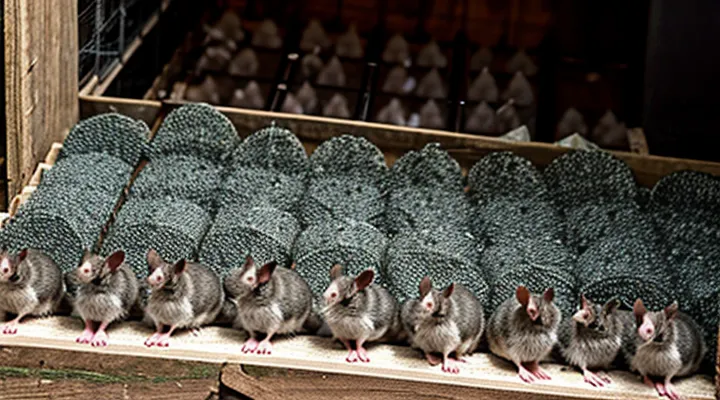
Mouse Reproductive Biology
Gestation Period and Litter Size
Factors Affecting Litter Size
The size of a mouse’s litter is determined by a combination of biological and environmental variables. Genetic makeup establishes the baseline capacity for offspring, with certain strains consistently producing larger or smaller litters. Age influences reproductive output; females reach peak fecundity in early adulthood, while very young or senior individuals generate fewer pups. Nutritional status directly affects embryonic development; diets rich in protein, energy, and essential micronutrients support higher birth numbers, whereas deficiencies reduce viability. Hormonal balance, particularly levels of estrogen and progesterone, regulates ovulation frequency and embryo implantation success. Environmental conditions such as temperature, humidity, and cage density modify stress levels, which can suppress ovulation and increase embryonic loss. Health factors, including the presence of parasites, infections, or chronic disease, diminish reproductive efficiency. Finally, breeding management practices—timing of mating, frequency of cohabitation, and use of artificial insemination—alter the number of embryos that develop to term.
Average Number of Pups Per Litter
Mice typically produce between 5 and 8 pups per litter, with the most frequent outcome being six offspring. Laboratory strains such as C57BL/6 and BALB/c average 6‑7 pups, while wild house mice (Mus musculus) often fall in the 5‑8 range. Outliers occur: some individuals yield as few as three pups, others exceed ten, especially under optimal husbandry conditions.
- Standard laboratory mouse: 6 ± 1 pups
- Wild house mouse: 6 ± 2 pups
- Hybrid or genetically enhanced lines: up to 10 pups
Litter size is influenced by genetic background, maternal age, nutritional status, and environmental stressors. Younger females (8‑12 weeks) usually attain peak productivity, whereas older breeders show a gradual decline. Adequate protein intake and minimal cage crowding raise the average count, while disease or poor ventilation suppress it.
Understanding the typical pup count per litter clarifies overall reproductive output. A mouse capable of producing a new litter every 3‑4 weeks can generate roughly 30‑40 offspring annually, assuming average litter size and consistent breeding cycles. This figure forms the basis for population projections in laboratory colonies and pest‑control assessments.
Frequency of Breeding
Reproductive Cycle of Mice
The reproductive cycle of the house mouse (Mus musculus) is rapid and highly efficient. A female reaches sexual maturity between 5 and 8 weeks of age, after which she enters the estrous cycle lasting approximately 4–5 days. The cycle consists of four phases:
- Proestrus (1–2 days): follicular development and rising estrogen.
- Estrus (12–24 hours): ovulation occurs; the female is receptive to mating.
- Metestrus (1 day): corpus luteum formation, progesterone rise.
- Diestrus (1–2 days): uterine preparation for possible implantation.
If mating occurs during estrus, fertilization takes place within hours. Gestation lasts 19–21 days, after which the female delivers a single litter. The term “litter” refers to one cohort of offspring born from a single pregnancy; a mouse never produces more than one cohort per gestation.
Typical litter size ranges from 5 to 8 pups, with extremes of 2 to 12 recorded in laboratory strains. Factors influencing litter size include genetic line, maternal age, nutrition, and ambient temperature.
Following parturition, the female often experiences a postpartum estrus as early as 24 hours later, allowing immediate re‑mating. Consequently, a productive breeding female can generate multiple litters within a year—commonly 5 to 10, depending on management conditions. Nonetheless, at any given time only one set of pups is present, because each pregnancy yields a single cohort.
Time Between Litters
Mice reach sexual maturity within six to eight weeks, after which they can produce successive litters with minimal delay. The gestation period lasts 19–21 days, and females enter estrus almost immediately after delivering a litter. Consequently, a mouse can become pregnant again within 24 hours of parturition, shortening the interval between consecutive litters.
Typical inter‑litter intervals range from 21 to 30 days, depending on several variables:
- Strain: Inbred laboratory strains often show more consistent intervals (≈22 days) than outbred or wild‑derived populations.
- Age: Younger females (< 12 weeks) may have slightly shorter intervals, while older females experience lengthening due to declining fertility.
- Nutrition: Adequate protein and caloric intake sustain rapid post‑partum recovery; deficiencies extend the gap between litters.
- Housing conditions: High density or stressors (e.g., temperature fluctuations) can delay the return to estrus.
Under optimal conditions—adequate diet, stable environment, and healthy adult females—mice can produce a new litter roughly three weeks after the previous one, enabling multiple litters within a single breeding season.
Environmental and Biological Influences
Impact of Diet and Nutrition
Dietary composition directly influences the number of offspring a mouse can produce in a single breeding event. Energy intake determines the physiological capacity to sustain multiple gestations, while protein availability regulates ovarian development and embryo viability.
- High‑quality protein (≥18 % of caloric intake) correlates with increased litter size.
- Adequate carbohydrate supply (≈55 % of calories) maintains glucose levels necessary for fetal growth.
- Essential fatty acids, particularly omega‑3, improve uterine environment and reduce embryonic loss.
- Vitamin E and selenium supplementation enhance antioxidant defenses, supporting higher reproductive output.
- Calcium and phosphorus balance prevents maternal bone depletion, allowing successful multiple births.
Experimental data show that mice fed a diet meeting the above criteria produce litters ranging from eight to twelve pups, compared with five to seven pups on a low‑protein, low‑energy regimen. Conversely, severe caloric restriction (<70 % of maintenance needs) reduces litter size to three or fewer and may trigger estrous cycle cessation.
Micronutrient deficiencies, such as inadequate folic acid, impede embryonic cell division, resulting in smaller litters despite sufficient macronutrient intake. Supplementation studies indicate a 15‑20 % increase in offspring number when folic acid is added to a standard diet.
Overall, optimal reproductive performance hinges on a balanced diet that supplies adequate energy, high‑quality protein, essential fatty acids, and a full spectrum of vitamins and minerals. Adjustments to these nutritional parameters produce measurable changes in the number of pups delivered per breeding cycle.
Stress and Its Effects on Reproduction
Stress influences the reproductive output of laboratory mice through hormonal, neuroendocrine, and behavioral pathways. Elevated glucocorticoids suppress gonadotropin-releasing hormone, reducing ovarian follicle development and decreasing the number of ova released per estrous cycle. Consequently, females exposed to chronic stress produce smaller litters, often by one to three pups fewer than unstressed controls.
Key mechanisms include:
- Hormonal disruption: Corticosterone elevation interferes with luteinizing hormone surges, delaying or aborting ovulation.
- Altered estrous cycling: Stress‑induced irregularities shorten the fertile window, limiting opportunities for conception.
- Maternal behavior changes: Anxious dams exhibit reduced nest building and nursing, leading to higher pup mortality and lower overall litter viability.
Empirical studies demonstrate that mice subjected to repeated restraint or social defeat produce 15–30 % fewer offspring per breeding event compared with baseline groups. Acute stressors applied immediately before mating can reduce conception rates by up to 40 %, while chronic exposure throughout gestation further diminishes pup survival.
Mitigation strategies such as environmental enrichment, consistent handling protocols, and minimizing noise reduce stress biomarkers and restore reproductive performance to near‑baseline levels. Implementing these practices is essential for accurate assessment of maximal litter production potential in murine breeding programs.
Age and Reproductive Capacity
Mice reach sexual maturity between 5 and 7 weeks of age; females at this stage can produce their first litter. Peak reproductive performance occurs from approximately 8 weeks to 6 months, during which ovulation cycles are regular and hormone levels support maximal embryo implantation. After six months, estrous cycles lengthen, ovulation frequency declines, and litter size gradually decreases.
At the onset of fertility, average litters contain 5–6 pups. Between 2 and 4 months, the mean litter size rises to 7–9 pups, reflecting optimal uterine capacity and embryo survival rates. Beyond 6 months, average litters fall to 4–5 pups, and by 10 months the number often drops below four, accompanied by higher rates of stillbirth and neonatal mortality.
Key age‑related reproductive metrics:
- 5–7 weeks: first litter, 5 ± 1 pups
- 2–4 months: peak output, 8 ± 2 pups
- 6–8 months: moderate decline, 6 ± 1 pups
- ≥10 months: low output, ≤4 pups, increased embryonic loss
Understanding these age brackets allows precise planning of breeding programs and accurate prediction of litter yields across a mouse’s lifespan.
Genetic Factors in Litter Production
Genetic variation exerts the primary influence on the number of offspring a mouse delivers in a single reproductive event. Studies of inbred strains reveal consistent differences in litter size, indicating that allelic composition determines reproductive output.
Key genetic elements linked to increased litter size include:
- QTL on chromosomes 2, 7, and 11 – associated with higher embryo survival.
- Prdm9 – regulates meiotic recombination, indirectly affecting gamete viability.
- Igf2 – growth factor influencing fetal development and placental efficiency.
- Gdf9 and Bmp15 – oocyte‑specific factors that modulate ovulation rate.
Heritability estimates for litter size range from 0.30 to 0.45, confirming a moderate genetic component. The trait follows a polygenic model: multiple loci contribute additive effects, while epistatic interactions can amplify or suppress outcomes. Marker‑assisted selection in laboratory colonies exploits these QTL to achieve predictable increases in offspring number.
Maternal genotype dictates uterine capacity, hormonal milieu, and resource allocation, thereby shaping the final litter count. However, the genetic architecture remains the dominant determinant, as environmental modifications produce only marginal changes compared with allelic differences.
Understanding the genetic basis of reproductive output guides breeding programs, improves experimental reproducibility, and informs comparative studies of mammalian fecundity.
Mouse Population Dynamics
Rapid Reproduction and Population Growth
Mice reach sexual maturity within six weeks, allowing a female to begin breeding shortly after birth. Gestation lasts 19–21 days, and a single delivery typically yields five to six pups, though litters can range from three to twelve under optimal nutrition and housing conditions. The reproductive cycle repeats rapidly: postpartum estrus occurs within 24 hours, enabling a new conception almost immediately.
Key factors influencing litter size include:
- Diet quality: high‑protein feed increases embryonic survival and pup weight.
- Environmental temperature: temperatures between 20 °C and 26 °C promote maximal fecundity.
- Genetic strain: laboratory strains such as C57BL/6 produce larger litters than wild‑type populations.
- Maternal age: females aged 2–4 months generate the highest offspring counts; fertility declines thereafter.
A single female can produce up to ten litters per year. Assuming an average of six pups per litter, the potential offspring from one mouse within twelve months approaches sixty. When each daughter reaches maturity and repeats the cycle, population growth follows an exponential trajectory, doubling or tripling each generation under favorable conditions. This rapid reproductive capacity underlies the species’ ability to colonize new habitats quickly and to sustain high densities in laboratory colonies.
Ecological Implications of High Reproductive Rates
Mice capable of producing multiple litters in a single reproductive cycle generate rapid population increases that reshape community structures. High offspring output accelerates the transition from low‑density to saturation levels, forcing local resources such as seeds, insects, and organic detritus to be consumed at rates that exceed regeneration. This consumption pressure can suppress plant seedling survival, alter nutrient cycling, and diminish habitat quality for other small vertebrates.
Intense reproductive output also intensifies predator–prey interactions. Elevated mouse densities provide abundant food for carnivores and raptors, potentially boosting predator populations. However, predator responses often lag behind prey surges, creating temporary imbalances where mouse numbers exceed the capacity of natural control mechanisms. Such mismatches may lead to periodic outbreaks followed by sharp declines when resource depletion or increased predation finally curtails the mouse population.
The ecological consequences extend to disease dynamics. Dense aggregations of juveniles facilitate transmission of pathogens such as hantavirus, ectoparasites, and bacterial agents. High turnover of susceptible individuals sustains infection cycles, raising the probability of spillover to other species, including humans. The persistence of disease reservoirs within mouse populations can influence broader ecosystem health and necessitate monitoring.
Key implications of prolific mouse reproduction:
- Accelerated depletion of primary food sources
- Temporary disruption of predator–prey equilibrium
- Amplified pathogen transmission risk
- Reduced genetic variability due to repeated bottlenecks in successive litters
- Heightened competition with sympatric small mammals for shelter and resources
Understanding these effects informs management strategies that aim to balance mouse population growth with ecosystem stability, guiding interventions such as habitat modification, predator support, and disease surveillance.