
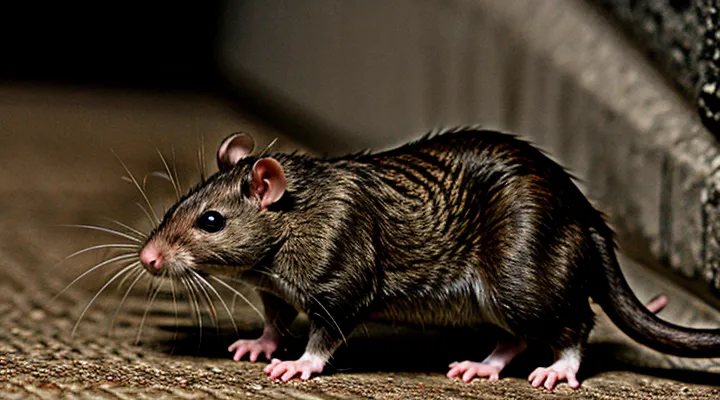
Rat Forelimbs: An Overview
The Concept of «Fingers» in Rodents
Defining Digits and Phalanges
Rats possess a typical mammalian limb structure in which each forelimb ends in five distal elements. These elements are commonly called digits; each digit consists of a series of bones known as phalanges. The proximal phalanx articulates with the metacarpal bone, while the intermediate and distal phalanges form the remaining segments of the digit. In the hindlimb, the same arrangement applies, with five toes per foot.
Key definitions:
- Digit – the external, movable portion of a mammalian limb that bears the nails or claws; in rats, each digit is numbered I through V from medial to lateral.
- Phalanx (plural: phalanges) – a bone of the digit; rats typically have three phalanges per digit (proximal, middle, distal), except for the thumb (digit I) which may have a reduced or absent middle phalanx.
- Metacarpal / Metatarsal – the bone that connects the digit to the limb’s main shaft; it supports the proximal phalanx.
The arrangement of digits and phalanges determines the functional capabilities of the rat’s paws, enabling precise manipulation of objects and effective locomotion.
Distinguishing from Human Anatomy
Rats possess five digits on each forelimb, but the structure of these digits diverges sharply from that of humans. The terminal elements are elongated, clawed phalanges that terminate in a single, sharp unguis rather than a broad, flat nail. Musculature and tendons are arranged to support rapid digging and climbing, with a pronounced flexor digitorum profundus that extends to the distal phalanx of each digit.
Key anatomical distinctions include:
- Digit count: Both species have five digits per hand; however, rats lack a true opposable thumb, the first digit being reduced and positioned laterally, whereas humans have a fully opposable thumb enabling precision grip.
- Nail versus claw: Rat digits end in keratinized claws optimized for penetration; human digits terminate in flat nails suited for protection and fine manipulation.
- Bone proportions: Rat metacarpals are shorter and more robust, facilitating force transmission during gnawing; human metacarpals are elongated to increase reach and dexterity.
- Joint mobility: Rat interphalangeal joints allow greater flexion for claw retraction; human joints provide a broader range of extension and abduction for tool use.
- Sensory innervation: Rats exhibit dense mechanoreceptor clusters on the pads of their digits, enhancing tactile detection of textures; human fingertips contain a high concentration of Meissner’s and Pacinian corpuscles for fine discrimination.
These differences reflect evolutionary adaptations: rats prioritize strength, clawed grip, and rapid locomotion, whereas humans emphasize precision, manipulatory versatility, and complex tool interaction.
Detailed Anatomy of Rat Paws
Forepaw Structure
Number of Digits on the Forepaws
Rats possess four well‑developed digits on each forepaw. The digits are numbered I through IV, each consisting of a metacarpal bone followed by three phalanges (proximal, middle, distal). A fifth digit, equivalent to a thumb, exists as a reduced, often hidden element; it lacks a functional claw and may be absent in some laboratory strains.
Key anatomical facts:
- Four functional forepaw digits are visible externally.
- The vestigial fifth digit is present as a small sesamoid structure beneath the skin.
- Each digit’s musculature is derived from the flexor and extensor compartments, enabling precise grasping.
- The skeletal arrangement mirrors that of other murine rodents, with a compact carpal cluster supporting the metacarpals.
Variations occur among species and strains. Wild rodents sometimes exhibit a more pronounced rudimentary digit, while selective breeding for laboratory use often reduces its expression. Developmental studies link the pattern to the expression of Hox genes governing limb segmentation.
Vestigial Thumb or Pollex
Rats possess five digits on each forelimb, but the most medial digit is markedly reduced compared to the other four. This digit, commonly referred to as the vestigial thumb or pollex, lacks a fully formed claw and exhibits a shortened, stubby morphology.
The pollex originates from the same embryonic limb bud as the other digits, yet its growth is arrested early in development. Muscular attachment points are limited, and the associated tendons are weak, resulting in minimal functional contribution during locomotion or manipulation. Comparative anatomy shows that the pollex retains a rudimentary metacarpal bone, while the phalanges are either absent or highly diminished.
Key anatomical features of the rat vestigial thumb:
- Reduced metacarpal length (approximately 30 % of the adjacent metacarpals).
- Absence of a functional unguis (claw).
- Minimal musculature, primarily consisting of vestigial flexor and extensor remnants.
- Presence of a small, non‑weight‑bearing articulation with the carpal row.
Evolutionary studies indicate that the pollex persists as a relic of the pentadactyl ancestor, providing insight into digit reduction processes across rodent lineages.
Anatomical Terminology for Rat Digits
Rats possess five forelimb digits and four hindlimb digits. Each digit consists of a series of phalanges ending in a keratinized ungual phalanx that forms the claw. The forelimb includes a reduced first digit (prepollex) that functions as a vestigial thumb; the remaining digits (II‑V) are fully developed. The hindlimb lacks a prehallux, presenting only digits I‑IV, each with three phalanges (proximal, middle, distal) and an ungual terminal.
Key anatomical terms for rat digits:
- Digit – individual finger or toe.
- Prepollex / Prehallux – reduced thumb equivalent on the forelimb.
- Pollex – functional thumb, absent in rats.
- Phalanx (plural: phalanges) – bone segment of a digit; proximal, middle, distal.
- Ungual phalanx – distal bone supporting the claw.
- Metacarpal – bone connecting forelimb digits to the radius and ulna.
- Metatarsal – bone connecting hindlimb digits to the tibia and fibula.
- Hallux – first hindlimb digit; in rats it corresponds to digit I.
Skeletal arrangement:
- Forelimb: prepollex (vestigial), digits II‑V, each with three phalanges plus an ungual phalanx; metacarpals articulate with the carpal row.
- Hindlimb: digits I‑IV, each with three phalanges plus an ungual phalanx; metatarsals articulate with the tarsal row.
These terms provide a standardized framework for describing rat digit morphology in research and veterinary contexts.
Hindpaw Structure
Number of Digits on the Hindpaws
Rats possess five digit structures on each hindpaw. The arrangement includes four weight‑bearing toes and a reduced fifth digit, commonly called a dewclaw, positioned medially and not involved in locomotion. The functional toes are elongated, equipped with sharp, retractable claws that facilitate climbing and digging. The dewclaw is vestigial, lacking a claw and serving primarily as a sensory organ.
Key anatomical points:
- Total digits per hindpaw: 5
- Weight‑bearing toes: 4 (digits I–IV)
- Vestigial dewclaw: 1 (digit V)
- Claw presence: present on digits I–IV, absent on the dewclaw
- Alignment: digits are splayed radially, providing a broad base for stability
The digit count is consistent across laboratory and wild Rattus species, with minor variations in dewclaw size observed among different subspecies.
Unique Features of Hindpaw Digits
Rats possess five hindpaw digits, but their morphology differs markedly from the forelimb. The fourth digit is the longest, extending beyond the third and supporting the primary weight‑bearing surface. The fifth digit is reduced and frequently hidden beneath the adjacent pad.
The plantar surface includes three distinct pads: the central digital pad beneath the fourth digit, a lateral pad under the fifth, and a medial pad supporting the second and third digits. Each pad contains a thickened epidermal layer that resists abrasion during rapid locomotion.
Unique sensory structures accompany the hind digits:
- High density of rapidly adapting mechanoreceptors (Meissner’s corpuscles) within the digital pads.
- Specialized nociceptors clustered near the claw bases, providing acute pain detection.
- Sparse distribution of Merkel cells on the dorsal skin, contributing to fine tactile discrimination.
These anatomical adaptations enable precise grip on uneven substrates, facilitate efficient grooming motions, and support the high‑frequency bursts of movement characteristic of rodent behavior.
Bone Structure of Rat Paws
Metacarpals and Metatarsals
Rats have five digits on each fore‑ and hind‑limb, supported by a set of short, sturdy bones called metacarpals in the forelimb and metatarsals in the hindlimb. These bones form the bridge between the wrist or ankle joints and the phalanges that bear the claws.
The forelimb contains five metacarpal elements, but only four are fully developed. The first metacarpal, associated with the thumb‑like digit, is markedly reduced and often fused with the adjacent bone. The remaining four metacarpals are elongated, robust, and articulate with the radius and ulna, providing a stable platform for the grasping digits.
The hindlimb mirrors this arrangement. Five metatarsal bones are present, with the first metatarsal reduced to a small, vestigial element. The four principal metatarsals are straight, slightly curved, and connect the tibia and fibula to the toe bones, facilitating locomotion and balance.
Key anatomical characteristics:
- Number: Four functional metacarpals and metatarsals; one reduced element in each series.
- Shape: Short, thick shafts with expanded distal ends for articulation with phalanges.
- Articulation: Metacarpals meet the carpal bones; metatarsals meet the tarsal bones, allowing limited flexion and extension.
- Function: Provide leverage for digit movement, support weight-bearing in the hindlimb, and enable fine manipulation in the forelimb.
- Comparative note: Unlike many rodents with fully developed first digits, rats retain a diminutive first metacarpal/metatarsal, reflecting an evolutionary shift toward specialized fore‑paw usage.
Phalanges in Detail
Rats possess five digits on each forelimb and four on each hindlimb. Each digit contains a series of phalanges that shape the claw and support locomotion.
The forelimb digits are arranged as follows:
- Digit I (thumb): one distal phalanx, no middle phalanx.
- Digits II‑V: each includes a proximal, a middle, and a distal phalanx, totaling three per digit.
The hindlimb digits lack a true thumb. Their structure consists of:
- Digits II‑IV: each comprises a proximal and a distal phalanx, two per digit.
- Digit V (small toe): a single distal phalanx.
Phalangeal morphology varies along the limb. Proximal phalanges are broader, providing attachment for flexor muscles. Middle phalanges, present only in forelimb digits II‑V, are slender and articulate with a hinge joint that permits flexion. Distal phalanges terminate in keratinized claws, essential for digging and climbing.
Microscopic examination reveals a compact, ossified cortex surrounding a medullary cavity. Growth plates persist into adulthood, allowing limited remodeling in response to mechanical stress. Comparative studies show that laboratory rats exhibit slightly shorter distal phalanges than wild counterparts, reflecting differences in substrate use.
Understanding the precise arrangement of rat phalanges informs surgical approaches, toxicological assessments, and evolutionary analyses of rodent locomotor adaptations.
Soft Tissues and Adaptations
Paw Pads and Their Function
Rats possess five digits on each forelimb, each terminating in a specialized pad that supports locomotion and sensory perception. The pads consist of a thick epidermal layer, underlying connective tissue, and a dense network of blood vessels, providing durability and thermal regulation.
Functions of the paw pads include:
- Traction: Keratinized surface creates friction against varied substrates, preventing slippage during climbing or rapid scurrying.
- Shock absorption: Fibrous tissue compresses under load, reducing impact forces transmitted to skeletal joints.
- Sensory feedback: High density of mechanoreceptors detects pressure, texture, and vibration, allowing precise adjustment of grip and movement.
- Thermoregulation: Vascular channels dissipate heat generated by muscular activity, maintaining optimal foot temperature.
These characteristics enable rats to navigate complex environments, from smooth laboratory surfaces to rough outdoor terrain, while maintaining agility and tactile acuity.
Claws: Structure and Purpose
Rats possess five forelimb digits and four hind‑limb digits; each digit terminates in a single claw. The claw is a compact, curved structure composed of hard keratin that overlays a bony core. Its growth zone lies at the base, allowing continuous renewal. The sheath is thin, translucent, and tightly adherent to the distal phalanx, providing a durable yet lightweight tip.
The claw serves multiple mechanical roles. Its curvature concentrates force, enabling efficient penetration of substrates. The keratinized surface resists abrasion, allowing repeated use without significant wear. The attachment to the distal phalanx transmits muscular tension from flexor tendons, facilitating precise movements.
Key functions include:
- Excavation of soil and nesting material
- Grip on vertical surfaces during climbing
- Removal of debris during self‑grooming
- Delivery of a swift, puncturing bite when threatened
These attributes make the claw an essential element of rat locomotion, foraging, and defensive behavior.
Functional Aspects of Rat Paws
Locomotion and Movement
Walking and Running Adaptations
Rats possess five forelimb digits and four hindlimb digits, a configuration that supports both quadrupedal walking and rapid sprinting. The forepaws feature a flexible metacarpal arch, allowing precise grip on substrates and manipulation of food objects. Hindfeet display a more robust calcaneus and elongated metatarsals, providing leverage for propulsion during high‑speed locomotion.
Key anatomical adaptations for terrestrial movement include:
- Muscle distribution: Forelimb musculature emphasizes fine motor control (e.g., flexor digitorum profundus), while hindlimb muscles (e.g., gastrocnemius, soleus) generate powerful extension forces.
- Tendon elasticity: Achilles‑type tendons store kinetic energy during stance phase, releasing it to increase stride length and reduce metabolic cost.
- Joint morphology: Plantar joints exhibit a limited range of motion that stabilizes the foot during rapid thrust, whereas carpal joints remain highly mobile to accommodate varied terrain.
- Gait modulation: Rats transition from a walking gait with a duty factor above 0.5 to a running gait where duty factor drops below 0.5, accompanied by a shift from diagonal to lateral limb support patterns.
These structural features enable rats to maintain stability while navigating complex environments and to achieve sprint speeds exceeding 1 m s⁻¹ when threatened. The combination of digit count, muscle‑tendon architecture, and joint design underlies the species’ versatility in both deliberate locomotion and escape responses.
Climbing and Grasping Abilities
Rats possess five digits on each forelimb, each ending in a sharp, curved claw. The skeletal structure of these digits is compact, allowing rapid flexion and extension. Muscular attachments to the distal phalanges generate strong grip forces despite the small size of the animal.
The combination of digit morphology and tendon arrangement enables several climbing and grasping behaviors:
- Vertical ascent: Curved claws embed into textured surfaces, while the flexor muscles pull the body upward in short, coordinated bursts.
- Horizontal navigation: Opposable-like movement of the second and third digits permits the formation of a stable tripod grip on narrow ledges.
- Object manipulation: Fine motor control of the distal joints allows rats to grasp, rotate, and release food items or nesting material with precision.
These capabilities are reinforced by a dense network of sensory receptors located on the pads and nail beds. Rapid feedback about surface texture and pressure guides adjustments in grip strength, preventing slippage during rapid locomotion. The integration of skeletal robustness, muscular power, and tactile acuity makes the rat’s forelimbs highly effective for both climbing structures and handling objects in complex environments.
Sensory Functions
Tactile Sensation in Paws
Rats possess four functional digits on each forelimb and a reduced fifth digit that does not bear a claw. The digits are equipped with dense innervation that enables precise tactile discrimination. Sensory receptors located in the paw pads include Merkel cells, Meissner’s corpuscles, and Ruffini endings, each responding to different mechanical stimuli such as pressure, vibration, and skin stretch.
The arrangement of these receptors provides a spatial map of the environment that guides exploratory behavior. When a rat contacts a surface, Merkel cells generate sustained signals reflecting object shape, while Meissner’s corpuscles deliver rapid transient responses that detect texture changes. Ruffini endings contribute to the perception of shear forces, allowing the animal to adjust grip strength.
Key aspects of tactile processing in rat paws:
- High concentration of myelinated Aβ fibers transmitting fast, high‑resolution information to the somatosensory cortex.
- Integration of signals from multiple receptor types within the dorsal column pathway, producing a composite representation of surface characteristics.
- Plasticity of cortical maps that remodels in response to altered sensory input, demonstrating adaptability of the tactile system.
Overall, the specialized sensory architecture of rat paws supports fine motor control and environmental exploration, directly influencing the functional use of their digits.
Role in Exploration
Rats possess five forelimb digits and four hindlimb digits, each ending in a claw that contacts surfaces during movement. The digital pads contain dense mechanoreceptor fields, allowing rapid detection of texture, pressure, and temperature.
Digits serve as primary tools for environmental investigation. When a rat encounters an unknown substrate, the paws probe the surface, generating tactile feedback that guides locomotion and foraging decisions. This feedback loop operates continuously, shaping exploratory patterns without reliance on visual cues.
Key mechanisms include:
- High‑density Merkel cells and Meissner‑like receptors that transduce fine surface details.
- Integration of paw‑derived signals with whisker input in the somatosensory cortex, producing a composite spatial map.
- Rapid adjustment of grip force based on real‑time pressure data, preventing slips on uneven terrain.
The functional properties of rat digits inform experimental designs in neuroscience and inspire biomimetic robotic grippers. By replicating the sensor density and reflex pathways observed in rodents, engineers achieve devices capable of delicate manipulation in cluttered environments.
Grooming and Feeding Behaviors
Manipulating Food
Rats possess five fore‑paw digits and four hind‑paw digits; the first digit on each fore‑paw functions as a pseudo‑thumb, enabling precision grip. The pads on the palmar surface contain dense mechanoreceptors that relay tactile feedback while the animal handles objects. When food is presented, the pseudo‑thumb opposes the remaining digits, forming a stable tripod that secures the item against the palm.
During feeding, rats execute a three‑stage sequence:
- Acquisition – the pseudo‑thumb contacts the food item, while the adjacent digits spread to encircle it.
- Stabilization – pressure from the palmar pads maintains orientation, allowing the animal to assess texture and size without visual input.
- Transfer – the food is repositioned toward the incisors; mandibular muscles generate the bite, while the fore‑paws release the grip in a coordinated motion.
The efficiency of this manipulation stems from the combination of digit count, opposable structure, and highly innervated pads. These anatomical traits permit rats to handle diverse food types, from tiny seeds to irregularly shaped crumbs, with minimal loss and rapid ingestion.
Self-Grooming Techniques
Rats possess five forelimb digits on each paw, with the first digit reduced to a small, claw‑like structure. This arrangement provides a precise grip that supports intricate grooming movements. During self‑maintenance, rats manipulate their fur, whiskers, and facial hair using coordinated actions of the digits and associated musculature.
Self‑grooming involves several repeatable motions:
- Forelimb sweeping: digits spread and retract to draw fur toward the body, removing debris.
- Paw‑to‑mouth transfer: digits lift a fur patch, positioning it for oral cleaning.
- Whisker alignment: the reduced first digit contacts whiskers, adjusting their orientation.
- Tail brushing: hind‑limb digits flex to sweep the tail, preventing matting.
These techniques rely on the tactile sensitivity of the digits and the flexibility of the joints, enabling rats to maintain coat condition without external assistance.
Evolutionary Perspective and Comparisons
Evolutionary Development of Rodent Paws
Ancestral Limb Structures
Rats possess five digits on each forelimb, a condition inherited from their mammalian ancestors. The original tetrapod limb comprised a pentadactyl pattern, which persisted through the early diversification of mammals. In the lineage leading to modern rodents, the basic arrangement of three phalanges per digit (except for the terminal digit, which often has two) remained largely unchanged, providing a functional template for grasping and manipulation.
Key ancestral features of the rodent forelimb include:
- Retention of a complete metacarpal series, each supporting a distinct digit.
- Presence of a well‑developed carpal row that mirrors the layout seen in early mammalian fossils.
- Conservation of the distal phalangeal morphology, with claw‑forming keratinized tips adapted for digging and climbing.
Comparative studies of fossil mammals demonstrate that the pentadactyl plan was established before the emergence of the order Rodentia. Subsequent evolutionary pressures refined digit length and muscular attachments, but the fundamental skeletal architecture stayed consistent. This continuity explains why contemporary rats exhibit the same five‑fingered configuration observed in their distant ancestors.
Adaptations for Survival
Rats possess five digits on each forelimb and four on each hindlimb, each equipped with specialized structures that support their ecological niche. The forefoot includes a prominent claw on the outermost digit and a dexterous, hair‑less pad on the inner digits, providing grip on varied surfaces. Hindlimb digits end in blunt claws that aid in climbing and digging.
These digit characteristics contribute directly to survival strategies:
- Tactile sensitivity – densely innervated pads detect subtle vibrations, enabling rapid response to predators and prey.
- Climbing ability – curved claws on forefeet and hindfeet generate friction on vertical substrates such as tree bark and pipes.
- Burrowing efficiency – robust forelimb claws excavate soil, while the reduced hindfoot digits streamline movement underground.
- Manipulation of objects – opposable-like movement of the inner forefoot digits permits handling of food, nesting material, and laboratory apparatus.
Collectively, the digit count and associated morphological features enhance locomotion, foraging, and predator avoidance, reinforcing the rat’s capacity to thrive in diverse environments.
Comparative Anatomy with Other Animals
Similarities with Other Rodents
Rats possess four functional digits on each forelimb and five on each hindlimb, a pattern shared by most rodent species. The digit count reflects the common mammalian pentadactyl plan, modified by evolutionary pressures that favor gnawing and burrowing.
- Mice display the same forelimb configuration (four digits) and a comparable hindlimb structure, differing only in relative digit length.
- Hamsters retain four forelimb digits and five hindlimb digits, with robust claws adapted for digging.
- Squirrels exhibit four forelimb digits but often show an enlarged fifth digit (the hallux) on the hind foot, supporting arboreal locomotion.
- Beavers maintain the four‑digit forelimb arrangement; their hind limbs retain five digits, each equipped with webbing for swimming.
These similarities arise from a conserved limb developmental pathway governed by Hox gene expression, which dictates digit number and patterning across rodent taxa. Variation in digit length, claw shape, and soft‑tissue adaptations reflects ecological specialization rather than fundamental changes in digit count.
Differences from Primates and Canids
Rats possess five digits on each forelimb, with the fourth digit bearing a prominent claw used for digging and climbing. The digit arrangement differs markedly from that of primates and canids.
- Primates exhibit opposable thumbs on the hand, enabling precision grip; rats lack a true opposable digit, and their thumb is reduced to a vestigial structure.
- Canids have four weight‑bearing toes and a dewclaw on the forelimb; rats retain five functional toes on both fore and hind limbs, with no specialized dewclaw.
- The claw curvature in rats is sharp and curved, optimized for substrate penetration, whereas primate nails are flat and keratinized, and canine claws are semi‑retractable and less curved.
- Musculature controlling rat digits emphasizes flexor strength for burrowing; primates possess fine motor muscles for manipulation, and canids feature extensors suited for rapid locomotion.
These anatomical distinctions reflect divergent evolutionary pressures: rodents prioritize excavation and grip on irregular surfaces, primates focus on dexterous handling, and canids adapt for endurance running and prey capture.
Common Paw-Related Issues in Rats
Injuries and Ailments
Common Paw Injuries
Rats possess five digits on each forelimb and hindlimb, each ending in a small, curved claw. The digits are supported by a compact arrangement of metacarpal and metatarsal bones, surrounded by a thin layer of skin and a dense pad of connective tissue. This configuration enables precise manipulation of food and objects but also renders the paws vulnerable to trauma.
Injury incidence correlates with the rat’s environment, activity level, and exposure to hazards such as sharp objects, abrasive surfaces, and aggressive conspecifics. Damage typically manifests as external lesions, structural compromise, or functional impairment.
- Lacerations: cuts caused by cage wire, bedding fragments, or handling tools; may involve skin, subcutaneous tissue, or claw.
- Puncture wounds: penetration by needles, splinters, or insect stings; risk of infection and foreign body retention.
- Burns: contact with heated surfaces, chemical agents, or electrical sources; result in tissue necrosis and edema.
- Fractures: breakage of metacarpal or metatarsal bones following falls, crushing, or blunt force; present with swelling, pain, and limited movement.
- Digital amputations: loss of a digit or claw due to severe trauma or necrosis; leads to altered gait and reduced grip strength.
- Nail abnormalities: overgrowth, splitting, or infection of the claw; may cause chronic pain and impede locomotion.
Prompt veterinary assessment, wound cleaning, and appropriate analgesia reduce morbidity. Preventive measures include regular cage inspection, provision of soft bedding, avoidance of hazardous equipment, and routine claw trimming under controlled conditions.
Dermatological Conditions Affecting Paws
Rats possess five digit-like structures on each fore‑ and hind‑paw, each covered by a thin keratinized epidermis. The skin of these extremities is subject to several dermatological disorders that can impair locomotion, affect grooming behavior, and compromise experimental outcomes.
Common conditions include:
- Pododermatitis – inflammation of the plantar skin caused by repetitive stress, poor cage flooring, or obesity. Lesions appear as erythema, edema, and, in severe cases, ulceration. Management involves environmental enrichment, weight control, and topical antimicrobial therapy.
- Fungal infections – dermatophytes such as Trichophyton mentagrophytes colonize moist paw pads, producing scaling and crust formation. Diagnosis relies on culture or PCR; treatment consists of systemic antifungals and dry housing.
- Mange (Sarcoptic or Demodectic) – mite infestation leads to pruritus, alopecia, and excoriation of the digits. Effective control requires acaricidal medication and strict quarantine.
- Allergic dermatitis – hypersensitivity to bedding material, feed additives, or cleaning agents manifests as localized swelling and erythema on the paws. Identification involves elimination trials; resolution follows removal of the offending agent and administration of anti‑inflammatory drugs.
- Traumatic lesions – bites, cuts, or burns produce acute necrosis and secondary infection. Immediate wound cleaning, debridement, and appropriate antibiotics prevent systemic spread.
Accurate diagnosis depends on visual inspection, histopathology, and microbiological testing. Preventive strategies focus on optimal cage design, regular health monitoring, and prompt treatment of early signs. Maintaining paw skin integrity is essential for reliable anatomical studies of rat digit morphology.
Health and Care Considerations
Recognizing Paw Problems
Rats possess a compact paw structure in which each forelimb typically displays five digits, while the hind limbs have four. This arrangement makes the extremities vulnerable to a range of problems that can compromise mobility, grooming efficiency, and overall health. Early detection of paw issues is essential for timely intervention and prevents secondary complications such as infection or musculoskeletal strain.
Observable indicators of paw distress include:
- Swelling or visible edema around the digits or metacarpal area
- Redness, heat, or discharge suggesting inflammation or infection
- Hair loss or ulceration on the pads
- Limping, reduced weight bearing, or altered gait patterns
- Excessive licking or chewing of the paws
Common etiologies involve traumatic injury (e.g., bites, falls, cage equipment), abrasive wear from unsuitable bedding, fungal or bacterial infections, and congenital deformities such as syndactyly. Systemic conditions like diabetes or nutritional deficiencies can also manifest as paw abnormalities, typically through delayed wound healing or peripheral neuropathy.
Diagnostic evaluation begins with a thorough visual inspection and palpation to assess pain response and tissue integrity. Radiographic imaging confirms fractures, dislocations, or bone lesions, while microbiological cultures identify infectious agents when purulent material is present. Histopathology may be required for chronic lesions or suspected neoplasia.
Management strategies depend on the underlying cause. Immediate measures include cleaning the affected area with sterile saline, applying topical antiseptics, and providing analgesia through appropriate veterinary-approved drugs. Surgical intervention is warranted for severe fractures, deep puncture wounds, or irreversible deformities. Environmental modifications—such as providing low-dust bedding, ensuring smooth cage surfaces, and limiting exposure to sharp objects—reduce the incidence of mechanical injuries.
Regular monitoring of paw condition should be incorporated into routine health checks. Documentation of any changes in appearance, behavior, or weight distribution enables early recognition of emerging problems and supports effective treatment planning.
Basic Paw Care for Pet Rats
Rats possess four functional digits on each forelimb and five on each hindlimb, each ending in a small, curved claw. The digits are covered by a thin layer of fur and protected by a calloused pad that distributes pressure during climbing and foraging.
Regular visual inspection of the pads prevents injuries, detects overgrown claws, and identifies signs of infection. Inspection should occur at least once a week, focusing on the spaces between digits and the underside of each pad.
- Trim nails when they extend beyond the tip of the claw; use a small animal nail clipper and avoid cutting the quick, which appears as a pink line within the nail.
- Clean pads with a damp, lint‑free cloth; remove debris, dried urine, or excess bedding material that can cause irritation.
- Apply a thin layer of veterinary‑approved moisturizer if the pad skin appears cracked; avoid petroleum‑based products that can trap moisture.
- Provide a textured substrate (e.g., untreated wood or safe chew toys) to encourage natural wear of the claws and strengthen pad muscles.
- Monitor for swelling, discoloration, or discharge; seek veterinary care promptly if any abnormality appears.
Adequate cage hygiene supports paw health. Replace soiled bedding weekly, spot‑clean droppings daily, and keep the enclosure dry to reduce the risk of fungal or bacterial growth on the pads.
Consistent care, combined with observation of the rat’s digit structure, maintains functional mobility and prevents common paw‑related problems in pet rats.