
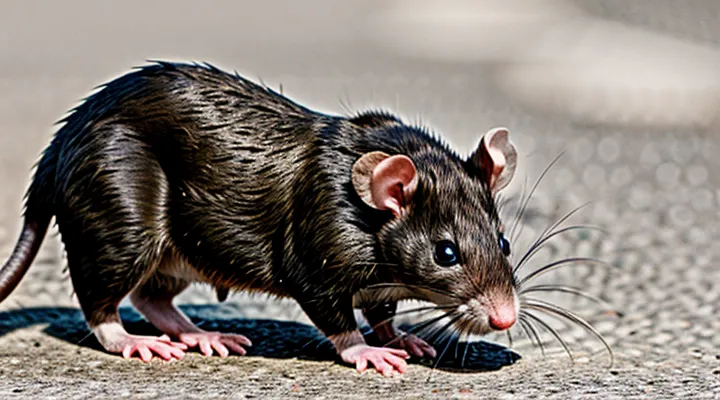
The Rat Reproductive Cycle
Estrous Cycle and Mating
The estrous cycle of laboratory rats lasts approximately four to five days and consists of four distinct phases: proestrus, estrus, metestrus, and diestrus. Proestrus (≈ 12 hours) is characterized by rising estrogen levels and the development of a mature follicle. Estrus (≈ 12 hours) marks the period of sexual receptivity; females display a lordosis response and the vaginal opening becomes swollen. Metestrus (≈ 24 hours) follows ovulation, during which progesterone begins to rise. Diestrus (≈ 48 hours) is the luteal phase, maintaining elevated progesterone until the cycle restarts.
Mating should be timed to coincide with the estrus phase. Detection of estrus can be performed by visual inspection of the vaginal opening, assessment of vaginal cytology, or observation of the lordosis reflex when a male is introduced. Introducing a male during the late proestrus or early estrus maximizes the probability of successful copulation, as sperm deposition occurs shortly before ovulation. Successful mating is confirmed by the presence of a copulatory plug or sperm in vaginal smears.
The timing of conception directly influences the schedule of embryonic development and subsequent post‑natal growth. Fertilization during the optimal estrus window leads to a gestation period of roughly 21–23 days. Precise control of the mating schedule enables researchers to predict the birth date, plan longitudinal studies of offspring maturation, and synchronize experimental cohorts. Accurate alignment of the estrous cycle with breeding protocols thus ensures reliable timelines for developmental investigations.
Gestation Period
Factors Influencing Gestation Length
Rat gestation length varies considerably across individuals, with typical periods ranging from 21 to 23 days. Several biological and environmental variables modify this interval.
Genetic background exerts a primary influence. Inbred strains such as Wistar, Sprague‑Dawley, and Long‑Evans display distinct average durations; Wistar rats often gestate closer to 22 days, whereas Sprague‑Dawley females may extend to 23 days. Allelic differences affecting hormonal regulation and uterine contractility underlie these disparities.
Maternal age and reproductive history affect the timing of parturition. Younger females (8–10 weeks) generally achieve shorter gestations, while older breeders (over 12 months) experience modest extensions. Multiparous dams tend to deliver earlier than primiparous counterparts, reflecting uterine adaptation after successive pregnancies.
Nutritional status directly modulates fetal growth and gestational timing. Caloric restriction or protein deficiency can delay implantation and prolong the gestational phase, whereas excess energy intake may accelerate fetal development and shorten the overall period. Micronutrient availability, particularly vitamin E and selenium, also correlates with gestation length.
Environmental temperature and housing conditions contribute to variability. Ambient temperatures below 20 °C slow metabolic rates and extend gestation, whereas temperatures between 22–24 °C optimize physiological processes and maintain standard durations. High‑density housing increases stress hormones, which can lengthen the gestational window.
Stressors and endocrine factors interact to shape the final timeline. Elevated corticosterone levels, induced by handling or crowding, suppress progesterone synthesis and delay parturition. Conversely, optimal prolactin and oxytocin signaling promotes timely uterine contractions and normal gestational length.
Key determinants of rat gestation duration:
- Genetic strain and specific allelic profiles
- Maternal age and parity status
- Dietary composition and caloric balance
- Ambient temperature and cage density
- Hormonal milieu affected by stress and endocrine regulation
Understanding these factors enables precise scheduling of experimental protocols and improves reproducibility in developmental studies.
Neonatal Development: Birth to Weaning
Birth and Initial Care
Rats give birth to litters ranging from six to twelve pups after a gestation period of approximately 21‑23 days. Newborns are altricial: hairless, blind, and unable to thermoregulate. The dam immediately initiates a series of behaviors that ensure survival.
Key aspects of initial care include:
- Cleaning: The mother chews each pup to remove membranes and stimulate circulation.
- Nursing: Pups attach to nipples within hours, receiving colostrum rich in antibodies.
- Thermoregulation: The dam huddles to provide warmth, maintaining nest temperature around 30 °C.
- Protection: The mother remains vigilant, defending the nest against predators and disturbances.
These processes occur continuously during the first post‑natal week, establishing the foundation for subsequent growth stages.
Early Postnatal Development
Sensory Development
Rat offspring exhibit a rapid sequence of sensory milestones during the first three weeks after birth. Early tactile and proprioceptive feedback guides nursing and locomotion, with whisker movement detectable by the second postnatal day.
Auditory function emerges as the external ear canal opens and the startle reflex becomes observable between days 10 and 12. Neural synchrony in the auditory cortex reaches adult‑like patterns by the third week.
Vision remains immature at birth; eyelid opening occurs around day 14, followed by measurable photoreceptor activity and pupillary responses by days 15–16. Cortical visual processing attains mature latency values near day 21.
Olfactory and gustatory systems provide essential environmental cues for feeding. Functional odor detection is evident within the first five days, while taste discrimination emerges by day 7, supported by rapid maturation of the gustatory cortex.
Key developmental time points:
- Day 1‑3: Whisker movement, tactile reflexes.
- Day 5‑7: Olfactory detection, gustatory discrimination.
- Day 10‑12: Ear canal patency, auditory startle reflex.
- Day 14: Eyelid opening.
- Day 15‑16: Photoreceptor responsiveness.
- Day 21: Adult‑like visual cortical processing.
Motor Skill Development
Motor skill acquisition in rat pups follows a predictable sequence that aligns with overall post‑natal development. The first detectable limb movements appear within the first 24 hours after birth, primarily as spontaneous twitches that lack coordination. By post‑natal day (PND) 4, pups exhibit forelimb grasping when presented with a tactile stimulus, indicating the emergence of basic reflexive control.
Between PND 7 and PND 10, coordinated fore‑ and hind‑limb movements become evident during crawling on a horizontal surface. This period marks the transition from reflexive to volitional locomotion, as pups can navigate short distances toward a maternal scent source. By PND 12, the righting reflex is fully established, allowing pups to orient themselves upright when placed on their backs.
The onset of more complex motor patterns, such as open‑field exploration and balance on narrow beams, occurs from PND 15 onward. At this stage, pups demonstrate increased stride length, reduced foot‑slip frequency, and the ability to sustain upright posture for extended periods. Full maturation of skilled locomotion, comparable to adult performance in tasks like the rotarod, is typically reached by PND 21–23, coinciding with weaning.
Key developmental milestones can be summarized:
- PND 1–3: Spontaneous twitches; rudimentary grasp reflex.
- PND 4–6: Forelimb grasping in response to tactile cues.
- PND 7–10: Coordinated crawling; initial voluntary locomotion.
- PND 12: Complete righting reflex; upright orientation.
- PND 15–21: Advanced gait, balance, and exploratory behavior.
- PND 21–23: Adult‑like motor proficiency; readiness for complex tasks.
Neurophysiological changes accompany these behavioral shifts. Myelination of corticospinal tracts accelerates between PND 10 and PND 15, enhancing signal conduction speed and supporting refined motor output. Synaptic pruning in the motor cortex peaks around PND 18, optimizing neural circuits for precise movement control.
Assessment methods such as the inclined plane test, ladder rung walking, and grip strength measurement provide quantitative indices of motor development. Data from these assays confirm that the rapid progression from reflexive movements to skilled locomotion occurs within the first three weeks of life, establishing the temporal framework for motor skill maturation in rat offspring.
Weaning and Independence
Rat pups typically leave the nest and begin to consume solid food between post‑natal day 14 and day 21. During this interval, the dam’s milk production declines while the litter increases its intake of chow and water. By day 21, most individuals are capable of meeting the majority of their nutritional requirements without maternal assistance.
Independence progresses as the young rodents explore the cage, develop locomotor competence, and establish social hierarchies. Separation from the dam after weaning reduces stress hormones and promotes autonomous foraging behavior. Survival rates improve once the pups can regulate body temperature, locate shelter, and avoid predators without maternal guidance.
Key milestones:
- Day 14 – initiation of solid‑food consumption, partial reliance on milk.
- Day 21 – complete weaning, majority of caloric intake from chow.
- Day 24–28 – full independence, self‑regulation of thermoregulation and social interaction.
These stages define the transition from maternal dependence to autonomous adulthood in laboratory rats.
Post-Weaning Development and Sexual Maturity
Juvenile Stage
The juvenile stage in laboratory rats extends from the completion of the neonatal period (approximately post‑natal day 10) to the onset of sexual maturity (around post‑natal day 45–55). During this interval, rapid somatic growth, organ maturation, and behavioral development occur.
Key physiological milestones include:
- Weight gain: body mass increases from roughly 15 g at weaning to 250–300 g at sexual maturity.
- Skeletal development: epiphyseal plates remain open, allowing continued lengthening of long bones.
- Neural maturation: myelination progresses, enhancing motor coordination and sensory processing.
- Immune competence: adaptive immune responses become fully functional, reducing susceptibility to infections.
- Reproductive axis activation: gonadotropin‑releasing hormone (GnRH) pulsatility rises, leading to the first estrus in females and sperm production in males.
Behaviorally, juveniles display heightened exploratory activity, social play, and the establishment of hierarchical structures within litters. Environmental enrichment during this period can modulate stress reactivity and cognitive performance.
Nutritional requirements shift from milk dependence to solid food consumption. Adequate protein (≈20 % of diet), essential fatty acids, and micronutrients support the accelerated growth rate. Monitoring feed intake and body weight provides reliable indicators of developmental progress.
Overall, the juvenile phase represents a critical window in which physiological systems transition from dependence to autonomy, setting the foundation for adult phenotypes. Accurate timing of experimental interventions must consider the defined age range to ensure relevance to the developmental stage under investigation.
Puberty and Sexual Maturation
Hormonal Changes
Hormonal regulation orchestrates the entire developmental trajectory of rat offspring, beginning with embryogenesis and continuing through the weaning period. Endocrine signals dictate cellular differentiation, organ maturation, and behavioral readiness for independent feeding.
- Estrogen and progesterone: peak during late gestation, driving uterine preparation and fetal tissue growth.
- Prolactin: rises in the perinatal window, supporting lactation and neonatal metabolism.
- Corticosterone: exhibits a surge around birth, facilitating lung maturation and stress adaptation.
- Growth hormone: increases from postnatal day 4, promoting somatic growth and skeletal development.
- Thyroid hormones (T₃, T₄): ascend sharply between days 10 and 15, accelerating brain myelination and thermoregulation.
The hormonal profile follows a predictable temporal pattern. During embryonic days 0‑21, maternal steroids dominate, reaching maximal concentrations at gestational day 19. At birth (postnatal day 0), corticosterone and prolactin attain their highest levels, then decline within the first week. Growth hormone and thyroid hormones display gradual elevations, peaking around postnatal days 14‑21, coinciding with rapid weight gain and onset of independent locomotion.
These endocrine dynamics align with critical developmental milestones: organ system maturation, sensory capability emergence, and the transition from maternal milk to solid food. Understanding the timing and magnitude of hormonal fluctuations provides a framework for interpreting experimental outcomes and for designing interventions that modify growth trajectories in laboratory rat models.
Reproductive Readiness
Reproductive readiness in laboratory rats emerges shortly after weaning, typically between 35 and 45 days of age. At this stage, females exhibit first estrus cycles, and males display elevated testosterone levels sufficient for successful mating.
Key physiological indicators of sexual maturity include:
- Vaginal opening in females, accompanied by cyclic estrogen fluctuations.
- Enlargement of testes and seminal vesicles in males, reflecting increased spermatogenic activity.
- Presence of mature spermatozoa in epididymal samples, confirming functional fertility.
Hormonal cascades governing puberty involve a rise in gonadotropin‑releasing hormone from the hypothalamus, stimulating luteinizing hormone and follicle‑stimulating hormone release. These pituitary hormones trigger gonadal development, culminating in gamete production.
Environmental variables such as photoperiod, nutrition, and housing density modulate the timing of reproductive competence. Adequate protein intake and stable light cycles accelerate maturation, whereas overcrowding or caloric restriction can delay onset.
Accurate identification of reproductive readiness is essential for scheduling breeding pairs, synchronizing experimental cohorts, and interpreting developmental timelines. Aligning offspring collection with the onset of parental fertility ensures consistency across longitudinal studies of growth and behavior.