
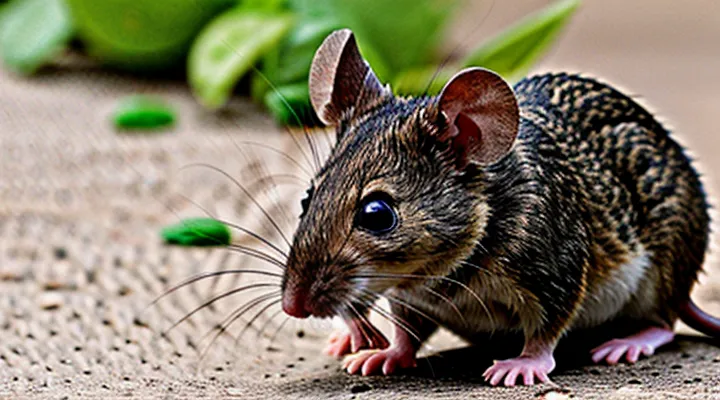
«The Crucial Role of Water for Mice»
«Physiological Importance of Hydration»
«Water in Metabolic Processes»
Water serves as the medium for enzymatic reactions that convert nutrients into usable energy. In glycolysis, glucose molecules are phosphorylated and split, a process that requires aqueous conditions to maintain substrate solubility and enzyme conformation. The citric acid cycle operates within the mitochondrial matrix, where water participates in the hydration of intermediates such as cis‑aconitate to form isocitrate. Oxidative phosphorylation relies on proton gradients established across the inner mitochondrial membrane, a mechanism that depends on the presence of water to facilitate ion transport and maintain membrane fluidity.
Dehydration disrupts these pathways by increasing intracellular solute concentration, leading to protein denaturation and loss of catalytic activity. Cellular osmolality shifts cause membrane permeability alterations, impairing nutrient uptake and waste removal. As metabolic flux declines, ATP production drops, and physiological functions such as thermoregulation and muscle contraction become compromised.
Key metabolic consequences of water deficit in a mouse include:
- Reduced glycolytic flux, decreasing pyruvate availability.
- Inhibited citric acid cycle activity, lowering NADH and FADH₂ generation.
- Impaired electron transport chain efficiency, resulting in diminished ATP synthesis.
- Accelerated catabolism of stored glycogen and lipids, producing metabolic water insufficient to offset loss.
The combined effect of these disruptions shortens the period a mouse can endure without external water sources. Survival time correlates with the rate at which metabolic water production fails to meet the organism’s basal requirements, leading to rapid onset of critical dehydration.
«Thermoregulation and Water Loss»
Thermoregulation in mice tightly controls body temperature, directly influencing water balance. Heat dissipation occurs through evaporative cooling, respiratory water loss, and skin diffusion. When ambient temperature rises, metabolic heat production increases, prompting higher respiration rates and greater water vapor exhalation. Concurrently, vasodilation expands peripheral blood flow, accelerating heat loss but also elevating cutaneous water evaporation.
Key physiological mechanisms affecting water depletion include:
- Elevated respiration frequency → increased pulmonary water loss.
- Enhanced skin perfusion → amplified transepidermal water diffusion.
- Urinary concentration limits → reduced ability to conserve water under thermal stress.
Mice possess a high surface‑to‑volume ratio, which accelerates heat exchange and intensifies fluid loss. In environments exceeding thermoneutral range, dehydration accelerates, shortening survival duration without external water sources. Efficient heat dissipation therefore imposes a trade‑off between temperature regulation and fluid preservation, critically shaping endurance limits.
«Factors Influencing Mouse Survival Without Water»
The survival of a mouse without water depends on multiple interacting variables. Understanding these variables clarifies the limits of dehydration tolerance in laboratory and wild rodents.
Key factors include:
- Physiological water balance mechanisms such as renal concentrating ability and respiratory water loss.
- Ambient temperature and relative humidity, which alter evaporative demand and heat dissipation.
- Body size and age; smaller and younger individuals exhibit higher surface‑to‑volume ratios, accelerating fluid loss.
- Nutritional status, particularly the presence of metabolic water from food substrates.
- Health condition, where disease or stress hormones impair fluid retention.
- Genetic strain, reflecting inherent differences in kidney morphology and hormone regulation.
- Acclimation history, with prior exposure to dry environments enhancing adaptive responses.
Each factor modifies the rate of dehydration and the point at which critical physiological failure occurs, thereby determining the overall duration a mouse can endure water deprivation.
«Environmental Conditions»
«Temperature and Humidity Impact»
Temperature dramatically influences the rate at which a mouse loses water. Higher ambient heat accelerates evaporative loss through the skin and respiratory tract, reducing the time a mouse can endure without drinking. Conversely, cooler conditions slow metabolic activity and lower evaporative demand, extending the dehydration tolerance window.
Humidity modifies this relationship by altering the gradient for water vapor loss. In low‑humidity environments, the dry air draws moisture from the animal’s body more rapidly, compounding the effects of heat. In high‑humidity settings, the saturated air diminishes the driving force for evaporation, allowing a mouse to retain water longer even when temperatures are elevated.
Key effects:
- Heat + dry air: fastest dehydration, survival time may drop to a few hours.
- Heat + humid air: still rapid loss, but slightly slower than dry conditions.
- Cool + dry air: moderate loss, survival time extends to many hours.
- Cool + humid air: slowest loss, mice can persist without water for the longest periods recorded.
Laboratory observations confirm that a temperature increase of 5 °C at constant humidity can halve the dehydration endurance, while a 20 % rise in relative humidity at constant temperature can increase it by roughly 30 %. These quantitative trends underscore the combined impact of thermal and moisture variables on mouse water‑free survival.
«Availability of Moisture-Rich Food»
Moisture‑rich food provides a source of water that can offset the absence of free drinking water for a mouse. When dietary items contain high percentages of fluid, the animal extracts water through digestion, thereby maintaining blood volume and cellular hydration longer than in a dry‑food regimen.
Typical moisture content in common rodent foods ranges from 60 % to 90 % of total mass. Consumption of such items can extend survival without external water by several hours, with experimental observations indicating an increase of 30 % to 50 % in time‑to‑critical dehydration compared with a low‑moisture diet.
Key moisture‑rich foods include:
- Fresh fruits such as apple slices (≈ 85 % water) and berries (≈ 90 % water)
- Vegetables like cucumber (≈ 95 % water) and lettuce (≈ 95 % water)
- Commercially prepared gel blocks designed for laboratory rodents (≈ 70 % water)
The physiological mechanism relies on gastrointestinal absorption of water, which supports renal function and reduces the rate of plasma osmolality rise. Consequently, the presence of «Availability of Moisture-Rich Food» directly influences the maximum duration a mouse can endure without direct water intake, adding a measurable buffer to its dehydration tolerance.
«Individual Mouse Characteristics»
«Age and Health Status»
Age significantly influences a mouse’s ability to endure dehydration. Juvenile mice, typically under four weeks old, possess higher metabolic rates and limited fat reserves, resulting in rapid onset of critical dehydration symptoms within 12‑18 hours. Adult mice, aged 8‑12 weeks, exhibit greater water retention capacity and can survive up to 24‑30 hours without fluid intake under standard laboratory conditions. Senior mice, older than 18 months, experience diminished renal function and reduced skin elasticity, shortening survival time to approximately 10‑14 hours.
Health status modifies these age‑related patterns. Mice with compromised immune systems, such as those bearing genetic immunodeficiencies, display accelerated physiological decline, losing up to 15 % of body mass within the first 8 hours of water deprivation. Animals with metabolic disorders, including obesity or diabetes, demonstrate altered osmotic balance, extending survival by 4‑6 hours compared with healthy counterparts of the same age. Conversely, mice receiving regular veterinary care, exhibiting normal blood electrolyte levels and intact kidney function, maintain homeostasis longer than untreated peers.
Key factors determining survival duration without water:
- Age group: juvenile → shortest, adult → intermediate, senior → shortest.
- Immune competence: intact → extended survival, compromised → reduced survival.
- Metabolic health: normal → baseline, disorders (obesity, diabetes) → variable extension.
- Renal efficiency: optimal → longer tolerance, impaired → rapid decline.
Monitoring body weight, skin turgor, and respiratory rate provides practical indicators of dehydration severity across different ages and health conditions.
«Species-Specific Adaptations»
Mice exhibit a range of physiological and behavioral traits that determine the length of survival without water. These traits vary markedly among species, influencing dehydration tolerance and mortality timelines.
Key adaptations include:
- Renal concentration ability: desert‑dwelling mice possess elongated loops of Henle, allowing urine osmolarity up to 5 000 mOsm kg⁻¹, which conserves water far more efficiently than the shorter loops found in common house mice.
- Metabolic water production: species that rely heavily on carbohydrate oxidation generate up to 0.6 g of water per gram of metabolized substrate, extending survival by several hours compared to those with lower metabolic water yields.
- Cutaneous water loss reduction: fur density and skin lipid composition differ among species; arid‑adapted mice display thicker fur and a more impermeable epidermal barrier, decreasing evaporative loss by approximately 30 % relative to temperate counterparts.
- Behavioral water‑seeking: nocturnal foragers limit activity to cooler periods, reducing respiratory water loss; some species also practice opportunistic drinking from dew or plant sap, delaying dehydration onset.
These adaptations collectively shape the maximum dehydration duration for each mouse species. For instance, the cactus mouse (Peromyscus eremicus) can endure up to 72 hours without free water, whereas the laboratory house mouse (Mus musculus) typically succumbs within 24–36 hours under identical conditions. Understanding «Species‑Specific Adaptations» clarifies the divergent survival limits observed across mouse taxa.
«Survival Estimates and Practical Implications»
«Average Survival Duration»
«Laboratory vs. Wild Environments»
Laboratory mice typically receive controlled access to water, allowing precise measurement of dehydration thresholds. Under experimental conditions, mice survive without water for approximately 48–72 hours before critical physiological failure appears. Researchers record body‑weight loss, plasma osmolality, and renal function to define the survival limit.
Wild mice encounter intermittent water sources and exhibit behavioral adaptations that extend dehydration tolerance. Field observations indicate survival periods of up to 96 hours when water is scarce, supported by reduced activity, nocturnal foraging, and efficient renal concentration mechanisms.
Key differences between captive and free‑living specimens include:
- Hydration baseline: laboratory animals maintain constant hydration; wild individuals start with higher baseline plasma osmolality.
- Metabolic rate: captive mice show elevated basal metabolism due to stable ambient temperature; wild mice lower metabolic demand during drought.
- Stress response: laboratory subjects experience acute stress from forced deprivation; wild mice undergo chronic, adaptive stress conditioning.
- Data variability: controlled experiments yield narrow confidence intervals; field data present broader ranges due to environmental heterogeneity.
Understanding these contrasts refines extrapolation of laboratory dehydration data to natural populations, ensuring accurate predictions of mouse survival under water‑limited scenarios.
«Signs of Dehydration in Mice»
Dehydration in mice manifests through observable physiological and behavioral changes that indicate insufficient water intake. Recognizing these signs is essential for assessing the limits of survival under water‑restricted conditions.
Typical indicators include:
- Skin that loses elasticity, causing a slower return to normal shape after gentle pinching.
- Dry, flaky fur and a dull coat appearance.
- Reduced urine output, often accompanied by concentrated, amber‑colored urine.
- Weight loss exceeding normal metabolic fluctuations.
- Lethargy, diminished activity, and reluctance to explore the environment.
- Increased heart rate and rapid breathing detectable with appropriate equipment.
- Elevated blood osmolarity and hematocrit levels measured in laboratory analyses.
These symptoms emerge progressively as water deprivation extends, providing measurable milestones for estimating the maximum duration a mouse can endure without fluid intake. Monitoring them allows researchers to define humane endpoints and to correlate physiological decline with survival time.
«Preventative Measures and Humane Considerations»
«Ensuring Adequate Water Access in Captivity»
Ensuring reliable water provision is essential for the health of captive mice. Dehydration reduces physiological functions within hours, leading to rapid weight loss, impaired thermoregulation, and organ failure. Laboratory standards typically require water availability at all times, reflecting the species’ limited capacity to endure fluid deficit.
Key measures for maintaining adequate hydration include:
- Automatic dispensers calibrated to deliver fresh water continuously, preventing interruption due to equipment malfunction.
- Daily inspection of bottles or sipper tubes for blockages, leakage, or contamination.
- Use of water bottles with metal caps to reduce spillage and preserve water quality.
- Monitoring of water consumption per cage; deviations from baseline intake signal potential health issues.
- Implementation of backup power sources for electronic watering systems to avoid outages.
Environmental factors influence water needs. Elevated ambient temperature increases evaporative loss, necessitating higher intake. High humidity reduces respiratory water loss but may promote bacterial growth, requiring more frequent water changes. Diet composition also affects demand; high‑protein or dry chow formulations elevate fluid requirements.
Documentation of water consumption trends supports early detection of illness. Recording daily volumes alongside body weight provides a quantitative basis for veterinary assessment. Prompt corrective action—such as supplemental water gels or subcutaneous fluids—mitigates the risk of fatal dehydration.
Regulatory guidelines mandate that water be accessible without barriers. Cage designs must allow unrestricted access, and any enrichment objects should not obstruct drinking stations. Compliance with these standards sustains animal welfare and ensures the validity of experimental results.
«Understanding Dehydration Risks in Pest Control»
The ability of rodents to endure water scarcity directly influences pest‑control strategies. A mouse typically succumbs after three to four days without hydration, although individual tolerance varies with ambient temperature, age, and health status. This physiological limit defines the window for effective intervention when moisture sources are removed.
Dehydration risk assessment should consider the following factors:
- Ambient humidity: lower humidity accelerates fluid loss through respiration and skin.
- Temperature extremes: heat increases metabolic rate, shortening survival time.
- Access to alternative water: condensation, leaky pipes, or plant soil can extend viability.
- Species‑specific physiology: larger rodents possess greater water reserves than mice.
Control measures that exploit dehydration include:
- Elimination of standing water and leaks in building structures.
- Installation of moisture‑absorbing barriers in crawl spaces.
- Use of desiccant‑based baits that reduce water availability while delivering active ingredients.
- Regular monitoring of humidity levels to ensure conditions remain unfavorable for rodent persistence.
Understanding the interplay between environmental moisture and rodent survival underpins proactive pest management. Implementing the outlined actions reduces the likelihood of infestations by limiting the essential resource of water, thereby shortening the period rodents can remain active within premises.