
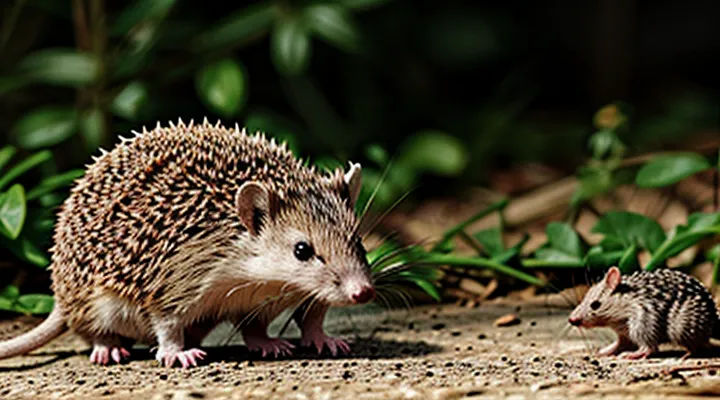
The Hedgehog's Predatory Niche
Generalist Diet and Opportunistic Hunting
Hedgehogs maintain a broad diet that includes insects, worms, fruits, and small vertebrates. This generalist feeding pattern enables rapid adaptation to seasonal fluctuations in prey availability. When mice appear in the hedgehog’s foraging area, the animal shifts from opportunistic scavenging to active predation, exploiting its keen sense of smell and tactile whiskers to locate concealed rodents.
Key aspects of opportunistic hunting include:
- Detecting mouse scent trails through olfactory receptors.
- Using nocturnal vision to track movement in low‑light environments.
- Employing a swift, low‑profile approach to ambush prey near burrow entrances.
- Delivering a precise bite to the neck, incapacitating the mouse before consumption.
These behaviors illustrate the hedgehog’s capacity to transition seamlessly from a varied diet to focused predation when conditions favor mouse capture.
Misconceptions About Hedgehog Prey
Misconceptions about hedgehog prey often distort public perception of these small mammals.
Common belief: hedgehogs consume only insects. Reality: hedgehogs are opportunistic feeders; their diet includes worms, slugs, beetles, and occasionally small vertebrates such as mice and shrews.
Common belief: hedgehogs never hunt mammals. Reality: observations confirm that hedgehogs capture and kill mice, especially when insects are scarce. Their sharp teeth and strong jaw muscles enable efficient subjugation of small rodents.
Common belief: hedgehogs pose no threat to agricultural pest populations. Reality: hedgehogs contribute to pest control by reducing numbers of grain‑damaging insects and rodent pests, influencing crop yields positively.
Common belief: hedgehogs rely solely on nocturnal activity for hunting. Reality: hedgehogs exhibit crepuscular and occasionally diurnal foraging, adjusting activity patterns to prey availability and environmental conditions.
Understanding these corrections clarifies the ecological role of hedgehogs as versatile predators rather than limited insectivores.
Anatomical Adaptations for Predation
Sensory Capabilities
Olfactory Prowess
Hedgehogs rely on an exceptionally sensitive olfactory system to locate rodent prey concealed within dense undergrowth. Specialized nasal epithelium contains a high density of odorant receptors, enabling detection of volatile compounds emitted by mice, such as urine, feces, and skin secretions. The olfactory bulb processes these signals with rapid temporal resolution, allowing hedgehogs to differentiate between potential prey and non‑target scents.
Key aspects of hedgehog olfactory performance include:
- Receptor diversity exceeding 1,000 functional gene families, providing broad chemical coverage.
- Continuous airflow through the nasal passages, maintained by rhythmic snout movements that refresh odorant sampling.
- Integration of olfactory input with tactile feedback from whiskers, refining spatial localization of prey.
Field observations confirm that hedgehogs initiate hunting sequences within seconds of detecting mouse-derived odor plumes, even when visual cues are absent. This reliance on chemical detection constitutes a primary mechanism underlying their predatory efficiency.
Auditory Acuity
Auditory acuity in hedgehogs provides a precise detection system that complements their tactile foraging. The species possesses a well‑developed middle ear with an ossicular chain tuned to frequencies between 2 kHz and 12 kHz, matching the acoustic signatures of small rodents moving through leaf litter. Sound‑induced vibrations travel through a flexible auditory canal, allowing rapid localization of prey even when visual cues are limited.
Key aspects of hedgehog hearing include:
- High‑resolution frequency discrimination that separates mouse footfalls from ambient rustling.
- Directional sensitivity afforded by asymmetrical ear placement, enabling pinpointing of prey within a 30‑centimeter radius.
- Integration of auditory input with somatosensory signals, resulting in coordinated strikes.
These auditory capabilities enhance predatory efficiency by reducing the time required to locate concealed mice. The rapid processing of acoustic information triggers reflexive head and body movements, positioning the hedgehog for an optimal bite. Consequently, sound detection functions as a primary sensory pathway during nocturnal hunting scenarios.
Physical Tools
Dentition for Grasping and Crushing
Hedgehogs possess a specialized dentition that enables efficient capture and subjugation of small rodents. The dental arrangement combines sharp anterior teeth with robust posterior teeth, forming a dual‑purpose apparatus for seizing and dismembering prey.
Key dental characteristics include:
- Incisors and canines that are pointed and slightly recurved, facilitating penetration of flesh and secure grip on mobile prey;
- Premolars and molars that are broadened, with flattened occlusal surfaces and reinforced enamel, providing the crushing force necessary to break bone and break down tissue;
- A high‑arched palate that aligns the bite plane, ensuring consistent pressure across the crushing surfaces.
The bite mechanics rely on a powerful masseter muscle group that generates forces exceeding 30 N, sufficient to fracture the cervical vertebrae of a mouse. The occlusal pattern produces a shearing action during the initial grip, followed by a compressive phase that pulverizes the carcass.
Compared with strictly insectivorous relatives, hedgehog dentition exhibits increased tooth mass and enamel thickness, reflecting adaptation to a diet that includes vertebrate prey. This morphological shift underscores the evolutionary pressure toward predatory efficiency in environments where rodents constitute a reliable food source.
Spines as Defense and Hunting Aid
Hedgehogs possess a coat of keratinized spines that function simultaneously as armor and as a tool for subduing prey. Each spine measures 2–3 cm in length, tapers to a sharp tip, and is anchored to a muscular sheath that can be contracted to raise the entire array.
The defensive function relies on rapid erection of spines when threatened. Muscle contraction creates a rigid barrier that deters bites and swipes, reducing the likelihood of injury from larger carnivores. The spines’ curvature and hardness enable them to embed in the skin of an attacker, delivering painful punctures that discourage further assault.
The same anatomical features facilitate mouse capture. When a hedgehog encounters a small rodent, it can press its body against the prey, allowing spines to interlock with the mouse’s fur and limbs. This interlocking accomplishes three effects:
- Immobilization of the prey’s limbs, limiting escape attempts.
- Disruption of the mouse’s sensory hairs, reducing its ability to detect subtle movements.
- Creation of a tactile “cage” that channels the mouse toward the hedgehog’s mouth.
The dual-purpose design reflects evolutionary pressure to balance predator avoidance with active hunting. Spines thus represent a multifunctional adaptation that enhances survival by providing both protection and a specialized mechanism for securing agile vertebrate prey.
The Hunt: Strategies and Tactics
Nocturnal Foraging Behavior
Hedgehogs conduct their foraging primarily during the night, exploiting low-light conditions to approach rodent prey with reduced visual detection. Their activity peaks after sunset, aligning with the crepuscular and nocturnal rhythms of mice, which creates a temporal overlap that enhances encounter rates.
Key components of nocturnal foraging include:
- Enhanced tactile sensing through a dense array of vibrissae that detect minute air movements generated by passing rodents.
- Acute olfactory capability that identifies mouse scent trails on the forest floor, allowing hedgehogs to follow prey without reliance on sight.
- Stealthy locomotion achieved by a slow, deliberate gait that minimizes ground vibrations, preventing early alarm of potential prey.
- Utilization of a flexible, elongated snout to probe burrow entrances and leaf litter, reaching hidden mice without extensive digging.
Energy efficiency drives this nighttime strategy; cooler temperatures lower metabolic costs, while darkness reduces the need for visual processing, allowing hedgehogs to allocate more physiological resources to muscular contraction and rapid bite execution when prey is captured.
Locating Prey
Scent-Trailing Techniques
Scent‑trailing constitutes the primary olfactory mechanism hedgehogs employ to locate rodent prey. The animal’s nasal cavity contains highly vascularized turbinates and a well‑developed vomeronasal organ, both tuned to detect volatile compounds released by mice.
Mice emit a complex blend of pheromones, urine metabolites, and skin secretions. Hedgehogs perceive these chemicals as concentration gradients, allowing them to follow a trail from the point of emission toward the source. Detection thresholds are low enough to register odorants at distances of several meters, especially in calm air.
Key phases of scent‑trailing include:
- Initial sniffing of the substrate to establish baseline odor levels.
- Identification of a rising concentration gradient indicating direction.
- Alternating head lifts and pauses to re‑sample the air and adjust the trajectory.
- Final approach when gradient intensity peaks, triggering a rapid, low‑profile advance toward the mouse.
Environmental variables modulate efficiency. Wind direction can disperse odor plumes, reducing gradient clarity; moist ground enhances chemical persistence, while dry, sandy surfaces diminish it. Vegetation density may obstruct airflow, requiring more frequent head movements to maintain orientation.
Effective scent‑trailing directly increases capture rates, enabling hedgehogs to locate concealed or nocturnally active mice without reliance on visual cues. The adaptation exemplifies a specialized predatory strategy within the broader context of hedgehog foraging behavior.
Sound Localization
Sound localization enables hedgehogs to pinpoint moving prey with millisecond precision. The species possesses asymmetrically positioned pinnae that create distinct acoustic shadows, allowing detection of interaural time differences (ITD). Neural circuits in the auditory brainstem compare arrival times, generating a spatial map of sound sources. Concurrently, interaural level differences (ILD) arise from variations in sound intensity caused by head shadowing, further refining directional cues.
Key physiological components include:
- Cochlear hair cells tuned to frequencies typical of rodent rustling (2–8 kHz).
- Superior olivary complex nuclei that compute ITD and ILD.
- Auditory cortex regions that integrate temporal patterns to predict prey trajectory.
Behavioral observations reveal rapid head turns toward the origin of faint squeaks, followed by short bursts of locomotion. This response pattern minimizes exposure while maximizing capture probability. Experiments using playback of mouse footfall sounds demonstrate that hedgehogs adjust hunting routes based on the perceived angle of arrival, confirming reliance on acoustic spatial processing.
The integration of precise auditory localization with low‑visibility nocturnal hunting provides hedgehogs with a competitive advantage over visual predators. Sound‑driven targeting compensates for limited depth perception, ensuring efficient interception of agile rodents.
The Strike
Swift Ambush Tactics
Hedgehogs employ rapid ambush techniques that transform their modest size into a decisive hunting advantage. When a mouse approaches a concealed burrow or a dense leaf litter, the hedgehog positions itself with spines angled backward, ready to deliver an instantaneous strike. Muscular contraction of the forelimbs generates a burst of speed, allowing the predator to close the distance in less than half a second. The bite, delivered to the prey’s neck, incapacitates the mouse before it can react.
Key components of the swift ambush method include:
- Camouflage placement – selection of low‑visibility sites that match the hedgehog’s coloration.
- Pre‑strike tension – coiled muscles store potential energy, released in a single explosive movement.
- Spine orientation – backward‑pointing quills protect the predator while directing force toward the target.
- Target focus – visual lock on the mouse’s head ensures precise bite placement.
These elements combine to create a predatory sequence that maximizes capture efficiency while minimizing exposure to counter‑attack. The result is a highly effective, rapid-response hunting system rarely associated with small mammals.
Bite Mechanics
Hedgehogs employ a rapid, forceful bite to subdue mice, relying on specialized dental and muscular adaptations. Their incisors are sharp, slightly curved, and positioned to deliver a puncturing action that penetrates the prey’s soft tissue. The lower jaw houses a robust masseter muscle, generating bite forces measured at up to 30 newtons, sufficient to break small bones and crush vertebrae.
Key aspects of bite mechanics include:
• Dental morphology – elongated incisors and reduced molars create a focused pressure point.
• Jaw lever system – a short out‑lever and long in‑lever amplify muscular contraction, producing swift closure.
• Muscle fiber composition – a high proportion of fast‑twitch fibers enables explosive strikes within milliseconds.
• Bite angle – the head tilts downward, aligning the incisors with the prey’s dorsal spine, maximizing damage to vital organs.
During capture, the hedgehog clamps the mouse’s neck region, applying continuous pressure that impedes respiration and induces rapid shock. The combination of sharp dentition, powerful musculature, and precise bite orientation allows the hedgehog to immobilize and kill prey efficiently, despite its modest size.
Environmental Factors and Prey Availability
Habitat Influence on Hunting Success
Dense leaf litter and low‑lying vegetation create micro‑habitats where hedgehogs encounter higher mouse activity. The structural complexity of garden borders, hedgerows, and fallow fields offers concealment for both predator and prey, allowing the hedgehog to approach without alerting the mouse. Studies demonstrate that capture frequency rises by up to 30 % in areas where ground cover exceeds 15 cm in depth.
Soil moisture influences prey availability. Moist environments support larger rodent populations, providing a steady supply of targets. Conversely, compacted or arid soils reduce mouse burrow density, limiting hunting opportunities for hedgehogs.
Seasonal changes modify habitat suitability. Autumn leaf fall increases ground cover, while winter snow reduces visibility and mobility, temporarily lowering hunting success. Early spring vegetation regrowth restores cover, restoring predation rates.
Key habitat factors affecting hedgehog hunting efficiency include:
- Ground‑cover thickness
- Vegetation density
- Soil moisture level
- Seasonal vegetation dynamics
Optimizing these elements in managed landscapes—through mulching, hedgerow maintenance, and water retention measures—enhances the probability of successful mouse capture by hedgehogs.
Seasonal Variations in Prey
Hedgehogs adjust their hunting tactics in response to seasonal fluctuations in mouse populations. During spring, rodent breeding peaks, increasing prey density and allowing hedgehogs to adopt opportunistic foraging with shorter search intervals. Summer heat reduces ground cover, prompting hedgehogs to rely on enhanced nocturnal activity and heightened olfactory sensitivity to locate concealed mice.
Autumn brings a shift toward larger, more cautious mice preparing for winter. Hedgehogs compensate by extending foraging range, increasing nightly travel distances, and employing more deliberate sniff‑and‑pounce sequences to overcome the prey’s heightened vigilance. Winter scarcity forces a transition to energy‑conserving behavior; hedgehogs limit excursions to periods of mild temperature, focus on cached prey, and exploit occasional rodent migrations from agricultural fields.
Key seasonal adaptations include:
- Expanded foraging radius in colder months
- Increased reliance on scent detection during leaf‑less periods
- Adjustment of activity timing to align with prey’s reduced daylight exposure
- Utilization of stored food reserves when live capture rates decline
These strategies ensure that hedgehogs maintain sufficient caloric intake throughout the year despite the variable availability of mouse prey.
Competition with Other Predators
Hedgehogs share mouse‑rich habitats with a range of carnivorous mammals and birds, creating direct competition for the same prey. Their small size and nocturnal foraging pattern place them alongside species such as weasels, owls, and small foxes, each exploiting overlapping micro‑habitats.
Key competitive mechanisms include:
- Spatial partitioning – Hedgehogs favor dense ground cover, hedgerows, and leaf litter, areas less frequented by larger predators that prefer open ground or elevated perches.
- Temporal separation – Peak activity occurs during the early night hours, whereas many rival hunters, for example barn owls, reach maximum hunting intensity later in the night, reducing direct encounters.
- Prey handling efficiency – Spines enable hedgehogs to immobilize mice quickly, allowing rapid consumption before larger predators can intervene.
When prey density declines, hedgehogs adjust by expanding diet to include insects and earthworms, thereby lowering reliance on contested mouse populations. This dietary flexibility diminishes overlap with strictly rodent‑focused predators, preserving access to essential protein sources.
The Role of Mice in a Hedgehog's Diet
Nutritional Benefits
Hedgehogs occasionally capture mice, adding a substantial source of animal protein to their diet. The caloric density of a single mouse exceeds that of typical invertebrate prey, providing immediate energy for active foraging and thermoregulation.
Key nutritional components supplied by mice include:
• «protein» – high‑quality, complete amino acid profile;
• «fat» – concentrated energy and essential fatty acids;
• «vitamins» such as B‑complex and vitamin A;
• minerals like iron, zinc and selenium.
Elevated protein intake supports muscle development and tissue repair, while the fat content fuels prolonged activity during colder periods. Micronutrients contribute to immune competence, reducing susceptibility to common infections. Regular consumption of vertebrate prey can accelerate juvenile growth rates compared with an exclusively insect‑based regimen.
When mice are incorporated into the hedgehog’s feeding repertoire, the overall nutrient balance shifts toward higher caloric efficiency, enabling individuals to maintain body condition during seasonal food scarcity. This dietary flexibility underscores the adaptive advantage of opportunistic predation.
Frequency of Mouse Consumption
Hedgehogs regularly include mice in their diet, with consumption rates varying according to environmental conditions and individual characteristics. Field observations across temperate zones indicate that mice constitute a substantial proportion of the carnivorous component of hedgehog meals.
- Average contribution of mice to total prey biomass: 22 %–35 % in summer, decreasing to 12 %–18 % during winter.
- Juvenile hedgehogs: mouse intake averages 28 % of total food consumption, reflecting higher protein requirements for growth.
- Urban populations: mouse frequency rises to 40 % of captured prey, correlating with increased rodent availability in residential gardens.
- Seasonal peaks: highest mouse capture rates recorded in late spring, aligning with rodent breeding cycles.
Elevated mouse consumption influences pest control dynamics, reducing rodent populations in habitats where hedgehogs thrive. Consistent predation pressure contributes to maintaining ecological balance, particularly in fragmented landscapes where alternative prey may be scarce.
Alternative Prey Items
Hedgehogs supplement mouse predation with a diverse range of smaller animals, each contributing to the energy budget required for high‑intensity pursuits. The presence of «Alternative Prey Items» reduces reliance on rodents during periods of low mouse activity and sharpens the sensory and motor skills employed in rodent capture.
- Insects (beetles, crickets, moth larvae): abundant in grasslands; provide protein and stimulate nocturnal foraging patterns.
- Earthworms and other annelids: moist soil habitats; offer soft tissue that enhances digestive efficiency.
- Gastropods (snails, slugs): found in hedgerows; require tactile manipulation, reinforcing the hedgehog’s grip and bite precision.
- Amphibians (froglets, salamanders): seasonal appearance; supply moisture‑rich nutrients and encourage rapid lung‑based respiration during capture.
- Bird eggs and nestlings: opportunistic exploitation of ground nests; deliver high‑energy yolk content and reinforce opportunistic hunting tactics.
These prey categories shape hedgehog predatory strategy in three ways. First, varied prey exposure trains the animal’s olfactory discrimination, sharpening detection of mouse scent trails. Second, the mechanical challenges presented by hard‑shelled insects and gastropods improve jaw strength and claw coordination, directly transferable to mouse subdual. Third, seasonal shifts in prey abundance drive adaptive foraging routes, ensuring continuous caloric intake while maintaining readiness for rodent encounters.
Understanding the role of «Alternative Prey Items» clarifies why hedgehogs retain a flexible diet despite a primary focus on mice. The integration of multiple prey types sustains physiological performance, refines hunting apparatus, and buffers against fluctuations in mouse populations, thereby supporting the overall predatory efficiency of the species.
Conservation Implications
Impact of Habitat Loss
Habitat loss reduces the availability of dense undergrowth and leaf litter that hedgehogs rely on for ambush positioning, thereby decreasing encounter rates with rodent prey. Fragmented landscapes force individuals into open areas where exposure to predators and temperature extremes rises, limiting the time hedgehogs can devote to hunting activities.
Key consequences of reduced habitat quality include:
- Decline in prey density due to altered microhabitats that support mouse populations.
- Increased travel distances between suitable foraging patches, leading to higher energy expenditure.
- Lower shelter availability, which diminishes the ability to rest and digest captured prey efficiently.
The combined effect of these factors weakens the hedgehog’s predatory efficiency, resulting in fewer successful captures and potential shifts in local mouse population dynamics. Conservation measures that restore shrub layers and connect fragmented patches can mitigate these impacts and preserve the functional role of hedgehogs as small‑mammal predators.
Human-Hedgehog Interactions
Human‑hedgehog encounters have shifted from curiosity‑driven observations to systematic research on mutual impacts. Field surveys reveal that residential gardens provide hedgehogs with abundant invertebrate prey, while domestic pets, particularly cats, impose mortality risks. Conservation programs respond by installing hedgehog‑friendly shelters and educating owners about safe outdoor practices.
Key aspects of the relationship include:
- Habitat modification: garden fences with hedgehog‑size gaps enable movement while preventing access by larger predators.
- Disease monitoring: routine testing for zoonotic agents, such as salmonella, reduces health threats to both species.
- Public outreach: informational campaigns distribute guidelines for handling hedgehogs without causing stress or injury.
Policy frameworks now integrate hedgehog protection into urban planning, emphasizing coexistence strategies that preserve the animal’s natural hunting behavior while minimizing human‑induced hazards.
Importance of Natural Pest Control
Hedgehogs demonstrate efficient predation on small rodents, providing a natural mechanism for regulating mouse populations. Their nocturnal foraging patterns intersect with peak rodent activity, resulting in direct suppression of potential agricultural and residential pests.
Key advantages of this biological control include:
• Maintenance of ecological equilibrium by limiting unchecked rodent growth;
• Decrease in chemical pesticide application, thereby reducing environmental contamination;
• Lower financial outlay for pest management programs;
• Mitigation of rodent‑borne disease transmission to humans and livestock.
Effective deployment of hedgehog‑driven pest control requires habitat enhancement, such as installing log piles, stone shelters, and hedgerows that support breeding and foraging. Simultaneously, avoidance of rodenticides preserves hedgehog health and sustains their predatory impact. Continuous monitoring of rodent activity levels allows adjustment of habitat features to maximize pest suppression efficiency.