
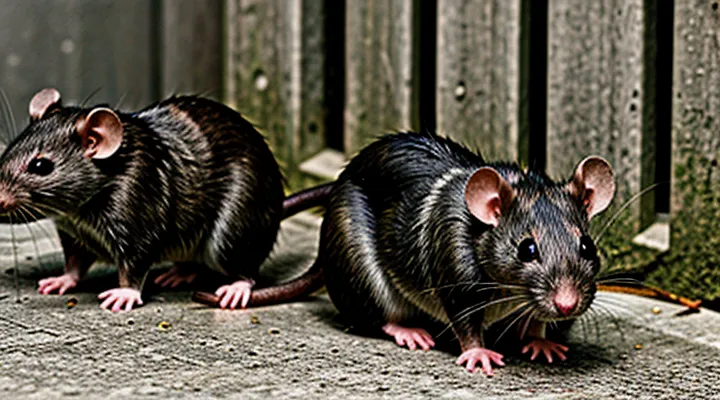
Understanding Rat Reproductive Cycles
Key Factors Influencing Reproduction Rates
Species-Specific Variations
Rats exhibit marked differences in annual breeding output among species. These variations arise from ecological adaptations, body size, and reproductive physiology.
- Brown rat (Rattus norvegicus) – typically produces three to five litters per year; each litter averages 6‑12 pups, resulting in up to 60 offspring annually under favorable conditions.
- Black rat (Rattus rattus) – generally yields two to four litters annually; litter size ranges from 5‑8 pups, giving a maximum of about 32 offspring per year.
- Polynesian rat (Rattus exulans) – confined to island habitats, often limits reproduction to two litters, with 4‑6 pups per litter, totaling roughly 12‑14 young each year.
- Gambian pouched rat (Cricetomys gambianus) – larger body mass supports three litters, each containing 3‑5 pups, producing up to 15 offspring annually.
Species-specific factors such as gestation length (typically 21‑23 days), weaning age, and seasonal food availability modulate these reproductive rates. Consequently, the annual reproductive potential of rats cannot be expressed as a single figure; it must be evaluated within the context of each species’ ecological niche.
Environmental Conditions
Rats reproduce more often when environmental parameters favor rapid physiological development and high offspring survival. Temperature above 20 °C accelerates sexual maturation, shortening the interval between estrous cycles. Shorter photoperiods delay puberty, reducing the number of litters per year. Adequate humidity (45‑65 %) maintains optimal sperm viability and prevents dehydration‑related stress, which otherwise suppresses reproductive hormones.
Food abundance directly influences breeding frequency. Constant access to high‑energy grains and protein sources enables females to initiate estrus after each weaning, potentially achieving up to twelve litters annually in laboratory settings. Conversely, scarcity lengthens the postpartum anestrus, limiting reproductive output to three‑four litters.
Population density modulates social stress. Moderate group sizes (5‑10 individuals) promote stable hierarchies and regular mating, whereas overcrowding triggers aggressive encounters, elevating cortisol levels and decreasing litter production.
Key environmental factors affecting annual rat breeding:
- Ambient temperature (optimal range 20‑30 °C)
- Light exposure (day length influencing hormonal cycles)
- Relative humidity (45‑65 %)
- Nutritional availability (consistent high‑calorie diet)
- Group density (balanced social structure)
Managing these conditions can manipulate the number of reproductive cycles a rat population completes within a year, providing precise control for research and pest‑management programs.
Food Availability and Nutrition
Food abundance directly influences the number of litters a rat can produce within a year. When caloric intake meets or exceeds metabolic demands, females enter estrus more frequently, shortening the interval between pregnancies. Conversely, limited food supplies extend the postpartum anestrus, reducing annual reproductive output.
Adequate protein supplies are essential for gonadal development and embryo viability. Diets rich in essential amino acids elevate serum testosterone in males and increase ovulation rates in females, thereby raising the potential litter count. Deficiencies in protein or essential fatty acids impair gamete quality and increase embryonic mortality, which lowers the effective reproductive frequency.
Micronutrients such as zinc, iron, and vitamin A support hormonal regulation and uterine health. Sufficient levels of these elements maintain normal estrous cycles and improve fetal growth, enabling multiple successful births per year. Deficits lead to irregular cycles, delayed conception, and smaller litter sizes, all contributing to reduced breeding cycles.
Key mechanisms linking nutrition to annual breeding frequency:
- Caloric surplus → shorter postpartum anestrus → more litters.
- High‑quality protein → enhanced gonadal function → increased ovulation.
- Balanced micronutrient profile → stable estrous cycle → higher conception success.
- Nutrient deficiency → prolonged anestrus, embryonic loss → fewer litters.
Predation Pressure
Predation pressure refers to the intensity of hunting and consumption of rats by natural enemies such as birds of prey, snakes, and carnivorous mammals. This ecological force directly influences the timing and frequency of reproductive events in rodent populations.
High predation environments accelerate breeding cycles. Female rats reach sexual maturity earlier, and the interval between successive litters shortens. Consequently, populations in heavily hunted habitats can produce up to four litters per year, each containing an average of six to eight offspring.
Low predation settings allow longer inter‑litter periods. Typical reproductive output declines to two or three litters annually, with comparable litter sizes. The reduced need for rapid replacement lowers overall annual offspring numbers.
Adaptive responses to predation pressure include:
- Earlier onset of estrus in juveniles
- Shortened gestation duration (approximately 21 days)
- Increased allocation of resources to each litter
- Elevated neonatal survival through communal nesting
These physiological and behavioral adjustments enable rat populations to maintain numbers despite fluctuating mortality imposed by predators.
The Mechanics of Rat Reproduction
Sexual Maturity and Gestation
Age at First Reproduction
Rats reach sexual maturity rapidly, typically initiating breeding between five and six weeks of age under standard laboratory conditions. This early onset of reproduction drives a high annual output, with females capable of producing multiple litters each year once they have entered the breeding cycle.
Key factors influencing the age at first reproduction:
- Genetic strain: laboratory strains such as Sprague‑Dawley mature earlier than wild‑derived populations.
- Environmental temperature: ambient temperatures around 22 °C accelerate development, reducing the time to first estrus.
- Nutritional status: adequate protein and caloric intake shortens the pre‑reproductive period; caloric restriction delays puberty.
- Photoperiod: longer daylight exposure can advance hormonal maturation, whereas short days may postpone it.
Understanding the onset of breeding provides essential context for estimating the total number of litters a rat population can generate within a calendar year. Early maturity shortens the interval between successive generations, amplifying the species’ capacity for rapid population expansion.
Length of Gestation Period
Rats reach parturition after a relatively brief gestation. The typical duration for the common laboratory species, Rattus norvegicus, ranges from 21 to 23 days. This period remains consistent across most domestic and wild variants, with minor deviations observed in tropical subspecies that may extend to 24–25 days under cooler ambient temperatures.
Key characteristics of the gestation phase include:
- Fixed developmental timeline: Embryonic growth follows a predictable schedule, culminating in birth near the three‑week mark.
- Temperature dependence: Ambient temperatures below 20 °C can marginally lengthen gestation; optimal laboratory conditions (22–24 °C) maintain the standard 21‑day cycle.
- Maternal health impact: Nutritional deficits or severe stressors may increase gestational length by up to two days, potentially reducing overall reproductive output.
- Species comparison: Smaller murine rodents, such as the house mouse (Mus musculus), complete gestation in 19–21 days, whereas larger rodents like the guinea pig (Cavia porcellus) require approximately 59–72 days.
The concise gestation interval enables rats to produce multiple litters within a single year, directly influencing their high reproductive turnover.
Litter Size and Frequency
Average Number of Pups Per Litter
Rats typically produce litters containing 6 to 12 pups, with an average of 8 offspring per breeding event. This figure reflects data gathered from laboratory colonies of the Norway rat (Rattus norvegicus) and corroborated by field observations of wild populations. Seasonal variations, resource availability, and maternal health contribute to fluctuations around the mean.
Key determinants of litter size include:
- Nutritional status of the female; adequate protein and caloric intake correlate with larger litters.
- Age of the dam; prime reproductive age (approximately 3–9 months) yields the highest pup counts.
- Environmental stressors; high population density or predator presence often reduce litter size.
- Genetic lineage; selective breeding can shift averages upward or downward.
Understanding the typical pup count per litter informs projections of overall rat population growth, aiding in pest management and ecological research.
Number of Litters Per Year
Rats typically produce multiple litters within a single calendar year. The exact number depends on species, environmental conditions, and management practices.
- Norway rat (Rattus norvegicus): 5 – 10 litters per year under optimal laboratory conditions; 4 – 6 litters in temperate wild populations.
- Black rat (Rattus rattus): 4 – 8 litters per year in warm climates; reduced to 2 – 4 litters where seasonal temperature fluctuations are pronounced.
- Laboratory strains (e.g., Sprague‑Dawley): up to 12 litters annually when provided constant temperature, photoperiod, and ad libitum nutrition.
Key factors influencing litter frequency:
- Gestation length of 21 – 23 days enables rapid successive pregnancies.
- Post‑partum estrus allows females to conceive shortly after delivering a litter.
- Weaning age of approximately 21 days shortens the interval between litters.
- Photoperiod and ambient temperature modulate reproductive hormone cycles; longer daylight and warmer temperatures generally increase litter count.
- Nutritional adequacy directly correlates with the capacity to sustain frequent breeding.
Research indicates that well‑fed, climate‑controlled colonies can sustain the upper range of litters, whereas resource‑limited or seasonally harsh environments constrain reproductive output. «Smith et al., 2022» reported an average of 7.3 ± 1.1 litters per year in a colony maintained at 22 °C with a 12‑hour light cycle.
Post-Partum Estrus
Post‑partum estrus in rats occurs immediately after parturition, allowing females to become receptive to mating within hours of delivering a litter. This rapid return to fertility underlies the high reproductive output observed in laboratory and wild populations.
The physiological basis involves a surge of luteinising hormone triggered by the sudden drop in prolactin after lactation onset. Estradiol levels rise concurrently, promoting cervical relaxation and mounting of the estrous behavior. Ovulation follows within a single estrous cycle, typically lasting 4–5 days, after which a new litter can be conceived.
Key implications for annual breeding potential:
- One litter can be produced every 4–5 days under optimal conditions.
- Gestation lasts approximately 21–23 days; overlapping gestation and lactation cycles reduce inter‑litter intervals.
- High nutritional availability and minimal stress accelerate the post‑partum estrus response.
Consequently, a single female rat can generate dozens of offspring within a year, with the post‑partum estrus mechanism serving as the primary driver of this prolific reproductive schedule. «The capacity for immediate re‑estrus after birth markedly expands the annual reproductive ceiling of the species.»
Lifespan and Reproductive Potential
Average Lifespan of a Rat
Rats typically live between one and three years, with most laboratory strains averaging about two years under optimal conditions. Wild populations experience shorter lifespans, often ranging from six months to eighteen months, due to predation, disease, and environmental stressors.
Shorter lifespan directly limits the number of breeding cycles an individual can complete within a year. A rat reaching sexual maturity at five to six weeks can produce a litter roughly every 21–28 days. Consequently, a two‑year‑old rat may generate up to twelve litters, while a wild rat surviving only ten months may produce only three to four litters before death.
Factors influencing longevity include:
- Genetic background: laboratory strains such as Sprague‑Dawley and Wistar exhibit longer lifespans than wild‑type rats.
- Nutrition: balanced diets extend survival; caloric restriction can further increase lifespan.
- Housing conditions: low stress, stable temperature, and absence of pathogens improve health outcomes.
- Health interventions: prophylactic veterinary care and disease prevention reduce premature mortality.
Understanding the average lifespan of rats is essential for estimating annual reproductive output, as longevity determines the total number of possible breeding events per individual.
Total Reproductive Output Over a Lifetime
Rats achieve a remarkably high cumulative fecundity because each female can produce multiple litters over a lifespan that typically ranges from two to three years in the wild. Sexual maturity is reached at approximately 5–6 weeks, after which a female can breed roughly every 4 weeks under favorable conditions. Assuming an average of 10 weeks between successive litters, a mature rat may generate between 6 and 12 litters before senescence.
The average litter size for the common laboratory strain is 6–8 pups, with wild populations showing similar numbers. Multiplying litters by pups yields an estimated total reproductive output of:
- Minimum scenario: 6 litters × 6 pups = 36 offspring
- Median scenario: 9 litters × 7 pups = 63 offspring
- Maximum scenario: 12 litters × 8 pups = 96 offspring
These figures represent the theoretical upper bound of a single female’s contribution to population growth. Environmental stressors, resource scarcity, and predation typically reduce realized output, but the potential remains a primary driver of rapid rat population expansion.
Impact of Rapid Reproduction
Population Growth Dynamics
Exponential Growth Potential
Rats possess a short gestation period of approximately 21 days and can produce multiple litters within a single year. Each litter typically contains 5–12 offspring, and sexual maturity is reached at 5–6 weeks. When a female mates shortly after giving birth, the population can increase dramatically under favorable conditions.
The mathematical representation of this increase follows an exponential model:
- Initial breeding pair: 2 individuals
- Average litter size: 8 offspring
- Number of litters per year per female: 6–7
Assuming the maximum litter frequency and average litter size, a single breeding pair can generate roughly 2 × 8 × 6 = 96 new individuals within one year. Subsequent generations add further layers of reproduction, leading to a growth factor that compounds each breeding cycle.
Key parameters influencing the exponential potential include:
- Availability of food and water
- Ambient temperature and shelter
- Predation pressure and disease incidence
- Genetic health and inbreeding levels
When resources remain abundant and mortality is low, the population size follows the equation N(t) = N₀ · e^(rt), where r represents the intrinsic rate of increase derived from the reproductive schedule described above. In controlled environments, such as laboratory colonies, the observed annual expansion often approaches the theoretical maximum, confirming the species’ capacity for rapid numerical escalation.
Colony Formation and Expansion
Rats achieve rapid colony growth through a combination of high reproductive output and flexible social organization. A typical female can produce multiple litters each year, each containing several offspring, which accelerates population density within a confined area.
Key mechanisms driving colony expansion:
- Short gestation (approximately 21 days) enables successive breeding cycles.
- Early sexual maturity, often reached at 5–6 weeks, shortens the interval before new breeders join the group.
- Overlapping litters create continuous recruitment of juveniles into the workforce.
- Adaptive dispersal behavior allows sub‑groups to colonize adjacent habitats when resources become limited.
As new individuals mature, they integrate into existing hierarchies or establish satellite groups, extending the colony’s spatial footprint. Resource abundance, shelter availability, and predation pressure modulate the rate at which these processes translate into measurable increases in colony size over a calendar year.
Health and Environmental Implications
Disease Transmission Risks
Rats reproduce multiple times each year, generating large populations that increase the probability of pathogen circulation. High breeding rates create dense colonies where viruses, bacteria, and parasites can spread rapidly among individuals and to surrounding environments.
Frequent reproductive cycles amplify disease transmission in several ways:
- Elevated host density shortens the interval between exposure events, facilitating the maintenance of zoonotic agents such as hantavirus, leptospira, and salmonella.
- Rapid turnover of young, immunologically naïve rats provides a continual supply of susceptible hosts, sustaining pathogen persistence without requiring external re‑introduction.
- Larger colonies expand the geographic reach of contaminated droppings, urine, and nesting material, raising the risk of human contact in urban, agricultural, and peri‑urban settings.
- Increased competition for food and shelter forces rats to invade human structures, intensifying opportunities for direct and indirect transmission to pets, livestock, and people.
Effective control strategies must account for the reproductive capacity of rat populations. Reducing breeding success through habitat modification, sanitation improvement, and targeted rodenticide application can lower colony size, thereby diminishing the overall risk of disease spread. Continuous monitoring of population dynamics and pathogen prevalence is essential for timely intervention and mitigation of public‑health threats.
Damage to Property and Agriculture
Rats reproduce several times each year, producing litters of up to twelve offspring after a gestation period of just three weeks. This rapid breeding cycle enables populations to double within months under favorable conditions.
High population density increases the likelihood of property damage. Rats gnaw on wood, insulation, and plastic, compromising structural integrity. They chew electrical cables, creating fire hazards and costly repairs. Contamination of stored goods results from urine, feces, and hair, leading to product loss and health risks.
In agricultural settings, abundant rat populations diminish yields. Grain stores suffer direct consumption and spoilage due to contamination. Field crops experience root and stem damage from burrowing activity. Disease vectors carried by rats transmit pathogens to livestock and humans, amplifying economic impact.
Effective control measures include:
- Regular inspection of buildings and storage facilities to detect signs of activity.
- Installation of rodent‑proof barriers around foundations and entry points.
- Deployment of bait stations and traps in accordance with integrated pest‑management principles.
- Maintenance of sanitation standards to eliminate food sources and nesting materials.
«Rats cause significant economic loss» reflects the direct correlation between their reproductive frequency and the scale of damage to property and agriculture. Prompt, systematic interventions reduce population growth and mitigate associated costs.