
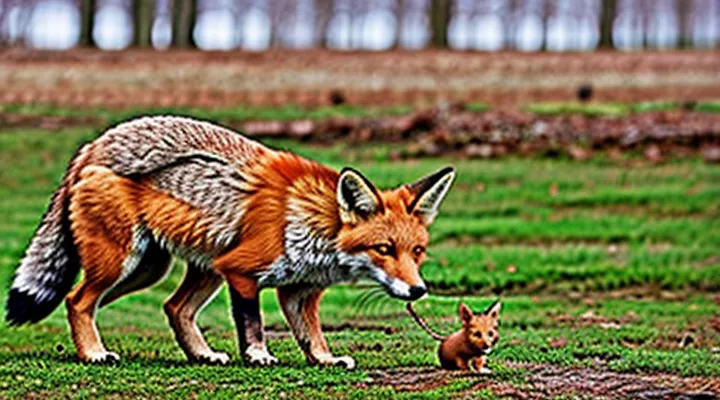
The Winter Predicament: Why Mice are a Crucial Food Source
The Scarcity of Winter Prey
Winter reduces the abundance of small rodents, forcing predators to adjust their foraging patterns. In cold months, mouse populations decline sharply because breeding cycles pause, snow impedes movement, and limited plant growth curtails seed availability that sustains herbivorous prey.
Key drivers of prey scarcity include:
- Prolonged sub‑zero temperatures that increase metabolic costs and mortality in rodents.
- Deep snow cover that restricts surface activity and access to burrows.
- Diminished vegetation, leading to lower seed and insect supplies that support mouse reproduction.
- Shortened daylight periods, which compress foraging windows for nocturnal species.
Foxes respond to this shortfall by expanding their hunting range, increasing daily travel distances, and incorporating alternative food sources such as birds, insects, and carrion. The reduced mouse density also raises the energetic expense of each successful capture, prompting foxes to prioritize larger or more abundant prey when available.
Adaptive behaviors mitigate the challenge. Foxes store excess kills in hidden caches for later consumption, and they adjust territory boundaries to encompass areas with higher residual rodent activity. These strategies sustain predator populations despite the seasonal deficit of primary prey.
Metabolic Needs of Foxes in Cold Climates
Foxes maintain body temperature in sub‑zero conditions by elevating their basal metabolic rate (BMR). The increase, typically 20–30 % above summer levels, supplies heat through intensified cellular respiration. Stored adipose tissue provides both insulation and a readily mobilized energy source; during prolonged fasting, lipolysis releases fatty acids that fuel thermogenesis in brown adipose tissue.
Winter hunting of small rodents demands rapid bursts of activity. Muscle glycogen stores support short, high‑intensity chases, while circulating glucose levels remain stable through gluconeogenesis from amino acids derived from prey. Protein intake therefore serves dual purposes: replenishing muscle mass and supplying substrates for glucose production.
Key physiological adjustments include:
- Enhanced vasoconstriction in extremities to reduce heat loss.
- Up‑regulated uncoupling protein 1 (UCP‑1) in brown fat, converting oxidative phosphorylation energy directly into heat.
- Seasonal growth of a denser winter coat, decreasing conductive heat loss and lowering the metabolic cost of thermoregulation.
Energy expenditure during a typical night of mouse pursuit can reach 2–3 kcal per hour, compared with 1 kcal per hour at rest. To offset this demand, foxes increase prey capture rates, often targeting multiple mice per outing. Successful foraging therefore hinges on the alignment of metabolic capacity with hunting efficiency, ensuring sufficient caloric intake to sustain elevated BMR throughout the cold season.
The Fox’s Sensory Arsenal
Exceptional Hearing: Pinpointing Prey Under Snow
Anatomy of the Fox's Ears
The fox’s ears are highly specialized organs that enable precise detection of prey beneath snow. Each ear consists of a flexible outer pinna, a well‑vascularized cartilage framework, and a dense array of sensory cells within the inner ear. The pinna can rotate up to 180 degrees, directing sound waves toward the ear canal while minimizing thermal loss.
Inside the canal, a layer of fine hairs and cerumen protects the tympanic membrane. The membrane vibrates in response to acoustic energy, transmitting motion to the middle ear ossicles—malleus, incus, and stapes. These bones amplify the signal before it reaches the cochlea, where hair cells translate vibrations into neural impulses.
Key anatomical features that enhance winter hunting:
- Large surface area of the pinna – captures low‑frequency sounds produced by rodents moving under compacted snow.
- Extensive vascular network – maintains ear temperature, preserving auditory sensitivity in subzero conditions.
- Highly developed cochlear hair cells – detect minute pressure changes, allowing discrimination of rustling versus wind noise.
- Muscular control of ear orientation – rapid adjustments align the ear with the direction of the faintest sounds.
The auditory pathway culminates in the fox’s auditory cortex, where the brain processes frequency, intensity, and timing cues. This processing enables the animal to pinpoint the location of hidden mice with remarkable accuracy, even when visual cues are unavailable during winter months.
Sound Localization Techniques
Foxes rely on precise auditory processing to locate mice hidden beneath snow. Their large, movable ears capture sound waves from multiple directions, allowing rapid discrimination of prey position even when visual cues are absent.
Key auditory mechanisms employed include:
- Interaural time difference (ITD): detection of minute delays between ears, enabling azimuth estimation.
- Interaural level difference (ILD): assessment of intensity contrast, refining lateral localization.
- Spectral filtering: ear‑pinna shape creates frequency‑specific patterns that convey elevation information.
- Doppler shift analysis: movement‑induced frequency changes assist in tracking prey motion.
These techniques combine to generate a three‑dimensional acoustic map, guiding the fox’s bite toward the mouse’s location beneath the winter crust.
Olfaction: Detecting Rodents Beneath the Surface
The Fox's Keen Sense of Smell
Foxes rely on olfaction to locate mice concealed beneath snow and leaf litter during the cold season. Their nasal cavity contains up to 200 million sensory receptors, far exceeding the count in most other carnivores. This high receptor density detects volatile compounds emitted by rodents at concentrations as low as parts per trillion.
Key olfactory advantages include:
- Enhanced scent diffusion: Warm air exhaled from the fox’s nostrils creates micro‑currents that draw odor molecules upward through snow layers, allowing detection of prey buried several centimeters deep.
- Memory of scent signatures: Foxes store chemical profiles of individual mice, enabling rapid recognition of recent activity even after the visual trace disappears.
- Rapid signal processing: Neural pathways transmit odor information to the brain within milliseconds, prompting immediate pursuit behavior.
Research on red fox (Vulpes vulpes) demonstrates that scent tracking accounts for over 70 % of successful winter captures, outperforming auditory and visual cues that are limited by snow cover and low light. Consequently, the fox’s acute sense of smell constitutes the primary mechanism by which it secures food when temperatures drop and prey become less accessible.
Scent Trails and Mouse Nests
Winter conditions force mice to rely on insulated nests and limited foraging routes, creating predictable scent signatures that foxes exploit. Foxes possess an acute olfactory system capable of detecting volatile compounds emitted by mice even beneath snow cover. The cold, dry air preserves these chemicals, allowing predators to trace a mouse’s recent movements over distances of several hundred meters. By following the gradient of odor concentration, a fox can locate the entrance of a nest without visual cues.
Key aspects of scent‑based hunting in cold weather:
- Odor persistence: Low temperatures slow volatile degradation, extending the detection window for fresh mouse tracks.
- Snow masking: Fresh snowfall can conceal visual signs but does not impede volatile diffusion; foxes often sniff through compacted layers to locate underlying trails.
- Nest proximity: Mice construct nests near stable food sources; the accumulation of urine, feces, and glandular secretions around these sites creates a concentrated odor plume that guides predators directly to the shelter.
When a fox reaches a nest, it employs rapid, low‑profile maneuvers to avoid alerting the resident mouse. The predator may dig through snow or soil, exploiting the weakened structural integrity of winter nests, and use its sharp teeth to breach the bedding. Successful capture relies on the combination of persistent scent cues and the vulnerability of mouse nests during the season.
Hunting Strategies: The Art of the Pounce
The "Mouse Pounce": A Signature Move
The Arc of the Jump
Foxes hunting rodents during the cold season rely on a precise aerial trajectory when they leap toward prey concealed in snow. The jump follows a parabolic arc determined by launch angle, initial velocity, and the resistance offered by winter ground cover.
The optimal launch angle ranges between 30° and 45°, allowing sufficient height to clear snow drifts while preserving forward momentum. Muscular contraction in the hind limbs generates the initial velocity; measurements of captive red foxes show peak speeds of 4–5 m s⁻¹ at take‑off. The resulting arc maximizes the distance covered in a single bound, typically 1.2–1.5 m, enough to reach a mouse hiding under a shallow snow layer.
Factors influencing arc shape include:
- Snow depth: deeper, compacted snow increases drag, shortening the horizontal component of the trajectory.
- Mouse movement: sudden bursts trigger a steeper angle to reduce reaction time.
- Ambient temperature: colder muscles contract more slowly, slightly lowering launch velocity.
Successful captures depend on synchronizing the arc with the mouse’s escape response. A fox that initiates the jump when the mouse is stationary achieves a flatter trajectory, ensuring contact upon landing. Conversely, a steeper arc compensates for a fleeing mouse, delivering a downward strike that penetrates the snow surface.
Landing Accuracy
Landing accuracy determines whether a fox can seize a mouse hidden beneath winter snow. Precise placement of the paws at the moment of contact prevents the prey from escaping and reduces the risk of breaking through the crust without reaching the animal.
The fox’s musculoskeletal system supports this precision. A flexible lumbar region allows rapid extension of the hind legs, while a lowered center of gravity stabilizes the body during the final jump. Muscles contract in a synchronized pattern that shortens the distance between launch and impact, aligning the trajectory with the target’s location.
Sensory input guides the strike. Vibrissae detect minute vibrations caused by a mouse’s movements under the snow surface. Acute hearing identifies rustling sounds, and binocular vision tracks subtle disturbances in the snow texture. The brain integrates these signals to calculate the exact point of impact.
Winter conditions introduce additional variables. Snow depth alters the required force; a thick, soft layer demands a longer, more forceful leap, whereas a thin crust calls for a shallow, controlled descent. Wind direction influences the fox’s approach angle, prompting adjustments in stride length and body orientation.
Key elements of landing accuracy:
- Stride length calibrated to snow thickness
- Descent angle optimized for minimal slip
- Timing of paw contact synchronized with sensory cues
- Weight distribution balanced to maintain stability upon impact
Field observations show that foxes achieving consistent landing accuracy capture mice at rates up to 70 % higher than individuals with erratic pouncing patterns. The data underscore the direct correlation between precise landing mechanics and hunting success during the cold months.
Snow Diving and Tunneling
Breaking Through the Snow Crust
Foxes must penetrate the hardened surface that forms over the ground when temperatures drop below freezing. The crust consists of a thin layer of ice and compacted snow, concealing the tunnels and burrows where field mice seek shelter. To access prey, foxes employ a combination of physical force and body heat.
- The animal lowers its weight onto a targeted spot, concentrating pressure on the paws and forelimbs.
- Muscular thrusts generate enough force to fracture the brittle ice layer.
- Warm blood flowing through the pads helps melt the immediate contact area, softening the crust enough for the claws to dig deeper.
Once the surface is broken, the fox quickly scratches with its sharp claws, enlarging the opening and exposing the mouse’s tunnel. The rapid entry minimizes the time the prey has to retreat further underground, increasing the likelihood of a successful capture.
Navigating Subnivean Spaces
Foxes locate prey beneath the snow by exploiting the subnieve environment, a network of air‑filled channels formed by the movement of small mammals. The animal’s elongated body, flexible spine, and strong forelimbs enable rapid entry into narrow tunnels. Sensitive vibrissae detect minute air currents generated by the locomotion of mice, while a highly developed auditory system discerns low‑frequency rustles that travel through compacted snow.
Key physiological and behavioral traits that facilitate subnieve hunting include:
- Thermal insulation: Dense underfur and a thick fur coat preserve core temperature while the fox’s paws remain insulated against extreme cold.
- Enhanced olfaction: Nasal receptors pick up scent molecules diffused through the snow matrix, allowing the predator to pinpoint mouse burrows.
- Tactile acuity: Whisker placement on the muzzle and forepaws registers vibrations from moving prey, providing directional cues.
- Stealthy locomotion: Low‑impact footfalls minimize snow disturbance, reducing the likelihood of alerting concealed rodents.
During winter, foxes adjust their foraging routes based on snow depth and hardness. They preferentially follow pre‑existing mouse pathways, using visual landmarks on the surface—such as fresh tracks or disturbed snow patches—to infer subnieve network geometry. When a tunnel is entered, the fox employs a combination of forward thrusts and side‑to‑side body bends to navigate bends and avoid collapse.
Successful subnieve predation relies on the integration of sensory data, physical adaptations, and learned spatial memory. These elements collectively allow foxes to exploit the hidden winter habitat of mice, securing a reliable food source when surface prey become scarce.
Patience and Observation
Waiting for the Right Moment
Foxes hunting mice during the cold season rely heavily on patience. As snow covers the ground, rodents reduce activity and seek shelter in burrows or under debris. The predator remains motionless near likely entry points, conserving energy while monitoring subtle signs such as faint movements or the sound of scurrying paws.
Key aspects of timing include:
- Positioning near mouse holes or under leaf litter where heat loss is minimal.
- Maintaining a low body temperature to extend the waiting period without fatigue.
- Observing wind direction to prevent scent from reaching prey.
- Initiating the strike only when a mouse emerges or when vibrations indicate imminent movement.
Stalking Behavior
Foxes adapt their stalking techniques to the challenges of cold weather, where snow and reduced cover limit visibility. They rely on keen hearing and scent to locate mice hidden beneath the surface or within burrows. When a potential prey is detected, the fox lowers its body, aligns its head with the target, and moves with deliberate, silent steps to close the distance without triggering alarm.
Key elements of the stalking sequence include:
- Silence: Paws are placed lightly on snow, pads spread to distribute weight and prevent audible crunches.
- Low posture: A crouched stance reduces the animal’s silhouette, making it harder for the mouse to perceive movement.
- Gradual approach: The fox advances in short, controlled bursts, pausing intermittently to reassess the prey’s position.
- Final strike: Upon reaching optimal range—typically within 1–2 meters—the fox lunges with a rapid, forward thrust, using its forepaws to pin the mouse before delivering a bite to the neck.
Winter conditions also influence the timing of the stalk. Foxes often hunt during twilight or early morning when low light further conceals their approach, and they exploit the frozen ground to detect subtle vibrations caused by a mouse’s activity. This combination of sensory acuity, precise body control, and environmental awareness enables successful capture of mice despite the harsh seasonal constraints.
Environmental Factors and Adaptations
Snow Depth and Density
Snow depth directly limits the distance mice can travel beneath the surface. In compact snow, burrows remain open, allowing rodents to move swiftly; in deep, loose snow, tunnels collapse, forcing mice to surface or travel shorter routes. Foxes exploit these constraints by focusing their search on areas where snow depth falls below the threshold that sustains stable burrows.
Snow density determines the resistance a fox’s paws encounter and the clarity of tracks left by prey. High‑density snow compresses footprints, producing deeper, more discernible impressions that retain scent for longer periods. Low‑density snow yields shallow prints that fade quickly, reducing the effectiveness of both visual and olfactory tracking.
Key implications for winter hunting:
- Depth < 5 cm: mice maintain active underground networks; foxes rely on scent cues penetrating thin layers.
- Depth ≥ 15 cm: surface movement dominates; visual detection of tracks becomes primary.
- Density > 0.3 g cm⁻³: tracks are pronounced, scent persists; foxes adopt slower, deliberate pacing.
- Density < 0.2 g cm⁻³: tracks are faint, scent dissipates rapidly; foxes increase patrol frequency to compensate.
Temperature and Its Impact on Hunting
Cold temperatures alter mouse behavior and physical condition, directly influencing fox predation strategies. As ambient heat drops, mice reduce activity to conserve energy, often remaining within insulated burrows or near stored food caches. This confinement limits their exposure to open ground, forcing foxes to adapt their search patterns and increase reliance on scent detection.
Key physiological effects of low temperatures on hunting dynamics include:
- Reduced mouse metabolism, resulting in slower movement and diminished escape response.
- Increased production of volatile compounds from mouse fur and waste, enhancing olfactory cues for predators.
- Greater snow cover, which masks visual cues but preserves scent trails, prompting foxes to prioritize sniffing over sight.
- Contraction of the thermal niche, causing mice to cluster in limited microhabitats, thereby raising local prey density.
Foxes compensate by adjusting body heat regulation and locomotion. They lower body temperature during brief rests to conserve energy, then briefly elevate muscular output for rapid bursts when a mouse is located. Footpads develop thicker pads to navigate icy surfaces, while the nasal cavity expands to improve scent acquisition in frigid air.
Overall, the thermal environment reshapes both prey availability and predator tactics, making temperature a decisive factor in the success of foxes hunting mice during the winter season.
Fox Adaptations for Winter Survival
Fur Insulation
Foxes rely on a dense fur coat to maintain body temperature during winter hunts for small rodents. The coat consists of two distinct layers: long, stiff guard hairs that repel snow and ice, and a thick underfur composed of fine, soft fibers that trap air. This arrangement reduces heat loss by up to 70 % compared to a single‑layer coat.
The insulating properties of the fur allow foxes to remain active for extended periods in sub‑zero conditions. Heat retention conserves energy, enabling the predator to pursue mice beneath the snow without a rapid decline in core temperature. Additionally, the fur’s surface texture muffles sound, decreasing the likelihood of alerting prey.
Key functions of fur insulation in winter predation:
- Thermal barrier: minimizes conductive and convective heat transfer.
- Energy efficiency: lowers metabolic demand during prolonged chases.
- Acoustic dampening: reduces vibration transmission to the ground.
- Water repellency: prevents moisture from saturating the underfur, preserving insulating air pockets.
Energy Conservation Tactics
Foxes hunting mice during the cold season must balance prey acquisition with limited energy reserves. The strategy centers on minimizing metabolic expenditure while maintaining sufficient activity to secure food.
- Initiate short, high‑intensity bursts of movement only when prey is detected; otherwise remain motionless in a den or snow‑covered hide.
- Conduct hunts during twilight or under overcast conditions, when ambient temperature is higher and visual detection of prey improves.
- Use existing burrow networks to travel underground, reducing exposure to wind‑chill and conserving body heat.
- Exploit fresh snowfall as a muffling layer, allowing silent approach and reducing the need for prolonged pursuit.
- Prioritize ambush near mouse entry points—such as tunnel openings or surface tracks—to limit chase distance.
Physiological adjustments support these behaviors. Foxes lower basal metabolic rate, rely on dense winter coat insulation, and employ peripheral vasoconstriction to retain core warmth. Energy derived from captured mice is allocated primarily to thermoregulation and reproductive demands, while excess is stored as fat for later scarcity.
The combined effect of behavioral restraint, environmental exploitation, and physiological adaptation enables foxes to capture winter rodents with a net energy gain, sustaining survival throughout the season.
The Success Rate: A Matter of Skill and Opportunity
Foxes achieve a measurable success rate when hunting mice during the cold season, and two primary factors determine the outcome: the predator’s hunting proficiency and the availability of vulnerable prey.
The hunting proficiency of a fox relies on several learned and innate capabilities. Sharp auditory perception allows detection of mouse movements beneath snow cover. Precise paw placement and rapid bursts of acceleration enable the animal to close distances before the prey can escape. Seasonal practice refines these skills; foxes that have spent multiple winters in the same territory display higher capture percentages than newcomers.
Opportunity hinges on environmental conditions that expose mice. Fresh snowfall often buries rodents, but intermittent thawing creates surface cracks where mice emerge to forage. When snow depth reaches a threshold that impedes mouse burrowing, the animals are forced onto the surface, increasing encounter rates. Additionally, reduced vegetation cover limits hiding places, making mice more accessible.
The interaction of skill and opportunity produces quantifiable results:
- Experienced foxes in regions with moderate snow depth: ~68 % capture success per hunting attempt.
- In areas with deep, compacted snow: ~42 % success, reflecting limited visibility despite high skill.
- Juvenile foxes with limited experience: ~31 % success, even when prey is abundant.
These figures indicate that neither skill nor opportunity alone guarantees success; optimal outcomes arise when proficient hunters operate under conditions that force mice into exposed positions. Consequently, the winter hunting efficiency of foxes can be predicted by assessing both the predator’s behavioral development and the prevailing snow and foraging dynamics.