
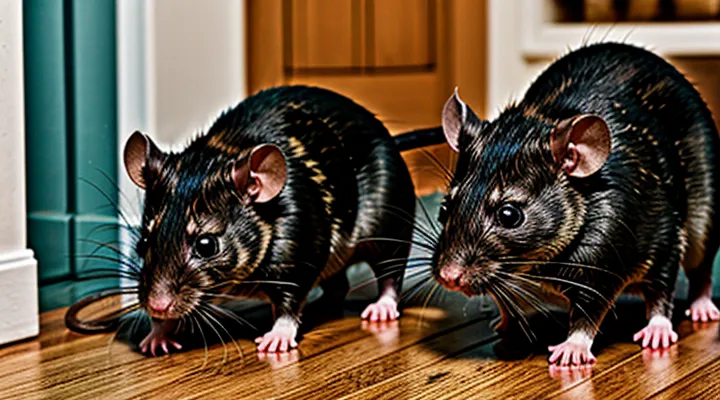
The Rodent Eye: Structure and Function
Anatomy of the Rat Eye
The rat eye is a compact, spherical organ adapted for nocturnal vision. The cornea is thin and relatively flat, providing a modest refractive contribution that, together with the powerful lens, focuses light onto the retina. The lens is spherical, highly elastic, and capable of rapid accommodation, allowing the animal to adjust focus across a range of distances despite the short axial length of the eye.
Behind the lens lies the vitreous body, a transparent gelatinous matrix that maintains ocular shape and transmits light without significant scattering. The retina occupies the posterior globe and consists of a layered structure where photoreceptors dominate. Rod cells are abundant, accounting for over 95 % of photoreceptors, which confers high sensitivity to dim illumination. Cone cells are sparse, concentrated mainly in a central visual streak that provides limited color discrimination and visual acuity. The retinal ganglion cells project through the optic nerve, which exits the eye at the optic disc and transmits visual information to the lateral geniculate nucleus and superior colliculus.
Key anatomical features include:
- Pupil – round, capable of extensive dilation to maximize photon capture.
- Nictitating membrane – translucent third eyelid that protects the cornea while preserving vision.
- Retinal vasculature – a network of superficial vessels that supplies metabolic support without obstructing the visual field.
- Photoreceptor distribution – a dense peripheral rod mosaic and a central cone-rich visual streak.
The rat’s ocular architecture, characterized by a high rod-to-cone ratio, a flexible lens, and a specialized retinal layout, underlies its ability to navigate low‑light environments and detect motion with precision.
Photoreceptors and Their Distribution
Domestic rats rely primarily on rod photoreceptors for scotopic vision, reflecting their nocturnal activity pattern. Rods dominate the retinal periphery, reaching densities of up to 120,000 cells mm⁻², which enhances sensitivity to low‑light stimuli and motion detection across a wide visual field. Central retinal regions contain a comparatively lower rod concentration but host the highest density of cones, approximately 10,000 cells mm⁻², supporting photopic tasks such as object discrimination under daylight conditions.
Cone photoreceptors in rats are of two spectral types: short‑wave (S‑cones) peaking near 360 nm and medium‑wave (M‑cones) peaking near 510 nm. The distribution of cones is uneven; the ventral retina, which views the upper visual field, exhibits a modest enrichment of S‑cones, whereas the dorsal retina, oriented toward the ground, shows a higher proportion of M‑cones. This arrangement aligns with the animal’s ecological need to detect overhead predators and ground‑level food sources.
The retinal architecture includes a thin avascular zone known as the optic disc, devoid of photoreceptors, and a small area centralis lacking a true fovea. Instead, visual acuity derives from the combined output of densely packed cones in the central retina and the high convergence of rod signals onto bipolar and ganglion cells, which amplifies sensitivity at the expense of spatial resolution.
Key characteristics of photoreceptor distribution:
- Rod density: maximal in peripheral retina, declines toward central region.
- Cone density: peaks in central retina, with dorsal‑ventral spectral gradients.
- Spectral types: S‑cones (UV) and M‑cones (green), proportionally balanced across the retina.
- Absence of a fovea: visual acuity relies on central cone aggregation and rod‑ganglion convergence.
Collectively, the arrangement of rods and cones equips domestic rats with a visual system optimized for low‑light detection, broad field coverage, and limited but functional color discrimination.
Visual Acuity and Perception
Resolving Power and Detail Detection
Domestic rats possess limited spatial resolution compared with primates. Behavioral tests using sinusoidal gratings indicate a peak acuity of approximately 0.5–1.0 cycles per degree (cpd). This threshold reflects the smallest angular separation at which rats can discriminate alternating light and dark bars.
The rat retina is dominated by rods, which confer high sensitivity in low‑light conditions but reduce the density of cones responsible for fine detail. Consequently, the fovea‑like region in the central retina contains only a sparse cone mosaic, restricting high‑frequency information processing. Photoreceptor spacing and ganglion‑cell sampling impose a physical ceiling on resolvable spatial frequencies.
Empirical measurements provide the following benchmarks for detail detection in domestic rats:
- Peak visual acuity: 0.5–1.0 cpd (≈ 1–2 mm at a distance of 30 cm).
- Minimum resolvable bar width: 0.5–1 mm under photopic illumination.
- Contrast sensitivity: highest at low spatial frequencies (≈ 0.1 cpd) and declines sharply beyond the acuity limit.
These parameters define the visual world accessible to rats, shaping their reliance on coarse patterns and motion cues rather than fine textures.
Depth Perception and Spatial Awareness
Domestic rats extract depth information despite a narrow binocular field. The overlap between the left and right visual axes measures roughly 15 ° to 20 °, limiting stereoscopic resolution but providing a focal region for precise distance judgments. Retinal ganglion cells concentrate in this zone, and visual acuity peaks at 0.5 cycles/degree, sufficient for detecting edges and contrast gradients that define spatial relationships.
Depth cues exploited by rats include:
- Motion parallax generated by head turns; nearer objects shift more rapidly across the retina than distant ones.
- Texture gradient where surface detail density decreases with distance, allowing the visual system to infer relative positioning.
- Looming signals rapid expansion of retinal images, indicating an approaching obstacle.
- Contrast and shading that create differential luminance across surfaces, contributing to perceived shape.
- Binocular disparity limited to the central overlap, supporting fine discrimination of objects within a few centimeters.
The visual system operates in concert with tactile input from the mystacial vibrissae. Whisker contacts supply metric data about object location, reinforcing visual estimates and compensating for the modest stereoscopic range. Neural recordings from the posterior parietal cortex reveal convergence of optic flow and whisker‑derived signals, producing a unified spatial map used for navigation.
Behavioral assays demonstrate functional depth perception. In maze crossings, rats adjust stride length and head orientation to negotiate gaps as narrow as 2 cm, a performance eliminated by binocular occlusion. During foraging, they select food items positioned behind transparent barriers, relying on visual depth cues to plan reach trajectories. These observations confirm that domestic rats construct a three‑dimensional representation of their environment through a combination of limited stereopsis, motion‑based cues, and somatosensory integration.
Color Vision in Rats
Dichromatic Vision: Two Cone Types
Domestic rats possess a visual system built around two distinct cone photoreceptors, enabling dichromatic perception. The retina contains short‑wavelength (S) cones and medium‑wavelength (M) cones, each tuned to different portions of the spectrum.
- S‑cones: peak sensitivity around 360 nm, responding to ultraviolet and blue light.
- M‑cones: peak sensitivity near 510 nm, detecting green wavelengths.
The coexistence of these cones allows rats to discriminate colors only along the ultraviolet‑green axis; wavelengths longer than the M‑cone peak appear indistinguishable, eliminating red perception. Color information supplements the dominant rod‑mediated scotopic vision, which governs low‑light navigation and foraging. In environments where ultraviolet cues are present—such as urine markings or certain food items—dichromatic vision provides a selective advantage for detecting and responding to biologically relevant signals.
Behavioral Evidence of Color Discrimination
Rats demonstrate reliable discrimination between colored stimuli when trained on operant tasks that require a response to a specific hue. In two‑alternative forced‑choice experiments, subjects learn to press a lever for a blue cue to receive food, while a green cue signals no reward. Performance rises above chance after a few sessions, indicating that the visual system can distinguish the wavelengths involved.
Evidence from conditioned place preference tests supports the same conclusion. Animals develop a preference for chambers illuminated with one color over another after pairing one hue with a sucrose solution. Preference scores remain stable when the illumination intensity is matched, confirming that the distinction is based on chromatic information rather than brightness.
Key findings from behavioral studies include:
- Rapid acquisition of color‑based discrimination in tasks with minimal training.
- Retention of learned color preferences after weeks of no reinforcement.
- Ability to generalize discrimination across variations in luminance, suggesting true hue perception.
- Consistency of results across strains, indicating that color discrimination is a general feature of the species.
These observations collectively provide robust behavioral proof that domestic rats can perceive and act upon differences in color, complementing physiological data on retinal cone types and neural pathways.
Field of View and Visual Processing
Panoramic Vision and Blind Spots
Domestic rats possess laterally positioned eyes that grant an expansive visual field exceeding 300 degrees. This panoramic coverage enables detection of predators and conspecifics across most of the surrounding environment without head movement. The overlap between the left and right visual fields forms a modest binocular zone of roughly 30–40 degrees directly ahead, providing depth perception for tasks such as navigating narrow passages and locating food.
The extensive peripheral vision creates two distinct blind zones. The primary blind spot lies directly behind the animal, where the visual fields of both eyes terminate. A secondary, narrower blind area occurs at the extreme forward point, just beyond the reach of the binocular region, where the eyes cannot focus on objects directly in front of the snout. Rats compensate for these gaps through rapid head turns, whisker (vibrissal) exploration, and reliance on auditory and olfactory cues.
Key characteristics of rat visual geometry:
- Field of view: ~300 ° total, split roughly 150 ° per eye.
- Binocular overlap: 30–40 °, centered on the forward axis.
- Rear blind spot: 60–70 ° directly posterior.
- Anterior blind spot: 10–15 ° ahead of the nasal bridge.
Behavioral adaptations mitigate the limitations imposed by blind spots. Frequent whisker sweeps generate tactile maps of the immediate forward space, while acute hearing localizes sounds originating from the rear. These multimodal strategies ensure continuous environmental awareness despite the anatomical constraints of the visual system.
Head Movements and Visual Scanning
Domestic rats rely on rapid, coordinated head rotations to compensate for the limited field of view provided by their laterally positioned eyes. Each saccadic head turn reorients the visual axis, allowing the animal to sample discrete sectors of the environment within milliseconds. The movements are driven by vestibular inputs that synchronize with retinal motion signals, ensuring that visual information remains stable on the retina despite body locomotion.
Visual scanning patterns emerge from the interaction of head dynamics and attentional priorities. When exploring a novel arena, rats perform a series of alternating left‑right pivots, interspersed with brief pauses that align the gaze with potential obstacles or food sources. The sequence follows a predictable rhythm:
- Initial broad sweep to detect distant landmarks.
- Focused micro‑turns toward objects of interest.
- Re‑orientation after each contact or sniffing episode.
Electrophysiological recordings reveal that each head shift triggers a transient increase in activity within the primary visual cortex, reflecting the influx of fresh visual data. Concurrently, the superior colliculus integrates head‑related proprioceptive feedback to refine spatial mapping, facilitating rapid threat detection and navigation.
The efficiency of this scanning system depends on the rat’s ability to synchronize head velocity with visual processing latency. Studies measuring head angular velocity show a peak at approximately 120 ° s⁻¹ during exploratory bouts, matching the temporal resolution of retinal ganglion cells. This alignment minimizes motion blur and maximizes contrast detection, enabling accurate discrimination of texture, shape, and movement in low‑light conditions typical of nocturnal habitats.
Adaptation to Light Conditions
Scotopic vs. Photopic Vision
Domestic rats rely on two visual modes that operate under distinct lighting conditions. In dim environments, rod photoreceptors dominate, providing high sensitivity to single photons and enabling detection of movement and silhouettes. The retinal architecture allocates roughly 85 % of photoreceptors to rods, a distribution that maximizes scotopic performance. Under these circumstances, spatial resolution declines, colour discrimination is absent, and visual acuity approaches 0.5 cycles/degree. Behavioral assays show rats navigate mazes and avoid predators effectively when illumination falls below 0.1 lux, confirming functional scotopic vision.
When illumination exceeds approximately 10 lux, cone photoreceptors become active, supporting photopic vision. Cones comprise about 15 % of the retinal photoreceptor population, are concentrated in the central retina, and mediate higher acuity (up to 1 cycle/degree) and limited colour perception in the ultraviolet range. Photopic conditions enhance contrast detection for fine patterns and enable discrimination of textured surfaces. The transition between modes occurs gradually; intermediate light levels engage both rods and cones, producing a mixed visual state that balances sensitivity and resolution.
Key contrasts between the two modes:
- Photoreceptor type: rods (scotopic) vs. cones (photopic)
- Sensitivity: high (rod) vs. low (cone)
- Spatial acuity: low (≈0.5 c/deg) vs. higher (≈1 c/deg)
- Colour perception: absent (rod) vs. limited UV detection (cone)
- Functional context: navigation in darkness vs. detailed object inspection in light.
Pupillary Response and Light Sensitivity
Domestic rats possess a highly adaptable visual system that relies on rapid pupil adjustments to cope with fluctuating illumination. The iris muscles contract and dilate within milliseconds, altering retinal irradiance and preserving image quality across a broad range of light intensities. This dynamic control is mediated by autonomic pathways: parasympathetic activation induces constriction, while sympathetic stimulation promotes dilation. The speed of these responses enables rats to transition from bright open‑field environments to dim burrows without loss of visual function.
Light sensitivity in rats is determined by several retinal mechanisms. Rod photoreceptors dominate the peripheral retina, providing high quantum efficiency at scotopic levels and supporting navigation in near‑dark conditions. Cone distribution is concentrated in the central retina, granting limited photopic acuity for tasks such as foraging under artificial lighting. The following features contribute to overall sensitivity:
- High rod density (≈120,000 rods/mm²) maximizes photon capture.
- Low threshold for rod activation (≈0.01 photons µm⁻² s⁻¹).
- Presence of melanopsin‑expressing intrinsically photosensitive retinal ganglion cells that regulate pupil reflexes and circadian entrainment.
- Adaptive phototransduction cascade that adjusts gain in response to sustained illumination.
Behavioral experiments demonstrate that rats can detect brief light flashes as short as 5 ms, with detection thresholds decreasing after exposure to dim backgrounds. Pharmacological blockade of the sympathetic pathway reduces dilation amplitude, confirming its essential role in maintaining retinal exposure during sudden brightening. Conversely, lesions of the parasympathetic nuclei impair constriction, leading to phototoxic risk under high‑intensity light.
In summary, pupillary dynamics and retinal photoreceptor composition together furnish domestic rats with a versatile visual apparatus capable of operating efficiently from starlight to artificial illumination. These physiological traits underpin their ability to exploit both subterranean habitats and illuminated human environments.
The Role of Vision in Rat Behavior
Navigation and Exploration
Domestic rats rely on a visual system adapted to low‑light environments, yet it provides essential information for spatial orientation and environmental assessment. Their eyes are positioned laterally, granting a wide field of view that overlaps minimally at the front, allowing detection of peripheral movement while navigating narrow passages. Photoreceptor distribution favors rod cells, enhancing sensitivity to dim illumination and motion contrast, which supports rapid adjustments when traversing cluttered habitats.
Key visual contributions to navigation and exploration include:
- Detection of edges and textures that define boundaries of tunnels and obstacles.
- Sensitivity to moving silhouettes, enabling avoidance of predators and other conspecifics.
- Integration of optic flow cues, informing speed and direction during locomotion.
- Use of contrast gradients to locate openings and assess shelter quality.
Rats combine visual input with tactile information from whiskers and olfactory signals, creating a multimodal map of their surroundings. In laboratory mazes, performance declines when lighting is removed, confirming that vision supplements other senses for route planning and error correction. Conversely, under low‑intensity illumination, rats maintain accurate path selection, demonstrating that their visual circuitry operates effectively at near‑threshold light levels.
Experimental findings indicate that visual landmarks, such as distinct patterns on walls, are encoded in hippocampal place cells, reinforcing spatial memory. When landmarks are altered, rats adjust their routes within a few trials, reflecting rapid updating of the visual component of their cognitive map. This flexibility underscores the role of visual perception in exploratory behavior, facilitating efficient resource discovery and risk assessment.
Predator Avoidance and Social Cues
Domestic rats rely on a visual system tuned to detect rapid changes in luminance and motion, which are essential for recognizing threats and communicating with conspecifics. Their retinas contain a high density of rods that enable detection of low‑light movement, allowing rats to perceive the silhouette of an approaching predator even at dusk. Cone photoreceptors, though fewer, provide color discrimination useful for identifying the distinctive fur patterns of familiar cage mates.
Key visual mechanisms supporting predator avoidance include:
- Sensitivity to looming stimuli: expanding dark shapes trigger an innate escape response within milliseconds.
- Detection of high‑contrast edges: sharp outlines of aerial predators are processed by the superior colliculus, prompting freezing or rapid retreat.
- Peripheral field monitoring: a wide visual field captures movements from multiple angles, reducing blind spots during foraging.
Social cues are conveyed through a separate set of visual features:
- Facial whisker orientation: subtle changes in whisker position signal aggression or submission.
- Body posture silhouettes: raised backs and elongated tails generate distinct outlines that are quickly interpreted by peers.
- Grooming gestures: repetitive, rhythmic movements produce characteristic motion patterns that reinforce group cohesion.
These visual capabilities operate in concert with auditory and olfactory systems, forming a multimodal network that enhances survival and social stability in domestic rat colonies.