
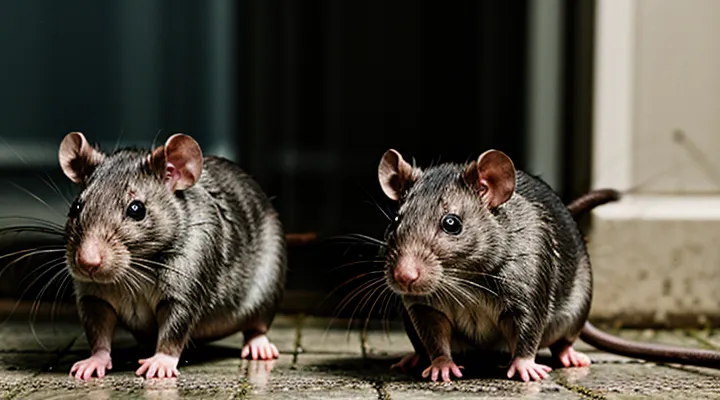
Sensory World of a Rat
Olfactory Perception
Recognizing Human Scent
Rats possess a highly developed olfactory system that enables them to identify individual humans through scent. Odor molecules emitted from skin, breath, and sweat create a unique chemical signature that rats can discriminate with remarkable accuracy.
Research using habituation–dishabituation tests shows that rats quickly learn to associate a specific human’s odor with food rewards or threat cues. When presented with a novel scent, they exhibit increased investigatory behavior, indicating recognition of unfamiliar individuals.
Key mechanisms underlying human‑scent recognition include:
- Vomeronasal organ (VNO): detects pheromonal and non‑pheromonal compounds, contributing to social categorization.
- Main olfactory epithelium: houses receptors for a broad spectrum of volatile organic compounds present on human skin.
- Neural processing: the olfactory bulb and piriform cortex encode odor patterns, allowing memory formation for specific human odors.
Experimental data reveal that:
- Rats can differentiate between two humans wearing identical clothing when only scent varies.
- Stress‑related hormones released by humans alter their odor profile, prompting rats to adjust their behavioral response.
- Repeated exposure to a person’s scent reduces latency to approach, demonstrating learned familiarity.
These findings confirm that rats rely primarily on chemical cues to recognize and remember individual humans, shaping their interactions in both laboratory and urban environments.
Detecting Emotional States Through Scent
Rats rely on an exceptionally sensitive olfactory system to gather information about surrounding organisms, including humans. Their nasal epithelium contains millions of receptors capable of detecting volatile compounds at concentrations far below human thresholds, allowing them to infer physiological states from scent alone.
Human emotional arousal alters the composition of sweat, breath, and skin secretions. Elevated cortisol, adrenaline, and catecholamine metabolites generate characteristic volatile organic compounds (VOCs) that rats can discriminate. Conversely, relaxed states produce a distinct VOC profile marked by lower concentrations of stress-related metabolites and higher levels of soothing compounds such as certain fatty acids.
Controlled experiments demonstrate that rats learn to differentiate between stressed and calm individuals after a few conditioning sessions. In a typical protocol, a rat receives a food reward when it approaches the scent of a relaxed person and none when presented with the scent of a stressed person. Performance rapidly exceeds chance levels, confirming reliable detection of emotional cues through odor.
The detection pathway involves the main olfactory bulb and the accessory vomeronasal system. Volatile signals bind to specific receptors, trigger neural activation patterns, and propagate to limbic structures that process affective information. This circuitry enables rapid, non‑visual assessment of human emotional status.
Practical outcomes include:
- Automated monitoring of laboratory animal welfare through scent analysis.
- Development of bio‑sensor devices that mimic rat olfactory discrimination for security or health screening.
- Insight into cross‑species communication mechanisms that inform humane handling practices.
Overall, rats possess a biologically grounded capacity to read human emotional states by interpreting subtle changes in odorant signatures.
Auditory Perception
Differentiating Human Voices
Rats possess a highly developed auditory system that operates effectively within the 1–80 kHz range, encompassing the fundamental frequencies of most human speech. Their cochlear hair cells respond to subtle variations in pitch and timbre, enabling discrimination between different speakers. Behavioral experiments reveal that rats can learn to associate specific human voices with distinct outcomes, such as food delivery or mild aversive stimuli, demonstrating rapid acquisition of voice–reward links.
Key observations include:
- Rats distinguish male and female voices based on average pitch differences.
- They respond selectively to familiar versus unfamiliar speakers after brief exposure.
- Variations in speech rhythm and stress patterns influence rats’ orienting responses.
- Neural recordings show increased activity in the primary auditory cortex and the basolateral amygdala when rats hear voices previously paired with emotional valence.
These findings indicate that rats not only detect acoustic features of human speech but also form memory representations that allow them to differentiate individual callers and assign behavioral relevance.
Interpreting Tones and Volume
Rats rely on acute auditory discrimination to assess human presence. Their cochlear architecture detects frequencies from 1 kHz to 80 kHz, far exceeding the human audible range. Within this spectrum, variations in pitch and intensity convey distinct information about a person’s actions and emotional state.
- Low‑frequency sounds (1–4 kHz) often indicate movement, such as footsteps or speech, prompting vigilance or approach depending on prior conditioning.
- Mid‑frequency tones (4–10 kHz) correspond to vocalizations and hand gestures, allowing rats to distinguish between calm and agitated humans.
- High‑frequency components (above 10 kHz) arise from subtle cues like clothing rustle or breath, providing additional context for threat assessment.
Volume modulation further refines interpretation. Sudden loud bursts trigger startle responses and activate the amygdala‑mediated fear circuit. Gradual increases in sound level are associated with approaching humans, leading to anticipatory behaviors such as freezing or exploratory sniffing. Conversely, soft, steady tones reduce stress hormones and encourage proximity.
Neural pathways integrate these acoustic parameters. Auditory nerve fibers transmit frequency‑specific signals to the inferior colliculus, where amplitude coding occurs. From there, projections to the auditory cortex and the medial geniculate body enable pattern recognition and memory association with individual humans.
Behavioral experiments demonstrate that rats trained to associate a specific tone‑volume pair with food reward will approach the source reliably, even when the tone is delivered through a human speaker. When the same pair is paired with an aversive stimulus, the rats exhibit avoidance, confirming that tone and volume serve as reliable indicators of human intent.
In natural settings, rats continuously sample ambient sounds, adjusting their activity based on the combined pitch and loudness of human-generated noise. This auditory appraisal guides decisions ranging from foraging near humans to retreating into concealed burrows.
Visual Perception
Limited Color Vision
Rats possess dichromatic vision, relying on two types of cone photoreceptors sensitive to ultraviolet (≈360 nm) and middle‑wave green (≈510 nm). This spectral range excludes the longer wavelengths that humans perceive as red, limiting rats’ ability to distinguish colors that lie outside the UV‑green band.
When a rat encounters a human, its visual assessment emphasizes contrast in brightness and movement rather than hue. Facial features, clothing, and skin tones that differ primarily in red or orange wavelengths appear similar to the rat, while patterns involving UV‑reflective or green elements generate stronger visual cues.
Key implications for rat–human interactions:
- UV‑reflective materials on clothing become highly visible to rats, potentially influencing approach or avoidance behavior.
- Dark or low‑contrast garments reduce detectability, especially in dim environments where rats rely on scotopic vision.
- Patterns that alternate between UV and green wavelengths create distinct visual markers that rats can track across surfaces.
Understanding the constraints of rat color perception informs experimental design, pest‑control strategies, and humane handling practices by aligning visual cues with the species’ limited chromatic capacity.
Detecting Movement and Shadows
Rats rely on rapid visual processing to monitor the presence of larger animals, including humans. Their eyes are positioned laterally, granting a wide field of view that captures motion across most of the surrounding space. When a person moves, the resulting change in luminance and contrast triggers a cascade of retinal signals that travel to the superior colliculus, a brain region specialized for detecting motion.
Key aspects of rat visual detection:
- Motion sensitivity – retinal ganglion cells respond preferentially to objects moving at speeds typical of walking or running; slower or static stimuli generate weaker responses.
- Shadow perception – variations in light intensity create shadows that alter the silhouette of a moving figure; rats interpret these changes as cues for object edges and depth.
- Temporal resolution – rats can discern flicker rates up to 60 Hz, allowing them to track swift movements that might be missed by species with lower temporal acuity.
- Integration with whisker input – visual cues are combined with tactile information from the vibrissae, producing a multimodal map of nearby threats.
The combined effect of motion detection and shadow analysis enables rats to anticipate the approach of a human, adjust their behavior, and, when necessary, seek shelter.
Behavioral Responses to Human Interaction
Fear and Avoidance
Triggers for Fleeing
Rats assess potential threats through a combination of sensory inputs that prompt rapid escape. Visual cues dominate when a human moves abruptly, enlarges body posture, or makes sudden gestures that exceed the rat’s typical field of view. High‑contrast silhouettes, especially those that cast deep shadows, are interpreted as looming predators. Auditory signals such as loud, unfamiliar tones, sudden claps, or rapid footfalls trigger the startle reflex; frequencies above 5 kHz are particularly salient because they fall within the rat’s optimal hearing range. Olfactory cues include strong human scents like perfume, sweat, or food residues that differ from the rat’s home environment; unfamiliar or intense odors are processed as indicators of foreign presence. Tactile stimuli, for instance direct contact or vibrations transmitted through the floor, activate mechanoreceptors that signal immediate danger. Contextual factors—crowded spaces, low lighting, or confined areas—lower the threshold for flight responses, as they limit escape routes.
Common triggers for fleeing can be summarized as:
- Sudden, large‑scale movements or gestures
- Rapid, high‑frequency noises or abrupt sounds
- Unfamiliar, strong human odors
- Direct touch or floor vibrations
- Visual patterns that suggest looming objects
- Environmental conditions that restrict safe egress
Understanding these stimuli allows researchers and caretakers to predict rat behavior and design environments that minimize unnecessary stress while maintaining safety.
Learned Caution
Rats quickly associate human presence with specific outcomes, adjusting their behavior after each encounter. When a person repeatedly delivers food, rats display reduced avoidance, approaching more readily. Conversely, when a person consistently threatens or startles them, rats develop heightened wariness that persists across subsequent interactions.
Learning mechanisms underlying this caution involve:
- Classical conditioning: neutral human cues (scent, voice) become predictors of aversive or rewarding events.
- Operant conditioning: successful escape or avoidance actions are reinforced, strengthening future avoidance.
- Social transmission: naïve rats observe conspecifics reacting fearfully to a human, adopting similar defensive strategies.
Neurobiological evidence links the amygdala and hippocampus to the formation of these memory traces. Elevated cortisol levels accompany acute stress during negative encounters, consolidating fear memories that resist extinction without repeated positive exposure.
Practical implications include the need for consistent, non‑threatening handling to reduce stress in laboratory and pet environments. Gradual habituation protocols—short, predictable sessions with gentle contact—can overwrite previously learned caution, fostering calmer interactions.
Curiosity and Exploration
Investigating New Stimuli
Rats respond to unfamiliar cues when interacting with people, making the introduction of novel stimuli essential for clarifying the mechanisms underlying this relationship. Researchers must select stimuli that engage the primary sensory channels—olfactory, auditory, visual, and tactile—while minimizing confounding variables such as stress or habituation effects.
Effective stimulus design follows several principles. First, the cue should be ecologically relevant; for example, a synthetic odor mimicking human sweat provides a realistic olfactory signal. Second, the intensity and duration must be calibrated to avoid saturation of sensory receptors. Third, the stimulus should be presented in a controlled environment that isolates the targeted modality, allowing precise measurement of behavioral responses.
Typical experimental formats include:
- Habituation–dishabituation trials that track changes in investigation time after repeated exposure to a baseline cue and subsequent introduction of a novel cue.
- Binary choice tests where rats select between a familiar human scent and a new scent, quantifying preference through time spent near each source.
- Operant conditioning chambers that pair a novel auditory tone with a food reward, assessing the speed of acquisition as an indicator of stimulus salience.
Data interpretation requires distinguishing between heightened curiosity and anxiety-driven avoidance. Increased sniffing or approach behavior generally signals recognition of a new human-related cue, whereas prolonged immobility or retreat suggests perceived threat. By systematically varying stimulus characteristics and recording corresponding behavioral metrics, researchers can map the perceptual hierarchy rats employ when evaluating human presence.
Approaching Out of Interest
Rats evaluate a person primarily through smell, sound, and visual cues. A novel scent on a human’s skin or clothing triggers olfactory receptors, prompting the animal to investigate. High‑frequency vocalizations or sudden movements generate auditory and visual alerts, causing the rat to pause and assess potential risk.
When a rat approaches a human out of curiosity, several mechanisms are involved:
- Olfactory sampling: Whisker‑linked scent receptors detect chemical signatures; unfamiliar but non‑threatening odors encourage closer inspection.
- Auditory discrimination: Low‑intensity sounds, such as breathing or soft speech, are interpreted as benign, whereas abrupt noises elicit avoidance.
- Visual appraisal: Limited color perception focuses on motion; steady, slow motions are less likely to provoke flight responses.
- Habituation: Repeated exposure without negative outcomes reduces fear, increasing the likelihood of voluntary approach.
Behavioral signs of interest include forward‑leaning posture, whisker extension, and gentle sniffing. Rats often pause before making contact, allowing the brain to integrate multisensory data and decide whether the human presents food, shelter, or a neutral presence. If the assessment remains favorable, the animal may climb onto the hand, explore with its paws, or follow the person’s movements.
Understanding these cues helps predict when a rat will initiate contact rather than retreat, informing handling practices and enrichment strategies.
Associative Learning
Connecting Actions with Outcomes
Rats assess human behavior through direct cause‑effect relationships. When a person provides food, opens a cage, or administers a mild stressor, the animal records the resulting change in its environment. This learning process relies on associative mechanisms that link a specific human action with a predictable outcome.
- Food delivery → approach and increased proximity to the giver.
- Gentle handling → reduced vigilance and lower cortisol levels.
- Sudden movements or loud sounds → heightened startle response and avoidance of the source.
Neural circuits in the rat brain, particularly the basal ganglia and amygdala, encode these pairings. Repeated exposure consolidates the association, allowing the animal to anticipate future interactions. Consequently, rats develop individualized expectations of different people based on the consistency of past actions.
The strength of the connection between action and result determines the rat’s willingness to engage. Reliable, positive outcomes foster trust and repeated approach behavior, whereas unpredictable or adverse consequences generate stress and withdrawal. This dynamic shapes how rats interpret and respond to human presence in laboratory, urban, and domestic settings.
Recognizing Individuals
Rats demonstrate the ability to differentiate between individual humans through a combination of olfactory, auditory, and visual cues. Experiments using maze navigation and food‑reward tasks show that rats alter their behavior when presented with a familiar caretaker versus an unfamiliar experimenter, indicating a stable memory of specific persons.
Key findings that support individual recognition include:
- Olfactory discrimination: Rats trained to associate a scent profile of a particular handler with a reward retain the preference after weeks of separation.
- Auditory association: Playback of a caretaker’s vocalizations paired with food leads to increased approach behavior compared with neutral sounds.
- Visual pattern learning: Rats exposed to distinct facial features or clothing colors of different humans develop distinct escape routes in a light‑dark box, reflecting recognition.
Neurophysiological recordings reveal heightened activity in the hippocampus and the olfactory bulb during encounters with known individuals, suggesting that memory circuits encode human‑specific signatures. The convergence of sensory modalities enables rats to maintain consistent individual identifiers across varied contexts.
Factors Influencing Perception
Individual Rat Personality
Bold vs. Shy Behaviors
Rats assess human presence through a combination of sensory cues and learned experiences, forming distinct response patterns that fall along a spectrum from boldness to timidity.
Bold individuals approach humans readily, exhibit exploratory locomotion near hands, and tolerate brief handling. Laboratory observations show that these rats maintain low corticosterone levels during human interaction, indicating reduced stress. They often display rapid habituation after repeated exposure, suggesting that positive reinforcement—such as food rewards—strengthens approach behavior.
Shy rats withdraw from proximity, emit ultrasonic vocalizations when a person is near, and display heightened vigilance, including frequent freezing and rear‑leg rearing. Elevated corticosterone concentrations accompany these reactions, reflecting heightened arousal. Their avoidance persists despite repeated exposure unless paired with consistent, gentle handling and predictable feeding schedules.
Key differences can be summarized:
- Approach distance: bold rats < 5 cm, shy rats > 15 cm.
- Stress hormone response: low in bold, high in shy.
- Learning speed: rapid habituation for bold, slow for shy.
- Vocalization rate: minimal for bold, frequent for shy.
Learning Propensities
Rats quickly form associations between human presence and specific outcomes. When a person consistently provides food, rats develop a positive expectation, demonstrated by increased approach behavior and reduced latency to explore. Conversely, unpredictable handling or occasional aversive stimuli generate heightened vigilance and avoidance.
Key mechanisms underlying these learning patterns include:
- Classical conditioning: pairing a human’s scent or voice with a reward or shock shapes anticipatory responses.
- Operant conditioning: rats learn that certain actions, such as pressing a lever, elicit human‑delivered reinforcement.
- Social transmission: inexperienced individuals observe conspecifics interacting with a person and adopt similar attitudes, accelerating acquisition of fear or affinity.
- Habituation: repeated, benign exposure to a specific human diminishes startle responses, indicating reduced novelty detection.
Individual variation influences learning speed. Factors such as age, sex, prior stress exposure, and strain genetics modify sensitivity to human cues. Younger rats display faster acquisition of food‑related associations, while older individuals retain fear memories longer.
Sensory modalities contribute distinct information. Olfactory signatures allow rats to differentiate between familiar and unfamiliar humans, while auditory tones convey predictability of reward delivery. Visual cues play a lesser role but can reinforce recognition when combined with scent and sound.
Overall, rats possess robust learning capacities that shape their perception of people. Consistent, predictable interactions foster trust, whereas erratic or threatening behavior cultivates fear, affecting subsequent social dynamics and experimental outcomes.
Prior Experiences with Humans
Positive Reinforcement
Rats quickly learn to associate specific human behaviors with outcomes that affect their well‑being. When a person delivers food, treats, or gentle handling, the rat experiences a rewarding stimulus that strengthens the link between that individual and positive experiences. This learning process relies on operant conditioning, where the reward follows the rat’s voluntary action or the presence of a particular human cue.
Positive reinforcement shapes rats’ expectations of humans in several ways:
- Repeated delivery of food or treats increases the frequency of approach behavior toward the provider.
- Gentle handling paired with a reward reduces signs of stress, such as freezing or excessive grooming.
- Consistent timing of rewards creates a predictable pattern, enabling the rat to anticipate beneficial interactions.
Neuroscientific studies show that reward‑related brain regions, including the nucleus accumbens, become active during human‑initiated reinforcement. Activation patterns correlate with increased dopamine release, reinforcing the memory of the human as a source of safety and nutrition.
Effective application of positive reinforcement requires precise timing, appropriate magnitude of the reward, and consistency across sessions. Overuse or irregular delivery can diminish the rat’s ability to discriminate between reliable and unreliable human cues, leading to ambiguous perception and reduced willingness to engage.
Negative Encounters
Rats assess humans primarily through olfactory cues, visual motion, and auditory signals. When a person behaves aggressively—squeezing, striking, or emitting sudden loud noises—rats register these inputs as threats. The limbic system activates, releasing stress hormones that trigger flight or defensive aggression. In laboratory settings, rats exposed to repeated handling with harsh grips exhibit elevated corticosterone levels and reduced exploration of novel environments, indicating lasting negative associations.
Typical responses to adverse human interactions include:
- Immediate retreat to concealed burrows or crevices.
- Emission of alarm vocalizations that recruit conspecifics.
- Increased grooming of fur, a self‑soothing behavior linked to stress mitigation.
- Heightened vigilance, expressed as frozen posture and rapid scanning of the surroundings.
Long‑term exposure to hostile human presence can condition rats to avoid specific locations, alter foraging patterns, and diminish social bonding with other rats. These adaptations reflect a robust survival mechanism that prioritizes avoidance of individuals perceived as dangerous.
Environmental Context
Enclosed Spaces vs. Open Areas
Rats rely on tactile, olfactory, and auditory signals to assess human presence, and the spatial context markedly influences these evaluations. In confined environments—such as burrows, cages, or cluttered rooms—rats experience limited visual fields and heightened vibration transmission. This setting amplifies the detection of human footsteps and breathing sounds, prompting rapid withdrawal or defensive posturing. The proximity of walls also restricts escape routes, increasing stress hormones and reinforcing cautious behavior toward nearby humans.
In contrast, open areas—large laboratory arenas, open fields, or spacious interiors—provide expansive visual coverage and multiple egress options. Rats can more readily monitor human movement from a distance, allowing gradual habituation. The reduced acoustic confinement lessens the intensity of footfall vibrations, diminishing immediate alarm responses. Consequently, rats in open spaces often display exploratory behavior and may tolerate closer human proximity after repeated exposure.
Key differences can be summarized:
- Sensory emphasis: Enclosed spaces prioritize vibration and scent; open spaces favor visual assessment.
- Stress level: Confinement elevates cortisol and heart rate; openness lowers physiological arousal.
- Behavioral outcome: Restricted environments trigger escape or freezing; expansive settings encourage investigation and gradual habituation.
Understanding these spatial effects assists researchers in designing experiments and handling protocols that minimize distress and improve the reliability of behavioral data involving rodents and human interaction.
Presence of Other Rats
Rats are highly social mammals; their survival strategies depend on interpreting the behavior of conspecifics. When a human approaches a group of rats, the animals first assess the reactions of nearby peers before forming an opinion about the intruder.
- If cage‑mates display alarm vocalizations or rapid flight, observers interpret the human as a threat and adopt heightened vigilance.
- If dominant individuals remain calm or investigate, subordinate rats are more likely to approach the human, treating the encounter as low risk.
- Continuous presence of familiar rats reduces stress hormones in newcomers, allowing a quicker habituation to human activity.
Social cues therefore modulate the rat’s risk assessment, altering attention, escape propensity, and willingness to explore. Understanding this dynamic improves handling protocols, enrichment design, and experimental reliability by accounting for the indirect influence of rat‑rat interactions on human perception.