
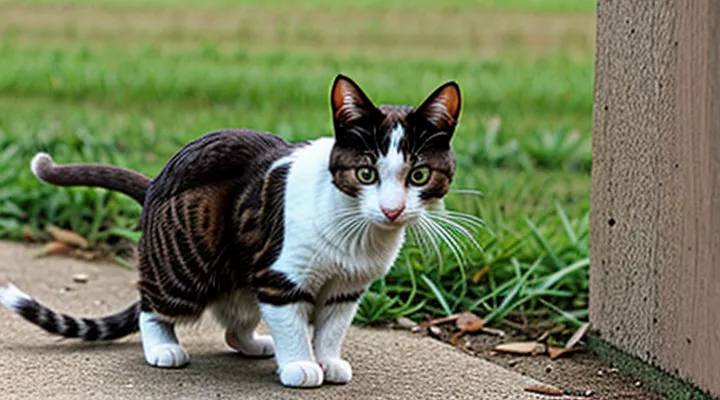
The Feline Hunter: An Overview
Instinctual Predation
Instinctual predation drives domestic cats to pursue and capture rodents without prior training. The behavior originates from evolutionary pressures that shaped felids as obligate hunters, preserving a set of neural circuits that activate automatically when prey cues appear.
Vision, hearing, and whisker feedback constitute the primary sensory triggers. High‑frequency ultrasonic sounds emitted by mice stimulate the auditory cortex, while the cat’s tapetum lucidum amplifies low‑light visual input, allowing detection of minute movements. Vibrissae detect airflow disturbances generated by a mouse’s scurrying, refining the cat’s spatial map of the target.
The hunting sequence unfolds in three stages:
- Stalk – the cat lowers its body, aligns its spine, and advances in short, silent steps, minimizing visual and auditory signatures.
- Pounce – rapid extension of the hind limbs propels the cat forward; the forelimbs spread to clamp the prey’s torso.
- Kill bite – the mandibular muscles compress the neck vertebrae, delivering a swift, lethal force.
Variation in execution arises from individual experience and environmental factors. Kittens refine timing through play, while adult cats adjust stride length and angle to accommodate cluttered indoor settings. Nevertheless, the core predatory pattern remains hard‑wired, ensuring consistent success across diverse habitats.
Evolutionary Adaptations for Hunting
Domestic cats possess a suite of evolutionary modifications that convert ordinary predatory instincts into a precise mouse‑hunting system. These modifications arise from millennia of selection for small‑prey capture and manifest in anatomy, physiology, and behavior.
- Acute low‑light vision centered on motion detection
- Highly mobile, whisker‑rich facial vibrissae for spatial mapping in darkness
- Muscular forelimbs capable of rapid, silent extension and contraction
- Retractable claws that provide grip without constant wear
- Flexible spine enabling explosive acceleration and agile turns
- Auditory range tuned to high‑frequency rodent squeaks
- Innate stalking sequence: freeze, slow approach, sudden pounce, bite to the neck
- Learned predatory play that refines timing and force control
The visual system isolates moving silhouettes against low illumination, allowing cats to lock onto a mouse’s erratic trajectory. Whiskers relay minute air currents, revealing prey position when visual cues are insufficient. Muscular and skeletal arrangements generate a burst of speed exceeding 30 mph in short sprints, while the retractable claw set delivers a secure hold without hindering stealth. Auditory sensitivity captures ultrasonic emissions produced by rodents, supplementing visual detection. The stereotyped stalking behavior reduces prey awareness; the final bite, directed at the cervical vertebrae, ensures rapid incapacitation. Repetitive play with objects replicates these motions, reinforcing neural pathways that govern timing, force, and coordination. Collectively, these traits constitute a comprehensive adaptation package that maximizes hunting efficiency in the domestic environment.
The Hunting Sequence
Stalking and Approaching Prey
Stealth and Camouflage
Cats rely on silence, low profile, and coloration to approach rodents without detection. Muscular control of the forelimbs and tail enables a crouched stance that reduces silhouette and limits visual cues. The flexible spine allows incremental adjustments, keeping the body aligned with the prey’s line of sight.
Key elements of feline concealment include:
- Fur pattern – mottled or tabby markings break up the outline against varied floor coverings and natural textures.
- Paw pads – thick, rubbery pads absorb impact and mute footfalls, preventing vibrations that rodents could sense.
- Whisker positioning – forward‑facing vibrissae detect airflow changes, allowing the cat to fine‑tune its approach while remaining motionless.
- Tail stabilization – a stationary tail counterbalances subtle shifts, maintaining a steady center of gravity and avoiding sudden movements.
Behavioral tactics complement physical adaptations. Cats often pause at the edge of a mouse’s burrow, observing for a moment before a rapid, silent sprint. During the pause, pupils dilate to maximize light intake, enhancing depth perception without altering the cat’s silhouette. The final strike is executed with a brief, explosive extension of the forelimbs, minimizing the time the prey can react.
Studies of domestic cat predation confirm that stealth and camouflage together increase capture success rates by limiting the mouse’s ability to perceive visual and auditory cues. The integration of morphological features and precise motor control constitutes a highly efficient predatory system.
Sensory Cues: Sight, Sound, Smell
Cats rely on three primary sensory channels to locate and capture rodents. Visual detection provides the initial cue; a mouse’s rapid, erratic movements generate high‑contrast silhouettes against typical indoor lighting. Cats possess a high density of rod cells and a reflective tapetum lucidum, enabling precise tracking even in low‑light conditions. Their forward‑facing eyes create binocular overlap, allowing accurate depth perception for the final pounce.
Auditory perception supplements sight. Mice emit faint squeaks and rustling noises while moving through debris. Cats’ ear pinnae rotate up to 180°, capturing frequencies between 48 Hz and 85 kHz. This range includes the ultrasonic components of rodent vocalizations, permitting early detection of prey concealed behind obstacles.
Olfactory input confirms the target’s presence. A mouse releases volatile compounds from urine, feces, and skin glands. Cats possess approximately 200 million olfactory receptors, far exceeding those of many mammals. The vomeronasal organ processes pheromonal signals, guiding the cat toward the exact location of the hidden animal.
Key aspects of each cue:
- Sight: motion detection, low‑light acuity, depth judgment.
- Sound: high‑frequency sensitivity, directional ear rotation.
- Smell: extensive receptor array, pheromone analysis, trail tracking.
Integration of these modalities enables rapid decision‑making, precise stalking, and successful capture.
The Pounce and Capture
The «Kill Bite» Technique
Domestic cats rely on a precise bite to terminate prey quickly. The kill bite targets the mouse’s neck or base of the skull, crushing the spinal cord or severing the trachea. This action immobilizes the animal within seconds, preventing escape and reducing the risk of injury to the cat.
The sequence begins with a chase that exhausts the mouse. Once the cat secures a grip with its forepaws, it positions its jaws over the vulnerable area. Muscular contraction of the masseter and temporalis muscles generates force sufficient to break vertebrae or collapse the airway. The bite is held for a brief, controlled interval—typically less than one second—to avoid excessive struggle.
Key anatomical factors that facilitate the kill bite include:
- Sharp, retractable canines that penetrate tissue precisely.
- Robust jaw muscles that deliver high bite pressure (up to 200 psi in some breeds).
- Sensitive whiskers that guide the cat’s mouth to the optimal strike zone.
Variations in execution arise from prey size and environment. Larger rodents may receive a bite to the cervical vertebrae, while smaller mice are often dispatched by a snap to the throat. Indoor cats sometimes use the kill bite as a final step after a prolonged paw‑hold, whereas outdoor cats may combine it with a rapid bite during high‑speed pursuits.
Effectiveness stems from evolutionary selection for rapid incapacitation. Studies show that cats employing the kill bite achieve a success rate above 80 % in controlled trials, compared with lower rates for alternative methods such as swatting or choking.
Understanding this technique informs humane pest control practices. Proper handling of captured mice—allowing the cat to perform the kill bite before removal—reduces stress for both animal and owner and aligns with natural predatory behavior.
Using Paws for Subdual
Cats rely on precise paw movements to immobilize rodents before delivering a lethal bite. The forelimbs generate a rapid, controlled strike that targets the mouse’s torso, neck, or limbs. Muscular contraction in the shoulder and elbow joints produces a forceful snap, while the flexible wrist adjusts angle to match the prey’s orientation.
During the strike, the cat’s claws may be extended or retracted depending on the situation. Extended claws increase friction, preventing the mouse from slipping, whereas a retracted position reduces the risk of injury to the cat’s own paws. The digit pads provide tactile feedback, allowing the animal to gauge pressure and adjust grip instantly.
A typical subdual sequence includes:
- Initial contact – paw contacts the mouse’s dorsal surface.
- Grip establishment – claws engage, pads maintain steady pressure.
- Force application – shoulder and forearm muscles contract, compressing the prey’s thorax.
- Stabilization – the cat secures the mouse, limiting escape movements.
- Transition to bite – head moves forward to target the neck or head.
The rapid closure of the paw’s metacarpal bones creates a “pinch” that immobilizes the mouse’s spine, reducing reflexive thrashing. Sensory receptors in the paw detect subtle shifts, prompting micro‑adjustments that keep the prey restrained until the cat can deliver a fatal bite.
Overall, the coordinated use of forelimb anatomy, claw modulation, and tactile sensing enables domestic felines to subdue small rodents efficiently and with minimal risk of injury.
Play and Practice with Prey
Cats engage with captured rodents through a sequence of staged actions that resemble play. After a successful kill, a cat often paws, tosses, and bites the carcass repeatedly. This behavior serves two functions: it refines motor patterns required for subduing live prey, and it stimulates sensory feedback that reinforces predatory instincts.
The repetitive motions allow kittens and adult felines to adjust grip strength, bite angle, and timing. By alternating between gentle batting and firm clamping, the animal calibrates the force needed to immobilize a moving target without expending unnecessary energy. The tactile feedback from the prey’s fur and flesh informs the cat’s perception of resistance, sharpening the coordination between forelimb and jaw muscles.
Practice sessions typically follow a predictable pattern:
- Capture: Seizing the prey with forepaws.
- Manipulation: Shaking, rolling, or tossing the animal.
- Mouth engagement: Delivering a series of bites to the neck or torso.
- Release and re‑capture: Dropping the prey and re‑seizing it to repeat the cycle.
Each iteration provides an opportunity to correct errors in strike placement or grip. Kittens observed performing these routines develop proficiency faster, as the repetitive exposure accelerates neural pathway formation linked to hunting.
Environmental factors influence the intensity of play. Indoor cats with limited hunting opportunities often compensate by intensifying mock‑hunt episodes with toys that mimic rodent movement. Outdoor cats, faced with actual prey, display more abrupt transitions from play to lethal action, underscoring the adaptive flexibility of this behavior.
In summary, the act of “playing” with captured rodents functions as a practical rehearsal platform. It hones motor skills, reinforces sensory cues, and ensures that domestic felines retain the efficiency required for successful predation.
Specialized Hunting Senses
Vision in Low Light
Cats rely on visual adaptations that enable effective predation during twilight and darkness. Their retinas contain a high density of rod photoreceptors, which detect minimal light levels and provide motion sensitivity. The rod concentration in feline eyes exceeds that of most mammals, allowing detection of prey silhouettes against faint illumination.
A reflective layer called the tapetum lucidum lies behind the retina. Light that passes through the photoreceptors is bounced back, effectively doubling photon exposure and enhancing image brightness. This structure contributes to the characteristic eye shine observed in low‑light environments.
Pupil dynamics further support nocturnal hunting. The feline iris can expand to a near‑circular aperture, maximizing light entry. Rapid constriction and dilation adjust to sudden changes in ambient illumination without compromising depth perception.
Key physiological features that optimize dim‑light vision include:
- Rod‑dominant retinal architecture
- Tapetum lucidum reflectivity
- Highly dilatable pupils
- Increased retinal thickness for greater photon capture
Together, these mechanisms allow domestic cats to locate and track mice when daylight is scarce, maintaining hunting efficiency across a broad range of lighting conditions.
Acute Hearing
Cats possess an auditory system finely tuned for detecting small prey. The external ear can rotate up to 180 degrees, allowing rapid alignment with sound sources. Muscular control of the pinnae adjusts the entrance angle, optimizing acoustic capture across a broad frequency spectrum.
The feline ear canal measures approximately 2 cm, funneling sound waves toward the tympanic membrane with minimal loss. Sensitivity peaks between 48 kHz and 64 kHz, a range that includes the ultrasonic vocalizations of rodents. Hair cells in the cochlea respond to pressure changes as slight as 0.01 Pa, enabling detection of movements concealed by foliage or bedding.
Acute hearing contributes to three core hunting functions:
- Prey detection: Minute rustlings and squeaks generate acoustic signatures distinguishable from ambient noise.
- Localization: Interaural time differences of less than 0.1 ms allow precise angle calculation, guiding head orientation toward the target.
- Distance estimation: Sound intensity attenuation provides a reliable metric for judging proximity, informing the timing of the pounce.
During a chase, auditory input operates in concert with vision and whisker feedback. Visual confirmation occurs once the mouse is within 2–3 m; whiskers then assess tactile cues as the cat closes the gap. The initial auditory alert therefore initiates the predatory sequence, reducing reaction time and increasing capture success.
Vibrissae: The Whiskers’ Role
Vibrissae, the stiff hairs surrounding a cat’s muzzle, nose, and eyes, function as highly sensitive tactile sensors. Each follicle contains a dense network of mechanoreceptors that detect minute air currents and surface textures, allowing the animal to construct a real‑time map of its surroundings without visual input.
When a cat stalks prey, whiskers sweep forward, contacting potential obstacles and the mouse’s fur. The resulting signals inform the cat of the prey’s position, speed, and direction, enabling precise adjustments to body posture and bite timing. This sensory feedback is critical during the rapid acceleration of the final pounce, where visual cues may be insufficient.
Key contributions of vibrissae to hunting efficiency:
- Detection of prey movement within a few centimeters of the face.
- Measurement of gap widths to prevent collision with tight spaces.
- Guidance of the head and jaws during the capture bite.
- Continuous feedback during pursuit, supporting balance and coordination.
Factors Influencing Hunting Success
Individual Cat Differences
Age and Experience
Cats develop hunting proficiency through distinct stages linked to age and accumulated experience. Kittens display reflexive pouncing driven by innate motor patterns, yet lack the precision required for successful capture. Their visual acuity, depth perception, and auditory localization mature rapidly during the first three months, allowing gradual refinement of strike distance and timing.
Key age‑related changes include:
- Neonatal (0–4 weeks): Limited coordination; play bouts serve as motor rehearsal rather than true predation.
- Juvenile (4 weeks–6 months): Rapid improvement in binocular vision; increased frequency of successful strikes on moving objects.
- Subadult (6 months–1 year): Consolidation of stalking behavior; ability to assess prey escape routes and adjust approach speed.
- Adult (1 year+): Optimized muscle fiber recruitment; consistent use of silent, low‑profile movement; higher capture success rates, especially in seasoned individuals.
Experience further modifies technique. Cats that have repeatedly encountered live rodents develop:
- Enhanced pattern recognition of prey movement, enabling anticipatory adjustments.
- Refined bite placement, targeting the neck to immobilize swiftly.
- Adaptive use of environmental features, such as leveraging cover for ambush.
Conversely, older cats may exhibit slower reaction times due to reduced agility, but compensate with strategic positioning and learned efficiency. The interplay of physiological maturation and learned behavior defines the overall effectiveness of domestic felines in rodent control.
Breed-Specific Tendencies
Domestic cats exhibit pronounced variations in hunting behavior that align with their genetic lineage. Each breed carries distinct predatory traits shaped by selective breeding and ancestral environments, influencing how effectively they pursue and capture rodents.
Siamese cats display heightened auditory sensitivity and rapid reflexes, enabling swift detection of mouse movements and precise pounce timing. Their slender build supports agile lunges, often resulting in a single, decisive strike.
Bengal cats retain characteristics of their wild ancestors, such as strong musculature and a pronounced stalking instinct. They frequently engage in extended pursuit sequences, employing low, deliberate crouches before accelerating to close distance.
Maine Coon individuals possess considerable body mass and powerful forelimbs, favoring ambush tactics that capitalize on strength rather than speed. Their larger paws facilitate secure grip on prey during the capture phase.
Russian Blue cats demonstrate exceptional visual acuity in low-light conditions, allowing effective hunting during twilight hours. Their calm demeanor often translates into patient observation before initiating a calculated attack.
Oriental Shorthair cats combine high energy levels with refined coordination, resulting in frequent, short bursts of activity that involve multiple rapid attempts to seize moving mice.
These breed-specific tendencies arise from a combination of sensory adaptations, muscular development, and inherited predatory strategies. Understanding such differences aids in predicting individual cat performance in rodent control scenarios and informs responsible selection of feline companions for environments where pest management is a priority.
Environmental Considerations
Terrain and Cover
Cats rely on terrain and cover to increase success when pursuing mice. The environment supplies visual obstruction, tactile pathways, and escape routes that shape each phase of the hunt.
Open areas such as lawns, leaf litter, and low vegetation create a mosaic of shadows and gaps. Cats position themselves behind a tuft of grass or a fallen branch, reducing their silhouette and masking movement. Rough ground allows silent footfalls, while uneven surfaces disrupt a mouse’s ability to maintain a straight escape line.
Indoor settings present different but equally useful structures. Furniture legs, curtain folds, and the space beneath cabinets serve as concealed perches. Elevated positions grant a broader field of view, while narrow aisles limit a rodent’s maneuverability. Soft furnishings absorb sound, preventing auditory detection.
Typical applications of terrain and cover include:
- Approaching the prey from a concealed angle, minimizing exposure until the final strike.
- Holding a stationary ambush point behind an obstacle, waiting for the mouse to enter a predictable pathway.
- Retreating to a pre‑selected shelter after a strike, ensuring rapid withdrawal if the pursuit fails.
Adaptability to varying landscapes enables domestic cats to exploit both natural and artificial environments, turning ordinary surroundings into effective hunting arenas.
Prey Availability
Prey availability determines the success of feline predation on rodents. Population density of mice fluctuates with seasonal breeding cycles; peaks in late spring and early summer increase encounter rates, while winter declines reduce opportunities. Habitat complexity influences accessibility; dense vegetation, cluttered storage areas, and structural gaps provide concealment for rodents, forcing cats to adapt their stalking and pouncing techniques. Human activities modify these conditions: regular cleaning, sealing entry points, and use of rodent control products lower local mouse numbers, whereas outdoor feeding stations or waste accumulation sustain higher prey densities.
Key factors affecting prey presence include:
- Seasonal reproductive patterns of rodents
- Structural features of the environment (e.g., cracks, debris, vegetation)
- Human interventions (pest control, sanitation, feeding practices)
- Cat lifestyle (indoor‑only, indoor/outdoor, fully outdoor)
- Availability of alternative food sources supplied by owners
Urban and suburban settings often present fragmented habitats where mouse populations persist in gardens, basements, and utility spaces. In such locales, cats that roam freely encounter higher prey densities than strictly indoor animals. Conversely, aggressive rodent eradication programs can depress mouse numbers to levels insufficient to sustain regular hunting behavior, prompting cats to rely more on provided food.
Understanding these dynamics enables accurate assessment of how domestic felines exploit mouse populations, informs humane pest management, and clarifies the ecological role of cats in controlling rodent abundance.
The Domestic Cat’s Instinct in a Modern World
Hunting as Enrichment
Cats possess innate predatory instincts that can be channeled into enrichment activities. Structured hunting simulations satisfy the drive to stalk, pounce, and capture, reducing stress and preventing behavior problems.
Enrichment designs that mimic natural prey capture include:
- Puzzle feeders containing moving parts that require a swipe or bite to release food.
- Motorized toys that dart across the floor, prompting a chase sequence.
- Interactive sessions where a feather wand is dragged along a rug, encouraging stalking behavior.
- Hidden treat dispensers placed under lightweight covers that must be lifted or torn.
Each element engages specific phases of the predatory sequence: detection, approach, attack, and kill. By replicating these stages, owners reinforce muscular coordination, sensory acuity, and mental focus. Regular rotation of toys and challenges prevents habituation and maintains high engagement levels.
Monitoring outcomes involves observing latency to initiate play, frequency of successful captures, and changes in grooming or vocalization patterns. Consistent participation correlates with improved overall welfare and a measurable decline in destructive scratching or excessive vocalization.
Managing Hunting Behavior
Domestic cats retain instinctual predation skills, yet uncontrolled hunting can threaten wildlife and create household conflicts. Effective management requires a systematic approach that modifies environment, behavior, and nutrition while preserving the animal’s welfare.
- Provide regular play sessions that mimic prey movements; use wand toys, laser pointers, or feathered lures for at least 15 minutes twice daily.
- Install motion‑activated deterrents on windows and doors to limit outdoor access during peak rodent activity.
- Offer a balanced diet rich in protein and taurine; supplement with high‑value treats to satisfy hunting drive without encouraging live capture.
- Apply positive reinforcement when the cat redirects attention from live prey to toys or puzzles; reward with food, praise, or short grooming periods.
Training protocols should begin with short, focused intervals and gradually increase complexity. Introduce puzzle feeders that require manipulation, reinforcing problem‑solving skills and reducing reliance on actual hunting. When outdoor access is necessary, use a secure harness and leash, or create a fenced enclosure that contains the cat while allowing exposure to natural stimuli.
Monitoring involves recording incidents of live prey capture, noting time of day, location, and circumstances. Analyze patterns to adjust enrichment schedules, modify deterrent placement, or revise dietary components. Consistent documentation enables owners to evaluate progress and refine strategies, ensuring that predatory behavior remains controlled without compromising the cat’s intrinsic abilities.