
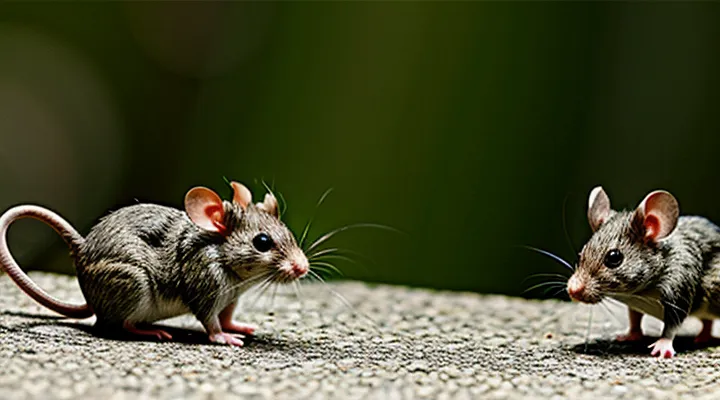
Introduction to Rodents
Common Misconceptions
Size Perception
The perception of size between a diminutive rat and a mouse relies on several visual and tactile cues that allow observers to discriminate the two species quickly.
Body length provides the most direct indicator. Adult mice typically measure 6–10 cm from nose to tail base, whereas small rats range from 12 cm upward. This difference creates a distinct visual angle when the animals are viewed from a standard distance, enabling the brain to categorize them based on proportion.
Weight reinforces the length cue. Mice weigh 15–30 g; small rats exceed 150 g. The greater mass affects how the animal moves and how it is supported by surfaces, contributing to a perception of bulk.
Tail proportion offers additional information. Mouse tails are roughly equal to body length, while rat tails are longer, often surpassing the body by 20–30 %. The extended tail alters the silhouette and affects balance perception.
Fur coloration and texture influence size judgment indirectly. Coarser, darker fur on rats contrasts with the finer, lighter pelage of mice, creating a visual contrast that supports size assessment.
Key perceptual factors can be summarized:
- Linear dimensions: nose‑to‑tail length, tail‑to‑body ratio.
- Mass perception: inferred from movement dynamics and surface interaction.
- Silhouette shape: overall outline, tail extension, ear size.
- Texture cues: fur density and coloration.
These elements interact to produce an immediate, reliable distinction in everyday observation, allowing humans and predators alike to evaluate the relative size of the two rodents without explicit measurement.
Identification Challenges
Accurately distinguishing a diminutive rat from a mouse poses practical difficulties because the two species overlap in several measurable traits. Both animals may weigh between 20 and 30 g and exhibit body lengths of roughly 7–10 cm, especially when the rat is a juvenile or a small adult breed. This size convergence eliminates weight and length as reliable sole indicators.
Additional sources of confusion arise from overlapping fur coloration and tail morphology. Many mouse strains display brown or gray dorsal fur identical to that of a small brown rat, while tail length can be proportionally similar in certain rat subspecies. The presence of a hairless tail tip, a classic mouse characteristic, may be obscured by wear or environmental factors, further blurring visual cues.
Key factors that increase identification uncertainty:
- Skull structure: Rat skulls possess a broader rostrum and more robust zygomatic arches; mouse skulls are narrower and lighter, but require dissection or imaging to assess.
- Auditory bullae size: Rats have larger, more inflated bullae; mice exhibit smaller, less pronounced cavities, detectable only via radiography or detailed palpation.
- Incisor curvature: Rat incisors tend toward a straighter profile, whereas mouse incisors display a pronounced curvature; microscopic examination is necessary for confirmation.
- Behavioral patterns: Rats often exhibit bolder foraging behavior and larger home ranges; mice are more timid and confined, yet individual temperament can vary, limiting reliability as a diagnostic criterion.
Because visual and morphological traits intersect across developmental stages and environmental conditions, definitive identification frequently requires a combination of anatomical analysis, measurement precision, and, when available, genetic testing.
Key Differences in Size
Body Length Comparison
Head-to-Body Ratio
The head‑to‑body ratio is a reliable metric for distinguishing a small rat from a mouse. It expresses the proportion of skull length to the length of the torso, providing a clear morphological indicator that does not rely on overall size alone.
- Small rat: head length ≈ 2.0 cm; body length (excluding tail) ≈ 10 cm; ratio ≈ 0.20.
- Mouse: head length ≈ 1.0 cm; body length (excluding tail) ≈ 6 cm; ratio ≈ 0.17.
A higher ratio in rats reflects a relatively larger cranium, which correlates with stronger jaw muscles and a more robust skull structure. The lower ratio in mice indicates a slimmer head, consistent with their lighter bite force and finer facial features.
When identifying specimens, measuring the head‑to‑body ratio yields immediate differentiation: a ratio above 0.18 typically signals a rat, while a ratio below that threshold points to a mouse. This quantitative approach reduces reliance on subjective visual assessment and enhances accuracy in field and laboratory settings.
Weight Variations
Average Adult Weights
Average adult mouse weight typically falls between 18 g and 30 g, with most laboratory strains averaging around 22 g. Adult small rat weight ranges from 150 g to 300 g, depending on species and sex; the common Norway rat averages approximately 250 g. The disparity in mass directly influences observable size differences: a mouse measures roughly 6–10 cm in body length, whereas a small rat reaches 20–25 cm.
Key weight comparisons:
- Mouse: 18–30 g (average ~22 g)
- Small rat: 150–300 g (average ~250 g)
The larger mass of the rat contributes to a bulkier form, thicker fur, and proportionally larger limbs, while the mouse’s lighter weight supports a more delicate silhouette and finer facial features.
Distinctive Appearance Traits
Tail Characteristics
Tail Length Relative to Body
The tail of a small rat typically exceeds its body length, while a mouse’s tail approximates the length of its torso. Measurements from laboratory colonies show that a rat weighing 200 g has a body length of 18–20 cm and a tail of 22–24 cm, yielding a tail‑to‑body ratio of roughly 1.2 : 1. A common house mouse weighing 20 g exhibits a body length of 7–9 cm and a tail of 6–8 cm, producing a ratio near 0.9 : 1.
Key comparative points:
- Rat tail length: 110–130 % of body length.
- Mouse tail length: 80–100 % of body length.
- Rat tail surface area: larger, supporting greater heat dissipation.
- Mouse tail: proportionally shorter, offering enhanced maneuverability in confined spaces.
Longer tails in rats contribute to balance during rapid locomotion and provide a thermoregulatory surface that offsets greater body mass. Mice rely on a relatively compact tail to navigate narrow burrows and maintain agility despite limited body size.
The distinct tail‑to‑body proportions constitute a reliable morphological marker for differentiating these rodents in field observations and taxonomic assessments.
Fur on Tail
The tail of a small rat typically bears a dense, coarse coat that extends over the entire length, giving the appendage a uniformly furry appearance. In contrast, a mouse’s tail is sparsely covered; hair is limited to the dorsal surface and often thins toward the tip, resulting in a semi‑naked look.
- Rat tail fur: thick, continuous, dark‑brown to black, length proportionally shorter relative to body size.
- Mouse tail fur: fine, patchy, lighter coloration, longer relative to body size, with a noticeable bare ventral side.
- Functional impact: the rat’s dense fur provides insulation and protection, while the mouse’s reduced fur enhances agility and heat dissipation.
Ear Size and Shape
Prominence of Ears
A small rat typically exhibits ears that are proportionally modest, covering roughly one‑third of the head’s width. The ear surface is covered with sparse, coarse fur, and the cartilage is relatively thick, giving the ear a blunt silhouette.
In contrast, a mouse displays ears that dominate its head shape. Each ear spans about half the head’s width, appears thin, and is almost hairless except for a fine fringe along the rim. The cartilage is delicate, producing a pointed, triangular outline.
Key distinctions in ear prominence:
- Relative size: rat ears ≈ 30 % of head width; mouse ears ≈ 50 % of head width.
- Fur coverage: rat ears bear noticeable fur; mouse ears are largely bare.
- Shape: rat ears are rounded and robust; mouse ears are slender and angular.
These morphological differences affect auditory sensitivity and visual identification, allowing quick separation of the two species in field observations.
Ear Hair
Ear hair provides a reliable visual cue for distinguishing a small rat from a mouse. The two species exhibit distinct patterns in length, density, and distribution that correspond to overall ear size and body proportions.
In a small rat, ear hair forms a dense fringe that extends several millimeters beyond the pinna edge. Hairs are coarse, pigmented dark brown or black, and align in parallel rows that accentuate the relatively large, rounded ears. The fringe creates a noticeable border visible even at a short viewing distance.
In a mouse, ear hair is markedly shorter, typically less than one millimeter, and sparsely distributed. The hairs are fine, often lighter in color, and do not form a continuous fringe. The reduced hair coverage reflects the mouse’s smaller, more triangular ears and contributes to a smoother ear silhouette.
Key comparative points:
- Length: rat ≈ 3–5 mm; mouse < 1 mm.
- Density: rat – dense, continuous fringe; mouse – sparse, isolated hairs.
- Color: rat – dark, pigmented; mouse – lighter, often near‑transparent.
- Visual impact: rat ears appear bordered; mouse ears appear smooth.
These characteristics enable rapid identification of each animal based on ear hair morphology alone.
Head Shape and Snout
Facial Features
The facial morphology of a small rat and a mouse reveals clear distinctions that correspond to their overall size difference.
A rat’s snout is noticeably longer and broader than a mouse’s. Typical adult rats possess a snout length of 15–20 mm, while mice average 8–12 mm. The rat’s muzzle tapers gradually, whereas the mouse’s muzzle ends in a sharper, more pointed tip.
Ears of the rat are proportionally larger and set lower on the head. Rat ears measure 20–25 mm in height, providing a rounded silhouette. Mouse ears are 10–12 mm tall, thin, and positioned higher, giving a more delicate appearance. Eye diameter follows a similar pattern: rat eyes range from 6 to 8 mm, mouse eyes from 3 to 5 mm, resulting in a comparatively broader visual field for the rat.
Whisker (vibrissae) length and density also differ. Rats display whiskers up to 30 mm, arranged in multiple rows that extend well beyond the snout. Mice have whiskers averaging 12–15 mm, fewer in number, and confined closer to the nose. Facial fur coloration varies; rats often exhibit a uniform brown or gray coat covering the cheeks, while mice frequently show a lighter, sometimes mottled, facial patch that contrasts with darker dorsal fur.
Key facial differences
- Snout length: rat ≈ 15–20 mm; mouse ≈ 8–12 mm
- Ear size: rat ≈ 20–25 mm; mouse ≈ 10–12 mm
- Eye diameter: rat ≈ 6–8 mm; mouse ≈ 3–5 mm
- Whisker length: rat ≈ 30 mm; mouse ≈ 12–15 mm
These measurements provide a precise framework for distinguishing the two species based solely on facial characteristics.
Jaw Structure
The mandible of a small rat is noticeably larger and more robust than that of a mouse. The rat’s lower jaw exhibits a broader ramus, providing increased surface area for attachment of the masseter and temporalis muscles. In contrast, a mouse’s mandible is slender, with a reduced ramus that limits muscle leverage and contributes to its overall smaller facial profile.
Key structural distinctions include:
- Ramus width: rat ≈ 2 mm; mouse ≈ 1 mm, reflecting divergent bite forces.
- Incisor orientation: rat incisors project forward at a steeper angle, enhancing gnawing efficiency; mouse incisors are more vertically aligned.
- Alveolar process depth: rat exhibits a deeper alveolar groove, supporting larger tooth roots; mouse shows a shallow groove.
- Zygomatic arch robustness: rat’s arch is thicker, reinforcing the skull against higher mechanical loads; mouse’s arch is delicate.
These anatomical variations directly influence the observable size and silhouette differences between the two rodents, with the rat’s jaw contributing to a bulkier head shape and the mouse’s jaw supporting a more streamlined appearance.
Fur Color and Texture
Common Colorations
Small rats and mice display a limited set of fur pigments that are easily recognized in the field. Both species commonly exhibit shades of brown, black, gray, and white, with variations produced by melanin concentration and genetic mutations. The dorsal surface typically bears the darkest pigment, while the ventral side is lighter, creating a contrast that aids in camouflage.
Typical coloration patterns include:
- Standard brown (agouti) – mixed black and yellow hairs, giving a speckled appearance; prevalent in wild populations of both rodents.
- Solid black – uniform melanin over the entire coat; more frequent in laboratory rat strains.
- Albino – absence of melanin, resulting in pink eyes and white fur; occurs in both species through recessive alleles.
- Piebald – distinct patches of white on a darker background; observed especially in pet mouse varieties.
- Gray (dilute) – reduced melanin intensity, producing a slate‑gray coat; common in certain rat lines.
These colorations arise from the same genetic mechanisms in each animal, yet the expression frequency differs: rats more often present solid or agouti coats, whereas mice display a broader range of patterned variants, including piebald and albino forms. The combination of dorsal‑ventral contrast and specific pigment patterns contributes to the visual distinction between the two small rodents.
Coat Density
Coat density refers to the number of hair follicles per square centimeter of skin and the thickness of the resulting fur layer. It directly influences the visual bulk of an animal and affects thermal regulation.
A small rat typically exhibits a higher coat density than a mouse. The rat’s fur consists of a greater number of fine hairs tightly packed together, creating a denser, more uniform covering. In contrast, a mouse possesses a sparser arrangement of hairs, with larger gaps between individual strands.
- Rat: approximately 150–180 follicles cm⁻²; hair shafts up to 5 mm long; soft, tightly layered coat.
- Mouse: roughly 90–120 follicles cm⁻²; hair shafts up to 3 mm long; looser, more airy coat.
The denser fur of the rat contributes to a perception of greater body mass despite its similar skeletal dimensions to the mouse. Conversely, the mouse’s lighter coat accentuates its diminutive appearance and facilitates quicker heat loss, aligning with its higher metabolic rate.
Habitat and Behavior Clues
Nesting Habits
Nest Material
Small rats construct nests that accommodate a larger body mass and longer tail. Their burrows often contain coarse fibers such as shredded paper, cardboard strips, and dried plant stems. The thickness of these materials provides structural support for a broader chamber and helps maintain a stable micro‑climate despite the rat’s greater heat loss.
Mice, being smaller and more agile, favor finer, lightweight substances. Typical components include soft cotton fibers, shredded tissue, and fine grass blades. These materials fill compact cavities and create a dense, insulating layer that matches the mouse’s modest size and reduced surface area.
Differences in nest composition reflect functional adaptation:
- Material diameter: coarse (rat) vs. fine (mouse)
- Structural depth: deeper, wider tunnels (rat) vs. shallow, tight pockets (mouse)
- Insulation density: moderate (rat) vs. high (mouse)
The selection of nest material directly influences the durability and thermal efficiency of each species’ dwelling, aligning with their respective physical dimensions and external appearance.
Social Structures
Group Living versus Solitary
Small rats often form colonies that share burrows, food caches, and nesting material. Living in groups reduces predation risk, allowing individuals to allocate more energy to growth. Consequently, rats tend to reach a body length of 20–25 cm and exhibit robust musculature, dense fur, and broader skulls that accommodate stronger jaw muscles.
Mice frequently adopt a solitary lifestyle, occupying individual nests and defending exclusive territories. The absence of cooperative foraging limits resource intake, resulting in a smaller stature—typically 7–10 cm in body length—with lighter bone structure, finer fur, and a narrower skull.
Key morphological contrasts linked to social organization:
- Body mass: group‑living rats average 250–300 g; solitary mice average 15–25 g.
- Fur density: rats possess thicker coats for communal nesting; mice have sparser fur suited to solitary shelter.
- Skull shape: rats display broader, more robust skulls; mice show elongated, delicate skulls.
These patterns illustrate how social strategy directly influences physical development in closely related rodent species.
Ecological Significance
Impact on Ecosystems
Role as Prey
Small rodents such as the diminutive rat and the common mouse occupy distinct positions in predator‑prey dynamics because of measurable variations in body size and external features. The rat, typically ranging from 150 to 250 g, presents a bulkier silhouette and coarser fur, while the mouse averages 15 to 30 g with a sleeker profile and finer hair. These physical distinctions influence detection, capture, and handling by carnivores.
Predators differentiate between the two prey items based on:
- Visual cues: larger, darker rats generate stronger contrast against ground cover, attracting raptors and nocturnal mammals that rely on sight.
- Tactile cues: the rat’s thicker hide offers greater resistance to bite, prompting predators such as feral cats to favor the more fragile mouse.
- Energetic payoff: a single rat supplies substantially more caloric value, encouraging opportunistic hunters to target it when available, whereas mice provide quick, low‑risk meals for small snakes and insectivores.
Consequently, the rat’s size confers both advantages and disadvantages: it deters minor predators but draws larger hunters seeking higher returns. The mouse’s diminutive form reduces detection probability, enabling survival in environments with abundant micro‑predators. Understanding these interactions clarifies how subtle morphological differences shape each species’ role as prey.
Role as Pests
Small rats and house mice are common urban and agricultural pests. The rat typically measures 12‑20 cm in body length, with a robust, coarse coat and a thick, scaly tail. The mouse averages 6‑10 cm, displays a finer, softer fur, and possesses a slender, hairless tail. These physical distinctions affect infiltration methods, food preferences, and population dynamics.
- Rats exploit larger openings (e.g., gaps above 1 cm) and can transport heavier food items, leading to significant grain loss and structural damage.
- Mice enter through minute cracks (down to 0.5 cm), contaminate stored products with urine and droppings, and cause electrical faults by gnawing wiring.
Coat coloration provides camouflage: rats, with darker fur, blend into basements and sewers, while mice, often light‑brown, remain concealed in attic insulation. Tail morphology influences mobility; the rat’s stout tail supports balance when climbing, enabling access to higher storage shelves, whereas the mouse’s flexible tail facilitates rapid maneuvering through narrow ducts.
Control strategies must reflect size differences. Traps sized for rats require larger trigger mechanisms and stronger springs; mouse traps prioritize sensitivity and minimal bait. Bait formulations consider dietary habits: rats accept larger protein blocks, while mice respond to finely ground grains. Sanitation efforts focus on sealing entry points appropriate to each species—gap fillers of at least 1 cm for rats, and fine mesh or caulking for mouse-sized openings.