
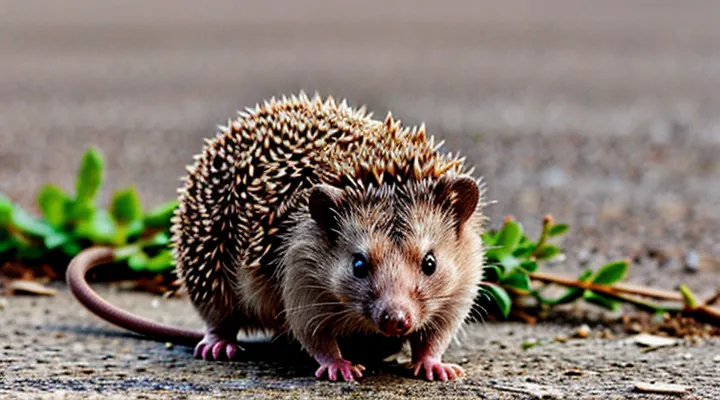
The Enigmatic Diet of Hedgehogs
Hedgehogs as Omnivores: A Nutritional Overview
Hedgehogs are classified as opportunistic omnivores, consuming a range of animal and plant matter depending on seasonal availability. Their diet includes insects, small vertebrates, fruits, seeds, and occasional carrion. This flexibility enables survival across diverse habitats and influences trophic dynamics within ecosystems where hedgehogs coexist with rodent populations.
Key nutritional components:
- Protein – derived mainly from insects (beetles, caterpillars) and occasional vertebrate prey; essential for muscle development and immune function.
- Lipids – supplied by insect larvae and fatty seeds; provide energy reserves for winter hibernation periods.
- Carbohydrates – sourced from berries, apples, and other fruits; support glycogen storage.
- Vitamins and minerals – obtained from both animal tissue (iron, zinc) and plant matter (vitamin C, potassium); critical for metabolic processes.
Digestive efficiency varies with prey type. Soft-bodied insects are processed rapidly, delivering high protein yields, while hard-shelled insects require longer gastric retention to break down chitin. Plant materials contribute fiber, aiding gastrointestinal motility but contribute less caloric density.
Seasonal shifts alter intake ratios. Spring and summer favor insect abundance, increasing protein and lipid consumption. Autumn introduces more fruit and seed intake, raising carbohydrate levels in preparation for reduced activity. Winter fasting relies on stored fat accumulated during prior months.
Overall, hedgehogs’ omnivorous strategy supports adaptive energy balance, influences prey population pressures, and integrates plant dispersal through fruit consumption, reinforcing their role in complex food webs.
Dietary Adaptations for Survival
Hedgehogs demonstrate opportunistic carnivory by incorporating small rodents, such as mice, into their diet. This behavior expands the traditional view of their feeding ecology and illustrates a complex trophic relationship.
Physiological adaptations enable efficient exploitation of vertebrate prey. Sharp, conical teeth allow precise capture and processing of flesh. Elevated levels of proteolytic enzymes in the gastrointestinal tract accelerate protein digestion, while a flexible stomach capacity accommodates occasional large meals without compromising nutrient absorption.
Behavioral strategies increase hunting success. Nocturnal activity aligns with peak rodent activity, reducing competition with diurnal predators. Acute olfactory receptors detect scent trails, and tactile whiskers sense minute movements in leaf litter. Seasonal shifts toward higher animal protein intake correspond with periods of reduced insect abundance, ensuring caloric adequacy.
Ecological consequences arise from this predatory pattern. Hedgehogs occupy an intermediate trophic level, transferring energy from primary consumers to higher predators. Their predation pressure helps regulate rodent populations, indirectly influencing seed dispersal and vegetation dynamics.
Key dietary adaptations for survival:
- Specialized dentition for grasping and shearing vertebrate tissue.
- Upregulated digestive enzymes targeting animal protein.
- Expanded gastric volume to handle irregular prey size.
- Nocturnal foraging synchronized with prey activity cycles.
- Enhanced sensory modalities for detecting concealed mammals.
The Predator-Prey Dynamic: Hedgehogs and Mice
Understanding Food Chains
Trophic Levels Explained
Trophic levels describe the hierarchical positions organisms occupy in a food web, each level representing a step in the flow of energy and matter from primary producers to top predators. Primary producers convert solar energy into organic material through photosynthesis. Primary consumers ingest this material, secondary consumers feed on primary consumers, and tertiary (or higher) consumers prey on secondary consumers. Decomposers break down dead organic matter, returning nutrients to the soil for reuse by producers.
In the observed chain where small mammals consume rodents, the sequence follows: plants → herbivorous insects → mice → hedgehogs. Plants form the base as primary producers. Insects that feed on plant tissue act as primary consumers. Mice, which eat insects and seeds, occupy the secondary consumer level. Hedgehogs, preying on mice, serve as tertiary consumers. This arrangement exemplifies a four‑level trophic structure within a terrestrial ecosystem.
Energy transfer between adjacent levels averages about ten percent, meaning that only a fraction of the energy captured by producers becomes available to the next consumer tier. Consequently, biomass decreases upward through the pyramid, limiting the number of individuals that can be sustained at higher levels. The hedgehog’s position near the apex reflects the reduced energy supply and the need for efficient hunting strategies.
Stability of such a chain depends on the balance of population sizes at each level. Overabundance of primary consumers can deplete plant resources, while a decline in tertiary predators may allow unchecked growth of secondary consumers, altering the entire system. Maintaining proportional representation across trophic levels supports resilience and functional diversity.
The Role of Predation
Hedgehogs have been documented preying on mice, an interaction that diverges from their usual insect‑based diet. This observation expands the known range of predator‑prey relationships within temperate ecosystems and prompts a reassessment of hedgehog ecological niches.
Predation in this context serves several functions:
- Transfers energy from small mammals to a traditionally insectivorous species, altering caloric flow across trophic levels.
- Regulates mouse populations, reducing potential overabundance that could impact seed dispersal and vegetation.
- Generates selective pressure on mice, encouraging behavioral and physiological adaptations that increase survival odds.
The presence of hedgehog‑mouse predation influences community structure. By introducing a new predator, the system experiences a shift in competitive dynamics, potentially limiting the success of other mesopredators. Additionally, the behavior illustrates dietary flexibility, suggesting that hedgehogs can exploit opportunistic resources when insect prey are scarce.
Overall, predation by hedgehogs on mice demonstrates adaptive foraging strategies, contributes to energy redistribution, and modifies population equilibria within the broader food web.
Mice as a Food Source
Nutritional Value for Hedgehogs
Hedgehogs, though primarily insectivores, frequently capture and consume small rodents such as mice. This behavior supplies a concentrated source of nutrients that support growth, reproduction, and immune function.
Mice deliver high‑quality protein. Each 100 g of mouse meat contains approximately 20 g of protein, providing a complete profile of essential amino acids required for muscle maintenance and tissue repair. The protein is readily digestible, with an estimated digestibility coefficient of 85 % in hedgehogs.
Energy is supplied by the fat present in mouse tissue. Approximately 10 g of fat per 100 g of meat contributes 90 kcal, delivering essential fatty acids (linoleic and α‑linolenic acids) necessary for cell membrane integrity and hormone synthesis. The lipid profile aligns with the hedgehog’s metabolic demand for rapid energy during foraging.
Micronutrients in mouse meat include:
- Vitamin B12: 2–3 µg per 100 g, supporting nervous system health.
- Vitamin A (retinol): 150 µg per 100 g, essential for vision and epithelial maintenance.
- Iron: 1.5 mg per 100 g, facilitating oxygen transport.
- Calcium: 15 mg per 100 g, contributing to skeletal strength.
- Zinc: 1 mg per 100 g, involved in enzymatic activity and immune response.
Digestibility studies indicate that hedgehogs absorb 80–90 % of the nutrients from mouse flesh, surpassing the absorption rates of many insect prey. Nevertheless, exclusive reliance on rodents can lead to imbalances, particularly excess fat and insufficient fiber, which may predispose individuals to obesity and gastrointestinal disturbances. A diet that mixes insects, occasional vertebrate meat, and appropriate supplements ensures optimal nutrient intake and maintains physiological equilibrium.
Frequency and Conditions of Consumption
Hedgehogs incorporate mice into their diet irregularly, with consumption rates varying across geographic regions and seasonal cycles. Field surveys in temperate woodlands report mouse prey in 8–12 % of stomach‑content samples, while urban populations show presence in 3–5 % of examined individuals. Captive observations confirm similar patterns, with mice offered as supplemental food accepted in 10–15 % of feeding sessions.
The likelihood of mouse predation rises under specific ecological and physiological conditions:
- Prey scarcity: When insect populations decline during late summer or early autumn, hedgehogs increase opportunistic hunting of small rodents.
- Energetic demand: Reproductive females and juveniles exhibit heightened intake of protein‑rich prey, including mice, to support growth and lactation.
- Habitat structure: Dense underbrush and leaf litter provide concealment for both predator and prey, facilitating successful captures.
- Seasonal temperature: Cooler nights in autumn trigger higher metabolic rates, prompting hedgehogs to seek calorically dense food sources.
- Health status: Individuals recovering from illness or injury demonstrate a greater propensity to consume mammals, likely to accelerate tissue repair.
These factors collectively shape the sporadic nature of mouse consumption within hedgehog foraging strategies. Understanding the interplay between resource availability and physiological need clarifies why mice constitute a minor yet context‑dependent component of the hedgehog diet.
Ecological Implications of Hedgehog Predation
Impact on Rodent Populations
Hedgehogs occasionally capture and consume mice, adding a vertebrate component to their primarily invertebrate diet. This behavior introduces a predatory pressure that can affect local mouse abundance, especially in habitats where hedgehog densities are high.
Direct consequences include measurable declines in mouse numbers within hedgehog territories, reduced juvenile survival rates, and altered age structures in mouse populations. In areas with limited alternative prey, hedgehog predation may shift the balance from stable to declining mouse trends.
Secondary effects arise from changes in mouse-mediated processes. Lower mouse densities can decrease seed predation, potentially enhancing plant recruitment. Reduced mouse activity may also diminish the transmission of rodent-borne pathogens, influencing disease dynamics for other wildlife and humans. Competition among small mammals may intensify as mice vacate niches, allowing other species to expand.
Key impacts of hedgehog predation on rodent populations
- Decrease in overall mouse abundance in hedgehog‑occupied zones
- Lower juvenile survival and altered demographic composition
- Modification of seed predation and plant community composition
- Potential reduction in rodent‑borne disease prevalence
- Redistribution of competitive interactions among sympatric small mammals
Competition with Other Predators
Hedgehogs regularly include small rodents in their diet, positioning them as secondary predators within temperate ecosystems. Their foraging habits intersect with a range of carnivores that also target mice, creating direct competition for limited prey resources.
Primary competitors include:
- Red foxes, which hunt mice during dusk and night.
- Tawny owls, employing silent flight to capture rodents from perches.
- European weasels, exploiting burrow systems for rapid pursuit.
- Domestic and feral cats, relying on opportunistic ambush.
- Grass snakes, using stealth to seize moving prey.
Competition manifests through overlapping activity periods, shared microhabitats, and similar prey size preferences. Hedgehogs mitigate conflict by exploiting crepuscular peaks when some predators reduce activity, and by focusing on microhabitats such as leaf litter where larger carnivores have limited access. Their defensive spines discourage direct encounters, allowing safe withdrawal from contested zones.
Overall, interspecific rivalry restricts mouse availability for hedgehogs, influencing seasonal feeding patterns and reproductive output. Adaptive foraging strategies and niche differentiation sustain hedgehog populations despite persistent predator overlap.
Conservation Status and Dietary Habits
Threats to Hedgehog Populations
Hedgehog numbers are declining across Europe and parts of Asia due to a combination of anthropogenic and ecological pressures. Habitat loss remains the most immediate factor; urban expansion, intensive agriculture, and the removal of hedgerows eliminate nesting sites and foraging corridors. Road networks fragment populations, increase mortality from vehicle collisions, and impede dispersal between suitable patches.
Key threats can be summarized as follows:
- Agricultural intensification – pesticide application reduces invertebrate prey, while monocultures diminish shelter availability.
- Urban development – construction replaces natural ground cover with impervious surfaces, limiting access to food and safe daytime refuges.
- Predation pressure – higher densities of domestic cats and raptors in suburban areas raise predation rates on hedgehogs and their juveniles.
- Climate variability – extreme temperature fluctuations and altered precipitation patterns affect hibernation cycles and prey abundance.
- Disease emergence – pathogens such as Sarcoptes scabiei spread more readily in fragmented, stressed populations.
Conservation measures must target these drivers directly. Protecting and restoring hedgerows, implementing wildlife-friendly road designs, regulating pesticide use, and promoting community awareness of responsible pet ownership constitute evidence‑based actions that can stabilize and potentially increase hedgehog populations.
The Importance of Natural Diets
Natural diets provide the specific nutrients, energy levels, and bioactive compounds that wild animals have evolved to process. In the observed predator‑prey interaction where hedgehogs capture small rodents, the prey’s protein profile, fat composition, and micronutrient balance align with the hedgehog’s metabolic demands.
A diet consisting of live or freshly killed rodents delivers:
- High‑quality protein that supports muscle maintenance and growth.
- Saturated and unsaturated fats that match the species’ digestive enzyme activity.
- Trace elements (iron, zinc, selenium) present in vertebrate tissue, essential for immune function.
Deviations from this natural intake—such as exclusive reliance on processed kibble or plant‑based substitutes—lead to measurable deficiencies. Laboratory studies record reduced weight gain, altered gut microbiota, and increased susceptibility to parasitic infections when hedgehogs are fed artificial diets lacking vertebrate protein.
Beyond individual health, natural feeding behavior influences ecosystem dynamics. Predation on small mammals regulates rodent populations, curbing vegetation overgrazing and reducing disease vectors. The removal of prey biomass contributes to nutrient redistribution through fecal deposition, supporting soil fertility and secondary consumer communities.
Conservation programs and captive breeding facilities should therefore:
- Incorporate freshly sourced rodent meat or whole prey items into feeding regimens.
- Monitor body condition scores and hematological parameters to verify adequacy.
- Phase out long‑term use of nutritionally incomplete commercial feeds.
Adhering to species‑specific dietary patterns sustains physiological integrity, preserves ecological functions, and enhances the success of both wild and managed hedgehog populations.