
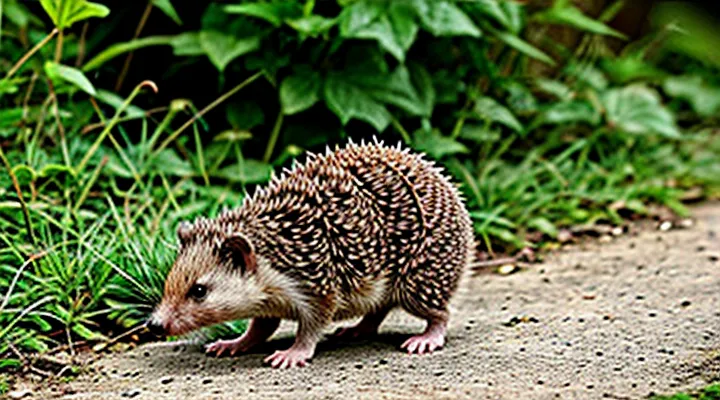
Hedgehog Ecology and Diet
Natural Habitat of Hedgehogs
Hedgehogs thrive in environments that supply cover, food sources, and suitable soil for burrowing. Typical settings include temperate woodlands, hedgerows, and grasslands where leaf litter and low vegetation create protective layers. Urban gardens and parklands also support populations when they contain compost heaps, stone walls, and dense shrubbery.
Key habitat features:
- Ground cover: dense leaf litter, moss, and low-growing plants that conceal hedgehogs from predators.
- Soil composition: loose, well‑drained soils facilitate digging of nests and foraging tunnels.
- Food availability: abundant invertebrates such as insects, worms, and mollusks, which are attracted to moist, organic-rich substrates.
- Shelter structures: log piles, stone walls, compost heaps, and abandoned burrows provide daytime refuges.
Seasonal variations influence habitat use. During winter, hedgehogs aggregate in communal nests within deep litter or under thick vegetation to conserve heat. In spring and summer, they expand their range to exploit increased insect activity, often moving closer to garden edges and irrigation zones.
Human activities affect habitat quality. Practices that maintain hedgerows, avoid pesticide overuse, and preserve natural debris in gardens enhance suitability. Conversely, intensive landscaping, removal of leaf litter, and habitat fragmentation reduce available resources and increase mortality risk.
Dietary Preferences Beyond Mice
Hedgehogs regularly supplement mouse consumption with a wide range of invertebrates. Earthworms constitute a primary protein source, especially in moist soils where they are abundant. Beetles, including ground and ladybird species, provide chitinous exoskeletons that aid digestive tract development. Slugs and snails offer soft-bodied prey rich in moisture, reducing the need for additional water intake.
Amphibians such as small frogs and salamanders appear in the diet during wet seasons when these organisms are active near hedgehog foraging routes. Reptile eggs, particularly those of lizards, are occasionally consumed for their lipid content. Invertebrate larvae, including caterpillars and fly magguts, supply high‑energy nutrients during periods of rapid growth.
Plant material enters the diet opportunistically. Berries, fallen fruit, and tender leaves supplement carbohydrate intake, especially when animal prey is scarce. Seeds and nuts are ingested in limited quantities, providing essential fatty acids.
Seasonal shifts influence prey selection. Spring and early summer favor invertebrate abundance, leading to higher worm and beetle intake. Autumn sees increased fruit consumption as hedgehogs prepare for reduced prey availability. Winter diets rely more heavily on stored fat reserves, with occasional predation on dormant insects and small vertebrates.
Key dietary components beyond mice:
- Earthworms
- Beetles and other insects
- Slugs and snails
- Amphibians (frogs, salamanders)
- Reptile eggs
- Invertebrate larvae
- Berries, fruit, and leafy material
- Seeds and nuts (limited)
Predatory Behavior of Hedgehogs Towards Mice
Hunting Techniques of Hedgehogs
Hedgehogs routinely capture mice, relying on specialized hunting strategies that maximize success in a variety of habitats.
The animal’s olfactory system detects rodent scent trails at distances of several meters, while acute hearing identifies rustling movements beneath leaf litter. These sensory inputs trigger a focused foraging response.
Nocturnal activity reduces competition with diurnal predators. Hedgehogs move silently, low to the ground, using a rolling gait to approach prey without disturbing surrounding debris.
Key hunting techniques include:
- Stealthy approach: gradual, low‑profile advance minimizes visual and vibrational cues.
- Ambush: positioning near known mouse pathways and waiting for the target to pass.
- Pursuit: short bursts of rapid movement when a mouse is spotted, covering up to 3 m per sprint.
- Spine deployment: after capture, the hedgehog rolls into a defensive ball, using quills to immobilize the mouse and prevent escape.
- Mouth grip: strong jaw muscles secure the prey’s neck, allowing swift killing and ingestion.
These methods collectively enable hedgehogs to regulate mouse numbers, contributing to ecosystem balance without reliance on external control measures.
Frequency of Mice in Hedgehog Diet
Hedgehogs regularly incorporate rodents into their diet, with mice representing a measurable portion of consumed prey. Field studies across temperate regions report that mice constitute between 10 % and 35 % of total biomass ingested by adult hedgehogs, depending on seasonal prey availability.
- Spring and early summer: mouse frequency rises to 25 %–30 % of diet, coinciding with peak juvenile mouse activity.
- Autumn: contribution declines to 12 %–18 % as hedgehogs shift toward higher‑energy invertebrates preparing for winter torpor.
- Urban environments: mouse proportion often exceeds 30 % due to reduced insect diversity and increased rodent densities.
- Species variation: European hedgehog (Erinaceus europaeus) shows higher mouse intake (average 28 %) than African pygmy hedgehog (Atelerix albiventris), which typically records 15 % under comparable conditions.
Laboratory analyses of stomach contents confirm that mouse tissue accounts for 5 %–22 % of total protein intake, reflecting both opportunistic capture and targeted hunting. Radio‑tracking data indicate that hedgehogs travel up to 800 m nightly in habitats where mouse capture rates exceed one individual per hour, suggesting active foraging rather than incidental consumption.
Overall, mice represent a significant, seasonally variable component of hedgehog nutrition, contributing essential protein and fat during periods of heightened energetic demand.
Ecological Impact of Hedgehog Predation
Pest Control Benefits for Humans
Hedgehogs naturally hunt mice, providing direct advantages for human pest management.
Their predation limits mouse numbers in residential gardens, farms, and storage facilities. Fewer rodents reduce damage to crops, stored food, and structural materials. This translates into lower financial losses for homeowners and agricultural producers.
By suppressing mouse populations, hedgehogs diminish the risk of rodent‑borne diseases such as leptospirosis, hantavirus, and salmonellosis. Health benefits extend to communities with reduced exposure to pathogens carried by rodents.
Relying on hedgehogs decreases the demand for chemical rodenticides. Lower pesticide use protects non‑target wildlife, prevents chemical residues in the food chain, and complies with environmental regulations.
Economic gains arise from:
- Reduced spending on rodent control products and professional extermination services.
- Lower crop and storage losses, improving yield and inventory stability.
- Decreased healthcare costs linked to rodent‑related illnesses.
Overall, the presence of these small mammals offers a sustainable, low‑maintenance component of integrated pest management, aligning ecological balance with human welfare.
Impact on Local Rodent Populations
Hedgehogs that hunt mice reduce the density of local rodent populations through direct consumption and competition for food resources. Field observations indicate a measurable decline in mouse capture rates in areas where hedgehog activity is high, with reductions ranging from 15 % to 40 % depending on habitat quality and seasonal conditions.
The impact results from several mechanisms:
- Predation pressure removes individuals before they reach reproductive maturity.
- Foraging behavior disrupts mouse nesting sites, lowering breeding success.
- Scavenging of mouse carcasses limits nutrient recycling that would otherwise support larger mouse cohorts.
Long‑term studies demonstrate that sustained hedgehog presence stabilizes rodent fluctuations, preventing outbreak cycles that can damage crops and spread disease. In agricultural landscapes, the decreased mouse abundance correlates with lower grain loss and reduced need for chemical rodent control, contributing to more sustainable pest management practices.
Factors Influencing Predation
Habitat Availability and Mouse Abundance
Habitat fragmentation directly influences the density of small rodents, which in turn determines the foraging opportunities for hedgehog populations that specialize in rodent capture. Areas with continuous cover of leaf litter, hedgerows, and low‑intensity grassland sustain higher mouse numbers because these environments provide shelter, nesting sites, and abundant food resources. Conversely, urbanized zones with paved surfaces and limited ground vegetation support sparse mouse populations, reducing prey availability for hedgehogs.
Key habitat features that affect mouse abundance include:
- Moist, shaded ground layers that retain invertebrate prey for mice.
- Dense shrubbery and woody debris offering protection from aerial predators.
- Mosaic of open and covered microhabitats enabling foraging and escape routes.
- Minimal pesticide application preserving insect populations that serve as secondary food sources for mice.
When mouse populations rise, hedgehogs exhibit increased reproductive output and expand their home ranges to exploit the surplus. Longitudinal studies demonstrate a positive correlation between mouse density and hedgehog body condition indices, confirming that prey abundance mediates predator health and population stability.
Management practices that enhance habitat connectivity—such as restoring hedgerows, maintaining unmanaged field margins, and creating wildlife corridors—simultaneously boost mouse numbers and support the ecological role of hedgehogs as effective rodent regulators.
Hedgehog Population Density
Hedgehog population density determines the effectiveness of these mammals in suppressing rodent numbers. High concentrations of hedgehogs increase encounter rates with mice, leading to greater predation pressure. Conversely, sparse populations limit their impact on mouse populations.
Field surveys typically estimate density through live‑trapping grids, radio‑telemetry tracking, or citizen‑science reports of hedgehog sightings. Data are expressed as individuals per hectare (ind/ha) or per square kilometer (ind/km²). Seasonal fluctuations are common: breeding periods raise density, while winter hibernation reduces surface activity and apparent numbers.
Key factors influencing density include:
- Habitat quality: abundant leaf litter, hedgerows, and low‑intensity agriculture provide shelter and food.
- Predator presence: foxes, badgers, and domestic cats can lower hedgehog numbers.
- Pesticide exposure: chemicals reduce invertebrate prey, indirectly affecting hedgehog survival.
- Urbanization: gardens with compost and log piles can support moderate densities, whereas heavily built environments often lack suitable cover.
Management actions that sustain or increase hedgehog density—such as creating wildlife corridors, limiting pesticide use, and installing hedgehog‑friendly nesting sites—enhance their role in controlling mouse populations across rural and suburban landscapes.
Conservation Implications
Protecting Hedgehog Habitats
Hedgehogs naturally prey on mice, helping to limit rodent populations that damage crops and spread disease.
Habitat fragmentation, intensive pesticide application, vehicle collisions, and urban expansion reduce the availability of suitable foraging and nesting sites, leading to declining hedgehog numbers.
Effective protection of hedgehog environments requires targeted actions:
- Preserve and restore hedgerows, field margins, and wooded strips that provide cover and food sources.
- Establish wildlife corridors linking isolated green spaces to facilitate movement and genetic exchange.
- Limit the use of broad‑spectrum insecticides and rodenticides that diminish prey and cause secondary poisoning.
- Install hedgehog‑friendly road crossing structures, such as low‑profile tunnels or guided fences.
- Provide artificial nest boxes and log piles in gardens and parks to supplement natural refuges.
- Promote community awareness programs that encourage responsible garden management and reporting of hedgehog sightings.
Implementing these measures sustains hedgehog populations, thereby maintaining their contribution to natural mouse control.
Minimizing Human Interference
Hedgehogs naturally suppress rodent numbers, but human activities can diminish their effectiveness.
Disturbances that reduce predation capacity include:
- Habitat loss from garden redesign, concrete paving, and removal of leaf litter.
- Broad‑spectrum pesticides that eliminate insects, the primary food source for hedgehogs, and indirectly lower their health.
- Direct handling or relocation, which causes stress and can lead to injury or death.
- Road networks that fragment territories and increase mortality rates.
To preserve the ecological service provided by these spiny mammals, implement the following practices:
- Maintain hedgerows, log piles, and undisturbed leaf layers to offer shelter and foraging grounds.
- Adopt targeted, low‑toxicity pest control methods; prioritize mechanical or biological alternatives.
- Refrain from feeding hedgehogs commercial foods; allow natural hunting behavior to continue unimpeded.
- Install wildlife underpasses or hedgehog‑friendly tunnels at road crossings.
- Limit garden trampling during nighttime when hedgehogs are active; use stepping stones or designated pathways.
By reducing anthropogenic interference, hedgehogs can more effectively regulate mouse populations, contributing to balanced ecosystems without additional chemical or mechanical interventions.