
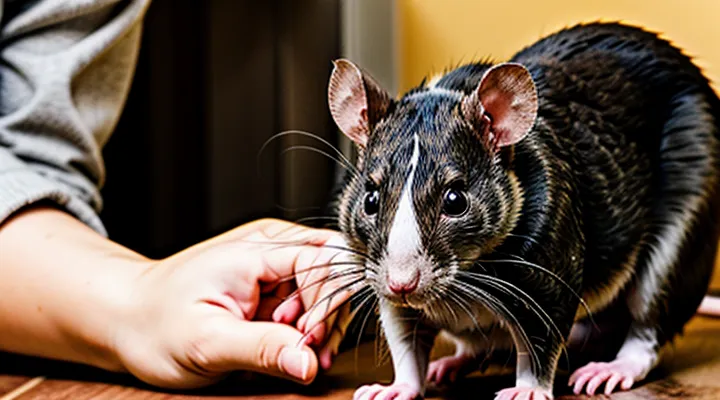
Understanding Your Pet Rat
The Intelligence of Rats
Why Rats Are Excellent Learners
Rats possess cognitive traits that make them highly effective learners in a domestic setting. Their brain architecture includes a well‑developed hippocampus, which supports spatial navigation and long‑term memory formation. This enables rapid acquisition of maze solutions and recall of object locations after extended intervals. Social dynamics further enhance learning; rats observe conspecifics and replicate successful behaviors, a process known as observational learning. Their innate curiosity drives exploratory behavior, providing frequent opportunities to encounter novel stimuli and develop problem‑solving strategies. Operant conditioning experiments consistently show that rats respond reliably to positive reinforcement, distinguishing between complex cue patterns and adjusting actions accordingly. Sensory acuity—particularly in whisker‑mediated tactile perception—allows precise discrimination of textures and shapes, facilitating fine motor tasks such as manipulating levers or opening containers. Collectively, these attributes produce a species capable of:
- Rapid memory consolidation and retrieval
- Imitative learning from peers
- Adaptation to variable reward schedules
- High tactile discrimination for intricate tasks
These characteristics explain why rats excel as trainable companions and why they respond effectively to structured teaching methods.
Common Misconceptions About Rats
Rats are frequently dismissed because of inaccurate beliefs that hinder their suitability as companion animals. These myths persist despite scientific evidence and practical experience demonstrating rats’ intelligence, sociability, and trainability.
- Rats are dirty and carry disease. Proper husbandry, regular cleaning, and veterinary care keep health risks comparable to other small pets.
- Rats are aggressive and bite without provocation. Individual temperament varies, but socialization and gentle handling greatly reduce defensive biting.
- Rats lack the capacity to learn commands. Positive‑reinforcement training enables rats to perform tricks, navigate mazes, and respond to cues reliably.
- Rats are unsuitable for families with children. Supervised interaction teaches responsibility and empathy, while rats’ short lifespan encourages respect for animal welfare.
- Rats are uninteresting compared to cats or dogs. Their curiosity, problem‑solving abilities, and expressive behavior provide rich enrichment opportunities.
Correcting these misconceptions expands acceptance of rats as trainable, affectionate pets. Accurate information supports responsible ownership, improves welfare standards, and encourages inclusion of rats in educational and therapeutic programs.
Building Trust and Bonding with Your Rat
Initial Acclimation: The First Few Days
Create a quiet, secure enclosure that mimics the rat’s natural shelter. Use a solid-bottom cage with a solid floor, not wire, to prevent foot injuries. Provide a nest box lined with soft, non‑abrasive material, and include a few chew‑safe items such as untreated wood blocks. Keep the temperature stable between 20 °C and 24 °C and limit sudden light changes.
During the first 48 hours, limit direct handling to brief, gentle contacts. Follow a consistent routine:
- Approach the cage calmly, avoid sudden movements.
- Offer a small piece of fresh fruit or vegetable on a clean finger; allow the rat to approach voluntarily.
- When the rat accepts the food, gently lift it for no more than five seconds, then return it to the nest.
- Repeat the short sessions two to three times daily, increasing duration by 10‑15 seconds each day if the animal remains relaxed.
Observe the rat’s behavior for signs of stress: excessive grooming, vocalizations, or attempts to escape. Adjust cage placement, lighting, or handling frequency accordingly. Maintain a regular feeding schedule, refresh water daily, and keep the environment free of strong odors. By the end of the first week, most rats will exhibit reduced vigilance, accept brief handling, and begin to explore the cage independently, establishing a foundation for subsequent training.
Handling Techniques: Gentle and Consistent Approach
Effective handling of domestic rats requires a calm, predictable interaction pattern. The animal’s small size and heightened sensitivity make abrupt movements counterproductive; steady, low‑stress contact builds trust and facilitates later training tasks.
Key principles include: maintaining a relaxed posture, using slow hand motions, and offering consistent tactile cues. The handler should approach the cage from the side, allowing the rat to see the hand before contact. Hands must be clean and free of strong scents that could alarm the animal.
- Hold the rat gently behind the forepaws, supporting the body with the opposite hand.
- Apply light, even pressure; avoid squeezing or gripping.
- Keep sessions brief, lasting no more than five minutes for inexperienced rats.
- Reward calm behavior immediately with a small food treat or verbal praise.
- Repeat the same handling routine each day; variation disrupts the rat’s sense of security.
Regular practice of these steps reduces fear responses, improves handling tolerance, and creates a reliable foundation for more advanced training such as target following, leash walking, or clicker conditioning. Consistency remains the decisive factor; the rat learns to anticipate the handler’s actions and responds with reduced stress.
The Importance of Scent Recognition
Scent recognition is a primary sensory channel for domestic rats trained by hand. Olfactory receptors provide immediate feedback about the environment, enabling rapid assessment of food, threats, and social cues. The rat brain allocates a substantial cortical area to processing odorants, allowing discrimination of minute chemical differences.
Training protocols exploit this capability by pairing specific scents with desired behaviors. For example, a cotton ball scented with a citrus oil can signal the start of a fetch exercise, while a lavender-infused pad may indicate a calming period. Consistent scent‑behavior associations accelerate learning curves and reduce reliance on visual or auditory prompts.
Effective use of scent recognition yields several measurable outcomes:
- Faster acquisition of target commands
- Lower stress indicators during novel tasks
- Enhanced recall of trained sequences after extended intervals
Owners who integrate olfactory cues report higher compliance rates and more reliable performance in complex routines such as obstacle navigation or object retrieval. The method also supports enrichment, as scent variety stimulates natural foraging instincts and prevents habituation.
Training Fundamentals for Domestic Rats
Basic Training Principles
Positive Reinforcement: The Cornerstone of Training
Positive reinforcement delivers a reward immediately after a desired behavior, increasing the likelihood that the behavior will recur. In the context of hand‑tamed rats, the method shapes actions such as coming when called, stepping onto a training platform, or performing tricks.
Effective reinforcement requires three elements: precise timing, appropriate reward, and consistency. Deliver the reward within one second of the target behavior; delays weaken the association. Preferred rewards include small pieces of fruit, seed mixes, or brief petting sessions, chosen for high palatability and low caloric impact. Apply the same reward each time the behavior occurs until the rat reliably performs the action without prompting.
Benefits of this approach include accelerated learning curves, reduced anxiety during training sessions, and a stronger human‑rat bond. Rats quickly identify the trainer as a source of positive outcomes, which encourages exploration of new tasks.
Practical steps for implementing positive reinforcement with domestic rats:
- Identify a clear, observable behavior.
- Choose a high‑value reward that the rat readily accepts.
- Present the reward immediately after the behavior, using a clicker or verbal cue to mark the moment.
- Repeat the sequence until the rat performs the behavior on cue.
- Gradually introduce a verbal command or hand signal to replace the marker.
Common errors diminish effectiveness: using food rewards inconsistently, delivering rewards after a delay, or mixing reward types within a single training phase. Maintaining strict timing and uniform rewards preserves the clear link between action and outcome.
By adhering to these principles, trainers can develop reliable, responsive rats capable of complex tasks while fostering a cooperative relationship.
Clicker Training: Introduction and Benefits
Clicker training provides a clear, consistent signal that rats can associate with desired behavior. The method relies on a small device that emits a distinct sound at the moment the animal performs the target action, followed immediately by a food reward. This pairing creates a strong stimulus‑response link, enabling rapid acquisition of tricks, obstacle navigation, and cooperative tasks.
Benefits include:
- Accelerated learning – the audible cue eliminates ambiguity, allowing rats to recognize the exact moment of success.
- Reduced stress – the predictable pattern of cue and reward minimizes anxiety during training sessions.
- Enhanced focus – the brief, sharp sound captures attention, keeping sessions short and productive.
- Transferable skills – once the clicker is linked to positive outcomes, rats apply the same principle to new commands with minimal additional instruction.
Implementation begins with “charging” the clicker: press the device, then deliver a treat. Repeating this sequence several times establishes the association. After the link is solid, present a simple behavior such as stepping onto a platform, click at the precise instant the rat lifts a paw, and reward. Gradually increase complexity by adding distance, obstacles, or multiple steps, always maintaining the click‑reward timing.
Consistent use of the clicker cultivates reliable obedience, improves problem‑solving abilities, and strengthens the bond between handler and pet rat. The technique integrates seamlessly with broader training programs aimed at domestic rats accustomed to human interaction.
Short, Frequent Sessions: Optimizing Learning
Short, frequent training sessions maximize learning efficiency in hand‑tamed domestic rats. Rats possess limited attention spans; a five‑minute session captures focus without causing fatigue. Repeating the same cue several times a day reinforces neural pathways more effectively than a single prolonged lesson.
Key practices for optimal sessions:
- Keep each interval to 4–6 minutes.
- Conduct 3–5 sessions daily, spaced evenly.
- End each trial with a clear, consistent reward.
- Vary the order of tasks to prevent pattern habituation.
- Record progress after every session to adjust difficulty.
Consistency outweighs duration. Frequent exposure encourages rapid habit formation, while brief periods reduce stress and maintain motivation. Adjust timing based on individual responsiveness; some rats may thrive on shorter, more numerous interactions, whereas others respond well to slightly longer blocks. Monitoring behavior—such as ear flicks, whisker movement, and willingness to approach—provides immediate feedback on session effectiveness.
Essential Commands and Tricks
Coming When Called
Training hand‑reared rats to respond to a recall cue builds safety and strengthens the human‑animal bond. Rats naturally explore and can be motivated by food, scent, and social interaction, making them suitable for a reliable “come when called” routine.
Recall offers immediate control in open environments, prevents accidental escapes, and facilitates health checks. Consistency in cue delivery and reward timing determines success.
Training protocol
- Choose a distinct sound (e.g., a clicker, whistle, or spoken word).
- Pair the cue with a high‑value treat while the rat is stationary; repeat until the rat associates the sound with the reward.
- Gradually increase distance, calling the rat from short ranges and rewarding each successful approach.
- Introduce mild distractions (toys, other pets) once the rat reliably approaches from several feet.
- Practice daily for 5‑10 minutes, ending each session with a successful recall.
Common errors include using inconsistent cues, rewarding late responses, and training in overly stimulating areas. Correction involves reverting to shorter distances, reinforcing immediate compliance, and minimizing background noise.
Maintenance requires occasional refresher sessions and occasional random reinforcement to prevent extinction. A well‑trained rat will reliably approach the owner when summoned, enhancing both safety and companionship.
Learning Their Name
Naming a hand‑tamed rat establishes a clear vocal cue that facilitates communication and strengthens the human‑animal bond. Consistent use of a single, short name—preferably one or two syllables—enhances the rat’s ability to associate the sound with itself.
- Choose a name that is distinct from everyday household noises.
- Introduce the name during calm, focused sessions lasting 2–3 minutes.
- Pair the spoken name with a brief, positive interaction such as a treat or gentle petting.
- Repeat the sequence 5–7 times per session, three times daily, until the rat shows a consistent response.
Typical response indicators include:
- Turning head toward the speaker.
- Approaching the source of the voice.
- Pausing activity when the name is uttered.
If the rat fails to react, adjust the training variables: reduce background noise, use a higher‑value reward, or shorten the name. Avoid using the name in negative contexts; reinforcement must remain positive to prevent aversion.
Gradual reduction of treats after the rat reliably responds maintains the learned behavior while preventing dependence on food rewards. Periodic reinforcement—brief name calls followed by occasional treats—preserves the association over the long term.
Fetching Small Objects
Training domesticated rats to retrieve tiny items requires consistent methodology, clear signals, and positive reinforcement. Begin with a calm environment to reduce distractions. Introduce a lightweight object, such as a small wooden block or a crumpled paper ball, and allow the rat to explore it freely. Once the rat shows interest, place the object within reach and encourage contact using a gentle hand gesture.
After the rat grasps the object, guide it toward a designated spot marked by a mat or a small bowl. Reward the behavior immediately with a preferred treat and brief verbal praise. Repeat the sequence, gradually increasing the distance between the starting point and the drop‑off zone. Consistency in cue wording—e.g., “fetch” spoken in a steady tone—helps the animal associate the command with the action.
Key considerations:
- Use objects that fit comfortably in the rat’s mouth; oversized items cause stress.
- Keep training sessions short (5–10 minutes) to maintain focus.
- Rotate treats to prevent habituation and sustain motivation.
- Monitor for signs of fatigue or disinterest; pause if the rat appears reluctant.
- Ensure the retrieval area is free of hazards that could injure the animal.
Progression follows a three‑stage pattern: initial contact, transport, and release. Mastery of each stage before advancing prevents confusion and reinforces confidence. Over time, rats can retrieve multiple objects in succession, demonstrating both physical dexterity and cognitive engagement.
Navigating Obstacle Courses
Obstacle courses provide a practical framework for enhancing the agility, problem‑solving abilities, and confidence of hand‑tamed domestic rats. Structured navigation tasks stimulate natural foraging instincts while reinforcing the bond between owner and pet through consistent, positive interaction.
Designing a safe and effective course requires attention to dimensions, surface texture, and material choice. Pathways should accommodate the rat’s average body length (10–12 cm) with clear clearance to prevent entrapment. Non‑slip surfaces such as untreated wood, natural fiber mats, or textured acrylic reduce the risk of falls. All components must be free of sharp edges, loose threads, or toxic finishes.
Training proceeds through three progressive stages:
- Habituation – Introduce the rat to each element individually, allowing free exploration for 2–3 minutes per item. Observe natural curiosity and note any avoidance behavior.
- Shaping – Use clicker or verbal marker paired with a small food reward to reinforce incremental steps toward the desired route. Begin with simple actions (e.g., climbing a low ramp) and gradually increase complexity.
- Integration – Combine multiple obstacles into a continuous sequence. Maintain a steady pace, rewarding successful completion of each segment while minimizing pauses that could cause disengagement.
Common challenges include hesitation at elevated sections, loss of motivation, and over‑reliance on food incentives. Address hesitation by lowering heights or adding tactile cues such as textured ramps. Counteract waning motivation by varying reward types (e.g., novel treats, brief grooming sessions) and introducing occasional novelty items. Reduce dependence on food by interspersing praise and gentle petting as secondary reinforcers.
Regular assessment of performance metrics—time to complete the course, error frequency, and willingness to initiate each trial—guides adjustments to difficulty and reinforces progressive skill development. Consistent, measured exposure cultivates a confident, adaptable rat capable of navigating increasingly sophisticated environments.
Advanced Training and Enrichment
Teaching Complex Behaviors
Litter Training: A Practical Skill
Litter training equips domestic rats with a reliable habit that simplifies household care and reduces sanitation concerns. The skill relies on clear cues, consistent placement of a suitable substrate, and reinforcement of desired behavior.
Select a low‑dust, absorbent material such as paper‑based bedding or wood pellets. Place the litter box in a corner of the cage where the rat naturally rests, avoiding high‑traffic zones that may discourage use. Ensure the box is shallow enough for easy entry but deep enough to contain waste.
Implement the training routine as follows:
- Introduce the rat to the box by allowing brief, supervised exploration.
- Observe natural elimination patterns and reposition the box beneath those spots if necessary.
- After each successful use, deliver a brief, gentle tactile cue (e.g., a light tap) and follow with a small treat to strengthen the association.
- Remove any accidents promptly, cleaning the area with a mild, rat‑safe disinfectant to eliminate scent cues that could reinforce undesired locations.
Maintain consistency by keeping the litter box in the same position for at least two weeks. Replace soiled substrate daily; perform a full change weekly to prevent odor buildup. If the rat reverts to inappropriate spots, reassess box accessibility and ensure the substrate remains appealing.
Regular monitoring confirms progress. A well‑trained rat will predominantly use the designated box, enabling owners to focus on enrichment activities and further behavioral development.
Solving Puzzle Toys
Hand‑tamed pet rats readily engage with puzzle toys when the challenges match their natural curiosity and problem‑solving instincts. Effective use of these toys enhances cognitive development, encourages fine‑motor coordination, and reinforces the bond between rat and caregiver.
When introducing a new puzzle, follow a step‑wise approach:
- Present the toy in a low‑stress environment; allow the rat to sniff and explore without immediate expectations.
- Demonstrate a simple solution by gently moving a treat or a small object into the accessible compartment; rats observe the action and often imitate.
- Gradually increase difficulty by adding extra barriers, hidden compartments, or timed elements after the rat reliably solves the initial version.
- Reward successful attempts with a high‑value treat and brief verbal praise; consistent reinforcement accelerates learning.
- Rotate toys regularly to prevent habituation and maintain motivation.
Key considerations for selecting appropriate puzzle toys include material safety, size proportionate to the rat’s body, and the absence of small detachable parts that could be swallowed. Toys made from untreated wood, reinforced plastic, or natural fibers meet these criteria and can be safely chewed.
Monitoring progress is essential. Record the time taken to solve each puzzle, note any signs of frustration, and adjust complexity accordingly. A steady reduction in solving time indicates cognitive improvement, while repeated failure suggests the need for a simpler configuration or additional guidance.
Integrating puzzle toys into daily routines provides structured mental stimulation without replacing essential social interaction, grooming, and exercise. By systematically presenting, shaping, and rewarding puzzle‑solving behavior, caregivers cultivate adaptable, confident rats capable of tackling increasingly intricate challenges.
Performing Simple Agility Tasks
Training domesticated rats to complete basic agility tasks enhances mental stimulation and strengthens the human‑animal bond. Begin with a low‑profile tunnel, a small platform, and a set of low hurdles. Introduce each obstacle separately, allowing the rat to explore without pressure. Reward the first successful passage with a high‑value treat and a brief verbal cue, such as “go.”
Consistent repetition builds the association between the cue and the action. Conduct short sessions—five to ten minutes—twice daily to prevent fatigue. Gradually increase difficulty by adding a second hurdle or extending the tunnel length. Maintain a calm environment; sudden noises or abrupt movements can disrupt focus.
Safety considerations are essential. Ensure all equipment is stable, free of sharp edges, and constructed from non‑toxic materials. Inspect regularly for wear that could cause injury. Provide a safe landing area beneath elevated platforms, such as a soft mat or padded surface.
Effective reinforcement follows a predictable schedule. Use a variable‑ratio reward system after the rat reliably completes a sequence, delivering treats intermittently to sustain motivation. Pair treats with a brief click or hand signal to reinforce the behavior without relying on verbal praise alone.
Progress tracking aids objective assessment. Record the number of successful runs, latency to complete each obstacle, and any signs of stress. Adjust the training plan based on data: increase challenge when performance stabilizes, or revert to simpler tasks if latency rises sharply.
By adhering to these guidelines, owners can develop a structured agility routine that promotes physical health, cognitive engagement, and cooperative interaction with their pet rats.
Maintaining Engagement and Preventing Boredom
Rotating Toys and Stimuli
Rotating toys provide continuous motion that stimulates the natural exploratory instincts of hand‑reared pet rats. The dynamic movement encourages locomotion, improves coordination, and reduces boredom when the device operates for short intervals throughout the day.
Effective implementation includes:
- Selecting toys with smooth, non‑sharp edges and secure attachment points to prevent injury.
- Adjusting rotation speed to a level that matches the rat’s activity range; moderate speed encourages pursuit behavior without causing stress.
- Integrating the toy into a schedule that alternates with other enrichment items, ensuring varied sensory input.
- Monitoring the animal for signs of fatigue or overstimulation and pausing operation as needed.
Rotating stimuli complement other forms of enrichment by delivering auditory and visual cues that mimic natural environmental changes. When paired with training sessions, the toy can serve as a reward cue: the onset of rotation signals the availability of a treat, reinforcing desired behaviors. Regular rotation cycles, combined with consistent handling, enhance the rat’s confidence and adaptability, contributing to a well‑balanced, mentally engaged companion.
Introducing New Challenges
Introducing fresh obstacles keeps hand‑raised pet rats mentally active and prevents habituation. New tasks stimulate problem‑solving circuits, reinforce learned cues, and expand the range of behaviors the animal can perform reliably.
Select challenges that meet three criteria: safety, relevance to existing training, and incremental difficulty. Safety excludes sharp edges, toxic materials, or heights beyond the rat’s climbing ability. Relevance ensures the task builds on commands already mastered, such as “come” or “stay.” Incremental difficulty requires each step to be slightly harder than the previous one, avoiding abrupt spikes that cause frustration.
Common challenge categories include:
- Puzzle feeders that require manipulation of levers or sliding doors to release food.
- Miniature obstacle courses with tunnels, low ramps, and stepping stones.
- Scent discrimination drills where the rat must identify a target odor among distractors.
- Timed retrieval tasks that measure speed of locating a hidden treat.
Implement a new challenge by presenting it alone, allowing the rat ten minutes of exploration without pressure. Observe signs of stress or disengagement; if observed, simplify the task or extend the acclimation period. Once the rat completes the task consistently, increase complexity by adding an extra element (e.g., a second lever or a longer tunnel) and repeat the observation cycle.
Consistent introduction of appropriately scaled challenges enhances cognitive resilience, sharpens motor coordination, and deepens the communication bond between owner and rat. Regularly updating the difficulty ladder sustains enthusiasm and ensures long‑term behavioral growth.
Socialization with Other Rats and Humans
Social interaction shapes the behavior, stress tolerance, and learning capacity of hand‑raised pet rats. Early exposure to conspecifics and people establishes predictable responses, reduces fear, and facilitates later training sessions.
- Introduce littermates gradually; start with short, supervised encounters in a neutral cage.
- Rotate partners every few days to broaden the social network and prevent dominance hierarchies.
- Provide shared enrichment—tunnels, chew toys, and foraging puzzles—to encourage cooperative play and mutual grooming.
- Observe body language; retreat or excessive aggression signals the need for a longer acclimation period.
Human contact requires consistent, gentle handling to build trust. Begin with brief fingertip touches, progress to cupping the rat, then to brief lifts. Offer treats from the hand to associate the caregiver with positive outcomes. Conduct short, daily sessions in a quiet area to prevent overstimulation. Incorporate verbal cues and clicker signals once the rat reliably approaches, laying the groundwork for more complex instruction.
Regular monitoring of weight, coat condition, and vocalizations ensures that socialization does not compromise health. Adjust group size, handling duration, or environmental complexity if signs of stress appear. A structured program that balances rat‑rat and rat‑human interactions creates a stable foundation for advanced training and enhances the overall welfare of domesticated, hand‑tamed rats.
Troubleshooting and Common Challenges
Addressing Behavioral Issues
Nipping and Biting: Understanding the Causes
Nipping and biting are common concerns for owners of hand‑raised pet rats. These behaviors reflect the animal’s response to perceived threats, discomfort, or miscommunication during interaction.
Typical triggers include:
- Sudden movements or loud noises that startle the rat.
- Over‑stimulation from prolonged handling sessions.
- Perceived intrusion into a personal space or nest area.
- Physical pain caused by injury, dental issues, or ill‑fitting equipment.
- Inadequate social exposure, leading to uncertainty about human cues.
Observing the rat’s body language clarifies the context. Flattened ears, a rigid posture, and a focused stare often precede a nip. Biting may follow a bite‑shy stance combined with vocalizations such as high‑pitched squeaks. Identifying the exact moment when the behavior escalates helps isolate the trigger.
Mitigation strategies rely on gradual exposure and positive reinforcement. Begin with brief, calm hand contacts, rewarding calm behavior with preferred treats. Increase session length incrementally, allowing the rat to retreat if signs of stress appear. Regular health checks eliminate pain‑related causes. Providing enrichment and opportunities for social interaction reduces uncertainty about human handling.
Consistent application of these measures lowers the frequency of nipping and biting, fostering a cooperative relationship between the rat and its caretaker.
Shyness and Fear: Building Confidence
Hand‑tamed domestic rats often display shyness and fear when first exposed to new stimuli, owners, or training tasks. These responses stem from limited socialization and unfamiliar environments, which can impede learning and reduce the animal’s willingness to engage in instructed behaviors.
Confidence builds through systematic exposure, predictable routines, and positive reinforcement. Each session should begin with a calm setting, a familiar scent, and a low‑intensity stimulus. Gradual escalation of the stimulus intensity allows the rat to adjust without triggering panic. Consistency in cues—such as a specific hand signal or verbal cue—helps the animal associate the cue with a safe outcome.
Practical steps for owners:
- Habituation: Place the rat in a neutral enclosure for several minutes daily, allowing free exploration before introducing training equipment.
- Desensitization: Introduce a mildly stressful object (e.g., a soft brush) at a distance, rewarding calm behavior. Reduce the distance incrementally over multiple sessions.
- Positive reinforcement: Deliver a small food reward immediately after any sign of reduced fear, such as approaching a hand or remaining still during a brief handling.
- Predictable timing: Conduct short training bouts (5‑10 minutes) at the same time each day to establish routine expectations.
Monitoring progress involves noting reductions in latency to approach the handler, increased tolerance of handling duration, and the emergence of voluntary engagement with training tools. When these indicators improve, owners may introduce more complex tasks, such as target training or obstacle navigation, while maintaining the same reinforcement structure. This incremental approach transforms initial shyness into reliable confidence, supporting advanced learning and a stronger human‑rat partnership.
Over-Excitement: Channeling Energy Positively
Rats that become overly excited often display rapid movements, vocalizations, and attempts to escape confinement. This state reduces their ability to focus on training cues and can lead to stress‑induced health issues. Recognizing the signs early allows owners to intervene before the behavior escalates.
Effective redirection of excess energy relies on structured physical activity, mental challenges, and consistent handling routines. Regular short‑duration play sessions with safe chew toys, tunnels, and climbing structures satisfy the rat’s innate exploratory drive. Introducing puzzle feeders and scent trails engages problem‑solving skills, turning hyperactivity into purposeful behavior. Consistent handling, using gentle restraint and brief, rewarding contacts, reinforces calmness and builds trust.
Practical steps to channel excitement:
- Schedule two to three 10‑minute exercise periods daily; vary apparatus to prevent habituation.
- Rotate enrichment items weekly; replace toys before they lose novelty.
- Implement a cue (“settle”) paired with a low‑volume click or soft verbal marker; reward with a treat when the rat pauses.
- Maintain a predictable feeding timetable; avoid sudden food availability that spikes arousal.
- Monitor the environment for loud noises or abrupt lighting changes; mitigate with background white noise or dimmed lights.
Applying these measures consistently transforms high‑energy bursts into constructive activities, enhancing the rat’s learning capacity and overall well‑being.
Patience and Consistency: Keys to Success
Recognizing Learning Plateaus
When a domesticated rat repeatedly fails to improve on a previously mastered task, a learning plateau has likely been reached. A plateau appears as stable performance despite continued practice, indicating that the animal’s current training methods no longer provide sufficient challenge or motivation.
Typical indicators include:
- Consistent completion time that does not decrease over several sessions.
- Repeated errors of the same type without variation.
- Lack of engagement when new cues are introduced, such as ignoring additional signals or rewards.
- Reduced willingness to initiate trials, observable as longer latency before starting a task.
To diagnose the plateau accurately, record quantitative data for each session: trial counts, success rates, latency, and error categories. Compare the metrics across at least five consecutive sessions; a flat trend confirms the plateau.
Effective responses involve altering one variable at a time to isolate the causal factor:
- Increase task complexity modestly (e.g., add an extra step or change the shape of a maze).
- Adjust reinforcement schedule, switching from continuous to intermittent rewards to heighten anticipation.
- Vary sensory cues (sound, scent, visual markers) to stimulate attention.
- Shorten session length while raising the number of sessions per day, preventing fatigue and maintaining motivation.
After implementing a change, monitor performance for a minimum of three sessions before introducing another adjustment. This systematic approach prevents overlapping variables and ensures that the observed improvement directly results from the specific modification.
Recognizing a plateau promptly prevents wasted effort and supports steady skill acquisition in pet rats. Accurate data collection, clear criteria for stagnation, and controlled modifications form the foundation of successful training progression.
Adapting Training Methods for Individual Rats
Adapting training techniques to each rat’s temperament, size, and prior experiences maximizes learning efficiency. Observation of the animal’s natural behavior provides the baseline for method selection. Record habitual activity periods, preferred textures, and response to tactile cues before introducing structured exercises.
Key adjustments include:
- Motivation alignment: Identify preferred food rewards, scent stimuli, or social interaction and use them consistently.
- Cue differentiation: Employ distinct sounds, hand signals, or scent markers for separate commands, ensuring the rat can discriminate between them.
- Session pacing: Limit training bouts to 5‑10 minutes during the rat’s peak alertness, extending duration only as proficiency improves.
- Environment tailoring: Provide a familiar, low‑stress setting; gradually introduce new apparatus after the rat demonstrates comfort in the base area.
Progress monitoring relies on measurable outcomes such as latency to perform a target behavior, accuracy rate across trials, and reduction of stress indicators (e.g., grooming spikes, vocalizations). Adjust reward frequency and cue complexity based on these metrics, maintaining a balance between challenge and reinforcement.
Consistent documentation of each rat’s response patterns enables the trainer to refine protocols over time, creating a personalized curriculum that respects individual differences while adhering to the overarching principles of hand‑tamed rat education.
Celebrating Small Victories
Training pet rats demands patience, consistency, and recognition of incremental progress. Small achievements, such as a rat reliably entering a tunnel on cue or accepting a new texture, confirm that conditioning methods are effective. Documenting these moments creates a reference point for future sessions and reinforces the trainer’s confidence.
Each success should be marked with a distinct reward—preferably a high-value food item or brief tactile praise. The reward must differ from routine treats to maintain its motivational impact. Immediate delivery of the reward links the behavior to the consequence, strengthening the association.
Practical ways to celebrate minor milestones include:
- Logging the date, cue, and outcome in a training journal.
- Adding a brief “celebration” period of play after the behavior is performed.
- Introducing a novel, low‑stress challenge once the initial task is mastered.
Regular acknowledgment of these steps prevents burnout, sustains engagement, and accelerates the overall learning curve for hand‑raised domestic rats.