
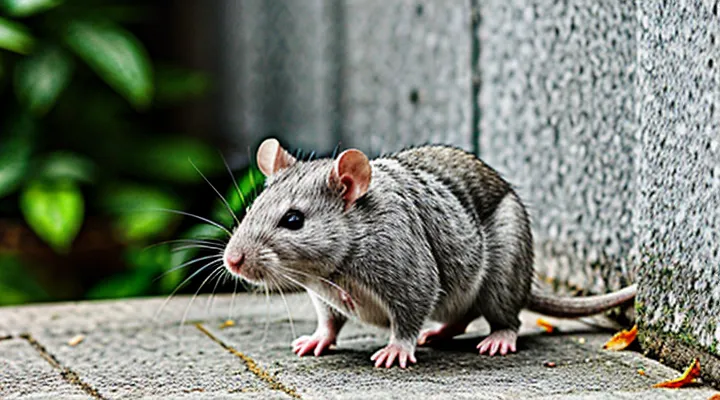
Coat Characteristics
Coloration Patterns
The gray‑white laboratory rat exhibits a distinctive bicolor pelage that combines a muted dorsal gray with a stark ventral white. The dorsal region presents a uniform, fine‑textured fur where eumelanin predominates, producing a consistent slate hue across the back and sides. The ventral surface, extending from the chest to the abdomen, lacks melanin deposition, resulting in an almost pure white coat that contrasts sharply with the dorsal coloration.
Key aspects of the coloration pattern include:
- Dorsal‑ventral contrast: a sharp demarcation line runs along the lateral margins, separating gray from white.
- Tail pigmentation: the proximal half of the tail mirrors the dorsal gray, while the distal portion transitions to a lighter, often pinkish tone due to reduced hair density.
- Facial markings: the mask area around the eyes and nose remains gray, whereas the cheeks and throat display the ventral white.
- Seasonal stability: coat coloration remains consistent throughout the year; no significant seasonal bleaching or darkening occurs.
- Genetic basis: the pattern derives from the interaction of the agouti locus with the albino allele, where the latter suppresses pigment production on the ventral side while allowing normal eumelanin expression dorsally.
These characteristics facilitate visual identification in research settings and support standardized reporting of phenotypic traits across experimental colonies.
Genetic Basis of Coat Color
The gray‑white phenotype in laboratory rats results from the combined action of several pigmentation genes. Primary determinants include the agouti locus (A), which regulates the distribution of eumelanin and pheomelanin, and the coat‑color locus (C), which controls pigment production. Mutations that reduce melanin synthesis, such as the albino allele (c), produce a white background, while dilution alleles (d) lighten existing pigments, generating the characteristic gray shade.
Key genetic elements:
- Agouti (A) – dominant allele produces banded hair; recessive a leads to uniform coloration.
- Coat‑color (C) – dominant C enables pigment formation; recessive c eliminates melanin, yielding a white coat.
- Dilution (d) – recessive allele reduces pigment intensity, creating gray tones on a white background.
- Tyrosinase (Tyr) – essential enzyme for melanin synthesis; loss‑of‑function mutations contribute to albinism.
- Melanocortin‑1 receptor (Mc1r) – modulates eumelanin versus pheomelanin ratio; specific variants shift hue toward gray.
The gray‑white appearance emerges when a functional C allele coexists with a dilution d/d genotype on a background that includes at least one c allele. The c allele suppresses overall melanin, allowing the diluted pigment to manifest as a muted gray over a predominantly white fur. Epistatic interactions among these loci determine the final coat pattern, with the agouti gene influencing the distribution of residual pigment patches.
Regulatory sequences upstream of the C and Agouti genes modulate expression levels during embryonic development. DNA methylation patterns in these regions can alter allele penetrance, leading to variability in gray intensity among otherwise genetically identical individuals.
Understanding the genetic architecture of this coat coloration supports selective breeding programs and provides a model for studying pigment disorders. Precise genotyping of the listed loci enables prediction of offspring phenotype, facilitating the creation of standardized laboratory strains with consistent visual markers.
Variations in White Markings
The gray‑white rat displays a spectrum of white markings that differ in size, placement, and symmetry. Genetic factors control melanocyte distribution, producing distinct patterns observable across individuals.
Common variants include: - A dorsal stripe extending from the neck to the tail base, often bordered by gray fur. - Lateral patches on the cheeks, sometimes forming a “cheek blaze” that may connect with the dorsal stripe. - Ventral white patches covering the abdomen, ranging from a narrow band to a broad, continuous area. - Isolated spots on the forepaws or hind limbs, typically irregular in shape.
These markings correlate with behavioral tendencies. Individuals possessing a pronounced dorsal stripe frequently exhibit heightened territoriality, while those with extensive ventral white may show increased social tolerance. The presence of facial white patches aligns with heightened exploratory activity, suggesting a possible link between visual signals and environmental interaction.
From a taxonomic perspective, white marking patterns aid in field identification and population monitoring. Researchers employ pattern classification to differentiate subpopulations, facilitating studies of gene flow and habitat adaptation. Accurate documentation of these variations enhances understanding of the species’ ecological dynamics.
Behavioral Traits
Social Behavior
The gray‑white rat exhibits a complex social structure that influences group stability and individual fitness. Individuals form hierarchical ranks based on aggression, age, and reproductive status. Dominant members secure preferred nesting sites and priority access to food, while subordinate rats display deference through avoidance behaviors and reduced vocalizations.
Key aspects of social interaction include:
- Grooming: Mutual grooming reinforces bonds, reduces parasite load, and signals affiliation.
- Ultrasonic vocalizations: High‑frequency calls convey alarm, mating readiness, and social recognition; listeners respond with context‑appropriate behaviors.
- Territorial marking: Scent deposits from flank glands delineate personal space, limiting intrusions and facilitating group cohesion.
- Play behavior: Juvenile rats engage in mock fighting and chase sequences that develop motor skills and hierarchical understanding.
- Maternal care: Females provide prolonged nursing, nest building, and temperature regulation, essential for offspring survival.
Group composition fluctuates with seasonal breeding cycles. During peak reproductive periods, male competition intensifies, leading to increased aggression and establishment of a clear alpha hierarchy. Female groups often coordinate nursing duties, sharing nest space to maximize offspring protection.
Social learning occurs through observation; naïve individuals adopt foraging techniques and predator avoidance strategies demonstrated by experienced conspecifics. This transmission of knowledge contributes to colony resilience and adaptability.
Exploratory Behavior
The gray‑white laboratory rat exhibits a distinctive pattern of exploratory activity that reflects its adaptive strategies for environmental assessment. When introduced to a novel arena, the animal initiates a sequence of actions aimed at gathering sensory information, including tactile probing with whiskers, olfactory sampling of substrates, and visual scanning of perimeters. These behaviors occur regardless of coat coloration, indicating that the exploratory drive is rooted in neural circuitry rather than external appearance.
Key components of the exploratory repertoire include:
- Rapid locomotion along the periphery to establish spatial boundaries;
- Repeated entry into the central zone to evaluate risk–reward balance;
- Frequent pausing to perform detailed sniffing of objects;
- Re‑examination of previously visited sites after short intervals, demonstrating short‑term memory utilization.
Environmental variables such as lighting intensity, floor texture, and the presence of conspecific scent marks modulate the frequency and duration of these actions. Elevated stress hormones correlate with reduced central zone entries, while enriched housing conditions enhance overall exploratory distance. The rat’s coat, while primarily a phenotypic trait, can influence thermoregulatory comfort during prolonged activity, subtly affecting the vigor of exploration under extreme temperature conditions.
Cognitive Abilities
The gray‑white rat exhibits a range of cognitive capacities that complement its distinctive coat and behavioral profile. Laboratory studies demonstrate rapid acquisition of spatial tasks, indicating strong hippocampal function. Memory retention remains stable for several weeks after single‑trial conditioning, reflecting robust long‑term potentiation mechanisms.
Key cognitive traits include:
- Spatial navigation – efficient use of distal cues in maze experiments; performance improves with repeated exposure.
- Operant learning – quick adaptation to reinforcement schedules; high response rates under variable‑ratio schedules.
- Problem solving – ability to manipulate objects to obtain food rewards; success rates exceed 80 % in puzzle‑box tests.
- Social cognition – recognition of conspecifics through olfactory and auditory signals; dominance hierarchies established within a few interactions.
- Sensory integration – precise discrimination of tactile and visual stimuli; reaction times comparable to other laboratory rodents.
Neurochemical analyses reveal elevated levels of dopamine in the prefrontal cortex during decision‑making tasks, supporting executive function. Cortical plasticity, measured by dendritic spine density, increases after enriched‑environment exposure, suggesting adaptability to complex surroundings.
Overall, the species’ cognitive repertoire aligns with its ecological niche, enabling efficient foraging, predator avoidance, and social organization while reflecting the interplay between physical attributes and mental processes.
Activity Rhythms
The gray‑white rat exhibits a distinct circadian pattern that governs locomotion, feeding, and social interaction. Activity peaks occur during the early dark phase, with a secondary surge shortly after dawn. Rest periods dominate the light phase, during which the animal reduces movement and engages in grooming.
Key features of the rhythm include:
- Primary active bout: 2–3 hours after lights‑off, characterized by intense exploration and foraging.
- Mid‑night interval: brief decline in activity, followed by renewed movement for nest maintenance.
- Pre‑dawn resurgence: 30–45 minutes before lights‑on, marked by heightened alertness and territorial patrols.
- Light‑phase quiescence: sustained low‑level activity, primarily grooming and brief tactile investigation.
Physiological correlates align with melatonin secretion peaks during darkness and cortisol fluctuations preceding the light period. Disruption of the light‑dark cycle shifts the timing of these bouts, leading to altered coat grooming frequency and reduced exploratory behavior.
Interplay of Coat and Behavior
Genetic Linkages
The gray‑white laboratory rat exhibits a distinct combination of pelage pigmentation and behavioral tendencies that are strongly influenced by genetic linkage. Coat coloration arises primarily from alleles at the melanocortin‑1 receptor (Mc1r) locus and the agouti signaling protein (ASIP) region, which are situated in close proximity on chromosome 4. This physical closeness results in frequent co‑inheritance of specific pigment patterns, producing the characteristic gray‑white coat in successive generations.
Behavioral traits such as heightened anxiety response and exploratory activity map to quantitative trait loci (QTL) on chromosomes 2 and 7. Notably, the locus controlling anxiety overlaps with a region containing the serotonin transporter gene (SLC6A4), establishing a genetic corridor that simultaneously affects emotional reactivity and fur coloration through pleiotropic mechanisms. The persistent association between these loci suggests that selection for coat phenotype inadvertently shapes behavioral profiles.
Key points regarding the genetic architecture:
- Tight linkage between Mc1r and ASIP reduces recombination events, stabilizing the gray‑white pelage across breeding cycles.
- Overlapping QTL for anxiety and coat color indicate pleiotropic genes that modulate both phenotypes.
- Linkage disequilibrium analyses reveal that alleles conferring the gray‑white coat are often paired with alleles linked to increased exploratory behavior, implying a hereditary bundle.
- Marker‑assisted selection employing single‑nucleotide polymorphisms (SNPs) within the linked regions enables precise breeding strategies that target desired coat and behavioral outcomes without disrupting the underlying genetic framework.
Understanding these genetic linkages provides a foundation for controlled breeding programs, facilitates interpretation of phenotypic variability, and supports the use of the gray‑white rat as a model organism in neurobehavioral research.
Environmental Influences
The coat coloration and behavioral patterns of the gray‑white rat respond markedly to ambient conditions. Temperature fluctuations dictate fur density: cooler environments trigger the growth of a thicker, lighter undercoat, while warmer settings reduce hair length and promote a darker, more compact outer layer. Light exposure influences pigment expression; prolonged daylight intensifies the gray hue, whereas reduced illumination favours a paler appearance.
Nutritional availability shapes both coat quality and activity levels. High‑protein diets support robust hair shafts and elevate exploratory behaviour, while protein‑deficient regimes lead to brittle fur and increased sedentary tendencies. Water quality also exerts an effect: hard water may cause mineral deposits on the pelage, altering texture, whereas soft water maintains softness and flexibility.
Social and spatial factors modulate conduct. Dense colony settings elevate aggression and territorial marking, whereas spacious enclosures encourage grooming and social bonding. Noise intensity correlates with stress‑induced grooming spikes; environments with low decibel levels reduce compulsive grooming and preserve coat integrity.
Key environmental determinants:
- Ambient temperature (cold → denser, lighter fur; heat → thinner, darker fur)
- Photoperiod length (extended light → deeper gray; limited light → paler coat)
- Dietary protein content (adequate → strong hair, active behavior; deficient → weak hair, reduced activity)
- Water hardness (hard → mineral buildup; soft → optimal texture)
- Population density (high → aggression, marking; low → grooming, cohesion)
- Acoustic environment (loud → stress‑related grooming; quiet → coat preservation)
Understanding these variables enables precise management of the species’ external appearance and behavioral repertoire.
Research Applications
The gray‑white rat’s distinctive pelage and observable behavioral patterns provide measurable phenotypes that enhance experimental precision across multiple scientific domains. Researchers exploit these traits to standardize animal models, reduce variability, and improve translational relevance.
- Biomedical investigations: coat color correlates with genetic markers, facilitating genotype‑phenotype mapping in disease models.
- Toxicology assessments: behavioral responses to contaminants serve as early indicators of neurotoxic effects.
- Neurobehavioral research: activity levels and anxiety‑related behaviors enable evaluation of pharmacological agents targeting central nervous system pathways.
- Genetic studies: inheritance patterns of coat coloration support breeding strategies for knock‑out and transgenic lines.
- Pharmacological testing: observable changes in grooming and locomotion assist in dose‑response determination for novel compounds.
- Environmental monitoring: shifts in behavior and fur condition reflect ecosystem stressors, aiding ecological risk assessments.
Methodological protocols integrate coat inspection with standardized behavioral batteries, ensuring reproducibility. Quantitative scoring systems translate visual traits into data compatible with statistical analysis, while automated tracking technologies capture locomotor metrics without observer bias.
Emerging applications involve CRISPR‑mediated editing of pigmentation genes to create visual reporters for gene expression, and integration of machine‑learning algorithms to predict behavioral outcomes from coat phenotype data. These advances expand the utility of the gray‑white rat as a versatile model for interdisciplinary research.