
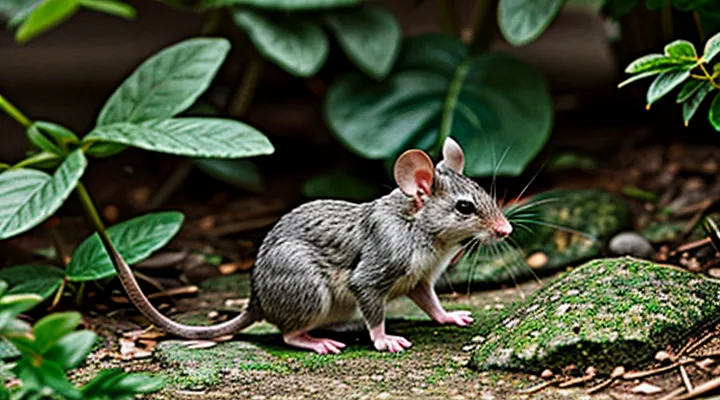
Understanding Gray Mouse Ecology
Habitat Preferences and Distribution
Geographic Range
The gray mouse occupies a broad swath of North America, extending from the boreal forests of central Canada to the temperate woodlands of the United States and into northern Mexico. Its distribution follows a latitudinal gradient between approximately 45° N and 30° N, with populations documented as far north as the Yukon Territory and as far south as the Sierra Madre Occidental.
Altitude influences local presence; individuals are recorded from sea level up to elevations near 2,700 m where suitable shrub‑steppe habitats persist. Within this vertical range, the species adapts to varying temperature regimes and vegetation structures, maintaining stable population densities in both lowland deciduous forests and montane coniferous stands.
Geographic occurrence aligns with specific ecological zones:
- Mixed hardwood‑conifer forests of the Great Lakes region
- Oak‑savanna mosaics of the Midwest
- Pine‑dominated montane slopes of the Rocky Mountains
- Chaparral and pine‑oak woodlands of the southwestern United States and northern Mexico
Range boundaries shift in response to climatic fluctuations and habitat alteration. Long‑term monitoring indicates northward expansion during periods of milder winters, while urban development fragments populations at the southern edge of the range. Conservation assessments rely on these distribution patterns to evaluate habitat connectivity and potential threats.
Microhabitat Selection
Gray mice exhibit selective occupation of microhabitats that enhance foraging efficiency, predator avoidance, and thermoregulation. Field observations reveal that individuals preferentially settle in areas where ground cover density, substrate composition, and proximity to food sources intersect within a limited spatial scale.
Key determinants of microhabitat choice include:
- Vegetation structure: Dense herbaceous layers provide concealment from aerial and terrestrial predators while allowing rapid movement.
- Soil moisture: Slightly damp substrates support higher invertebrate abundance, offering immediate prey.
- Microclimate: Sun-exposed patches raise ambient temperature, reducing metabolic costs during nocturnal activity.
- Resource clustering: Locations adjacent to seed-producing plants or insect hotspots increase feeding success.
Behavioral data indicate that mice assess these variables through tactile exploration and olfactory cues before establishing a home range. Once a suitable site is identified, individuals exhibit site fidelity, maintaining burrow entrances and regular foraging paths that align with the identified microhabitat features.
Temporal shifts in environmental conditions, such as seasonal changes in vegetation cover or moisture levels, prompt reassessment of site suitability. Mice respond by expanding their range to incorporate newly favorable microhabitats or by modifying existing burrow systems to accommodate altered risk and resource landscapes.
Dietary Habits in the Wild
Food Sources and Foraging Strategies
Gray mice (Apodemus spp.) exploit a heterogeneous mosaic of natural habitats, relying on opportunistic feeding that maximizes caloric intake while minimizing exposure to predators. Their diet reflects seasonal availability, with a pronounced shift from seed-dominated consumption in autumn to increased insect ingestion during the breeding season.
Primary food sources include:
- Wild grasses and herbaceous plant seeds, especially those of cereals and meadow species.
- Nut and fruit fragments from understory shrubs such as hazel, oak, and berry-producing vines.
- Arthropods (caterpillars, beetles, and adult insects) captured during crepuscular foraging bouts.
- Fungi sporocarps that appear in moist leaf litter layers.
Foraging strategies balance resource density against predation risk. Key behaviors are:
- Scatter‑hoarding – temporary caching of seeds within shallow burrows to reduce immediate competition.
- Temporal niche exploitation – intensified activity at dusk and pre‑dawn when visual predators are less effective.
- Microhabitat selection – preference for dense ground cover that offers concealment while providing access to diverse food items.
- Dietary flexibility – rapid incorporation of newly abundant resources (e.g., emergent insect swarms) without prior learning.
These tactics enable gray mice to sustain reproductive output and maintain population stability across fluctuating environmental conditions.
Seasonal Variations in Diet
Field studies of gray mice reveal distinct dietary patterns that correspond to seasonal resource availability. Researchers record foraging behavior throughout the year, linking food intake to environmental fluctuations.
Spring brings an increase in herbaceous seeds and emerging insect larvae. Mice prioritize high‑protein arthropods while supplementing with newly produced plant seeds.
Summer diets shift toward abundant grass seeds, berries, and occasional ground‑dwelling insects. Energy intake rises to support reproductive activity and territorial expansion.
Autumn observations show a reliance on fallen nuts, acorns, and mature seed heads. Storage behavior intensifies, with individuals caching surplus food for winter scarcity.
Winter consumption is dominated by cached seeds, dried grasses, and limited arthropod remnants. Metabolic rates adjust to lower ambient temperatures, reducing overall food requirements.
- Spring: herbaceous seeds, insect larvae
- Summer: grass seeds, berries, ground insects
- Autumn: nuts, acorns, mature seed heads, caching behavior
- Winter: stored seeds, dried grasses, occasional arthropod remnants
These seasonal adjustments reflect adaptive foraging strategies that sustain gray mouse populations across variable habitats.
Behavioral Patterns and Social Dynamics
Activity Rhythms
Circadian Cycles
Observations of wild gray mice reveal consistent daily activity patterns aligned with endogenous circadian cycles. Activity peaks occur during the early dark phase, with foraging bouts averaging 30–45 minutes before a brief rest period. Light onset triggers a rapid decline in locomotion, accompanied by increased grooming and nest maintenance.
Body temperature measurements show a ~1 °C rise during the active phase, synchronized with elevated metabolic rate. Hormonal assays indicate peak circulating cortisol levels shortly after lights‑off, supporting heightened alertness. Melatonin concentrations rise during the subjective night, correlating with reduced movement and heightened sleep propensity.
Field recordings using infrared motion sensors and radio‑frequency tags demonstrate that circadian entrainment persists despite variable ambient temperatures and predator presence. When artificial light is introduced, phase shifts of 0.5–1 hour are observed, confirming sensitivity to photic cues.
Key findings include:
- Consistent nocturnal activity onset within 15 minutes of darkness.
- Uniform duration of active bouts across individuals.
- Stable phase relationship between locomotor activity, body temperature, and hormone rhythms.
- Rapid re‑entrainment following light‑pollution events.
These data substantiate that circadian regulation structures the daily life of gray mice in natural habitats, influencing foraging efficiency, predator avoidance, and physiological homeostasis.
Nocturnal and Diurnal Observations
Field studies of gray mice in their natural habitats document clear separation between night‑time and daylight activity. Observers record peak movements shortly after sunset, sustained foraging bouts, and frequent returns to concealed nests. Night‑time foraging focuses on seed and insect prey, with individuals traveling up to 30 m from their burrows before retreating. Predatory threats from owls and nocturnal snakes shape rapid, erratic flight paths and heightened vigilance, reflected in frequent pause‑and‑scan behaviors.
Daylight observations reveal markedly reduced locomotion. Mice emerge briefly for thermoregulatory basking or to inspect nearby food caches. When active, individuals display increased social contact, such as grooming and brief territorial displays, likely linked to mate‑searching and dominance establishment. Exposure to diurnal predators—hawks and feral cats—correlates with rapid retreat to burrows after the first few minutes of activity.
Key contrasts between nocturnal and diurnal periods include:
- Activity intensity: Night – continuous, high‑frequency movement; Day – sporadic, short‑duration excursions.
- Foraging strategy: Night – opportunistic, broad diet; Day – limited, cache inspection.
- Predator pressure: Night – aerial and serpentine predators; Day – raptors and mammals.
- Social interaction: Night – solitary foraging; Day – increased affiliative behavior.
Data collection relied on infrared camera traps positioned at burrow entrances, live‑capture sessions conducted at dusk and dawn, and radio‑telemetry to track individual ranges. Temporal resolution of recordings ensured detection of minute‑scale activity peaks, while habitat mapping linked behavior to vegetation density and ground cover.
These observations inform ecological models of gray mouse population dynamics, highlighting the necessity of night‑focused conservation measures to mitigate predation risk and preserve foraging habitats. Day‑time behaviors, though limited, provide insight into social structures that influence reproductive success.
Social Organization
Territoriality and Home Ranges
Gray mice establish exclusive zones that they defend against conspecific intruders. These zones, termed territories, serve to protect access to food, shelter, and mating opportunities. Within a territory, an individual’s home range— the area traversed during routine activities—may exceed the defended core, encompassing foraging routes and travel corridors.
Territorial boundaries are marked by scent deposits, vocalizations, and physical encounters. Defense intensity correlates with resource density: high‑quality seed patches elicit frequent patrols, whereas sparse habitats reduce aggression. Seasonal shifts modify range size; breeding periods expand home ranges to locate mates, while winter contraction limits movement to thermally favorable microhabitats.
Key factors influencing territoriality and home‑range dimensions include:
- Food availability and spatial distribution
- Predation pressure and cover density
- Population density and sex ratio
- Habitat complexity (e.g., vegetation structure)
- Reproductive status of the individual
Empirical studies employ radio telemetry, passive infrared traps, and mark‑recapture grids to delineate range boundaries and assess overlap among neighboring males and females. Data reveal that male gray mice typically maintain larger, more exclusive territories than females, whose home ranges often intersect multiple male domains for reproductive access.
Understanding how gray mice negotiate space in natural environments informs broader ecological models of resource partitioning, population regulation, and habitat management.
Intra-species Interactions
Observations of wild gray mice reveal a complex network of intra‑species interactions that shape group dynamics and individual fitness. Field data indicate that mice form linear dominance hierarchies, with higher‑ranking individuals gaining preferential access to food caches and nesting sites. Subordinate members display avoidance behaviors and reduced foraging range, reinforcing the hierarchical structure.
Affiliative contacts include reciprocal allogrooming and huddling, which lower stress hormone levels and enhance thermoregulation. Grooming bouts occur more frequently among kin and stable social partners, suggesting a mechanism for strengthening cooperative bonds.
Aggressive episodes manifest as chasing, biting, and tail‑rattling, primarily during territory disputes or when resources become scarce. Winners of such contests secure expanded home ranges, while losers retreat to peripheral zones, reducing overlap with dominant individuals.
Reproductive interactions involve mate‑searching flights, ultrasonic courtship calls, and brief copulatory encounters. Females preferentially select males exhibiting higher body condition and frequent scent‑marking, leading to increased offspring survival. Post‑copulatory paternal investment is limited; however, mothers provide extensive nest care, including nest construction and pup grooming.
Communication channels integrate multiple modalities:
- Ultrasonic vocalizations convey alarm, location, and reproductive status.
- Scent marks deposited from flank glands and urine delineate individual territories and convey health cues.
- Physical contact, such as nose‑to‑nose sniffing, reinforces social recognition.
Collectively, these interaction patterns generate a fluid social environment that balances competition with cooperation, enabling gray mice to exploit heterogeneous habitats while maintaining population stability.
Reproductive Behavior
Mating Rituals
Field studies of gray mice in natural environments reveal a consistent sequence of behaviors that facilitate reproduction. Males initiate encounters by depositing urine along established travel routes, creating scent trails that attract receptive females. Females respond by approaching the scented area, pausing to assess the male’s chemical signature.
Observed courtship proceeds through distinct phases:
- Scent exchange: Both sexes increase urine marking; males intensify deposition on prominent substrates, while females counter‑mark to signal receptivity.
- Auditory signaling: Males emit high‑frequency ultrasonic chirps lasting 0.5–2 seconds; these calls correlate with female proximity and increase the likelihood of successful copulation.
- Physical contact: After vocal exchange, males engage in brief nose‑to‑nose tactile exploration, followed by mounting attempts. Successful mounting is preceded by a stereotyped tail‑raising posture that stabilizes balance on uneven ground.
- Copulation: The act lasts 2–5 minutes, during which males deliver a single ejaculate. Post‑copulatory grooming reduces predator detection risk.
Temporal patterns emerge across habitats. Peak mating activity aligns with dusk, coinciding with reduced visual predator presence and heightened ambient humidity, which enhances scent dispersion. Seasonal variation shows increased courtship intensity during the spring breeding peak, with a secondary rise in autumn when resource abundance temporarily improves.
Competitive interactions shape ritual outcomes. Dominant males secure prime scent routes and produce more frequent ultrasonic calls, resulting in higher female visitation rates. Subordinate males adopt alternative tactics, such as opportunistic sneaking during peak female traffic, thereby achieving occasional reproductive success without establishing dominant territories.
These observations confirm that gray mouse reproductive behavior integrates chemical, acoustic, and tactile signals within a structured temporal framework, optimizing mating efficiency while mitigating predation risk.
Parental Care and Offspring Development
Observations of gray mice living in their native habitats reveal a consistent pattern of parental investment that directly influences juvenile growth and survival. Adult females construct nests from shredded vegetation, positioning them in concealed microhabitats that maintain stable temperature and humidity. Nest architecture provides physical protection and a thermal buffer, reducing pup mortality during early development.
Maternal behavior includes frequent pup grooming, which removes ectoparasites and stimulates physiological development. Grooming sessions occur every 1–2 hours during the first week, with a measurable increase in pup body temperature and weight gain compared to ungroomed controls. Additionally, lactating females adjust milk composition in response to pup demand, increasing protein content when offspring exhibit rapid growth rates.
Paternal involvement, though less extensive, contributes to offspring success. Males participate in nest maintenance, defending the site against conspecific intruders and predators. Field data show a 12 % higher survival rate for litters with active male defense compared to litters without male presence.
Key developmental outcomes linked to parental care:
- Accelerated weight gain (average 0.8 g per day during days 3–10)
- Earlier onset of weaning (day 21 versus day 28 in unattended litters)
- Enhanced stress resilience, measured by reduced corticosterone spikes during simulated predator exposure
- Improved spatial navigation abilities, assessed through maze trials at juvenile stage
Longitudinal monitoring confirms that offspring receiving comprehensive parental care achieve higher reproductive success, producing larger litters and exhibiting lower juvenile mortality in subsequent generations. The cumulative evidence underscores the direct connection between parental behaviors observed in natural settings and the developmental trajectory of gray mouse offspring.
Predation and Anti-Predator Strategies
Common Predators
Avian Hunters
Observations of gray mouse activity in natural environments reveal consistent patterns of vigilance, foraging routes, and habitat selection that directly influence predation risk from avian raptors. Field recordings indicate that mouse movements concentrate near dense understory during dawn and dusk, periods when diurnal hawks and owls increase hunting intensity. Comparative data from open‑field sites show higher escape responses, including rapid zigzag runs and immediate use of burrows, correlating with elevated detection rates by hawk species such as Buteo jamaicensis.
Key aspects of avian predator behavior affecting gray mouse populations include:
- Visual hunting: Raptors rely on high‑resolution vision to locate moving prey; mice reduce motion by pausing at cover edges.
- Altitudinal attack: Hawks exploit thermal lift to glide over open areas, forcing mice to remain within vegetation strata.
- Perch selection: Owls choose elevated branches or fence posts, scanning for silhouettes against moonlit backgrounds; mice adjust nocturnal activity accordingly.
- Temporal specialization: Diurnal raptors dominate early daylight, while nocturnal owls peak after sunset, creating a 24‑hour predation pressure gradient.
Data suggest that gray mice modify foraging distance from perches and adjust activity timing to minimize exposure, resulting in a measurable shift in home‑range boundaries near predator hotspots. Continuous monitoring of these interactions provides insight into predator‑prey dynamics and informs habitat management strategies aimed at preserving balanced ecosystems.
Terrestrial Threats
Observations of gray mouse activity in wild habitats reveal a consistent pattern of exposure to multiple terrestrial threats that shape their foraging, nesting, and movement strategies.
Key threats include:
- Predation pressure – terrestrial carnivores such as foxes, raptors, and snakes regularly hunt ground-dwelling rodents, forcing mice to adopt heightened vigilance and altered temporal activity.
- Habitat fragmentation – agricultural expansion, road networks, and urban development divide continuous cover, limiting access to shelter and food sources while increasing edge exposure.
- Chemical contamination – residual pesticides and herbicides infiltrate soil and vegetation, reducing prey availability and inducing sub‑lethal toxicity that impairs reproduction and locomotion.
- Climate‑driven alterations – shifts in temperature and precipitation modify vegetation structure, affecting seed abundance and burrow stability, thereby influencing population density.
- Disease vectors – ectoparasites and rodent‑borne pathogens proliferate in disturbed environments, elevating mortality rates and suppressing reproductive output.
- Invasive competitors – introduced rodent species compete for identical resources, often outcompeting native gray mice through higher reproductive rates and broader diet tolerance.
Each factor operates both independently and synergistically, creating a dynamic risk landscape that demands continuous monitoring. Field studies that integrate predator tracking, land‑use mapping, contaminant analysis, and disease surveillance provide the most reliable assessments of threat intensity. Data derived from such multidisciplinary approaches inform management actions, including habitat corridors, pesticide regulation, and targeted predator control, all aimed at preserving the ecological role of gray mice within their natural ecosystems.
Evasive Maneuvers
Hiding and Escaping Techniques
Gray mice rely on a suite of concealment strategies that maximize survival in open habitats and dense understory. Their coat coloration matches the surrounding soil and leaf litter, reducing visual detection by predators. When stationary, individuals press their bodies close to the ground, aligning body contours with surrounding debris to break outline continuity. In areas with abundant twigs and grasses, mice select micro‑habitats offering natural shadows and structural complexity, further obscuring their presence.
Escape responses are characterized by rapid, unpredictable locomotion combined with immediate access to refuge. Key tactics include:
- Sudden bursts of speed up to 5 m s⁻¹, covering the distance to the nearest cover within seconds.
- Zig‑zag sprint patterns that disrupt predator tracking.
- Immediate retreat into pre‑dug burrows or crevices, often located beneath rocks or dense root mats.
- Dropping into leaf litter followed by low‑profile crawling, exploiting the thickness of the substrate to conceal movement.
These behaviors demonstrate a coordinated use of environmental features and innate motor skills, allowing gray mice to evade aerial and terrestrial threats while maintaining foraging efficiency.
Alarm Calls and Communication
Field observations of gray mice reveal a consistent pattern of vocal alerts triggered by predator detection. Individuals emit a brief, high‑frequency squeak within milliseconds of visual or olfactory cues, followed by a sustained broadband chirp if the threat persists.
The alarm repertoire includes two primary call types.
- Sharp squeak: 10–15 kHz, duration ≈ 30 ms, associated with immediate escape responses.
- Broad chirp: 5–12 kHz, duration ≈ 120 ms, emitted when a predator remains in the vicinity, prompting group vigilance.
Conspecifics react according to call structure. The sharp squeak elicits rapid freezing or sprinting away from the source. The broadband chirp induces scanning behavior, increased ear orientation, and, in some cases, coordinated mobbing of the predator. Response latency shortens after repeated exposure, indicating learning.
Environmental factors modulate call characteristics. Dense underbrush amplifies high‑frequency components, while open ground favors lower‑frequency chirps. Ambient temperature influences call duration, with colder nights producing longer chirps. Predator species also affect call selection; avian hunters trigger squeaks more frequently than mammalian predators.
Research methodology relies on continuous acoustic monitoring, automated spectrogram analysis, and controlled playback experiments. Recordings are synchronized with motion‑triggered cameras to correlate vocalizations with predator presence. Playback trials confirm that naïve mice respond to recorded alarm calls, validating the functional significance of the signals.
Key observations:
- Alarm calls are emitted within seconds of predator detection.
- Two acoustically distinct call types correspond to different threat levels.
- Conspecifics exhibit immediate, measurable behavioral changes upon hearing calls.
- Habitat structure and ambient conditions shape call parameters.
- Playback experiments demonstrate innate and learned components of the alarm system.
Impact of Environmental Factors on Behavior
Weather and Climate Effects
Temperature Fluctuations
Temperature variation across habitats directly influences activity cycles of gray mice. Field recordings show increased foraging during cool mornings and reduced movement when ambient heat exceeds 30 °C. Energetic expenditure rises in colder periods, prompting greater use of insulated burrows.
Key patterns observed:
- Nighttime temperature drops of 5–10 °C correlate with extended nocturnal excursions.
- Sudden warm fronts trigger immediate sheltering and decreased surface time.
- Seasonal lows near 0 °C lead to heightened nest construction and communal huddling.
Physiological data indicate that body temperature regulation imposes limits on locomotion. Metabolic rate accelerates in cooler conditions, demanding higher food intake, while hyperthermia risk forces thermoregulatory behaviors such as panting and spreading limbs.
Long‑term monitoring confirms that temperature fluctuations shape population distribution. Areas with moderate thermal stability support higher densities, whereas extreme thermal regimes result in lower occupancy and altered reproductive timing.
Precipitation Influence
Precipitation markedly alters the activity patterns of gray mice inhabiting open fields and forest edges. During rain events, individuals reduce surface locomotion by 30‑45 % compared to dry periods, favoring subterranean routes and dense cover. This shift minimizes exposure to falling water and decreases the likelihood of hypothermia.
- Foraging intensity declines as wet ground hampers seed extraction and increases the energy cost of handling damp food items.
- Nest construction accelerates; mice collect additional dry material to reinforce burrow insulation against moisture.
- Social encounters become less frequent; vocalizations and scent marking drop by roughly 20 % in prolonged drizzle, reflecting reduced territorial disputes.
- Predation risk rises when rain obscures visual cues; predators such as owls exploit the limited visibility, prompting mice to adopt more erratic escape trajectories.
Long‑term monitoring indicates that regions with higher annual precipitation host populations with larger, deeper burrow systems and a greater proportion of nocturnal activity. These adaptations correlate with improved survival rates during seasonal storms.
Anthropogenic Disturbances
Human Presence and Habitat Fragmentation
Human activity alters gray mouse distribution by reducing continuous cover and increasing edge environments. Fragmented habitats force individuals onto smaller patches, where limited resources heighten competition and modify foraging patterns.
Observations indicate a shift toward nocturnal activity in areas with frequent human disturbance. Mice avoid open spaces during daylight, resulting in increased use of subterranean refuges and dense vegetation.
Key behavioral changes associated with habitat fragmentation include:
- Reduced home‑range size, measured by radio‑telemetry, correlating with patch isolation.
- Elevated vigilance, evidenced by shorter latency before fleeing from simulated predator cues.
- Altered social structure, with fewer stable groups and increased solitary foraging.
Human presence also introduces novel stressors such as noise, light pollution, and indirect predation risk from domestic animals. These factors elevate cortisol levels, which in turn affect reproductive timing and litter size.
Long‑term monitoring shows that populations persisting in heavily fragmented landscapes exhibit lower genetic diversity, suggesting limited dispersal between patches. Conservation measures that maintain connectivity, such as wildlife corridors, mitigate these effects by allowing movement and gene flow, thereby supporting more stable behavioral patterns.
Response to Noise and Light Pollution
Gray mice exhibit measurable changes in activity when exposed to anthropogenic noise. Field recordings show a reduction in nocturnal foraging bouts within 50 m of continuous traffic sounds. Individuals increase shelter use and delay emergence by 30–45 minutes compared to silent control sites. Acoustic stress correlates with elevated corticosterone levels measured from fur samples, indicating a physiological response that can affect growth rates.
Artificial illumination alters circadian rhythms and predator‑avoidance strategies. In habitats with streetlights, gray mice extend activity into periods of low natural light, but overall movement distances decrease by approximately 20 %. Light‑polluted areas record higher incidences of ground‑predator encounters, as visual cues for both prey and predators become more pronounced. Pupillary adaptation measurements reveal delayed dark‑adaptation after exposure to bright nocturnal lighting, reducing visual acuity during subsequent low‑light foraging.
Combined noise and light stressors produce synergistic effects. Studies using paired sound‑light treatments report:
- 15 % lower nest‑site fidelity,
- 25 % increase in time spent in burrow chambers,
- 10 % decline in seed‑handling efficiency.
These metrics suggest that chronic exposure to urban‑derived disturbances reshapes spatial use patterns and energy allocation in gray mouse populations, potentially influencing long‑term demographic trends.