
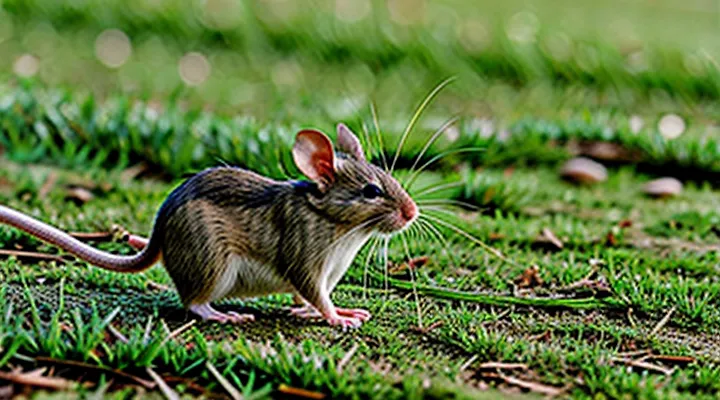
«Key Factors in Grass Luring Mice»
«Types of Grasses Most Attractive to Rodents»
Rodents are drawn to grasses that provide dense cover, high moisture content, and abundant seed production. Species that meet these criteria dominate in areas where mouse activity is frequent.
- Creeping Bentgrass (Agrostis stolonifera) – forms a low, continuous mat that hides predators; retains moisture throughout the growing season, supporting a stable food source.
- Tall Fescue (Festuca arundinacea) – produces vigorous leaf growth and large seed heads; its thick tillers create tunnels for nesting.
- Kentucky Bluegrass (Poa pratensis) – develops a dense sod with frequent seed dispersal; the cool-season growth pattern aligns with peak mouse breeding periods.
- Ryegrass (Lolium perenne) – offers rapid leaf development and high protein seeds; the grass’s quick recovery after grazing maintains a reliable habitat.
- Bermuda Grass (Cynodon dactylon) – spreads via stolons and rhizomes, generating extensive underground networks that rodents exploit for shelter and foraging.
These grasses share common traits: rapid vegetative expansion, persistent seed output, and a structure that reduces exposure to predators. Managing their prevalence—through selective mowing, controlled irrigation, or replacement with less dense species—can diminish mouse attraction in cultivated or urban landscapes.
«Nutritional Value and Shelter Provided by Grass»
Grass serves as a primary food source for many small rodents, offering a balanced mix of carbohydrates, proteins, and essential micronutrients. The young shoots contain high concentrations of soluble sugars and amino acids, while mature blades provide fiber that aids digestive health. Key nutrients include:
- Glucose and fructose for immediate energy
- Crude protein ranging from 5 % to 12 % of dry weight
- Calcium, magnesium, and potassium essential for bone and muscle function
- Vitamin A precursors and B‑complex vitamins supporting metabolic processes
Beyond nutrition, grass creates a microhabitat that protects mice from predators and harsh weather. Dense tufts form insulated pockets that retain warmth during cold periods and reduce exposure to wind and rain. The root network stabilizes soil, preventing erosion and maintaining burrow integrity. Additionally, the vertical structure of grass stems offers elevated pathways, allowing mice to move covertly while scanning for threats.
Together, the dietary benefits and sheltering properties explain the frequent observation of mice congregating in grassy areas. The combination of readily available sustenance and secure cover makes grass an optimal environment for sustaining small rodent populations.
«Seasonal Variations in Mouse Activity within Grasslands»
Grassland ecosystems exhibit distinct patterns of mouse activity that correspond closely to seasonal changes in vegetation density, temperature, and resource availability. Photographic surveys conducted across multiple sites reveal higher rodent presence during periods of rapid grass growth, when seed and insect populations peak.
Spring brings accelerated shoot development, providing fresh foliage and abundant seed heads. Mice increase foraging trips, occupy larger home ranges, and display elevated nesting activity near dense grass clumps. Recorded images show individuals navigating emergent blades and exploiting newly exposed soil insects.
Summer conditions, characterized by peak biomass and elevated humidity, sustain moderate mouse activity. However, higher temperatures and the onset of predator activity constrain daylight foraging. Observations indicate a shift toward nocturnal movement and reliance on ground cover for concealment.
Autumn marks a decline in vegetative vigor, yet the accumulation of mature seeds offers a concentrated food source. Mice concentrate in remaining high‑grass patches, intensifying seed collection before winter scarcity. Photographs capture clusters of individuals within residual tussocks.
Winter imposes the lowest activity levels. Reduced grass cover, frozen ground, and limited food force mice to seek shelter in burrows or beneath remaining litter. Imaging during this season shows minimal surface presence, confirming a seasonal retreat from open grassland.
Key factors influencing seasonal mouse dynamics:
- Grass growth rate and seed production
- Ambient temperature and humidity
- Predator activity patterns
- Food resource distribution (insects, seeds)
- Availability of protective cover
Understanding these seasonal trends assists in interpreting visual documentation of mouse–grass interactions and informs management strategies for grassland habitats.
«Visual Identification of Mouse Infestation in Grass»
«Signs of Mouse Presence in Lawns and Fields»
Mice leave distinct evidence in grassy areas, allowing reliable detection without direct observation.
Common indicators include:
- Small, dark droppings 1–3 mm long, often found in clusters near vegetation edges or under leaf litter.
- Fresh gnaw marks on grass stems, seed heads, or nearby wooden structures; the bite edges are clean and uniform.
- Shallow, rounded burrows with smooth entrances, typically 2–4 cm in diameter, visible as slight depressions in the soil surface.
- Seed or grain caches, recognizable as piles of displaced kernels or husks arranged in orderly mounds.
- Parallel runways or trampling paths where the grass is flattened and the soil compacted, indicating frequent traffic.
- Accumulated nesting material such as shredded grass, shredded paper, or soft fibers gathered in concealed corners.
- Chewed plant roots or damaged seedlings, often with clean cuts near the base of the plant.
Photographic documentation of these signs enhances field assessment. High‑resolution images reveal droppings against the green backdrop, the texture of gnawed stems, and the geometry of burrow entrances. Consistent visual patterns across multiple photos confirm active mouse activity and support targeted management decisions.
«Chewed Grass and Pathways»
Chewed grass forms visible trails that indicate mouse activity. The blades appear clipped irregularly, with edges worn down to a uniform length. Soil beneath the cut grass often shows a light discoloration, reflecting the moisture left by the rodents’ movement. Photographic documentation captures the contrast between the freshly grazed areas and surrounding untouched foliage, highlighting the pattern of foraging.
Key characteristics of the pathways include:
- Consistent width ranging from 5 cm to 15 cm, matching the typical stride of a house mouse.
- Parallel alignment with nearby food sources such as seed heads or garden waste.
- Presence of small droppings and occasional seeds displaced from the original location.
- Slightly raised edges where the mice have pushed soil outward while navigating the grass.
These elements together provide a reliable visual indicator of mouse presence, allowing accurate assessment of habitat use and informing targeted control measures.
«Droppings and Nests»
Mice drawn to grassy habitats leave distinct signs that reveal their presence and activity. Droppings appear as small, dark brown to black pellets, roughly 3‑5 mm in length, with a tapered shape and a smooth surface. Fresh specimens are moist and may emit a faint, musky odor; older deposits become dry, brittle, and may crumble when handled. In photographs, droppings are visible as clusters on the undersides of blades, along fence lines, or near the edges of garden beds where mice forage.
Nests constructed in or near grass consist of loosely woven material. Typical components include shredded plant stems, leaf litter, and occasional soft fibers such as hair or textile fragments. The architecture is shallow, often forming a dome or shallow depression no deeper than 2‑3 cm, with a single entrance that aligns with the direction of prevailing wind to reduce scent dispersal. In close‑up images, nests display a heterogeneous texture, with visible layers of intertwined grass and finer debris.
Key identification points:
- Droppings: size, color, moisture level, placement relative to grass clumps.
- Nests: depth, composition, entrance orientation, integration with surrounding vegetation.
Recognizing these elements assists in confirming mouse activity in grassy zones, supports accurate photographic documentation, and informs management decisions aimed at mitigating rodent-related damage.
«Photographic Examples of Mouse Damage»
Photographic documentation provides concrete evidence of how rodents affect turf areas. Images reveal distinct patterns that differentiate mouse activity from other forms of damage.
Typical visual indicators include:
- Chewed grass blades – clean cuts at the tips, often in clusters near the base of the plant.
- Burrow entrances – small, circular openings surrounded by loosened soil, frequently located along fence lines or under low vegetation.
- Nesting material – accumulations of shredded plant matter, twigs, and paper debris found in sheltered corners of the lawn.
- Scattered droppings – dark, pellet-shaped residues dispersed across pathways and near feeding sites.
- Gnaw marks on roots – exposed roots with bite marks, visible when the soil surface is disturbed.
Close‑up photos of each sign enable rapid identification and help distinguish mouse damage from insect herbivory or mechanical wear. Comparative images taken before and after control measures illustrate the effectiveness of interventions such as habitat modification or bait placement.
Consistent visual records support accurate assessment, guide targeted treatment, and reduce unnecessary pesticide application.
«Close-up Images of Gnawed Vegetation»
Close‑up photographs reveal the precise manner in which rodents consume grass. The images display torn blades, chewed nodes, and exposed stems, each indicating active feeding. Color shifts from vivid green to pale, fibrous interiors highlight the transition from healthy tissue to damaged material.
The visual evidence supports the hypothesis that certain grass species serve as a strong attractant for mice. Patterns of bite marks, ranging from shallow nibbles to deep incisions, correspond to the size and feeding behavior of the animals. Texture changes, such as softened fibers and exposed vascular bundles, provide measurable indicators of consumption intensity.
Key observations extracted from the photographs:
- Uniform bite spacing suggests repetitive foraging routes.
- Irregular edge fraying points to opportunistic grazing.
- Presence of droppings near the gnawed patches confirms recent activity.
- Variation in chlorophyll loss correlates with the duration of feeding.
These details allow researchers to quantify rodent impact on grass, refine attractant selection, and develop management strategies based on visual documentation.
«Pictures of Mouse Burrows and Tunnels»
Images of mouse burrows and tunnels provide concrete evidence of how grass ecosystems influence rodent activity. Photographs captured at ground level reveal entrance diameters ranging from 2 cm to 5 cm, indicating the size of the resident species. Overhead shots expose network patterns, showing branching angles of 30°–45° and tunnel lengths up to 1.2 m. Close‑up macro images display soil displacement and vegetation wear, confirming that dense grass sheaths serve as both cover and foraging substrate.
Key visual characteristics:
- Entrance morphology: smooth rims, occasional gnawed edges.
- Tunnel architecture: primary shafts descending 10–30 cm, secondary branches extending laterally.
- Soil composition: increased organic matter near burrow walls, visible in cross‑sectional photos.
- Vegetation impact: grass blades bent or uprooted at tunnel mouths, indicating frequent traffic.
These visual data support the correlation between lush grass patches and heightened mouse presence, allowing researchers to quantify habitat suitability without relying on indirect signs.
«Preventative Measures for Grass-Related Mouse Problems»
«Landscape Management Techniques»
Grass that draws small rodents creates a distinct visual pattern that can be documented through close‑up photography. The image typically shows dense, low‑lying foliage with visible burrow entrances and gnaw marks on stems, indicating active foraging.
Effective landscape management addresses the attraction by modifying habitat conditions and implementing control measures:
- Maintain mowing height at 4–6 inches to reduce shelter density.
- Select grass species with coarse blades and low seed production, such as tall fescue or bermudagrass, which are less palatable to rodents.
- Improve soil drainage to discourage burrowing in overly moist areas.
- Introduce groundcover plants that emit strong scents (e.g., lavender, mint) to deter foraging.
- Establish predator habitats by installing nest boxes for owls or perches for raptors.
- Apply integrated pest management, combining mechanical removal of nests with targeted, low‑toxicity bait stations.
Monitoring should include periodic photographic surveys to verify reductions in rodent activity and to adjust techniques as needed. Continuous assessment ensures that the landscape remains functional while minimizing unwanted wildlife presence.
«Mowing and Trimming Strategies»
Mice are drawn to dense, unmanaged grass that provides cover and food sources. Effective mowing and trimming reduce habitat suitability while preserving the aesthetic qualities captured in photographic records of the area.
- Maintain a cutting height of 2–3 inches for most turf species; lower heights expose soil and discourage nesting.
- Trim edges weekly to eliminate continuous corridors that facilitate rodent movement.
- Use a rotary mower with a sharp blade to achieve clean cuts; ragged edges create shelter pockets.
- Schedule mowing in the early morning when mouse activity is lowest, minimizing disturbance and allowing rapid vegetation recovery.
- Remove clippings after each pass to prevent accumulation of organic debris that serves as forage.
Consistent application of these practices limits the availability of protective cover, thereby reducing mouse presence without compromising the visual integrity of the grass landscape.
«Eliminating Hiding Spots»
Dense, low‑lying vegetation near foundations creates a shelter that encourages rodents to settle. A close‑up image of such an area illustrates the typical arrangement: clusters of grass blades interwoven with debris, forming concealed pathways that mice exploit for nesting and travel.
Mice rely on these concealed zones to avoid predators and to move unnoticed between food sources. Removing the cover eliminates the primary advantage that the habitat offers, forcing the animals to expose themselves to natural deterrents and control measures.
Practical steps to eradicate concealment:
- Trim grass to a height of no more than two inches, using a rotary mower or string trimmer.
- Clear all organic litter, including leaf piles, mulch, and compost remnants, from the perimeter of structures.
- Install a hard‑scaping barrier such as stone, brick, or concrete edging to interrupt continuous vegetation.
- Apply a thin layer of coarse gravel or bark chips in areas where grass must remain, reducing the depth of potential burrows.
- Conduct a quarterly inspection to identify new growth or debris accumulation, addressing each issue promptly.
Consistent upkeep of the trimmed zone and removal of surplus material sustains an environment that offers no refuge for rodents, thereby reducing the likelihood of infestation despite the presence of attractive grass.
«Natural Deterrents and Repellents»
Mice are drawn to lush, low‑lying vegetation where cover and food sources converge. The presence of such grass can be mitigated by employing natural deterrents that disrupt scent trails, alter habitat conditions, and introduce predator cues.
- Peppermint oil applied to cotton balls or diluted spray creates a volatile compound that mice avoid; reapply weekly or after rain.
- Cayenne pepper or crushed red pepper mixed into the soil deters foraging by irritating nasal passages.
- Plants such as lavender, rosemary, and sage emit strong aromatics that repel rodents when cultivated along the perimeter.
- Predator urine (fox, coyote) placed in strategic locations signals danger, prompting avoidance of the area.
- Diatomaceous earth scattered on the grass surface damages the exoskeleton of small mammals, reducing their willingness to traverse the zone.
Maintaining a tidy environment reduces attractants: remove fallen fruit, limit seed spillage, and trim excess grass to eliminate shelter. Regular monitoring of mouse activity, using motion‑activated cameras, confirms the effectiveness of each method and informs adjustments.
Combining multiple natural agents creates a layered defense, increasing the likelihood of sustained rodent exclusion without chemical pesticides.
«Professional Pest Control Interventions»
Mice frequently colonize lawns that provide dense cover, abundant organic debris, and easy access to shelter. Photographic evidence often shows thick, unmowed grass, accumulated leaf litter, and visible gnaw marks near garden structures, confirming the habitat’s suitability for rodent activity.
Professional pest control responses follow a systematic sequence:
- Site assessment – Certified technicians conduct a visual inspection, identify entry points, and evaluate vegetation density.
- Exclusion measures – Installation of sealed barriers around foundations, sealing cracks, and fitting rodent‑proof vent screens prevent ingress.
- Habitat modification – Regular mowing, removal of excess mulch, and trimming of vegetation reduce concealment opportunities.
- Targeted rodenticide application – Licensed professionals apply bait stations in accordance with safety regulations, ensuring minimal non‑target exposure.
- Integrated monitoring – Placement of motion‑activated cameras and tracking plates provides ongoing data on activity levels, allowing adjustments to treatment plans.
Accurate photographic documentation supports each stage, enabling technicians to verify the effectiveness of interventions and to communicate findings clearly to property owners. Combining exclusion, habitat management, and regulated chemical control yields sustainable reduction of mouse populations in grass‑dominated environments.