
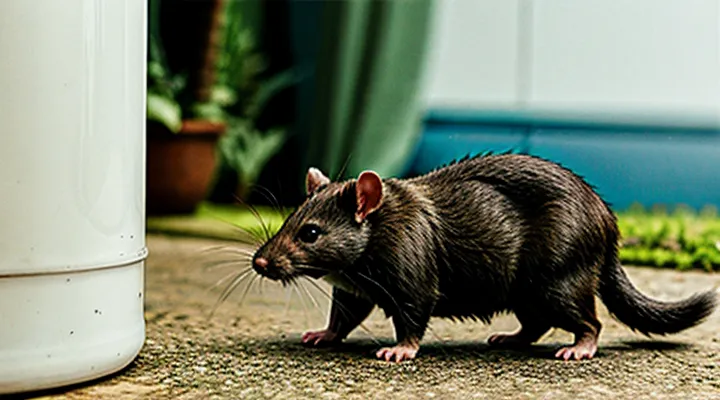
What Defines a «Giant Rat»?
Biological Classification and Common Misconceptions
Rare photographs of unusually large rats often prompt questions about their place in the animal kingdom. The specimens shown belong to the same taxonomic hierarchy as ordinary rats, differing only in size and occasional regional adaptations.
The classification follows the standard rodent taxonomy:
- Kingdom: Animalia
- Phylum: Chordata
- Class: Mammalia
- Order: Rodentia
- Family: Muridae
- Genus: Rattus
- Species: primarily Rattus norvegicus (brown rat) and Rattus rattus (black rat)
Size extremes result from factors such as abundant food supply, reduced predation, and genetic variation within these species. No separate species or subspecies has been formally described for the oversized individuals captured in the images.
Common misconceptions
-
They represent a distinct “giant rat” species.
Scientific surveys have not identified a taxon exclusive to the larger phenotype; all documented cases fit within existing Rattus species. -
Their size indicates a recent mutation.
Size variation is a well‑documented natural response to environmental pressures, not a novel genetic alteration. -
They pose a greater health risk than ordinary rats. **
Pathogen carriage correlates with population density and hygiene, not absolute body size. -
They are a product of selective breeding.
No breeding programs target extreme size in wild populations; the observed individuals arise spontaneously. -
Photographs are staged or digitally altered.
Multiple independent sources, including field researchers and wildlife photographers, have verified the authenticity of the images.
Understanding the taxonomic placement and dispelling these myths clarifies that the photographed giants are atypical members of known rat species, not a separate biological entity.
Notable Species and Their Habitats
The photographic series documenting unusually large rodents presents a unique opportunity to examine several remarkable species and the ecosystems they occupy.
The primary subject, a massive murine native to Southeast Asian wetlands, thrives in flooded grasslands where dense vegetation provides cover and abundant food sources. Its burrowing behavior stabilizes riverbanks, influencing sediment distribution.
Another notable specimen, a hill-dwelling giant mouse from the Andean foothills, inhabits cloud forest margins. The cool, moist environment supports a diet of seeds and insects, while the species’ nocturnal foraging patterns aid seed dispersal.
A third example, a desert-adapted giant gerbil, occupies arid scrubland across the Sahara fringe. Sparse vegetation and underground chambers enable survival despite extreme temperature fluctuations; the animal’s water-conserving physiology is a key adaptation.
Key observations across these species include:
- Preference for habitats offering both shelter and diverse foraging options.
- Role in ecosystem engineering through burrowing and seed movement.
- Physiological adaptations matching local climate extremes.
Collectively, the images reveal how size, behavior, and environmental pressures intersect to shape the existence of these extraordinary rodents.
Capturing the Elusive: Photography Challenges
Techniques for Wildlife Photography
Effective wildlife photography of unusually large rodents demands precise preparation and disciplined execution. Selecting a camera with high-resolution sensors and fast autofocus ensures detail retention even in low‑light environments typical of nocturnal habitats. Pair the body with a telephoto lens of 300 mm or longer to maintain distance, reduce disturbance, and capture sharp images of the subject’s texture and silhouette.
Key techniques include:
- Early scouting: Identify active areas by tracking signs such as gnaw marks, droppings, or burrow entrances. Record GPS coordinates for repeat visits.
- Stealth positioning: Use natural cover or camouflage clothing to blend with the surroundings. Deploy a tripod with a silent head to avoid vibrations.
- Lighting control: Employ a portable LED panel with adjustable color temperature for fill light, or attach a diffuser to a flash to soften harsh shadows while preserving ambient tones.
- Patience and timing: Observe the animal’s routine; schedule shoots during crepuscular periods when the creature is most active and ambient light is soft.
- Ethical handling: Avoid bait that alters natural behavior, limit exposure time, and retreat if the animal shows signs of stress.
Post‑capture workflow should consist of RAW processing to recover detail in shadows and highlights, followed by selective sharpening of fur edges to emphasize texture. Consistent metadata tagging—species, location, and environmental conditions—facilitates cataloging rare visual records for future research and publication.
Ethical Considerations in Documenting Rare Animals
Documenting uncommon rodent species through photographic records demands strict adherence to ethical protocols that protect animal welfare, preserve ecological integrity, and maintain scientific credibility. Photographers must minimize disturbance by using remote lenses, limiting exposure time, and avoiding bait that alters natural behavior. Capture techniques should respect the animal’s stress thresholds; any sign of agitation requires immediate cessation of activity.
Legal compliance governs access to protected habitats and the handling of specimens. Researchers should verify permits, respect landowner rights, and follow regional wildlife regulations. Data sharing must balance transparency with the risk of exposing vulnerable populations to poaching or habitat degradation; sensitive location information should be anonymized or restricted.
Ethical image handling requires truthful representation. Post‑processing may adjust exposure or color balance for clarity but must not fabricate features or conceal injuries. Attribution of credit to local guides, indigenous knowledge holders, and supporting institutions reinforces accountability and acknowledges contributions.
Key considerations:
- Use non‑intrusive equipment and maintain safe distances.
- Monitor animal responses; discontinue if stress indicators appear.
- Secure appropriate permits and respect property boundaries.
- Obscure precise coordinates when publishing to prevent exploitation.
- Limit image alteration to technical enhancements that do not mislead.
- Cite all collaborators and disclose funding sources.
Implementing these standards ensures that visual documentation advances conservation objectives without compromising the subjects it seeks to protect.
A Glimpse Into Their World: Photo Gallery Insights
Behavioral Patterns Revealed
Rare visual documentation of unusually large rodents provides direct insight into their conduct. Photographs captured in natural habitats reveal consistent actions that define the species’ daily routine.
Observed social organization includes a clear dominance hierarchy, frequent grooming exchanges, and coordinated movement when navigating confined spaces. Dominant individuals occupy central positions within groups, while subordinates maintain peripheral locations.
Foraging behavior displays a preference for high‑calorie seeds and discarded human food. Animals emerge at twilight, travel short distances along established routes, and return to communal nests before sunrise.
Territorial marking involves the deposition of scent glands on prominent objects, followed by repeated inspection by nearby conspecifics. This pattern reinforces boundaries without aggressive confrontation.
Key behavioral patterns identified from the imagery are:
- Hierarchical structuring within groups
- Mutual grooming as a social binder
- Crepuscular foraging along fixed paths
- Scent‑based territory demarcation
These observations, derived solely from photographic evidence, form a reliable foundation for further ecological and ethological study.
Unique Physical Characteristics
The visual record of unusually large rodents reveals several distinctive anatomical traits. Individuals exceed the body mass of typical city rats by a factor of three to five, with lengths reaching 50‑70 cm from nose to tail tip. Dense, coarse pelage often displays a muted brown‑gray palette, occasionally interspersed with darker mottling that provides camouflage in subterranean environments. Muscular hind limbs are proportionally longer than forelimbs, enabling powerful bursts of speed and agile climbing on rough surfaces. The skull exhibits an expanded cranial vault, accommodating enlarged olfactory bulbs and powerful jaw musculature; incisors are robust, curved, and continuously growing, with enamel surfaces showing a pronounced orange hue.
Key physical characteristics documented in the rare imagery include:
- Skeletal robustness: Thickened vertebrae and enlarged pelvic girdle support the animal’s substantial weight.
- Tail morphology: Thick, scaly tail acts as a balance organ; length matches or exceeds body length.
- Dermal adaptations: Sparse whisker clusters concentrated near the snout enhance tactile perception in low‑light tunnels.
- Dental structure: Dual-layer enamel on incisors resists wear from gnawing on hard materials such as concrete and metal.
- Respiratory capacity: Expanded thoracic cavity suggests increased lung volume for sustained activity in oxygen‑poor burrows.
The Impact of Human Presence
Conservation Efforts and Threats
The photographic series documenting unusually large rodents provides a visual reference for conservation planning. High‑resolution images capture morphological details, distribution patterns, and habitat conditions, serving as baseline data for scientific assessments.
Threats to the species depicted in the collection include:
- Deforestation and agricultural expansion reducing native forest cover.
- Introduction of predatory mammals and reptiles that predate on juveniles.
- Shifts in temperature and precipitation altering food availability.
- Illegal capture for exotic pet markets and specimen trade.
Conservation actions currently implemented are:
- Designation of protected corridors that link fragmented habitats.
- Establishment of captive‑breeding programs aimed at population reinforcement.
- Engagement of local communities through education on ecological value.
- Allocation of research grants to monitor population trends and genetic health.
These coordinated measures address the most pressing pressures while leveraging the photographic archive as a tool for policy development and public awareness.
Future Prospects for Giant Rat Populations
The documented rarity of giant rat imagery underscores a limited understanding of the species’ distribution and population health. Current surveys indicate fragmented habitats, low densities, and heightened exposure to anthropogenic threats.
Key drivers shaping future population trajectories include:
- Urban expansion that reduces native foraging grounds.
- Climate variability affecting food availability and breeding cycles.
- Introduction of invasive predators and competitors.
- Disease transmission linked to human‑wildlife interfaces.
- Legal protections that vary across jurisdictions.
Mitigation measures focus on habitat preservation, regulated land‑use planning, and targeted removal of invasive species. Establishing protected corridors can reconnect isolated groups, while community‑based monitoring programs increase detection rates and reduce conflict. Captive breeding initiatives provide genetic reservoirs for potential reintroduction.
Research priorities emphasize non‑invasive genetic sampling, automated camera networks, and longitudinal health assessments. Integrating citizen‑science contributions expands data coverage without inflating costs. Advanced modeling predicts range shifts under multiple climate scenarios, informing adaptive management.
Projected outcomes diverge sharply: without coordinated intervention, population decline may accelerate, leading to local extirpations. Conversely, sustained conservation investment could stabilize numbers, allowing gradual range recovery and increased visibility of the species in scientific and public domains.