
The Grassland Habitat
Ecosystem of the Meadow
Flora of the Grasslands
The meadow ecosystem is dominated by a diverse assemblage of herbaceous plants that define the structure and productivity of grassland habitats. Primary grasses such as Festuca rubra (red fescue), Poa pratensis (Kentucky bluegrass), and Lolium perenne (perennial ryegrass) form a continuous canopy that stabilizes soil, regulates moisture, and supplies the bulk of available biomass. Interspersed among these dominant species are forbs and low shrubs, including Achillea millefolium (yarrow), Plantago lanceolata (ribwort plantain), and Salvia pratensis (meadow sage), which contribute to floral diversity and provide seed resources.
Key functional groups of the grassland flora include:
- Nitrogen-fixing legumes – Trifolium pratense (red clover) and Lotus corniculatus (bird’s‑foot trefoil) enrich soil fertility.
- Deep‑rooted perennials – Dactylis glomerata (orchard grass) and Centaurea jacea (brown knapweed) access subsoil moisture, enhancing drought resilience.
- Annual pioneers – Papaver rhoeas (common poppy) and Convolvulus arvensis (field bindweed) rapidly colonize disturbed patches, maintaining ground cover.
The plant community sustains the field mouse by offering nesting material, protective cover, and a continuous supply of seeds and invertebrate prey associated with root and leaf litter. Seasonal phenology of grasses and forbs dictates the temporal availability of food, while structural heterogeneity created by varying plant heights and densities influences predator avoidance strategies. Consequently, the composition and health of the grassland flora directly affect the population dynamics of small mammals inhabiting the meadow.
Fauna of the Grasslands
The meadow ecosystem supports a diverse assemblage of vertebrates, invertebrates, and microorganisms that together maintain ecological balance. Small mammals such as the field mouse dominate the ground layer, exploiting seed stores and providing prey for raptors and carnivorous mammals. Their burrowing activity aerates soil, facilitating nutrient cycling and promoting plant root development.
Birds occupy the aerial and shrub strata. Representative species include:
- Meadow pipit – ground‑foraging insectivore.
- Skylark – aerial singer that nests among tall grasses.
- Red‑winged blackbird – omnivorous feeder on seeds and insects.
Herbivorous insects, notably grasshoppers and leafhoppers, consume foliage and serve as primary food sources for insectivorous birds and spiders. Predatory arthropods such as wolf spiders and ground beetles regulate herbivore populations, contributing to pest suppression.
Reptiles and amphibians are less abundant but present. Common lizards bask on sun‑warmed tussocks, while pond frogs utilize temporary water bodies formed after rainstorms for breeding. Their presence indicates healthy microhabitats within the grassland matrix.
Mammalian predators, including the European kestrel and the short‑tailed weasel, rely on the field mouse and other small mammals for sustenance. Their hunting pressure influences prey behavior, encouraging vigilance and nocturnal activity patterns.
Microbial communities in the rhizosphere decompose organic matter, release nitrogen, and enhance soil structure. Mycorrhizal fungi form symbiotic relationships with grasses, improving water and nutrient uptake.
Overall, the grassland fauna forms an interconnected network where each trophic level contributes to the resilience and productivity of the meadow environment.
Adaptations to the Environment
The meadow-dwelling field mouse thrives in open grassland ecosystems through a suite of specialized adaptations that enable survival amid fluctuating temperatures, limited cover, and abundant ground predators.
Morphologically, the species exhibits a compact body shape that reduces heat loss and facilitates rapid movement through dense vegetation. Fur coloration blends with the surrounding grasses, providing camouflage against avian hunters. Enlarged auditory bullae enhance sound detection, allowing the animal to respond swiftly to distant threats. Strong, clawed forelimbs support burrowing activities, creating subterranean refuges that maintain stable microclimates.
Behaviorally, individuals adopt a crepuscular activity pattern, foraging during dawn and dusk when predator visibility is reduced. They construct intricate tunnel networks that connect multiple nesting chambers, enabling escape routes and resource storage. Food caching behavior secures high-energy seeds and insects for periods of scarcity, while scent-marking establishes territorial boundaries that minimize intra‑specific competition.
Physiological and reproductive adaptations include:
- Seasonal fur densification that insulates against winter cold.
- Elevated basal metabolic rate, supporting sustained activity in cooler conditions.
- Rapid breeding cycles, with litters produced multiple times per year, ensuring population resilience despite predation pressure.
- Hormonal regulation that synchronizes reproductive readiness with peak resource availability, optimizing offspring survival.
The Field Mouse: A Closer Look
Physical Characteristics
Size and Appearance
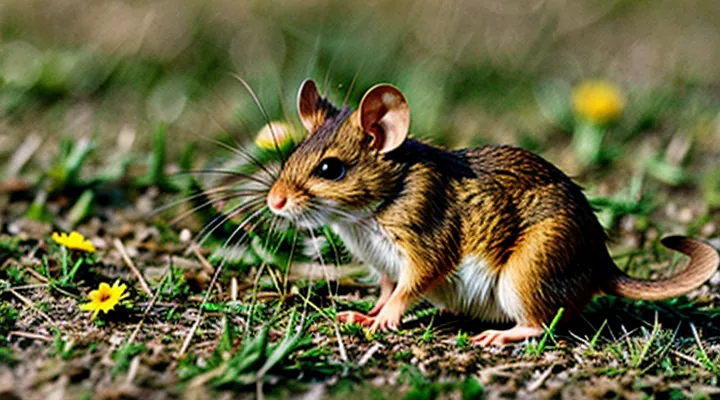
Field mice that inhabit meadow ecosystems are small rodents whose dimensions fall within a narrow range. Adult body length typically measures 7–10 cm, while the tail adds an additional 5–8 cm. Weight averages 12–20 g, with slight variations linked to seasonal food availability.
Key aspects of appearance include:
- Dorsal pelage: soft, brown to gray‑brown fur providing camouflage among grasses.
- Ventral side: lighter, pale gray or white fur that contrasts with the back.
- Ears: proportionally large, rounded, covered with fine hair, facilitating thermoregulation.
- Eyes: relatively large, dark, positioned laterally for a wide field of view.
- Whiskers: long, tactile hairs extending from the snout, aiding navigation through dense vegetation.
Morphological traits enable efficient movement through low vegetation and rapid escape from predators, reflecting adaptation to open grassland habitats.
Sensory Organs
The meadow‑dwelling field mouse relies on a suite of highly adapted sensory systems to navigate the open grassland environment, locate food, and avoid predators.
Vision is provided by relatively large, laterally positioned eyes that grant a wide field of view. The retina contains a high density of rod cells, enhancing sensitivity to low‑light conditions prevalent at dusk and dawn. This visual arrangement enables rapid detection of movement against the heterogeneous background of grasses and foliage.
Auditory perception centers on elongated pinnae that funnel sound toward a well‑developed middle ear. The cochlea exhibits a broad frequency range, allowing the mouse to discern subtle rustling of insects and the low‑frequency footfalls of larger mammals. Directional hearing is achieved through the asymmetrical placement of the ears, which aids in pinpointing the origin of threats.
Olfactory capability is mediated by an extensive nasal epithelium rich in olfactory receptors. The animal can identify volatile compounds from seeds, roots, and invertebrates, facilitating efficient foraging. Chemical cues also convey information about conspecifics and territorial markers.
Tactile input is supplied by vibrissae (whiskers) anchored on the snout and facial region. These mechanoreceptors detect minute air currents and surface textures, providing spatial awareness when the mouse moves through dense vegetation. Additionally, the pads of the forepaws contain Merkel cells that register pressure and texture during handling of food items.
Taste buds located on the tongue and palate allow discrimination of nutrient content and potential toxins. The field mouse demonstrates a preference for sweet and umami compounds associated with carbohydrate‑rich seeds, while rejecting bitter substances that often signal plant defenses.
Key sensory organs of the grassland field mouse
- Large lateral eyes with rod‑dominant retina
- Prominent pinnae and expanded cochlear range
- Highly innervated nasal epithelium
- Facial and mandibular vibrissae
- Forepaw Merkel cell clusters
- Distributed taste buds on oral cavity
These adaptations collectively support the mouse’s survival in the dynamic and exposed meadow ecosystem.
Behavioral Patterns
Diet and Foraging
The meadow‑dwelling field mouse maintains a varied diet that reflects the seasonal availability of resources across grassland ecosystems. Plant material dominates intake, supplemented by animal protein when insects are abundant.
- Seeds of grasses, wildflowers, and cereal crops
- Fresh shoots and young leaves of herbaceous plants
- Small arthropods, chiefly beetles, moth larvae, and springtails
- Fungal spores and occasional detritus during late autumn
Nutrient composition shifts with the calendar: early spring emphasizes high‑protein insects, midsummer favors carbohydrate‑rich seeds, and autumn introduces greater fiber from mature vegetation and stored seeds.
Foraging behavior aligns with predator avoidance and energy efficiency. The mouse employs tactile whisker input and olfactory cues to locate concealed food. Activity peaks during twilight periods, reducing exposure to visual hunters. Individuals construct shallow surface runways that connect feeding sites to burrow entrances, enabling rapid retreat. When resources are scarce, the mouse caches surplus seeds in shallow chambers near the nest, a practice that mitigates winter shortages.
Seasonal adjustments include expanding foraging ranges during dry spells, increasing reliance on underground seed stores, and intensifying nocturnal activity when daytime temperatures rise. These strategies ensure a continuous supply of nutrients essential for growth, reproduction, and thermoregulation throughout the grassland year.
Burrowing Habits
Field mice construct extensive underground networks that serve as refuges, foraging bases, and breeding chambers. Tunnels typically run 5–15 cm below the surface, following the moist layers of loam that retain structural stability while allowing easy excavation.
- Primary tunnels branch into secondary shafts spaced 30–50 cm apart, creating a grid that minimizes travel distance to food sources.
- Nest chambers are lined with grasses, shredded leaves, and fur, providing insulation against temperature fluctuations.
- Entrance holes are concealed by vegetation or a shallow mound of soil, reducing predator detection.
- Seasonal adjustments include deeper tunnels in winter, reaching up to 30 cm to exploit the insulating properties of frozen ground, and shallower systems in summer to maintain ventilation.
Soil composition influences burrow durability; fine‑silt loam permits smooth excavation, whereas compacted clay requires reinforced tunnel walls. Burrowing activity aerates the substrate, enhances water infiltration, and redistributes organic matter, thereby influencing plant growth and soil health across the meadow ecosystem.
Social Structure
Field mice that occupy meadow ecosystems live in small, stable family groups. Each unit typically comprises a breeding pair and their offspring, remaining together until juveniles disperse to establish new territories.
Territoriality defines spatial organization. Adults defend exclusive burrow complexes and foraging zones that range from 30 to 150 m², depending on vegetation density and predator pressure. Overlap between neighboring territories is minimal; boundary encounters are resolved through brief chases and scent‑mark reinforcement.
Communication relies on chemical and acoustic signals. Scent glands on the flank release pheromones used to mark burrow entrances and delineate borders. Short, high‑frequency vocalizations alert conspecifics to danger and coordinate group movement during foraging bouts.
Reproductive dynamics are seasonal. Breeding peaks in late spring and early summer, producing up to five litters per year. Females give birth to litters of three to eight pups after a 21‑day gestation. Both parents contribute to nest maintenance, while maternal care predominates during the first two weeks of pup development.
Key features of the social structure:
- Stable pair‑bonded units with dependent offspring
- Strictly defended burrow territories
- Chemical and acoustic signaling for boundary maintenance and predator alerts
- Seasonal breeding with multiple litters and shared nest responsibilities
These elements collectively shape the organization and survival strategies of meadow‑dwelling field mice.
Reproduction and Life Cycle
Mating and Gestation
The meadow field mouse (a small rodent inhabiting temperate grasslands) reproduces primarily during the warm months when food abundance supports offspring growth. Males establish territories by scent marking and emit ultrasonic vocalizations that attract receptive females. Courtship involves brief chases and tactile stimulation, culminating in copulation that lasts only a few seconds but may occur repeatedly over several nights to ensure sperm transfer.
Gestation in this species is remarkably brief, typically ranging from 19 to 22 days. During this period, the female isolates herself in a shallow nest constructed from grasses and shredded plant material, providing insulation and concealment from predators. Embryonic development proceeds rapidly; by day ten, fetal limb buds and sensory structures are discernible, and by day fifteen, the embryos acquire most of their skeletal formation.
Key reproductive parameters:
- Breeding season: April – September, with peak activity in late spring.
- Litter size: 4 – 7 pups, averaging five.
- Birth interval: Females can produce up to five litters per season, given sufficient resources.
- Neonatal development: Newborns are altricial, hairless, and blind; they gain weight at approximately 2 g per day and achieve weaning by day 21.
- Maternal care: The mother provides warmth, nursing, and protection until weaning; paternal involvement is absent.
Successful reproduction hinges on the synchronization of mating behavior with optimal environmental conditions, ensuring that the rapid gestation and subsequent growth phases align with periods of peak vegetation productivity. This strategy maximizes juvenile survival rates in the dynamic meadow ecosystem.
Development of Young
The meadow ecosystem supports rapid growth in juvenile field mice. Newborns emerge blind and hairless, relying on maternal warmth and milk for the first ten days. During this period, the mother confines the litter to a shallow nest constructed from grass stems and moss, maintaining a stable microclimate that reduces heat loss.
After the initial nursing phase, juveniles transition to solid food. Their diet expands from milk to a mix of seeds, insects, and tender shoots. This shift provides essential proteins and carbohydrates needed for skeletal development and muscle mass increase. The availability of diverse forage in grassland patches accelerates weight gain, allowing young mice to reach a functional body size within three weeks.
Predator avoidance skills develop concurrently with physical growth. Juveniles practice rapid scurrying and burrow entry under maternal guidance, honing reflexes that reduce exposure to avian and reptilian hunters. Learning to use the dense grass cover for concealment becomes a critical survival behavior before independence.
Key developmental milestones:
- Day 0–10: Blind, hairless; maternal nursing.
- Day 11–21: Introduction of solid foods; rapid weight gain.
- Day 22–30: Mastery of burrow entry and rapid locomotion; preparation for independent foraging.
Lifespan
The meadow-dwelling field mouse typically reaches adulthood within six to eight weeks and can live up to 18 months under natural conditions. In the wild, most individuals die before the second year, with mortality sharply increasing after the first breeding season.
Key determinants of lifespan include:
- Predation pressure from birds, snakes, and mammals.
- Seasonal food availability; scarcity in winter shortens survival.
- Disease incidence, particularly hantavirus and ectoparasite‑borne infections.
- Habitat quality; dense grass cover provides shelter, reducing exposure to predators.
Reproductive output influences population turnover. Females may produce three to five litters per year, each containing 4–7 offspring. High reproductive rates compensate for the short individual lifespan, ensuring stable meadow populations.
Environmental stressors such as drought or intensive grazing can reduce average longevity by limiting shelter and foraging opportunities. Conversely, protected grassland reserves with abundant cover and consistent food sources can extend average lifespan toward the upper limit of the species’ potential.
Challenges and Survival Strategies
Predation and Threats
Natural Predators
The meadow ecosystem subjects the field mouse to continuous predation pressure from a diverse assemblage of carnivores and raptors. Predators regulate mouse abundance, shape foraging patterns, and influence dispersal decisions, thereby maintaining ecological balance across grassland habitats.
- Red fox (Vulpes vulpes) – nocturnal hunter that captures mice using stealth and acute hearing.
- European kestrel (Falco tinnunculus) – diurnal raptor that detects prey from height and attacks with rapid dives.
- Barn owl (Tyto alba) – silent flyer that exploits low‑light conditions to locate mice by sound.
- Common buzzard (Buteo buteo) – broad‑winged bird of prey that seizes mice from perches or in flight.
- Eurasian sparrowhawk (Accipiter nisus) – agile forest edge predator capable of ambushing mice in dense vegetation.
- Stoat (Mustela erminea) – small mustelid that pursues mice through grass stalks with swift, lethal strikes.
Predation induces heightened vigilance, reduced activity during peak predator hours, and the construction of concealed burrows. These behavioral adjustments lower encounter rates but also limit foraging efficiency, creating a trade‑off that shapes population cycles.
Physiological stress responses, such as elevated glucocorticoid levels, accompany predator exposure, affecting reproductive output and juvenile survival. Consequently, predator density directly correlates with mouse reproductive timing and litter size across the season.
Adaptive traits—cryptic coat coloration, rapid sprint capacity, and keen auditory perception—enhance escape success. Continuous selective pressure from the predator community sustains these characteristics, ensuring the field mouse remains a resilient component of grassland food webs.
Human Impact
Human activities reshape the meadow environment that supports the field mouse, altering its survival prospects. Agricultural expansion replaces native grasses with monocultures, reducing shelter and food availability. Intensive tillage disturbs soil structure, exposing nests to predators and weather extremes.
- Pesticide application lowers invertebrate populations, the primary diet of the mouse, and introduces toxic residues that accumulate in tissues.
- Habitat fragmentation creates isolated patches, limiting gene flow and increasing susceptibility to local extinction.
- Road networks intersect meadows, causing direct mortality and inhibiting movement between suitable areas.
- Drainage projects lower soil moisture, affecting seed germination and the cover needed for nesting.
- Climate‑driven shifts in temperature and precipitation modify plant phenology, leading to mismatches between food peaks and breeding cycles.
Land‑use policies that preserve buffer strips, adopt integrated pest management, and maintain connectivity corridors mitigate these pressures. Monitoring programs that track population trends and habitat quality provide data for adaptive management, ensuring the meadow’s small rodent remains a functional component of grassland ecosystems.
Environmental Adaptations
Seasonal Changes
The meadow’s field mouse adapts to each season through distinct behavioral and physiological adjustments that correspond to changes in vegetation, temperature, and predator activity.
Spring brings rapid plant growth and abundant insect prey. The mouse increases reproductive activity, producing litters that benefit from the surge in food availability. Nest construction intensifies, with material gathered from fresh grasses and leaf litter.
Summer presents high temperatures and dense foliage. Foraging shifts toward seed consumption and occasional arthropods. The mouse reduces exposure by nesting deeper in the soil or beneath thick vegetation, mitigating heat stress and predation risk.
Autumn triggers preparation for scarcity. The mouse expands food caches, selecting high‑energy seeds and grains. Body fat reserves rise, and fur density increases to improve insulation.
Winter demands energy conservation. The mouse relies on stored provisions, minimizes movement, and utilizes insulated burrows that protect against freezing ground temperatures. Predation pressure declines as many predators enter torpor or migrate.
Seasonal adaptations
- Reproduction surge in spring
- Heat‑avoidance and seed diet in summer
- Cache building and fur thickening in autumn
- Energy conservation and burrow use in winter
Resource Scarcity
Field mice inhabiting temperate grasslands confront limited availability of essential resources. Seasonal fluctuations reduce seed and insect abundance, forcing individuals to prioritize high‑energy items and to expand foraging ranges. Diminished water sources during dry periods increase competition with other small mammals and insects, accelerating dehydration risk.
Key resources affected by scarcity include:
- Seeds and grains: primary caloric source, production varies with rainfall and soil fertility.
- Invertebrate prey: protein supply, population peaks align with moist conditions.
- Fresh vegetation: provides shelter and supplemental nutrition, declines as grazing pressure rises.
- Nesting material: grasses and bark become scarce when herbivore grazing intensifies, leading to poorer nest construction.
Resource limitation drives behavioral adjustments. Mice increase nocturnal activity to avoid predators while extending travel distances to locate food patches. They also exhibit higher reproductive suppression, reducing litter size when nutritional intake falls below threshold levels. Mortality rates rise proportionally with the severity of scarcity, influencing population dynamics across the meadow ecosystem.
Overall, resource scarcity shapes survival strategies, reproductive output, and community interactions for field mice within grassland habitats.