
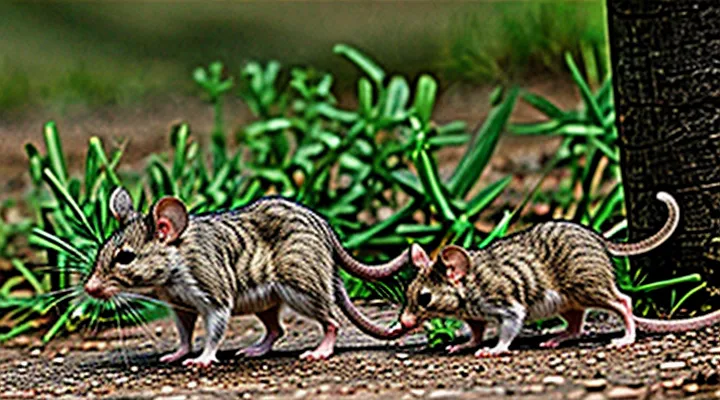
Understanding Mouse Social Structures
Types of Family Groups
Solitary Mice
Solitary mice occupy distinct niches within rodent populations, maintaining independent territories that rarely intersect with communal nests. Their home ranges average 30–50 m², marked by scent deposits and gnawing marks that signal occupancy to conspecifics. This spatial segregation reduces direct competition for food and shelter, allowing individuals to exploit marginal resources such as scattered seed caches or isolated insect infestations.
Reproductive behavior reflects the solitary lifestyle. Females typically breed once per breeding season, producing litters of three to six offspring after a gestation period of 19–21 days. Mating occurs through brief encounters at the periphery of adjacent territories; after copulation, both sexes retreat to their own domains, and parental care remains confined to the mother within her nest. Paternal involvement is absent, and offspring disperse at weaning, establishing new solitary territories rather than joining existing family groups.
Physiological adaptations support the independent existence of these mice. Elevated stress‑hormone regulation enables rapid response to predator cues, while a heightened olfactory acuity facilitates detection of rival scent marks. Metabolic efficiency allows sustained activity on limited food supplies, and a flexible diet—comprising seeds, grains, arthropods, and occasional carrion—reduces reliance on communal foraging.
Key characteristics of solitary mice:
- Exclusive home‑range maintenance
- Limited breeding opportunities per season
- Absence of male parental care
- Enhanced sensory and hormonal mechanisms for territory defense
- Broad dietary flexibility
These traits collectively distinguish solitary individuals from their socially inclined counterparts, illustrating a divergent strategy within the broader spectrum of mouse family dynamics.
Pair-Bonded Mice
Pair‑bonded mice form long‑lasting male‑female partnerships that persist throughout the breeding season. Both individuals maintain exclusive proximity, cooperate in nest construction, and share the duties of offspring care.
Key behaviors of these monogamous units include:
- Joint excavation of burrows in close proximity to food sources.
- Simultaneous provisioning of milk and solid food to pups.
- Coordinated vigilance against predators, with each partner alternating sentinel duties.
- Mutual grooming that reinforces social cohesion and reduces ectoparasite load.
Field studies demonstrate that pair bonds increase litter survival by 15‑20 % compared with solitary breeders. Stable partnerships enable more efficient allocation of foraging time, allowing parents to balance nutrient acquisition with offspring protection. Territorial fidelity is higher in bonded pairs, resulting in reduced overlap with rival groups and lower incidence of aggressive encounters.
Research employs radio‑telemetry tracking, genetic paternity testing, and continuous video monitoring to quantify partnership duration, reproductive output, and cooperative behaviors. Data consistently reveal that pair‑bonded mice exhibit lower stress hormone levels and higher reproductive efficiency than non‑bonded individuals, confirming the adaptive advantage of sustained monogamy in natural mouse populations.
Communal Nests
Communal nests are a central component of mouse social organization in natural environments. These structures are built collaboratively by multiple individuals, often comprising a dominant breeding pair and their offspring. Construction occurs primarily in concealed locations such as dense vegetation, underground burrows, or abandoned rodent tunnels, providing protection from predators and harsh weather.
Key characteristics of communal nests include:
- Multi‑individual participation in material collection and assembly.
- Continuous refurbishment, with fresh bedding added regularly.
- Spatial segregation within the nest, allowing adults and juveniles to occupy distinct zones.
- Shared thermoregulation, where close contact maintains stable internal temperatures.
The benefits derived from shared nesting are measurable. Energy expenditure for heat production decreases by up to 30 % compared to solitary burrows. Juvenile survival rates improve due to increased access to maternal care and reduced exposure to ambient fluctuations. Additionally, collective vigilance enhances early detection of threats, lowering predation incidents.
Reproductive cycles influence nest dynamics. During breeding peaks, nest size expands to accommodate additional litters, while off‑season periods see a contraction as individuals disperse. Seasonal variations in material availability dictate the composition of nest lining, shifting from dry grasses in summer to mosses and leaf litter in winter.
Factors Influencing Group Size
Mice organize into groups whose size reflects a balance of ecological pressures and social benefits. Predation risk drives individuals to cluster; dense aggregations reduce each mouse’s chance of being captured, while open habitats may limit group formation because concealment becomes less effective. Food distribution shapes the same balance: abundant, evenly dispersed resources permit larger colonies, whereas patchy or scarce supplies favor smaller units that can defend limited caches.
Habitat complexity also matters. Dense ground cover, burrow networks, and vertical structures provide refuge and support multiple families cohabiting, whereas barren substrates constrain the number of individuals that can occupy a given area. Seasonal cycles influence group size through breeding peaks that temporarily swell populations, followed by winter reductions when resources dwindle and thermoregulatory demands rise.
Kinship ties affect cohesion. Related females often remain together to share parental duties and enhance offspring survival, while unrelated males may be excluded or form separate subgroups to reduce competition. Disease dynamics impose a counterforce: higher densities increase pathogen transmission, prompting natural selection for mechanisms that limit group size under epidemic conditions.
Typical factors can be summarized:
- Predation pressure
- Food abundance and spatial pattern
- Structural complexity of the environment
- Seasonal reproductive cycles
- Genetic relatedness among members
- Disease and parasite load
Understanding how these variables interact explains the observed variation in mouse colony dimensions across different ecosystems.
Benefits of Social Living
Enhanced Foraging
Mice that live in family groups exhibit a distinct set of foraging strategies that increase the efficiency of food acquisition. Enhanced foraging emerges from coordinated movements, shared information, and adaptive responses to resource variability.
Key characteristics of this behavior include:
- Cooperative excursions where multiple individuals travel together, reducing predation risk and expanding the search radius.
- Division of labor, with certain members focusing on locating food sources while others guard the nest or monitor for threats.
- Spatial memory transmission, where experienced adults convey the locations of productive patches to juveniles through scent trails and vocalizations.
- Seasonal flexibility; families adjust foraging intensity and distance in response to fluctuations in seed availability, insect abundance, and weather conditions.
These elements collectively improve the nutritional intake of the group, support rapid growth of offspring, and sustain population stability in fluctuating habitats.
Predator Protection
Mice employ several tactics to reduce the risk of predation while maintaining their social structures. These tactics are shaped by the need to protect offspring, preserve group cohesion, and secure foraging opportunities.
- Construction of deep, branching burrow systems that limit predator entry and provide multiple escape routes.
- Use of sentinel individuals that remain near the entrance, detecting movement and emitting sharp vocalizations when a threat approaches.
- Synchronization of activity periods to twilight and night, aligning foraging with reduced visual hunting efficiency of many predators.
- Application of scent marking around nest entrances, creating chemical barriers that deter some carnivores and signal occupancy to conspecifics.
- Adoption of communal nesting, where several adults share a single burrow, increasing the number of eyes and ears available to detect danger.
Empirical observations indicate that populations exhibiting these behaviors experience lower mortality rates from raptors, snakes, and small mammalian predators. The integration of structural, temporal, and social defenses enables mouse families to persist in habitats where predator pressure is intense.
Thermoregulation
Mice maintain body temperature through coordinated behaviors that reinforce the stability of the nest and the welfare of offspring. Adults construct insulated chambers using shredded plant material, dried fur, and soil, which trap heat generated by collective metabolism. The nest’s architecture—multiple layers, sealed entrances, and strategic positioning near sun‑exposed substrates—reduces thermal gradients and limits heat loss.
Thermal homeostasis is supported by social huddling. When ambient temperatures drop below the lower critical limit, litter members cluster tightly, sharing conductive heat. This behavior reduces individual metabolic demand by up to 30 % compared to solitary individuals. Conversely, during heat waves, mice increase ventilation by opening nest flaps and spreading bedding to enhance convective cooling.
Physiological adjustments complement these actions:
- Vasodilation of peripheral capillaries to dissipate excess heat.
- Brown adipose tissue activation for non‑shivering thermogenesis during cold spells.
- Elevated respiratory rate to augment evaporative cooling when temperatures exceed the upper critical limit.
Maternal care integrates thermoregulatory duties. The dam periodically rotates pups within the nest, positioning them near warmer zones during cold periods and moving them to cooler sections when temperatures rise. This maternal micro‑climate management ensures uniform development across the litter.
Overall, thermoregulatory practices in wild mouse families combine architectural engineering, collective behavior, and physiological modulation to sustain optimal body temperature throughout fluctuating environmental conditions.
Daily Life and Interactions
Nesting Behaviors
Nest Construction
Mice construct nests that serve as central hubs for breeding, rearing young, and shelter from predators. Nest sites are chosen based on concealment, proximity to food sources, and micro‑climatic stability. Typical locations include burrow chambers, dense vegetation, and crevices beneath rocks or logs.
Materials employed in nest building are selected for insulation and structural integrity. Common components are:
- Dry grasses and stems
- Soft leaves and moss
- Fine twigs and shredded bark
- Animal fibers such as hair or feathers when available
Mice gather and arrange these items in layered formations. The inner layer consists of fine, soft fibers that provide warmth for pups, while outer layers incorporate coarser elements that reinforce the structure and resist collapse. Construction proceeds in a stepwise manner: clearing the site, collecting material, shaping the dome or cup, and compacting the walls.
Seasonal variations affect nest architecture. In colder months, nests become more compact and include additional insulating layers; in warmer periods, openings are enlarged to enhance ventilation. Social dynamics influence nest size: breeding pairs often share a single nest, whereas larger family groups may create interconnected chambers within a shared burrow system.
Predator avoidance is achieved through strategic placement and camouflage. Nests are hidden under dense cover, and the outer material often matches the surrounding substrate, reducing visual detection. Additionally, mice line the entrance with shredded material that muffles movement sounds.
Thermoregulatory efficiency results from the combination of material selection and nest geometry. The dome shape minimizes heat loss by reducing surface area exposed to ambient air, while the insulating layers trap metabolic heat generated by the occupants.
Overall, nest construction reflects a complex set of behavioral adaptations that optimize reproductive success, offspring survival, and environmental resilience in wild mouse populations.
Material Selection
Mice construct nests from locally available resources that meet structural, thermal, and camouflage requirements. Preferred materials include:
- Soft plant fibers such as dried grasses and moss, providing insulation and flexibility.
- Fine detritus like shredded bark and leaf litter, offering rigidity and concealment.
- Animal-derived elements, for example, feathers or fur, contributing to warmth and scent masking.
Selection depends on habitat characteristics, seasonal availability, and predation pressure. In dense vegetation, woven grasses dominate; in arid zones, dried twigs and sand become primary components. Material choice directly influences nest durability, microclimate stability, and offspring survival rates.
Nest Placement
Mice construct nests in locations that maximize protection from predators, maintain stable microclimates, and support the rearing of offspring. Preferred sites include underground burrows, dense vegetation, and structural cavities that provide concealment and insulation. Selection criteria are driven by seasonal temperature fluctuations, humidity levels, and the availability of building materials such as grasses, leaves, and shredded bark.
Key factors influencing nest placement:
- Soil composition: loose, well‑drained soils facilitate excavation while preventing collapse.
- Vegetation density: thick ground cover reduces visual detection and offers additional material.
- Proximity to food sources: nests are situated near seed caches or insect populations to minimize foraging distance.
- Predator pressure: locations with limited access routes lower the likelihood of intrusion by snakes, owls, and mammalian hunters.
Mice regularly relocate nests in response to environmental changes. Increased moisture may trigger a move to higher ground, while extreme cold prompts deeper burrowing. These adjustments ensure that the nest environment remains conducive to pup development and adult survival.
Parental Care
Rearing Pups
Mice rear their young in tightly regulated microenvironments that maximize survival odds. The mother establishes a nest of shredded plant material, fur, and detritus, shaping a compact chamber that retains heat and reduces exposure to predators. Nest construction begins shortly after mating and continues throughout the lactation period, ensuring structural integrity as pups grow.
During the first 10 days, pups remain immobile, relying exclusively on the mother’s milk. Lactation provides essential proteins, lipids, and antibodies; the mother visits the nest every 30–45 minutes, delivering brief nursing bouts while maintaining nest temperature through her body heat. Pup body temperature rises from approximately 30 °C at birth to 35 °C within the first week, a process supported by maternal huddling and periodic grooming that removes debris and stimulates circulation.
From day 10 onward, pups develop thermoregulatory capacity and begin to explore the nest interior. This stage includes:
- Thermal independence – pups generate sufficient heat to maintain core temperature without constant maternal contact.
- Solid‑food introduction – the mother provides small amounts of seed fragments and insects, gradually increasing dietary diversity.
- Social interaction – siblings engage in brief tactile encounters, establishing dominance hierarchies that influence later resource allocation.
Weaning completes by day 21, after which the mother reduces nursing frequency and eventually abandons the nest. Juvenile mice then disperse to establish independent territories, equipped with learned foraging routes and predator‑avoidance tactics acquired during the rearing phase.
Throughout rearing, the mother employs vigilant anti‑predator behavior: rapid nest relocation, emission of alarm vocalizations, and aggressive defense when threats approach. These tactics, combined with the structured progression from dependence to autonomy, constitute the core strategy mice use to ensure the successful development of their offspring in natural settings.
Weaning Process
The weaning period marks the transition from maternal milk to solid food for wild mouse pups. It begins around day 14 after birth and concludes by day 21, although timing can vary with species, temperature, and food availability. During this interval, the mother reduces nursing frequency, allowing pups to explore the nest and practice foraging behaviors.
Key physiological changes accompany weaning:
- Development of incisors capable of gnawing seeds, insects, and plant material.
- Maturation of the digestive tract, enabling efficient processing of carbohydrate‑rich and protein‑rich foods.
- Increase in body mass, typically reaching 75 % of adult weight by the end of the stage.
Behavioral adjustments are equally critical. Pups start to leave the nest for short forays, guided by scent cues left by the mother. The dam’s vigilance intensifies; she monitors pup movements, intervenes when predators approach, and may retrieve stragglers back to the nest. Sibling interactions become more competitive as individuals vie for limited food resources, reinforcing hierarchical structures within the litter.
Survival outcomes correlate strongly with weaning efficiency. Early successful transition reduces dependence on maternal care, lowers exposure to nest‑bound predators, and accelerates the onset of independent foraging. Conversely, delayed or incomplete weaning increases mortality risk due to prolonged vulnerability and competition for limited milk supplies.
Teaching Survival Skills
Mice transmit essential survival techniques through daily interactions within their family units. Mothers guide pups to food sources, demonstrating the identification of seeds, grains, and insects that meet nutritional requirements. Fathers and older siblings model efficient routes to foraging sites, reducing exposure to predators.
Key competencies taught by the family include:
- Nest construction: Young mice observe the selection of safe materials, the layering of insulation, and the placement of entrances to minimize detection.
- Predator avoidance: Adults exhibit alarm calls, rapid escape paths, and use of cover; observers learn to recognize threat cues and execute immediate flight responses.
- Social coordination: Siblings practice synchronized movement, sharing of resources, and cooperative grooming, which strengthens group cohesion and reduces disease transmission.
The learning process relies on repeated exposure and reinforcement. Each successful foraging trip strengthens neural pathways associated with spatial memory, while failed attempts trigger corrective behavior from caregivers. Over time, pups develop autonomous decision‑making abilities, enabling them to locate shelter, assess risk, and secure nutrition without direct adult supervision.
Communication within the Family
Vocalizations
Mice communicate through a diverse repertoire of vocal sounds that facilitate coordination within their social units. Ultrasonic squeaks, typically ranging from 30 to 110 kHz, dominate interactions between mothers and offspring. These calls convey the pup’s hunger state, prompting the dam to retrieve food or adjust nursing posture. In response, the mother emits low‑frequency chirps that signal readiness to nurse and reinforce the bond.
Sibling relationships are maintained by a separate set of calls. Juvenile mice produce brief, high‑frequency whistles during play, which synchronize activity levels and reduce aggression. When an individual detects a predator, it emits a rapid series of broadband alarm pulses; neighboring mice react by freezing or seeking shelter, thereby enhancing collective survival.
Adult males use distinct vocalizations during territorial encounters. A pattern of repetitive, modulated trills signals dominance and deters intruders without physical confrontation. Females, when entering a new nesting site, emit soft cooing notes that encourage acceptance by resident females and stabilize the group hierarchy.
Key characteristics of mouse vocal behavior include:
- Frequency range: 30–110 kHz, with specific bands allocated to different social contexts.
- Temporal structure: Calls last 5–100 ms; alarm pulses are shorter and more frequent than nurturing squeaks.
- Developmental shift: Neonates rely on high‑pitch distress calls; adult repertoire expands to incorporate trills and alarm bursts.
- Environmental modulation: Ambient temperature and humidity influence signal attenuation, prompting mice to adjust amplitude and repetition rate.
These acoustic signals underpin the complex family dynamics observed in wild mouse populations, ensuring efficient resource allocation, predator avoidance, and social cohesion.
Scent Marking
Scent marking constitutes a primary mode of chemical communication among wild mice, enabling individuals to convey identity, reproductive status, and spatial boundaries without visual cues. The behavior relies on specialized exocrine glands that release volatile and semi‑volatile compounds onto substrates such as bedding, nest material, and territorial perimeters.
The secretions derive mainly from the flank, abdominal, and urine glands. They contain a mixture of fatty acids, aldehydes, and proteinaceous pheromones that persist for several hours under ambient conditions, allowing detection by conspecifics through the olfactory epithelium and vomeronasal organ.
Key functions of scent marking include:
- Territorial delineation: establishes exclusive zones, reduces direct encounters.
- Reproductive signaling: indicates sexual receptivity, synchronizes mating activity.
- Kin recognition: differentiates relatives from non‑relatives, modulates cooperative behavior.
- Predator deterrence: masks individual odor, lowers predation risk through collective scent layers.
Marking frequency varies with population density, breeding season, and resource distribution. Increased crowding elevates deposition rates to reinforce individual presence, while peak reproductive periods trigger intensified pheromone release to attract mates. Scarce food sources may suppress marking, conserving energy for foraging.
Empirical studies employ gas chromatography–mass spectrometry to profile chemical constituents, alongside behavioral assays that track response latency to marked versus unmarked sites. Findings illuminate the hierarchical organization of mouse societies and inform pest management strategies that exploit disruption of scent trails.
Tactile Interactions
Mice maintain close physical contact within their groups, a behavior critical for coordination and survival. Direct skin-to-skin contact occurs during nest construction, grooming, and when offspring cling to the mother’s fur for warmth and protection. These tactile exchanges transmit information about body temperature, health status, and emotional state, allowing rapid adjustment of group dynamics.
Key tactile functions include:
- Nest cohesion: Adults press bodies together while arranging bedding, creating a compact structure that conserves heat and deters predators.
- Maternal care: Mothers grip pups with their forepaws, providing nourishment and stabilizing them during movement.
- Social grooming: Individuals use whiskers and forepaws to clean each other, removing parasites and reinforcing social bonds.
- Territorial signaling: Physical nudges and light bites convey dominance hierarchies without resorting to aggression.
Research shows that deprivation of these contacts leads to elevated stress hormones and impaired development in juveniles, confirming the essential role of tactile communication in mouse family life.
Reproductive Strategies
Breeding Seasonality
Breeding seasonality in wild mouse populations is tightly linked to environmental cycles. Reproductive activity peaks when temperature, photoperiod, and food availability reach optimal levels, typically during spring and early summer. Hormonal cues triggered by longer daylight stimulate gonadal development, leading to synchronized estrus among females.
Males adjust reproductive effort in accordance with female readiness. During peak periods, testosterone concentrations rise, sperm production accelerates, and territorial aggression intensifies to secure mating opportunities. Outside the breeding window, both sexes exhibit reduced reproductive physiology, conserving energy for survival.
Key characteristics of seasonal breeding:
- Photoperiod dependence: Longer days increase melatonin suppression, facilitating gonadotropin release.
- Resource-driven timing: Abundant seed and insect populations provide necessary nutrients for gestation and lactation.
- Physiological suppression: In winter, gonadal regression and lowered hormone levels prevent costly reproduction.
- Population synchrony: Cohesive breeding cycles enhance offspring survival through communal nesting and shared vigilance.
Understanding these patterns clarifies how mouse families coordinate reproduction with ecological constraints, ensuring maximal offspring output when conditions support growth and reducing mortality during unfavorable periods.
Mating Systems
Mating systems among wild mice represent a central component of their familial behavior patterns. Male house mice (Mus musculus) typically adopt a polygynous strategy, defending territories that overlap the home ranges of several females. Females establish nests within these territories, mate with the dominant male, and may also engage in extra‑pair copulations when neighboring males infiltrate the periphery of the defended area.
Female mice exhibit selective mate choice based on male scent marks, vocalizations, and the quality of nest sites. This choice influences the genetic diversity of litters and reduces inbreeding risk. After conception, females exclusively provide parental care, constructing and maintaining the nest, nursing the pups, and protecting them from predators.
Key characteristics of mouse mating systems include:
- Polygyny – a single male mates with multiple females; common in dense populations where resources allow territorial defense.
- Promiscuity – both sexes mate with multiple partners; observed in environments with high male turnover and limited territorial stability.
- Monogamy (rare) – one male and one female share a nest and cooperate in offspring rearing; typically occurs in isolated habitats with scarce mates.
Reproductive timing aligns with seasonal fluctuations in temperature and food availability. Breeding peaks in spring and autumn, when longer daylight periods stimulate gonadal development. Litter size varies from three to eight pups, with gestation lasting approximately 19‑21 days. Post‑natal growth is rapid; pups achieve independence within three weeks, after which the mother may initiate another breeding cycle.
Overall, the diversity of mating strategies among mice directly shapes their social organization, population dynamics, and adaptive success in natural ecosystems.
Pup Development and Dispersal
Growth Stages
Wild mouse families exhibit distinct developmental phases that shape social interactions and parental investment. Each phase corresponds to specific physiological and behavioral changes, influencing how offspring integrate into the group.
- Neonatal period (0–5 days): Pups are altricial, blind, and hairless; depend entirely on maternal care for warmth and nutrition. Mother provides frequent nursing bouts and nest maintenance.
- Pre‑weaning stage (6–14 days): Fur develops, eyes open, and locomotor activity increases. Pups begin to explore the nest, emit ultrasonic vocalizations that solicit feeding, and receive limited grooming from siblings.
- Weaning stage (15–21 days): Solid food intake rises, nursing frequency declines, and pups start to leave the nest for brief forays. Sibling play intensifies, establishing dominance hierarchies and social bonds.
- Juvenile stage (22–35 days): Independent foraging skills mature; individuals acquire territory awareness and engage in cooperative nest building. Maternal aggression may increase to enforce separation.
- Subadult stage (36–50 days): Sexual maturity is reached; males display scent marking, while females exhibit nesting behavior in preparation for reproduction. Family cohesion diminishes as dispersal begins.
These growth stages dictate the allocation of parental resources, the timing of sibling competition, and the emergence of cooperative behaviors. Understanding each phase clarifies how wild mouse families coordinate survival strategies throughout development.
독립을 위한 준비
Wild mice develop independence through a series of behavioral steps that unfold within the family unit. Juvenile individuals remain in the nest for a limited period, during which they acquire essential skills from parents and siblings. The transition from dependence to self‑sufficiency is marked by reduced nursing, increased foraging attempts, and exposure to predator cues.
Key components of the preparation process include:
- Gradual reduction of maternal care: Mothers decrease feeding frequency, prompting pups to seek alternative food sources.
- Structured play and exploration: Older siblings engage younger ones in brief excursions beyond the nest, allowing practice of navigation and burrow maintenance.
- Risk assessment training: Pups observe adult responses to predator scents, learning to recognize and avoid threats.
- Social hierarchy establishment: Interactions among littermates create a ranking system that influences access to resources and eventual dispersal routes.
By the end of the fledgling phase, each mouse demonstrates competency in locating food, constructing protective tunnels, and evading predators, thereby achieving the necessary readiness for autonomous survival.
Dispersal Patterns
Dispersal in wild mouse populations describes the movement of individuals away from their natal groups to establish new territories. This process reduces local competition for resources, limits inbreeding, and facilitates gene flow across habitats.
Mice typically disperse during the juvenile stage when body mass reaches a threshold that supports independent foraging. Dispersal routes follow linear corridors such as hedgerows, riparian strips, or fragmented field edges. Individuals may travel distances ranging from a few meters to several hundred meters, depending on habitat connectivity and population density.
Key factors influencing dispersal decisions include:
- Resource scarcity in the natal area
- High density of conspecifics
- Presence of predators or aggressive neighbors
- Seasonal changes that affect food availability
- Genetic pressures favoring outbreeding
The outcome of dispersal reshapes family organization. Departing juveniles abandon the parental nest, reducing litter size and altering parental investment. Successful settlers often form new breeding pairs, extending the spatial distribution of mouse families across the landscape.
Environmental Adaptations and Challenges
Habitat Selection
Mice families exhibit selective placement of nests and foraging zones based on resource distribution, predation pressure, and microclimatic conditions. Adult pairs assess soil composition, vegetation density, and proximity to water before establishing a breeding burrow. Juvenile dispersal follows the same criteria, with siblings often remaining within a radius that maximizes shared vigilance while minimizing competition for food.
Key determinants of habitat choice:
- Food availability – seed caches, insect abundance, and plant matter concentration drive site preference.
- Predator avoidance – dense cover, burrow depth, and distance from open fields reduce exposure to owls, snakes, and mammals.
- Thermal stability – underground chambers maintain temperatures between 15 °C and 25 °C, essential for pup development.
- Social cohesion – overlapping territories enable cooperative grooming and alarm signaling among related individuals.
Seasonal shifts prompt families to relocate. In autumn, increased leaf litter provides insulation, prompting deeper burrow construction. Spring floods force upward movement to higher ground, where vegetation offers both shelter and foraging opportunities. Throughout the year, families continuously evaluate habitat quality, abandoning sites that exhibit depletion of resources or heightened predator activity. This dynamic selection process sustains reproductive success and population stability in wild mouse communities.
Resource Utilization
Wild mice exhibit highly efficient resource utilization that sustains their survival and reproductive success. They acquire nutrients through opportunistic foraging, exploiting seeds, insects, and plant matter available in their immediate environment. Preference for high‑energy seeds reduces the time required for food collection, allowing more allocation of effort toward nest construction and predator avoidance.
Nesting material is selected based on availability and insulating properties. Mice gather dried grasses, leaves, and soft bark, arranging them to create compact chambers that retain heat and limit moisture loss. This behavior conserves energy during colder periods and minimizes exposure to damp conditions that could foster fungal growth.
Water intake derives from direct sources such as dew, puddles, and sap, as well as from moisture contained in food items. By extracting water from moist seeds and insects, mice reduce the need to travel to open water bodies, decreasing predation risk.
Territorial use reflects a balance between resource abundance and competition. Home ranges are delineated by scent markings and burrow entrances, ensuring exclusive access to cached food stores and nesting sites. Overlap occurs only when resource density supports shared use, indicating adaptive flexibility in spatial exploitation.
Key strategies of resource utilization include:
- Prioritizing high‑calorie foods to maximize energy return per foraging bout.
- Selecting nesting materials with optimal thermal conductivity.
- Integrating water acquisition into dietary intake.
- Defining and defending home ranges according to resource distribution.
These practices demonstrate a cohesive system in which wild mice allocate limited resources to meet physiological demands while mitigating environmental threats.
Threats and Survival Tactics
Predation
Predation imposes a constant selective pressure on mouse groups living in natural habitats. Adult females adjust nesting locations to reduce exposure, often selecting concealed burrows beneath dense vegetation or rocky crevices. Juvenile dispersal patterns shift toward shorter distances when predator density rises, decreasing the likelihood of encountering unfamiliar threats.
Key predator categories affecting mouse families include:
- Avian hunters such as hawks and owls, which target individuals during crepuscular activity.
- Terrestrial carnivores, including foxes, weasels, and snakes, that locate nests through scent cues.
- Larger rodents and mustelids that may raid burrows for eggs and young.
Anti‑predator behaviors are transmitted within family units. Mothers emit ultrasonic alarm calls that prompt immediate freezing or retreat in offspring. Scent marking by dominant individuals delineates safe zones, limiting intruder access. Cooperative vigilance emerges when multiple adults share a burrow, each allocating time to scanning while others forage.
Reproductive timing aligns with predator cycles. Breeding peaks often occur during periods of reduced predator activity, such as early spring before migratory bird influx. Litter size may decrease under high predation risk, conserving resources for enhanced parental care and rapid development of defensive reflexes.
Competition
Competition shapes the organization and success of mouse families in natural habitats. Direct confrontations and subtle signals determine which individuals secure limited supplies and breeding opportunities.
Key forms of competition include:
- Sibling rivalry for parental care and food.
- Conflict between neighboring groups over territory boundaries.
- Competition for nesting material and shelter sites.
- Contest for access to fertile foraging patches.
Aggressive encounters, scent marking, and vocal warnings constitute the primary mechanisms by which individuals assert dominance. Resource hoarding by dominant adults reduces availability for subordinates, prompting dispersal or submissive behavior.
Consequences of competitive interactions manifest as hierarchical structures, altered reproductive output, and variable survival rates. Dominant pairings typically achieve higher litter sizes, while lower‑ranking members may delay breeding or relocate to peripheral areas. The balance of these pressures maintains population stability and influences the evolution of cooperative and selfish strategies within mouse families.
Human Impact
Human activities reshape the social structure and reproductive strategies of wild mice. Agricultural expansion replaces native vegetation with monocultures, reducing shelter options for nesting pairs and prompting earlier dispersal of juveniles. Pesticide application lowers insect prey availability, forcing adult mice to increase foraging range and allocate more energy to food acquisition rather than parental care.
Urbanization introduces artificial structures that serve as alternative nesting sites. However, constant disturbance and light pollution disrupt nocturnal communication, leading to shortened mating rituals and reduced litter sizes. Road networks fragment habitats, isolating family groups and limiting gene flow; observed outcomes include increased inbreeding coefficients in populations adjacent to highways.
Climate alteration driven by greenhouse‑gas emissions affects seasonal resource cycles. Earlier spring onset advances breeding periods, but mismatched food peaks cause higher offspring mortality. Drought conditions diminish seed stores, compelling mothers to abandon nests more frequently.
Key human‑induced factors influencing mouse family dynamics:
- Habitat conversion (agriculture, urban development)
- Chemical exposure (pesticides, pollutants)
- Physical barriers (roads, fences)
- Climate variability (temperature shifts, precipitation changes)
Mitigation measures that directly address these pressures include preserving hedgerows and riparian buffers, implementing integrated pest management to reduce chemical load, designing wildlife corridors across roadways, and monitoring phenological shifts to adjust conservation timing.